Entity · Concept
Social memory
A reference page linking a name, group, or concept to the materials that discuss it.
How do groups shape ties to the past through narrative, ritual, houses and burials, and how does archaeology tell material continuity from its interpretation? A critical test of the contested “history house” model.
Estimated reading time: 7 min Published Last reviewed:
Share article
Text
Introduction
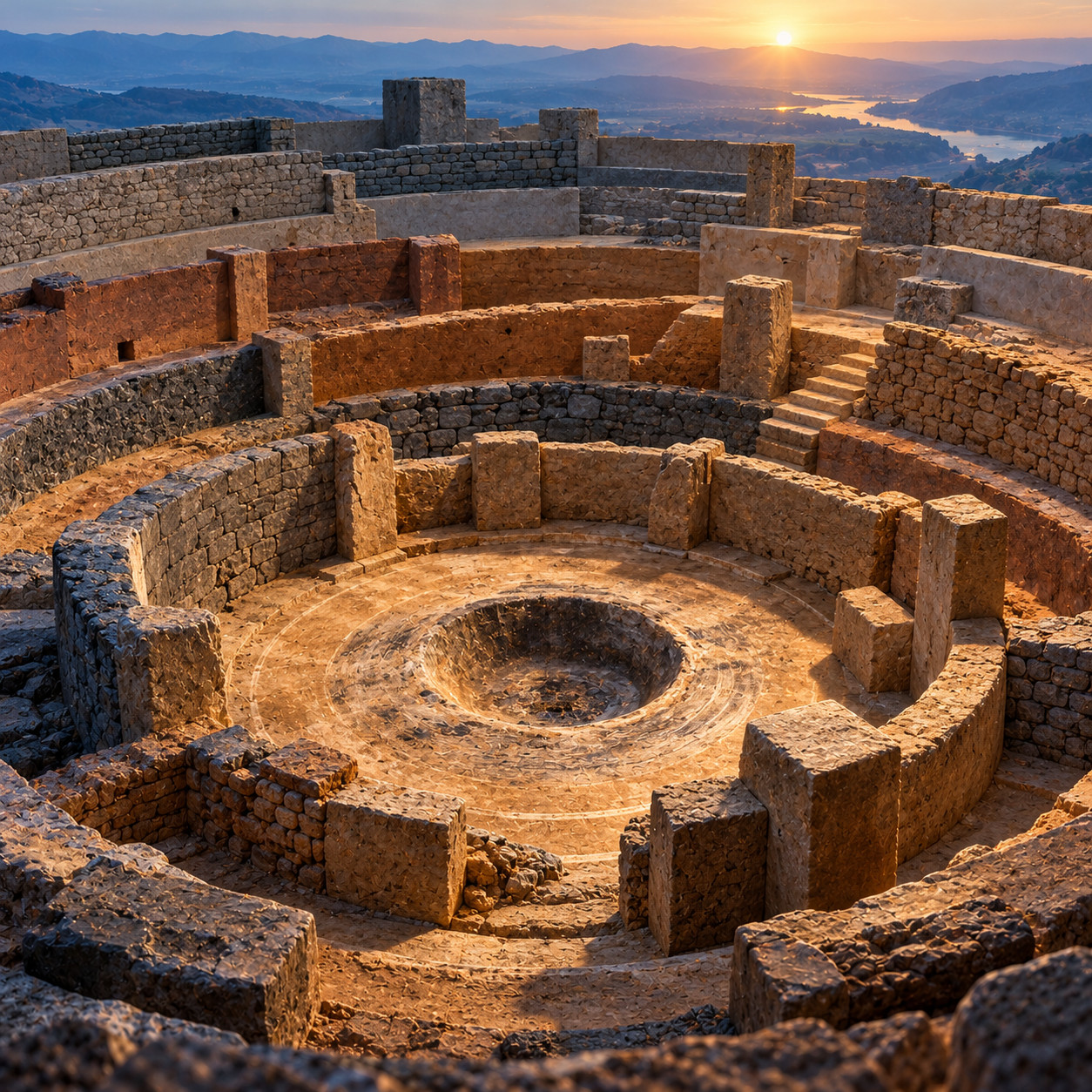
How can we investigate a community’s relationship to its past when no written account survives? This entry explains “social memory” from sociology to archaeology, separating observable material continuity from its interpretation as shared remembrance. Houses at ÇatalhöyükÇatalhöyükNeolithic site on the Konya Plain in central Anatolia, with clustered houses, subfloor burials and imagery on the East Mound, and later Chalcolithic phases on the West Mound.Glossary · Click to read the explanation provide a test case, including disagreement over “history housesHistory housesHistory houses: Hodder and Pels’s hypothesis linking certain long-lived Çatalhöyük buildings and concentrated burials to social memory. A debated analytical category, not an ancient name or proof of a separate temple.Glossary · Click to read the explanation” and the limits of interpreting burials and painted walls.
Meaning and scope
Social memory describes the ways a group creates, maintains and revises its relationship to the past, sharing it among participants. It can take shape in inherited stories, periodic rites, bodily habits, monuments, or houses repeatedly repaired and used. A community does not possess one brain-like store of unchanging facts; practices and choices that make the past present change with people and circumstances. The researcher asks what is transmitted, by which medium, by whom, and with which exclusions.[4][5]
Some scholars use “social” and “collective” memory interchangeably, while others distinguish socially framed individual recollections from public representations, institutions and symbols that persist beyond any one person's remembering. The terms therefore lack a single agreed definition across disciplines.[5]
Halbwachs and remembering within groups
In the preface to The Social Frameworks of Memory (1925), French sociologist Maurice Halbwachs argued that remembering is shaped by family, language and groups that furnish ways to recover and reconstruct a past. He explicitly cautioned that the opening anecdote was second-hand and its authenticity unknown: it should not be treated as a verified historical case. His theoretical claim is that recollection operates within social frameworks, not that everyone remembers identical events.[4]
Jeffrey Olick subsequently asked what exactly makes memory “collective.” Is it a collection of personal memories shaped by social relations, or relatively enduring public forms such as commemorations and institutions? He set these out as levels to be reconciled, not proof of an independent group mind.[5]
Communicative and cultural memory
Jan AssmannJan AssmannGerman Egyptologist and cultural-memory scholar, born 1938, died 2024.Glossary · Click to read the explanation proposed an analytical distinction between memories circulated in ordinary conversation across generations and cultural memory stabilized in narratives, formulas, ritualsRitualAn organised or distinguished practice meaningful to a community; it may leave traces, but its form alone does not reveal an associated doctrine.Glossary · Click to read the explanation or objects whose transmission may be organized by specialists and institutions. This is not a fixed dividing date, nor does it make oral traditions inherently inferior: it directs attention to the medium and organization of transmission.[6]
Paul Connerton likewise stressed that remembering works through more than words and images. Commemorative ceremonies represent the past again, whereas repeated bodily skills may be passed on without a consciously recounted story of their origins. A practice can endure across generations even when no written explanation survives.[7]
Narratives, places, things and bodies
Many channels converge: names and songs, recurring visits, offerings, reused tools, routes to burial sites and the repair of particular houses. Places and things may support continued action after the explanations associated with them have changed. They do not, however, speak their meanings on their own; successive generations or neighboring groups may understand one site differently.[7][8]
Material evidence is particularly significant for societies without surviving contemporary writing. Stratigraphy, burials within occupied buildings and repeated plastering can document the continuity of practices. Calling this continuity “ancestor memory” or “worship” requires an additional argument; neither human remains nor images alone establishes such a belief.[8]
From material observation to interpretation
The analysis starts by describing a find without imposing a cause: where do graves sit relative to occupied floors? How often was a wall replastered? Which stages of construction, occupation, modification and abandonment can be demonstrated? Stratigraphic, chronological and spatial tests then compare similar and contrasting buildings. Many layers do not automatically establish the long life of one social group unless technical renewal and changing occupants have also been considered.[8]
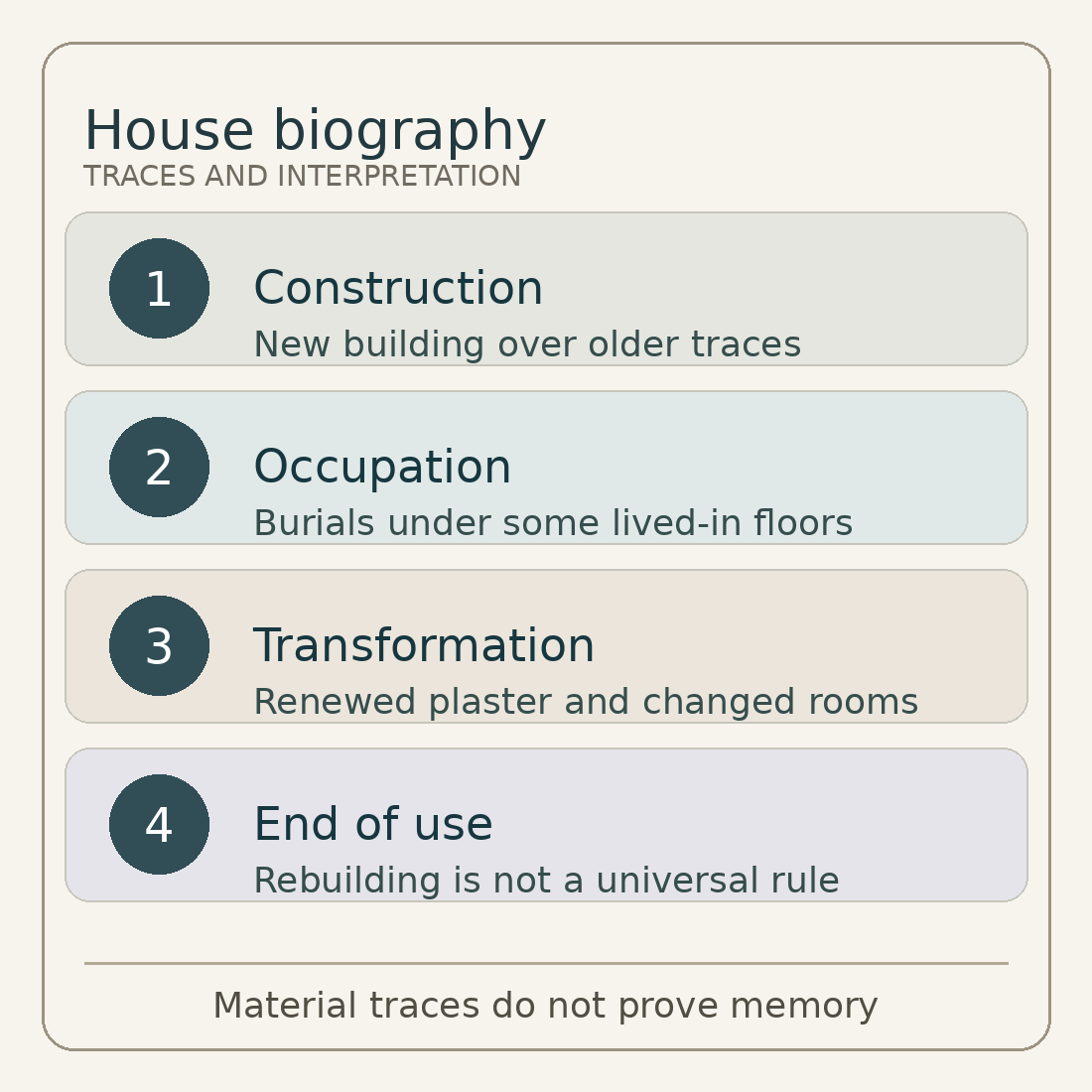
This graphic is a teaching model of a house biography; its stages are prompts for questions, not a universal obligatory sequence. Burial may occur during occupation, and a house may go out of use without being rebuilt. Each interpretive arrow needs a documented observation and a comparison with alternatives such as structural maintenance, spatial management and economic change.[8][13]
Çatalhöyük: daily practice in domestic space
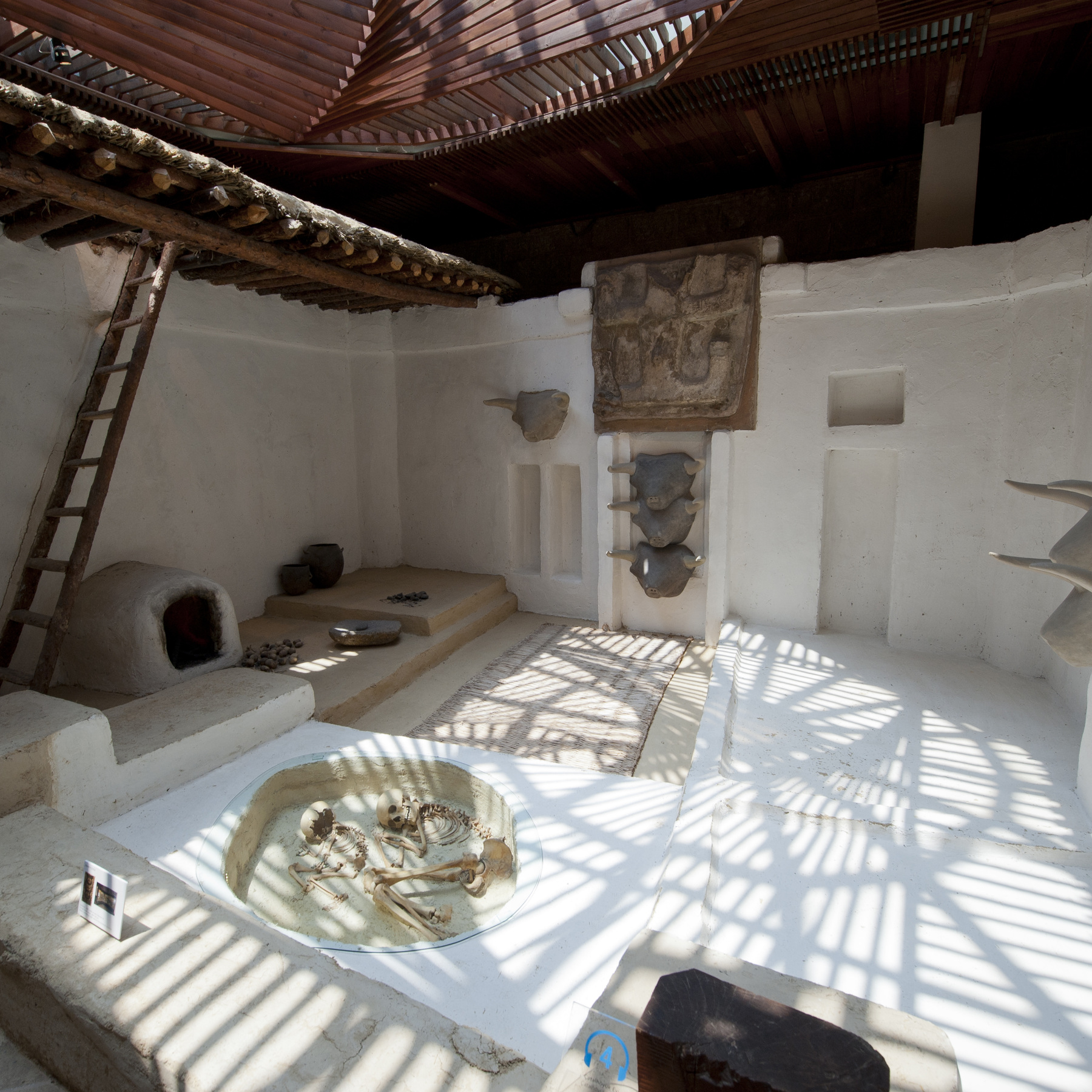
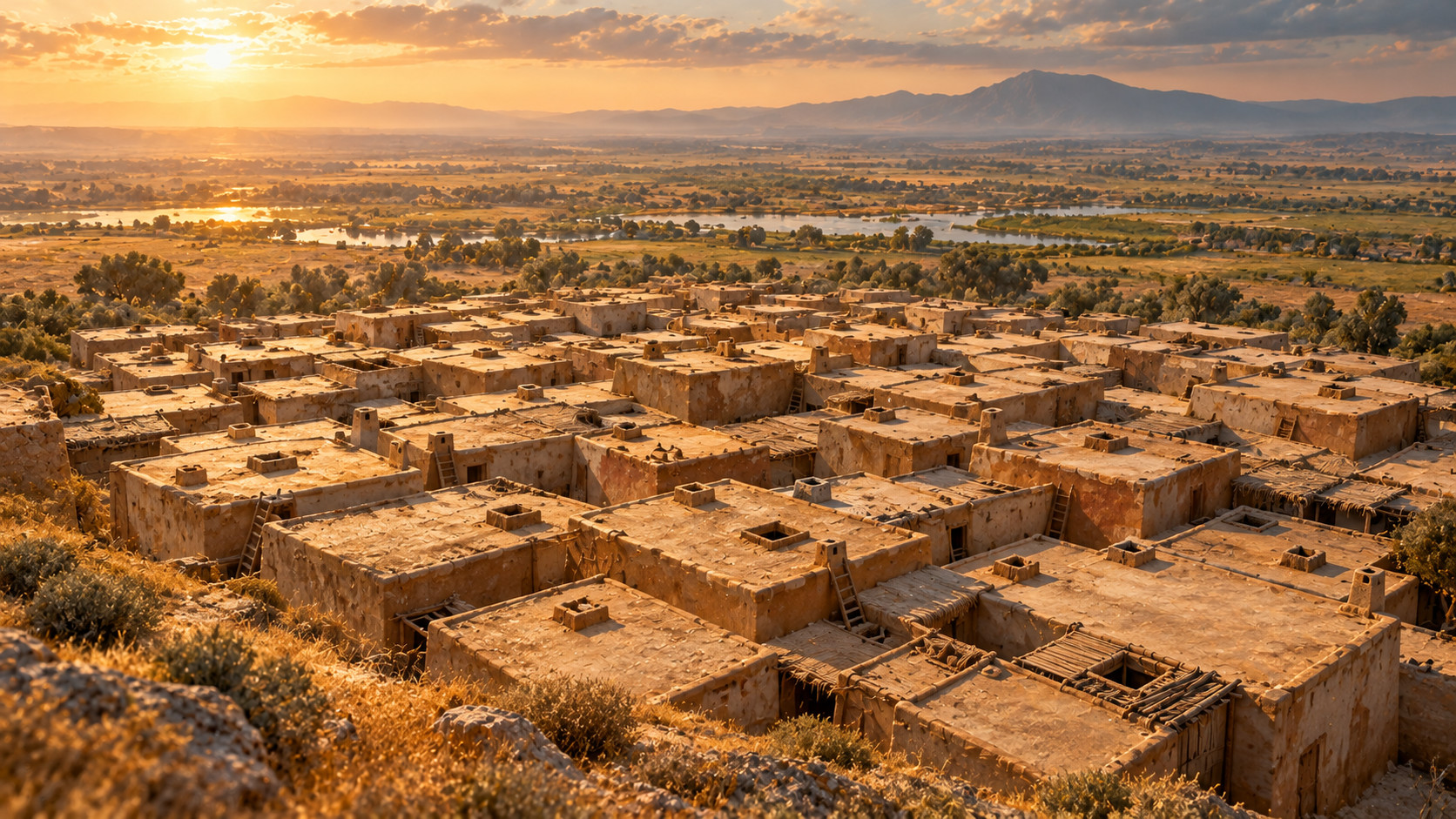
At ÇatalhöyükÇatalhöyükNeolithic site on the Konya Plain in central Anatolia, with clustered houses, subfloor burials and imagery on the East Mound, and later Chalcolithic phases on the West Mound.Glossary · Click to read the explanation, a Neolithic settlement in central AnatoliaAnatoliaAnatolia is the region occupying the Asian part of present-day TurkeyGlossary · Click to read the explanation, excavation has documented closely grouped houses, plastered floors, burials within some houses and successive alterations. This is a setting in which ties among residence, burial and decoration can be tested over time, not direct testimony that all inhabitants followed one doctrine or shared identical memories. Ian Hodder and Craig Cessford consider recurring construction and activities in houses through the lens of learning social rules in everyday practice.[1][9]
A later study of human remains and house biographies reports that most interments at the site occurred during a house's use-life, and that whole or partial bodies were incorporated into different architectural contexts. This supports investigation of durable ties between living and dead without determining the identity or kinship of every buried individual.[13]
“History houses”: a contested model
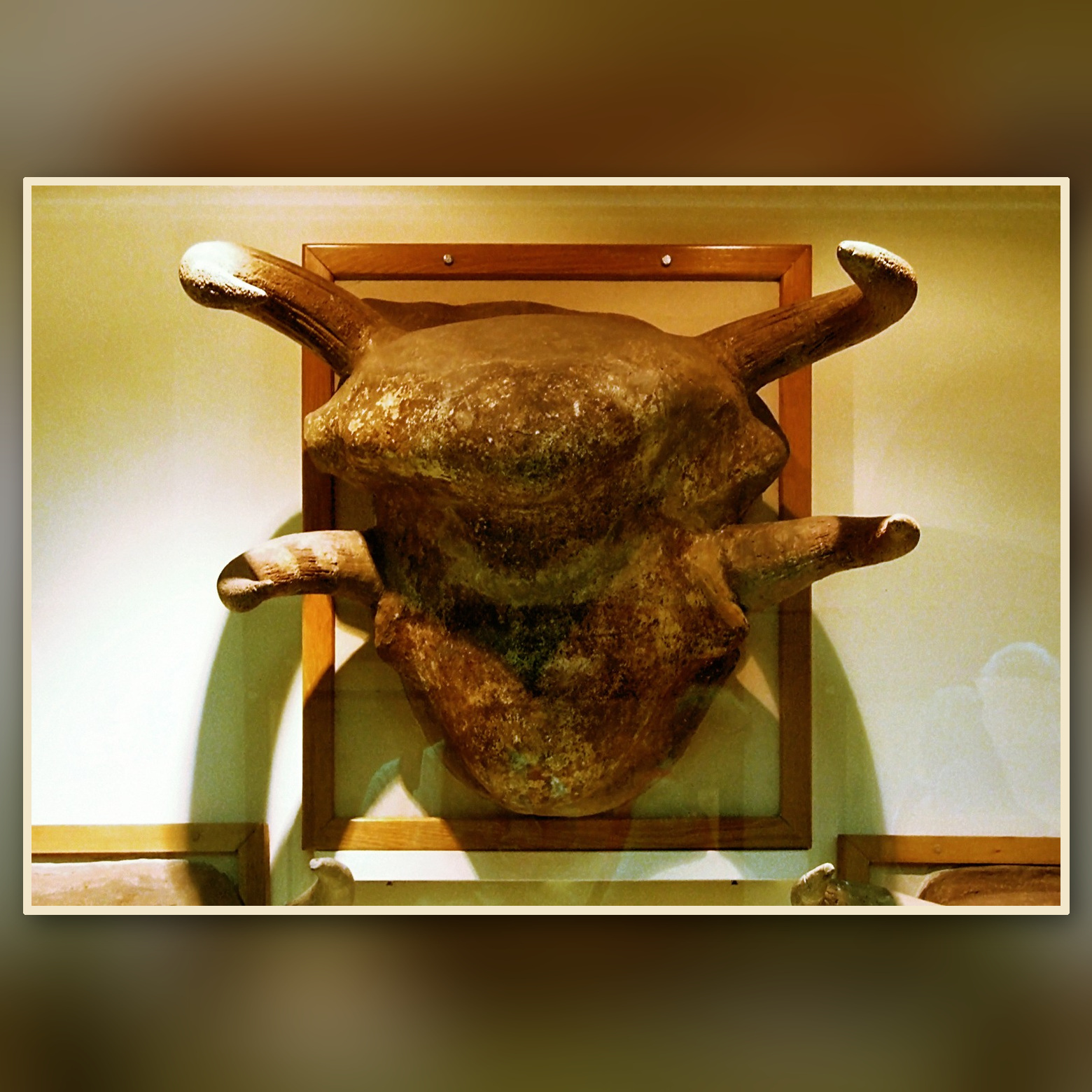
Ian HodderIan HodderAn archaeologist who directed the Çatalhöyük project from 1993 to 2018 and read its buildings as houses of dwelling and memory, not necessarily separate temples.Glossary · Click to read the explanation and Peter Pels used the concept of “history houses”History housesHistory houses: Hodder and Pels’s hypothesis linking certain long-lived Çatalhöyük buildings and concentrated burials to social memory. A debated analytical category, not an ancient name or proof of a separate temple.Glossary · Click to read the explanation to interpret some more elaborate structures in terms of rebuilding, burials and decorated installations. Their chapter summary also emphasizes that buildings once categorized as “shrines” served domestic functions: it would be misleading to label every elaborated house a separate temple or to assume that all traits coincide in each building.[2]
Yet the model is not a settled fact. Building on the same spot may reflect technique, property practices or available space as well as commemoration. A repeated floor plan alone cannot prove that successive residents were of one descent group or consciously remembered a particular ancestor.[2][8]
Quantitative criticism and response
In 2013 W. Chris Carleton, James Conolly and Mark Collard tested the association between wall continuity and the proportion of houses containing burials in the data then available. Their analysis did not find the expected co-variation, and they cautioned against treating the corporate-kin-group version of the history-house model as established.[10]
Hodder replied in 2016 that the test misstated his hypothesis and relied in part on out-of-date data. He supplied further evidence but still described the hypothesis as requiring additional testing. In 2018 Ian Kuijt considered an alternative in which a social “House” may encompass several rooms or residences; this too is a research proposal, not proof of a specific family organization. A balanced account therefore states the different formulations and measurements rather than declaring one side victorious.[11][12]
Burial pigments: what the numbers demonstrate
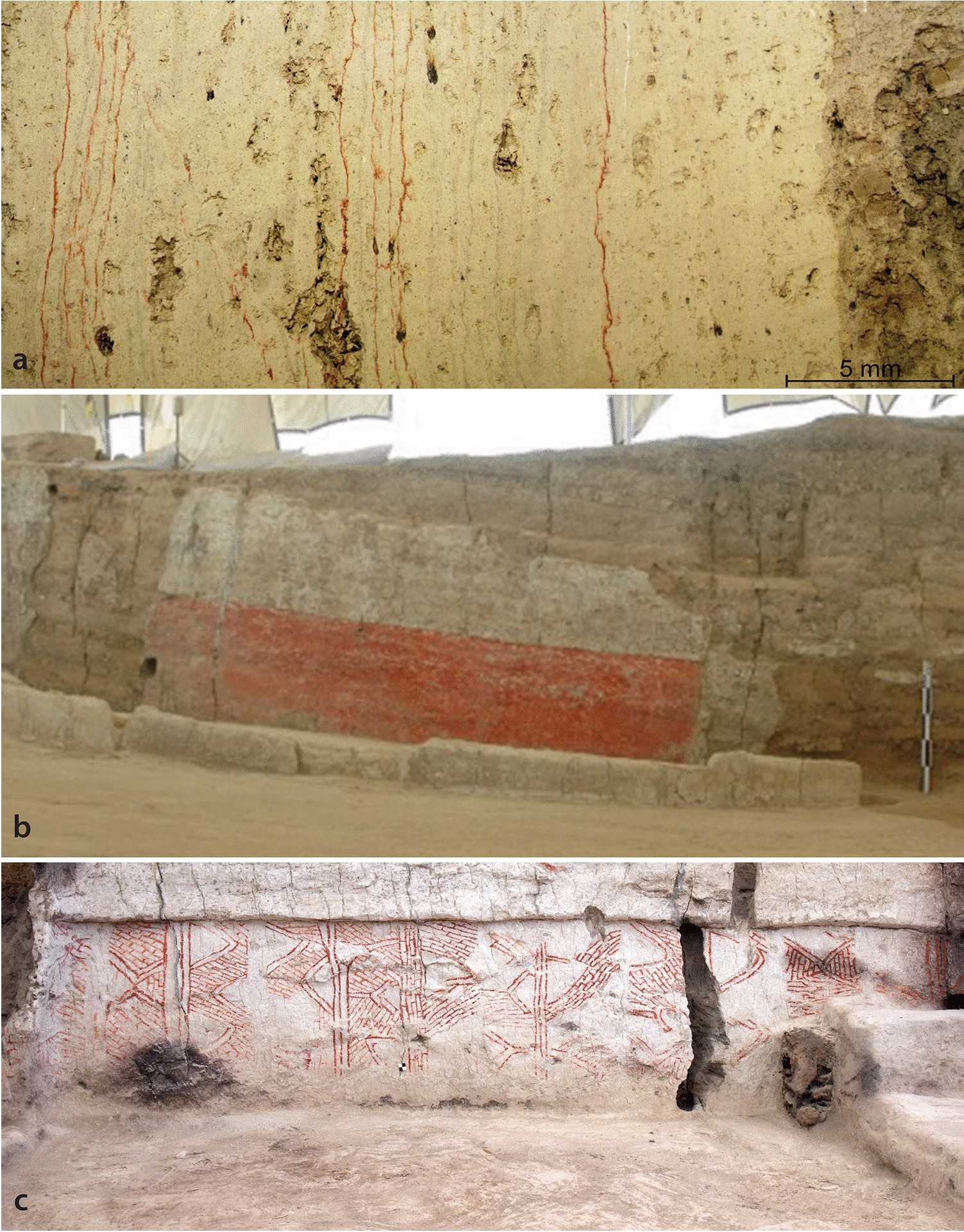
Eline Schotsmans and colleagues (2022) examined pigments in funerary and architectural contexts. Out of 567 studied primary and secondary human depositions, 62 had either pigment directly on remains or associated pigmented items, while 36 individuals had direct traces on bone. The figure 62/567 must therefore not be described as 62 painted bodies. The authors also found statistical associations between numbers of burials and certain layers of wall paint, with substantial differences by period and context.[3]
These data show differentiated practices involving burial and color in some buildings. They do not demonstrate one causal link between every burial and every replastering event, nor can they yield the name of a deity or an ancestor rite without independent evidence.[3]
Identity, power, selection and forgetting
Collective practices can sustain a place's, lineage's or institution's connection to a particular past, but selection is always involved: some dead are acknowledged while others are not, and some objects are conserved while others disappear. Social memory does not imply unanimous remembrance. Tensions between personal recollections and public accounts, including who is allowed to represent the past, belong to the subject rather than being exceptions to it.[5][8]
With archaeology alone, a decision to forget is rarely observable directly: missing material may reflect decay, reuse or unequal preservation. The absence of evidence must be distinguished from evidence of absence, and an observed distribution from a proposed social cause.[8]
Claims the evidence cannot settle
A grave under a floor cannot on its own establish “ancestor worship,” renewed painting cannot prove a single symbolic meaning, and architectural repetition cannot verify the continuity of kinship or identity. Nor should a Çatalhöyük model be transferred automatically to every Neolithic site: occupation dates, burial regimes and sampling histories differ, and much evidence remains undiscovered or unpublished.[3][10][13]
The gap between measured evidence and a model of memory must remain visible. Observation supports a material pattern; a model proposes one possible explanation; confidence rises only when independent evidence discriminates against reasonable alternatives.[8]
Methodological conclusion
Social memory offers a way to study how people and practices, places and objects link the past to the present. Its value lies in testable questions, not in turning every recurring archaeological feature into an unknown creed. The strongest approach combines stratigraphy, object biographies, embodied practice and comparative analysis, while distinguishing findings from interpretations and acknowledging genuine scholarly disagreement. Architecture and burial may have been vehicles of memory, without giving us the words those communities did not leave behind.[4][8]
References and notes (13)
- Ian Hodder and Craig Cessford (2004), “Daily Practice and Social Memory at Çatalhöyük,” American Antiquity 69(1):17–40, DOI: 10.2307/4128346. Publisher abstract only, not full text. Recurrent building practices and learned rules are the authors’ interpretation, not recorded prehistoric statements. Return to the text ↑
- Ian Hodder and Peter Pels (2010), “History houses: A new interpretation of architectural elaboration at Çatalhöyük,” in Religion in the Emergence of Civilization, pp. 163–186, DOI: 10.1017/CBO9780511761416.007. Publisher chapter summary only. Even elaborate buildings served as houses; “history houses” is an analytical label, not an ancient term. Return to the text ↑
- E. M. J. Schotsmans et al. (2022), “New insights on commemoration of the dead through mortuary and architectural use of pigments at Neolithic Çatalhöyük, Turkey,” Scientific Reports 12, 4055, DOI: 10.1038/s41598-022-07284-3. Open article: introduction, results on funerary/architectural pigments, and selected discussion. 62/567 include direct traces or associated items; 36 individuals have direct skeletal traces. Association is statistical, not causation. Return to the text ↑
- Maurice Halbwachs (1925), Les cadres sociaux de la mémoire [The Social Frameworks of Memory], Paris: Félix Alcan. Author’s full preface (Avant-propos), web transcription, especially social frameworks, reconstruction and the stated uncertainty of the opening anecdote; not the full book. Return to the text ↑
- Jeffrey K. Olick (1999), “Collective Memory: The Two Cultures,” Sociological Theory 17(3), 333–348. DOI: 10.1111/0735-2751.00083. Publisher abstract and bibliographic information only; the two approaches to collective memory, not a reading of the whole article. Return to the text ↑
- Jan Assmann (2008), “Communicative and Cultural Memory,” in A. Erll and A. Nünning (eds.), Cultural Memory Studies, pp. 109–118. Only indexed passages from section 1 (memory levels) and section 5 (institutions and carriers); the university-hosted PDF was access-denied. No claim to full chapter. Return to the text ↑
- Paul Connerton (1989), How Societies Remember, Cambridge University Press, ch. 3 “Bodily Practices,” pp. 72–104. Extended publisher excerpt/summary for ch. 3, and introduction summary (pp. 1–5); not a complete reading of pp. 72–104. Return to the text ↑
- Ruth M. Van Dyke and Susan E. Alcock (2003), “Archaeologies of Memory: An Introduction,” in Archaeologies of Memory, DOI: 10.1002/9780470774304.ch1. Publisher summary and table of sections, with volume overview only; no claim to the complete introduction. Return to the text ↑
- UNESCO World Heritage Centre, “Neolithic Site of Çatalhöyük,” World Heritage List no. 1405. Site description and accessible brief synthesis of outstanding universal value; general site chronology and architecture, not evidence of specific beliefs. Return to the text ↑
- W. Chris Carleton, James Conolly, and Mark Collard (2013), “Corporate kin-groups, social memory, and ‘history houses’? A quantitative test,” Journal of Archaeological Science 40(4):1816–1822, DOI: 10.1016/j.jas.2012.11.011. Publisher abstract, accessible introduction and selected text on the quantitative test; not the full paywalled article. Return to the text ↑
- Ian Hodder (2016), “More on history houses at Çatalhöyük: A response to Carleton et al.,” Journal of Archaeological Science 67:1–6. DOI: 10.1016/j.jas.2015.10.010. Abstract, introduction, section snippets on test construction/data, and conclusion excerpt on publisher page; not the complete article. Return to the text ↑
- Ian Kuijt (2018), “Material Geographies of House Societies: Reconsidering Neolithic Çatalhöyük, Turkey,” Cambridge Archaeological Journal 28(4):565–590, DOI: 10.1017/S0959774318000240. Open publisher HTML: abstract and selected sections on House Societies, history houses, discussion and conclusion; not the entire article line by line. Return to the text ↑
- Scott D. Haddow (2025), “Bodies in buildings: Human remains and the life histories of houses at Neolithic Çatalhöyük,” Archaeological Research in Asia 41, article 100598, DOI: 10.1016/j.ara.2025.100598. University research-portal abstract and bibliographic data only, not the article in full. Return to the text ↑
Suggest a correction · Suggest a source for this record
Cite this record
IL Archive, «Social memory», https://ilarchive.com/en/entities/social-memory
Continue reading