Entity · Concept
Building biography
A reference page linking a name, group, or concept to the materials that discuss it.
Reading a building through construction, use, transformation and closure, rather than as a fixed plan.
Estimated reading time: 4 min Published Last reviewed:
Share article
Text
Introduction
A building biography is an archaeological approach that treats a building as a changing place: constructed, used and repaired, then perhaps abandoned, dismantled or rebuilt. The question is not simply what a house looked like at one moment, but how people's actions followed one another within it. This approach helps connect domestic life, burial and memory without turning a plan alone into a certain account of the occupants' beliefs.[1]
From a plan to a sequence of actions
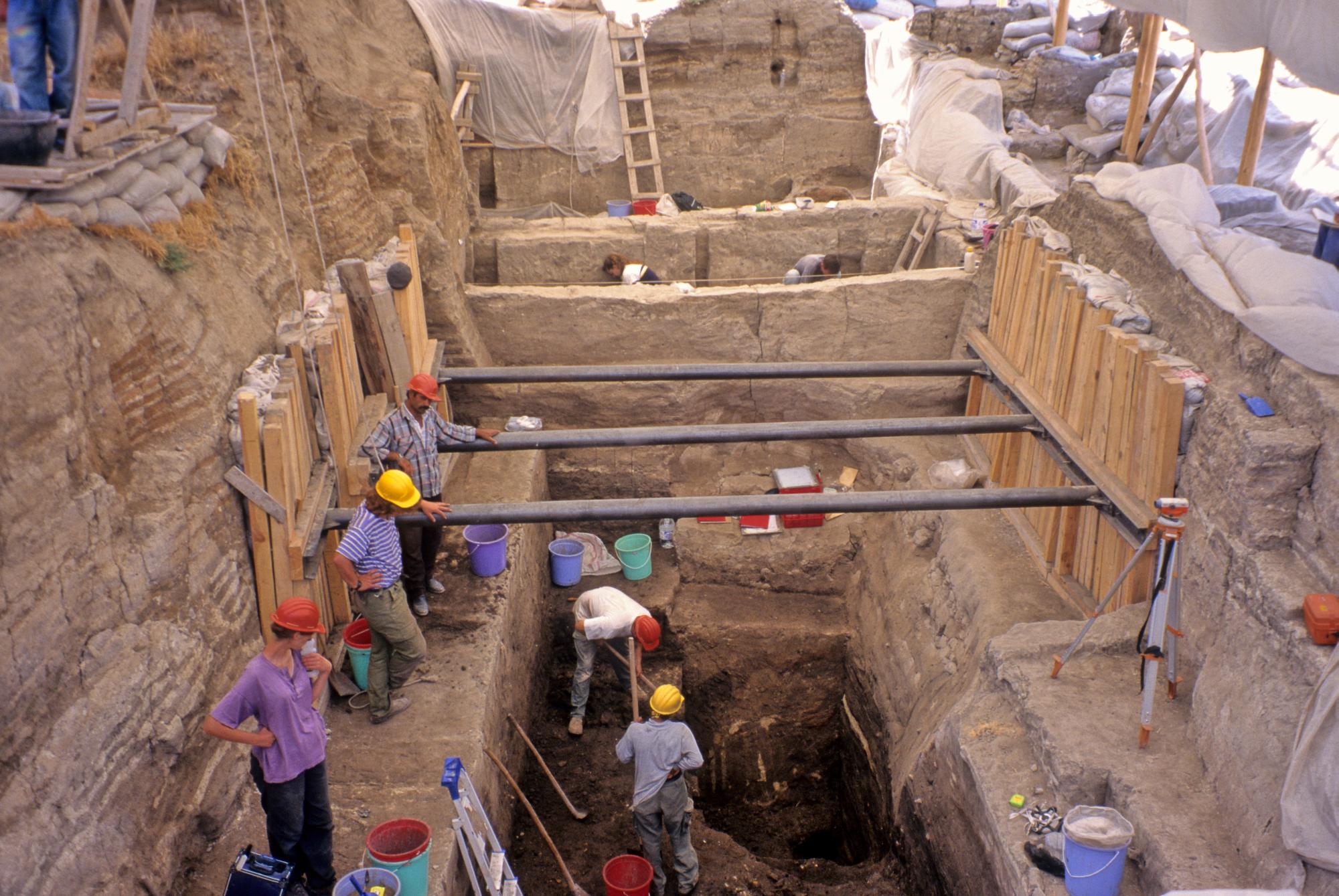
A final plan may bring together a hearth, platform and grave that were not all created together. Archaeologists therefore establish the sequence through stratigraphy: which floor covered another, which pit cut it, and whether wall plaster continued across an architectural addition or stopped at it. Dating and examination of building materials and deposits complement these relationships; a sequence alone does not establish the number of years between events.
At ÇatalhöyükÇatalhöyükNeolithic site on the Konya Plain in central Anatolia, with clustered houses, subfloor burials and imagery on the East Mound, and later Chalcolithic phases on the West Mound.Glossary · Click to read the explanation, a Neolithic settlement on the Konya plain in central TurkeyTurkeyTurkey is a modern country including Anatolia and territory in southeastern EuropeGlossary · Click to read the explanation, house floors and platforms also accommodated burials. Scott Haddow's study abstract reports that most burials at the site took place during house occupation, rather than only after abandonment. Each grave must therefore be situated within the building's history, not merely described as “beneath a house”.[2]
For chronological orientation, the 2025 synthesis places Building 42 and grave F.1517 in the Late period, approximately 6500–6300 BCE; the Building 52 analysis dates its context to around 6500 BCE. These are approximate contextual frameworks, not annual dates for every action. The years 2004, 2005, 2016, 2023 and 2025 instead identify modern reports and studies.[2][6]
An example: Building 42
The 2004 excavation report documented an adult woman holding a plastered, painted skull, with a neonate above her, beneath the first plaster surface. Layers then reveal ground preparation, brick arrangement, platform construction and plastering; hearths and an oven were also present. The excavators proposed that the grave influenced the building's location. Identifying a sacred founder or a particular belief requires additional evidence.[3]
The end of use is not the end of a place
In Building 52, some rooms and passages changed before the fire; afterwards, part was cleared and Building 51 erected within it. A place's biography can thus involve alteration, destruction and reuse, rather than a succession of identical houses.[4]
A 2005 field discussion contrasted preparations for closing Building 45 with the retained finds and irregular burnt debris in Building 52. The cause of the latter's fire remained disputed. Deliberate dismantling, deliberate burning and ritualRitualAn organised or distinguished practice meaningful to a community; it may leave traces, but its form alone does not reveal an associated doctrine.Glossary · Click to read the explanation closure are different questions: interpretation requires converging evidence, not a fire trace alone.[5]
Research did not stop with this preliminary debate. Haddow and colleagues in 2016 linked Building 52’s end to a final collective burial beneath the northwest platform, close to the fire. Selected placements of horns and tools, together with prolonged ventilated combustion suggesting an open roof, strengthen organized closure beyond what an ash layer alone could establish.[6]
The strength of evidence nevertheless depends on the question. Tringham notes that an open roof could follow dismantling or collapse; combustion patterns alone do not settle ignition. Organized preparations for ending use are therefore better supported than certainty about deliberate ignition or its religious purpose. This weighs distinct claims rather than treating every possibility as equally probable.[7]
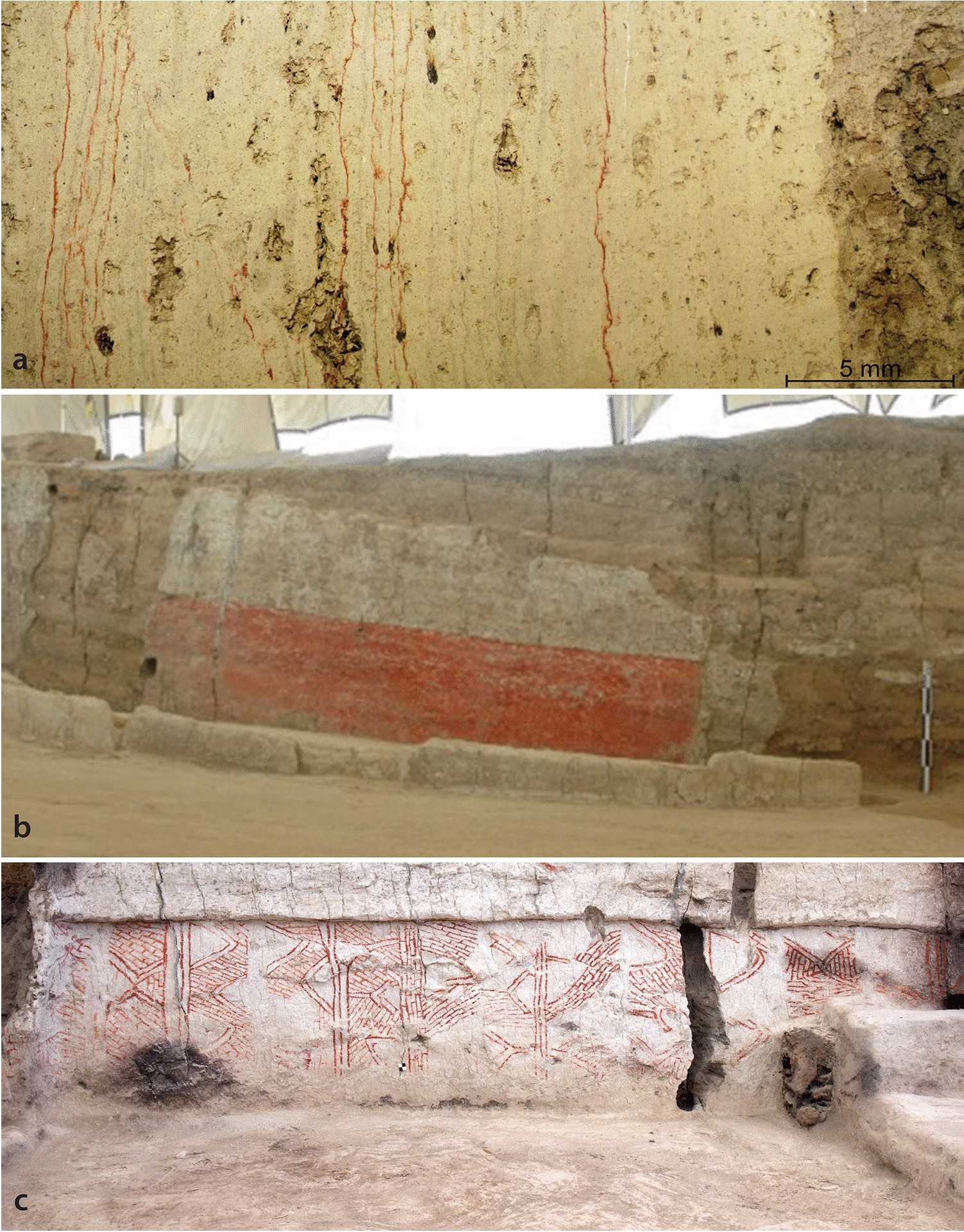
Kay and colleagues’ 2023 study also challenges an unchanging funerary role. Building 52’s final collective deposition differed from successive burials in another platform; in Building 77, the last burials probably coincided with, or shortly followed, large horn pillars and red painting. Such late commemorative elaboration cannot simply be projected across a house’s entire life.[8]
What does a biography reveal?
Biography makes change itself the subject of investigation: an activity moving, a surface renewed, a burial inserted or part of an older building reused. It does not automatically reconstruct one family's history. Groups using a place may change, while rebuilding on the same footprint may reflect restricted space and plot boundaries alongside social memorySocial memoryA concept for how groups shape, transmit and revise relationships to the past through narratives, rites, objects and places, without assuming unanimous recollection or fixed meanings for material traces.Glossary · Click to read the explanation. The aim is an interpretation testable against the sequence of evidence, not an assumption that persistent walls imply unchanging occupants or beliefs.[1][5]
References and notes (8)
- Kevin Kay (2020). Dynamic Houses and Communities at Çatalhöyük: A Building Biography Approach to Prehistoric Social Structure. Cambridge Archaeological Journal 30(3), 451–468. DOI: 10.1017/S0959774320000037. Publisher abstract: biographies of four contemporary houses and changes in their roles and the groups using them. Return to the text ↑
- Scott D. Haddow (2025). Bodies in buildings: Human remains and the life histories of houses at Neolithic Çatalhöyük. Archaeological Research in Asia 41, 100598. DOI: 10.1016/j.ara.2025.100598. Author abstract; section 2.1, p. 2, in indexed institutional manuscript text for Building 42/F.1517 chronology. The complete article was not read. Return to the text ↑
- Gareth Chaffey & Simon McCann (2004). Excavations of the South Area: Building 42. Çatalhöyük Archive Report 2004. The Building Plan, especially grave F.1517, construction, surfaces and hearths; stratigraphic observation distinguished from the proposed reason for location. Return to the text ↑
- Doru Bogdan (2005), “Building 52”, Çatalhöyük Archive Report, 4040 Area. Introduction, Survival and Form, and Rooms to the west: changing passages and partial reuse; preliminary field report. Return to the text ↑
- Shahina Farid (2005), “Concluding Remarks”, Excavations of the South Area, Çatalhöyük Archive Report. Opening discussion of rebuilding constraints; final paragraphs comparing Buildings 45 and 52 and alternative fire interpretations, not a definitive verdict. Return to the text ↑
- Scott D. Haddow, Joshua W. Sadvari, Christopher J. Knüsel & Rémi Hadad (2016). A Tale of Two Platforms: Commingled Remains and the Life-Course of Houses at Neolithic Çatalhöyük. In Theoretical Approaches to Analysis and Interpretation of Commingled Human Remains, pp. 5–29. DOI: 10.1007/978-3-319-22554-8_2. p. 8 for chronology; pp. 20–24 for burial and closure sequence. Specified passages read in the author-posted full text. Return to the text ↑
- Ruth Tringham (2013). Destruction of Places by Fire: Domicide or Domithanasia. In Destruction: Archaeological, Philological and Historical Perspectives, pp. 89–108. pp. 92–94 in the author-posted copy, not final-edition pagination; Buildings 77/52, combustion and roof discussion read. The author’s bibliography lists the published chapter as pp. 89–108. Return to the text ↑
- Kevin Kay et al. (2023). No gentry but grave-makers: inequality beyond property accumulation at Neolithic Çatalhöyük. World Archaeology. DOI: 10.1080/00438243.2023.2196956. Author-posted full text, manuscript pp. 10–11: final burials in Buildings 52/77; the second synchronization is probable, not certain. Return to the text ↑
Suggest a correction · Suggest a source for this record
Cite this record
IL Archive, «Building biography», https://ilarchive.com/en/entities/building-biography
Continue reading