Entity · Deity
Hendursaga, the Sumerian Watchman of the Streets
A reference page linking a name, group, or concept to the materials that discuss it.
- Names
- Hendursaga · Hendursaja · Hendursanga · Ḫendursaĝa
- Region
- Mesopotamia
Hendursaga patrols the city at night, opens its gates at dawn and carries out Nanshe's commands in Sumerian hymns. Gudea's building inscription records a temple dedicated to him.
Estimated reading time: 5 min Published Last reviewed:
Share article
Text
Introduction
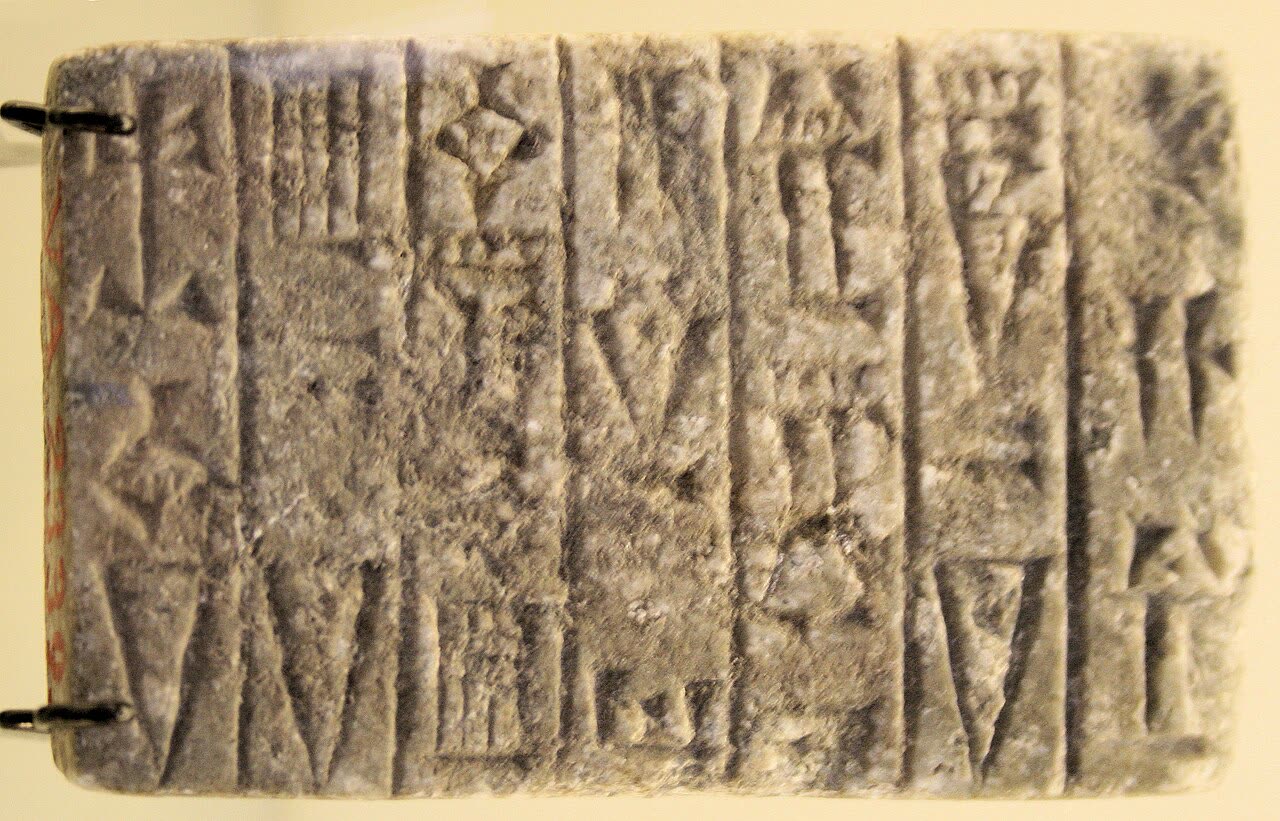
A Sumerian hymn describes Hendursaga going around the city's squares in the middle of the night watch and opening the gates at daybreak. It imagines a person invoking him to find the right way through quiet streets. In a hymn to Nanshe, the same god carries a staff of office, announces the orders of her house and hears testimony. A dedication by GudeaGudeaRuler of Lagash in the late third millennium BCE, whose inscriptions document temple construction and the name Anunna.Glossary · Click to read the explanation, ruler of Lagash, adds a different kind of evidence. Its seven lines record the building of a house for the god whom the hymns place in the streets and in Nanshe's service. [1][2][3]
Gudea's dedication
The alabaster tablet in Berlin, VA 2339, begins with Hendursaga's name and Gudea's acknowledgment of him as lord. The ruler identifies himself by name and title and states that he built the god's house. The tablet supplies neither a temple name nor a location in its text. Dietz Otto Edzard's edition lists the provenance as unknown. Lorenzo Verderame's account of the inscribed objects from Tell Zurghul identifies Zurghul as the place of purchase and allows for the possibility that local people found the tablet there. The modern acquisition gives a geographic clue while leaving the location of the building open. [3][4]
The edition places beside the building record a second inscription by Gudea, on the side of a fragmentary stone figurineFigurineA small shaped object depicting a human, animal or abbreviated form, in clay, stone or another medium. Its form alone does not establish its use; manufacture, handling traces and find context matter.Glossary · Click to read the explanation of a human-headed bull. Its opening names Hendursaga and Gudea, as the tablet does, but the surface breaks before the act of dedication survives. Edzard considers it likely to have been a votive inscription. The figurine's inscription occupies the right side of the animal's body. The complete wording on the tablet allows a reader to see what survives on the more fragmentary object: the god is addressed as lord by the ruler who names himself in the inscription. [3]
Patrol, light and the gates
The hymn to Hendursaga places his authority in familiar parts of a city. There are squares to patrol, gates whose doors open onto the street and rooftops from which a watcher can look out. In its conditional description of a night journey, a person takes objects in hand and pronounces the god's name before finding the right route. The tablet is broken where the objects should be named. The poem also imagines seven heralds patrolling the walls at his command, extending his watch beyond the streets through which the solitary traveler passes. [1]
Nanshe confers authority on him in a damaged passage near the opening. The Oxford translation describes her giving him a powerful emblem and confiding in him. Andrew George proposes that the staff mentioned there could serve as a torch, restoring a damaged word in the next line to read Hendursaga's flame. In this reading the light he raises in the silent streets belongs to the office the goddess has granted him. The identification depends on the restoration. The rounds in the squares and the opening of the gates are preserved more clearly, making them a firmer basis for describing his duties. [1][5]
Speaking for Nanshe
The hymn to Nanshe places Hendursaga in her household as the officer who promulgates its decrees. It praises him for recognizing who is in the right and deciding for the orphan and widow. What follows is a pair of difficult disputes between a mother and her child. The hymn gives him the work of hearing testimony and examining the case. Gaps obscure some of the circumstances, but the two outcomes assign blame differently as those circumstances change. The example gives the claim that he distinguishes the just and the wicked a concrete setting. [2]
Another scene in the hymn to Hendursaga takes place at daybreak, when the sun god Utu stands at a weighing place. When someone wishes to buy a bull or sheep, Utu consults Hendursaga before determining a favorable outcome for the purchaser. The surviving passage extends the pattern to the purchase of an enslaved person and to marriage. Hendursaga advises Utu, and the sun god settles what will come of the decision. In the night patrol scenes his office helps people move through the city. At the weighing place his advice concerns obligations and decisions made once the day begins. [1]
Hendursaga and Ishum
AkkadianAkkadianAn ancient East Semitic language written in cuneiform from the third millennium BCE; its varieties include Babylonian and Assyrian, and it served in international diplomacy.Glossary · Click to read the explanation scholarly lists offer a further setting for the god. In his study of the night watchman, George reads a series of learned names for Ishum in the god listGod ListsTexts collecting divine names for preservation, teaching and classification, with varying theological organization.Glossary · Click to read the explanation An = Anum. They include Hendursanga and titles that describe going about at night or exercising authority in the street. George also cites amulet tablets that ask Ishum to protect a house and its occupants as he makes his rounds. The pairing in the learned material makes sense alongside the older Sumerian images of a god whose patrol extends protection to streets and dwellings. [1][5]
The distinction between the hymns and the god list is useful when following the two names. The list organizes what scribes recognized as corresponding names and functions. The hymns preserve where the Sumerian watchman stands in particular scenes, who gives him authority and what a traveler asks of him. Alongside both, Gudea's tablet preserves a short dedication in the ruler's own name. It is the clearest evidence here for building devoted specifically to Hendursaga. [1][2][3][5]
References and notes (5)
- Electronic Text Corpus of Sumerian Literature, A Hymn to Hendursaga (Hendursaga A) Read the opening on the staff, night watch and gates, Segment A 42–68 on safe passage and heralds, and Segment C 29–55 on the weighing place. Return to the text ↑
- Electronic Text Corpus of Sumerian Literature, A Hymn to Nanshe Read lines 181–221 on Hendursaga's office, decrees, hearings and decisions. Return to the text ↑
- Dietz Otto Edzard, Gudea and His Dynasty Read Gudea 14–15, the text and commentary for VA 2339 and the inscribed figurine fragment AO 20152. Return to the text ↑
- Lorenzo Verderame, Inscribed Objects from Zurghul, Ancient Nina/Niĝin Read the inventory note and section 4.2.4 in The Italian Archaeological Excavations at Tell Zurghul, with acquisition and findspot distinctions for VA 2339. Return to the text ↑
- Andrew R. George, The Gods Išum and Ḫendursanga: Night Watchmen and Street-lighting in Babylonia Read pp. 2–5 on divine names, protective tablets, the night patrol and the proposed flame restoration. Return to the text ↑
Suggest a correction · Suggest a source for this record
Cite this record
IL Archive, «Hendursaga, the Sumerian Watchman of the Streets», https://ilarchive.com/en/entities/hendursaga