Person · Literary figure
Danel in the Tale of Aqhat
- Names
- Danel · Danil · Danilu · Dan’il · dnʾil
- Region
- The Near East
Danel is the father of Aqhat and Pughat in a Ugaritic poem preserved on clay tablets. He petitions for a son, hears legal claims at a gate and mourns Aqhat after his killing.
Estimated reading time: 5 min Published Last reviewed:
Share article
Text
Introduction
Danel is a central figure in the Tale of Aqhat, a Ugaritic poem preserved on three clay tablets. He asks the gods for a son, receives the promise of Aqhat’s birth and later searches for the boy’s remains. In a scene at a gate, he gives judgment in cases involving a widow and an orphan. The surviving poem ends after Danel’s daughter Pughat has set out to avenge Aqhat. [1][2][3][4]
Danel’s story is preserved in literary scenes, from the petition that opens the surviving text to his blessing of Pughat. The poem brings together the duties a father expects of a child, his obligations to people outside his household and the acts of care he undertakes when his son dies. [1][2][3][4]
A son to carry out household duties
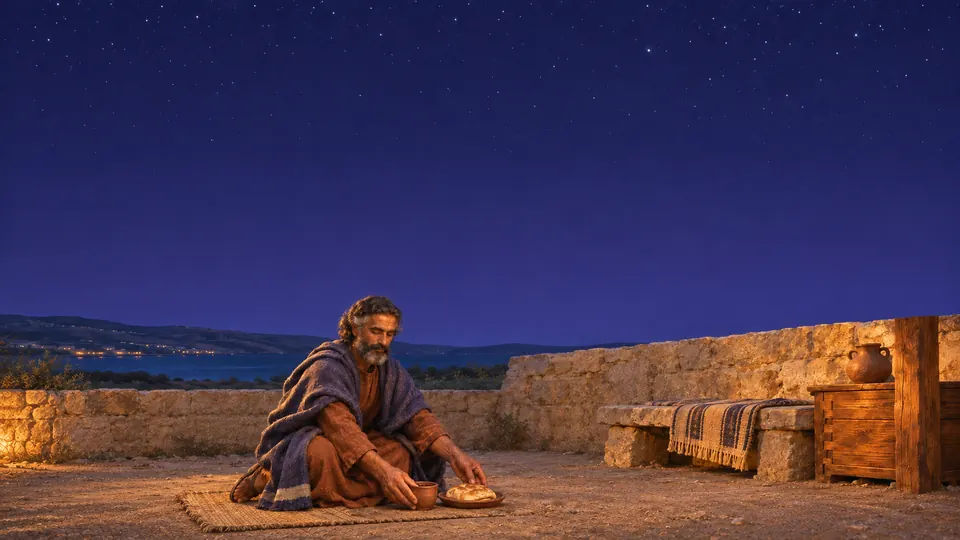
The surviving opening finds Danel performing a ritualRitualAn organised or distinguished practice meaningful to a community; it may leave traces, but its form alone does not reveal an associated doctrine.Glossary · Click to read the explanation as he seeks a son. Baal sees his efforts and takes up the request with El, who grants the blessing. The text moves from Danel’s request to Baal’s intercession and then back to Danel as he learns he will have a child. Marcin Majewski notes that the beginning of the first tablet is damaged. The reason for Danel’s actions becomes clear from the words of the characters in the lines that follow. [1][2]
The first tablet returns four times to the obligations the hoped-for son will take on. The list includes setting up a monument for an ancestor, helping a father who has had too much to drink and repairing the roof. Majewski draws attention to a change in the wording. When Danel repeats the duties in the first person, the general picture of a son’s responsibilities becomes something he imagines for his own family. A child would help with the work of keeping a household in order and with preserving the memory of its dead. [2][3]
The man who hears claims at the gate
The poem also presents Danel at a gate hearing the case of a widow and rendering judgment for an orphan. The Primer on Ugaritic treats the passage as an example of a duty also associated with kings, the protection of people who could be vulnerable in disputes. The verse describes the people whose cases Danel hears and gives a setting for the act. It preserves neither the arguments of the parties nor the terms of any settlement. [1]
The title and authority of Danel have drawn different readings. Majewski observes that the word for a king appears in connection with him once in a difficult context near the end of the poem. He emphasizes the portrayal of Danel as a patriarch and judge and compares the characterization with the much more explicitly royal setting of the Ugaritic epic about Kirta. The title problem matters because a scene about justice at a gate can carry more than one implication about the status of the person who presides. [1][2]
Searching for Aqhat
Aqhat receives a bow made by the craftsman god Kothar. AnatAnatAnat is an ancient Near Eastern goddess attested at Mari, Ugarit and in Egypt. In Ugaritic narratives she is a warrior, Baal’s ally and a mourner for him; her roles vary by tradition and context.Glossary · Click to read the explanation wants the bow and makes offers that Aqhat rejects. She then arranges his death with the help of Yatipan. The narrative shifts to Danel’s grief and to the effects of the loss around his house. Stephanie Lynn Budin describes how Pughat notices withered grain and birds circling overhead, and how the poem associates the killing with drought. [1][3][4]
Danel searches for Aqhat’s remains among the birds. Budin traces three stages of the search. Danel appeals to Baal to bring down first a group of birds, then Hargub and finally Ṣamal, called the Mother of Birds. The remains are found in the last of them. The recurring acts of bringing the birds down and examining them give way to mourning in Danel’s house. Tablet KTU 1.19 puts a term of seven years on that period and describes weeping for Aqhat. [1][4]
The blessing of Pughat
After the period of mourning, Pughat asks Danel for his blessing as she prepares to avenge her brother. Eric McDonnell reads the scene alongside the expectations Danel had for the son at the beginning. His daughter now undertakes a task for the family with her father’s acknowledgment. The surviving text follows her preparations and brings her into Yatipan’s company, but its damaged ending leaves the outcome of that encounter uncertain. [1][3][4]
The episodes involving the two children give the father’s blessing different purposes. Early in the tale he is the person for whom a blessing is requested so that a child may be born. Later he grants a blessing to the child who acts in response to Aqhat’s death. The second scene returns to the family’s future after a long section that describes what Danel himself does for the son he has lost. [2][3][4]
The setting of the surviving tablets
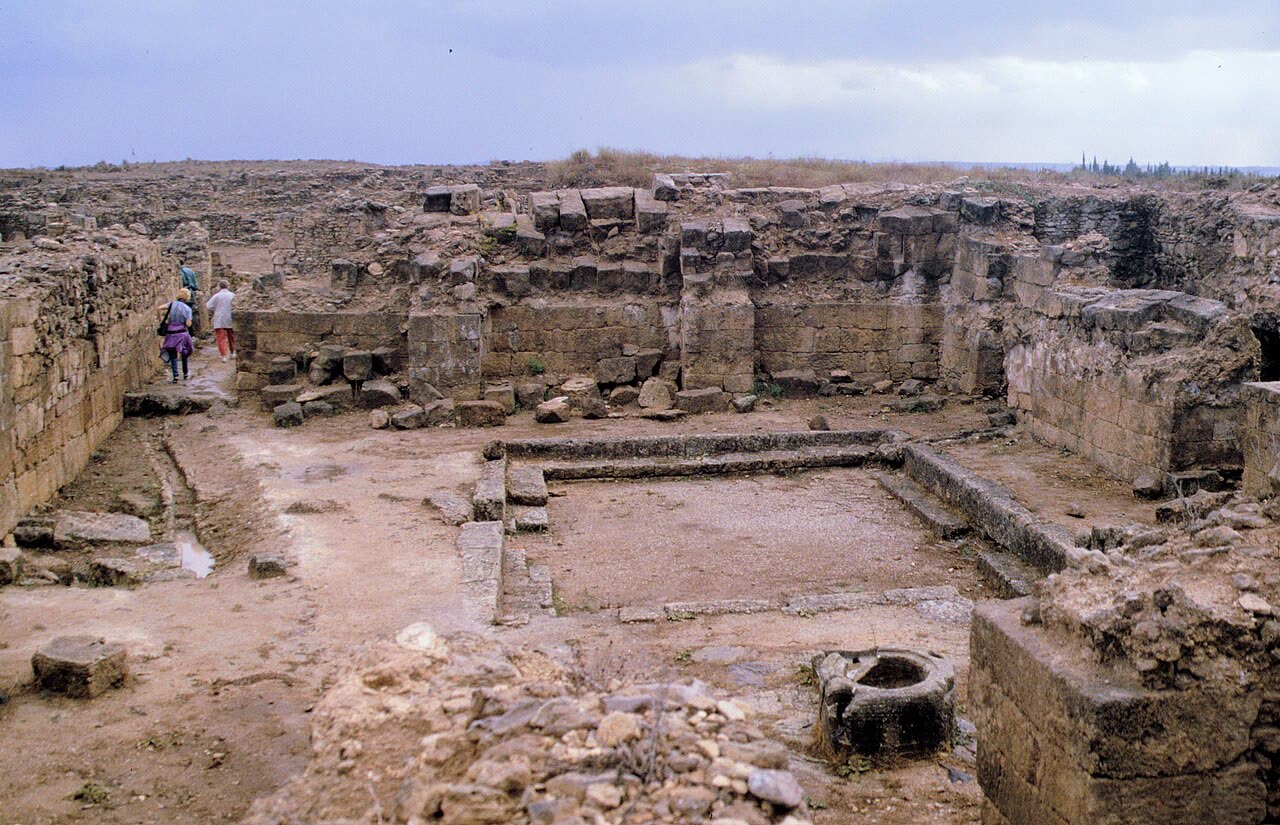
The Louvre’s first-tablet fragment, AO 17324, is identified with KTU 1.17 through the excavation number RS 2.004. It is a piece of fired clay with cuneiformCuneiformWriting with wedge-shaped signs, developed from Mesopotamian recording traditions and used for several languages from the third millennium BCE.Glossary · Click to read the explanation writing, found at Ras ShamraUgaritAncient city and kingdom at Ras Shamra on the Syrian coast, flourishing between the fourteenth and early twelfth centuries BCE and preserving multilingual archives.Glossary · Click to read the explanation in 1930 and dated by the museum to the later Bronze Age. The excavated royal palace shown here belongs to the site that yielded the poem. Danel’s gate and house are places described in the verses, whose locations cannot be assigned to excavated buildings from the story alone. [1][5][6][7]
References and notes (7)
- William M. Schniedewind and Joel H. Hunt, A Primer on Ugaritic Read the discussion of justice and KTU 1.17 at page 16, the plot summary at page 27, and the transcription of KTU 1.19, especially column IV, in section 6.6. Return to the text ↑
- Marcin Majewski, Filial Duties in the Ugaritic Epic of Danilu and Aqhatu Read the damaged opening, Baal’s intercession, repetition of the son’s obligations and the argument about Danel’s status. Return to the text ↑
- Eric D. McDonnell, Jr., Will Womankind Now Go Hunting? Constructions of Gender in the Aqhat Epic Read the ritual request, bow episode, four repetitions of the household duties and the discussion of Danel’s blessing of Pughat before the encounter with Yatipan. Return to the text ↑
- Stephanie Lynn Budin, Gender in the Tale of Aqhat Read sections 2.4.3–2.5 on the drought, Pughat’s first response, the three stages of the bird search, seven years of grief and Pughat’s departure. Return to the text ↑
- Musée du Louvre, Tablette, AO 17324 Read the accession, excavation record, identification of the text as the legend of Aqhat, material and Late Bronze Age date. Return to the text ↑
- Ugaritic Texts, literary and religious text concordance Read entries for KTU 1.17–1.19 on PDF page 7, including the pairing of KTU 1.17 with RS 2.[004] and the three tablet designations. Return to the text ↑
- Ministère de la Culture, Ugarit – Ras Shamra Read the site overview and context for its alphabetic cuneiform and objects now held at the Louvre. Return to the text ↑
Suggest a correction · Suggest a source for this record
Cite this record
IL Archive, «Danel in the Tale of Aqhat», https://ilarchive.com/en/people/danel-of-ugarit