Person · Figure
Odaenathus of Palmyra
- Names
- Odaenathus · Odainat · Odenathus · Septimius Odaenathus
- Timeline
- From 258 CE to 267 CE
- Region
- The Levant
Palmyrene leader who defended Rome's East after the Persians captured the emperor Valerian in 260. He drove Shapur I back to Ctesiphon, took the title "king of kings" and was murdered in 267 or 268.
Estimated reading time: 5 min Published Last reviewed:
Share article
Text
Introduction
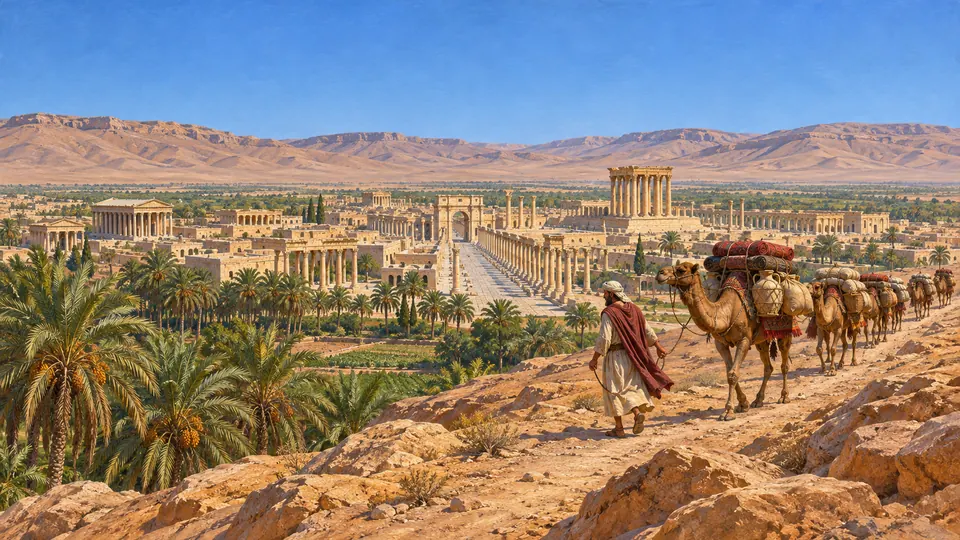
Septimius Odaenathus was the leading man of Palmyra, a rich caravan city in the Syrian desert, in the middle of the third century CE. When the Persian king Shapur I captured the Roman emperor Valerian in 260, Odaenathus became the main defender of Rome's eastern provinces. He drove the Persians back, put down rivals inside the Roman camp and was honoured as "king of kings". He was murdered in 267 or 268, and his wife Zenobia then governed for their young son. [1][2][3]
His career is known from two kinds of evidence. Inscriptions on the columns of Palmyra, written in Palmyrene AramaicAramaicNorthwest Semitic language varieties documented since the early first millennium BCE, including Old and Imperial Aramaic, Syriac, Jewish dialects, and living Neo-Aramaic forms.Glossary · Click to read the explanation and Greek, give his family and his titles. Histories written later, some of them centuries later, tell the story of his wars and his death, and they often disagree. This entry shows what each kind of evidence says. [1][3][4]
Name and family
In Aramaic his name is written ʾdynt, usually read Odainat; Greek and Latin writers turned it into Odaenathus. Like other leading Palmyrenes he also carried a Roman family name, Septimius. [1]
An inscription of 251 CE on the city's main colonnaded street honours his eldest son, Septimius Hairan, as "illustrious senator and head of Tadmor" (Tadmor is the city's own name for Palmyra). Its Greek version gives the family over four generations: Odaenathus was the son of Hairan, son of Vaballathus, son of Nasor. The names Hairan and Vaballathus come back in the next generation. The same Greek text calls the son the city's "exarch", a leader whose exact powers are not known. Odaenathus married Zenobia, the daughter of one Antiochus, and their son Vaballathus later inherited his titles. [1][5]
A Roman senator in Palmyra
An inscription of 258 on the same street calls him "lord" and gives him the Roman rank of a "consular", the honour of a man who had held, or was treated as having held, Rome's highest office. A foundation inscription calls him a senator. So before the great crisis he was already both the first man of his city and a member of Rome's ruling class, much as a local leader today might also sit in a national parliament. [1][4]
The crisis of 260
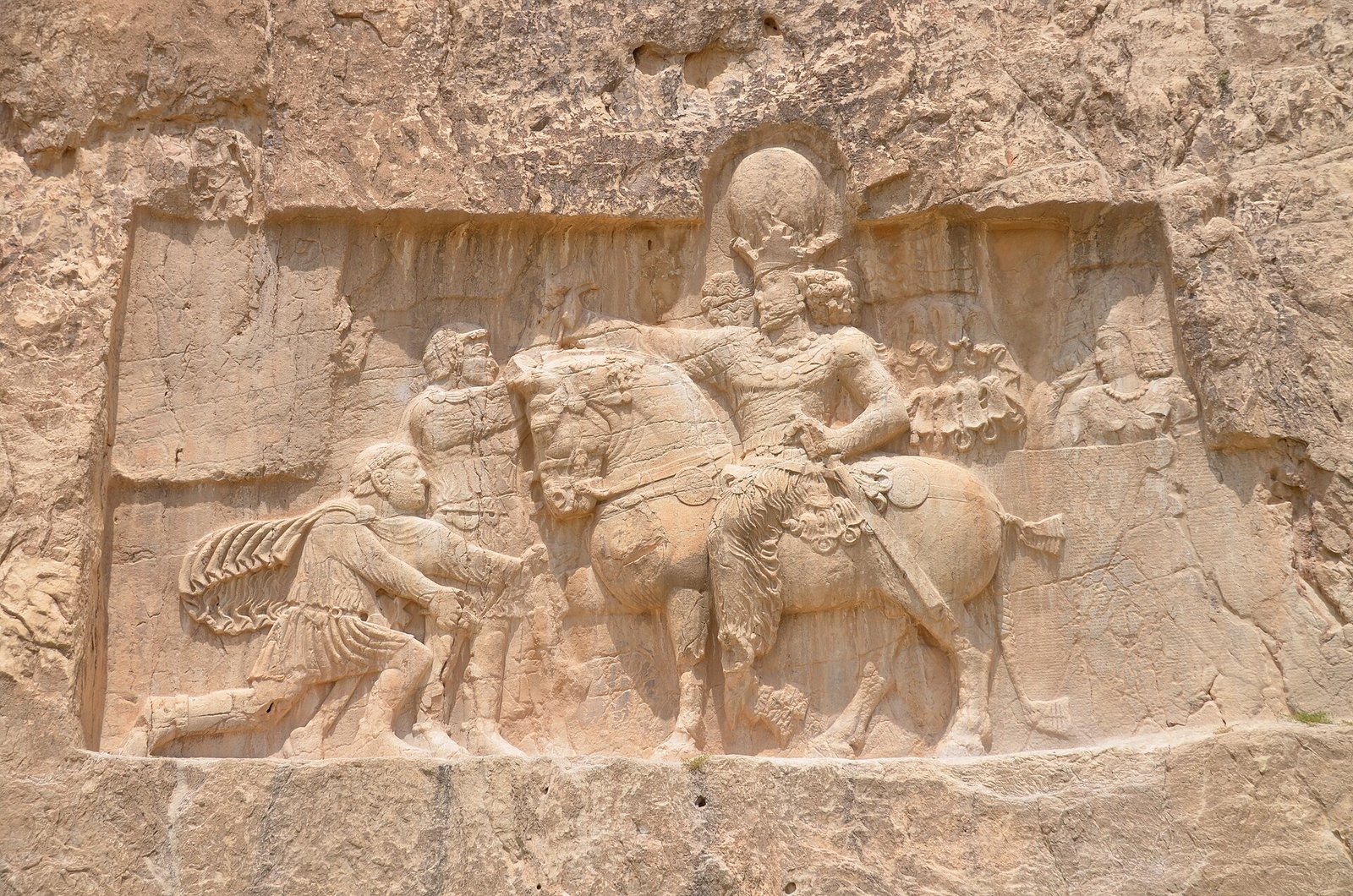
Shapur I, king of the Sasanian Persians, fought three great campaigns against Rome. His own inscription, carved in three languages on a stone tower in Persia, describes his third campaign. He was besieging Carrhae (ancient HarranHarranHistoric city in southeastern Türkiye, south of Şanlıurfa; Genesis places Abraham’s family there on its journey towards Canaan.Glossary · Click to read the explanation) and Edessa when Valerian came against him with an army of 70,000. In a modern English version of the Greek text, the king says:
The inscription then lists the cities Shapur took, Antioch among them. [2]
Fighting for Rome
The Greek historian Zosimus says that the emperor Gallienus, Valerian's son, was busy with wars in Europe and asked Odaenathus, "a person whose ancestors had always been highly respected by the emperors", to help the East. Odaenathus attacked Shapur, took back Nisibis and went "not once merely, but a second time, as far as Ctesiphon", the Persian capital on the Tigris. [3]
Other writers fill in the picture. Odaenathus caught Shapur's army as it returned along the Euphrates. In 261 he crushed Quietus, a rival emperor proclaimed in the East against Gallienus, at Emesa (modern Homs). Later he recovered Carrhae, Nisibis and Roman MesopotamiaMesopotamiaHistorical region associated with the Tigris and Euphrates: Uruk, Ur, Eridu, cuneiform, Sumer, Akkad, Babylon and Assyria, their languages and cults, and the limits of archaeological evidence.Glossary · Click to read the explanation. The Historia Augusta, a late Latin collection of imperial lives, says he sent captured Persian governors to Gallienus, and Gallienus celebrated a triumph in Rome for the victory; its editor notes coins of 264 that show this triumph. The attacks on Ctesiphon are usually dated to 262 or 263, with a second attack near the end of his life. [4][5][6][7]
Several Latin writers say his army was gathered from "Syrian countryfolk". The historian Byron Nakamura reads this as a call-up of horsemen from the villages and pastures around the city, where horses could be kept. [7]
Roman officer or king?
After his death the Palmyrene generals Zabda and Zabbai set up a column statue for him in 271. The inscription calls him "king of kings" and mtqnnʾ "of the whole East". [1][7]
These two titles point in two directions. "King of kings" was the old title of the Persian rulers, so using it was a claim against Shapur himself. The Aramaic mtqnnʾ means one who sets things right. It probably stands for a Roman title, corrector or restitutor, of a commander with authority over the Roman governors of the East. [5][7]
The Historia Augusta goes further and says Gallienus made him Augustus, a co-emperor. Its modern editor answers simply: "This is incorrect." There is no evidence that he ever bore that title, but his position became, in the editor's words, "almost that of an independent prince". Whether he saw himself as Rome's servant, as its partner or as a ruler in his own right is still debated. [4][6]
The murder
Odaenathus was killed together with his eldest son, and the sources do not agree about how. [3][4][5][6]
- Zosimus: he died in a conspiracy at Emesa "as he was celebrating the birth-day of a friend". He names no killer.
- The Historia Augusta: his cousin Maeonius killed him and his son Herodes out of envy; "it is said" that Zenobia took part, because Herodes, the son of an earlier wife, stood above her own sons. The editor warns that parts of this story were probably invented by the biographer.
- Other late sources: a man named Rufinus did it, perhaps on Gallienus' orders.
Coins from Alexandria place his death in 266–267, and some historians prefer 268. Whether the Herodes of the Latin story is the Hairan of the inscriptions is also debated. What is certain is that his younger son, Vaballathus, inherited his titles, and Zenobia governed in the boy's name. The critic Cassius Longinus, later her adviser, is said to have composed Odaenathus' funeral speech. [4][5][6][7]
Quick answers
Who was Odaenathus?
The leading man of Palmyra and a Roman senator, who defended Rome's East against the Persians after 260 and was honoured as "king of kings". [1][3]
Did he capture Ctesiphon?
The sources say he reached it and besieged it, at least once and probably twice, but not that he took the city. [3][5][6]
Who killed him?
It is not known. Zosimus speaks of a conspiracy at Emesa; the Historia Augusta blames his cousin Maeonius; another tradition names Rufinus. [3][4][5]
References and notes (7)
- Prosopographia Palmyrena (Carl von Ossietzky Universität Oldenburg), person entries 855, 856, 858, 859 and 860: spṭmyws ˀdynt / Σεπτίμιος Οδαινάθος and spṭmyws ḥyrn (PAT 0290, 0291, 0292, 0558) All five entries in full: Aramaic and Greek name forms, the four-generation genealogy (son of Hairan, grandson of Vaballathus, great-grandson of Nasor), wife Zenobia and her father Antiochus, sons Hairan and Vaballathus, the titles "illustrious, consular", "lord" (258), senator, "king of kings" and mtqnnʾ "of the whole East" (271), Hairan as "illustrious senator and head of Tadmor" / exarch (251), the honorific columns of the Great Colonnade, and the editors' remarks on identity. Return to the text ↑
- Shapur I, Res Gestae (the trilingual inscription of the Kaʿba-ye Zardosht at Naqsh-e Rostam), English translation by R. N. Frye (1984), adapted to the Greek text by Brady Kiesling, ToposText §§ 15–30: the third campaign, the siege of Carrhae and Edessa, Valerian's army of 70,000, his capture, the deportation of his officers and the list of captured cities including Antioch. Return to the text ↑
- Zosimus, New History, book 1, English translation (London: Green and Chaplin, 1814), online at the Tertullian Project Book 1, the passages on Odaenathus: his family's standing with the emperors, Gallienus' request, the war against Shapur, Nisibis, the two advances to Ctesiphon, and his murder at Emesa at a friend's birthday celebration. Return to the text ↑
- Historia Augusta, “The Thirty Pretenders,” 15–17 (Odaenathus, Herodes, Maeonius), translated by David Magie, Loeb Classical Library (1932), on LacusCurtius, with the editor's notes Chapters 15–17 in full and the editor's notes 47–59: the title of consular in 258, the command of the East, "no evidence that he ever received the title of Augustus", "almost that of an independent prince", the place and date of the murder (Emesa; Alexandrian coins, 266–267), Herodes, Maeonius and the reliability of the biographer. Return to the text ↑
- Jona Lendering, “Palmyra (4)” (last modified 12 October 2020) and “Odaenathus” (last modified 10 August 2020), Livius.org Both pages in full: the exarch title, the consulship of 258, the attack on Shapur's army on the Euphrates, Quietus at Emesa (261), dux Romanorum, corrector totius Orientis and rex regum, the attacks on Ctesiphon, the murder of Odaenathus and Herodian, the Rufinus tradition and the date. Return to the text ↑
- Historia Augusta, “The Two Gallieni,” 1, 3, 9–13, translated by David Magie, Loeb Classical Library (1932), on LacusCurtius, with the editor's notes The passages on Odaenathus (1.1, 3.1–5, 10.1–8, 12.1, 13.1–5) and the editor's notes 34–48: Nisibis and Carrhae, the captured satraps, Gallienus' triumph and the coins of 264, Ctesiphon, the alleged title of Augustus ("This is incorrect"), the murder by his cousin, and the date 266–267. Return to the text ↑
- Byron Nakamura, “Palmyra and the Roman East,” Greek, Roman and Byzantine Studies 34 (1993): 133–150 Pp. 138–140, 144 and 148 with notes 19, 27–29, 45–47 and 66–67: the army raised from the Syrian countryside, the defeat of Shapur and the recovery of Carrhae, Nisibis and Mesopotamia, Vorodes, the titles in CIS II 3946 and 3971 and the reading of mtqnnʾ as corrector or restitutor, and Longinus' funeral speech. Return to the text ↑
Suggest a correction · Suggest a source for this record
Cite this record
IL Archive, «Odaenathus of Palmyra», https://ilarchive.com/en/people/odaenathus