Person · Contextual definition
Pseudo-Apollodorus
Pseudo-Apollodorus is the conventional name for the author of the Greek Bibliotheca. The collection preserves accounts of the gods and heroic families, including Zeus’s struggle with Typhon.
Estimated reading time: 2 min Published Last reviewed:
Share article
Text
Introduction
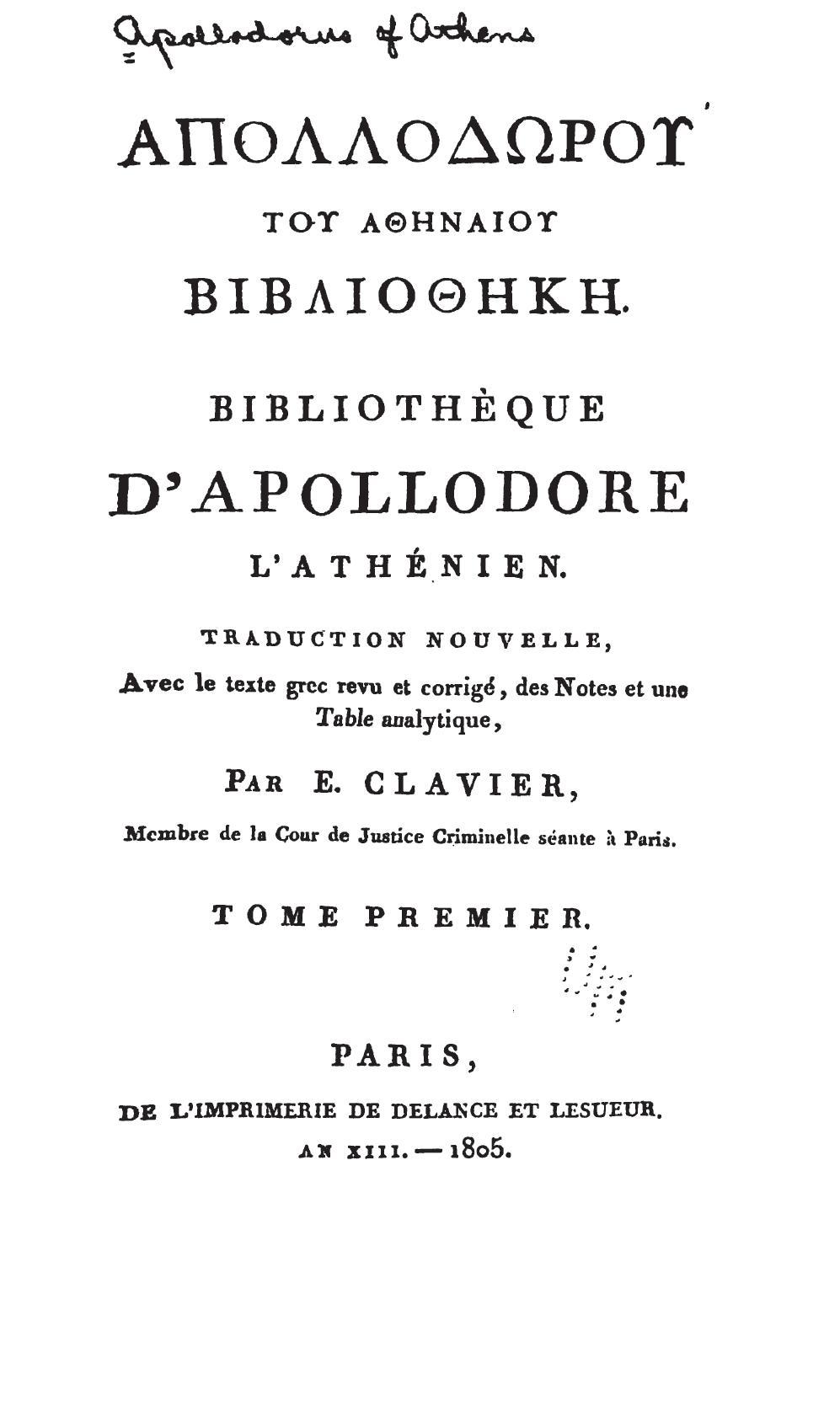
Pseudo-Apollodorus is the name commonly used for the author of the Bibliotheca, or Library, a Greek collection of traditional accounts of gods and heroes. The work is usually dated to the first or second century CE. The author’s identity remains uncertain. [1]
The traditional attribution
Manuscripts call the author “Apollodorus the Athenian, Grammarian”, so the work was long identified with the Athenian grammarian Apollodorus, who wrote a treatise On the Gods in twenty-four books. In the introduction to his Loeb edition, James George Frazer notes that this identification is now generally abandoned. He gives two reasons. The Bibliotheca cites the chronicler Castor, who wrote a history down to 61 BCE, so it cannot have been composed before about the middle of the first century BCE. And On the Gods seems to have explained the gods as personified natural powers or dead men, whereas the Bibliotheca simply summarises the myths. Frazer concludes that the work was probably written in the first or second century CE and that scribes may have attached the name “Apollodorus” to it. [1]
Zeus and Typhon
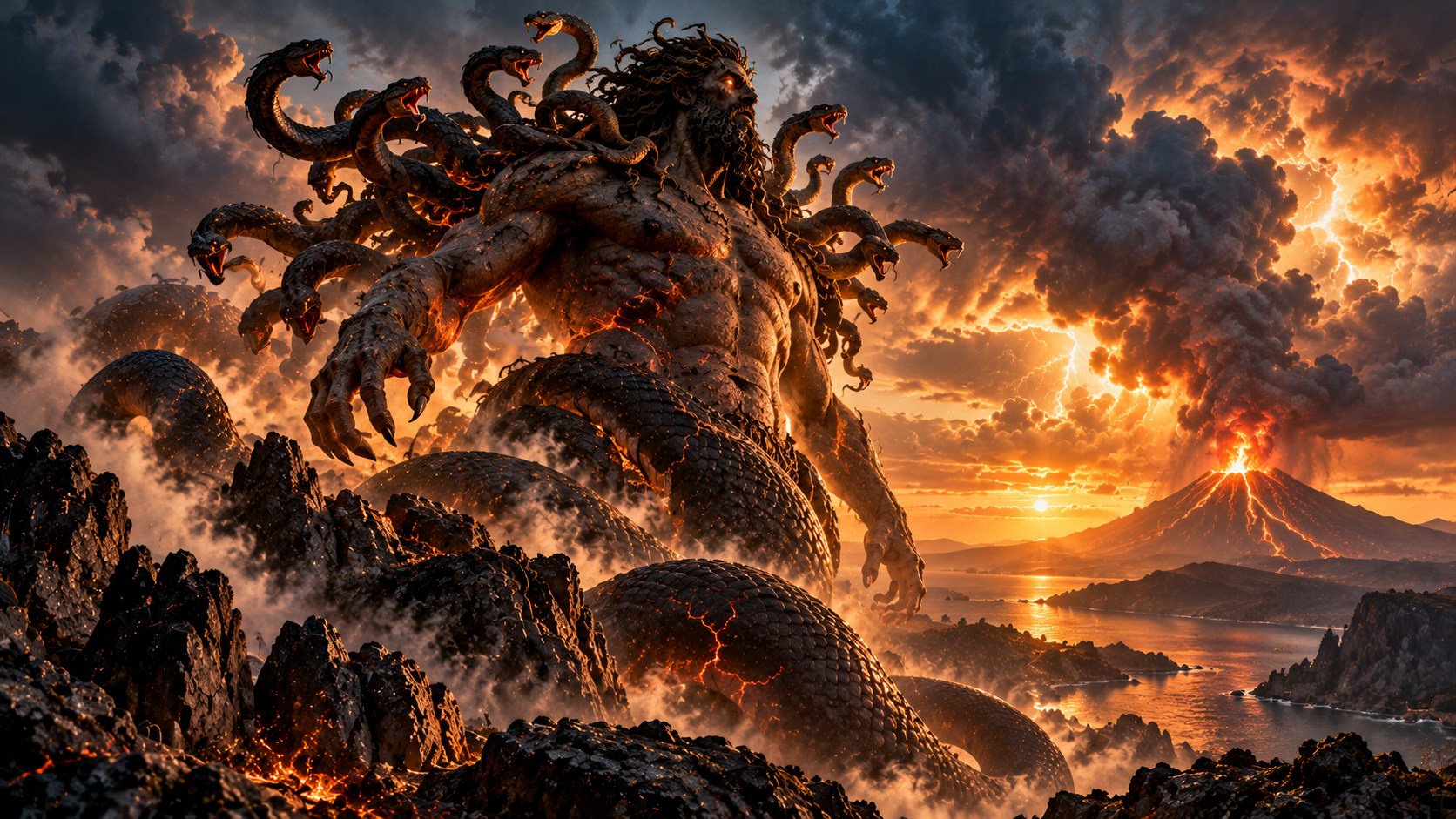
In Bibliotheca 1.6.3, Gaia and TartarusTartarusDeep abyss in Greek poetic imagination, named by Zeus as a place of punishment in the Iliad.Glossary · Click to read the explanation produce TyphonTyphon / TyphoeusTyphon (Typhoeus), a serpentine adversary of Zeus in Greek myth; his defeat and punishment vary across Hesiod, Pindar, and the later Library.Glossary · Click to read the explanation after the Giants have been defeated. ZeusZeusZeus is the sky god and leading deity in many Greek traditions. In the Iliad he presides over divine gatherings while others can still speak and object.Glossary · Click to read the explanation pursues him to Mount Casium in Syria, where Typhon temporarily disables him and carries him to the Corycian cave in CiliciaCiliciaHistorical region on Anatolia’s southern coast in modern Türkiye, with plains and uplands connected to the Levant and Anatolian interior.Glossary · Click to read the explanation. HermesHermesGreek god acting as a messenger in the Odyssey passages examined here.Glossary · Click to read the explanation and Aegipan retrieve his sinews and restore them to him. Zeus resumes the pursuit, which ends in Sicily with Mount Etna brought down upon Typhon. The passage traces a battle across several regions and gives the god’s recovery a specific place in that sequence. [2]
Variants in the story of Perseus
The first sections of Book 2, chapter 4 show the compiler handling a tradition with several versions. One account of Danaë’s pregnancy names Proetus, while another credits Zeus in the form of a stream of gold. The text then follows Perseus from his mother’s confinement and their arrival on Seriphus to the encounter with Medusa. It gives Hermes and Athena specific roles and describes Perseus looking at Medusa’s reflection in a bronze shield. This combination of continuous narrative and named alternatives makes the passage useful when tracing which form of a story a retelling follows. The book, chapter and section numbers identify that evidence across editions and translations. [3]
References and notes (3)
- J. G. Frazer, Apollodorus: The Library, Loeb Classical Library, vol. 1 (1921) Introduction, passages on the attribution to Apollodorus the Athenian grammarian, the chronicler Castor and the date Return to the text ↑
- Pseudo-Apollodorus, Library 1.6.3, ed. and trans. J. G. Frazer, Perseus Digital Library 1.6.3, Typhon and the loss of Zeus’s sinews Return to the text ↑
- Pseudo-Apollodorus, Library, ed. and trans. J. G. Frazer, Perseus Digital Library 2.4.1–4, Danaë and Perseus Return to the text ↑
Suggest a correction · Suggest a source for this record
Cite this record
IL Archive, «Pseudo-Apollodorus», https://ilarchive.com/en/people/pseudo-apollodorus
Continue reading