Person · Literary figure
Ubara-Tutu, the King Named Before the Flood
- Names
- Ubar-Tutu · Ubara-Tutu · Ubartutu
- Region
- Mesopotamia
The Sumerian King List makes Ubara-Tutu its last ruler before the flood. Wisdom and flood texts give his name different places in the family of the survivor.
Estimated reading time: 5 min Published Last reviewed:
Share article
Text
Introduction
Ubara-Tutu is the last king named before the flood in the opening of the Sumerian King List. The list places him at Shuruppak, the fifth city to receive kingship in that distant age. His name also appears in a Sumerian work of advice and in the Babylonian Epic of Gilgamesh. These works give him different places in the family of the man who survives the flood. [1][2][3]
In the instructions, he is the father of the sage Shuruppak, who speaks to his son ZiusudraZiusudraA literary king-priest in the fragmentary Sumerian Flood Story (ETCSL 1.7.4). He survives by boat, sacrifices, and receives divine life from An and Enlil in Dilmun. The surviving copy is Old Babylonian; his historicity is unproven.Glossary · Click to read the explanation. In Gilgamesh, a god calls the survivor a man of Shuruppak and the son of Ubar-Tutu. The same name can place a ruler in an order of kings, or place a speaker or listener in a family. The surviving accounts are evidence for those traditions. [1][2][3]
The final reign before the flood
In the Oxford translation of the Sumerian King List, Ubara-Tutu rules for 18,600 years. He is the only king listed for the city called Curuppag in that translation, the name usually written Shuruppak. Immediately after his reign, the text counts the kings and cities of the earlier age and reports that the flood swept over. Kingship then descends from heaven and is placed in Kish. Ubara-Tutu stands at the point where the story of rule before the flood gives way to a new succession of cities. [1]
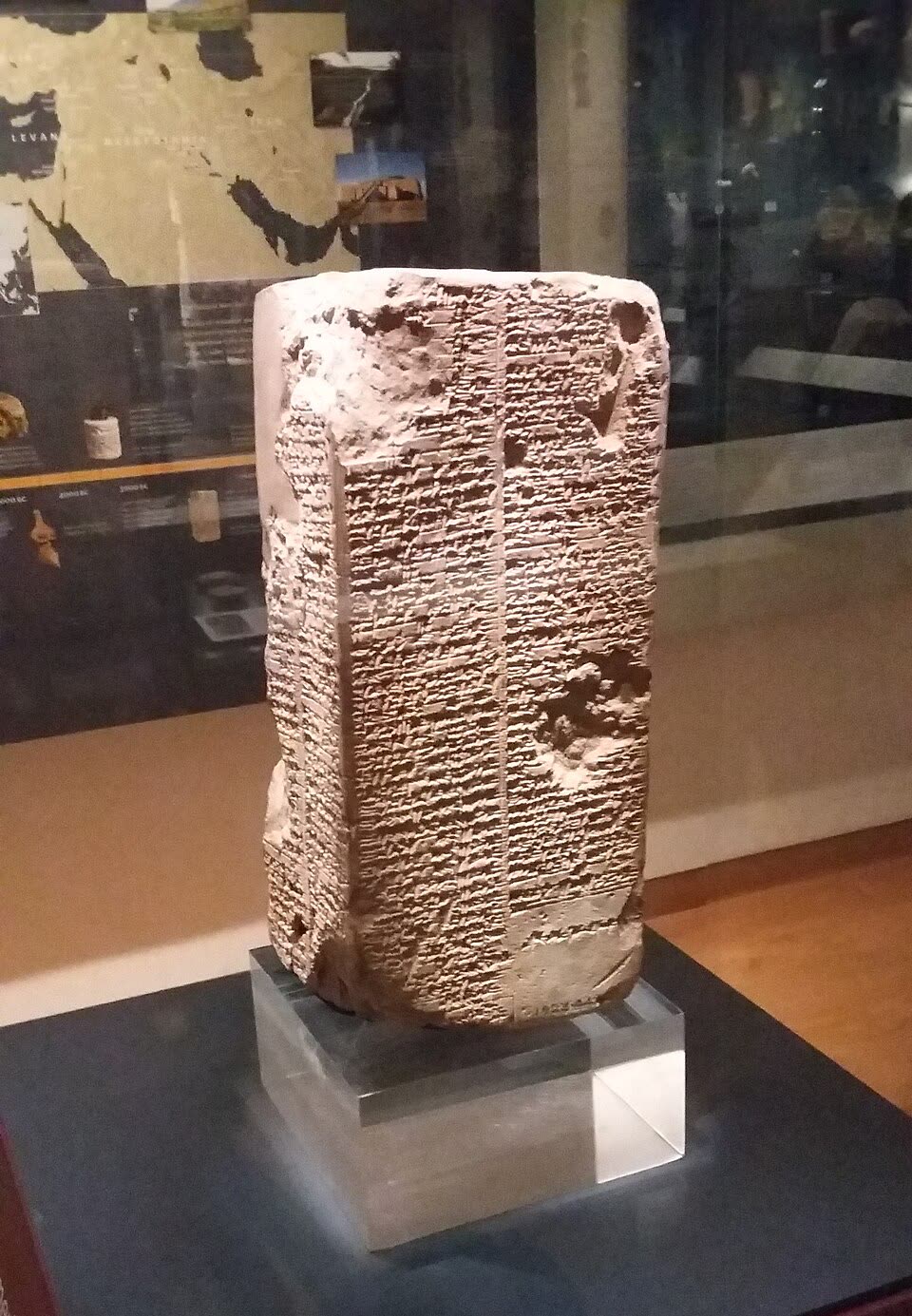
The Ashmolean Museum holds a four-sided clay prism with two columns of writing on each side, shown here. It dates the prism to around 1800 BCE and gives Larsa as its probable place of origin. The museum explains that the list arranges rulers by city and presents kingship as something a single city holds for a time. Its long early reigns are part of a literary treatment of the origins of rule. The figure of 18,600 years belongs to that treatment. The museum’s date for the clay prism concerns when a surviving copy was made, an entirely separate question. [1][4]
A father’s name in a book of advice
The Instructions of Shuruppak introduce the speaker as Shuruppak, son of Ubara-Tutu, and name the person he addresses as his own son, Ziusudra. The formula recurs between sections of advice. The advice deals with ordinary concerns. It includes a warning against buying a donkey that brays and another about entering a dispute. The repeating introduction connects practical guidance about living among neighbours with a lineage placed in the remote past. Ubara-Tutu has no speech in the introduction. His name identifies the father of the man who gives the advice. [2]
Walther Sallaberger distinguishes this arrangement from earlier forms of the composition. He reads the earlier description of the speaker as a sage from Shuruppak, and explains how Shuruppak becomes a personal name in the Old Babylonian version. He describes the later literary arrangement as putting that sage between the city’s last king before the flood and Ziusudra, the flood survivor. In his interpretation, the new frame gives the advice the authority of wisdom preserved from an age that the flood brought to an end. The old sayings can thus be studied alongside the genealogy that later readers encountered with them. [2][5]
The name in the address to a survivor
In Tablet XI of the Babylonian Epic of Gilgamesh, Gilgamesh asks Uta-napishtiUtnapishtimThe flood hero of Standard Babylonian Gilgamesh, granted exceptional life with his wife by the gods. He tells Gilgamesh how he survived; his name overlaps with Atrahasis and Ziusudra traditions without making their narratives identical.Glossary · Click to read the explanation how he came to live among the gods. Uta-napishti begins his answer with Shuruppak on the banks of the Euphrates. In Nathan Wasserman’s edition, the god EaEnkiMesopotamian deity also known as Ea, linked with Eridu and the Abzu (deep fresh waters), wisdom, incantations, and narratives of creation and cosmic order. Later written attestations do not identify the deity of Eridu’s earliest layers.Glossary · Click to read the explanation speaks to a wall and then addresses a man of Shuruppak as the son of Ubar-Tutu. He tells him to abandon his house, build a boat and take aboard what is needed to preserve living creatures. The father’s name is part of the address to the man who receives the warning. In this telling, the son identified by that address is the one who recounts the flood. He asks how to answer the crowd and the elders of his city. Ea gives him the words to use. From that point the story follows what the son must do to leave Shuruppak, and the father is named in the address that first sets him on that course. [3]
The surviving Sumerian Flood Story calls its survivor Ziusudra, written Zi-ud-sura in the Oxford translation. In a broken passage he hears words about the coming flood while standing beside a wall. After the storm passes, he makes an opening in the boat and the light of the sun enters. The gods eventually give him life like a god and settle him in DilmunDilmun: Ancient Gulf Land and Literary SettingDilmun was an ancient Gulf trading land with a major archaeological centre in Bahrain and connections to eastern Arabia and Failaka. This entry separates boats, burials and kings from the literary purity and fresh water of Enki and Ninhursaga, and tests the limits of comparison with Eden.Glossary · Click to read the explanation. The preserved scenes name him as king and give him a place in the survival of animal and human life. The fragments leave much of the story open, including parts of the warning. [6]
These texts use Shuruppak for a city or a person according to the passage. The instructions put a speaker of that name between Ubara-Tutu and Ziusudra. The AkkadianAkkadianAn ancient East Semitic language written in cuneiform from the third millennium BCE; its varieties include Babylonian and Assyrian, and it served in international diplomacy.Glossary · Click to read the explanation poem calls the man who receives the warning a man of the city and a son of Ubar-Tutu. The King List uses the name of the city to locate a reign and closes that entry with the flood. Reading each account in its own sequence shows which relationship is actually attested. [1][2][3][5]
References and notes (6)
- Electronic Text Corpus of Sumerian Literature, The Sumerian King List, 2.1.1, English translation Read lines 1–94, including the succession before the flood, Ubara-Tutu at Curuppag and the first dynasty of Kish after the flood. Return to the text ↑
- Electronic Text Corpus of Sumerian Literature, The Instructions of Shuruppak, 5.6.1, English translation Read the opening, early warnings, and the repeated genealogical introductions and conclusions in lines 1–82 and 143–152. Return to the text ↑
- Nathan Wasserman, The Flood: The Akkadian Sources, §2.4, Gilgameš Tablet XI Read the translation of lines 1–47, including the question to Ūta-napišti, the setting at Šuruppak, the address to the son of Ubar-Tutu and his question about the town elders. Return to the text ↑
- Ashmolean Museum, Sumerian King List, AN1923.444 Read the description, material, layout, date and probable provenance of the clay prism and the interpretation of succession by city. Return to the text ↑
- Walther Sallaberger, Updating Primeval Wisdom: The Instructions of Šuruppak in Its Early Dynastic and Old Babylonian Contexts Read sections 3.1–3.2 on the change to the prologue, comparison of the earlier and Old Babylonian frames and the genealogy connecting the text with the flood. Return to the text ↑
- Electronic Text Corpus of Sumerian Literature, The Flood Story, 1.7.4, English translation Read segments C–F on the divine warning, the flood, Ziusudra’s actions after the storm and his settlement in Dilmun. Return to the text ↑
Suggest a correction · Suggest a source for this record
Cite this record
IL Archive, «Ubara-Tutu, the King Named Before the Flood», https://ilarchive.com/en/people/ubara-tutu