Person · Figure
Zenobia of Palmyra
- Names
- Bat-Zabbai · Bathzabbai · Septimia Zenobia · Zenobia
- Timeline
- From 267 CE to 272 CE
- Region
- The Levant
Queen of Palmyra who governed for her young son Vaballathus after 267 CE. Her armies held much of Rome's East until Aurelian captured her in 272; inscriptions and coins tell more than the later stories.
Estimated reading time: 6 min Published Last reviewed:
Share article
Text
Introduction
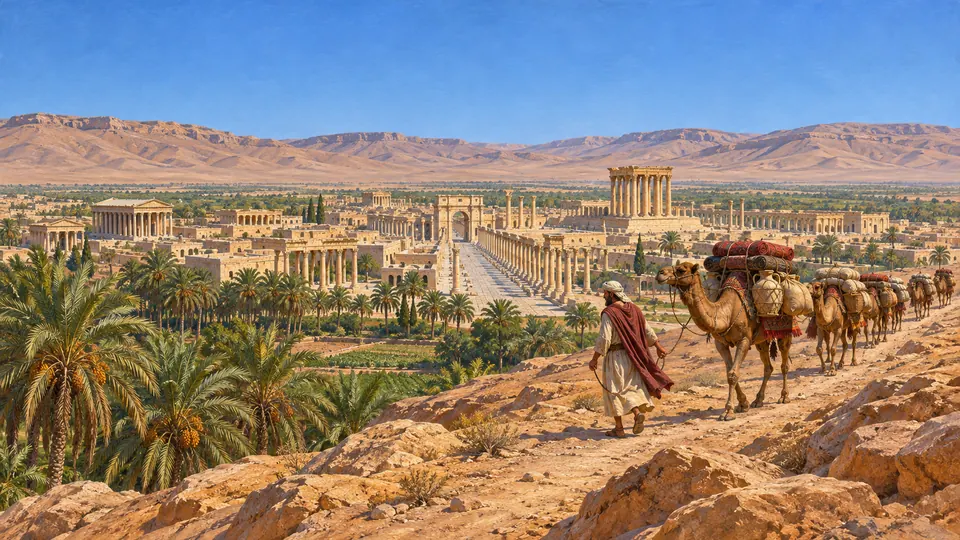
Zenobia was a queen of Palmyra, a rich caravan city in the Syrian desert. She was the wife of Septimius Odaenathus, the city's leading man. After he was murdered in 267 CE, she governed for their young son, Vaballathus. Between 270 and the summer of 272, Palmyrene armies controlled much of Rome's eastern provinces, from Egypt to central AnatoliaAnatoliaAnatolia is the region occupying the Asian part of present-day TurkeyGlossary · Click to read the explanation. Then the emperor Aurelian defeated her armies, besieged Palmyra and captured her. [1][2][3]
Her story is told in two very different kinds of evidence. Inscriptions and coins made in her lifetime show her names and titles. Histories written long after her death add speeches, ancestors and a dramatic ending, and they do not agree with each other. This entry sets out what each kind of evidence shows and where it stops. [2][3][4]
Her names
Palmyrenes wrote AramaicAramaicNorthwest Semitic language varieties documented since the early first millennium BCE, including Old and Imperial Aramaic, Syriac, Jewish dialects, and living Neo-Aramaic forms.Glossary · Click to read the explanation in their city's own alphabet, and they also used Greek. In Aramaic she is Septimia Bat-Zabbai, a name usually explained as "daughter of Zabbai". In Greek the same woman is Septimia Zenobia. Many Palmyrenes had two names like this, much as some people today use one name at home and another at work. [1]
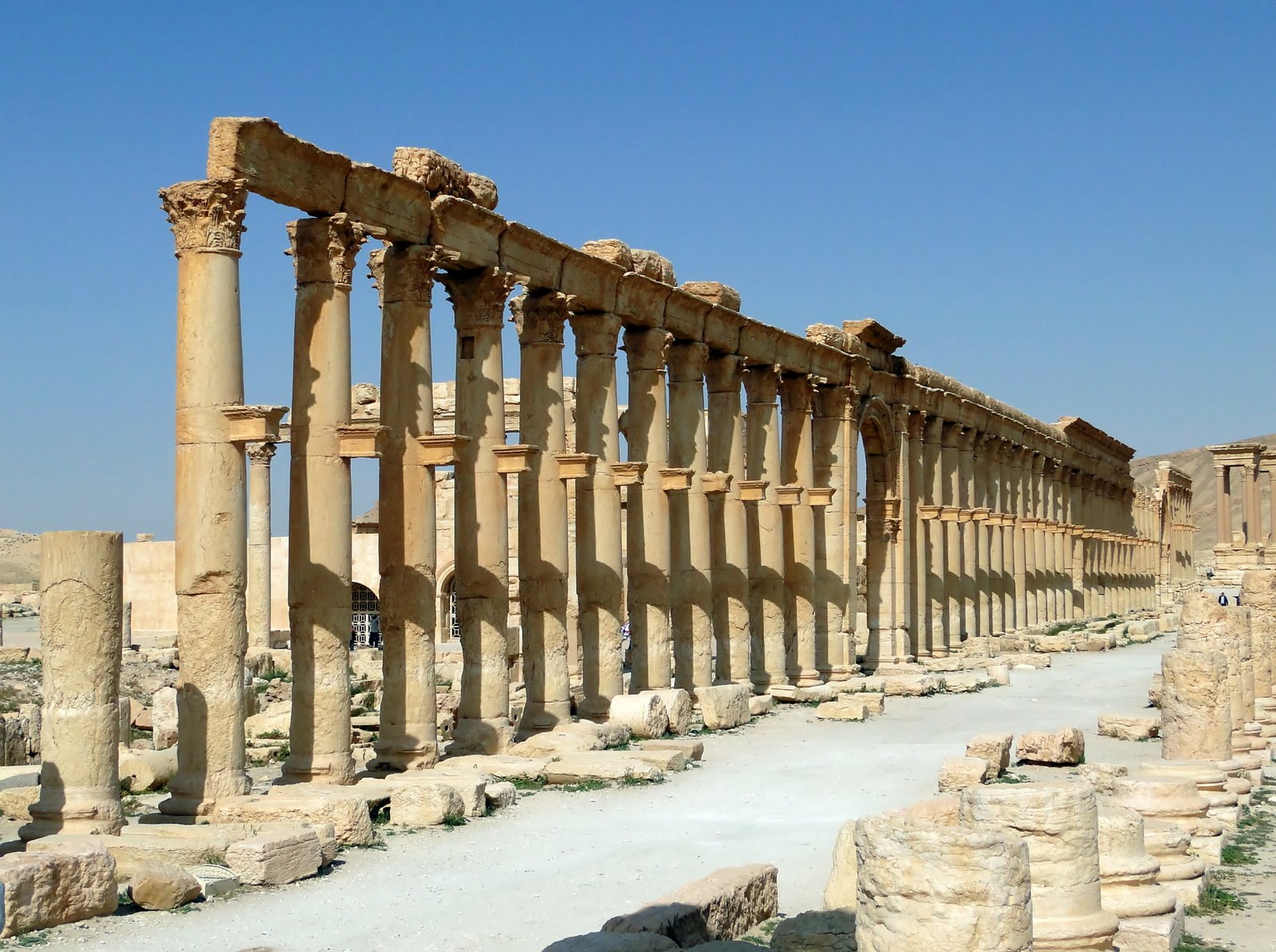
Columns on the city's main colonnaded street carry dedications to her in both languages, one of them dated 271 CE. They call her "queen" and "the illustrious and pious", and name her father as Antiochus. Some scholars have linked this Antiochus to the old SeleucidSeleucid dynastyHellenistic dynasty arising after Alexander and ruling changing Near Eastern territories into the first century BCE.Glossary · Click to read the explanation kings, even to Antiochus IV EpiphanesAntiochus IV EpiphanesAntiochus IV Epiphanes was a Seleucid king who ruled from175 to164 BCE.Glossary · Click to read the explanation. The inscriptions say only that her father was called Antiochus. The name may have recalled the famous royal house, but a real descent is not proven. [1][2]
Odaenathus and the regency
In the middle of the third century Rome suffered heavy defeats against the Persian king Shapur I, including the disaster of 260 under the emperor Valerian. Odaenathus filled the gap. According to the Greek historian Zosimus, the emperor Gallienus asked him to protect the East. Odaenathus drove the Persians back, recovered Nisibis and advanced as far as their capital, Ctesiphon. Palmyrene inscriptions give him a Roman title usually read as "corrector of the whole East", and the eastern title "king of kings". [2][3]
Zosimus says Odaenathus was killed in a plot while celebrating a friend's birthday at Emesa (modern Homs). Vaballathus inherited his titles, and Zenobia governed in his name. A late Latin collection of imperial lives, the Historia Augusta, gives her two other sons, but its modern editor notes that they are known from no other source. [2][3][4]
Palmyra takes the East, 270–272
In 270 Palmyrene forces attacked Bostra, the capital of the Roman province of Arabia, and then entered Egypt. Zosimus says the general Zabdas led some 70,000 men there and left 5,000 to hold AlexandriaAlexandria (Egypt)Alexandria is a city on Egypt’s Mediterranean coast, founded by Alexander the Great in 331 BCE and an important center of trade and culture.Glossary · Click to read the explanation. Two papyrus letters show ordinary life in the war: two brothers tell their mother they cannot visit her because of the fighting in Alexandria. Palmyrene troops also reached Ancyra (modern Ankara) in AnatoliaAnatoliaAnatolia is the region occupying the Asian part of present-day TurkeyGlossary · Click to read the explanation. [2][3]
Some modern histories called this a native revolt against Rome, an Arab movement or a Hellenistic revival. The historian Byron Nakamura argued instead for practical politics. Her army was small for such a territory and relied on allies, so she won over the great cities with gifts, titles and patronage, and showed herself in different ways to different audiences. How far she meant to break with Rome is still debated. [2]
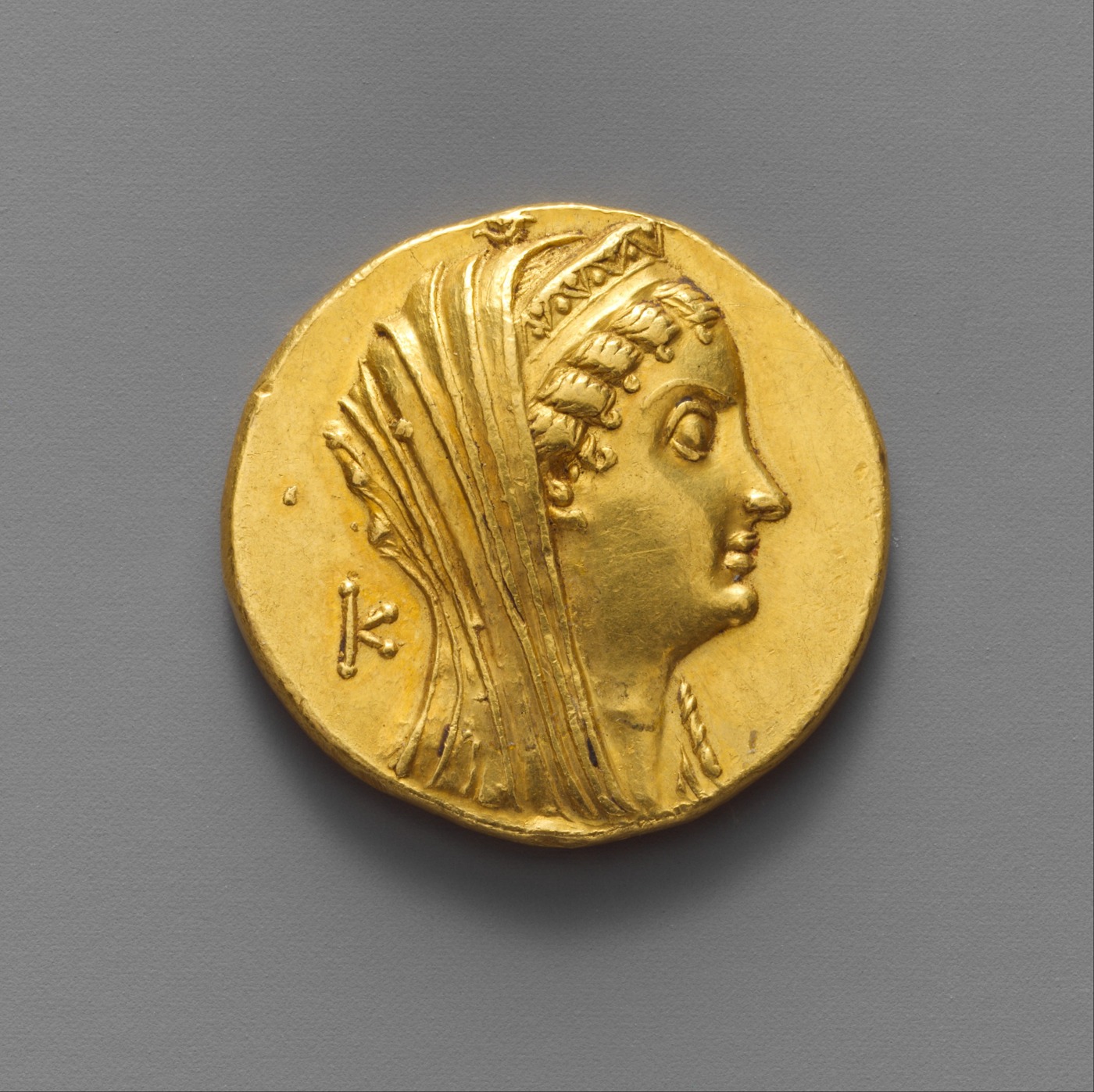
Her court drew Greek scholars, among them the critic Cassius Longinus. A writer from Petra dedicated a history of Alexandria to her as a new Cleopatra. The Historia Augusta says she claimed descent from Cleopatra and the Ptolemaic dynastyPtolemaic dynasty in EgyptDynasty of Macedonian origin ruling Egypt as kings from 305 to 30 BCE, amid Greek and Egyptian traditions.Glossary · Click to read the explanation; its editor called this "a fiction". It may reflect the image she used in Egypt. [2][4]
What the coins show
Coins were the mass media of the ancient world: every coin in a market carried a message about who ruled. That makes them our best guide to Zenobia's changing position. [5][6]
After the Palmyrenes took the mints of Antioch and Alexandria, the first coins put the emperor Aurelian on one side and Vaballathus on the other. One Alexandrian type of 270/271 calls Aurelian emperor and Augustus. It gives Vaballathus Roman titles, "consular, emperor, general of the Romans", and counts the year by both reigns. The message was a partnership, with Rome still in first place. [2][5]
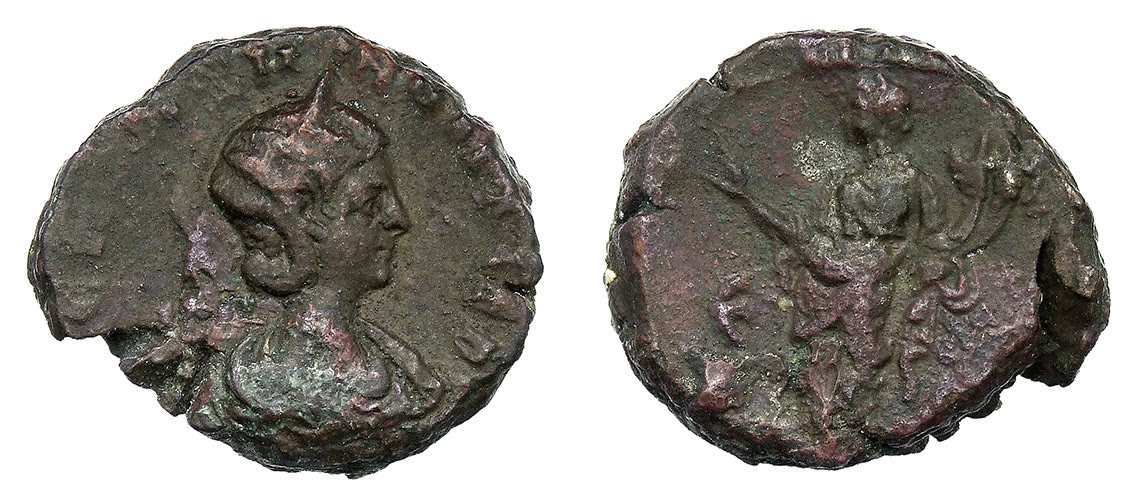
In the spring of 272 this changed. New coins showed Vaballathus alone as Augustus, and Zenobia alone as Augusta, the title of a Roman empress. The coin in the picture was struck at Alexandria in her "year 5". It reads "Septimia Zenobia Augusta" around her portrait, and its other side shows Homonoia, the goddess of concord. The specialist catalogue of these coins dates it to about March–June 272. [2][6][7]
Defeat and capture
Aurelian marched east in 272. Zosimus describes a battle near Antioch, where the Roman cavalry pretended to flee until the heavily armed Palmyrene horsemen were tired, then turned on them. A second battle was fought at Emesa. Zenobia withdrew to Palmyra, and Aurelian besieged the city. She left on a female camel to seek Persian help, but Roman horsemen caught her as she crossed the Euphrates in a boat. Zosimus, writing more than two centuries later, reports Aurelian's unease at the victory, in the English translation of 1814:
At a trial at Emesa, Zosimus says, Zenobia blamed her advisers, and several of them, Longinus among them, were executed. The next year Palmyra rose again, and Aurelian returned and destroyed the city. It never regained its former power. [2][3][8]
Three different endings
The ancient writers disagree about what happened to Zenobia herself. [3][4][8]
- Zosimus: she died on the way to Rome, of illness or from lack of food.
- The Historia Augusta: she walked in Aurelian's triumph in Rome, bound in chains of gold, and then lived as a Roman lady on an estate at Tibur (modern Tivoli). Its editors warn that this collection contains invented people and documents.
- The Byzantine chronicler John Malalas: she was killed after the triumph.
None of these can be checked against a document from her own time. A much later Arabic tradition, recorded by al-TabariAl-TabariAbbasid-era historian and Qur'anic exegete (c. 839–923 CE). His commentary records competing views on Abraham's son, then favors Isaac.Glossary · Click to read the explanation, tells of a queen called al-Zabba who killed Jadhima, a king of the Tanukh tribes, and was then defeated by his nephew in revenge. It is a legend, not a record, but it may echo real tension between Palmyra and some Arab tribes. [2]
Quick answers
Who was Zenobia?
A queen of Palmyra, wife of Odaenathus, who governed for her son Vaballathus from 267 CE and ruled much of Rome's East until 272. [1][2]
Did she claim to be empress?
Yes, at the end. In the spring of 272, coins from Antioch and Alexandria call her Augusta. Earlier coins still honoured Aurelian. [2][6]
How did she die?
It is not known. Zosimus says she died on the way to Rome; the Historia Augusta says she lived on in Italy. [3][4]
References and notes (8)
- Prosopographia Palmyrena (Carl von Ossietzky Universität Oldenburg), person entries 868 and 869: spṭmyˀ btzby / Σεπτιμία Ζηνοβία (PAT 0317 = CIS II 3971; PAT 0293 = CIS II 3947) Both entries in full: Aramaic and Greek name forms, family (daughter of Antiochus, wife of Septimius Odaenathus, mother of Septimius Vaballathus), the office of queen, the honorific columns of the Great Colonnade, the date 271 CE of PAT 0293, and the editors' remark "the Illustrious and Pious". Return to the text ↑
- Byron Nakamura, “Palmyra and the Roman East,” Greek, Roman and Byzantine Studies 34 (1993): 133–150 Whole article with its notes: the extent and speed of the campaigns of 270–272 (Bostra, Egypt, Ancyra), the army and its allies, Antioch and Alexandria, the titles of Odaenathus and Vaballathus (CIS II 3946, 3971), the coinage and the break with Aurelian in spring 272, the Bostra milestone (AE 1904.60), the daughter-of-Antiochus and Cleopatra claims, Longinus and the court, the Tanukh tradition in al-Tabari, and the author's case for political pragmatism. Return to the text ↑
- Zosimus, New History, book 1, English translation (London: Green and Chaplin, 1814), online at the Tertullian Project Book 1, the passages on Odaenathus, his murder at Emesa, Zenobia's rule, the Egyptian and Anatolian campaigns, Aurelian's battles near Antioch and at Emesa, the siege of Palmyra, the capture at the Euphrates, the trial at Emesa and Longinus, her death on the journey, and the second Palmyrene rising. Return to the text ↑
- Historia Augusta, “The Thirty Pretenders,” 30 (Zenobia), translated by David Magie, Loeb Classical Library (1932), on LacusCurtius, with the editor's notes Chapter 30 in full (§§1–27: ancestry claim, rule after Odaenathus, Aurelian's letter, character, triumph, life at Tibur) and the editor's notes on Zenobia, Vaballathus, the sons Herennianus and Timolaus, the inscriptions and the reliability of the collection. Return to the text ↑
- Roman Provincial Coinage Online, vol. X, type ID 75752 (Alexandria, Aurelian year 1 with Vaballathus year 4, AD 270/1) Whole type record: legends with edition and translation, portraits of Aurelian and Vaballathus, date, metal, references to Bland 2011 nos. 32–34 and 40–42, specimens. Return to the text ↑
- Roman Provincial Coinage Online, vol. X, type ID 75761 (Alexandria, Zenobia Augusta, year 5, AD 272) Whole type record: obverse legend Σεπτιμία Ζηνοβία Σεβαστή ("Septimia Zenobia Augusta"), bust of Zenobia, reverse with the date "year 5", references to Bland 2011. Return to the text ↑
- Münzkabinett der Staatlichen Museen zu Berlin, object 18252812, “Alexandria: Zenobia”, tetradrachm, 272 CE Whole object record: legends, Homonoia reverse, weight and size, literature including R. Bland, Numismatic Chronicle 171 (2011) p. 176 no. 59 (dated c. March–June 272), photographer and image rights. Return to the text ↑
- Jona Lendering, “Zenobia,” Livius.org (last modified 2020) Whole page: the dated titles, the capture in 272, the destruction of Palmyra in 273, and the three accounts of her death (Zosimus, Historia Augusta, Malalas). Return to the text ↑
Suggest a correction · Suggest a source for this record
Cite this record
IL Archive, «Zenobia of Palmyra», https://ilarchive.com/en/people/zenobia
Continue reading