Site · Region
Amqa in Late Bronze Age Diplomacy
- Names
- Amka · Amqa · Amqu · ʿAmqu
- Region
- The Near East
Letters from Amarna and texts from Hatti place Amqa on a contested Egyptian frontier. The name is associated with Lebanon’s Beqaa Valley, though its ancient extent remains uncertain.
Estimated reading time: 5 min Published Last reviewed:
Share article
Text
Introduction
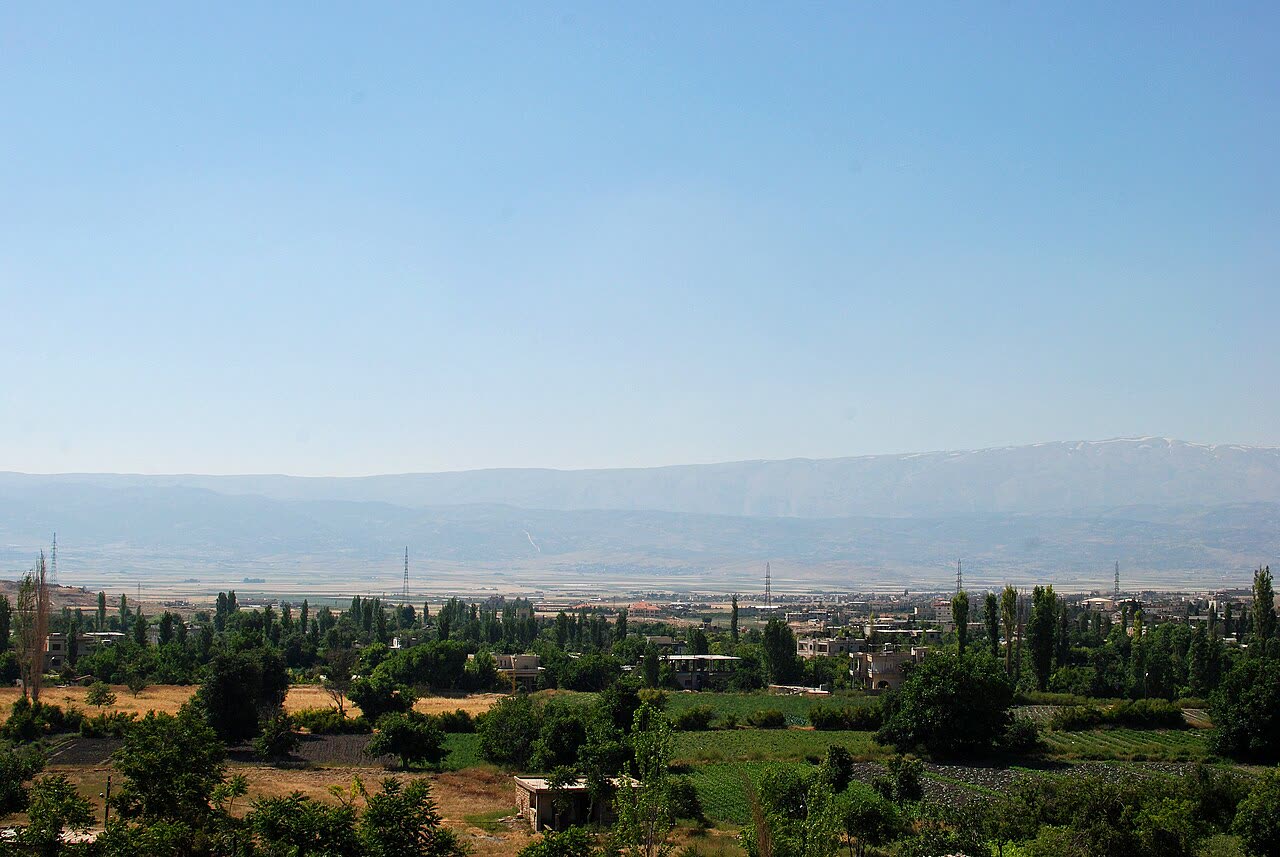
Amqa was a territory known to Egyptian and Hittite rulers in the Late Bronze AgeLate Bronze AgeAn archaeological period around 1600–1200 BCE in much of the Near East, with international diplomacy, exchange and religious diversity; its endpoints vary by region.Glossary · Click to read the explanation. The name also appears as Amqu in discussions of the AmarnaAmarna / AkhetatenAmarna is the archaeological site of Akhetaten, Akhenaten’s fourteenth-century BCE capital in Middle Egypt, preserving royal boundary stelae, temples, houses and cemeteries.Glossary · Click to read the explanation letters. Scholars associate it with the Beqaa Valley in what is now Lebanon, through which the upper Orontes flows. The texts refer to towns in the territory and describe the region as an Egyptian borderland. They give less certainty about the boundaries of the ancient district and whether it included stretches of the upper Orontes beyond the valley. [1][2][3]
The territory appears in accounts written for different purposes. Letters sent to the Egyptian court and to a visiting ruler report dangers and request attention. The deeds of the Hittite king Suppiluliuma I place an attack on Amqa within a wider war. A prayer composed under his son Mursili II returns to the attacks as part of an account of a broken oath and a disaster in Hatti. The differences matter for how the episodes are dated and understood. [1][2][3][4]
Where the name belongs
Jared L. Miller associates the Hittite place name with the Beqaa. He also notes how little detail the Hittite texts give about the geography of the wider Orontes region. They were written from the perspective of a court operating across a large area, and the river itself is unnamed in those texts. In the account of Suppiluliuma’s deeds, Amqa appears as a place he sent two commanders to attack while he was at Carchemish. Another, much more fragmentary source mentions Amqa alongside Aba, the region of Damascus. The references position Amqa within the affairs of surrounding territories and leave the precise limits of its settlements uncertain. [1]
What the letters reported
EAEnkiMesopotamian deity also known as Ea, linked with Eridu and the Abzu (deep fresh waters), wisdom, incantations, and narratives of creation and cosmic order. Later written attestations do not identify the deity of Eridu’s earliest layers.Glossary · Click to read the explanation 170 came from Baaluya and Bet-ili and was addressed to Aziru, ruler of Amurru, while he was in Egypt. The writers reported that troops under the Hittite commander Lupakku had taken cities in Amqu. They also relayed a report about another commander, Zitana, and a large force that might have reached Nuhashshe. They said they had yet to confirm the second report. The wording lets readers distinguish the capture they reported from what they had heard about a possible further movement. The tablet entered the Egyptian archive even though it was addressed to Aziru. [2][3]
EA 174–176 and EA 363 give accounts in very similar language. Their writers report that Aitakama of Kadesh had supported the HittitesHittitesAncient people and kingdom of Anatolia, dominating much of Anatolia and northern Syria around 1650–1200 BCE.Glossary · Click to read the explanation and that cities belonging to Egypt’s king had been burned. Norbert van Cleve compares the group with Aitakama’s own claims in a different letter, EA 189, where he professed loyalty and accused the ruler of Damascus of damaging the king’s cities. Charges of disloyalty were one way local rulers appealed to the court. In this case the separate report addressed to Aziru gives another account of Hittite forces entering Amqu. [2]
EA 363 survives as clay tablet AO 7097 at the Louvre. The museum identifies its script as cuneiformCuneiformWriting with wedge-shaped signs, developed from Mesopotamian recording traditions and used for several languages from the third millennium BCE.Glossary · Click to read the explanation and its language as AkkadianAkkadianAn ancient East Semitic language written in cuneiform from the third millennium BCE; its varieties include Babylonian and Assyrian, and it served in international diplomacy.Glossary · Click to read the explanation. It gives Tell el-Amarna as the findspot. The study of the clay by Yuval Goren, Israel Finkelstein and Nadav Na’aman lists the sender as Abdi-Risha of Enishasi and compares the tablet’s material with another letter from that city. The place where archaeologists found such a tablet is the receiving end of its journey. The language of the text and the physical clay can help researchers ask separate questions about how it was written and where it was made. [5][6]
How the Hittite records tell it
Mursili’s account of his father’s deeds reports that Suppiluliuma sent Lupakki and Tarhunta-zalma against Amqa during the siege of Carchemish. The similar names Lupakki and Lupakku in the Hittite and Amarna accounts are among the clues scholars have used to compare them. Miller argues that the apparently repeated attacks in the prayer may reflect successive actions within one episode. Other reconstructions separate an attack reported in the Amarna letters from a later attack associated with the death of an Egyptian king and a request for a Hittite prince. Which episodes are equated affects the dating of the exchange between the two courts. [1][3][4]
The surviving copies of the prayer themselves complicate the comparison. Singer’s translation gives a line that describes a second dispatch of troops and a second attack. Miller notes that the wording appears in witness A, with the clause about sending again written across the edge and onto the back. The other copies do not preserve the same paired wording. Miller reads the phrase in the context of the reports as a further dispatch in the same campaign. Assigning each reference to a separate event requires a chronological argument beyond that phrase. [3][4]
In Mursili’s Second Plague Prayer, the king says he sought an oracle and consulted old tablets to learn why people were dying. One tablet concerned offerings to the Mala, the Euphrates. The other concerned Kurustamma and an oath between the people of Hatti and Egypt. Within this account, the attacks on Amqa broke the oath. The prayer then describes the death of the Hittite prince sent to Egypt and a subsequent campaign by Suppiluliuma. It says prisoners taken in the ensuing conflict carried the affliction into Hatti. Mursili presents this sequence while asking the Storm-god for relief and offering to make restitution. The passage records the king’s religious explanation for the suffering of his country. [4]
References and notes (6)
- Jared L. Miller, The Contribution of the Hittite Documentation to the Historical Geography of the Middle Orontes Region Read the introduction and pp. 7–8 on the Beqaa, the upper Orontes, the siege of Carchemish, the commanders and the further fragment mentioning Aba. Return to the text ↑
- Norbert van Cleve, First Steps on the Road to Kadesh Read the sections on EA 170, the four letters reporting actions in Amqu, and the accusations and assurances of loyalty in EA 189. Return to the text ↑
- Jared L. Miller, Amarna Age Chronology and the Identity of Nibhururiya in the Light of a Newly Reconstructed Hittite Text Read pp. 267–270, including the translated passage of EA 170 and the arguments for one episode or several with the manuscript variants in the prayer. Return to the text ↑
- Itamar Singer, Hittite Prayers, no. 11, Mursili’s Second Plague Prayer to the Storm-god of Hatti Read §§1–7, particularly the two old tablets, Amqa, the prince, the subsequent conflict, the oracular inquiry and the appeal to end the plague. Return to the text ↑
- Musée du Louvre, Tablet AO 7097, EA 363 Read the inventory, material, Akkadian text classification, diplomatic genre, findspot and bibliography identifying EA 363. Return to the text ↑
- Yuval Goren, Israel Finkelstein and Nadav Na’aman, Inscribed in Clay: Provenance Study of the Amarna Tablets and Other Near Eastern Texts Read the Beqaa group and the petrographic entry for EA 363, including its comparison with EA 187. Return to the text ↑
Suggest a correction · Suggest a source for this record
Cite this record
IL Archive, «Amqa in Late Bronze Age Diplomacy», https://ilarchive.com/en/sites/amqa