Site
Dhiban: town and archaeological site
Beside the modern town of Dhiban rises a mound occupied in several periods. The Mesha Stele records royal building claims. Excavated rooms, cisterns and pottery reveal how other communities lived on the same plateau.
Estimated reading time: 3 min Published Last reviewed:
Share article
Text
Introduction
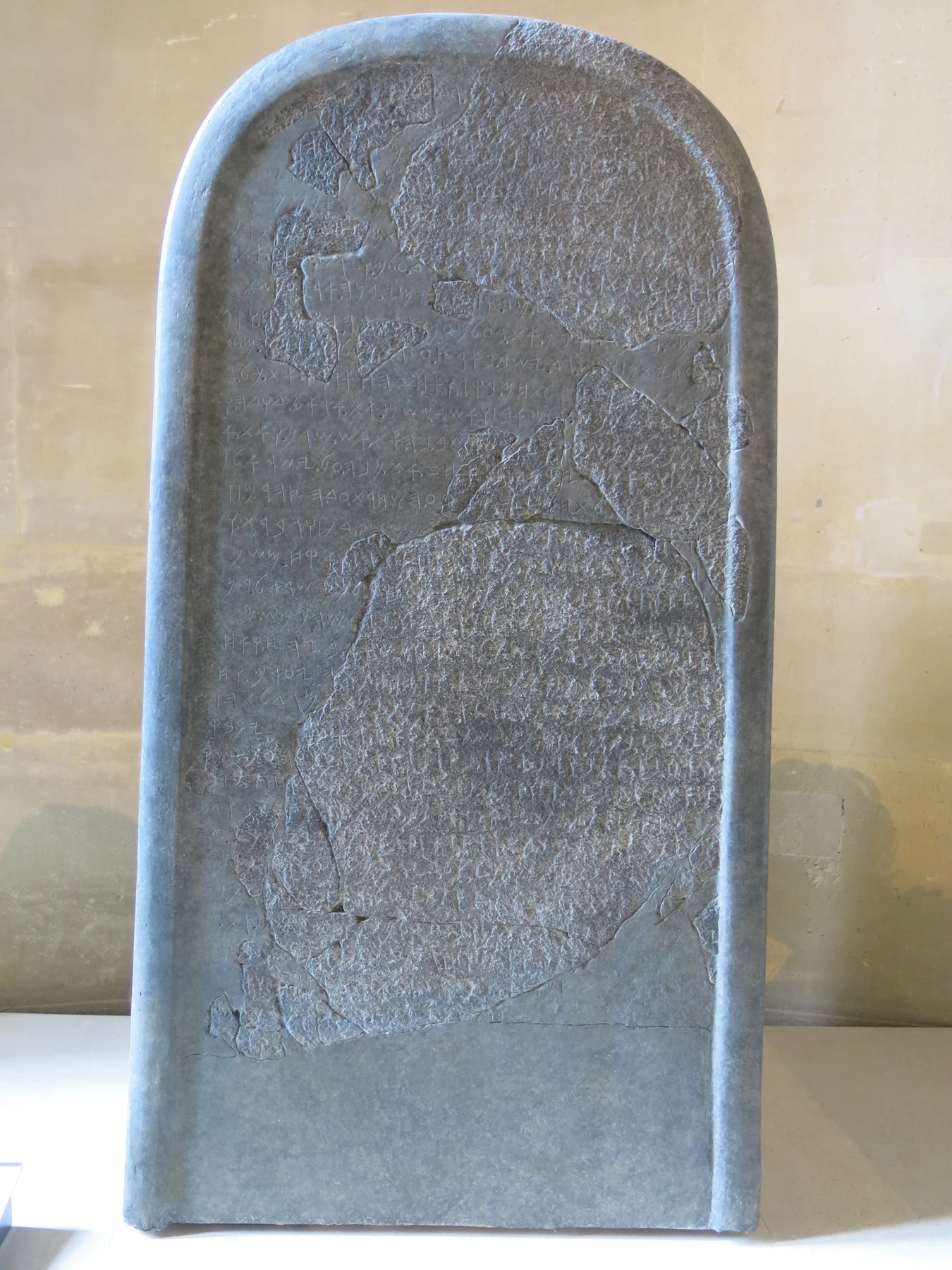
Dhiban is a town in west-central Jordan, about 70 kilometres south of Amman. The archaeological mound beside it preserves several episodes of settlement. The site is the findspot of the Mesha SteleMesha SteleA ninth-century BCE Moabite royal basalt stele at the Louvre (AO 5066; KAI 181). Its inscription names Chemosh, Omri, Israel and YHWH (line 18). A proposed “House of David” reading in damaged line 31 is disputed.Glossary · Click to read the explanation, a royal monument of ancient Moab, and its later buildings record ways of living on a plateau where storing water mattered. [1][2][3][4][5]
The mound and the plateau
The archaeological project describes a mound of about 15 hectares beside the present town. It places the earliest documented habitation around 3100 BCE, in the Early Bronze Age. Excavated deposits also attest to settlement in the Iron Age, the Nabataean and Byzantine periods, and the early and medieval Islamic periods. Long gaps separate some of these episodes. [1][2][5]
Dhiban is on the plateau between Wadi al-Wala to the north and Wadi al-Mujib to the south. The project’s description emphasizes limited rainfall and the importance of water storage at the site. The modern town and the older mound occupy neighbouring ground. [1][2][5]
The stone associated with Mesha
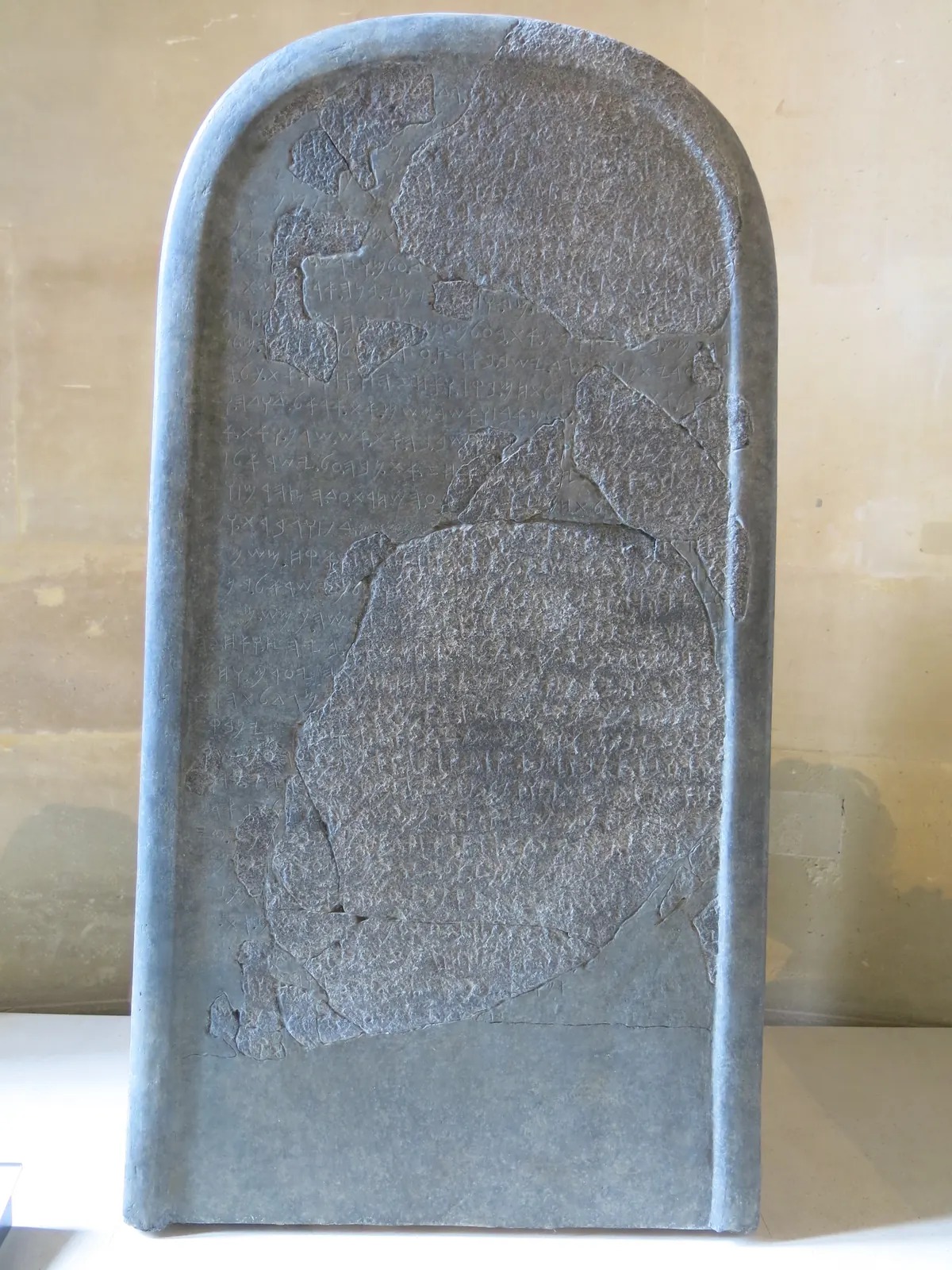
The Mesha SteleMesha SteleA ninth-century BCE Moabite royal basalt stele at the Louvre (AO 5066; KAI 181). Its inscription names Chemosh, Omri, Israel and YHWH (line 18). A proposed “House of David” reading in damaged line 31 is disputed.Glossary · Click to read the explanation was found at Dhiban in 1868. The Louvre, which holds the basalt monument as AO 5066, dates it to the ninth century BCE and identifies the language as Moabite. In the translation published by the Jordan Museum, Mesha describes building a palace and making retaining walls for a reservoir. He also tells people to provide cisterns in their houses. These lines give the ruler’s account of construction. Archaeologists use excavated contexts to date each structure separately. [3][4][5]
What the rooms in Field L preserve
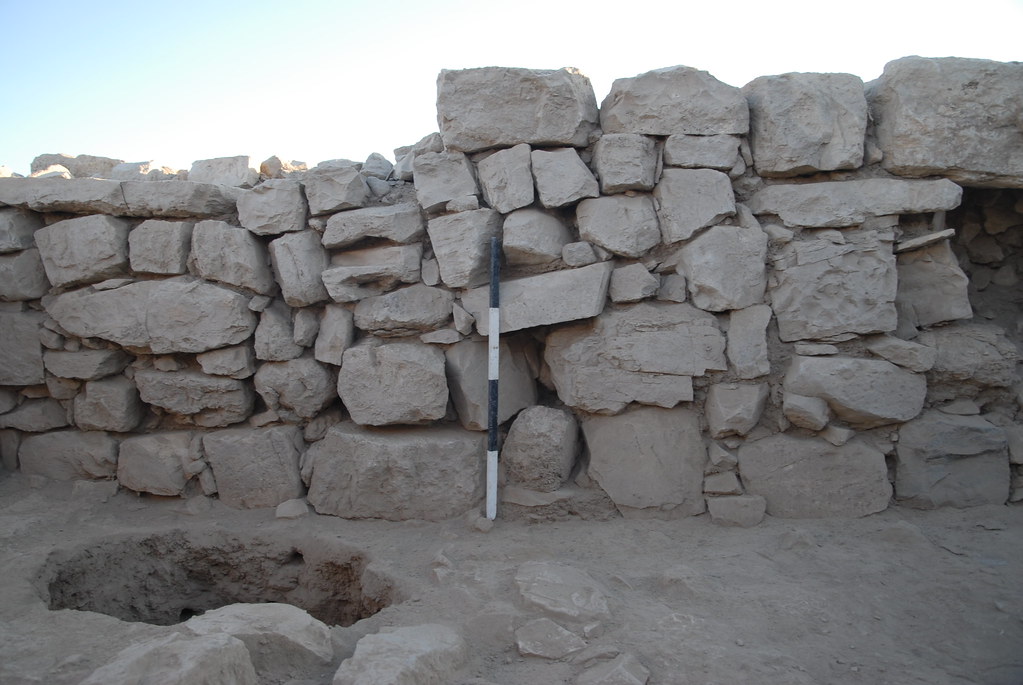
The report on the 2009 excavations explains that earlier work in Field L East had uncovered a large Iron Age building, walls from the Late Hellenistic or Early Roman period, and a substantial medieval Islamic residence. The later team cleared and mapped some of the older Iron Age walls that had been exposed. Their foundations rest on bedrock and outline a central room within a larger building. [5]
In Field L West the team exposed parts of several structures oriented towards an open area, with cisterns and a drain. In a separate vaulted room it found a handmade painted jar and pieces of a bowl decorated in blue under a clear glaze. The authors used the objects’ position, pottery comparisons and radiocarbon evidence to place the room’s last substantial phase in the late fourteenth or early fifteenth century. The location of the finds within the mound is part of the evidence for their date. [5]
Quick answers
Where is Dhiban? The modern town and adjacent mound are in west-central JordanJordan, the modern countryModern Levantine country independent as a kingdom in 1946, whose present territory includes Dhiban and ancient Moabite sites.Glossary · Click to read the explanation, about 70 kilometres south of Amman. [1][5]
Where was the Mesha Stele found? It was found at Dhiban in 1868. The Louvre holds the basalt monument under inventory number AO 5066. [3][4]
When was the mound occupied? The earliest habitation identified by the project dates to about 3100 BCE. The evidence records later episodes of occupation through the medieval Islamic period. [2][5]
References and notes
- Benjamin Porter and Bruce Routledge, “Dhiban Excavation and Development Project,” Open Context (2011) Project abstract and sections on settlement and landscape. Location about 70 kilometres south of Amman, 15-hectare mound, intermittent occupation and water storage. Return to the text ↑
- Danielle Steen Fatkin et al., “Digging Deeper: Technical Reports from the Dhībān Excavation and Development Project (2004–2009),” Annual of the Department of Antiquities of Jordan 55 (2011), 249–266 Introduction and fig. 1. Early Bronze 1b habitation around 3100 BCE and the location between Wadi al-Wala and Wadi al-Mujib. Return to the text ↑
- Musée du Louvre, “Stèle de Mesha,” AO 5066, KAI 181 Description, inscriptions, materials, and places and dates. Basalt, Moabite language, ninth-century BCE date, and Dhiban findspot. Return to the text ↑
- The Jordan Museum, “Mesha‘ Stele: An Important Jordanian Historical Document” Discovery account and translated inscription, lines 21–25. Dhiban in 1868, palace, reservoir retaining walls and household cisterns. Return to the text ↑
- Benjamin W. Porter et al., “The Dhībān Excavation and Development Project’s 2009 Season: Field L Excavations,” Annual of the Department of Antiquities of Jordan 56 (2012), 111–130 Introduction and Field L West and East discussions, pp. 111–112, 117–120. Settlement episodes, courtyard and installations, pottery and dating of the medieval room, and Iron Age walls founded on bedrock. Return to the text ↑
Suggest a correction · Suggest a source for this record
Cite this record
IL Archive, «Dhiban: town and archaeological site», https://ilarchive.com/en/sites/dhiban-jordan-archaeological-site
Continue reading