Site · Region
Gutium and the Gutians in Mesopotamian Records
- Names
- Gutians · Gutium · Qutûm
- Region
- Mesopotamia
Gutium was a geographical and political name that changed in scope over time. Royal inscriptions, the Sumerian King List and poems preserve different accounts of Gutian rule and its end.
Estimated reading time: 5 min Published Last reviewed:
Share article
Text
Introduction
Gutium was a name used in Mesopotamian records for a land and for groups associated with it. It often points towards the Zagros in later texts, and its geographical range varies with the source. Several rulers styled themselves kings of Gutium towards the end of the third millennium BCE. Other writers remembered Gutian rule as a disruption that ended when Utu-hegal of UrukUrukAncient city at Warka in southern Iraq, a major urban centre around 3200 BCE that preserved early writing and accounting tablets.Glossary · Click to read the explanation defeated Tirigan. [1][2][3]
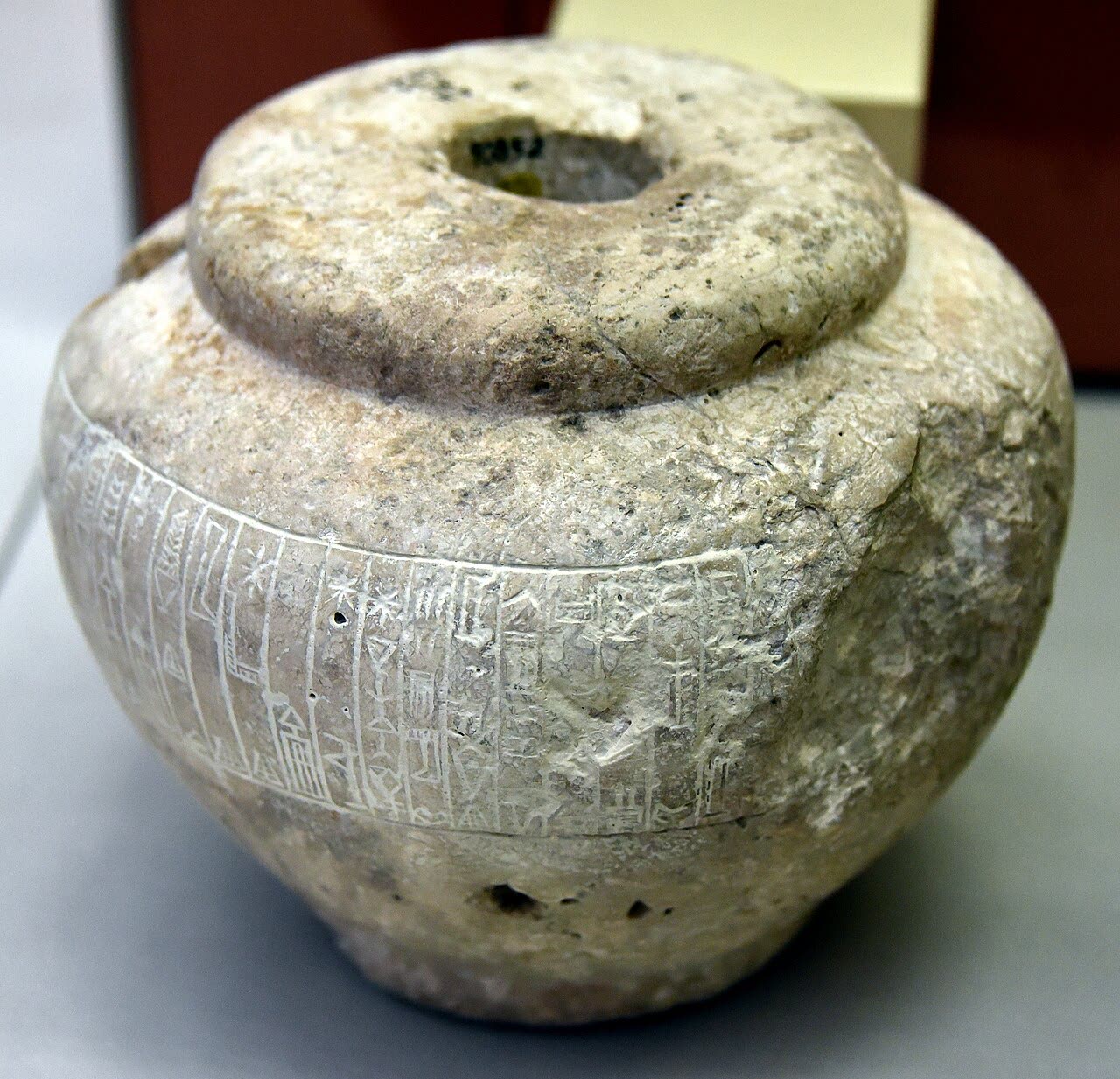
Much of the evidence comes from cities whose own histories overlap with those rulers. A stone macehead from Sippar names La’arab as king of Gutium. A clay tablet in the Louvre preserves a copy of an inscription celebrating the defeat of a Gutian king. The former was inscribed in the Gutian ruler’s own name, while the latter commemorates a victory over a Gutian king from the side of the Sumerian king who won it. [2][4][5]
A name in different records
Marc Van De Mieroop traces the use of Gutium over some two millennia. Its association with the Zagros is particularly apparent in sources from the second and first millennia BCE. In some first-millennium Babylonian scholarly texts, Gutium could be exchanged with Subartu in a scheme assigning names to directions. The two names could refer to a direction north or east of Babylonia. The term in those texts gives an orientation while leaving the borders and populations of the earlier land unresolved. [1]
People called Gutians also appear in Sargonic administrative documents from Adab. Walther Sallaberger and Ingo Schrakamp note the frequency of the references there, as well as the rarity of documents from the period between the reigns of Sharkalisharri of Akkad and Ur-Namma of Ur. They distinguish rulers contemporary with the AkkadianAkkadianAn ancient East Semitic language written in cuneiform from the third millennium BCE; its varieties include Babylonian and Assyrian, and it served in international diplomacy.Glossary · Click to read the explanation dynasty from those who exercised power in Babylonia later. A year name of Sharkalisharri, used to date tablets at Girsu and Adab, celebrates the capture of a king of Gutium called Sarlag. It places a ruler with that title in the record while Akkadian royal dating was still in use. [2]
A ruler’s name on stone
The inscribed macehead from Sippar names La’arab as mighty and as king of Gutium. Douglas Frayne identifies it as an alabaster object from Hormuzd Rassam’s excavations, now in the British Museum. The inscription includes a curse against someone who tampers with it. Frayne discusses the wording that invokes the god of Gutium alongside IshtarInanna / IshtarA prominent Mesopotamian goddess whose Sumerian name Inanna became associated with Akkadian Ishtar across diverse traditions. She was associated with desire, war, royal authority and Venus, while local forms and genealogies varied among texts.Glossary · Click to read the explanation and Sin. The curse and title together preserve something of how this king presented his authority. [2][4]
Frayne suggests that La’arab is the ruler whose name is partly preserved in the Sumerian King List, where an entry gives him two years. The stone gives neither that figure nor a place in a sequence of rulers. It preserves his title in a dedication that was intended to endure on the object itself. Sallaberger and Schrakamp also note that the full name is missing in the extant copies. The reconstruction therefore depends partly on evidence from the macehead. A different king, Yarlagan or Arlagan, appears in an inscription of a governor of Umma and on a bowl that also bears the name of the Akkadian ruler Shudurul. The recurrence of ruling titles on these objects gives independent evidence for names known or reconstructed from the lists. [2][4][6]
The defeat of Tirigan
The Sumerian King List makes kingship pass from Uruk to Gutium and then back to Uruk. Different manuscripts describe the recipient as the army or the land of Gutium. The versions also differ over the duration of Gutian rule. A section whose witnesses give 124 years and 40 days or 25 years ends with a ruler identified as Tirigan, whose reign is given as 40 days. The differences complicate the use of the list as a count of the actual years of Gutian power. [2][6]
The Victory of Utu-hegal names Tirigan as king of Gutium. It says he controlled both banks of the Tigris, stopped water reaching fields in Sumer and closed roads in the uplands. Utu-hegal prays to Inanna, calls on the citizens of Uruk and Kulaba, and advances towards Adab. After the defeat, Tirigan flees to Dabrum, where the inhabitants hold him for Utu-hegal. The text presents the campaign as the fulfilment of an instruction from EnlilEnlilEnlil/Ellil: a major Mesopotamian god associated with destinies, kingship, and Ekur at Nippur, already prominent in third-millennium god lists. His name’s origin and cult beginnings remain debated.Glossary · Click to read the explanation to restore kingship to Sumer. The Louvre’s copy of the monumental inscription preserves this same claim of restoration. [3][5]
Gutium in a poem about Akkad
In the Cursing of Agade, Enlil brings the Gutians down from the mountains after Naram-Sin’s attack on his temple. The poem describes travel breaking down, herds driven away and agricultural land failing to yield grain. The cost of food in the cities rises, and hunger enters homes. This description gives Gutium a role in a poem about a god’s anger and the collapse of a city. Its picture of people, roads and fields follows the purposes of that story. [7]
The cuneiformCuneiformWriting with wedge-shaped signs, developed from Mesopotamian recording traditions and used for several languages from the third millennium BCE.Glossary · Click to read the explanation witnesses preserve several uses of the name. The king list marks a movement of kingship, the victory text makes a claim about its restoration, and the macehead preserves a title chosen by one of the rulers. Read together with routine records from places such as Adab, they show where Gutian names enter the record and why an exact map or chronology remains difficult to recover. [1][2][3][4][6]
References and notes (7)
- Marc Van De Mieroop, Gutians, Encyclopaedia Iranica Read the account of geographical variation, the link with the Zagros and the use of Gutium alongside Subartu in later sources. Return to the text ↑
- Walther Sallaberger and Ingo Schrakamp, History and Philology, ARCANE Read pages 127–129 on the chronological evidence, administrative attestations at Adab, Sarlag, La’arab, the bowl naming Arlagan and Shudurul, and Tirigan. Return to the text ↑
- Electronic Text Corpus of Sumerian Literature, The Victory of Utu-hegal Read lines 1–62 on Enlil’s commission, the conditions before the campaign, Tirigan’s flight and capture, and the restoration of kingship. Return to the text ↑
- Douglas R. Frayne, Sargonic and Gutian Periods, RIME 2, La’arab Read the edition and commentary on BM 90852, its findspot, material, divine names and the proposal to identify the ruler with an entry in the king list. Return to the text ↑
- Musée du Louvre, Tablet AO 6018 Read the catalogue identification of the clay copy of the monumental inscription and the account of Tirigan and the restoration of kingship to Sumer. Return to the text ↑
- Electronic Text Corpus of Sumerian Literature, The Sumerian King List Read the closing entries for Uruk, the Gutium sequence at lines 308–334 and the manuscript variants in the totals and transfer formulae. Return to the text ↑
- Electronic Text Corpus of Sumerian Literature, The Cursing of Agade Read the destruction of E-kur and the passages at lines 149–192 on the arrival of the Gutians, disruption of travel and herds, and famine. Return to the text ↑
Suggest a correction · Suggest a source for this record
Cite this record
IL Archive, «Gutium and the Gutians in Mesopotamian Records», https://ilarchive.com/en/sites/gutium