Site
Ishtar Gate at Babylon
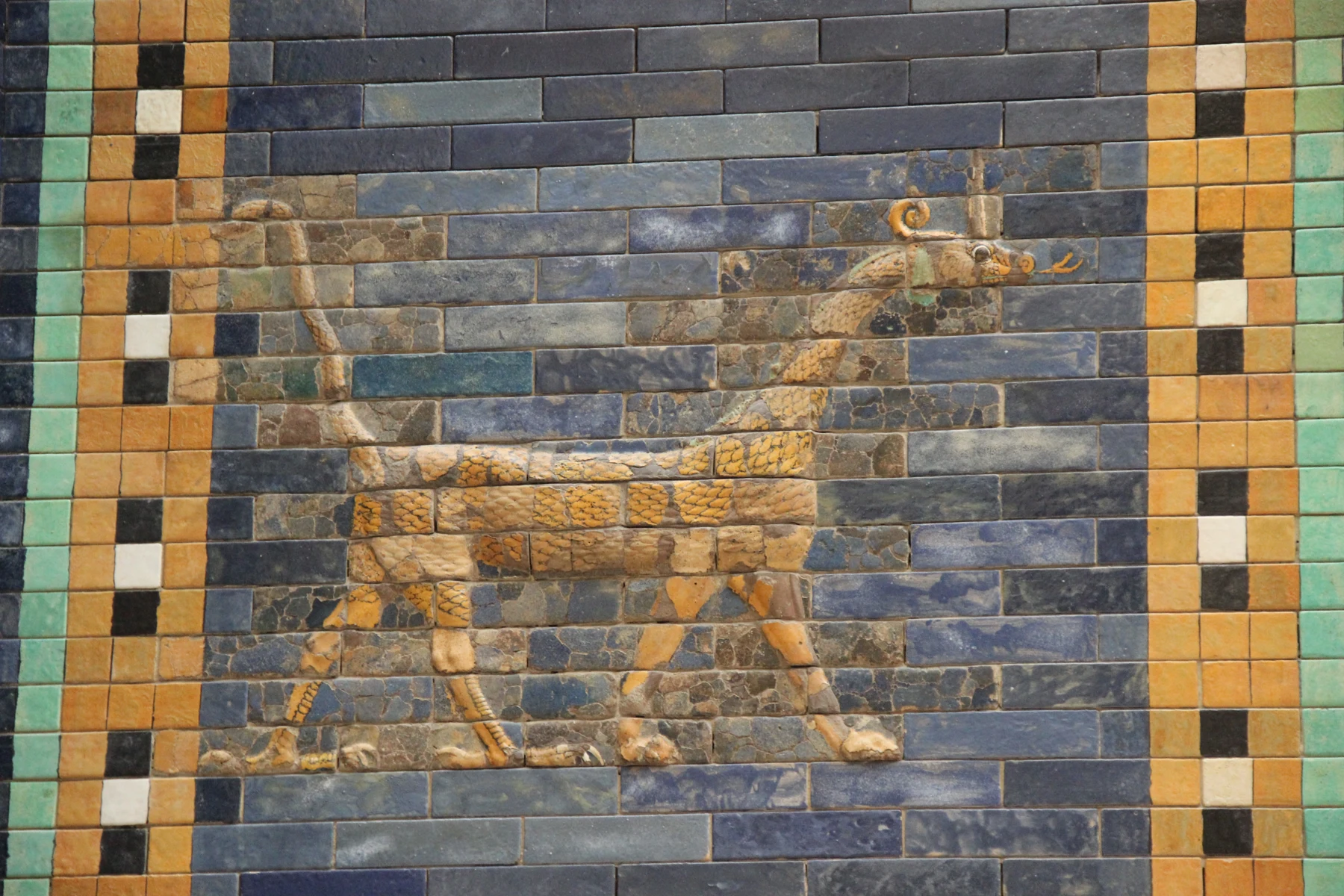
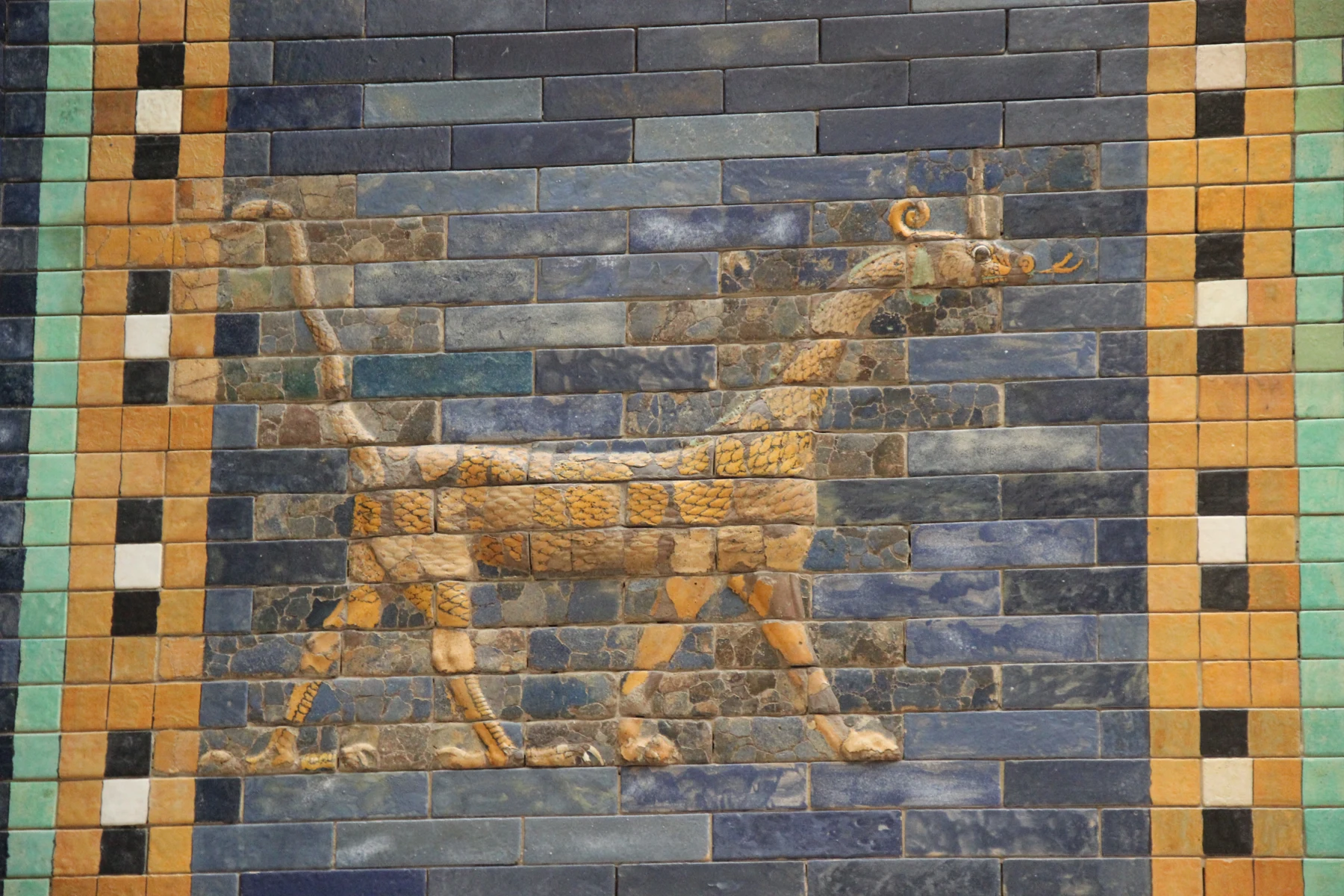
A gate in Nebuchadnezzar II’s sixth-century BCE Babylonian building program, decorated with glazed-brick animals associated with Mesopotamian deities.
Last reviewed:
Text
The IshtarInanna / IshtarA prominent Mesopotamian goddess whose Sumerian name Inanna became associated with Akkadian Ishtar across diverse traditions. She was associated with desire, war, royal authority and Venus, while local forms and genealogies varied among texts.Glossary · Click to read the explanation Gate is an architectural monument at ancient BabylonBabylonBabylon is an ancient city in central present-day Iraq, south of BaghdadGlossary · Click to read the explanation, from Nebuchadnezzar IINebuchadnezzar IIBabylonian king, 605–562 BCE, appearing in Daniel and independently attested in inscriptions and building remains.Glossary · Click to read the explanation’s sixth-century BCE building program. The Metropolitan Museum associates its dragon decoration with MardukMardukBabylon’s leading god, worshipped at Esagil and elevated in the Akkadian Enūma eliš. His symbols include a spade and mušḫuššu dragon. His earliest origins remain obscure; Nibiru is no evidence of a planetary homeland.Glossary · Click to read the explanation and the bull with AdadAdad: storm godAdad is the storm god in Mesopotamian traditions, associated with rain, thunder and powers of fertility or destruction.Glossary · Click to read the explanation. Lions linked to IshtarInanna / IshtarA prominent Mesopotamian goddess whose Sumerian name Inanna became associated with Akkadian Ishtar across diverse traditions. She was associated with desire, war, royal authority and Venus, while local forms and genealogies varied among texts.Glossary · Click to read the explanation lined the Processional Way connected with the gate. [1]
The photograph shows a dragon panel in a museum reconstruction incorporating ancient bricks. It illustrates one decorative detail, not the entire gate or a wall surviving in its original location. The ancient architecture’s date is distinguished from modern photography. [2]
References and notes
- Blair Fowlkes-Childs, “Temporary Encounters, Permanent Galleries,” Metropolitan Museum, 14 October 2014; Ishtar Gate architecture, animal symbols and the Processional Way. Glazed-brick panels from Babylon section. Return to the text ↑
- Gary Todd, photograph of the dragon panel reconstructed with ancient bricks, Pergamon Museum; 1 August 2016, CC0 dedication documented on the file page. Photograph of a decorative detail, not the whole gate. Return to the text ↑
Suggest a correction · Suggest a source for this record
Cite this record
IL Archive, «Ishtar Gate at Babylon», https://ilarchive.com/en/sites/ishtar-gate-babylon
Continue reading