Site · City
Purushhanda
- Names
- Burušḫattum · Purushhanda · Purušhaddum · Purušḫanda
- Region
- الأناضول
Purushhanda was an Anatolian trading center known from Old Assyrian records. It also appears in Anitta's proclamation and the King of Battle tradition. Its site remains debated.
Estimated reading time: 5 min Published Last reviewed:
Share article
Text
Introduction
Purushhanda is an ancient place known from merchant records, royal texts and stories. Old Assyrian tablets refer to a market called Purušhaddum in AnatoliaAnatoliaAnatolia is the region occupying the Asian part of present-day TurkeyGlossary · Click to read the explanation, generally associated with the place known as Purušḫanda in Hittite writing. The Proclamation of Anitta recounts a meeting between Anitta and its ruler. A much later copy of the tale of Sargon known as King of Battle makes the town the destination of a campaign. The records establish the town's place in Bronze Age trade and the stories show its place in later memory. Its archaeological location remains debated. [1][2][3]
A market in the merchant records
The Old Assyrian documentation, much of it preserved at Kanesh, connects Purushhanda to a substantial trade in copper. Merchants moved metal through several towns. Some records refer to copper being sent from Durhumit to the market at Purušhaddum, and one unusually large entry refers to about twenty-three tons in Gojko Barjamovic's analysis. Most records are far less detailed. The quantities that do survive show the scale on which some shipments were organized. They give no direct census of consumers. The market could draw goods and buyers from a wider region, and traders could send the metal onward. Barjamovic considers whether the silver available in the town came chiefly from mines in its own territory or from buyers and investors. The variation in supply leads him to favor the latter explanation. [1]
The tablets also give a view of dealings between traders and palace officials. Barjamovic identifies an official named Ušinalam as a participant in transactions concerning the local palace. One letter reports that the local ruler treated two Assyrians badly and held their goods in palace storage. The complaint is a record of a disagreement over people and property in an economic setting. The materials in it have encouraged comparisons with the King of Battle, where merchants call on a king for help. The existence of a trade dispute in the Old Assyrian period does not connect those particular traders to Sargon, who belongs to a much earlier age. [1][3][4]
A throne and a seat on Anitta's right
Near the end of the Proclamation of Anitta, the ruler of Purushhanda brings Anitta an iron throne and an iron crook. Anitta takes him back to Nesha. In Harry Hoffner's translation, the ruler is to sit on Anitta's right when he goes into the inner chamber. The account is short and damaged around the description of the meeting. The throne, crook and assigned seat therefore carry much of the meaning readers try to recover. [2]
One interpretation treats the gifts as the insignia of a ruler who yielded to Anitta. Jan Gerrit Dercksen observes that other ancient Near Eastern kings also sent thrones in recognition of an alliance or as signs of an offer of protection. He compares a letter in which the king of Eshnunna sends a throne to the king of Mari so others will recognize their relationship. That comparison leaves the Purushhanda gifts open to more than one interpretation. The text makes the relationship with Anitta public in material and ceremonial terms, without giving us an agreement that spells out the rulers' obligations. [2][5]
Purushhanda in King of Battle
The AkkadianAkkadianAn ancient East Semitic language written in cuneiform from the third millennium BCE; its varieties include Babylonian and Assyrian, and it served in international diplomacy.Glossary · Click to read the explanation manuscript EAEnkiMesopotamian deity also known as Ea, linked with Eridu and the Abzu (deep fresh waters), wisdom, incantations, and narratives of creation and cosmic order. Later written attestations do not identify the deity of Eridu’s earliest layers.Glossary · Click to read the explanation 359, found at AmarnaAmarna / AkhetatenAmarna is the archaeological site of Akhetaten, Akhenaten’s fourteenth-century BCE capital in Middle Egypt, preserving royal boundary stelae, temples, houses and cemeteries.Glossary · Click to read the explanation in Egypt, preserves a version of the story called King of Battle. Sargon's men describe a difficult road into Anatolia. A spokesman for the merchants appeals to him, and Nurdaggal, the opposing ruler, expects the terrain to keep him away. The manuscript stages their eventual encounter as a confrontation in speech as well as in action. Late Bronze AgeLate Bronze AgeAn archaeological period around 1600–1200 BCE in much of the Near East, with international diplomacy, exchange and religious diversity; its endpoints vary by region.Glossary · Click to read the explanation manuscripts of the Hittite version add material and arrange some scenes differently. Giulia Torri treats the differences as evidence of a story reshaped through transmission. [3][4][6]
A major Hittite witness was excavated in the storerooms associated with Temple 1 at Hattusa. Its tablet fragment KBo 22.6 preserves the place-name Purušḫanda. Other copies or fragments of the tale have been identified at Hattusa, Amarna, Assur and NinevehNineveh and KuyunjikNineveh is an ancient Assyrian city near Mosul in northern Iraq; Kuyunjik is one of its archaeological moundsGlossary · Click to read the explanation, with different degrees of certainty for individual pieces. The known manuscripts are separated from the time of Sargon by centuries. The evidence is much closer to the time of the scribes who copied the story than to the reign it depicts. They document where the story circulated and how different scribes transmitted it. They do not independently establish that Sargon traveled to the town. [3][4][7]
Locating a city that survives in texts
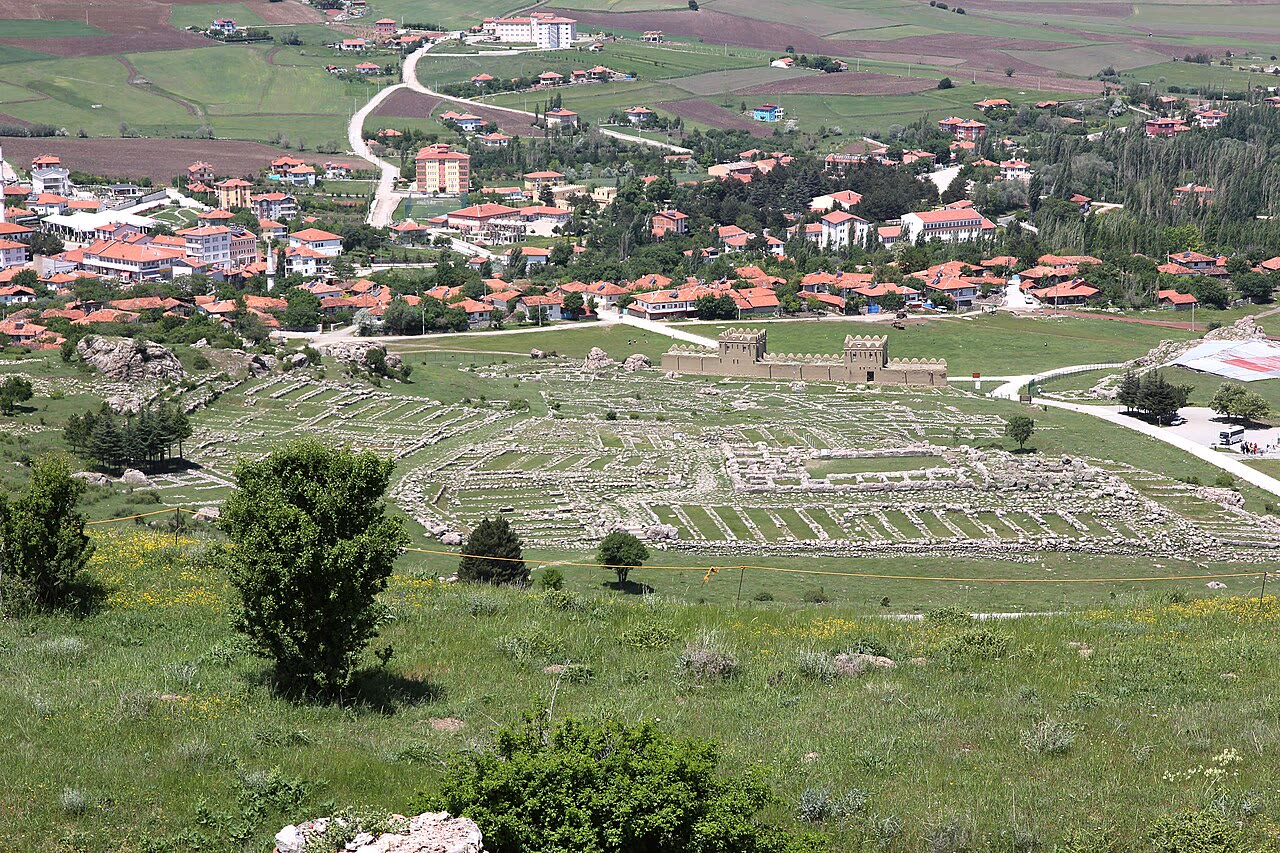
Acemhöyük long figured among proposed identifications, in part because it was a major Bronze Age center with palatial remains. Torri notes the option while also describing arguments that the town lay farther west, including a proposal involving Karahöyük near Konya. Barjamovic argues against identifying it with Acemhöyük. He looks to the routes and markets named together in the merchant texts and proposes Üçhöyük in the Bolvadin area. Its Middle Bronze Age surface material and location near overland routes fit part of his reconstruction. The available pottery and terrain can identify a settlement and explain its role along routes. Neither supplies an inscription identifying it as the city in the letters. The texts therefore tell us more about Purushhanda's relationships with rulers and trading communities than they do about its exact place on a modern map. [1][6]
References and notes (7)
- Gojko Barjamovic, A Historical Geography of Anatolia in the Old Assyrian Colony Period Pp. 372–376 and 405–407, copper trade, palace evidence and proposed position near Bolvadin Return to the text ↑
- Harry A. Hoffner Jr., Proclamation of Anitta of Kuššar The Context of Scripture 1.72, §19, Purushhanda and the iron gifts Return to the text ↑
- Jonathan F. Osborne, History and Temporality in Bronze Age Anatolia Pp. 706–712, summary of the narrative, manuscript contexts and historical problem Return to the text ↑
- Shlomo Izre’el, The Amarna Scholarly Tablets Pp. 68–70, EA 359 translation, obverse and reverse Return to the text ↑
- Jan Gerrit Dercksen, Anitta and the Man of Purušhanda Discussion of the gifts and comparisons with other royal thrones Return to the text ↑
- Giulia Torri, Sargon, Anitta, and the Hittite Kings Against Purušḫanda Pp. 111–114, manuscript traditions and geographical proposals Return to the text ↑
- LAMAN, Hittite and Anatolian Names, KBo 22.6 Hittite King of Battle fragment, attestation of Purušḫanda at I 14′ Return to the text ↑
Suggest a correction · Suggest a source for this record
Cite this record
IL Archive, «Purushhanda», https://ilarchive.com/en/sites/purushhanda