Enki’s Journey to Nippur Chapter 1
The House on the Water
Enki’s temple at Eridu shines with precious metal and blue stone. Its bricks give counsel and its river carries him to a feast where his father, Enlil, praises his work.
SourcesTurn the pages with the arrows, the arrow keys or a swipe.
ERIDU
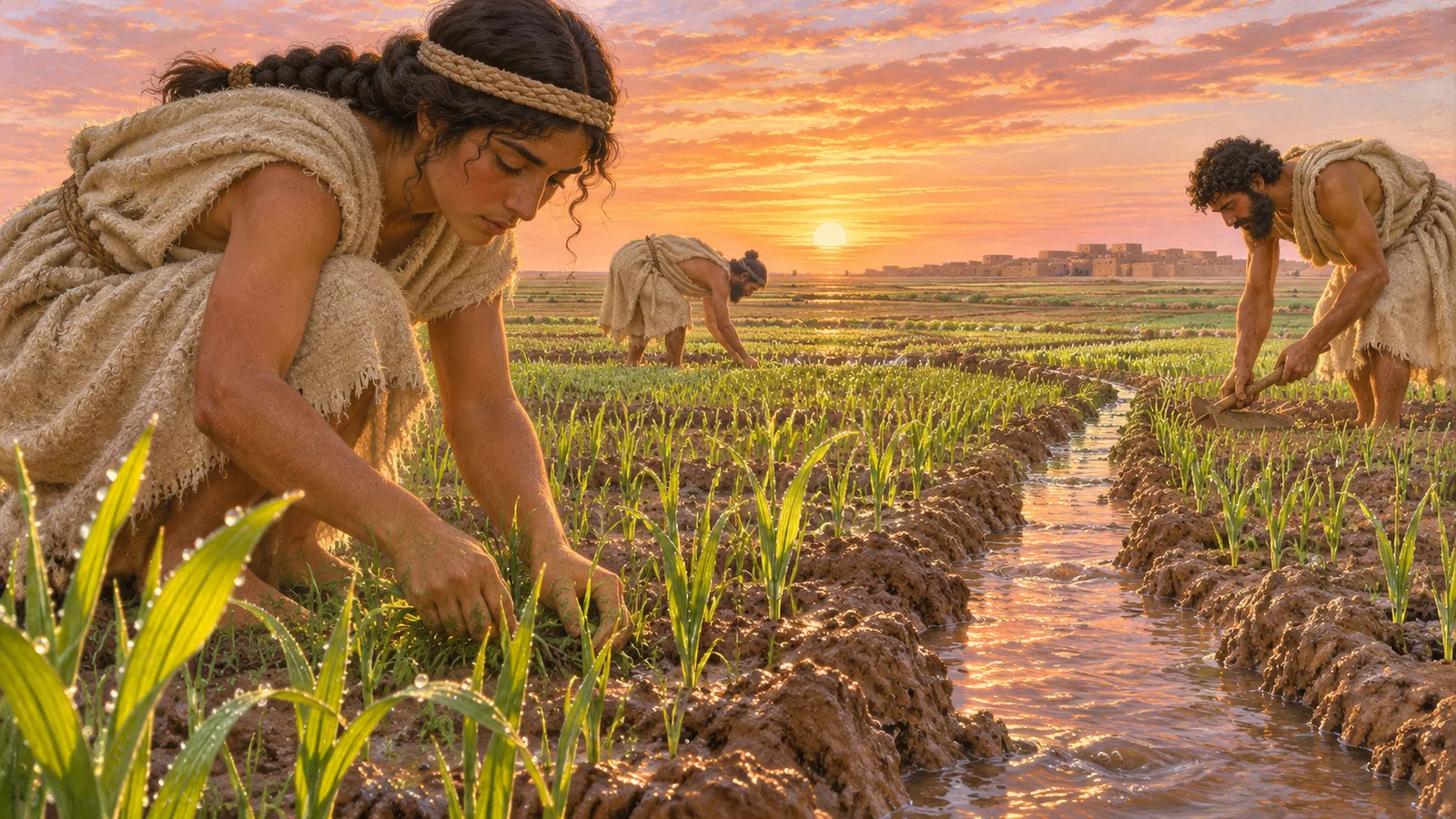
In the far-off days when destinies were first decided, An brought a year of abundance. The poet pictures people coming up through the earth like young plants.
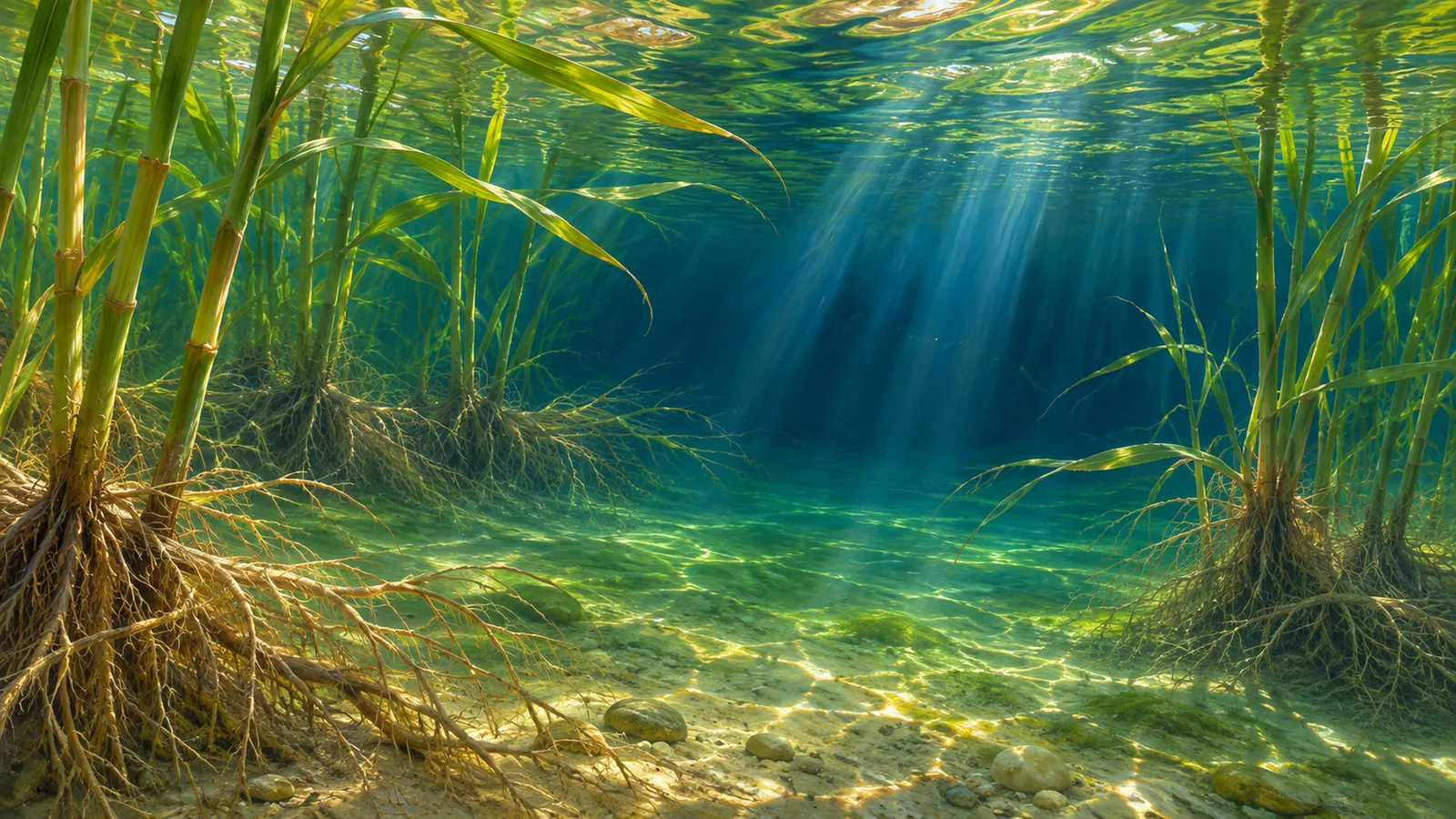
Enki ruled the Abzu, the deep fresh waters. As lord of destinies he made his sanctuary there, bringing joy into the depths where his new house took root.
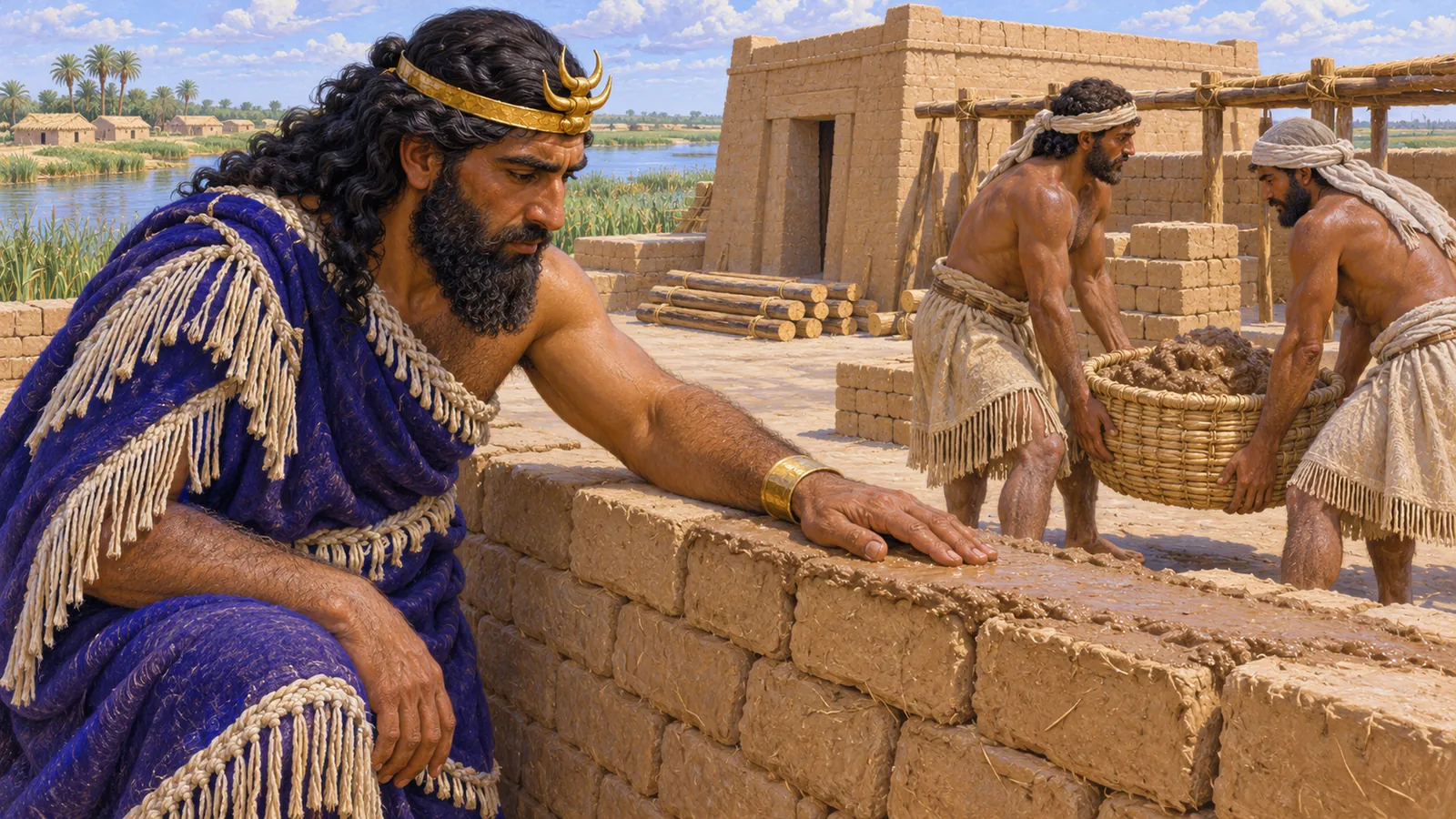
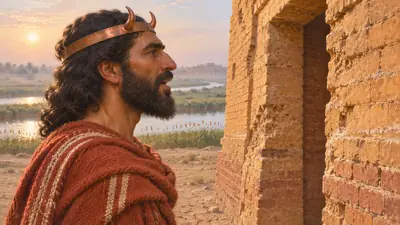
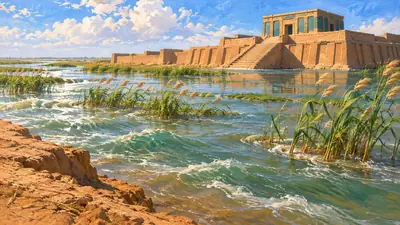
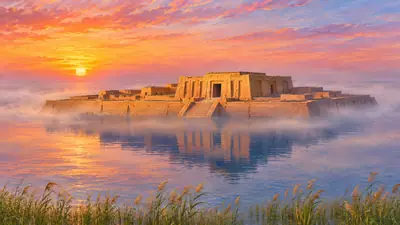
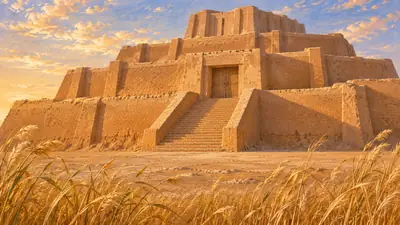
At Eridu, Enki built on the bank. A crafted parapet rose above the water, and the poem calls its owner Nudimmud, another name for Enki.
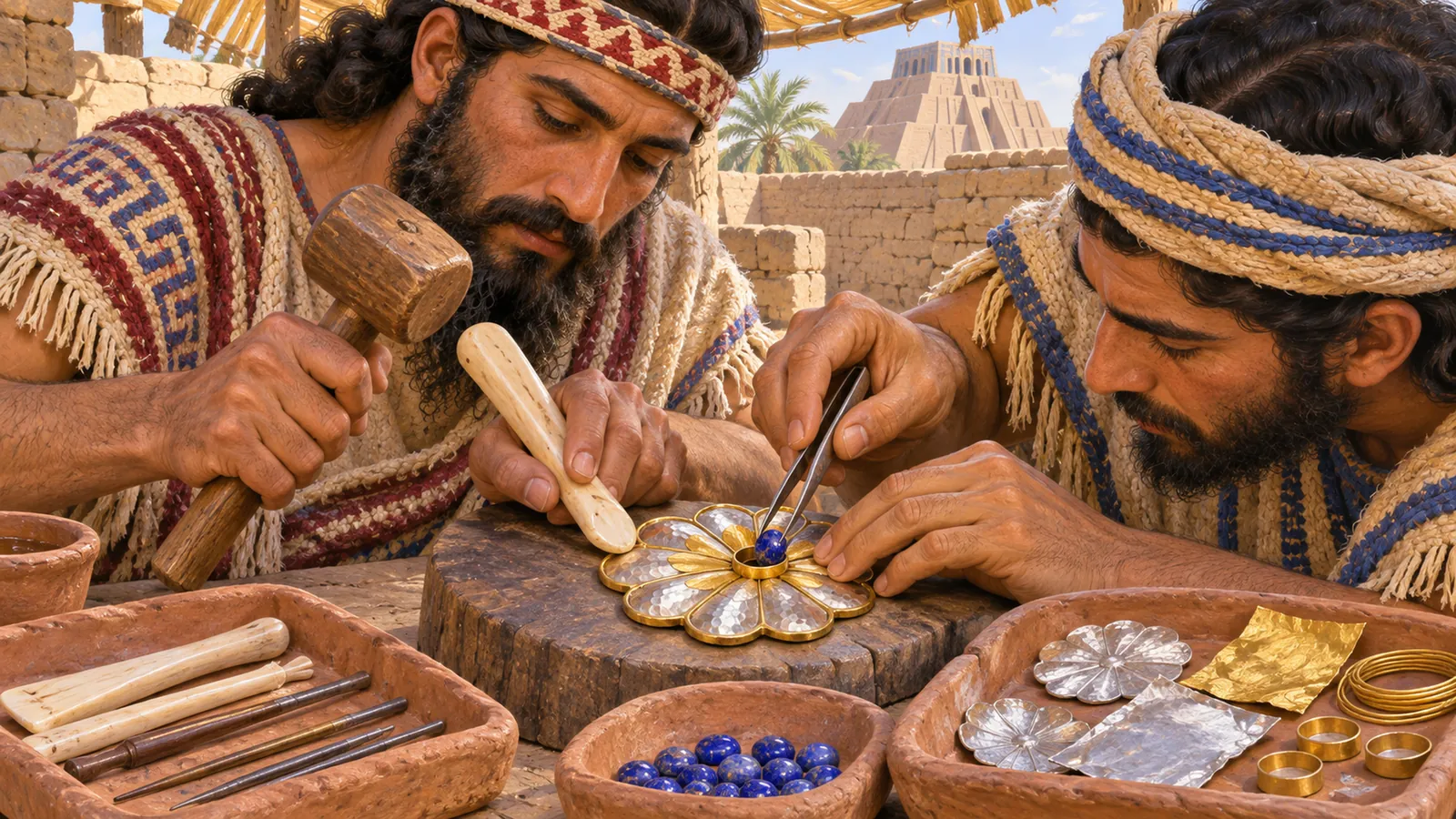
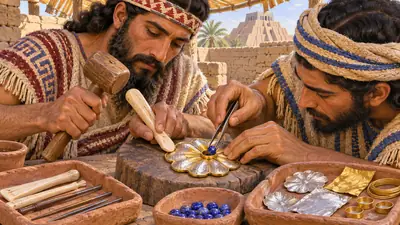
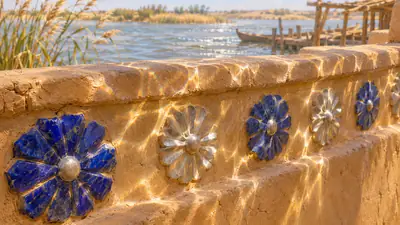
The poem gives the building walls of precious metal and ornaments of lapis lazuli. Gold covers it abundantly, turning a house of the gods into a place of radiance.
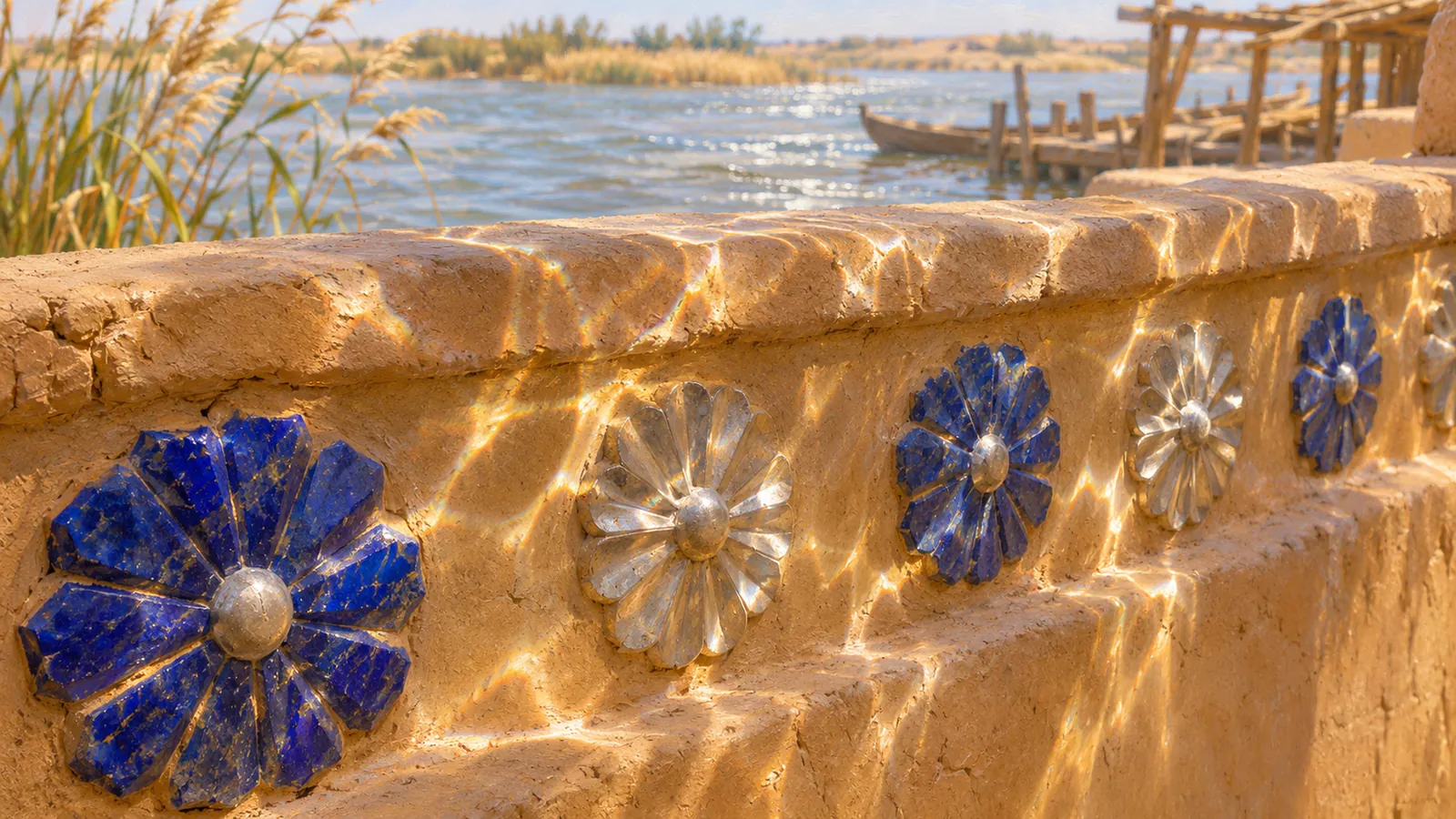
Silver and lapis shine as brightly as daylight in the poet’s telling. Every glitter of blue stone and bright metal seems to carry the Abzu’s gladness into the open.
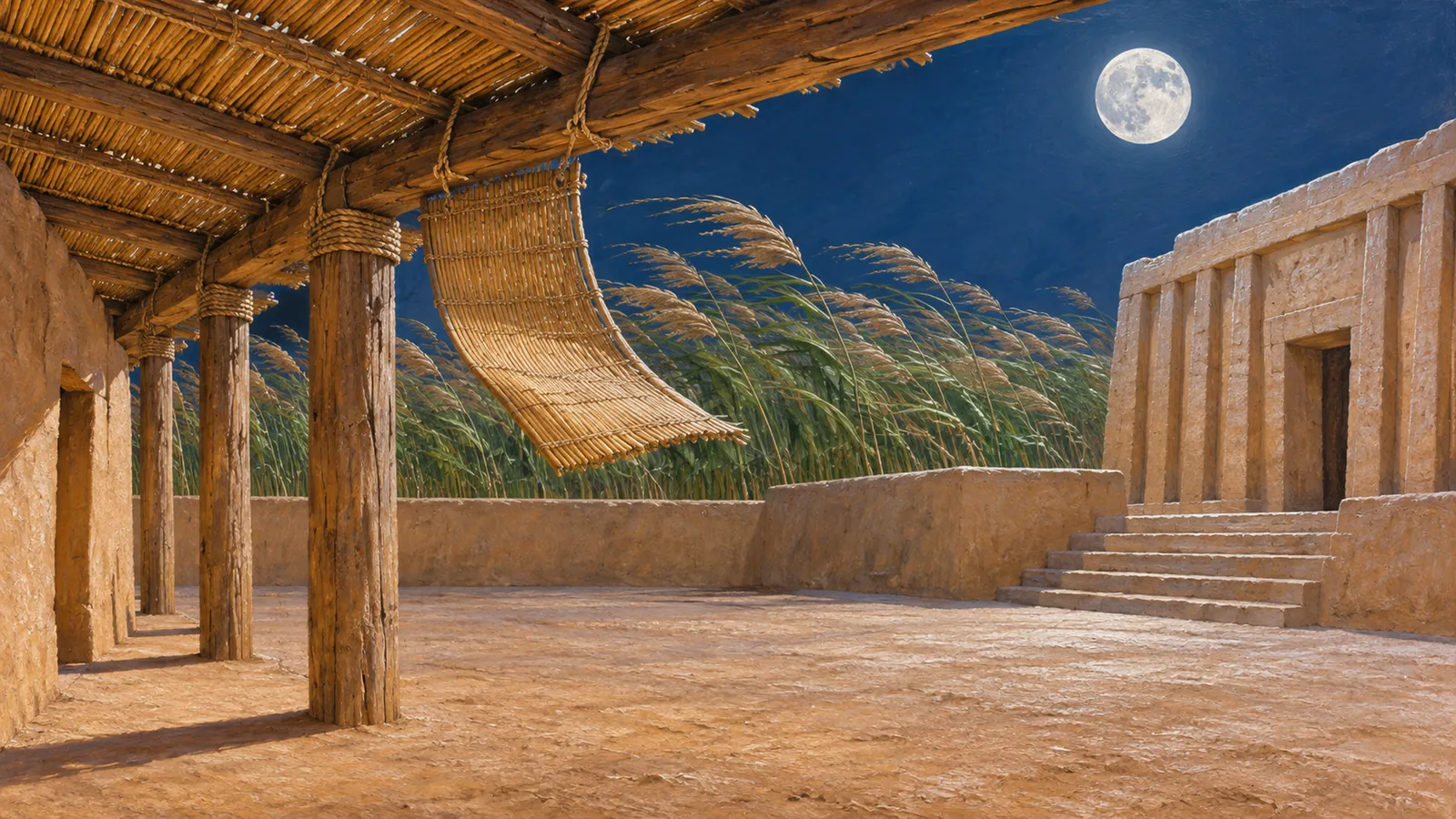
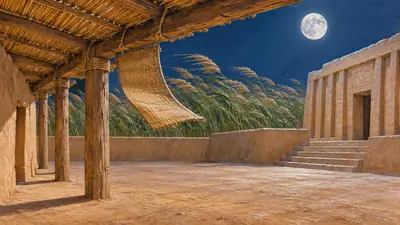
At night the house praises its lord. Its bricks speak and offer counsel. Above them the eaves roar like a bull, and the whole building seems to answer.
ISIMUD
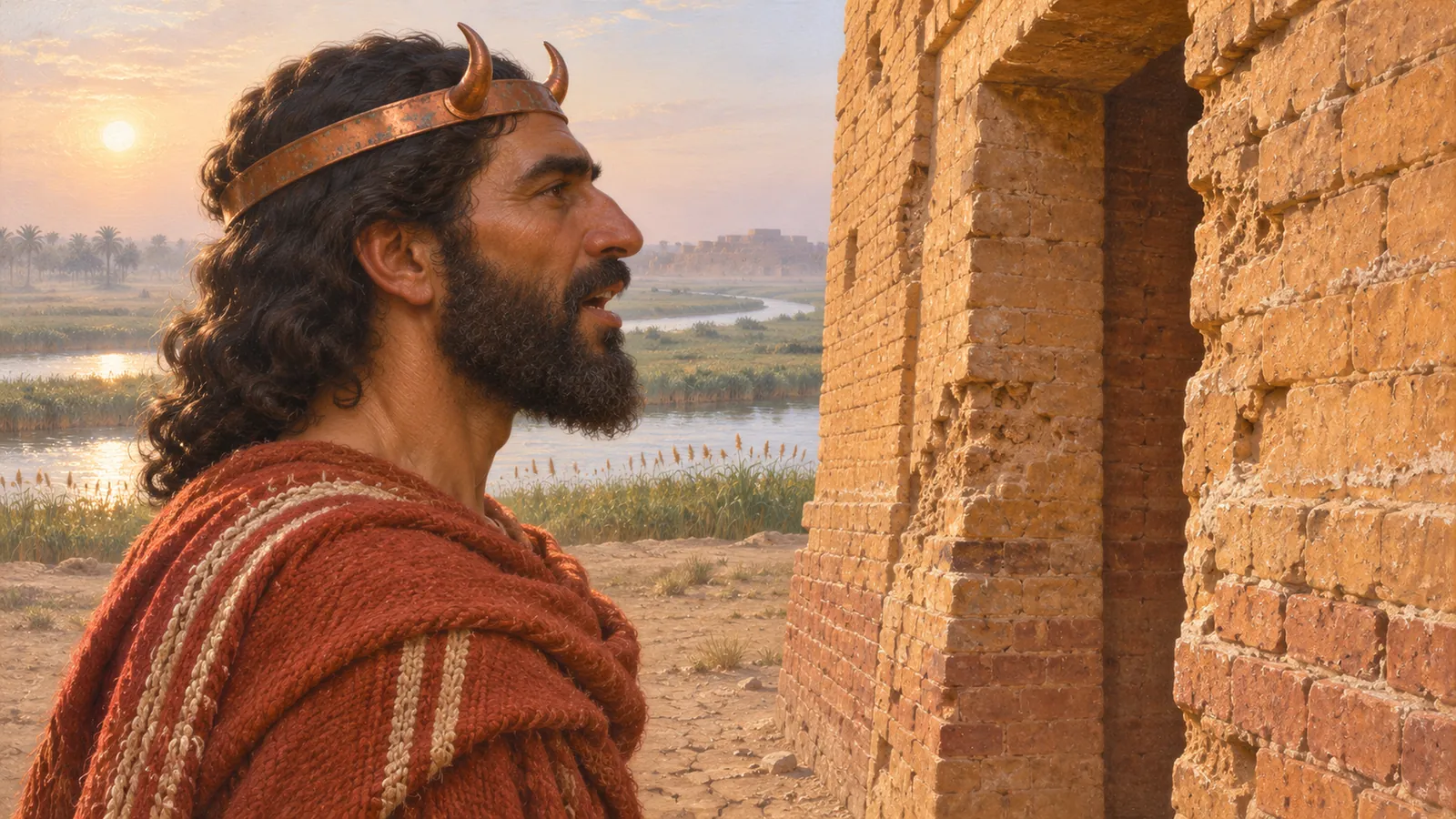
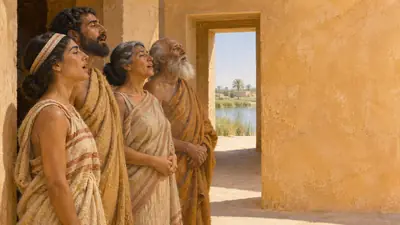
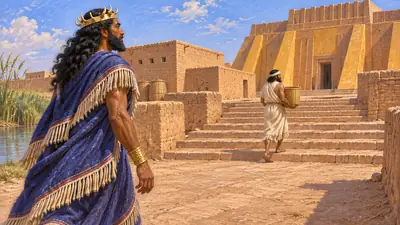
Enki’s minister Isimud walks up to the building and speaks to its bricks. He praises the house as mighty and awe-inspiring as the Tigris and the Euphrates.
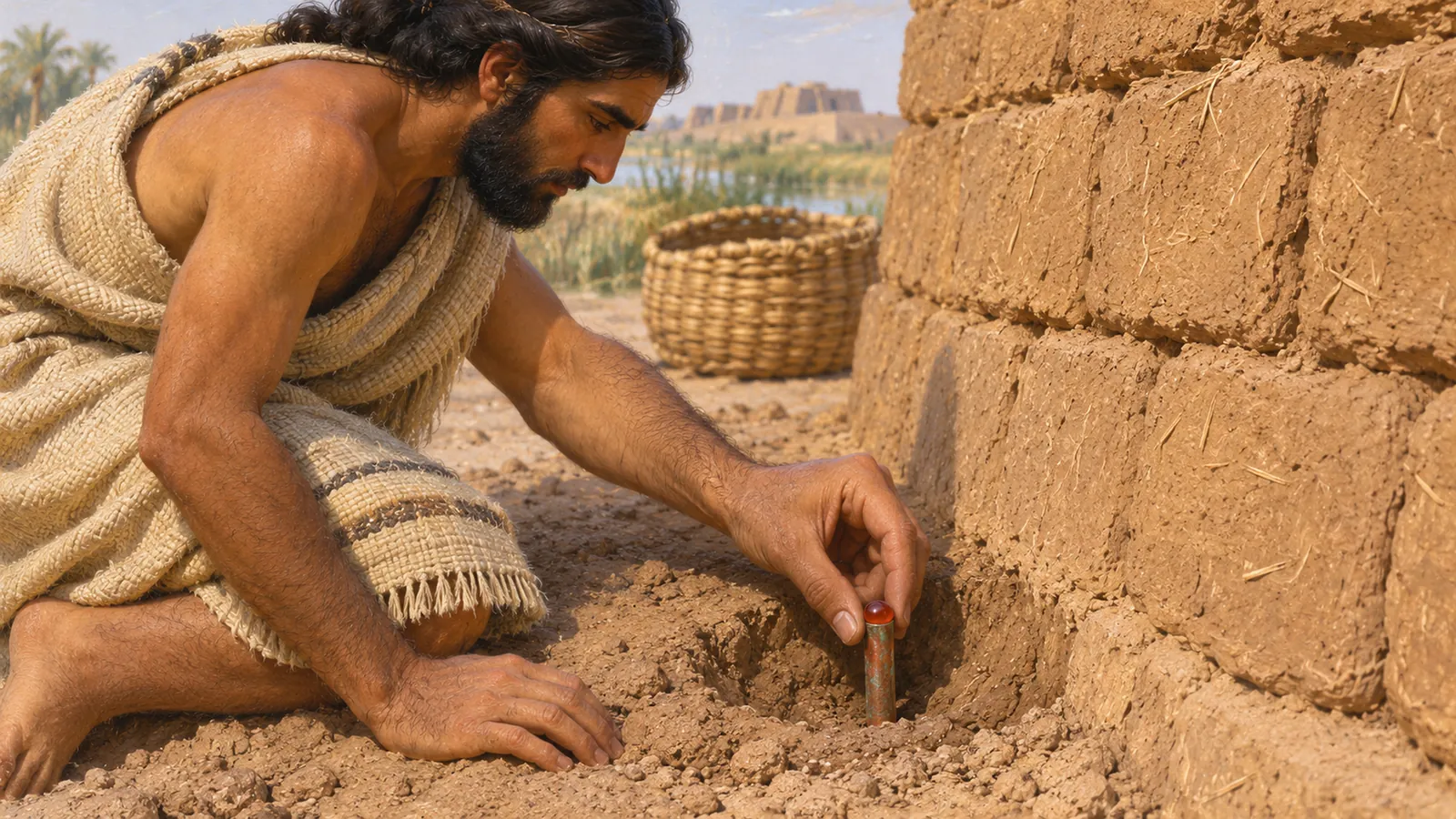
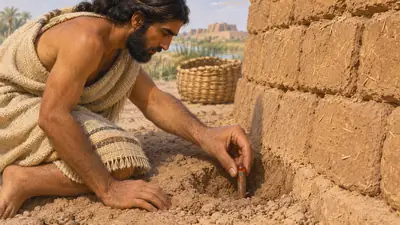
Isimud tells the house that its foundation pegs reach down into the Abzu. Enki has adorned them with carnelian, so the splendor extends down where eyes can seldom follow.
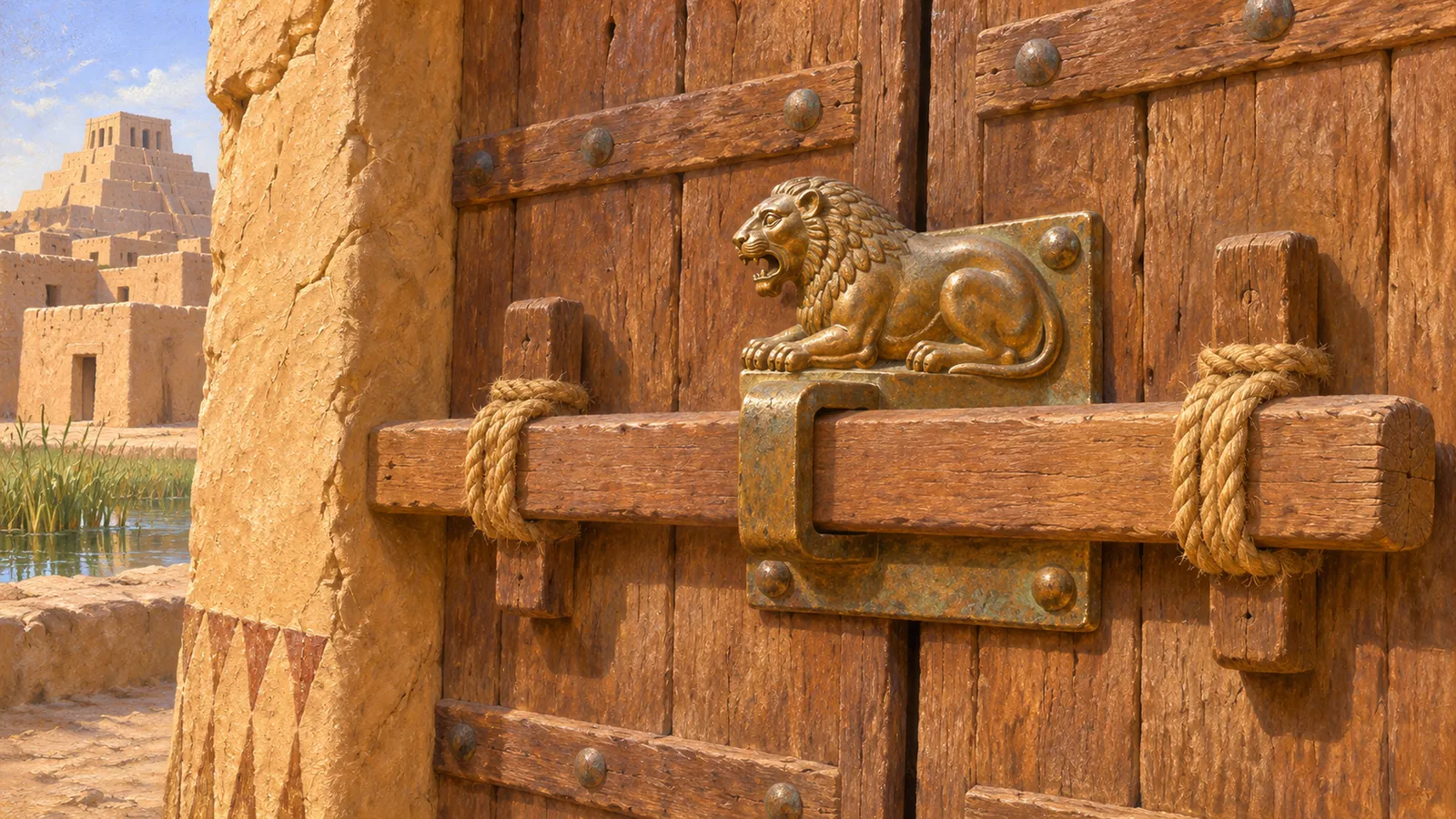
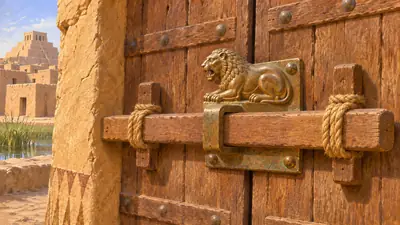
Isimud praises a lock without rival. The bolt that holds the door shut is a fearsome lion in his speech, one of several guardians made from words.
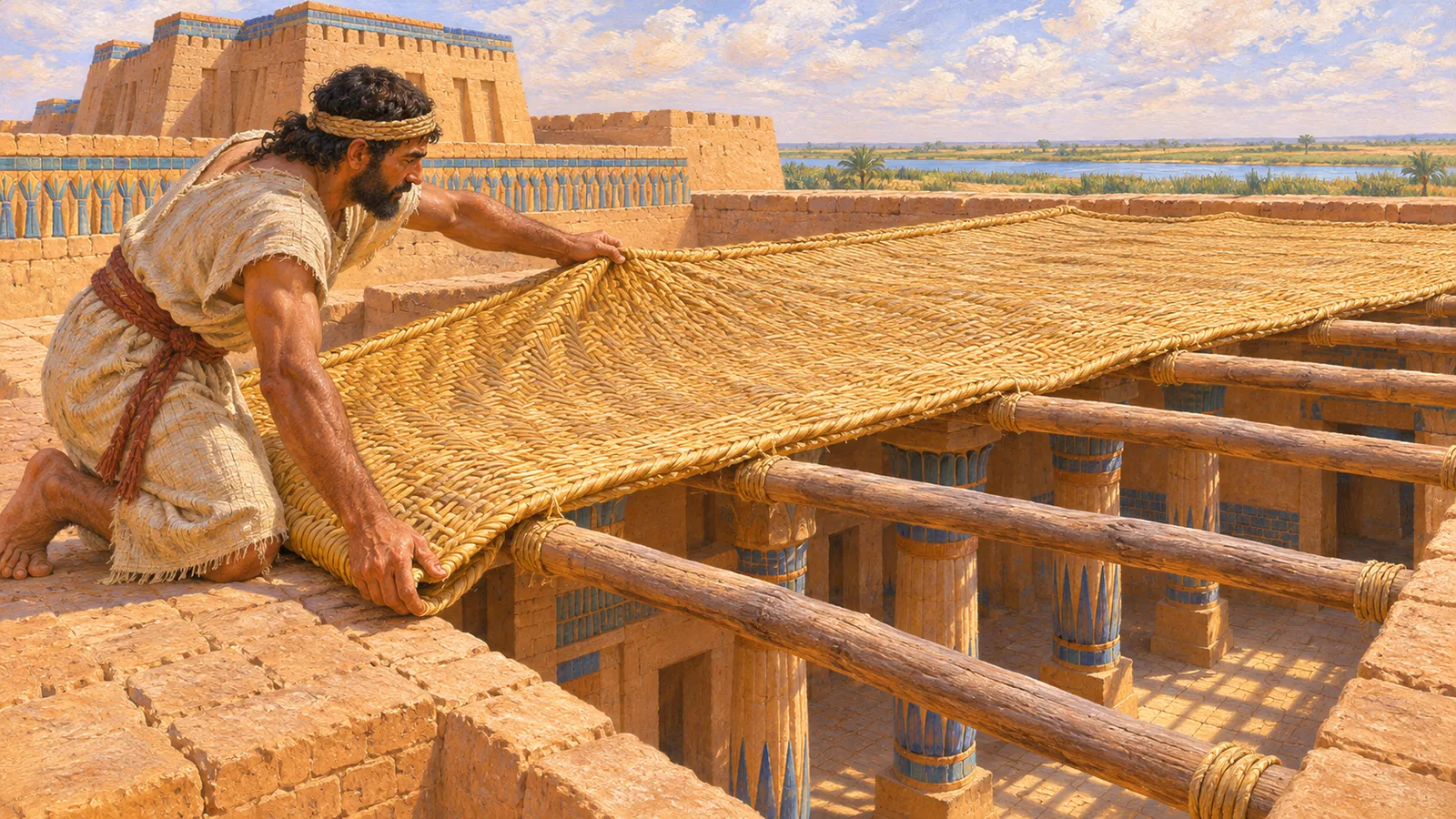
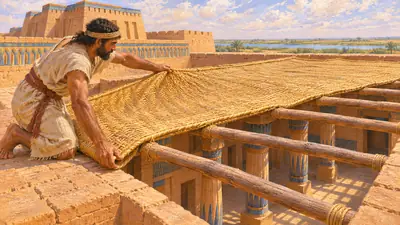
The roof beams carry the strength of the bull of heaven. Reed mats spread across them, and in Isimud’s praise their woven surfaces shine like lapis lazuli.
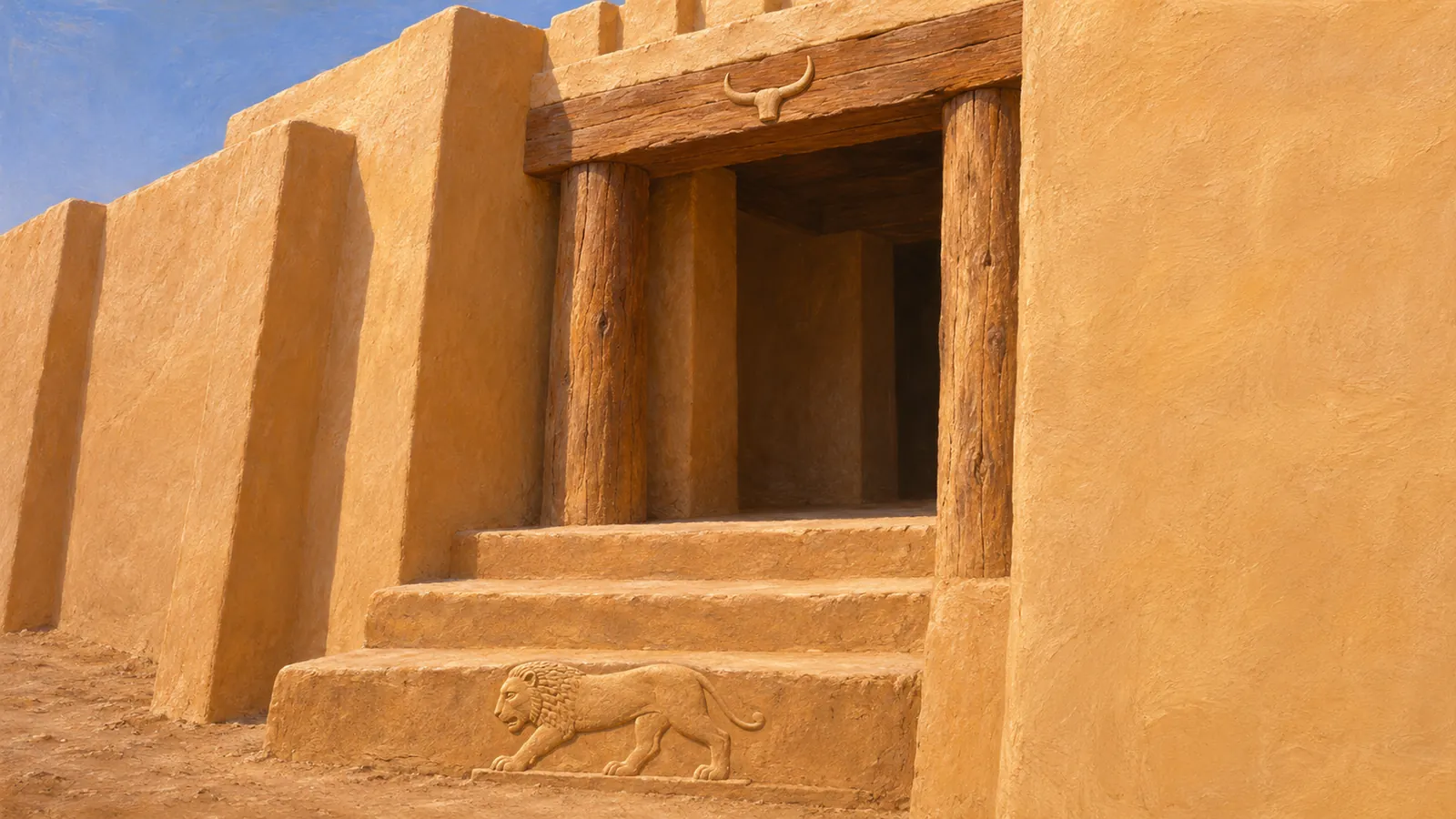
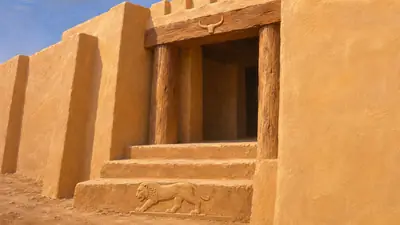
The vault swells like a wild bull lifting its horns. The doorway seizes a visitor like a lion, and Isimud gives the stair beneath it the same startling strength.
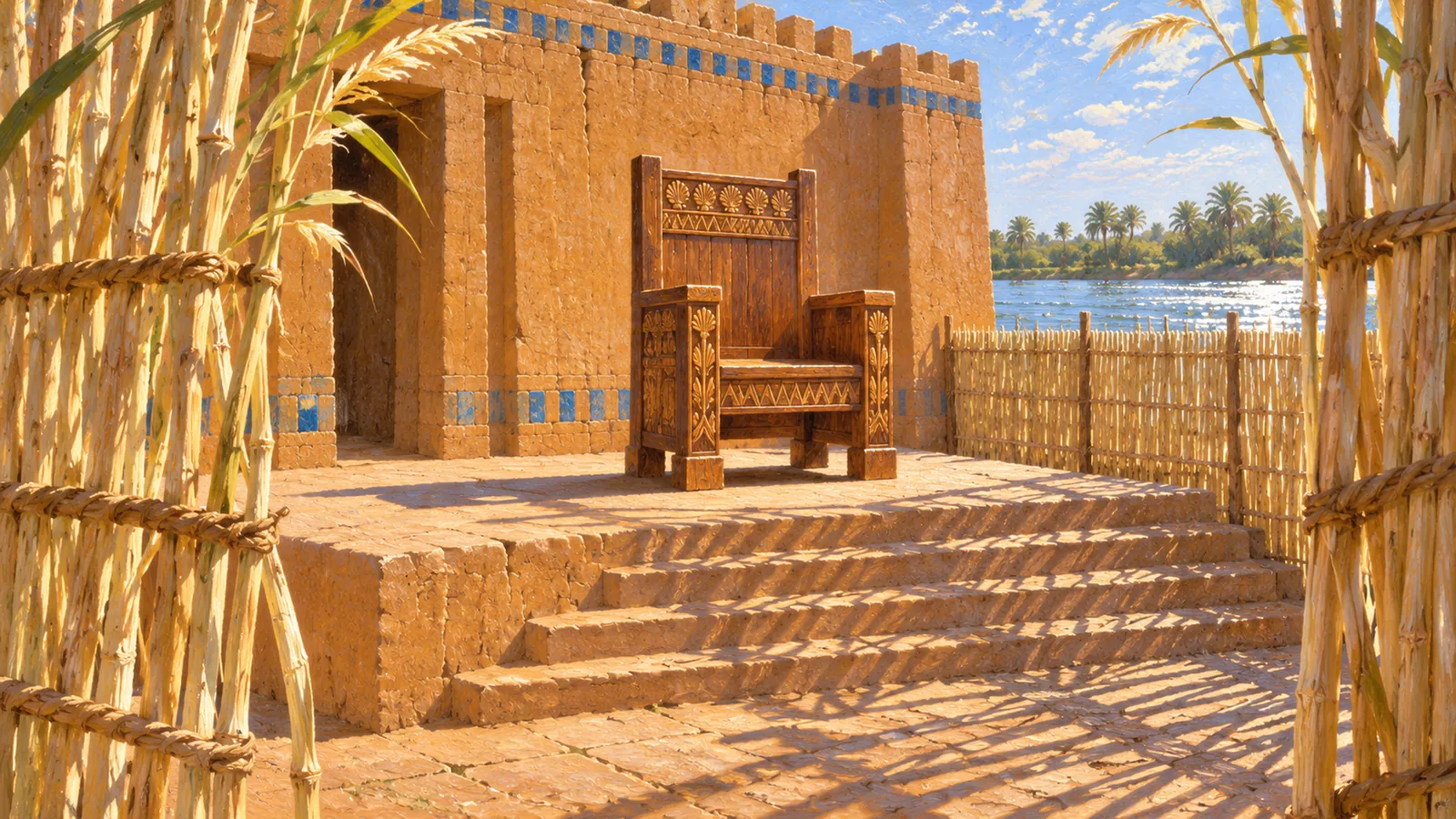
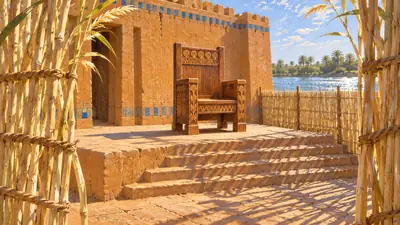
Enki has surrounded the house E-engura with a fence of silver reeds. Within, a high throne stands waiting. Its doorjamb reminds Isimud of heaven’s own shining lock.
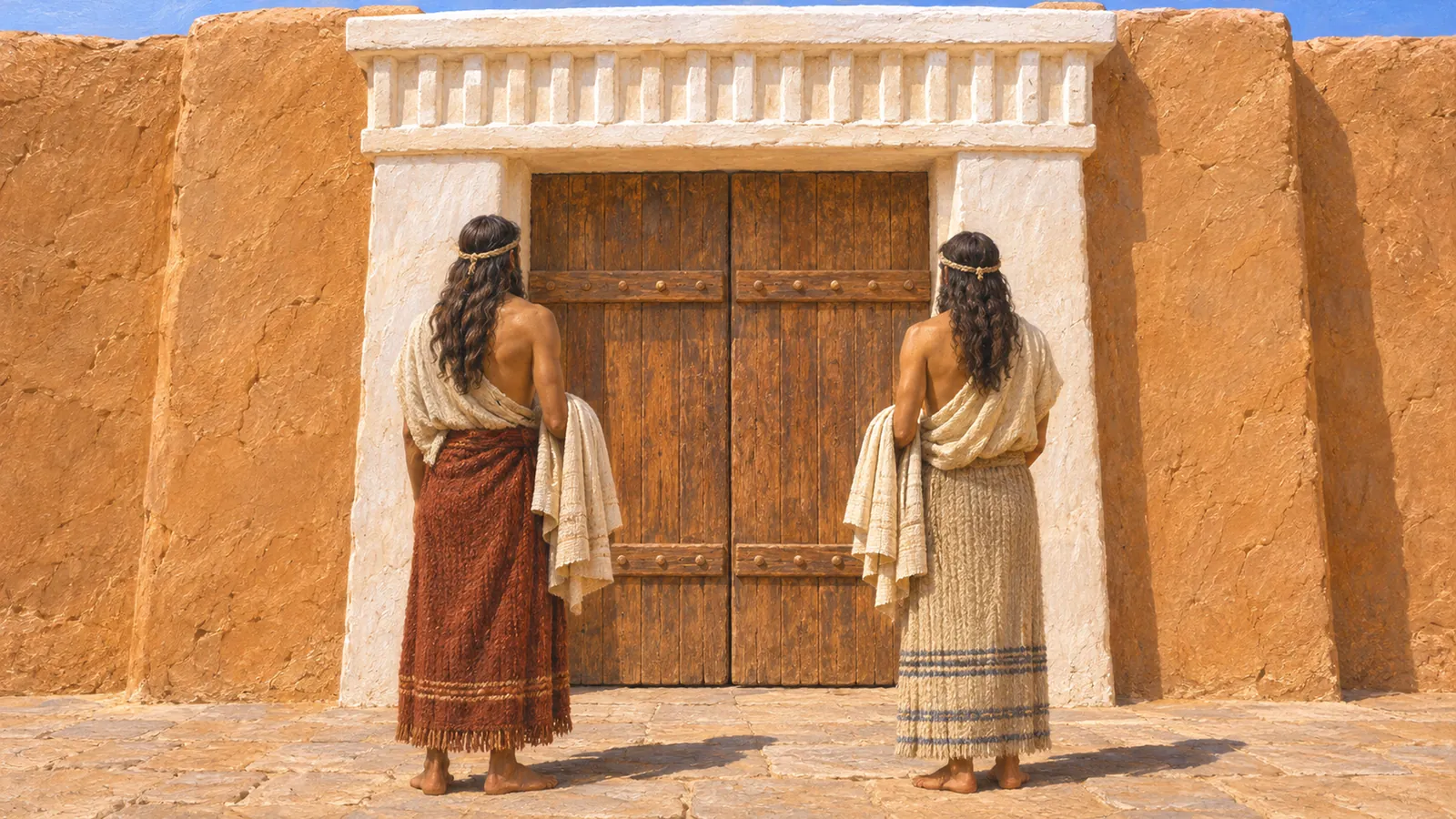
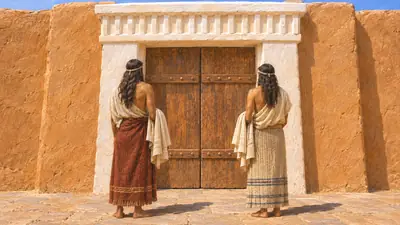
Within the Abzu destinies are decided. Enki guards the inner place from view. The abgal priests of the shrine wear their long hair loose down their backs.
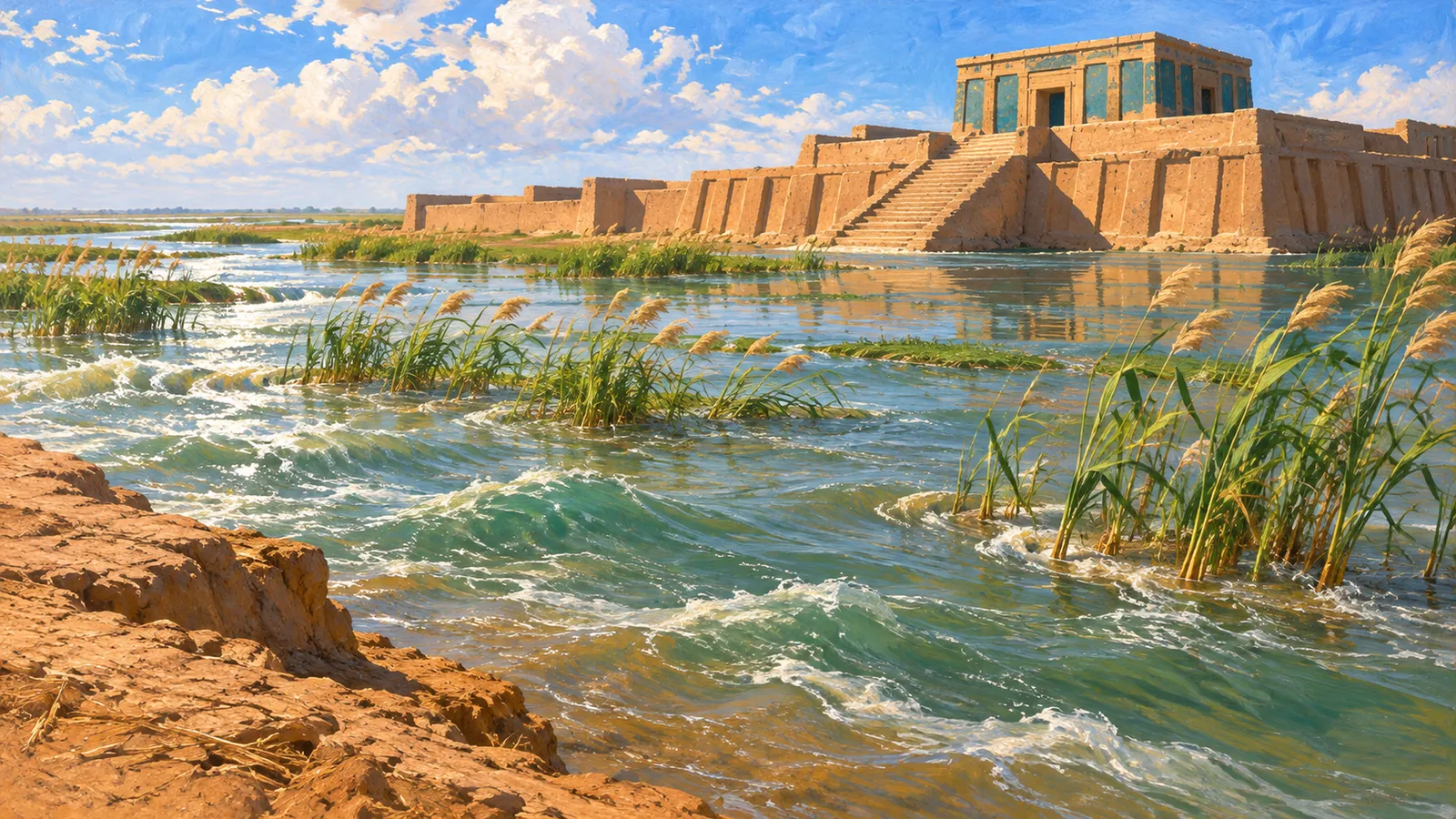
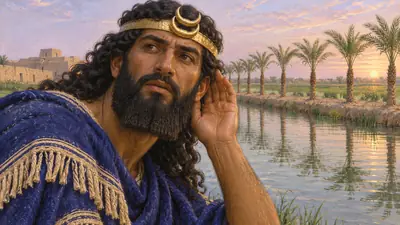
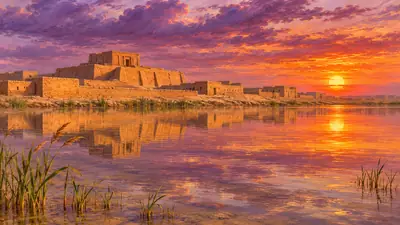
Isimud calls to Eridu and sees its shadow stretch out over the sea. An immense river rises in his telling while the house stands fast on the shore.
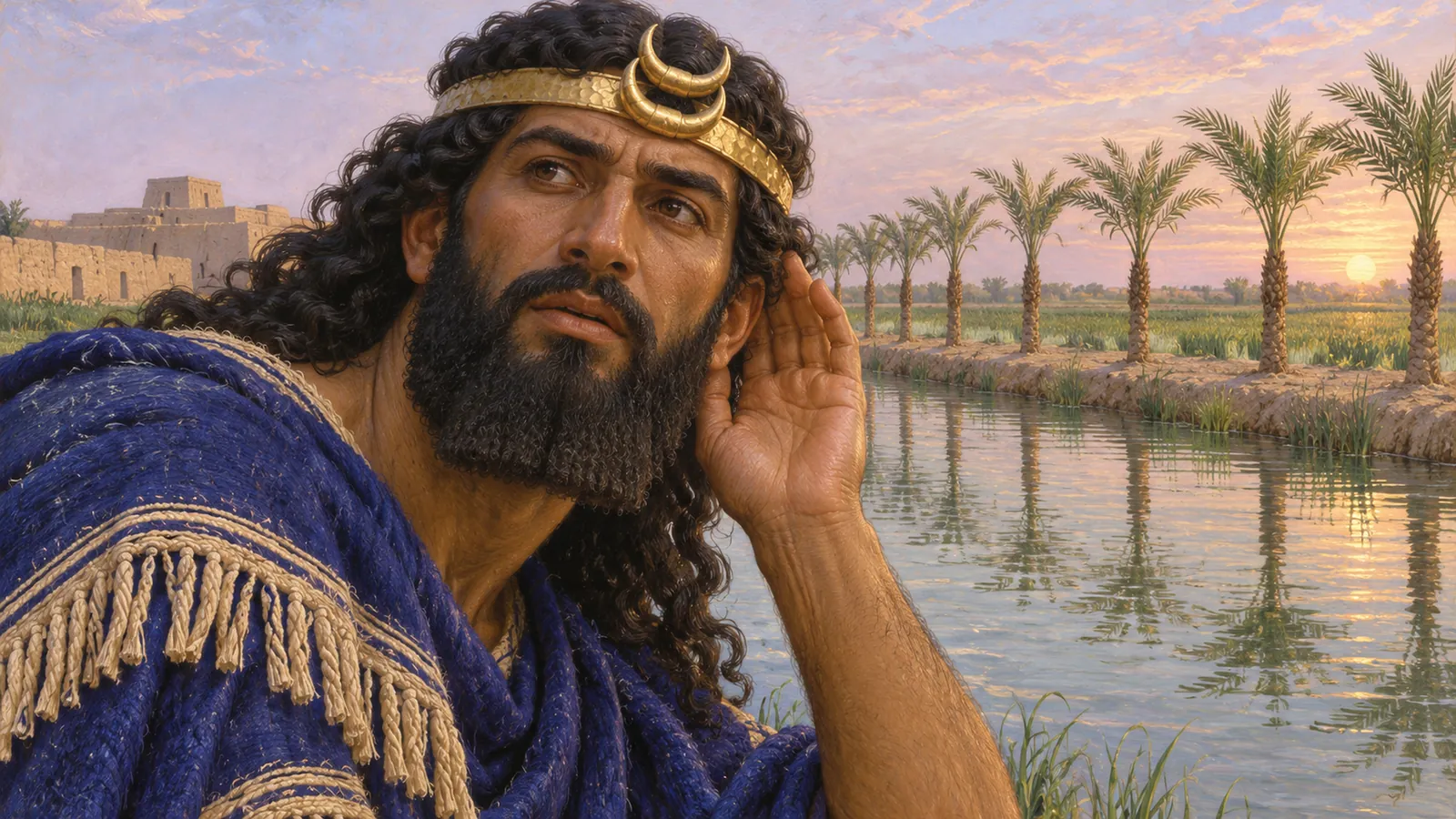
Isimud praises the high temple for giving wisdom to the land. He likens the building’s cry to the roar of a rising river. Its voice reaches Enki.
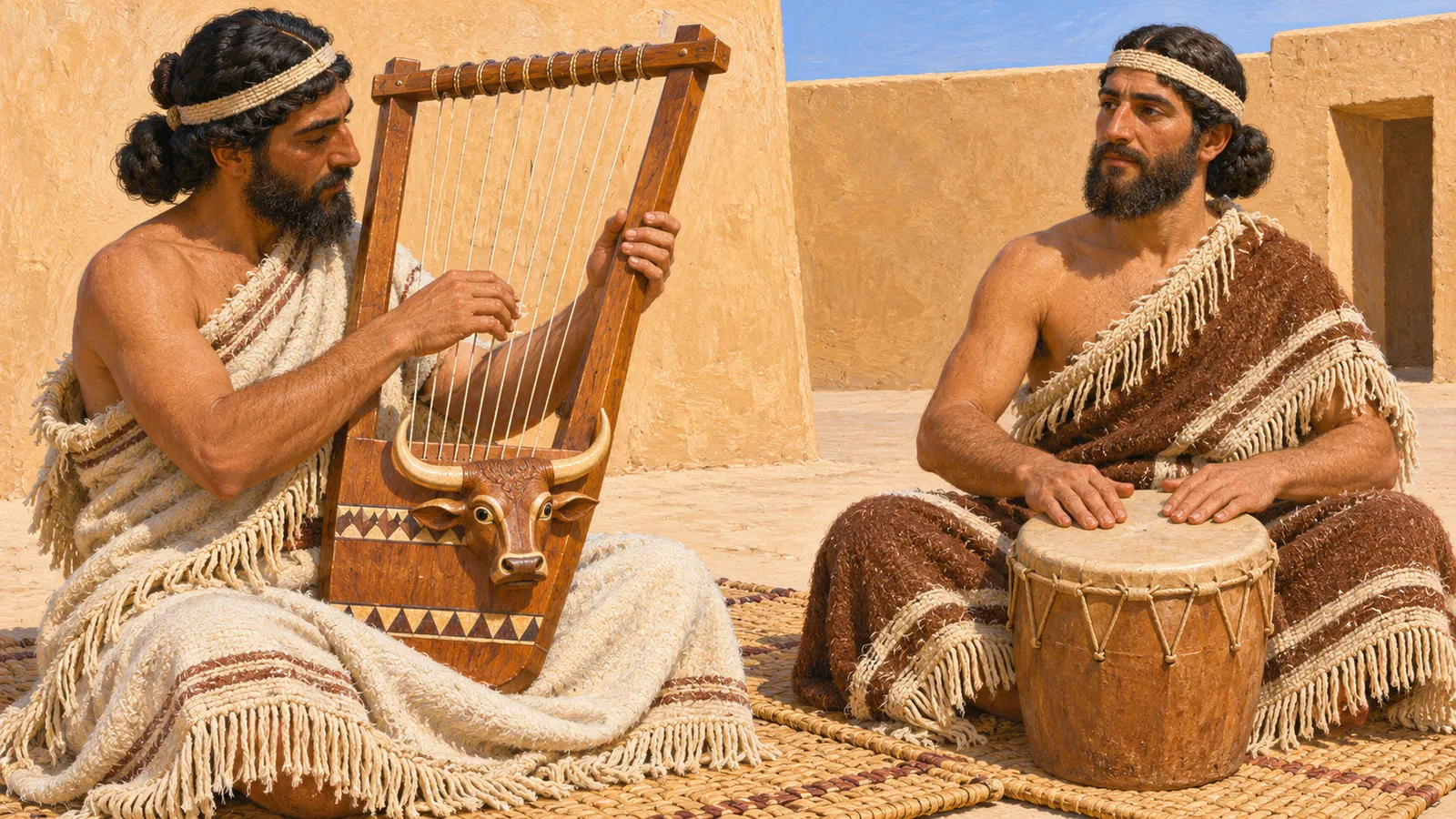
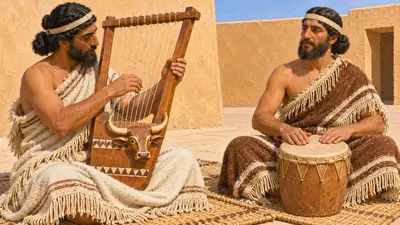
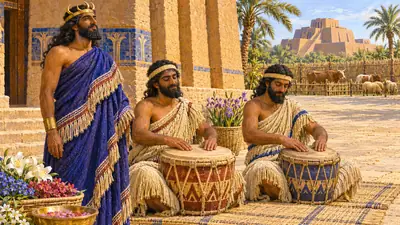
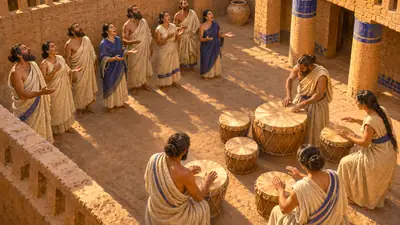
Enki fills his shining house with music. A lyre and a balag drum are among the instruments the poem names. Their sounds mingle in praise of the new sanctuary.
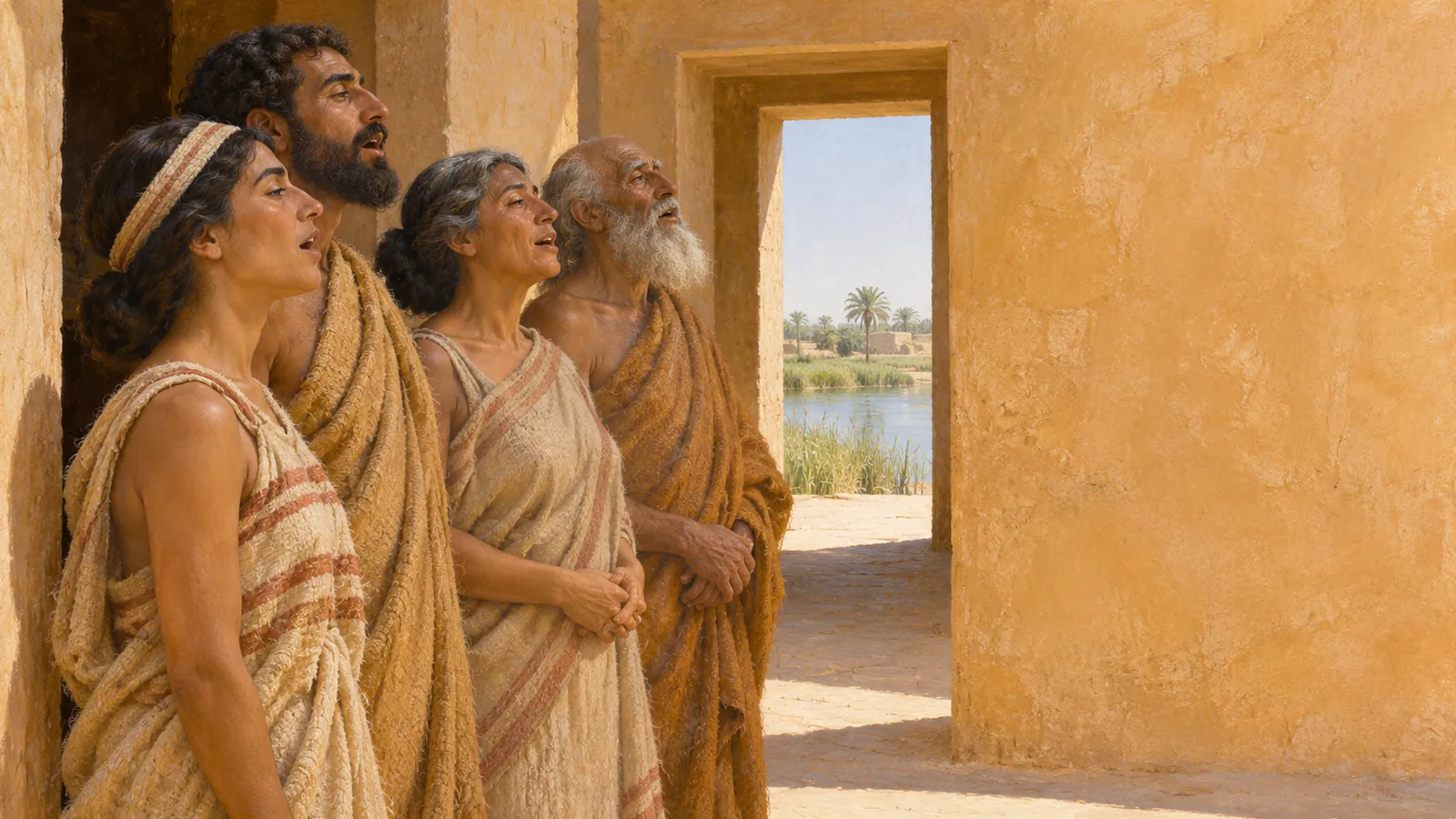
The silver algar sounds of its own accord, and the poem hears others answer. Isimud ends his address to the bricks with sweet songs for E-engura.
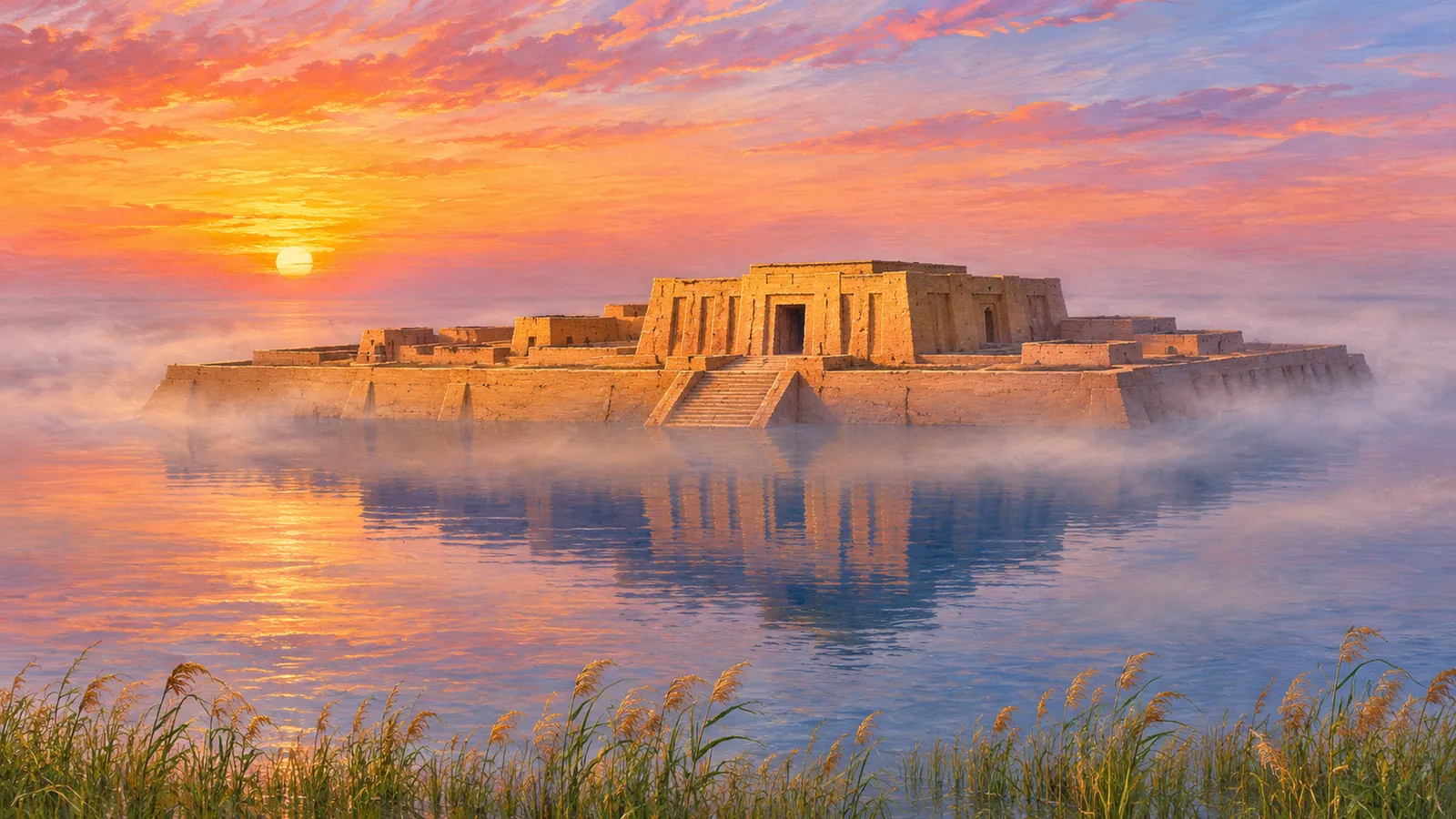
Now the poem sings of Eridu itself. Enki has raised it so skillfully that the temple is like a mountain afloat, its edge stretching out toward the reeds.
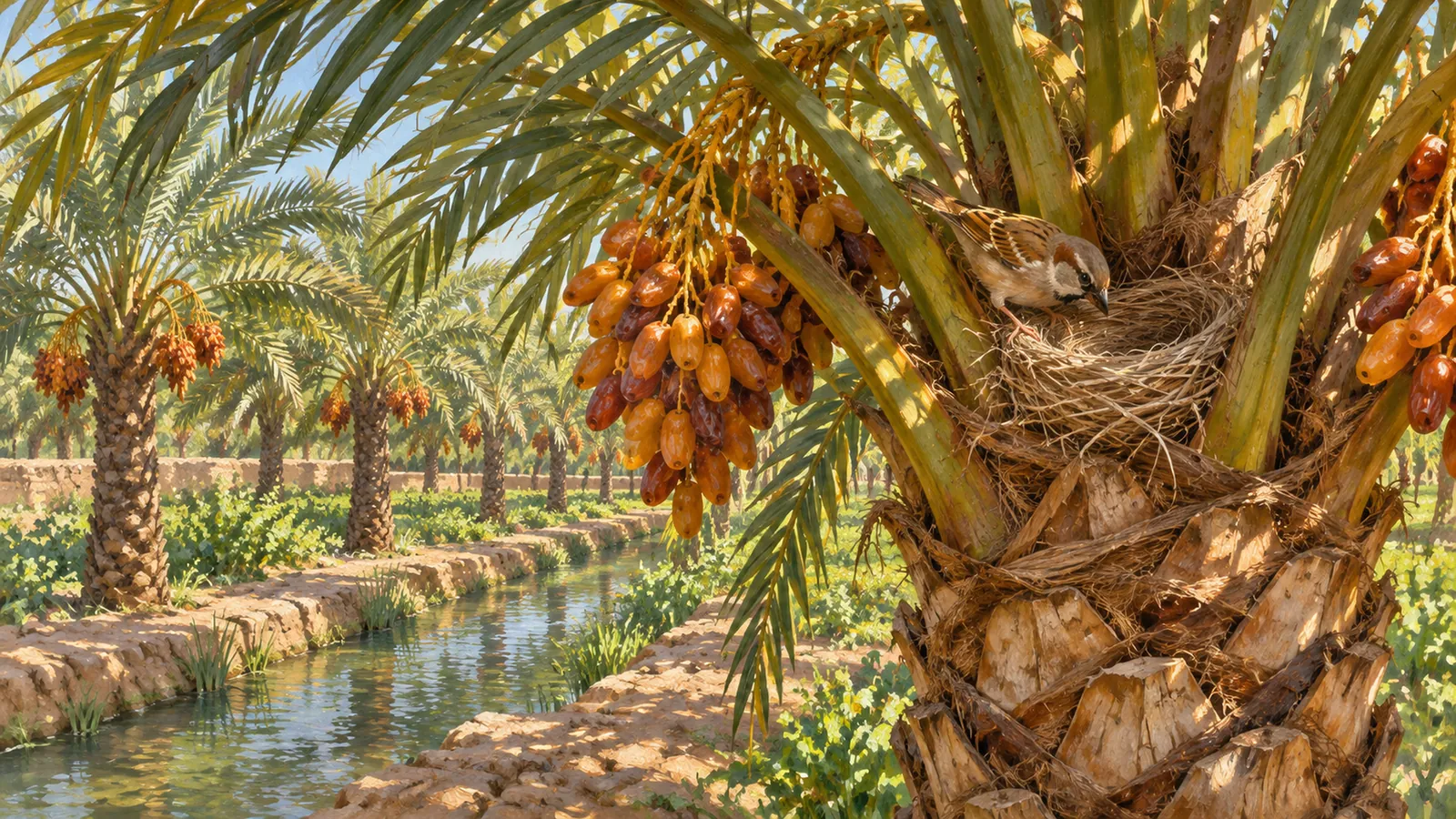
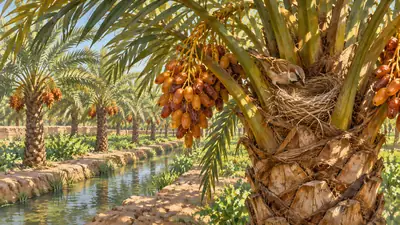
Beyond the walls, the green orchards bend with fruit. Birds settle in their nests among the branches. The poem’s praise of Eridu reaches living things along the water.
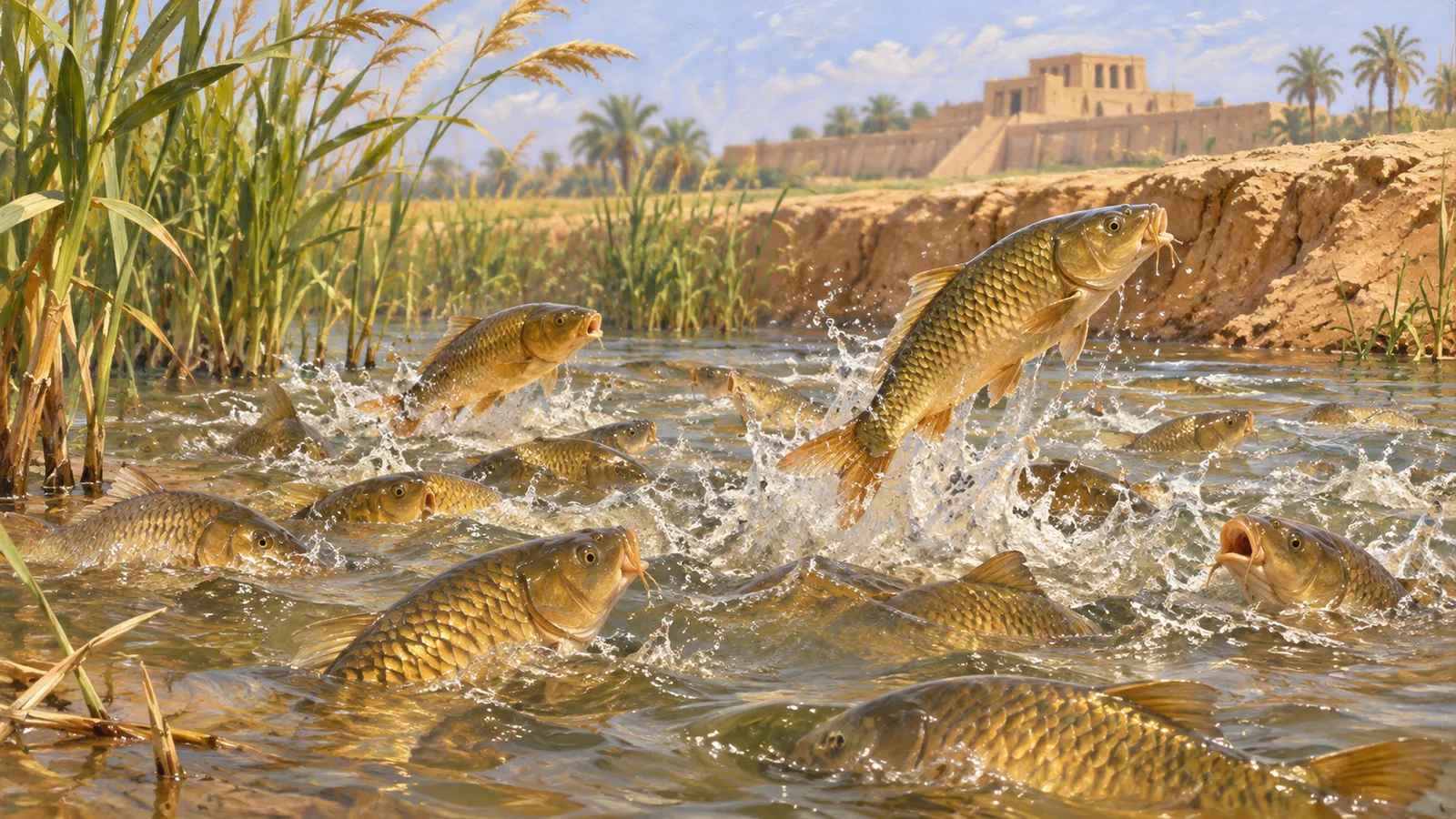
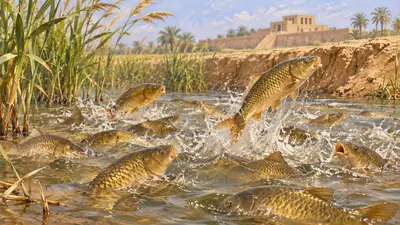
Carp play among water plants and dart among the small reeds. When Enki stands, the fish rise before him like waves, filling the shallow water with their movement.
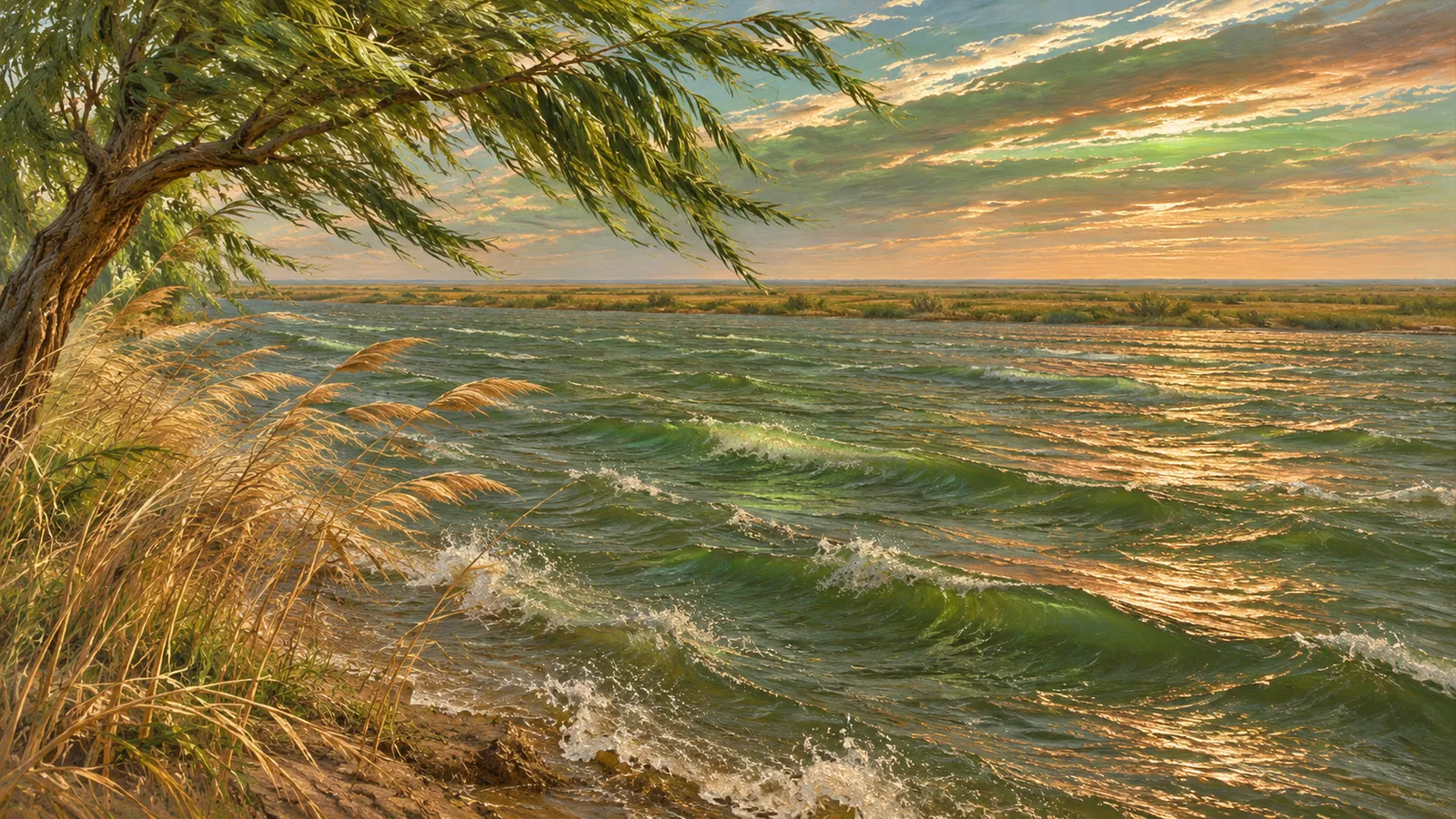
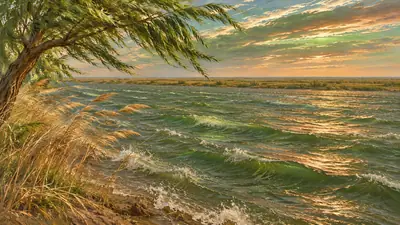
The poet gives Enki the sea’s terrible grandeur and the force of a great river. Before him the Euphrates heaves as it does under a fierce south wind.
THE VOYAGE
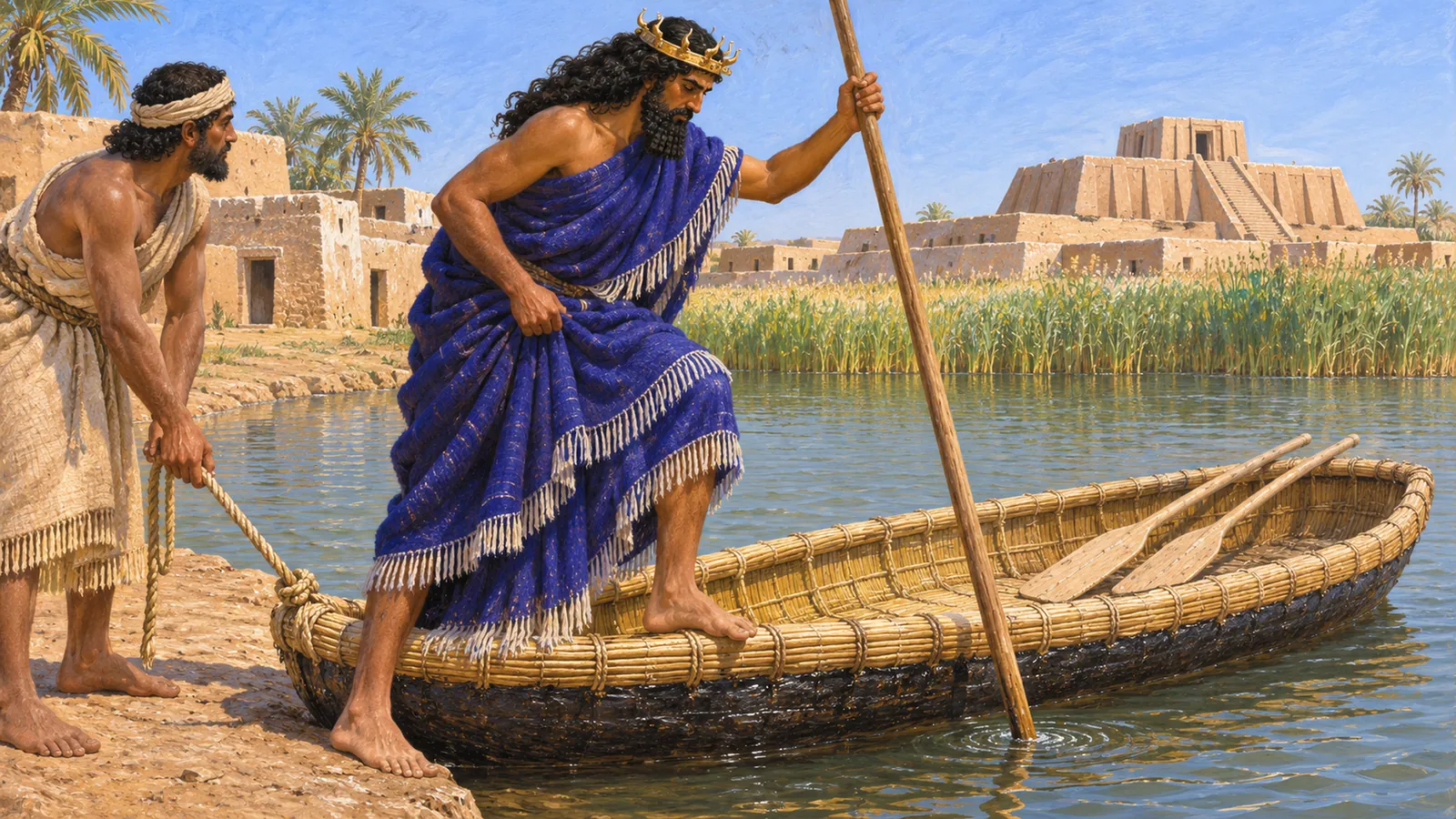
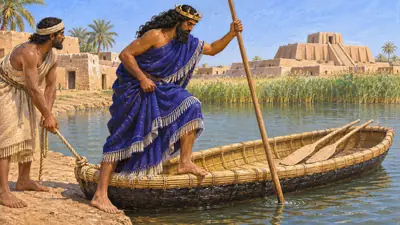
When Enki boards, the poet foresees a year full of plenty. In this reading, his punting pole is named Nirah, and his oars are like little reeds.
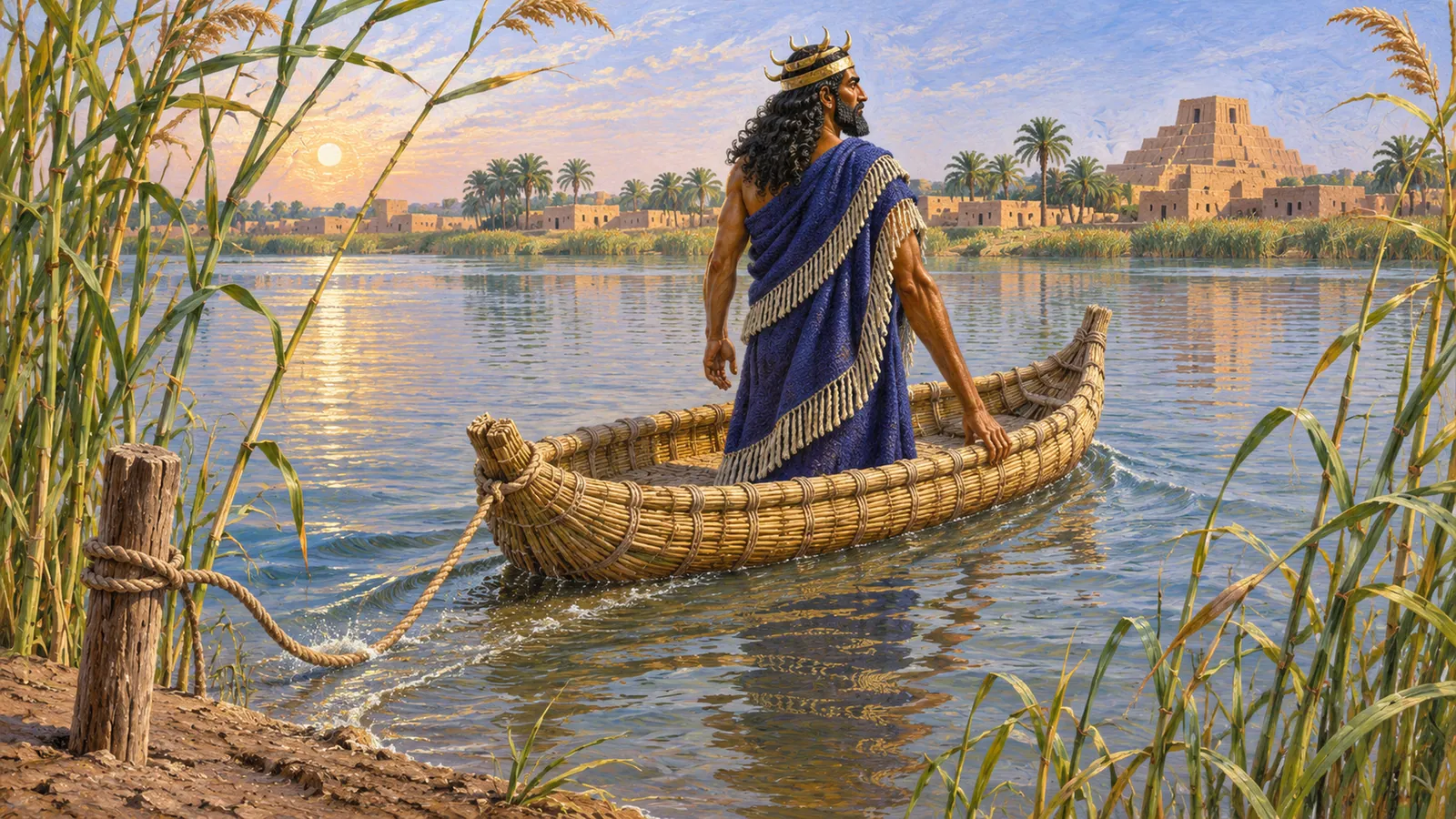
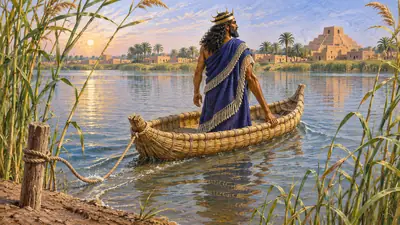
As Enki leaves the house at Eridu, his boat slips away of its own accord. Even the towrope seems to manage itself as the boat takes to open water.
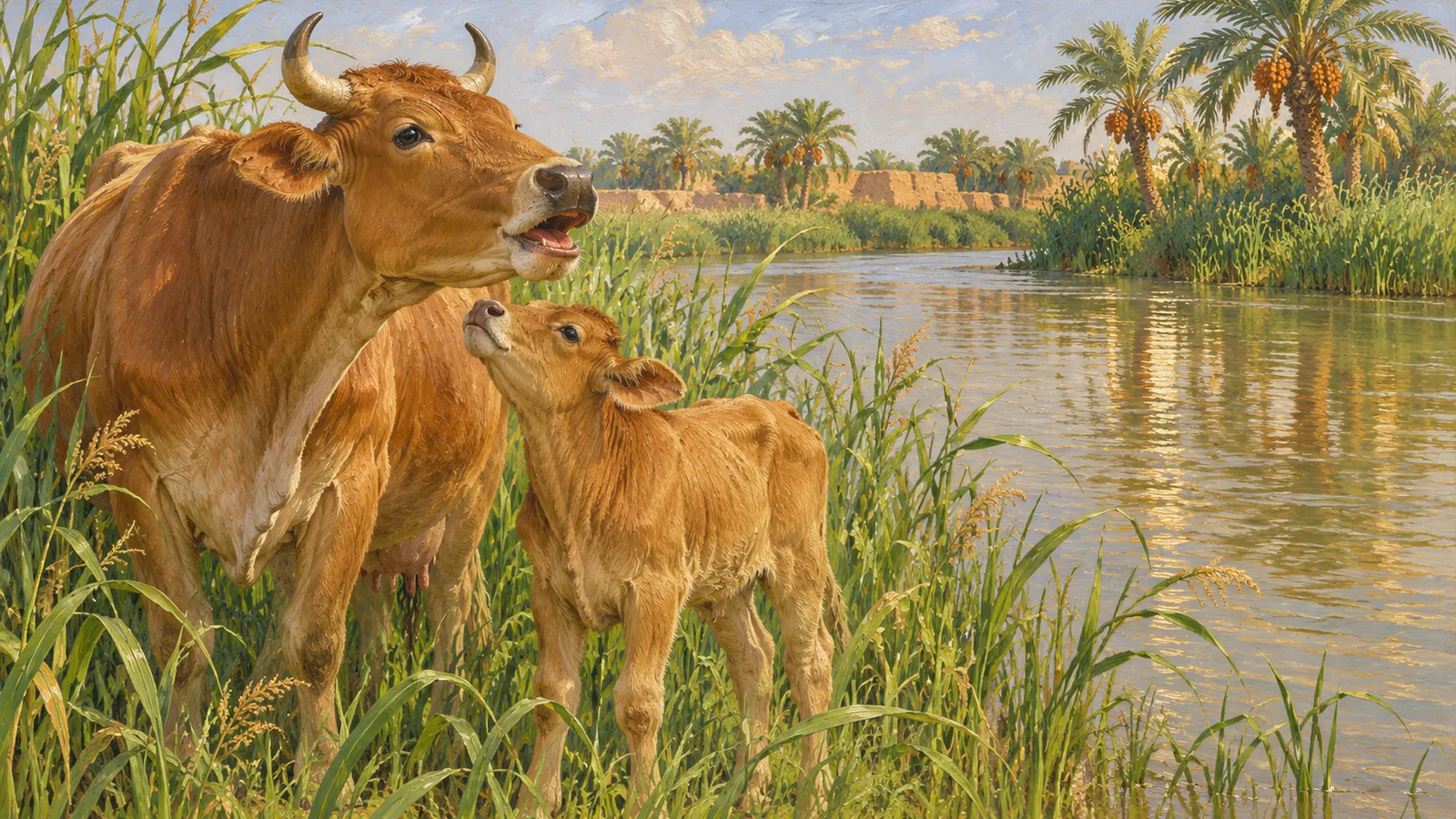
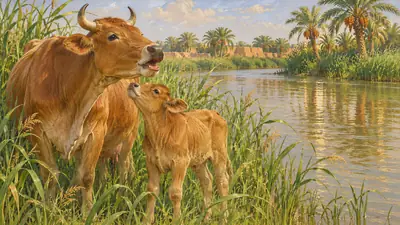
The river speaks to its lord in its own way. The sound recalls a calf’s call answered by the lowing of a cow, familiar voices from the riverside.
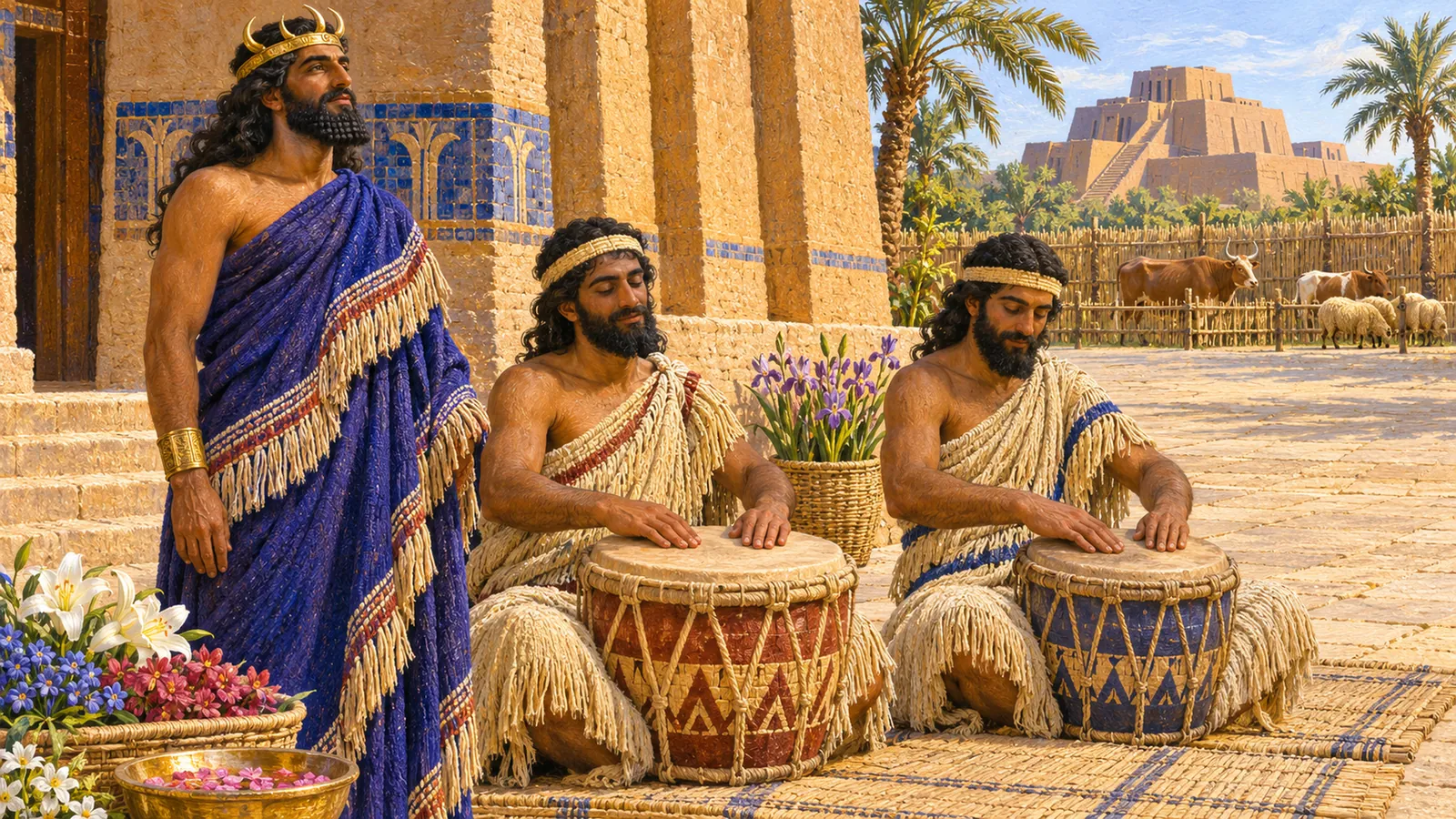
The poem names oxen and sheep among Enki’s offerings. On the journey from Eridu to Nippur its attention moves from the river’s own voice to the sound of drums.
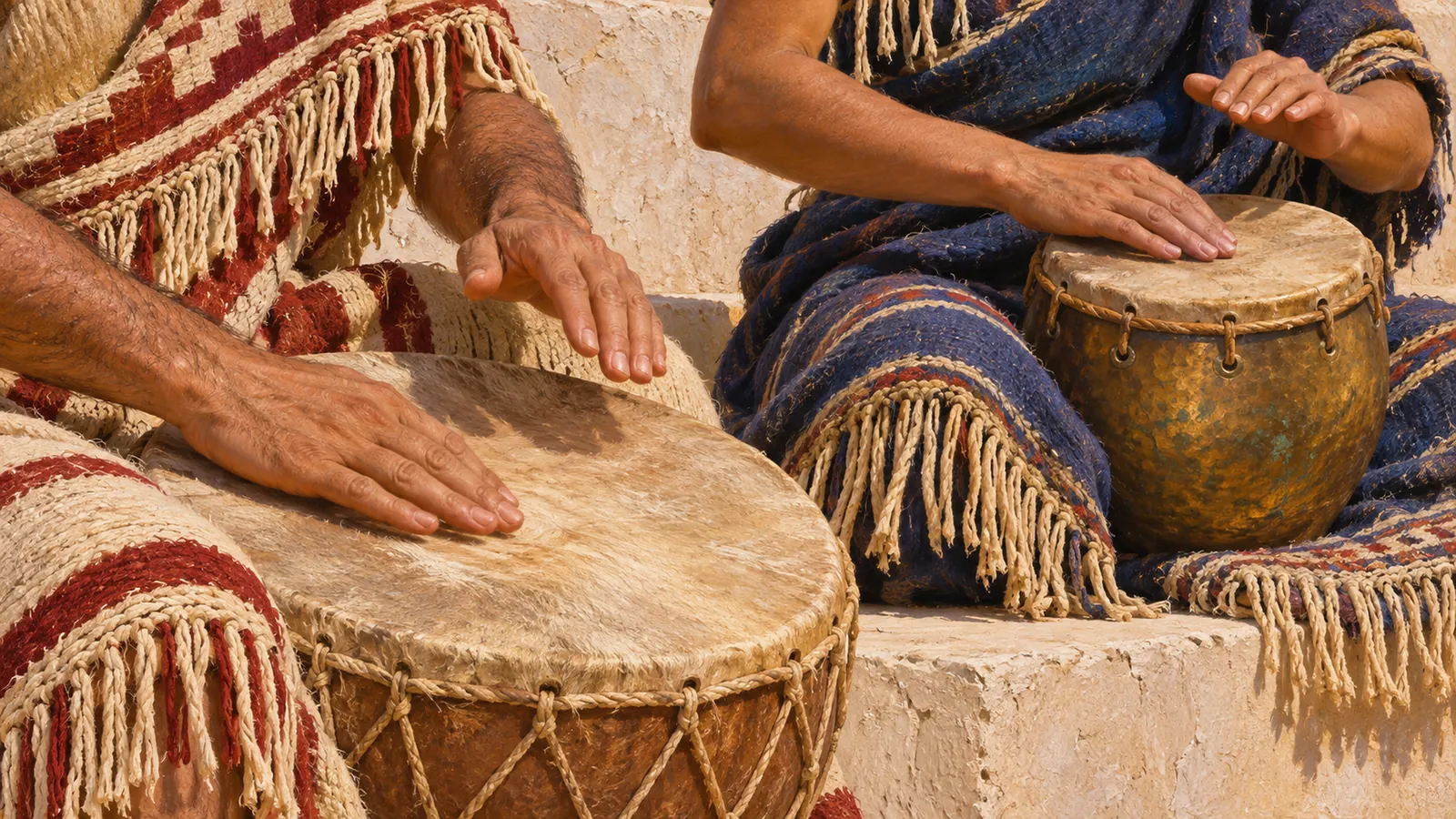
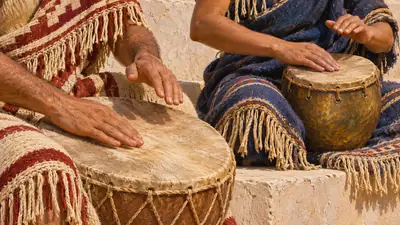
Where there were no ala drums, Enki had them set in place. He sent bronze ub drums to places that needed them too, bringing new sounds to the route.
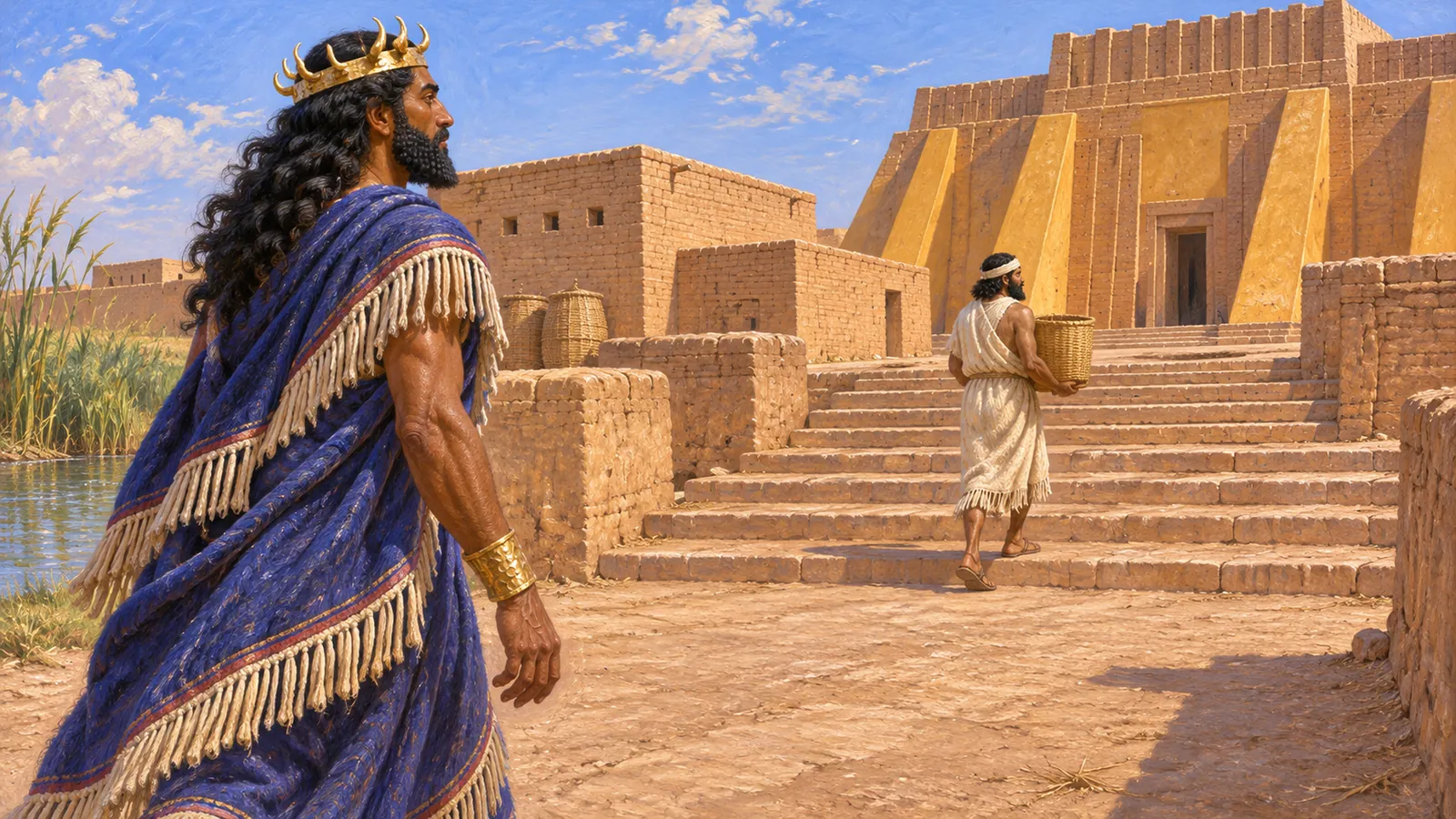
NIPPUR
Enki turns his steps toward Nippur and goes up to its shrine terrace. The journey has taken him from the house he built to the sacred city of Enlil.
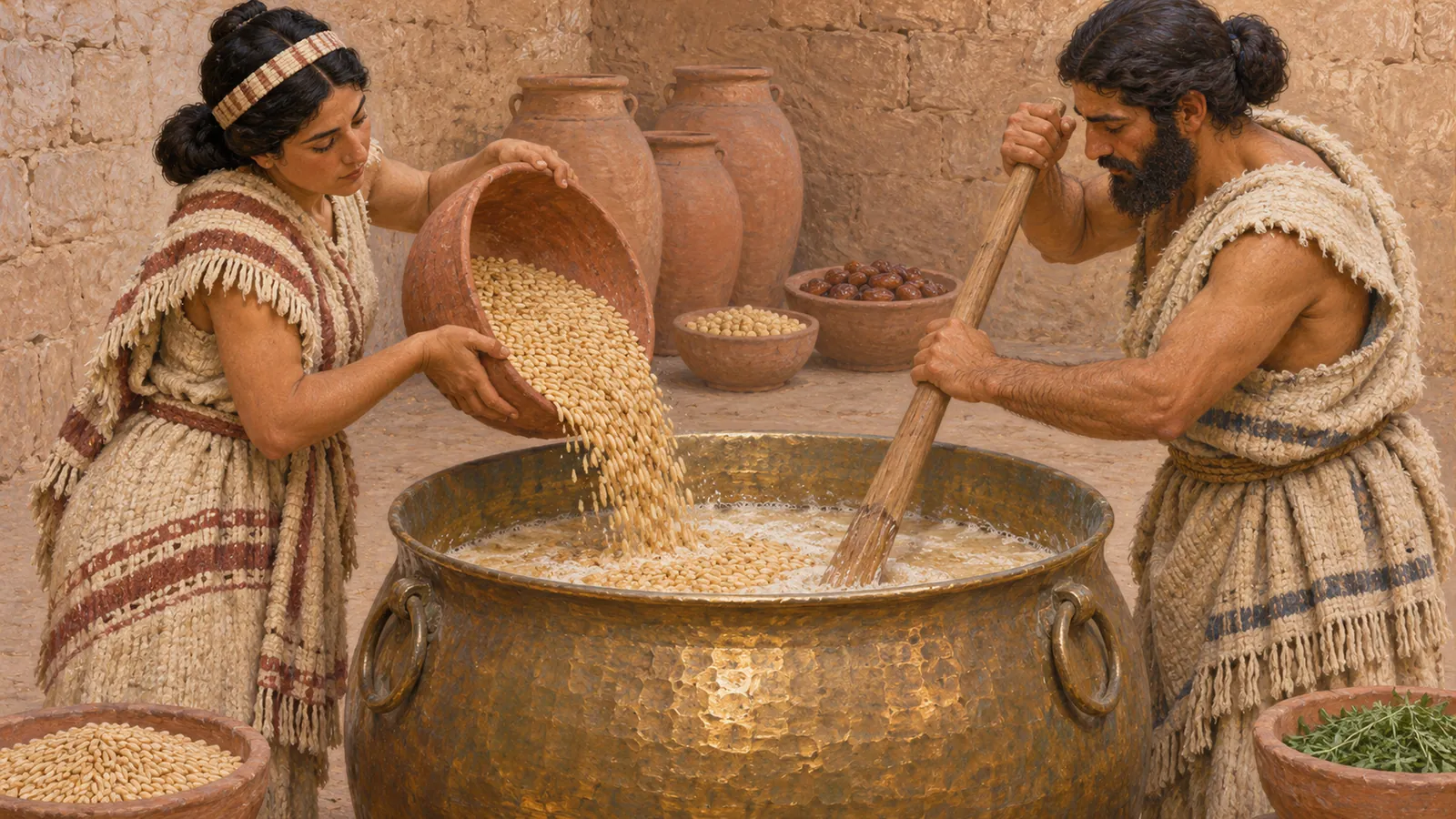
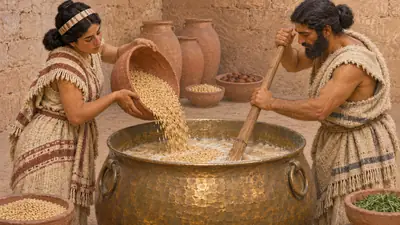
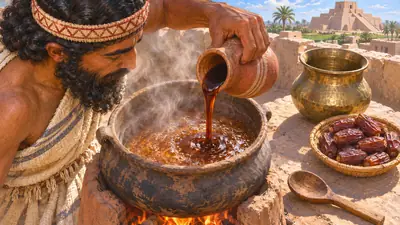
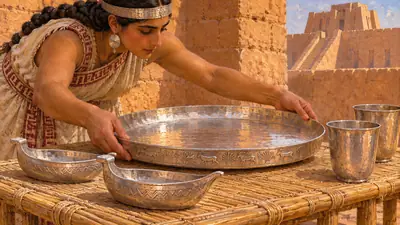
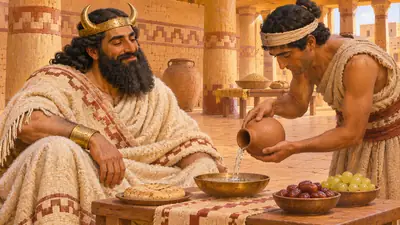
At Nippur, Enki has drink poured into large bronze vessels. The poem also mentions beer made with emmer wheat, a grain that grew on the watered plains.
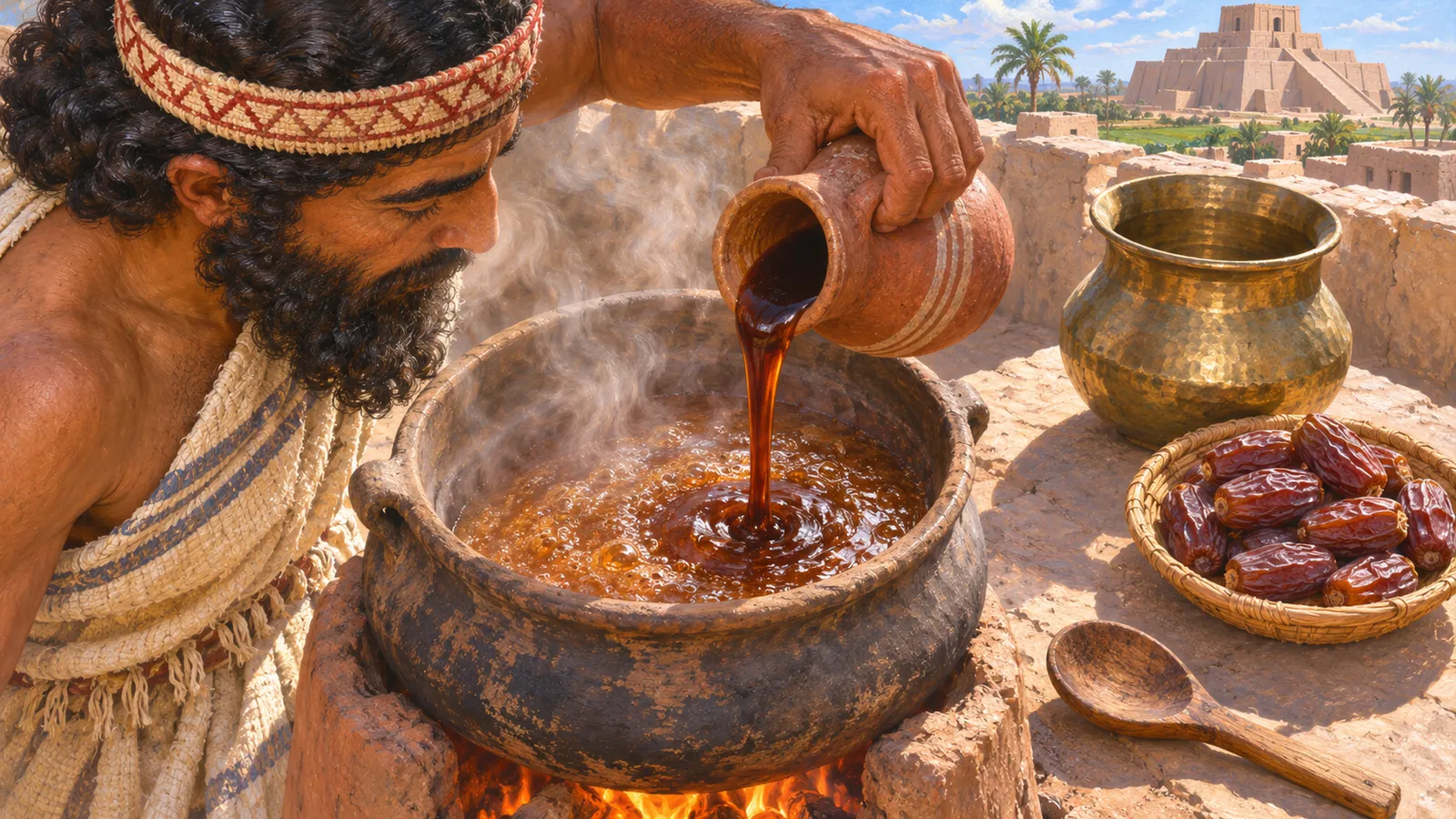
Enki has the mash mixed in vessels called kukuru. He adds date syrup to make the drink strong. Part of the verse about preparing the mash remains difficult to read.
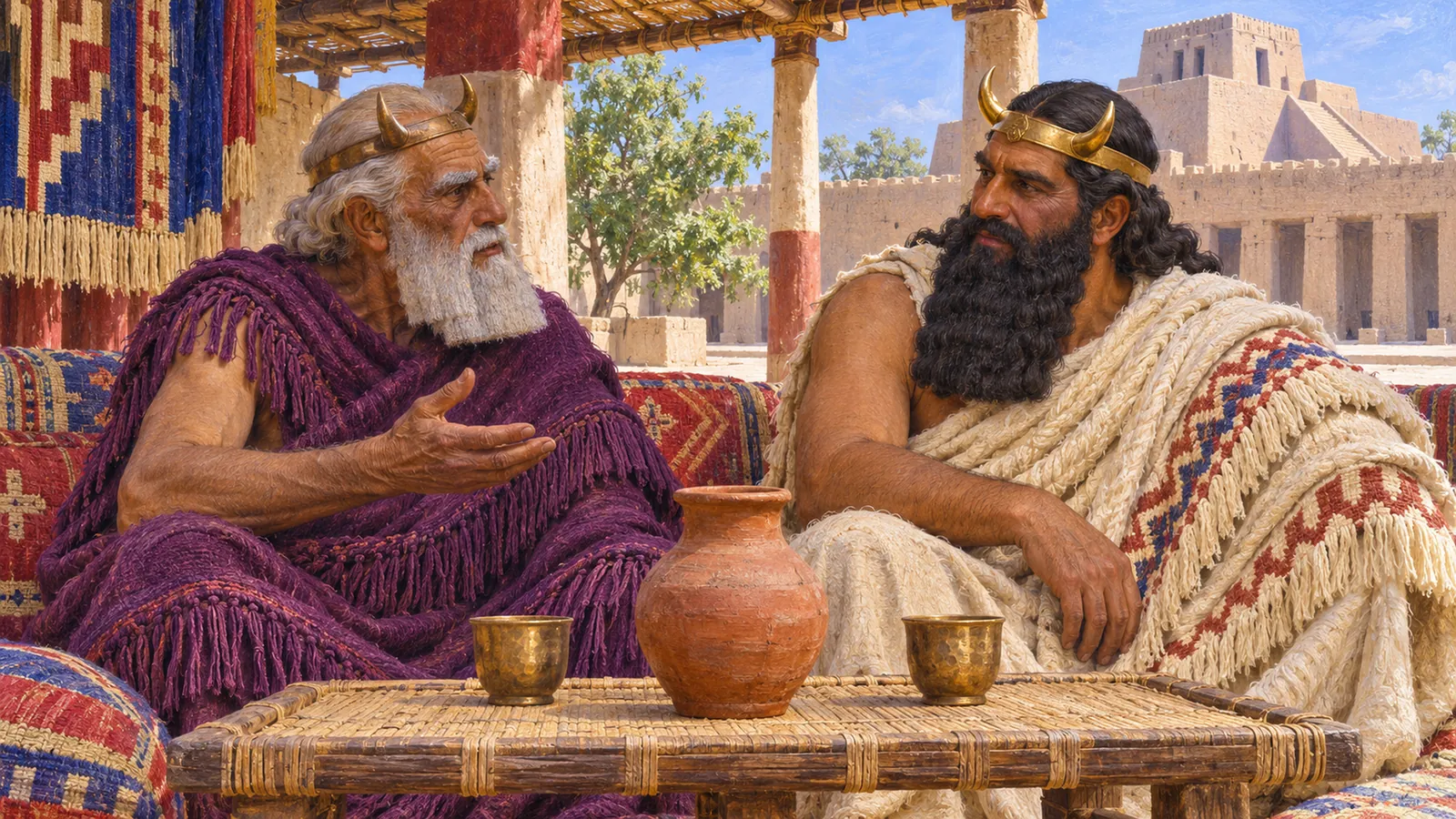
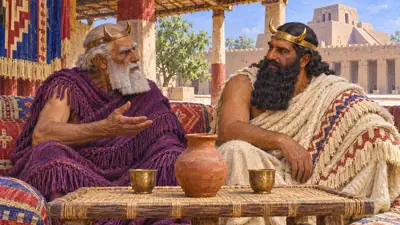
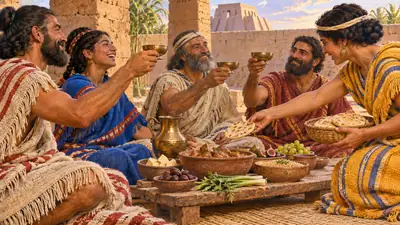
In Nippur’s shrine Enki prepares a meal for Enlil, whom the poem calls his father. He seats An at the head of the feast, with Enlil beside him.
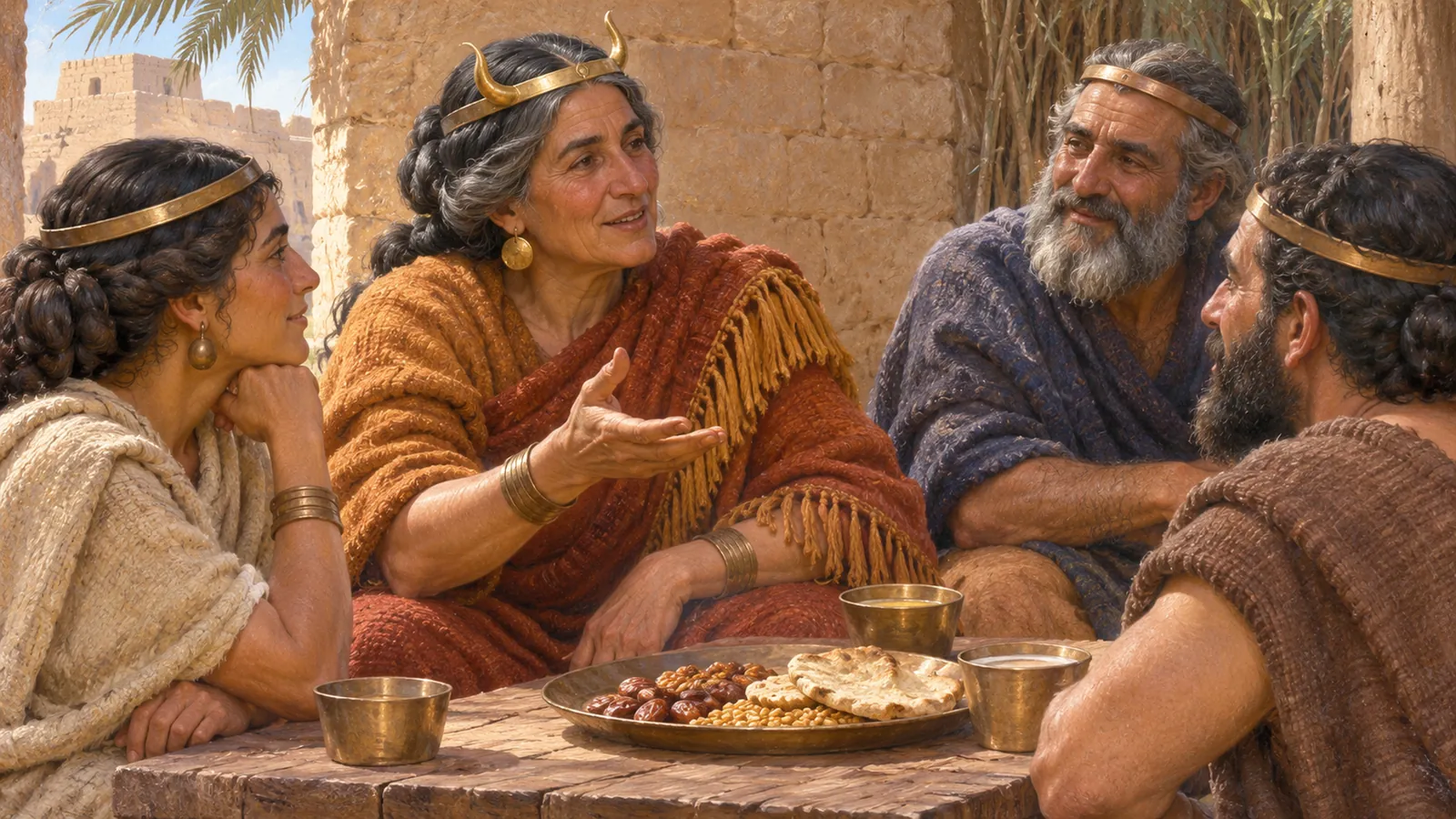
Enki gives Nintur the place of honor. The Anuna gods take their seats nearby, and the careful arrangement of the guests sets the gathering in order for the meal.
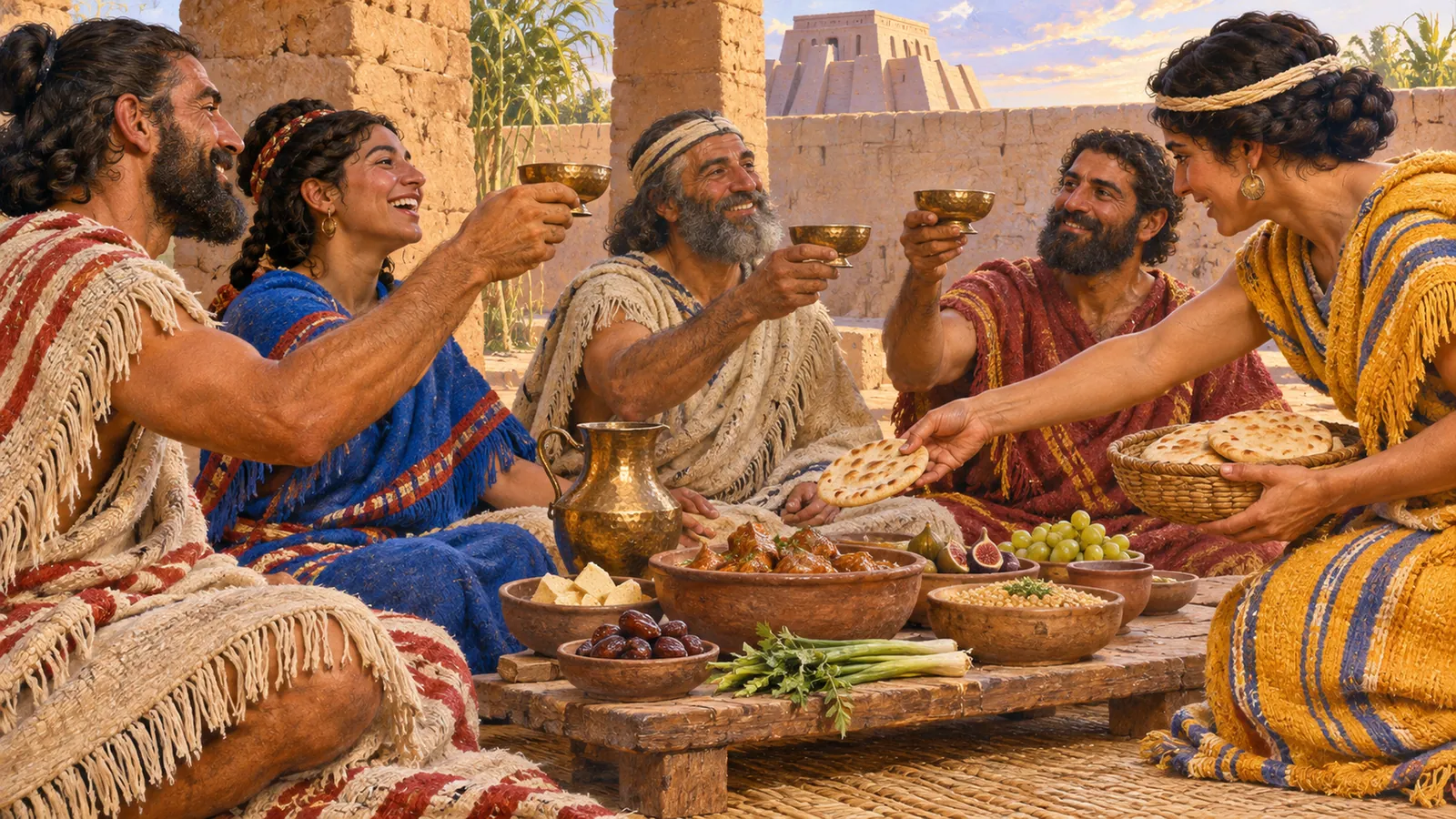
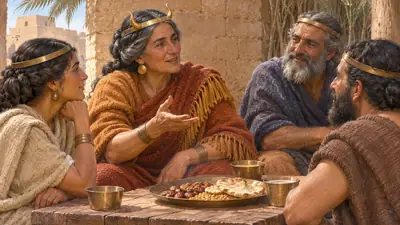
The guests enjoy what Enki has served and fill the bronze vessels to the brim. Their feast turns into a contest with cups the poem associates with Uraš.
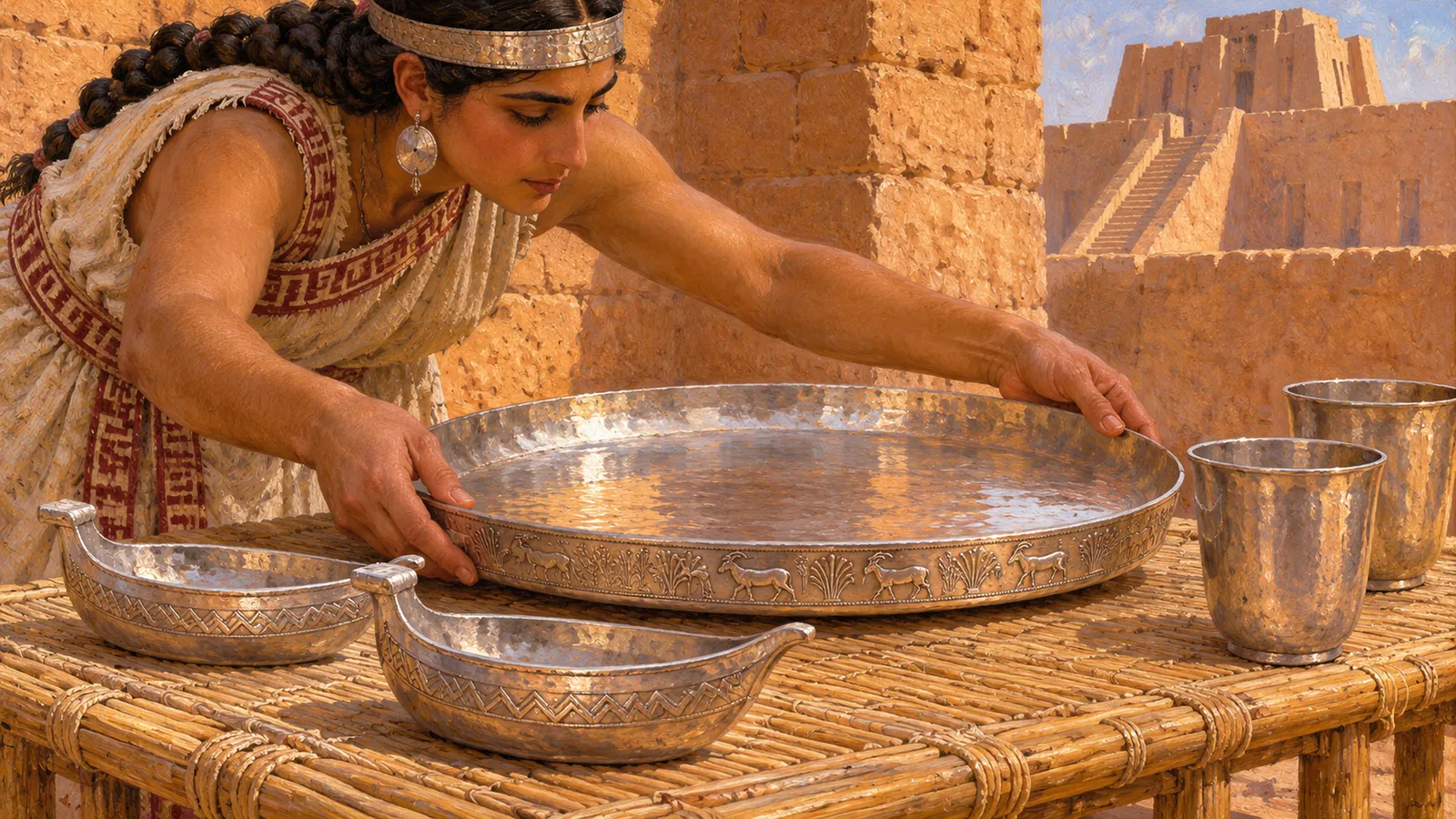
The tilimda vessels catch the light. In the poet’s eyes they gleam like silver barges. For a moment the feast in Nippur brings the river voyage back to mind.
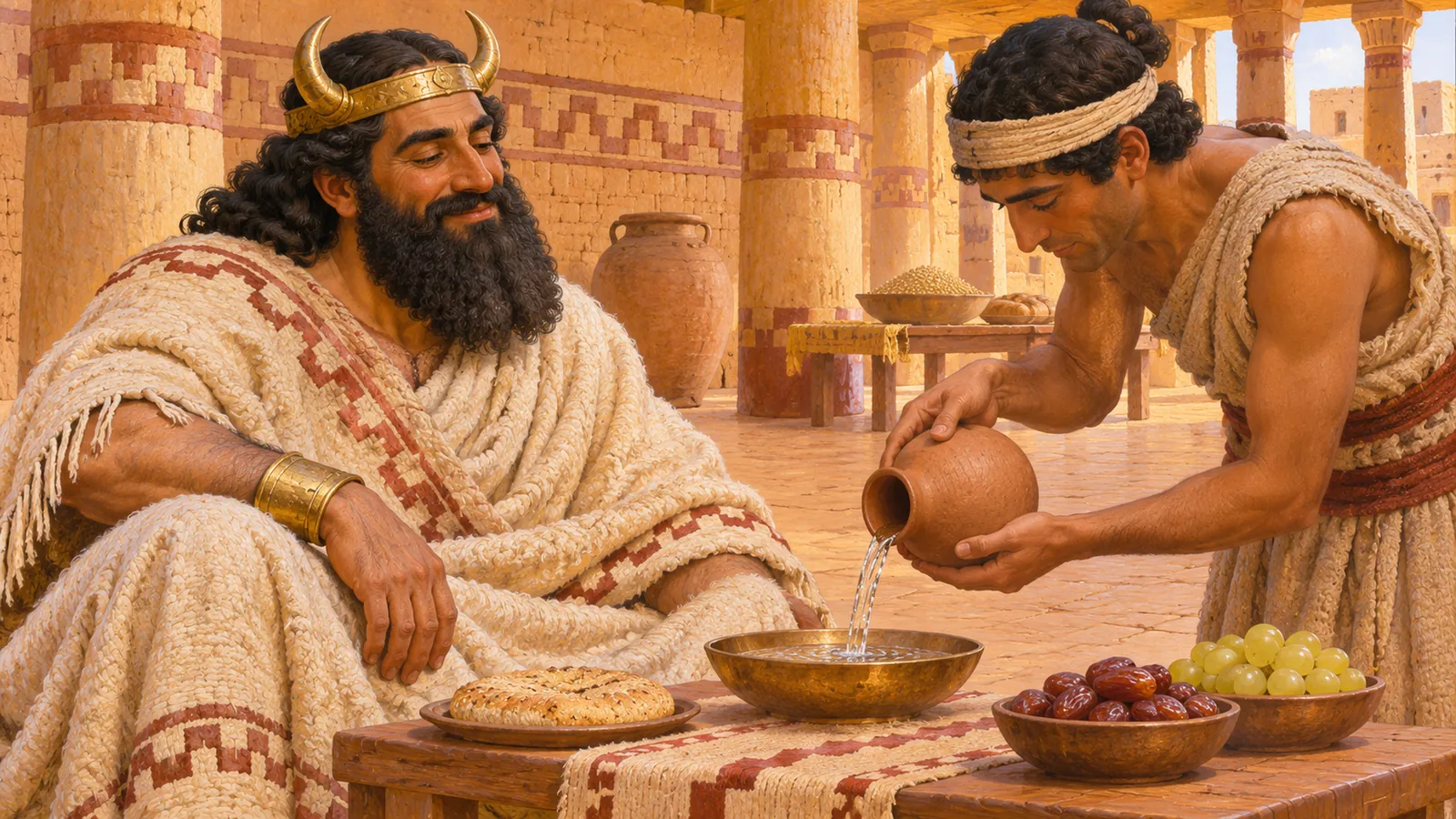
Drink is poured as an offering, and there is enjoyment around the table. The poem leaves part of the action unclear before it tells us that Enlil rejoices in Nippur.
THE PRAISE
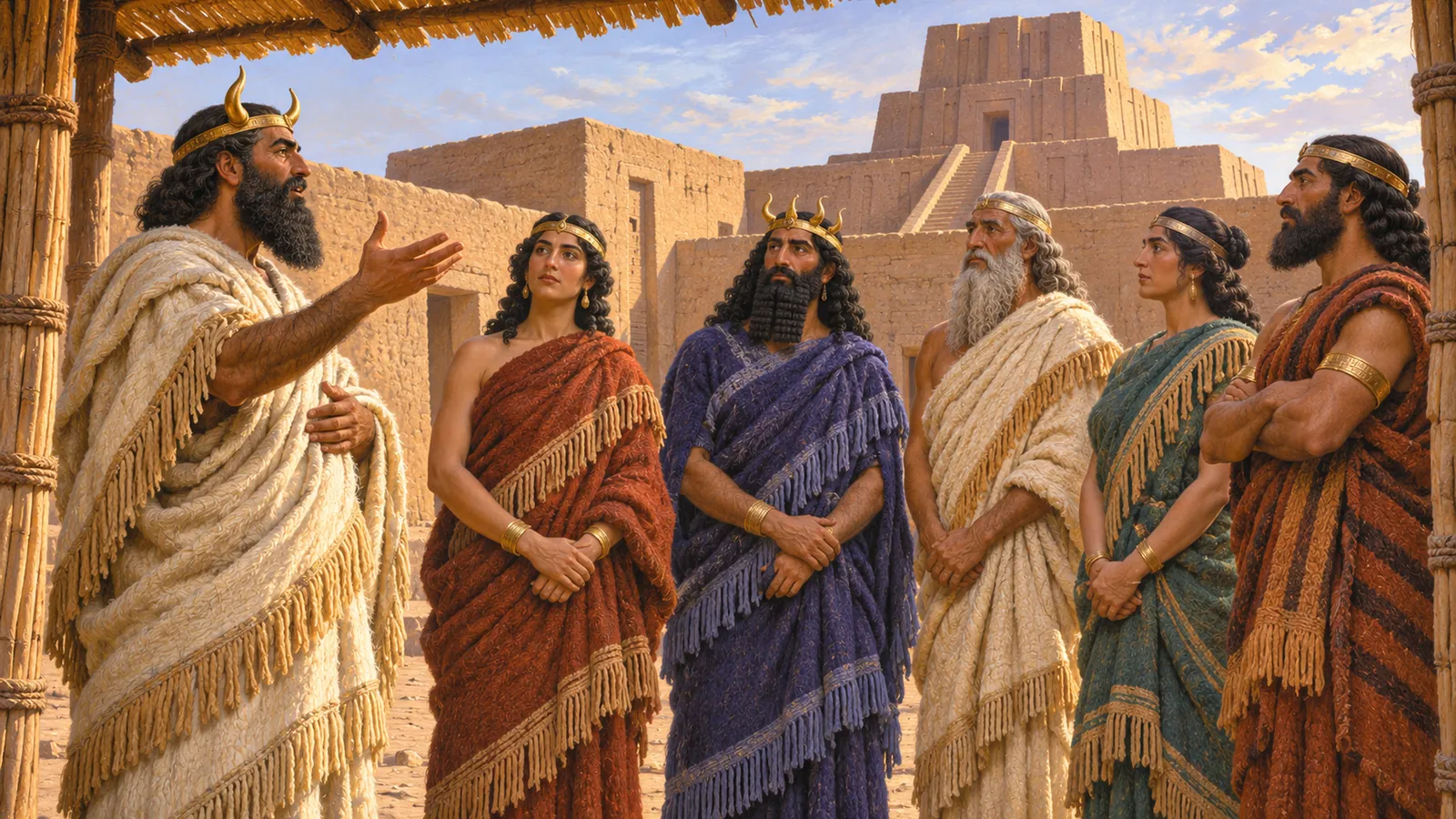
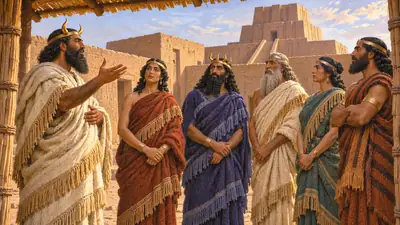
Enlil addresses the assembled Anuna in the Ubszu-unkena. He tells the great gods gathered there of the house his son Enki has built, turning their thoughts back to Eridu.
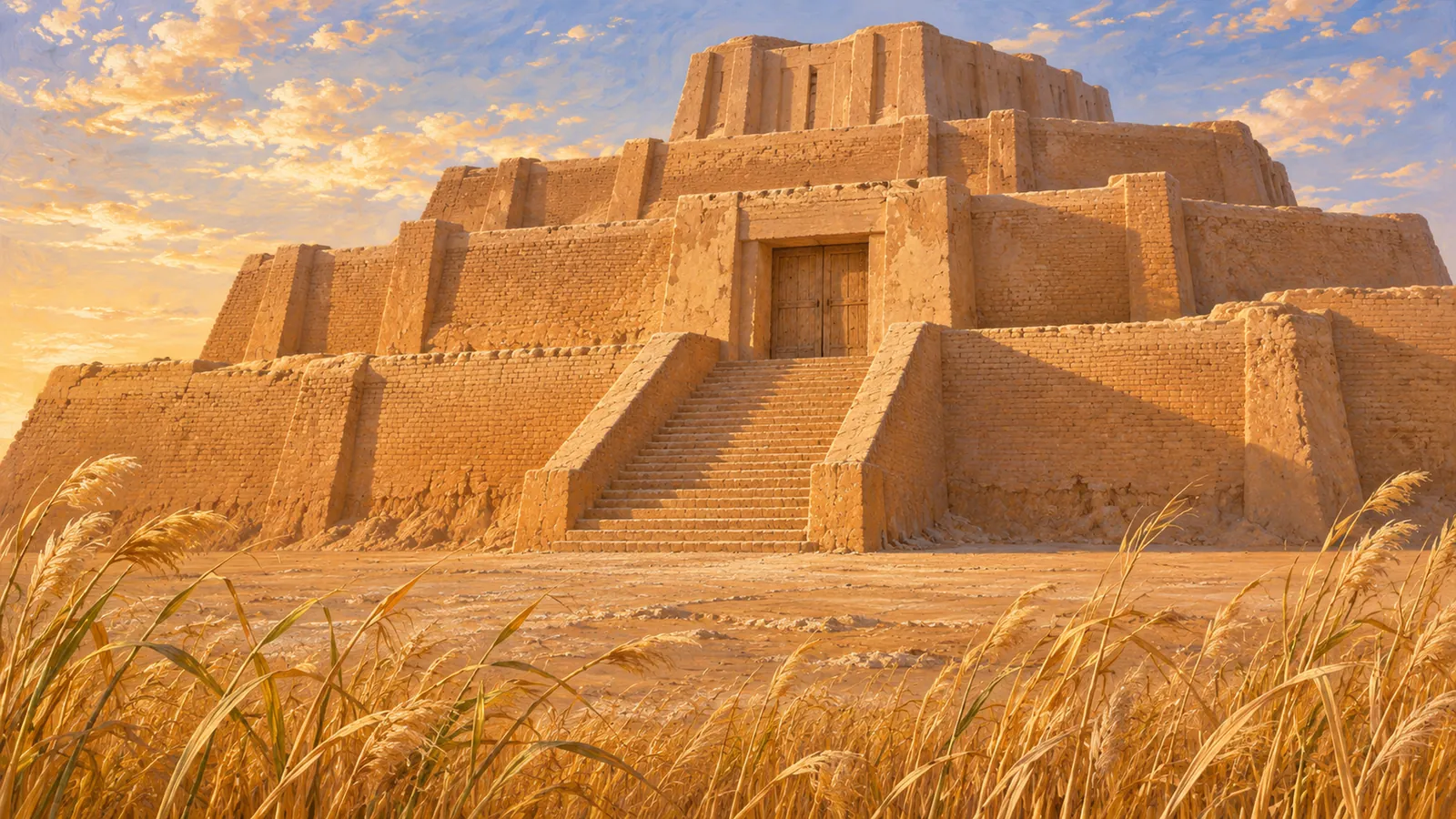
Enlil says Enki has raised Eridu from the earth like a mountain. He calls the shrine a pure place set apart, a house bright with silver and decorated with lapis.
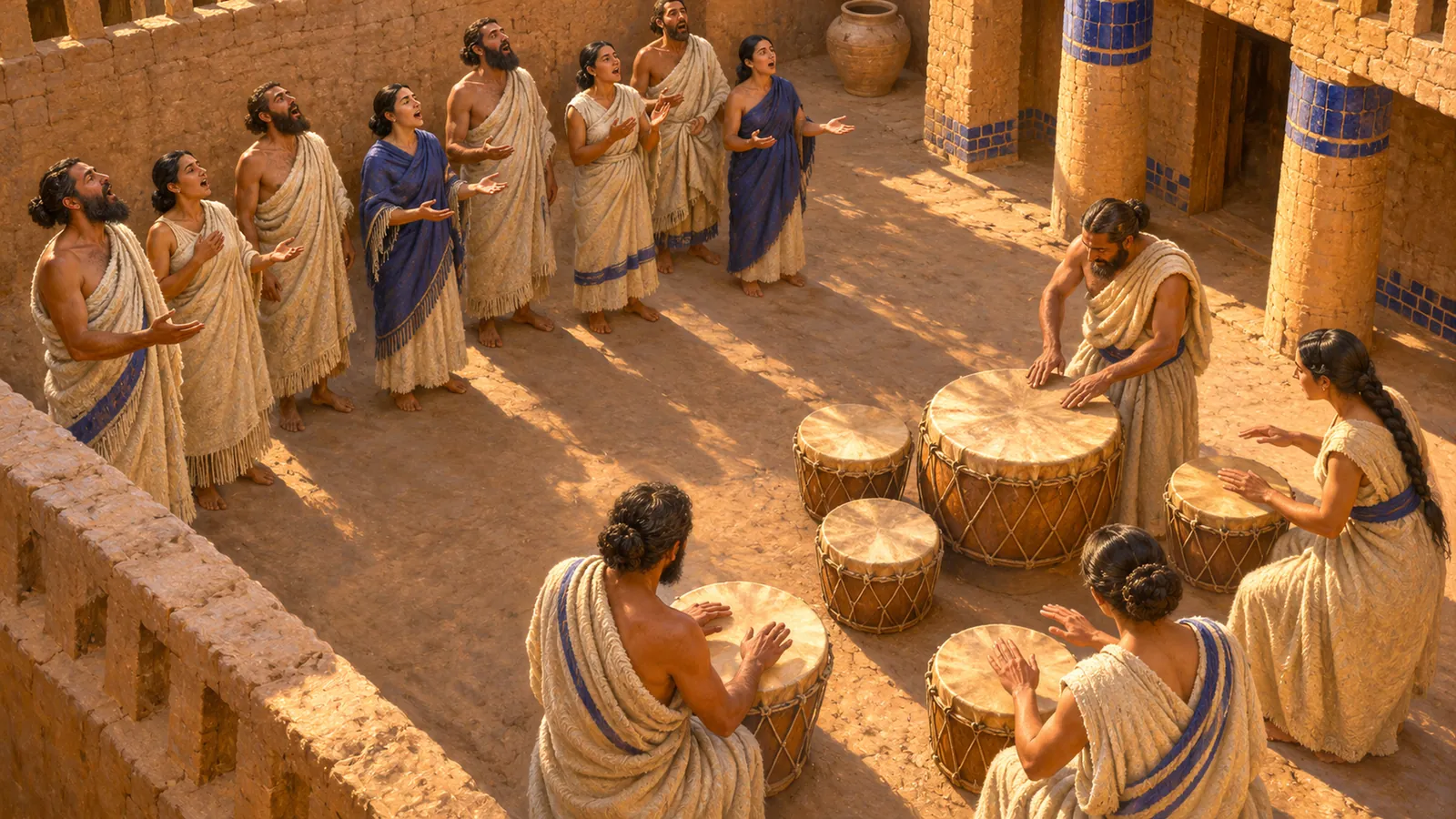
Enlil speaks of seven tigi drums tuned in the house, of ritual words and songs that make it lovely. The music at Eridu comes back into the poem’s final praise.
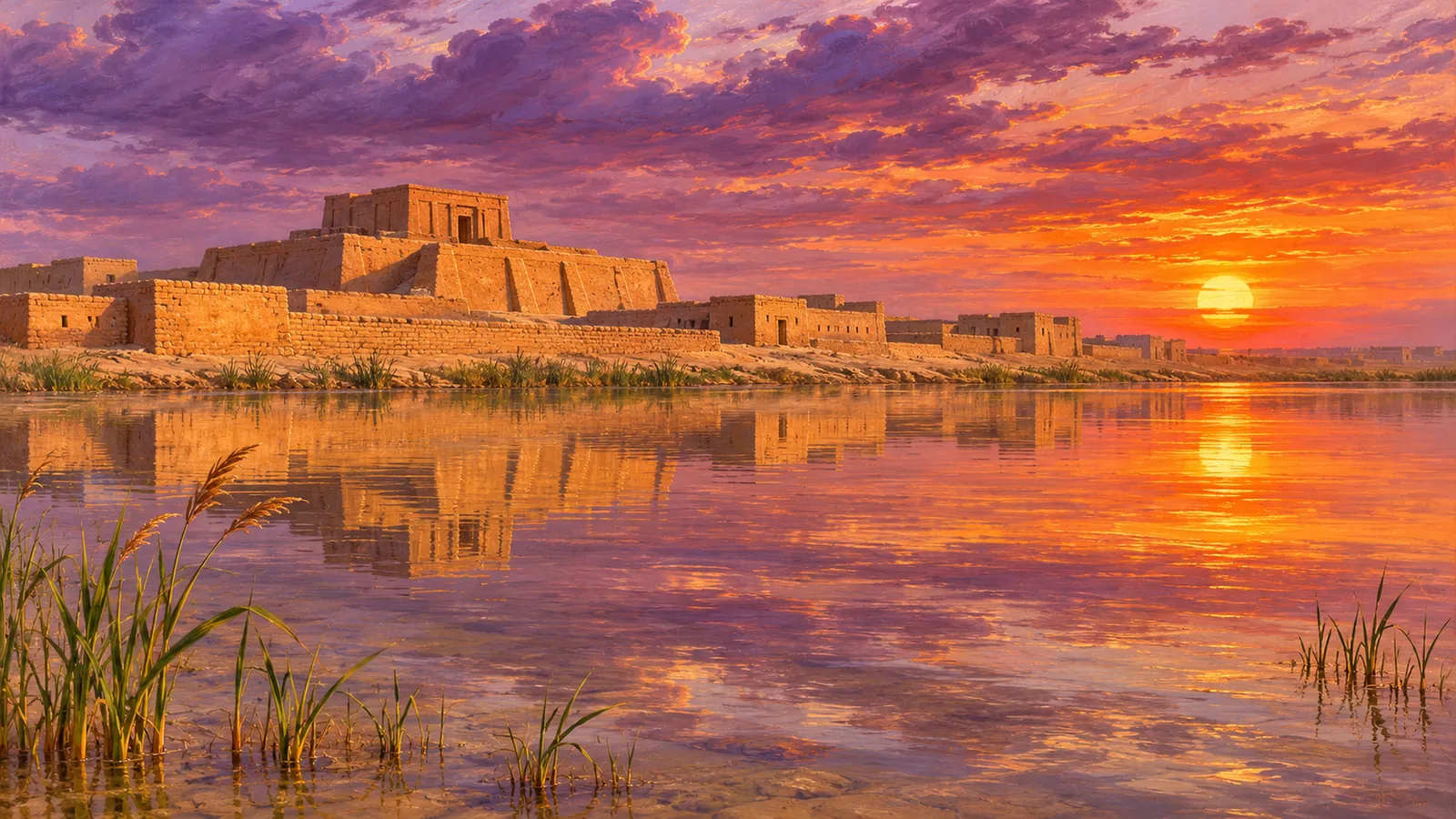
Enlil’s speech ends with praise for Father Enki and the house he has built. The poem closes its journey with the sacred shine of Eridu still before the listener.
End of chapter 1
All pages

Sources
Editions consulted
- University of Oxford, ETCSL 1.1.4, Enki’s journey to Nibru
- Cuneiform Digital Library Initiative, Literary 000335, composite P469517
- ORACC, Enki/Ea and his minister Isimud
- British Museum, the Adda seal, BM 89115
- Smithsonian, Adda seal impression and identification of Isimud
- Cuneiform Digital Library Initiative, Nippur witness P278543
Ancient lines behind each page
- Page 1: ETCSL 1.1.4, lines 1–3
- Page 2: ETCSL 1.1.4, lines 4–8
- Page 3: ETCSL 1.1.4, lines 9–13
- Page 4: ETCSL 1.1.4, lines 9–13
- Page 5: ETCSL 1.1.4, lines 6–12
- Page 6: ETCSL 1.1.4, lines 14–17
- Page 7: ETCSL 1.1.4, lines 18–25
- Page 8: ETCSL 1.1.4, lines 21–25, 33–37
- Page 9: ETCSL 1.1.4, lines 26–27
- Page 10: ETCSL 1.1.4, lines 28–29
- Page 11: ETCSL 1.1.4, lines 30–32
- Page 12: ETCSL 1.1.4, lines 38–43
- Page 13: ETCSL 1.1.4, lines 44–51
- Page 14: ETCSL 1.1.4, lines 52–57
- Page 15: ETCSL 1.1.4, lines 57–60
- Page 16: ETCSL 1.1.4, lines 61–65
- Page 17: ETCSL 1.1.4, lines 66–70
- Page 18: ETCSL 1.1.4, lines 71–75
- Page 19: ETCSL 1.1.4, lines 75–77
- Page 20: ETCSL 1.1.4, lines 78–82
- Page 21: ETCSL 1.1.4, lines 83–85
- Page 22: ETCSL 1.1.4, lines 86–88
- Page 23: ETCSL 1.1.4, lines 89–90
- Page 24: ETCSL 1.1.4, lines 91–92
- Page 25: ETCSL 1.1.4, lines 93–95
- Page 26: ETCSL 1.1.4, lines 94–95
- Page 27: ETCSL 1.1.4, lines 96–97
- Page 28: ETCSL 1.1.4, lines 98–100
- Page 29: ETCSL 1.1.4, lines 101–103
- Page 30: ETCSL 1.1.4, lines 104–107
- Page 31: ETCSL 1.1.4, lines 108–109
- Page 32: ETCSL 1.1.4, lines 110–112
- Page 33: ETCSL 1.1.4, lines 113
- Page 34: ETCSL 1.1.4, lines 114–116
- Page 35: ETCSL 1.1.4, lines 117–120
- Page 36: ETCSL 1.1.4, lines 121–124
- Page 37: ETCSL 1.1.4, lines 125–127
- Page 38: ETCSL 1.1.4, lines 127–129
Illustrations made with AI tools by IL Archive; the text is based on the ancient sources (see the sources at the end of each chapter).