Ra’s Twelve-Hour Night Journey Chapter 1
Through the Duat
Ra’s boat crosses fertile waterways and the desert of Sokar before Apophis stops it in the sand. With help from his companions, the sun reaches the eastern horizon and rises in the form of a scarab.
SourcesTurn the pages with the arrows, the arrow keys or a swipe.
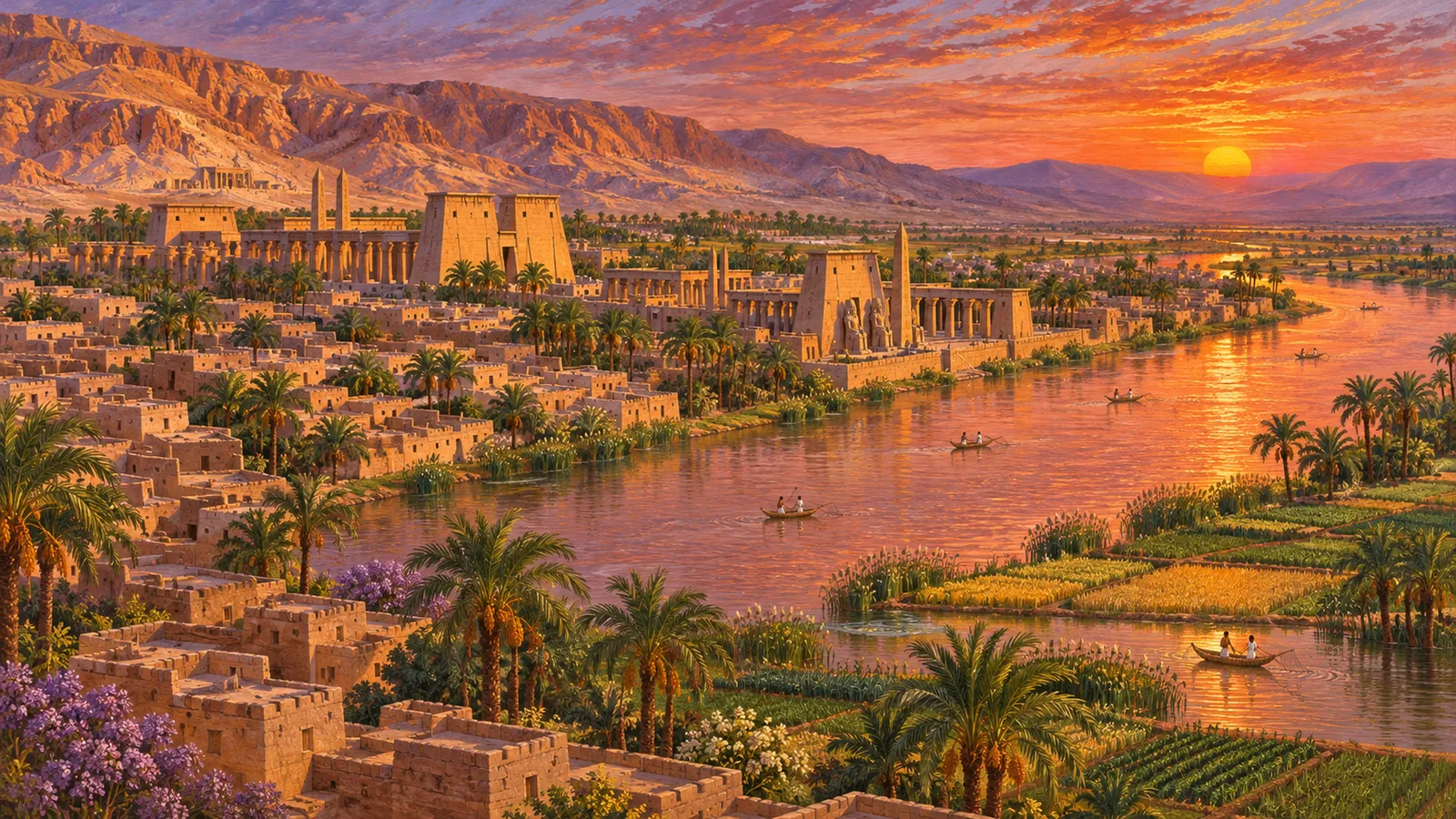
DUSK
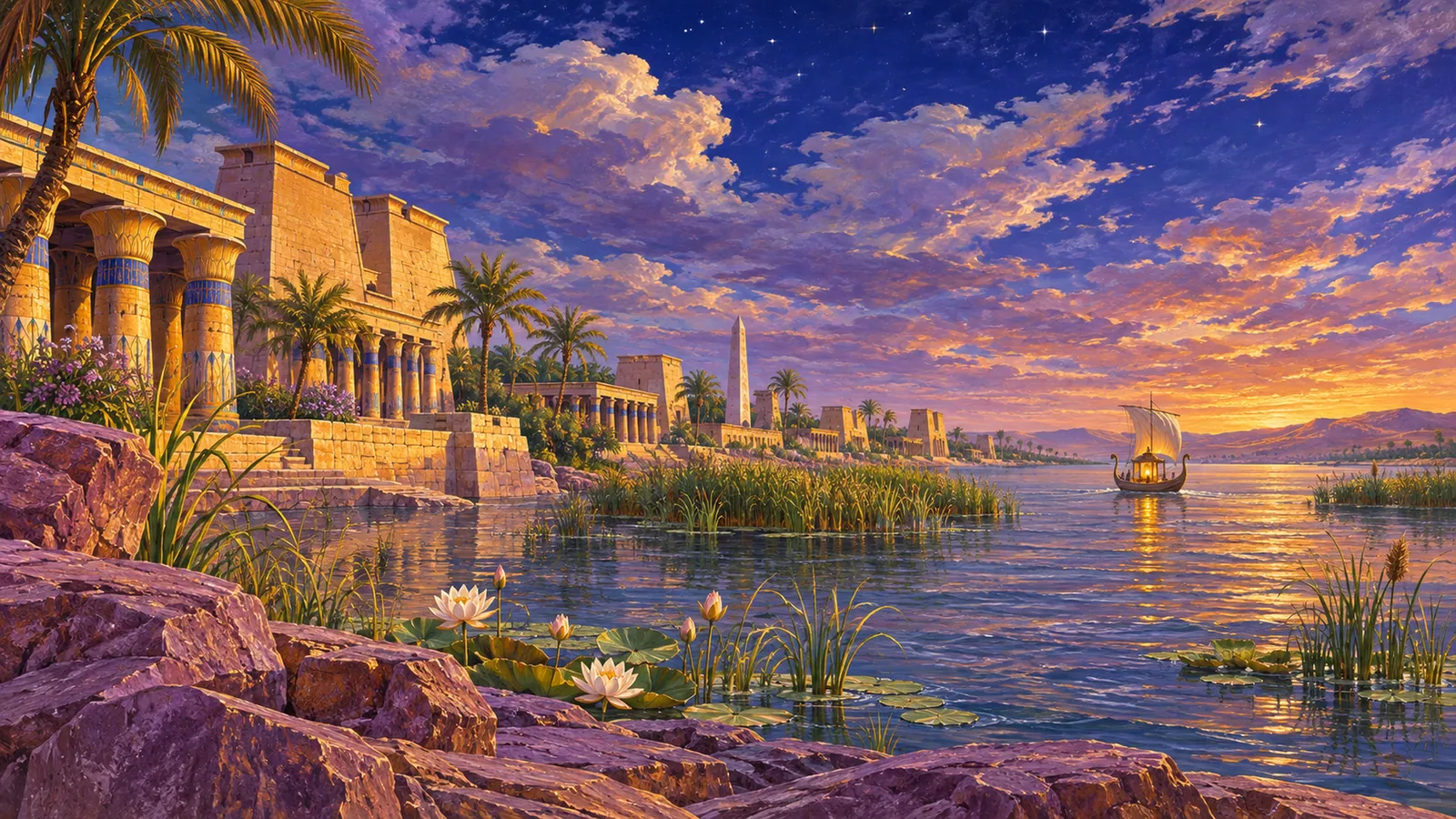
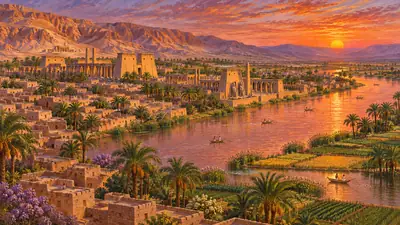
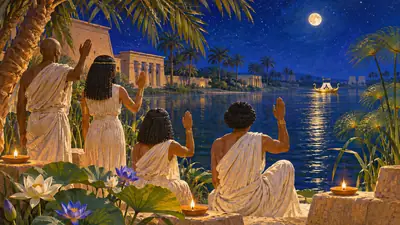
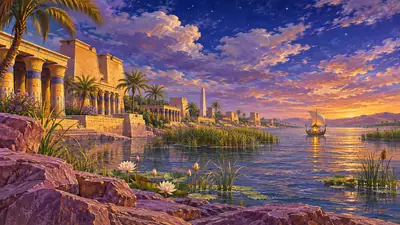
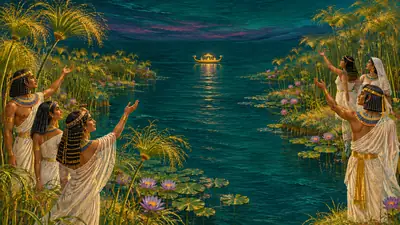
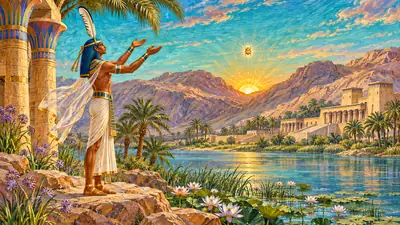
On the Nile the sun slips behind the western hills. The Amduat follows it beyond the horizon, where the Egyptian sun god Ra makes the journey that will bring back morning.
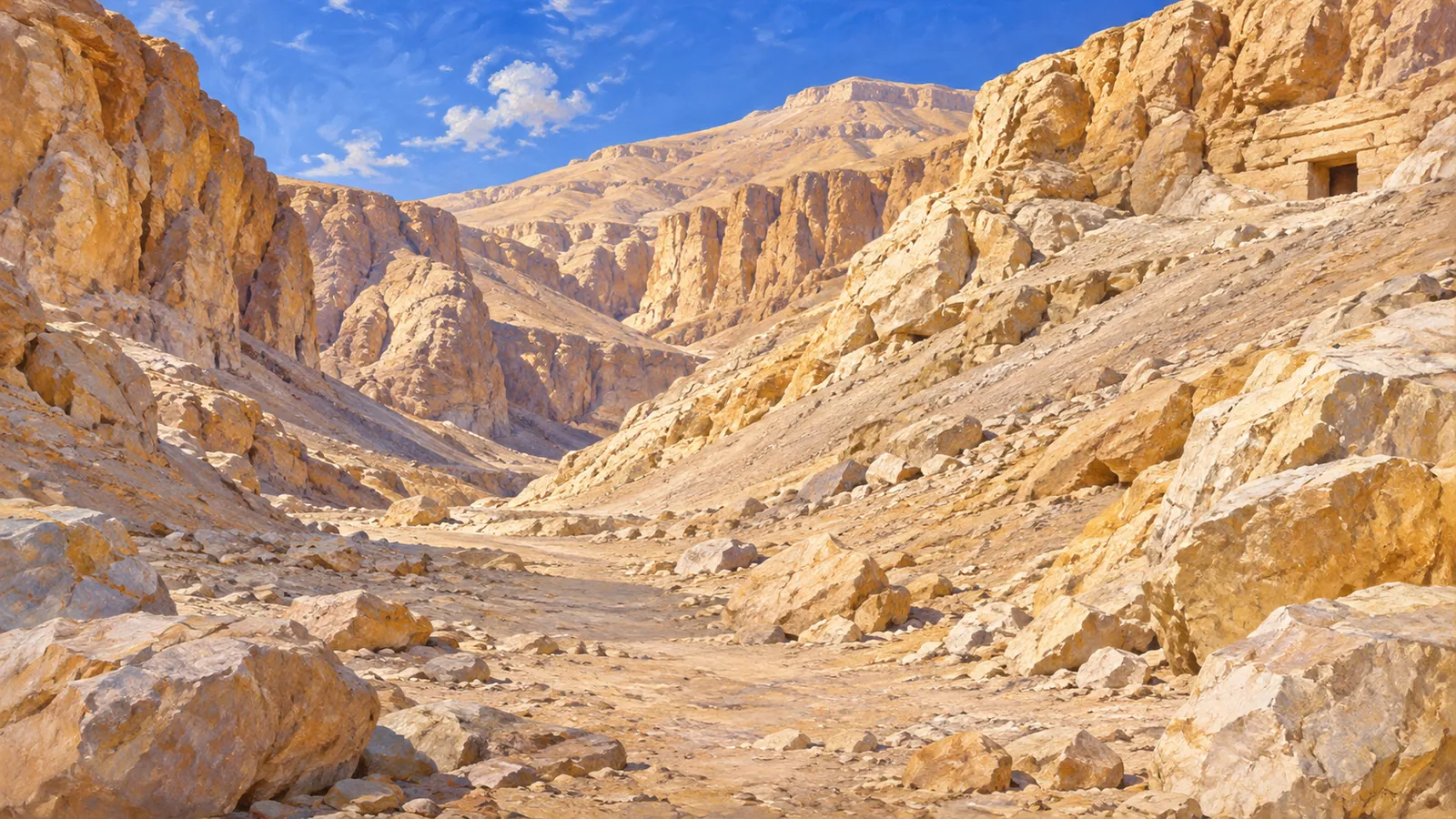
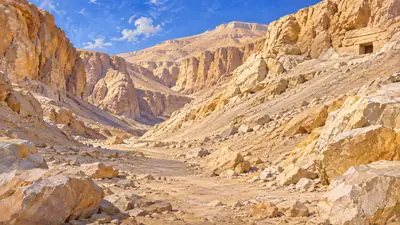
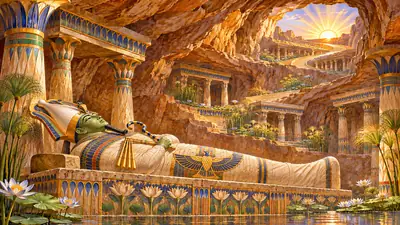
In the Valley of the Kings, the walls of Thutmose the Third’s burial chamber preserve an early complete Amduat. Its pictures and words trace twelve hours, from the west to the east.
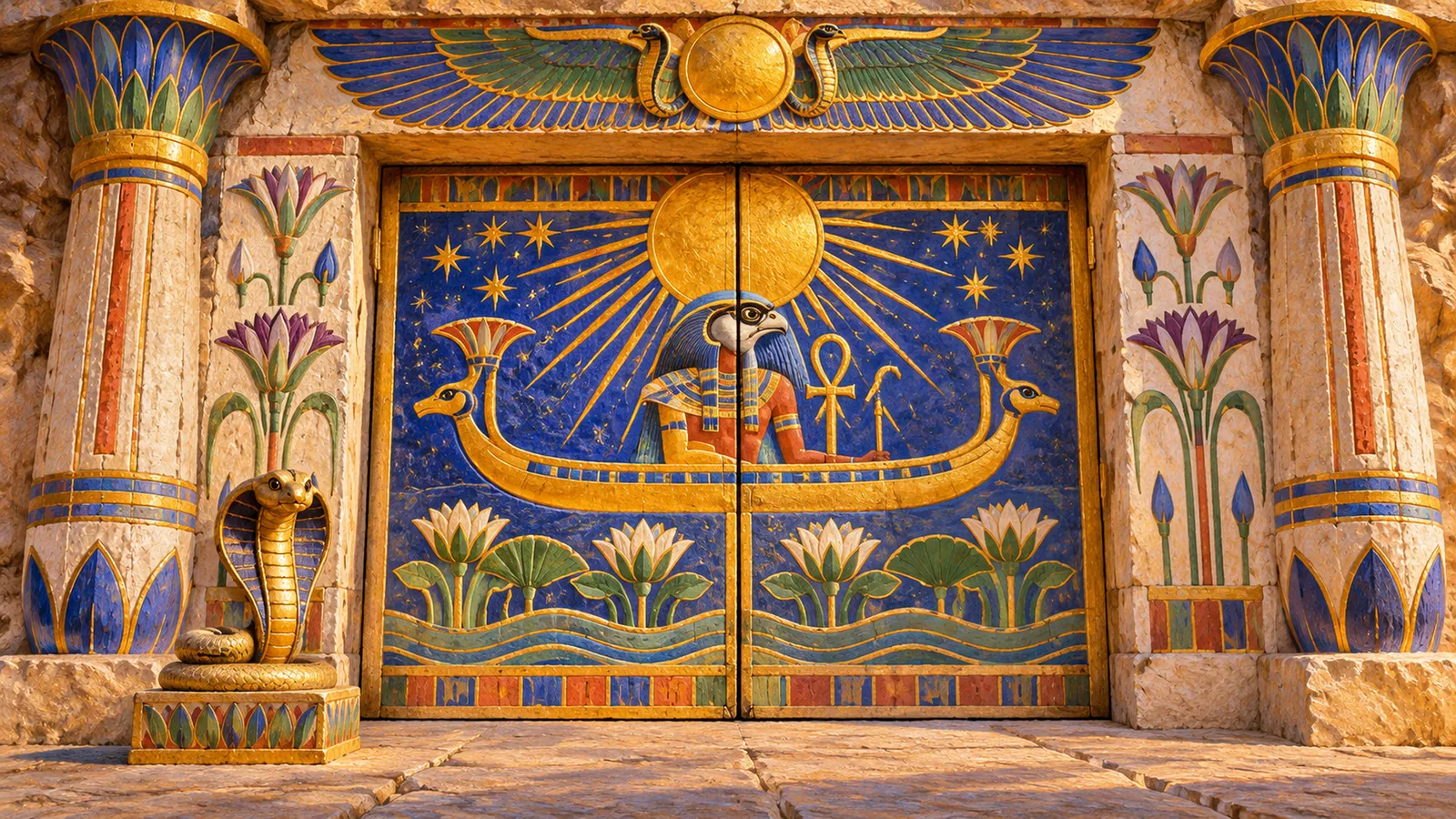
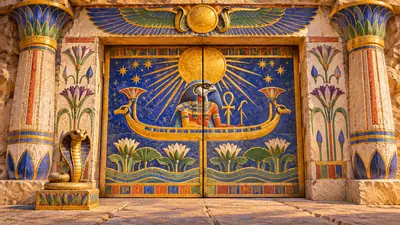
The later Book of Gates tells the sun’s journey through its own succession of guarded doors. The journey here follows the Amduat, which also records the people and places the sun visits.
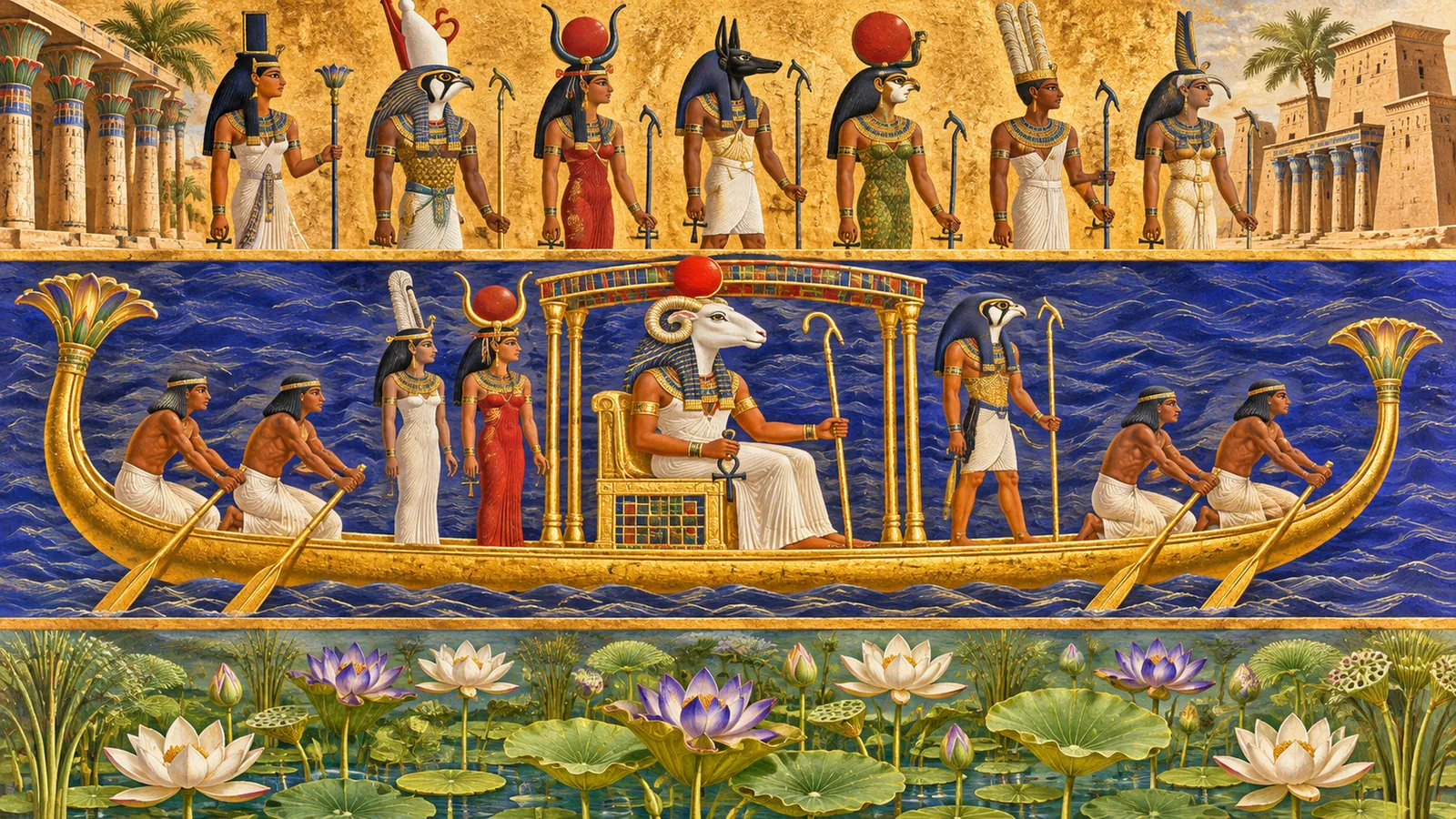
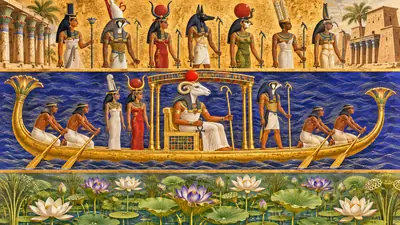
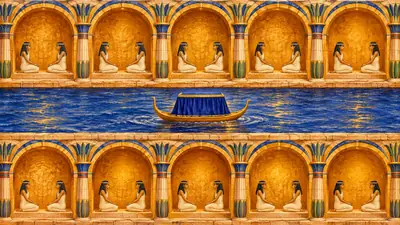
Many hours are drawn in three bands. The boat usually travels through the middle one, while figures above and below show other events in the same hour.
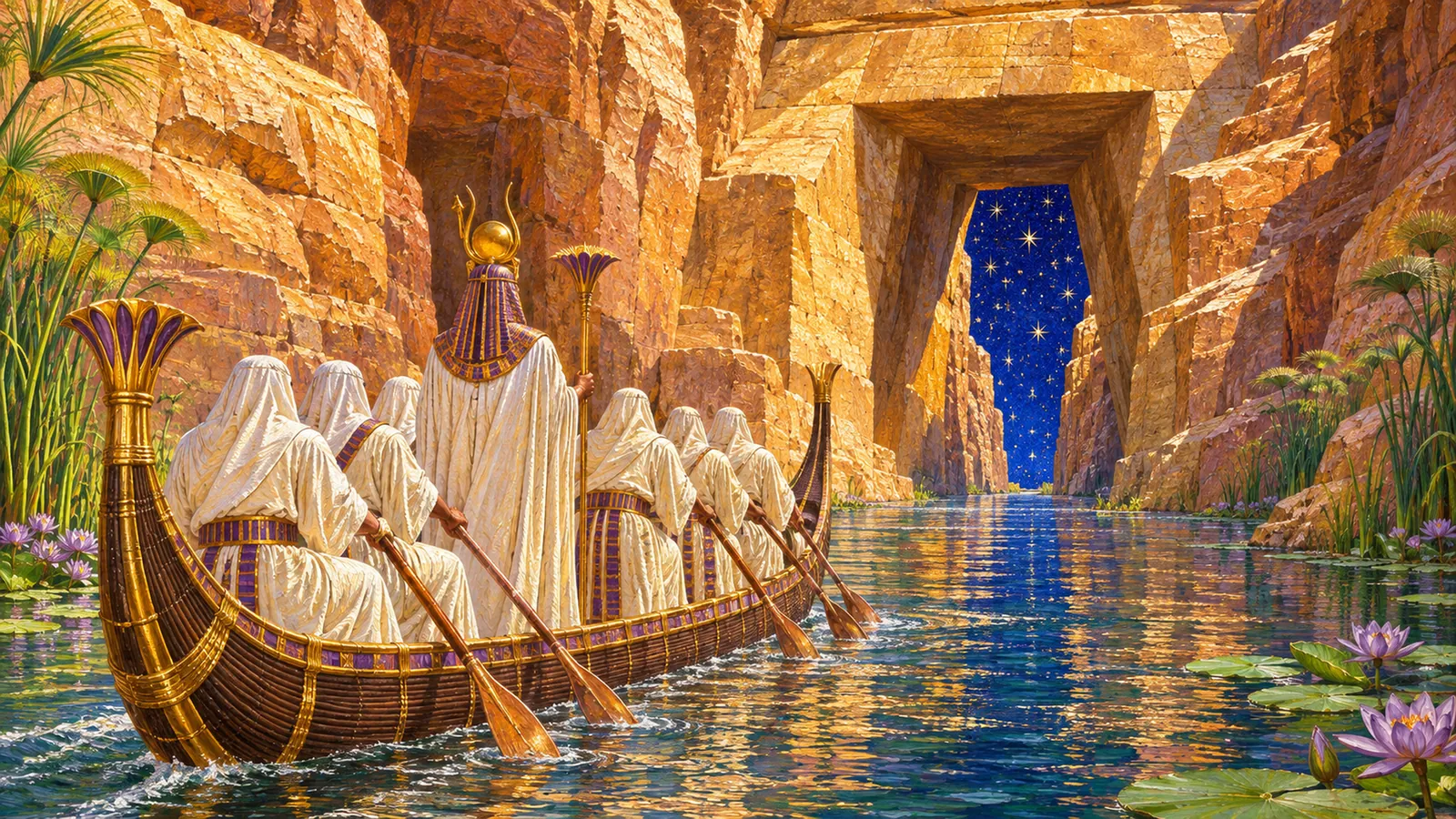
HOUR 1
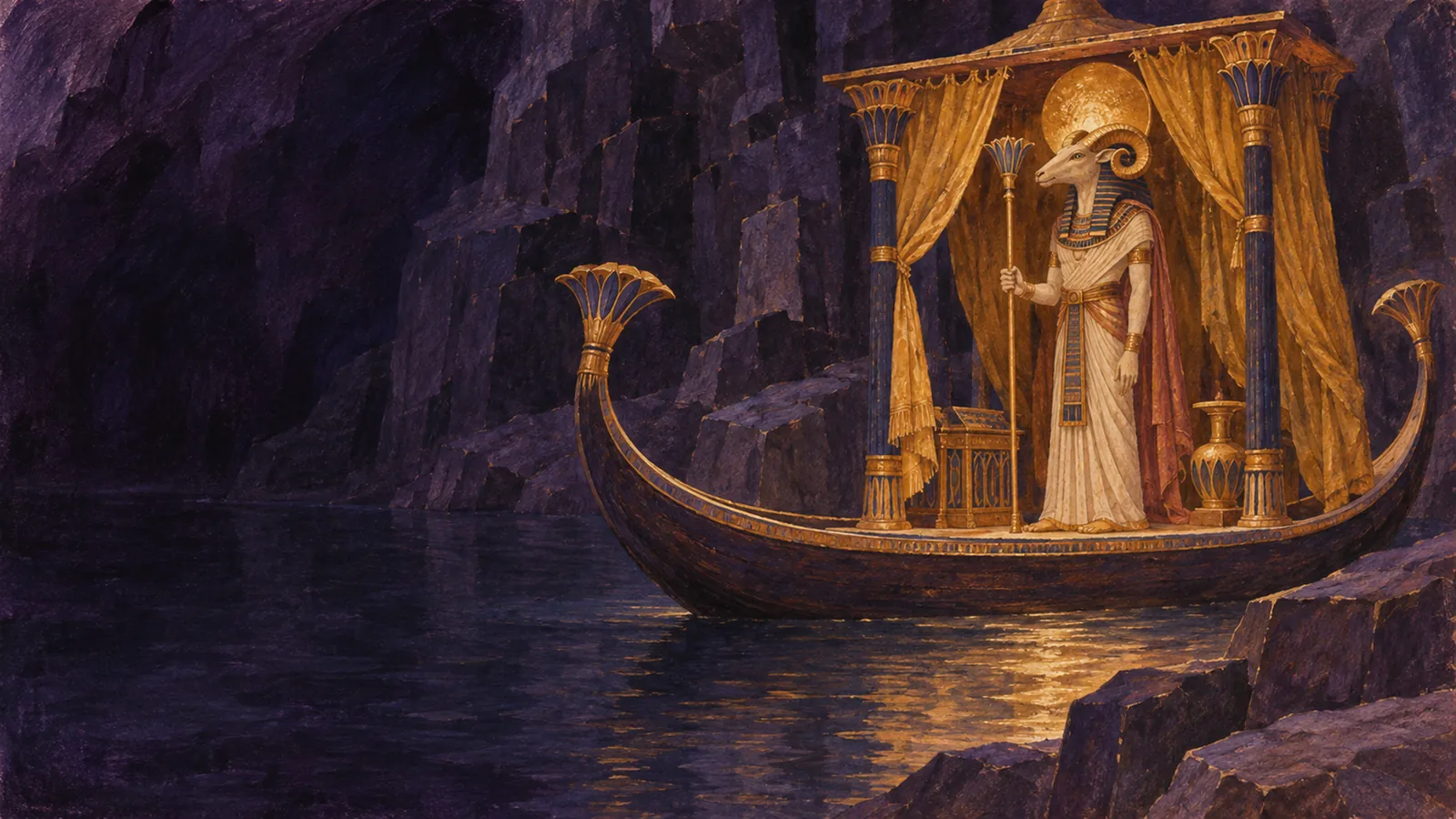
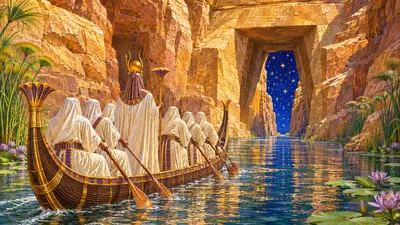
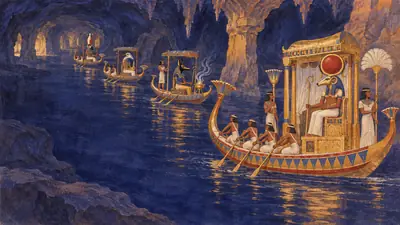
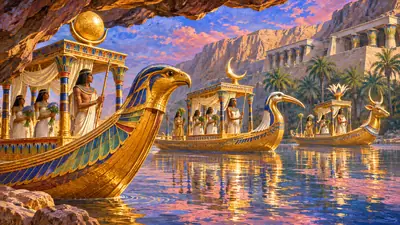
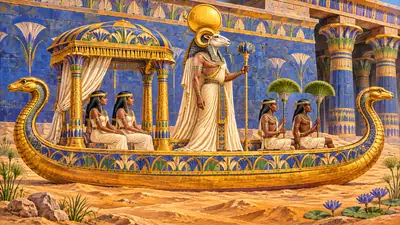
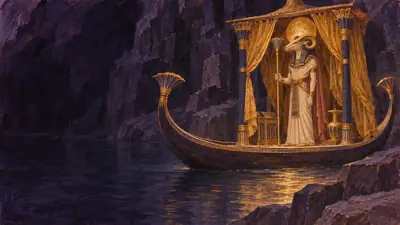
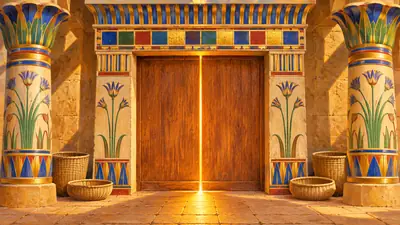
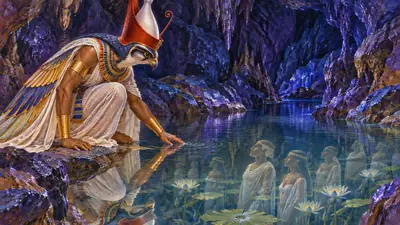
Ra enters the western gate of the horizon. His vessel has a name, Mesektet, and now it carries him where the daylight cannot follow. His divine company crosses the threshold with him.
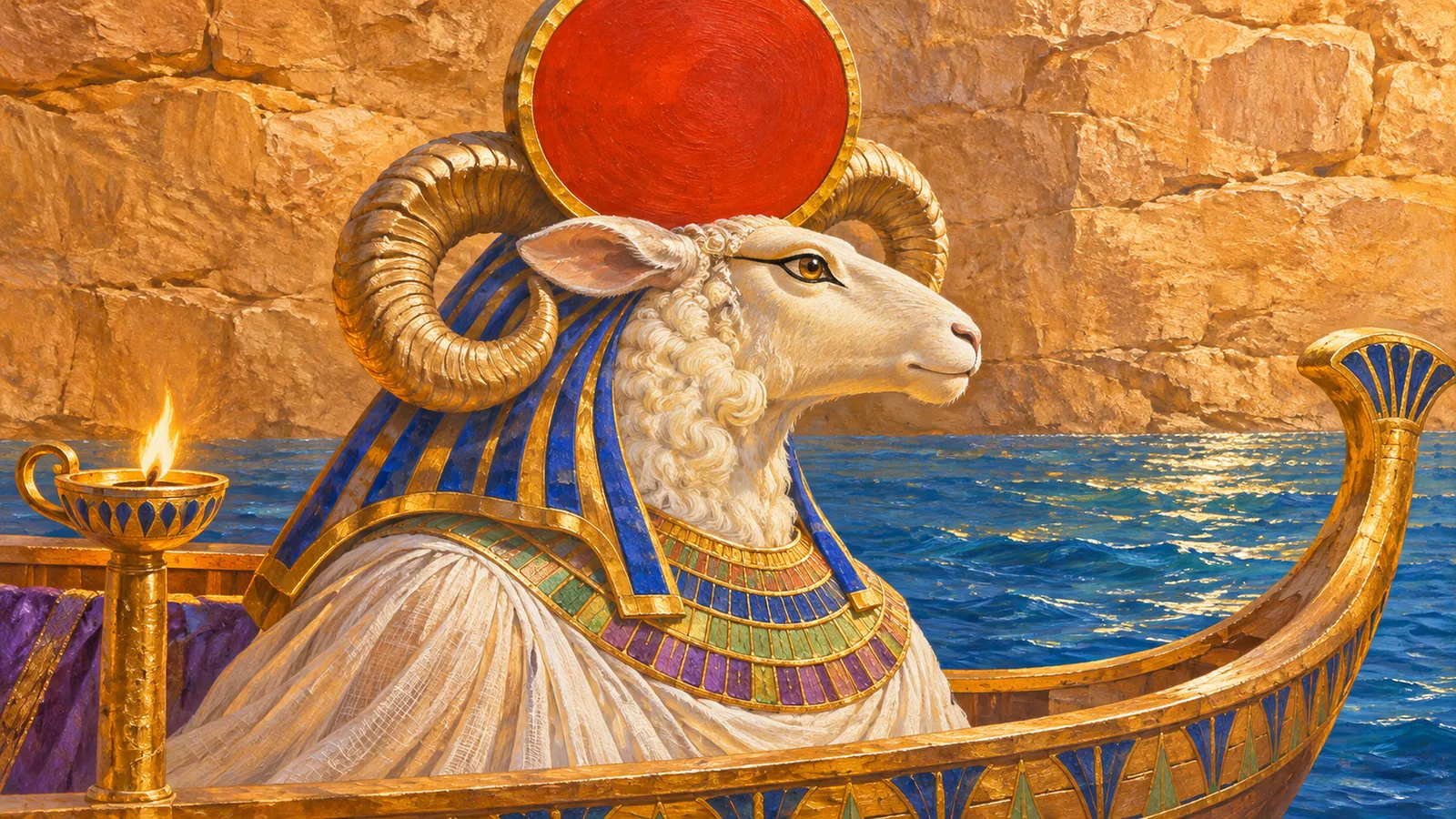
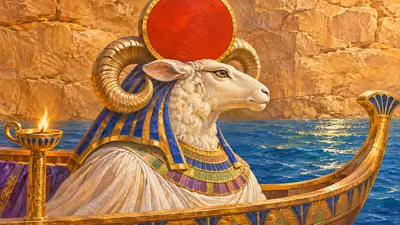
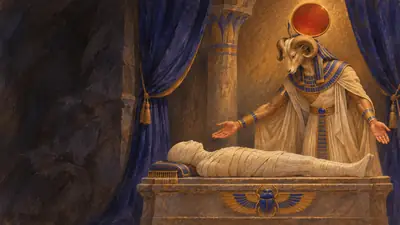
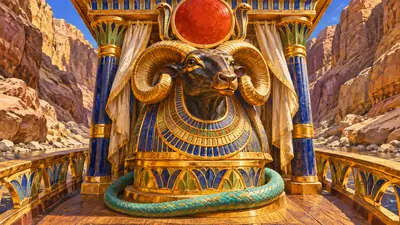
The night sun is drawn with the head of a ram. He stands beneath a shrine’s canopy in his boat, with the disk above his horns and his companions around him.
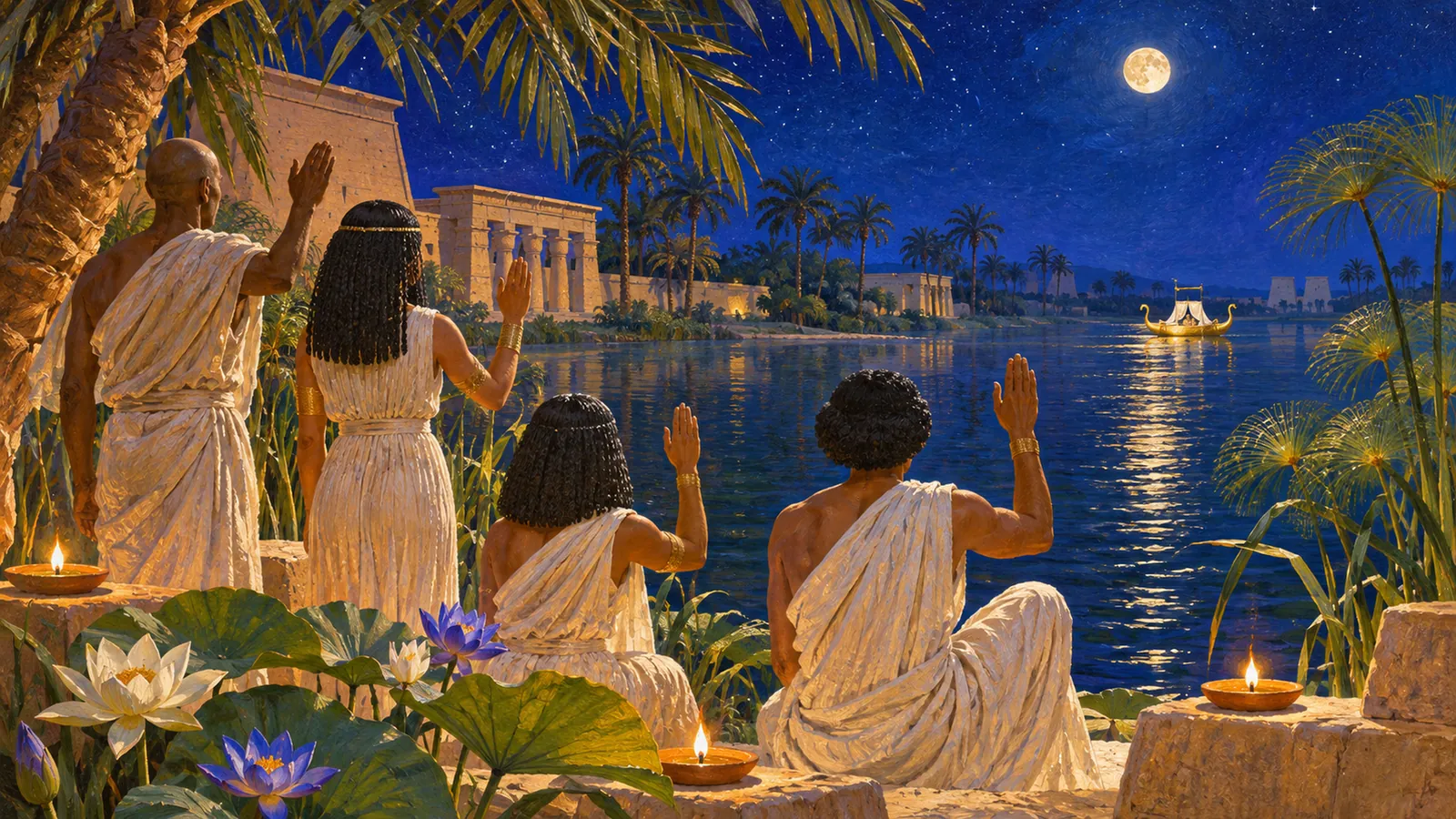
Figures greet Ra as he enters their part of the night. In the first hour the boat passes among ranks of beings from the hidden country, some lifting their hands in welcome.
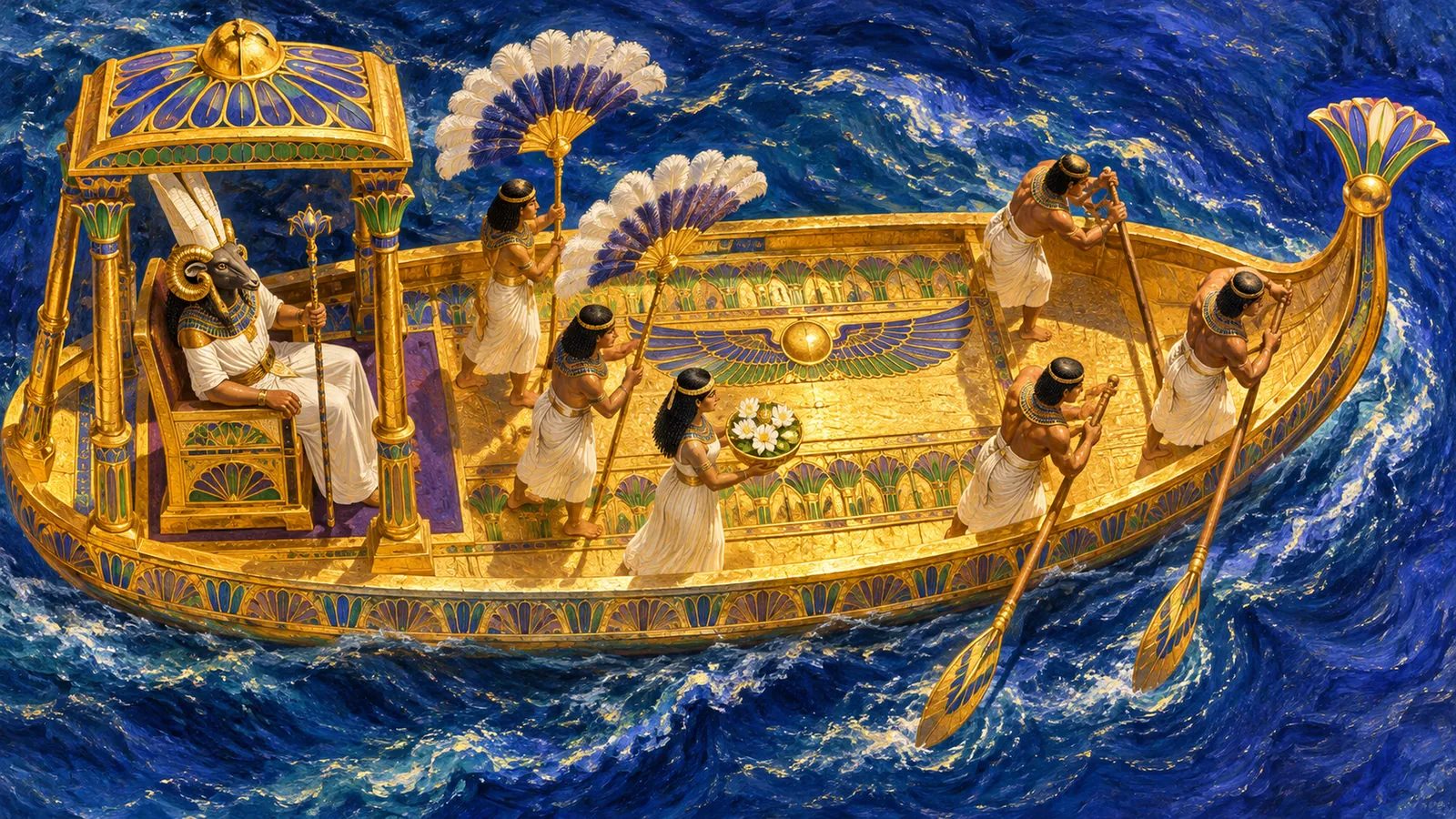
The crew shares Ra’s passage. The pictures give places to companions who guide the vessel and attend the god. The further the boat goes, the more their work will matter.
The figures stack above and below the boat on the tomb wall. Read as a journey, the first hour brings Ra from the edge of daylight to the water of the Duat.
HOUR 2
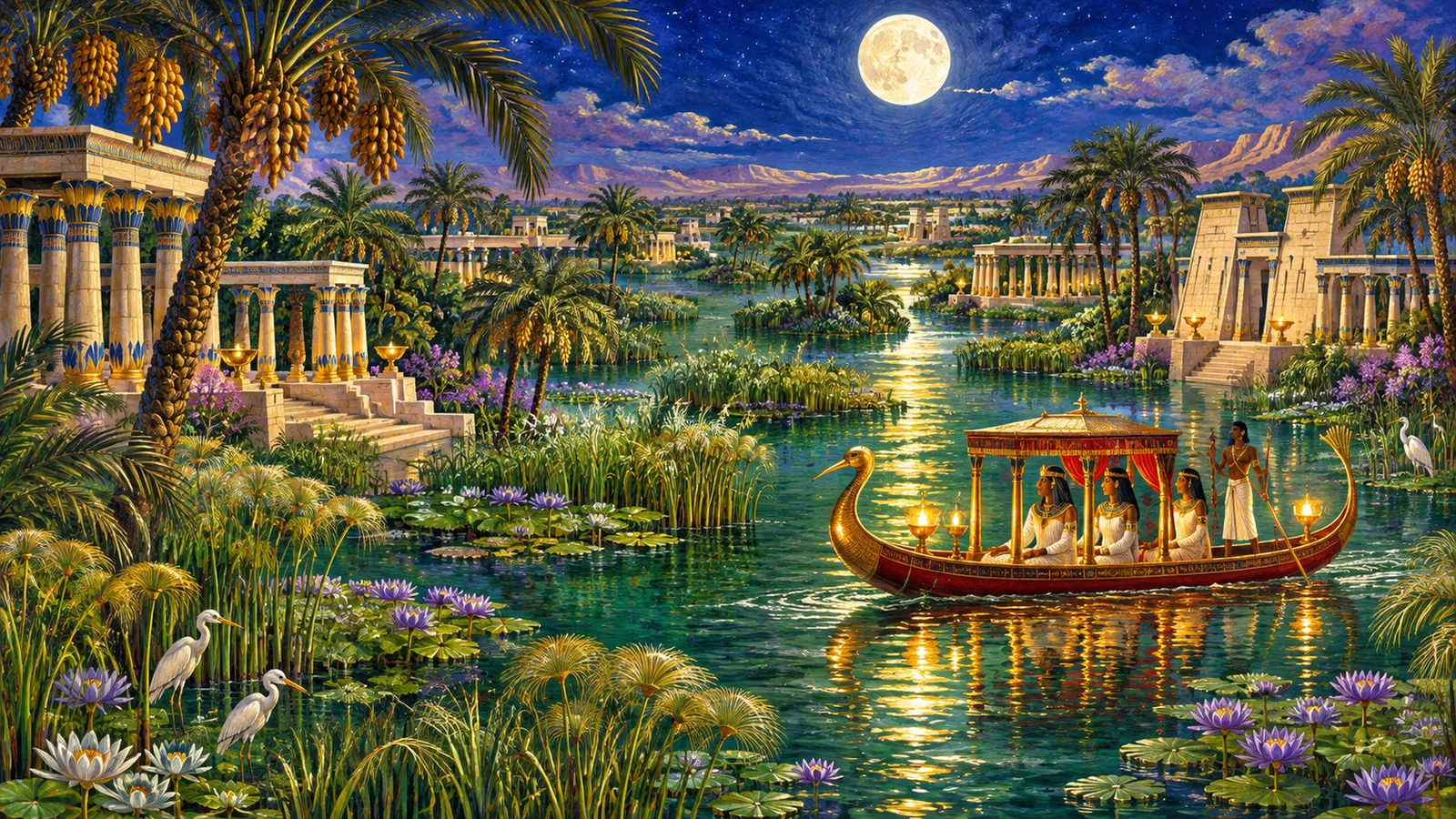
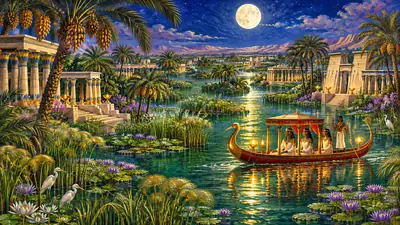
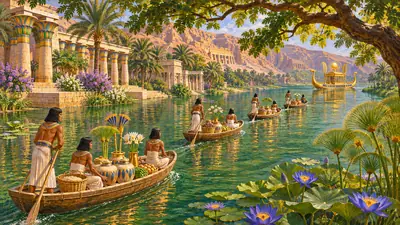
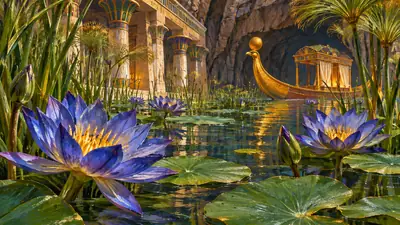
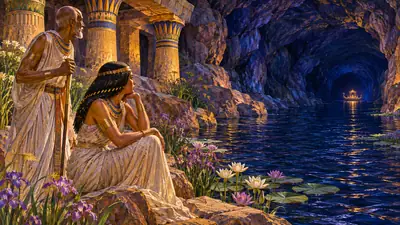
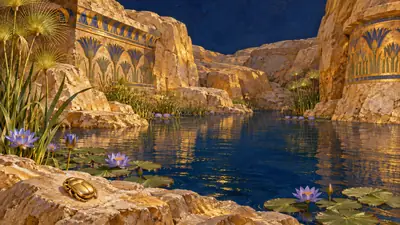
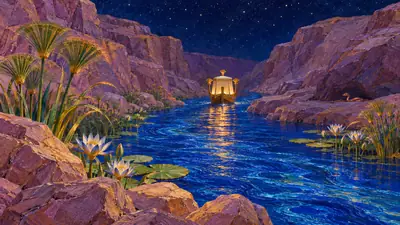
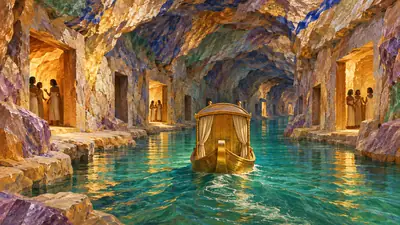
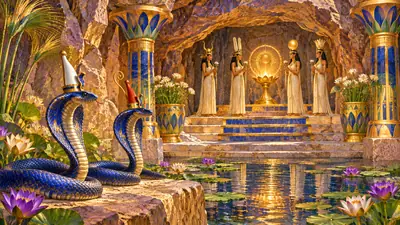
Beyond another threshold, the boat enters Wernes. Plants flourish along the water. The channel curves through a green and fertile country where the dark sky reaches down to the bank.
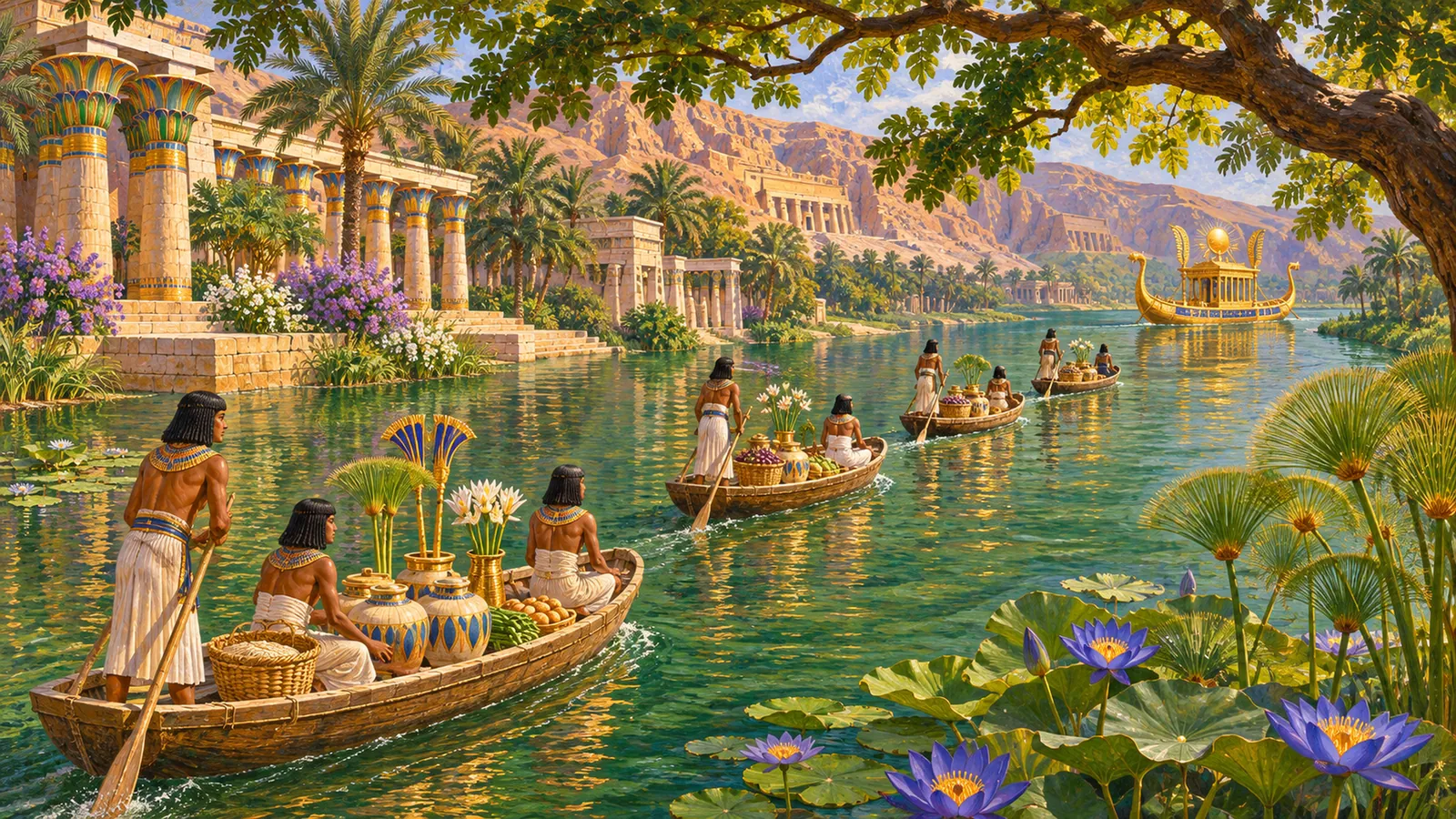
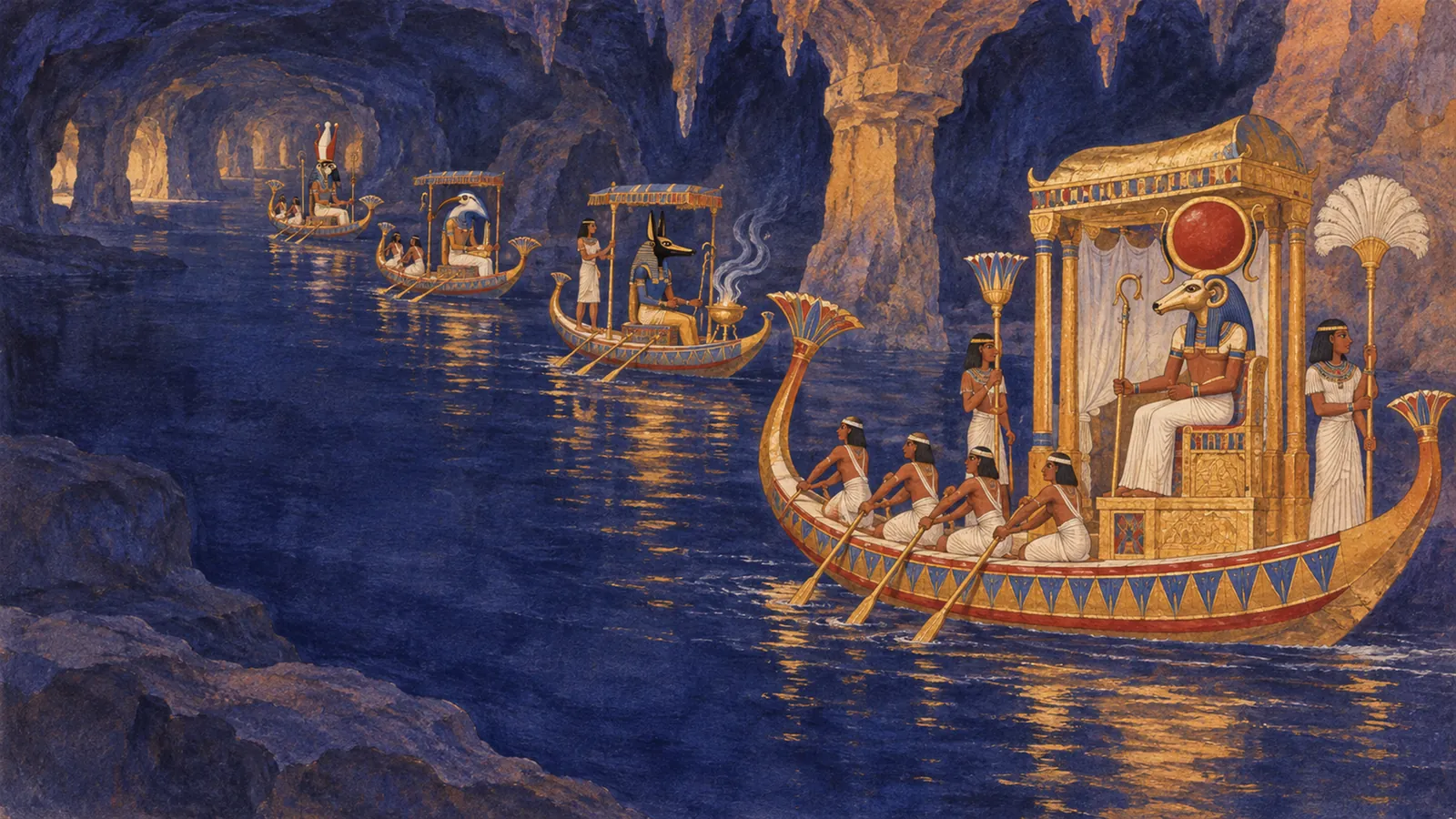
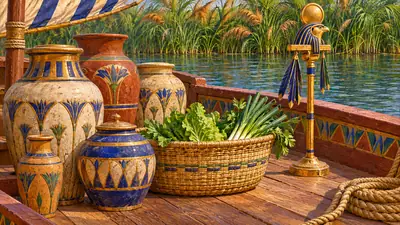
Four companion boats follow Mesektet in the second hour. They carry provisions and sacred signs. Their cargo belongs to the life of the hidden country through which Ra now travels.
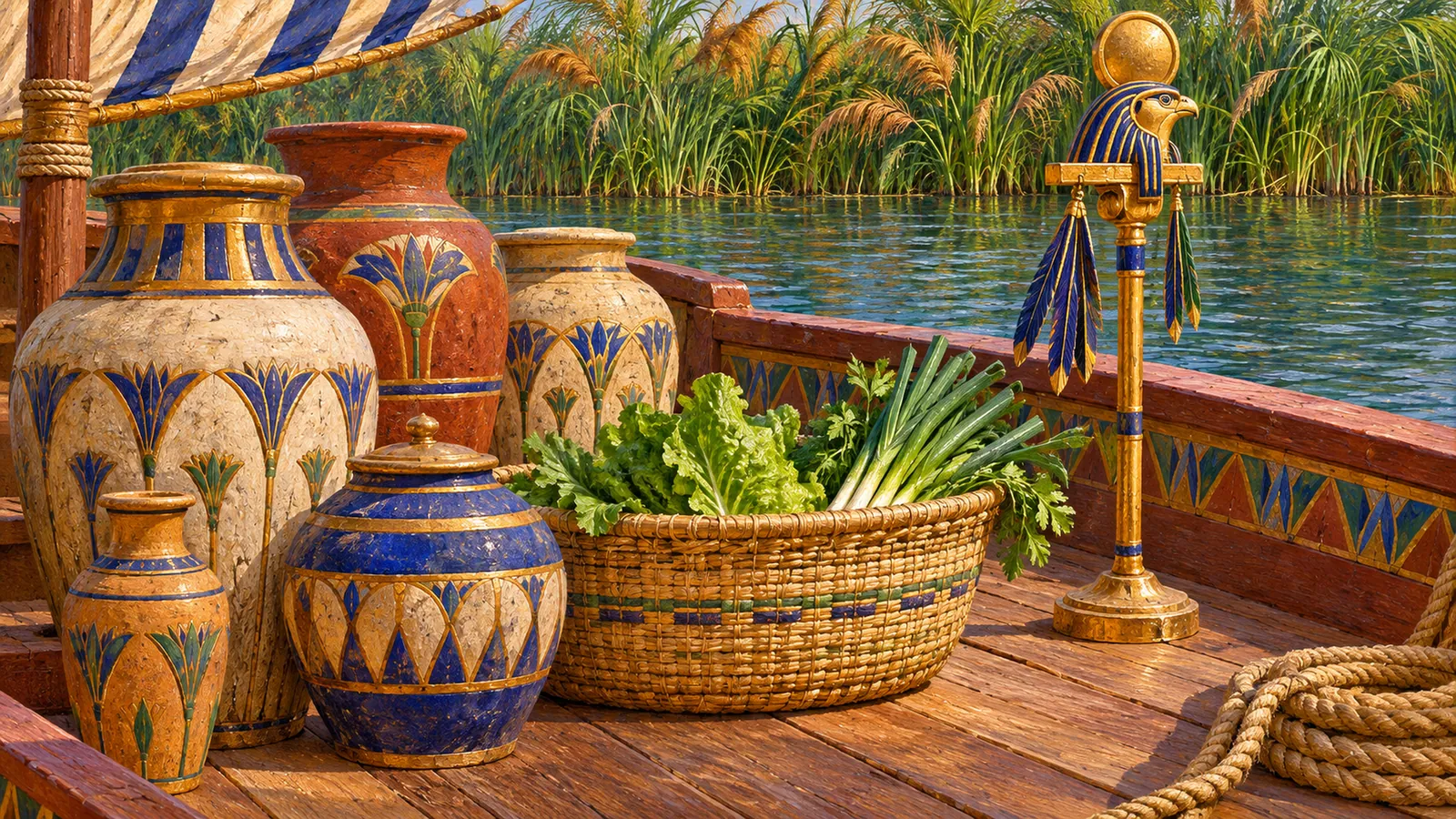
In the second hour the vessels are drawn separately, with different cargoes. Beside Ra’s shrine, the pictures give space to supplies and the emblems that accompany the sun through Wernes.
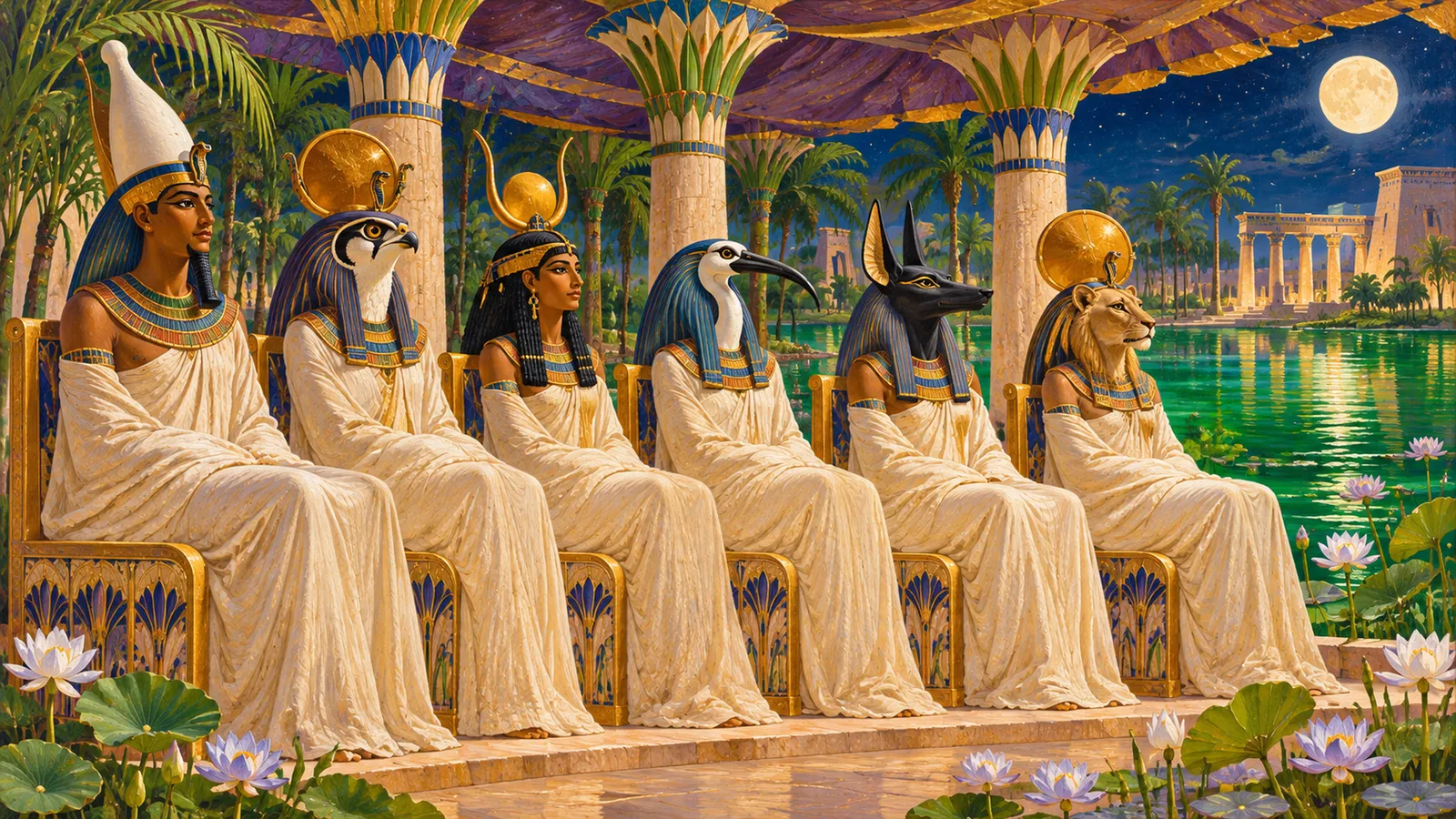
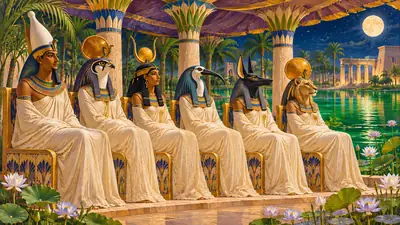
Six seated judges appear in the upper band of the second hour. The green reach of Wernes has its own order, and these figures watch from the shore of Ra’s route.
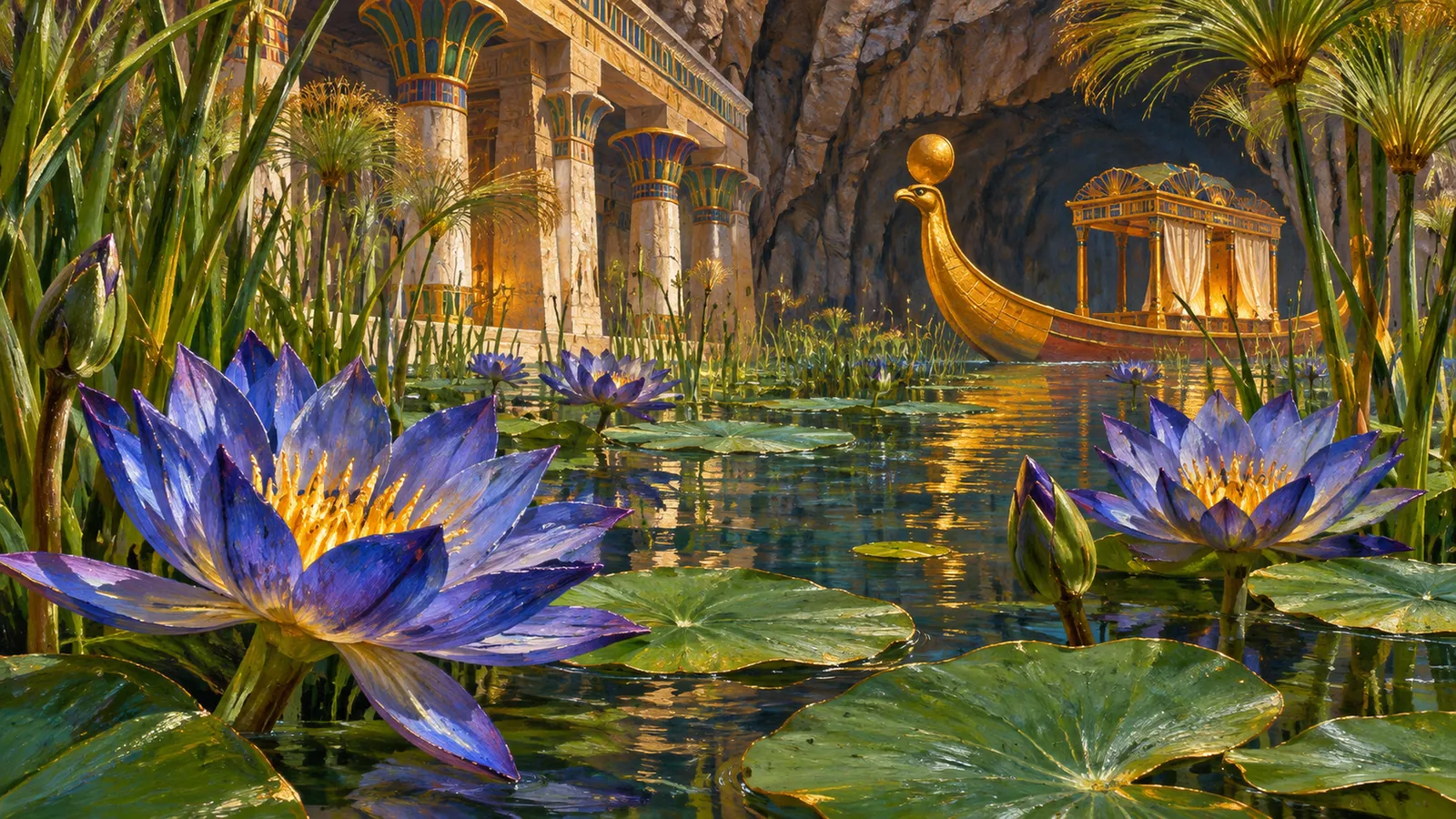
The plants and rich banks make Wernes a place of growth. That abundance belongs to the hidden country. As Ra travels farther, the source will show renewal in other forms.
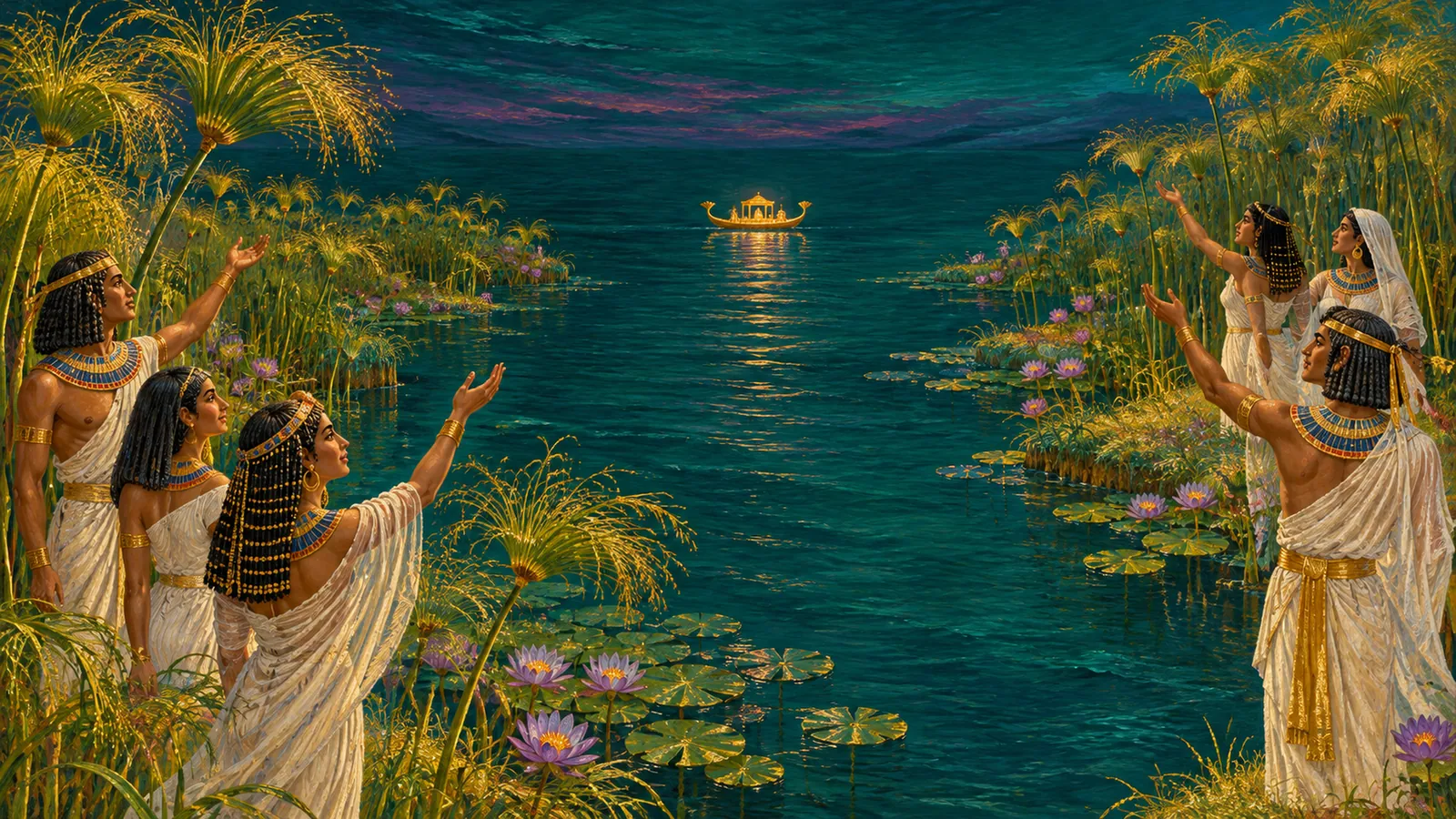
The gods and other inhabitants of Wernes appear on both sides of the water. The scene makes a settled place out of a stretch of river that Ra will soon leave behind.
HOUR 3
The boat comes to the Water of Osiris in the third hour. Three vessels go before it. The ordered passage of the boats continues as the sun draws closer to the west’s ruler.
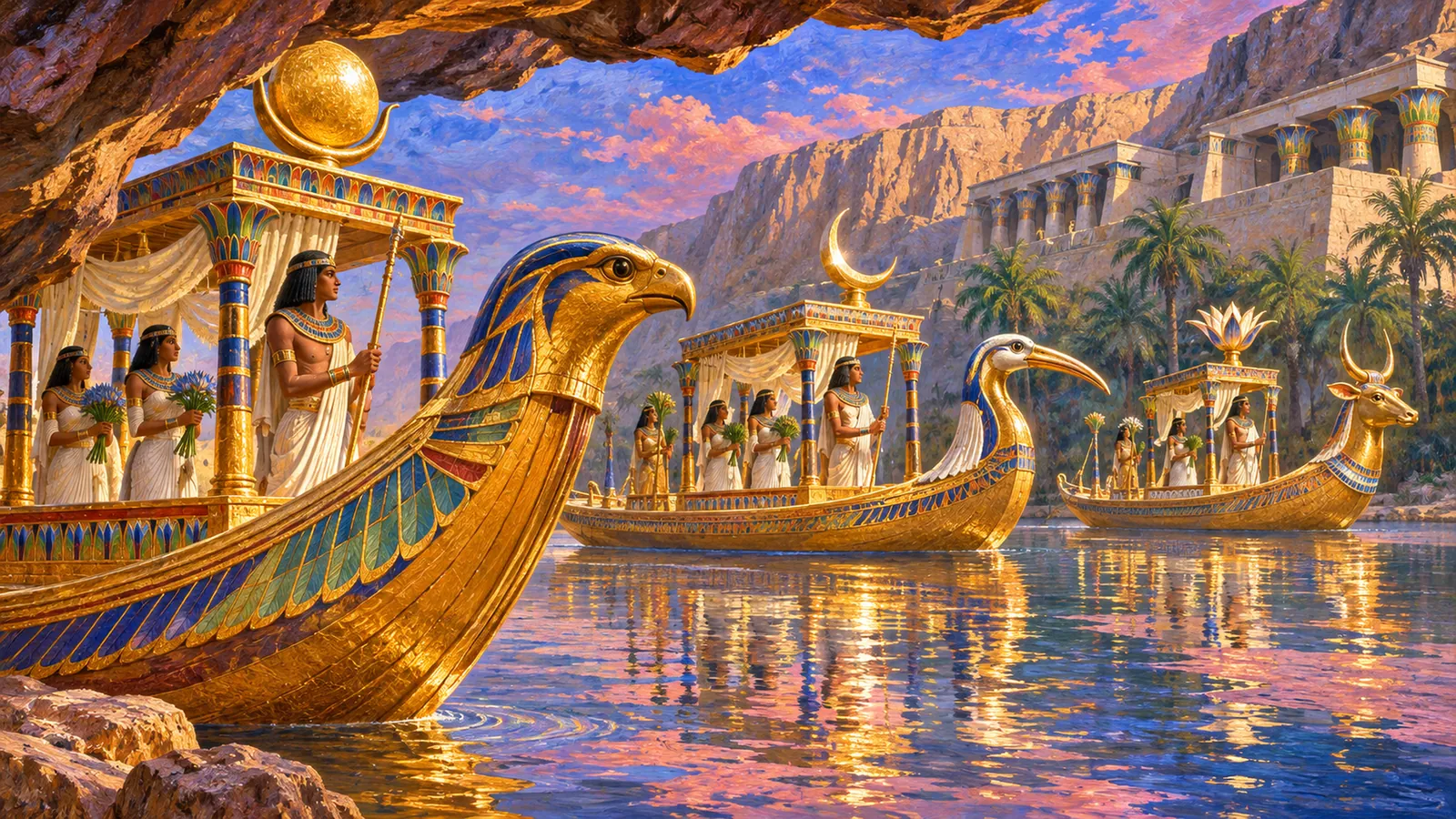
The pictures give different forms to the gods who go ahead of Ra. The small vessels keep their places in the procession, each with its own crew and sacred presence.
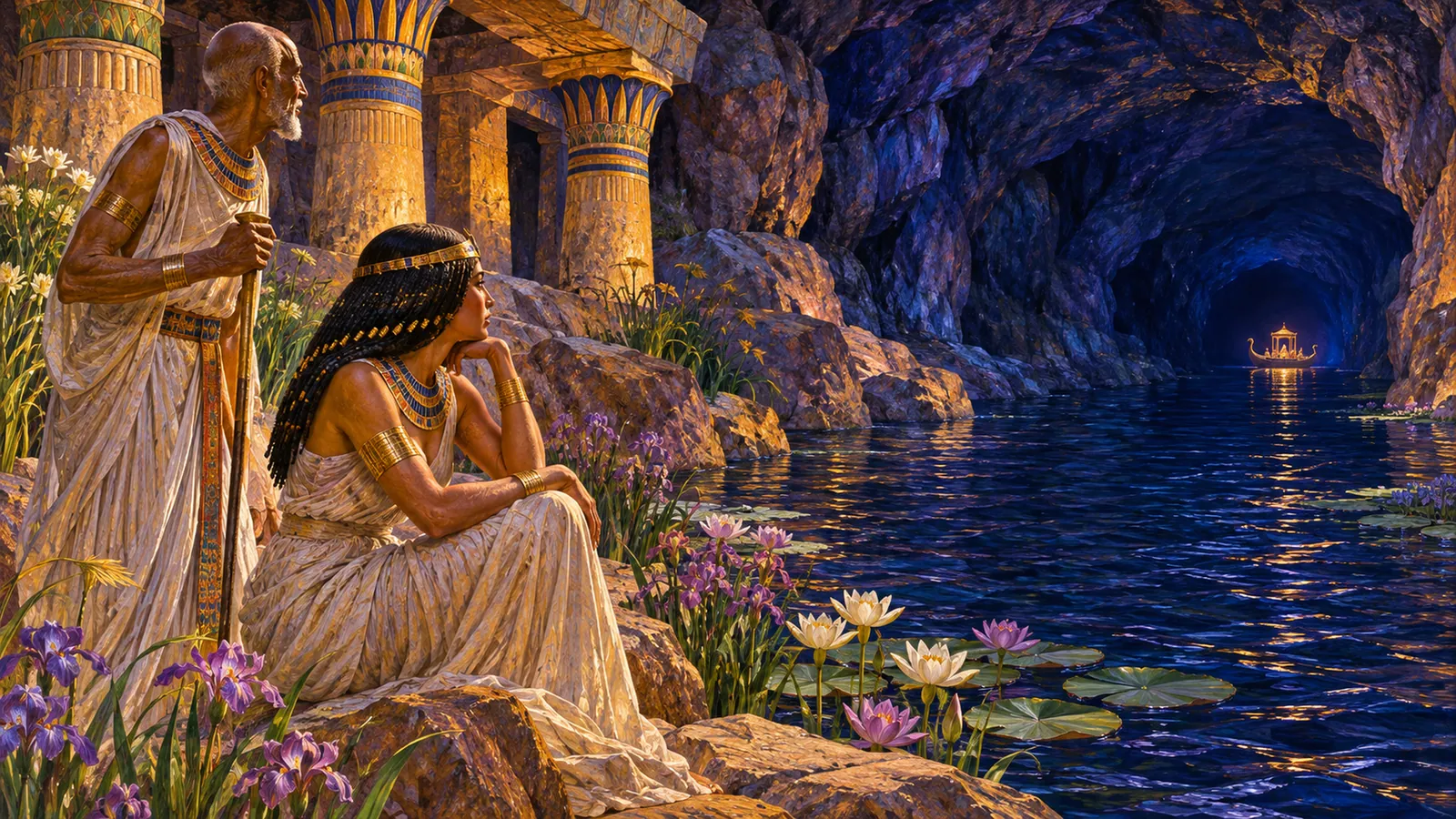
The beings on these shores address the passing sun. For a short time his presence reaches them. The three levels of the scene let us see the boat and those who greet it together.
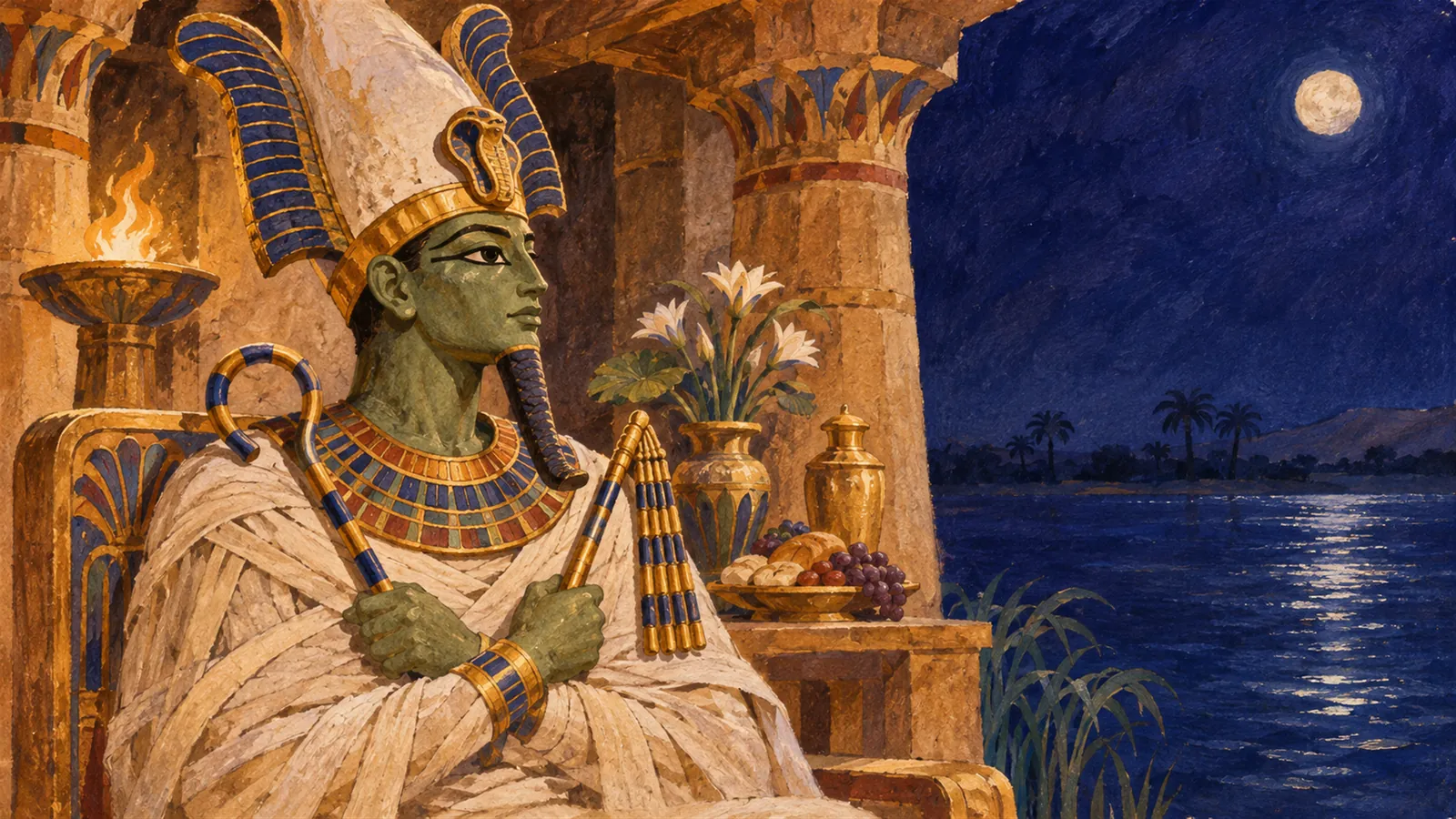
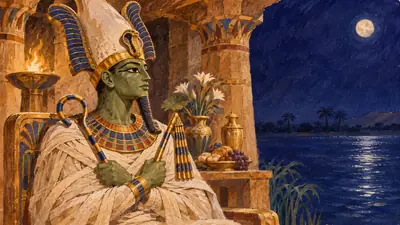
Osiris appears again and again in the lowest band of the third hour. He is the ruler of the dead, and the waters of the underworld are also a place of renewal for him.
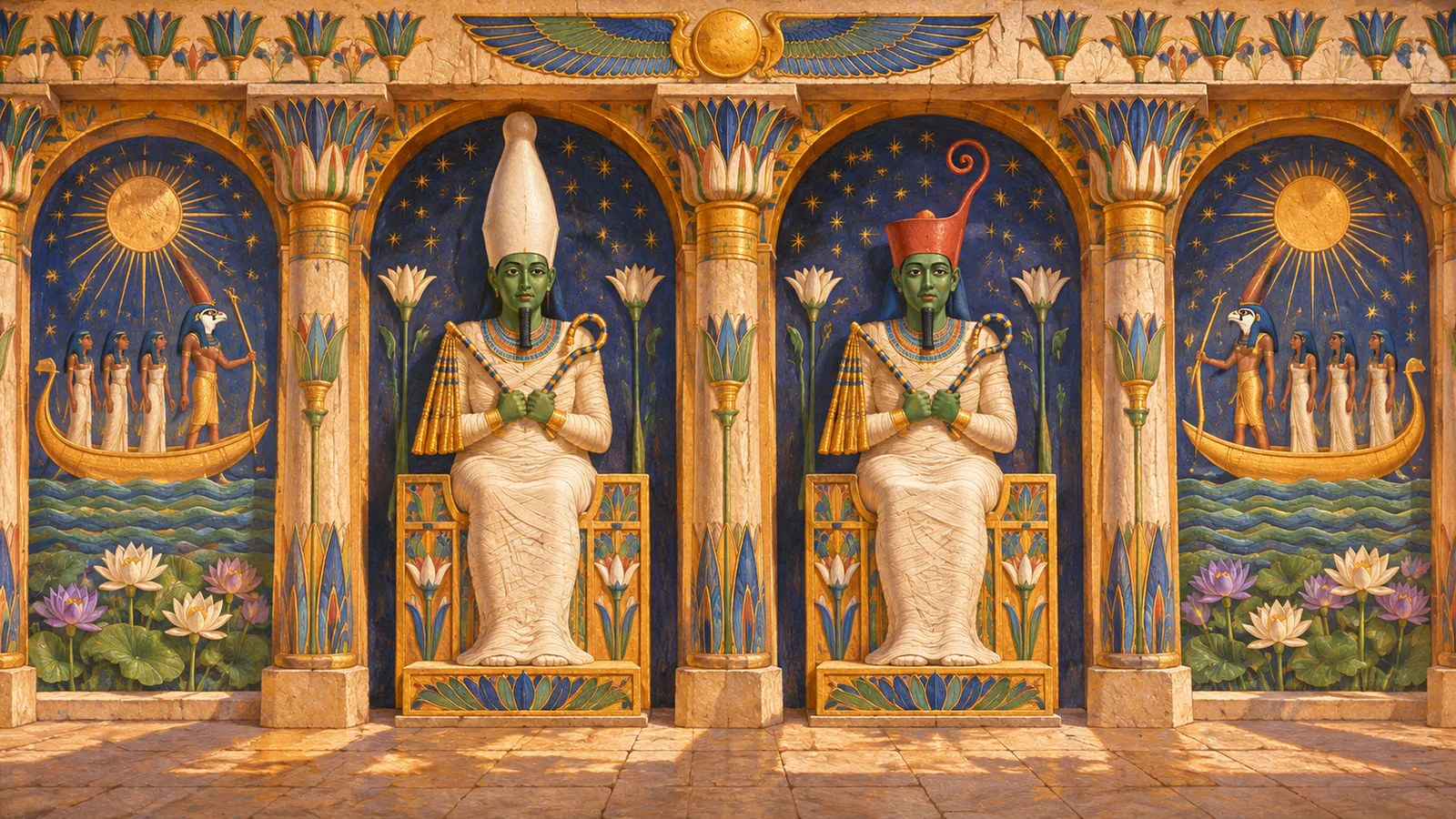
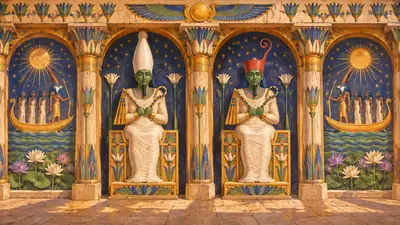
In intact versions of the scene, four seated forms of Osiris wear the white crown and four wear the red one. Two standing figures look back. Nesmin’s papyrus preserves part of this procession.
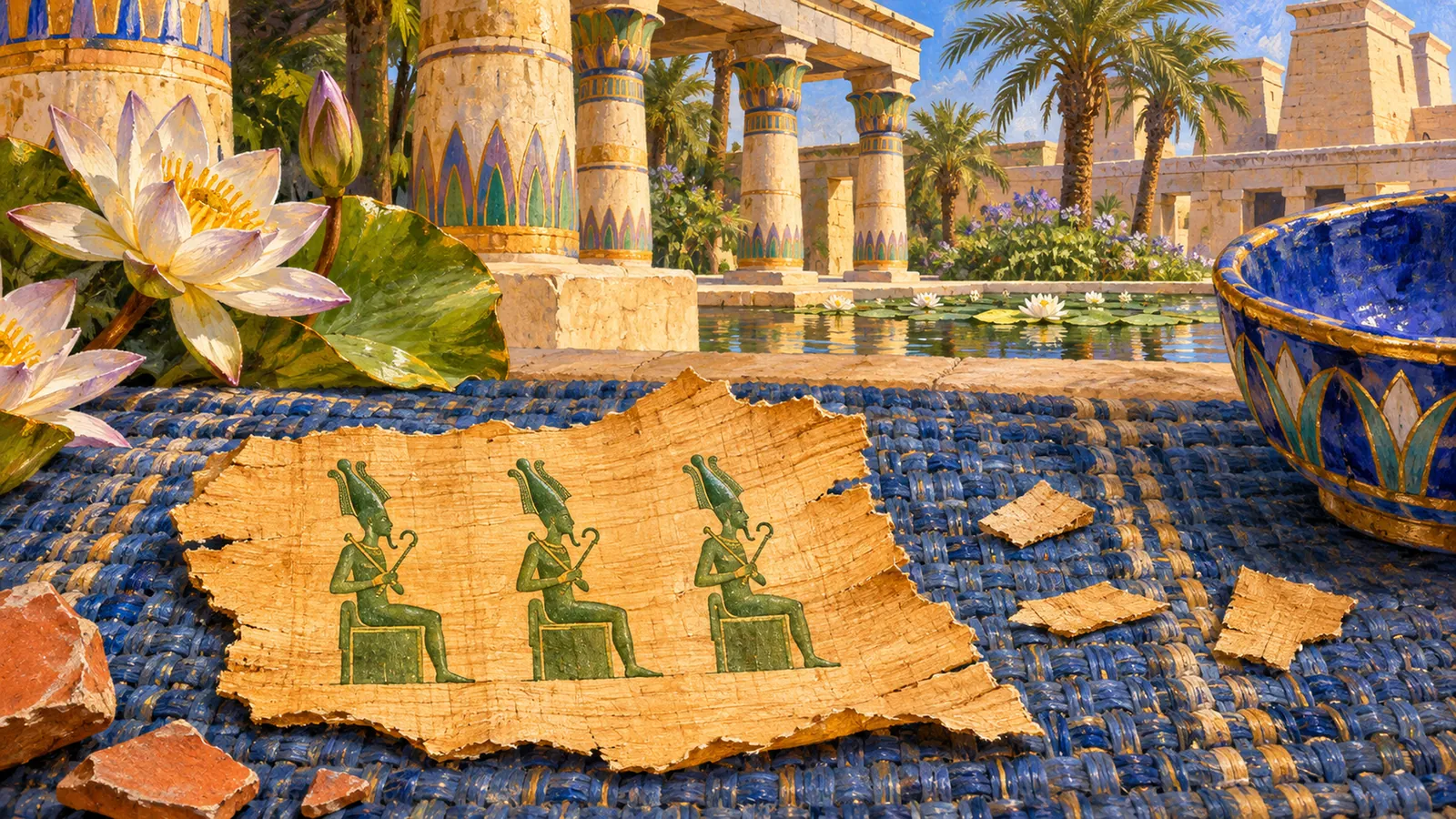
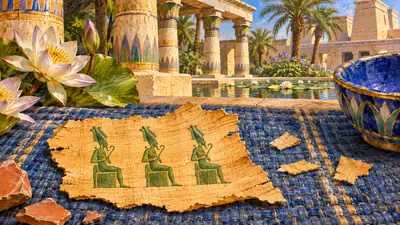
Nesmin’s copy was buried with him centuries after the royal tombs were painted. Its torn third hour still preserves part of the row of Osiris figures, enough to compare with other copies.
HOUR 4
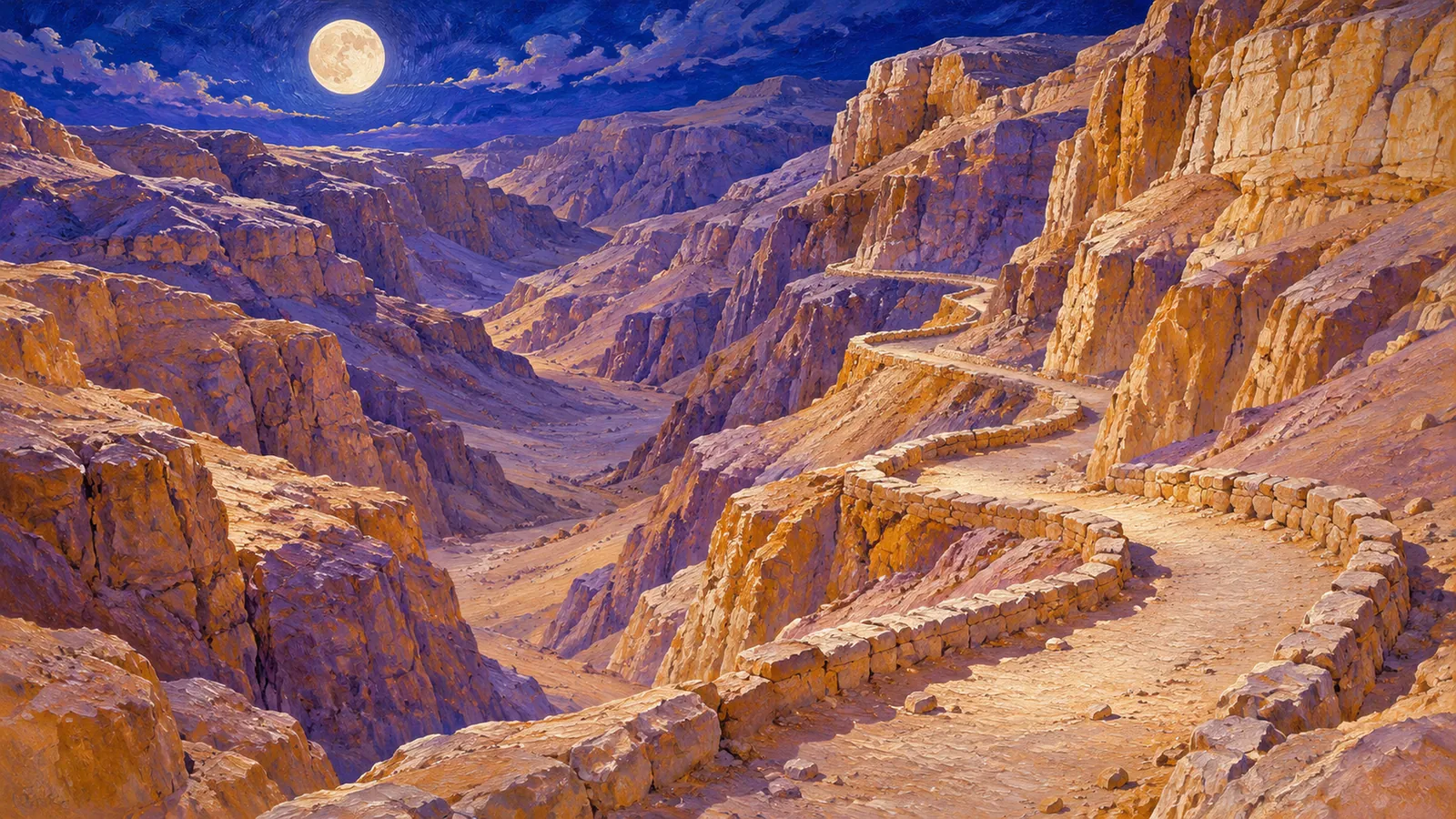
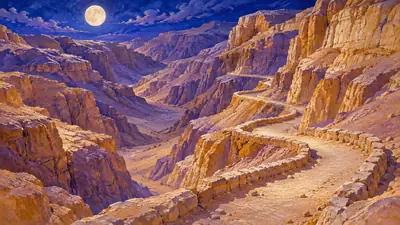
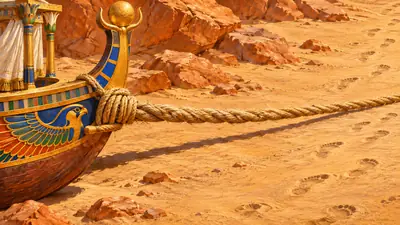
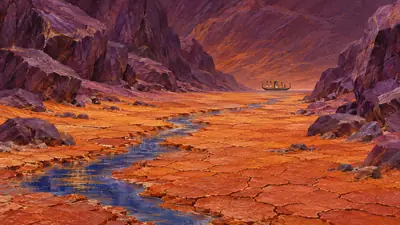
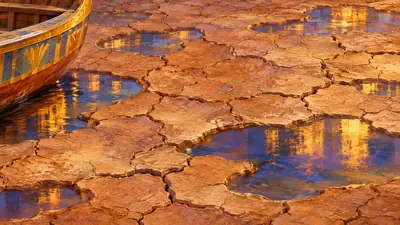
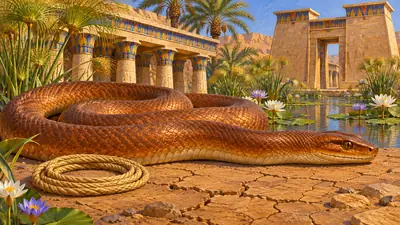
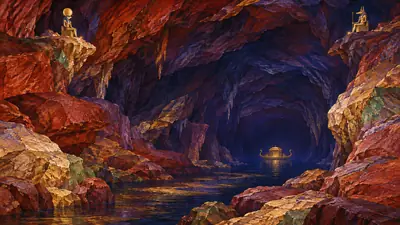
In the fourth hour the channel gives way to sand. The barque reaches Rosetau, where the roadway bends sharply across the land of Sokar and the crew can no longer row.
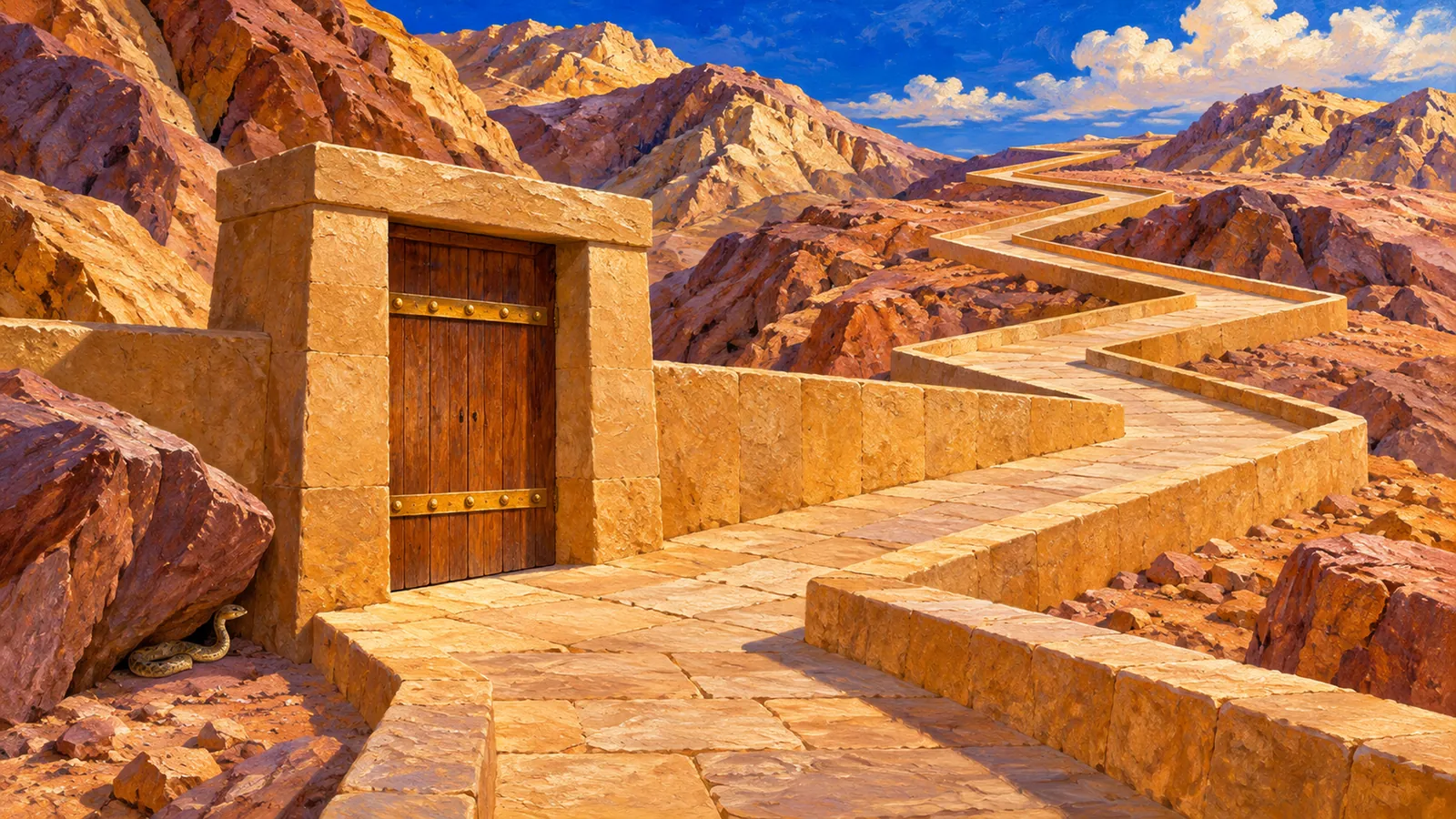
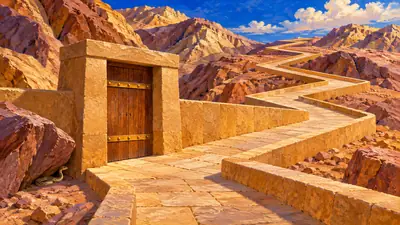
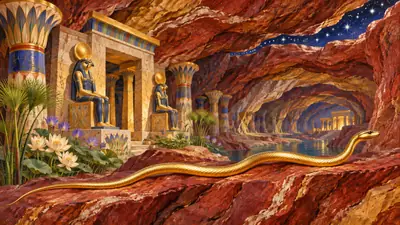
The path through Rosetau zigzags across the bands of the picture. Doors break the way and strange serpents inhabit the desert. The route bears little resemblance to the reaches of Wernes.
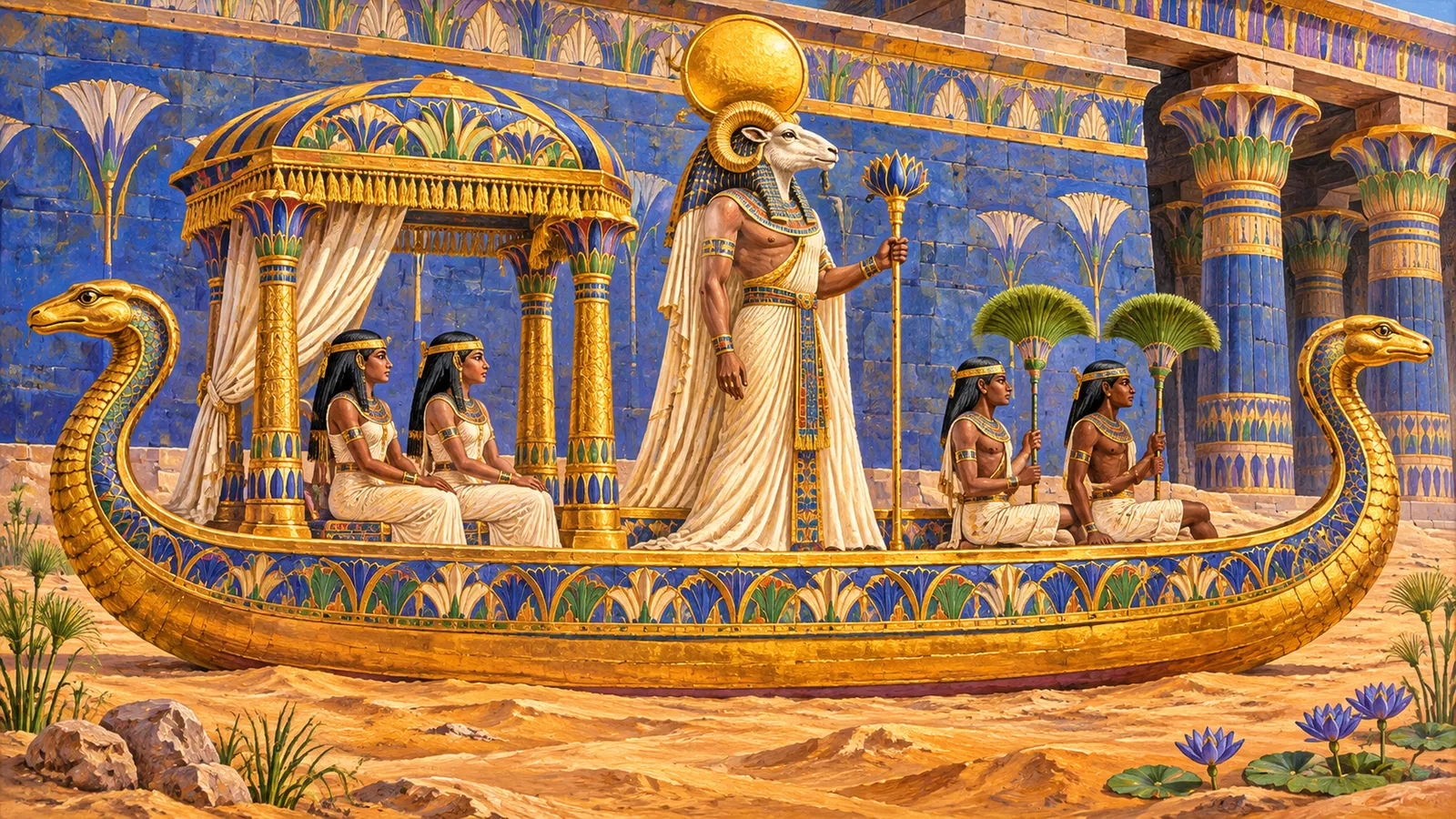
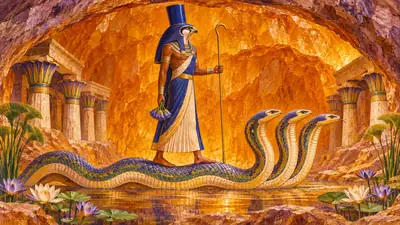
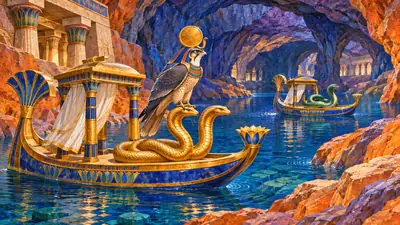
The night boat itself changes shape. In the fourth hour it has a snake’s head at each end, a form suited to the dry land it has to cross.
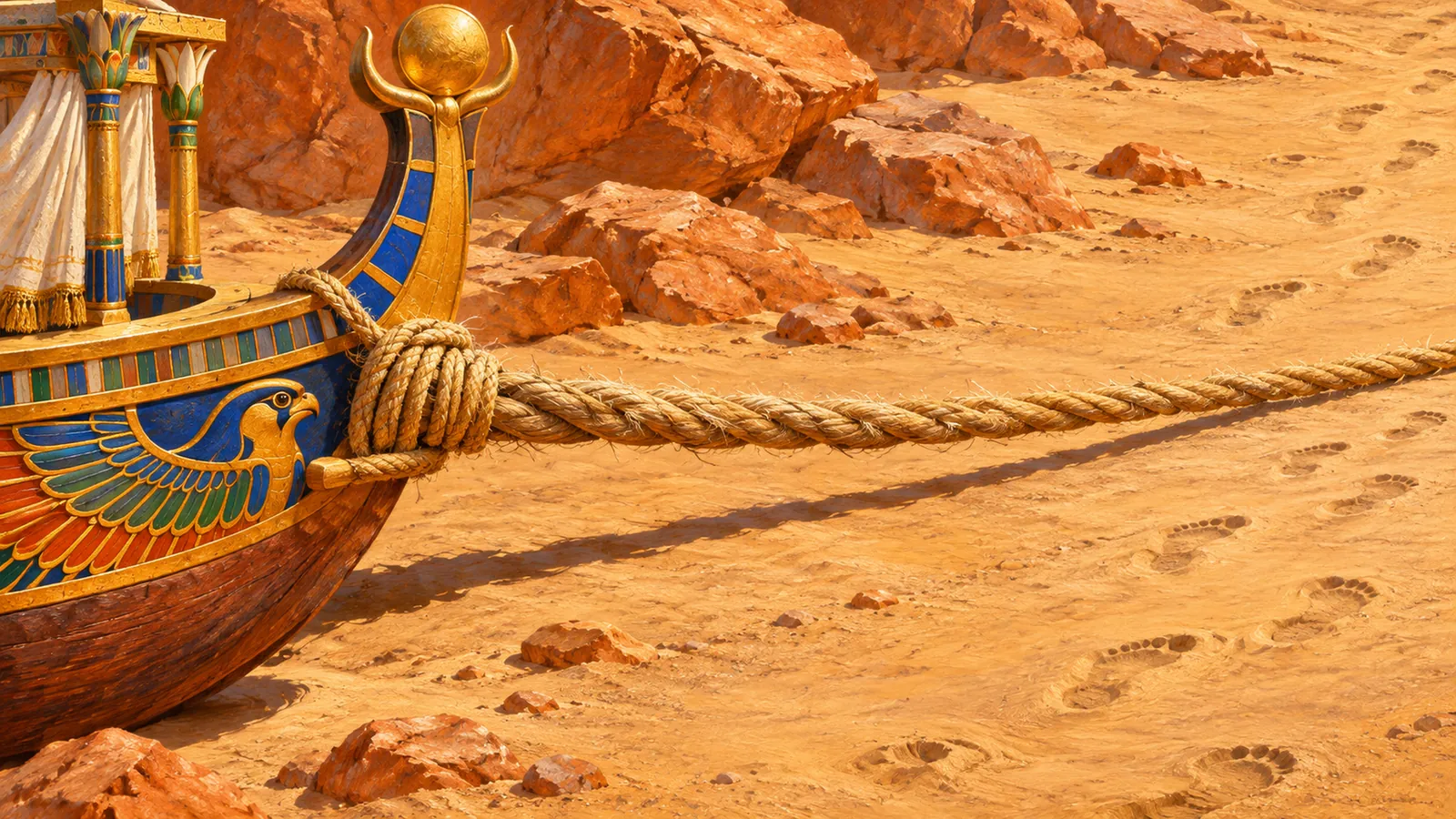
Four figures tow the transformed boat across the dry region in Nesmin’s copy. They pull on the rope as it makes its way into the desert, where an oar would be useless.
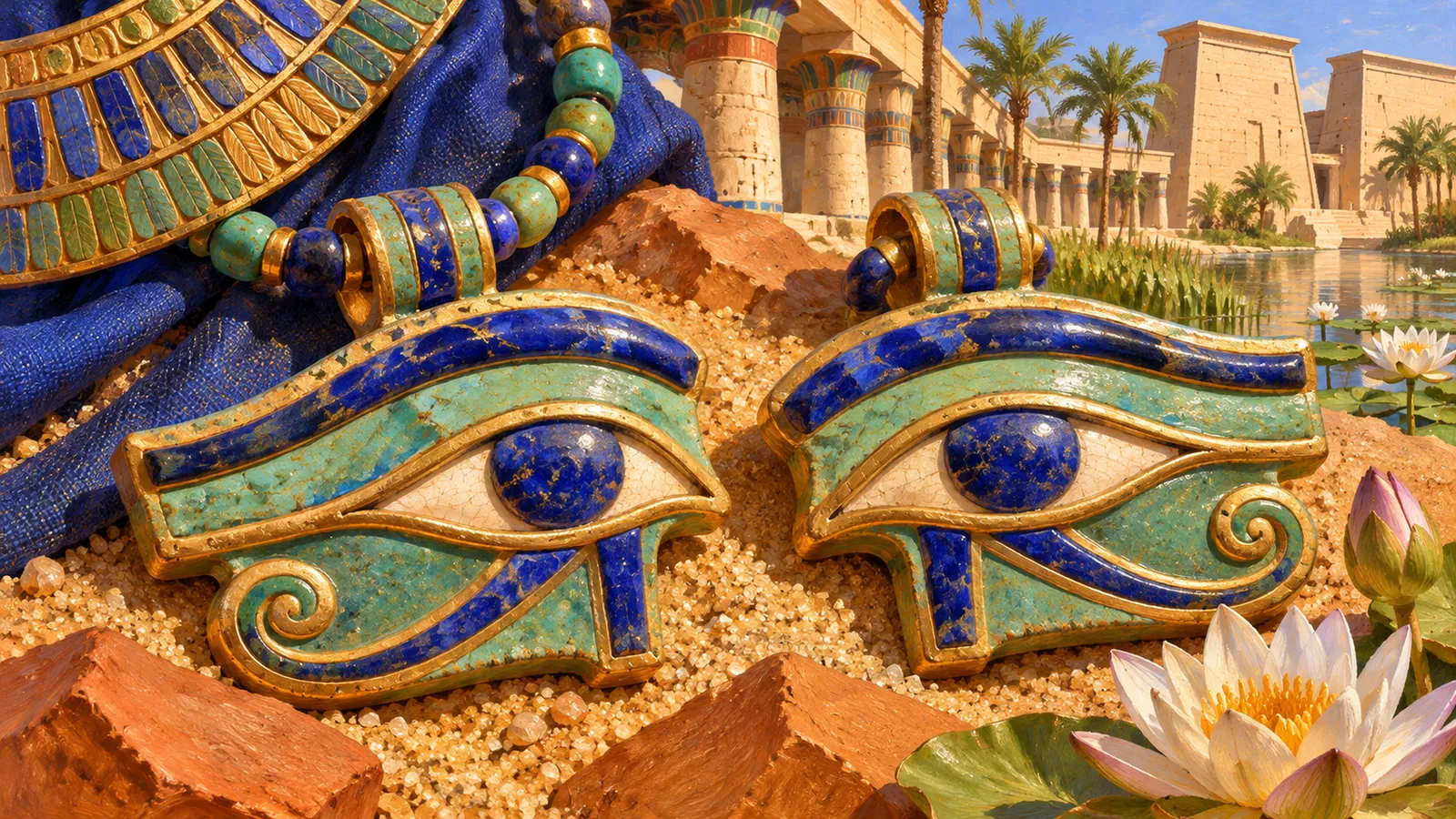
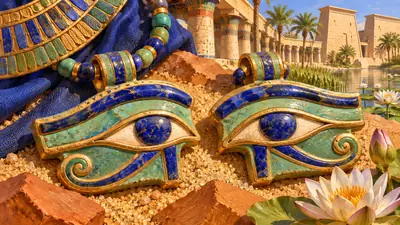
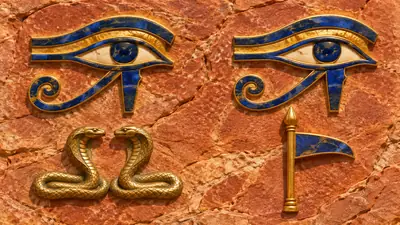
The fourth hour includes the eyes that appear again later in the journey. In Sokar’s land the winding path, the serpents and these signs of sight surround Ra as he passes.
HOUR 5
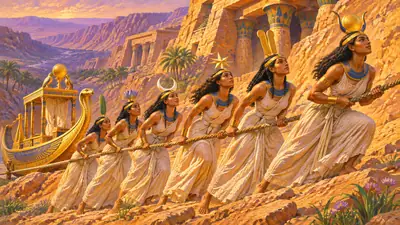
The boat follows the rope over a mound in the fifth hour. The drawing sets a second world beneath the road. Sokar’s chamber lies inside the earth, below the traveling god.
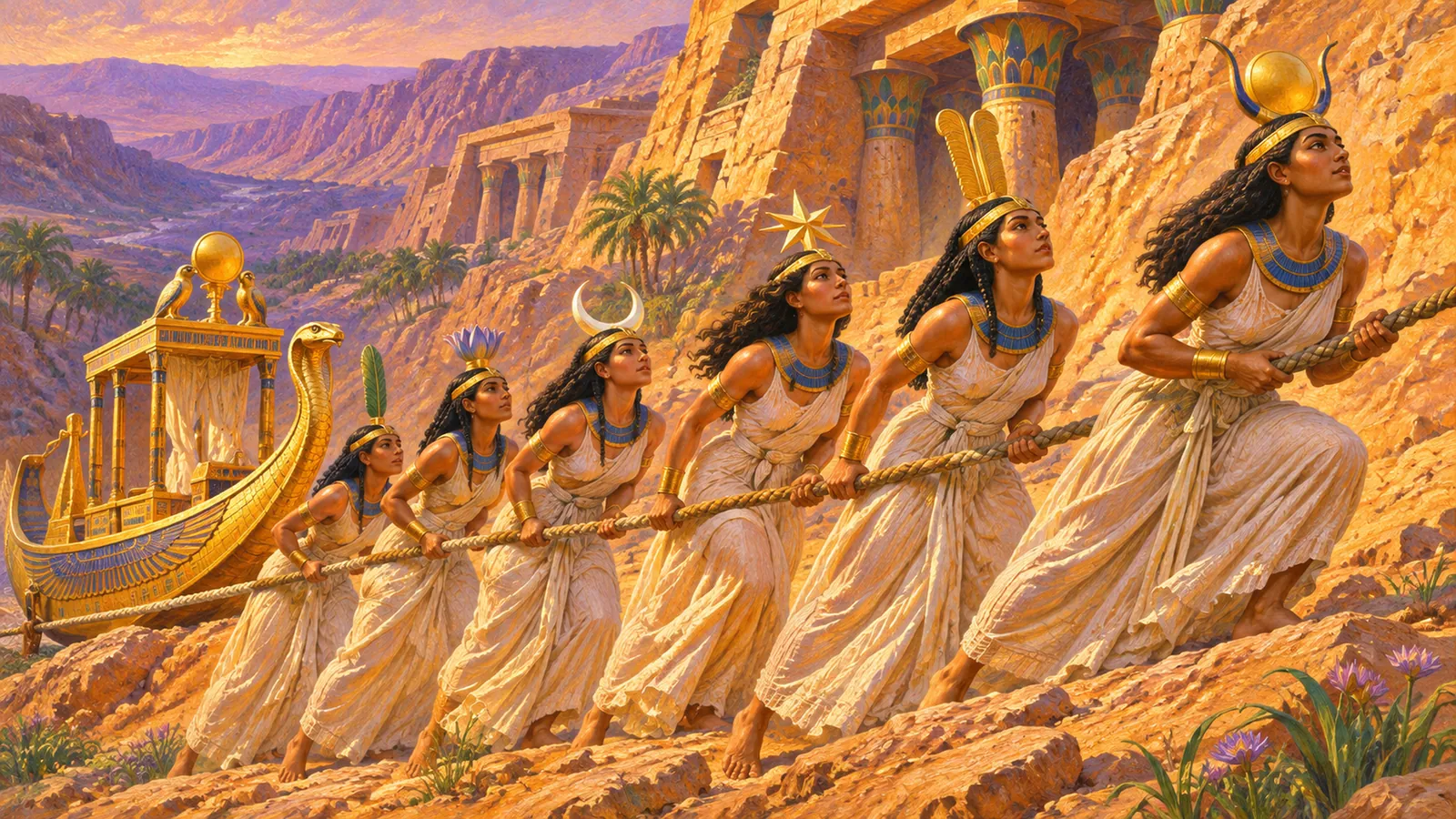
At first six male deities tow Ra. Beyond the mound marked by Isis, six female deities draw the boat. The goddess shelters the journey as it passes over the hidden chamber.
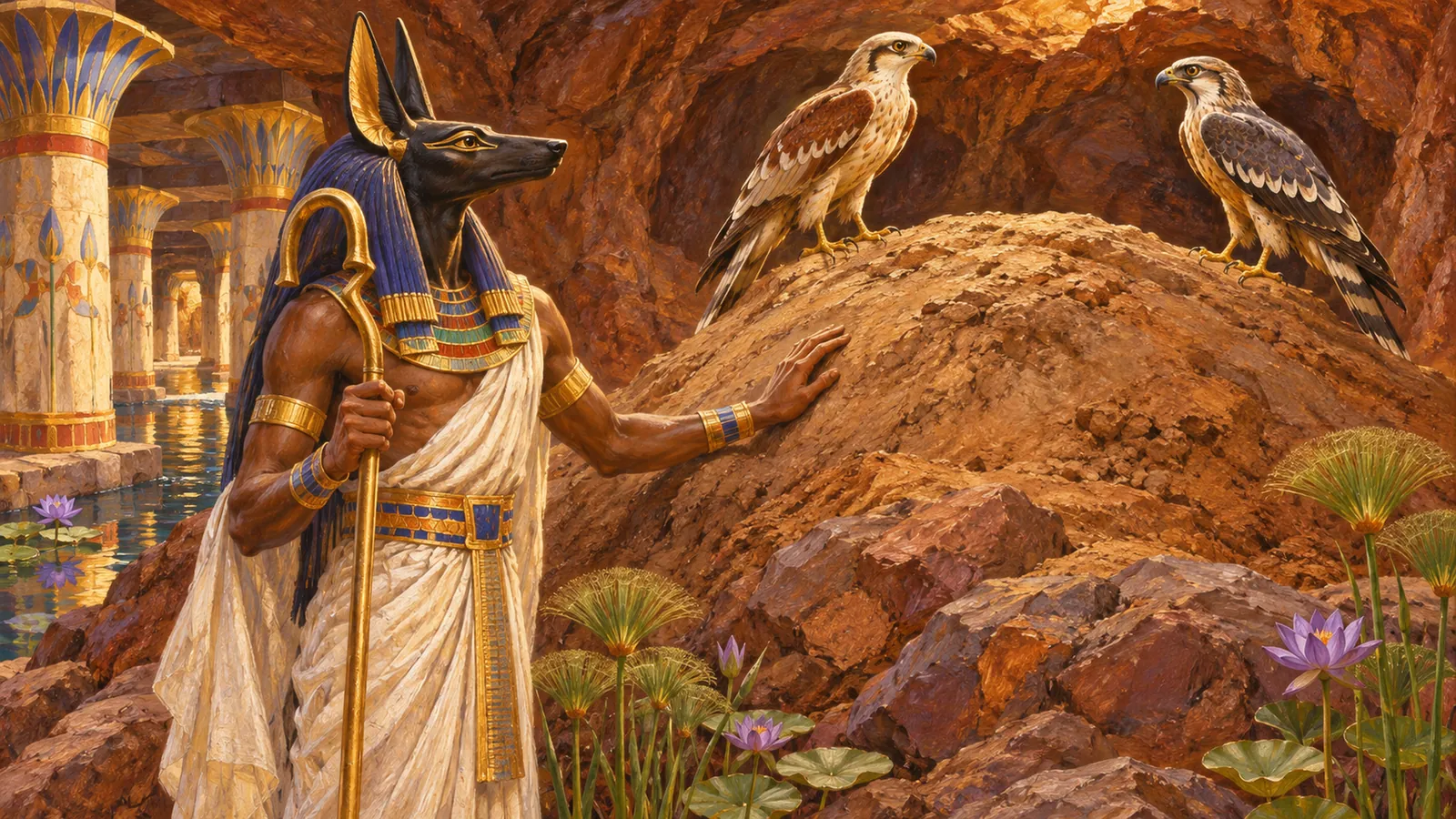
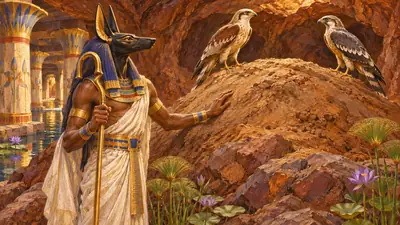
Above the boat, another mound belongs to Osiris. Anubis stands guard. Isis and Nephthys mourn by the mound in the forms of birds, while the boat passes through the hour below.
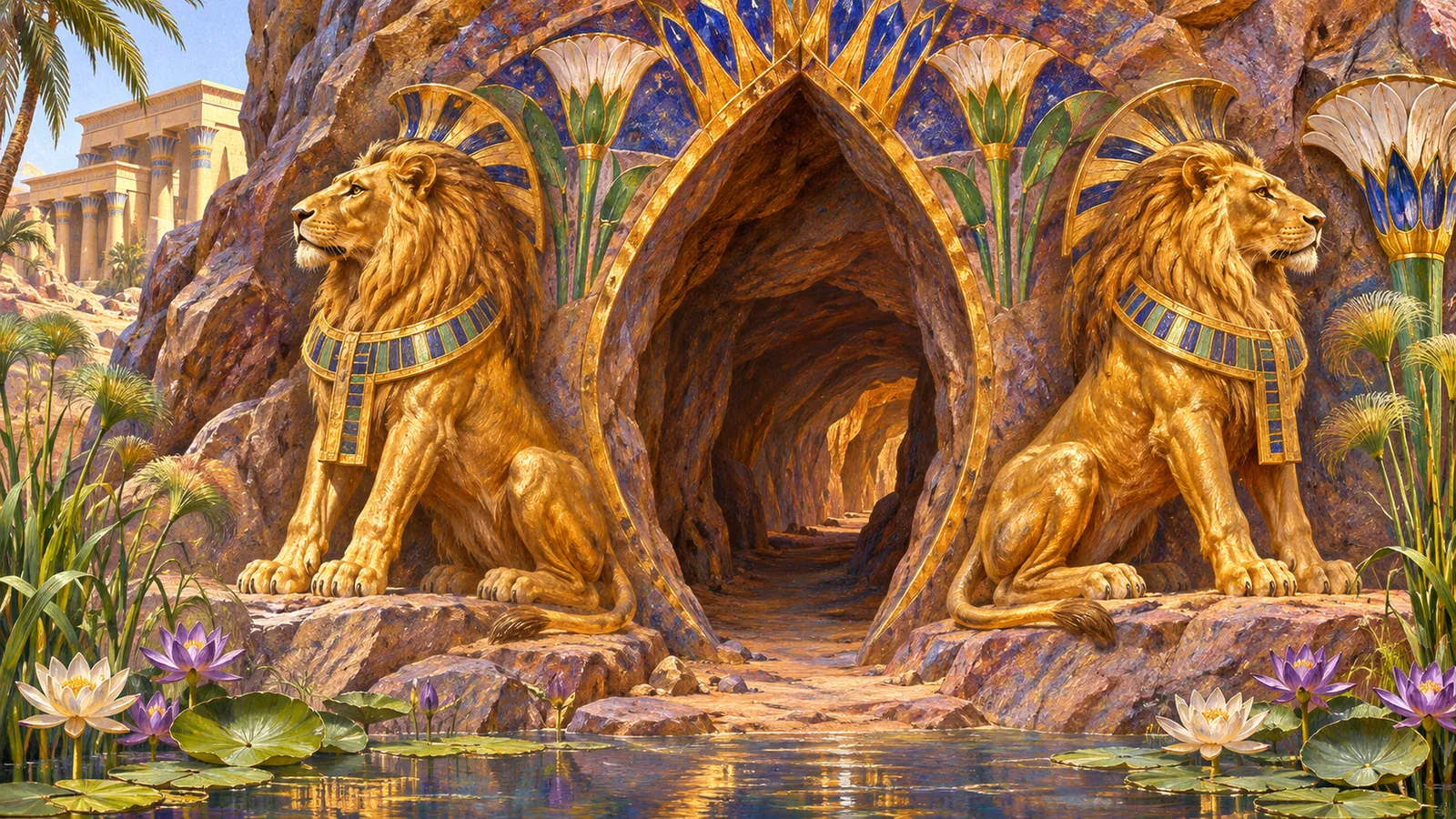
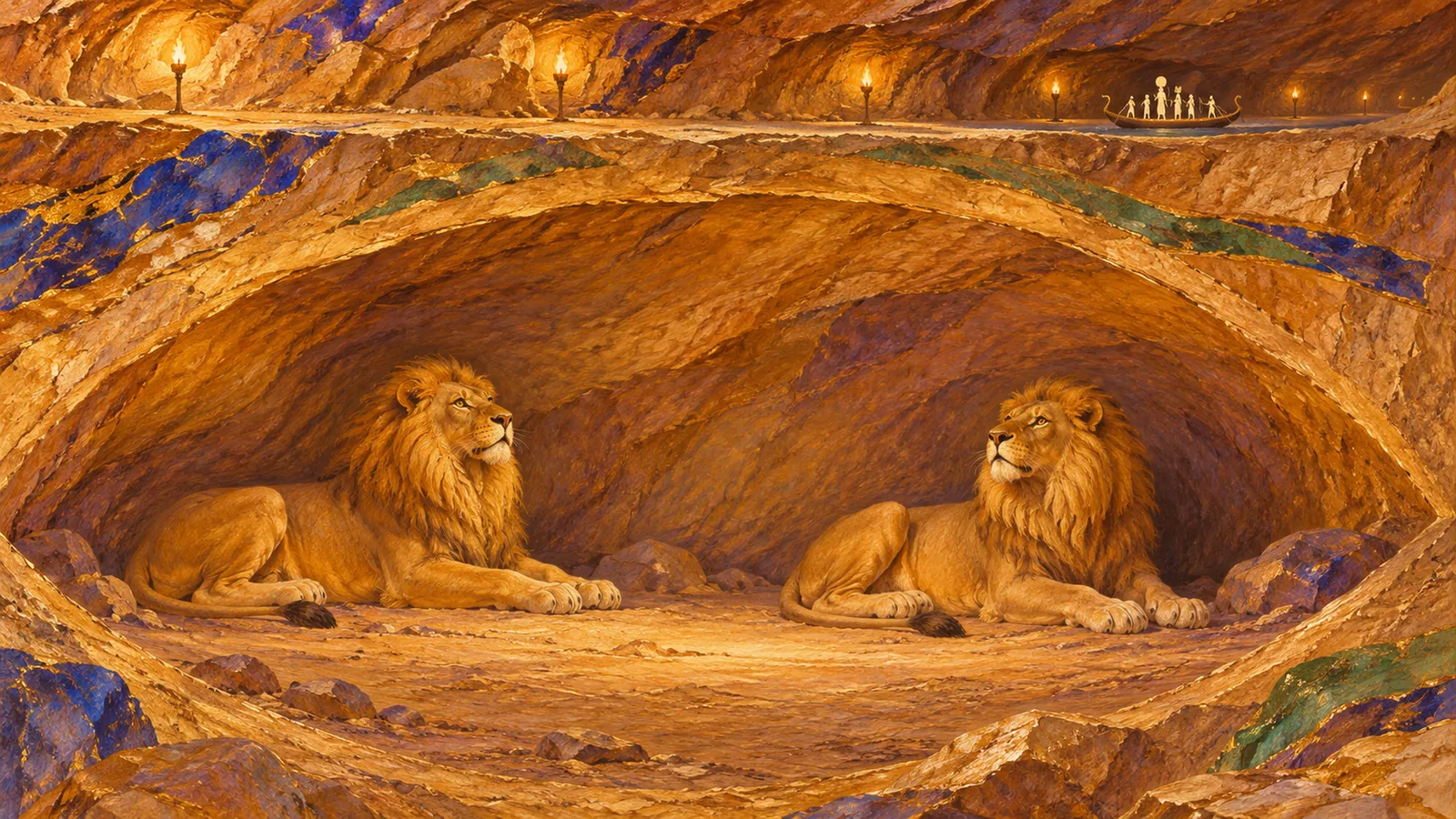
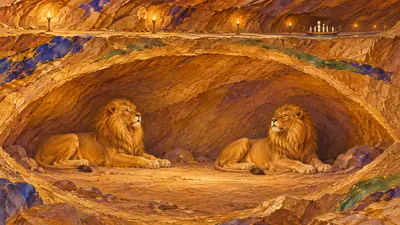
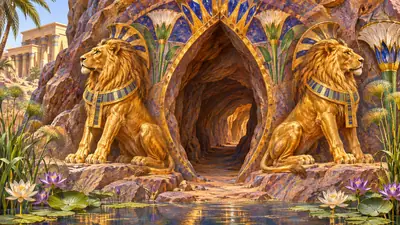
The earth god Aker appears at the oval chamber of Sokar. Two lions show his presence. Their place at the boundary recalls his connection to both horizons of the night journey.
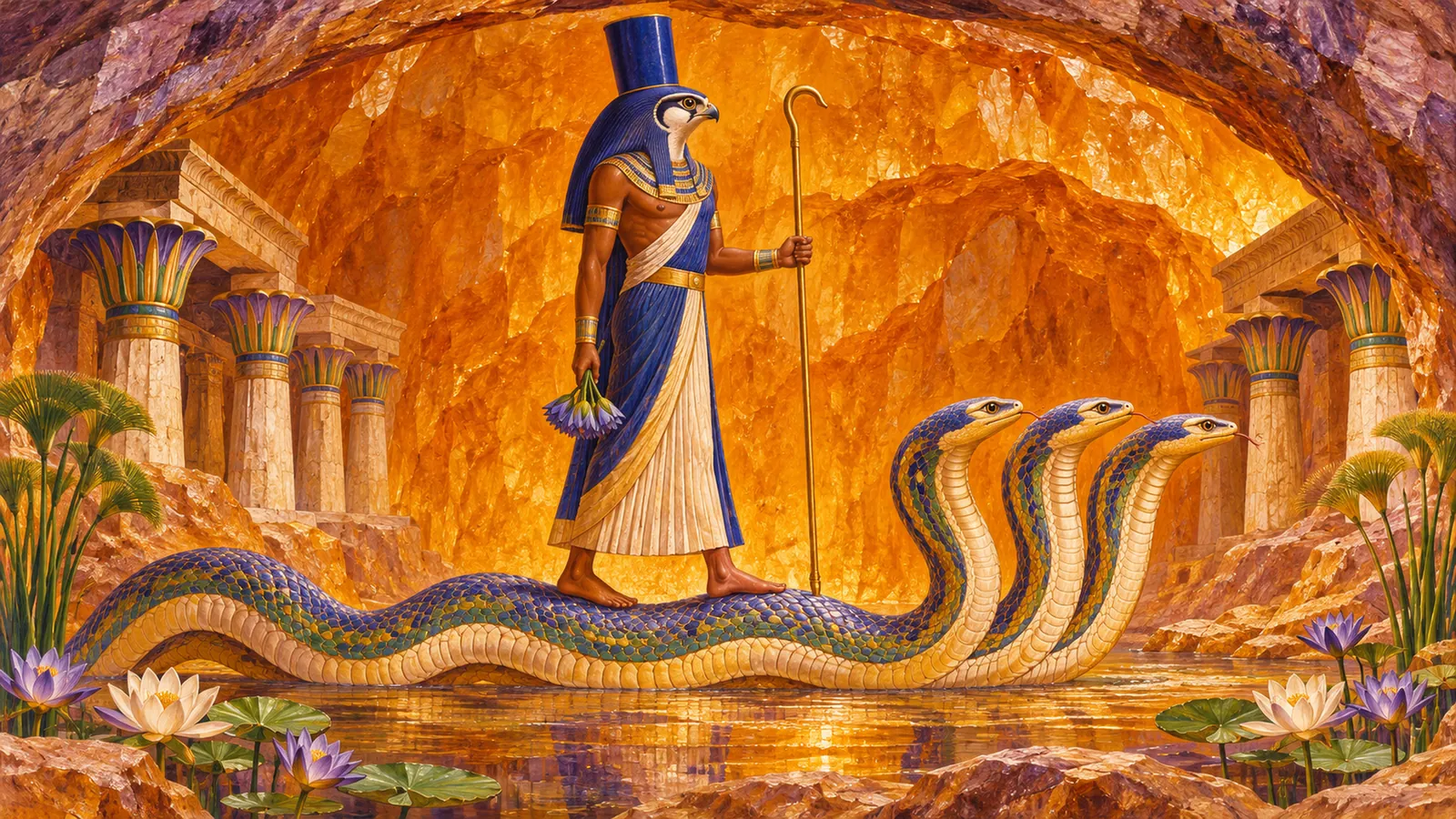
Sokar stands within the oval as a falcon-headed god. Below him is a many-formed serpent. The cavern and its god remain in the earth while the rope pulls Ra overhead.
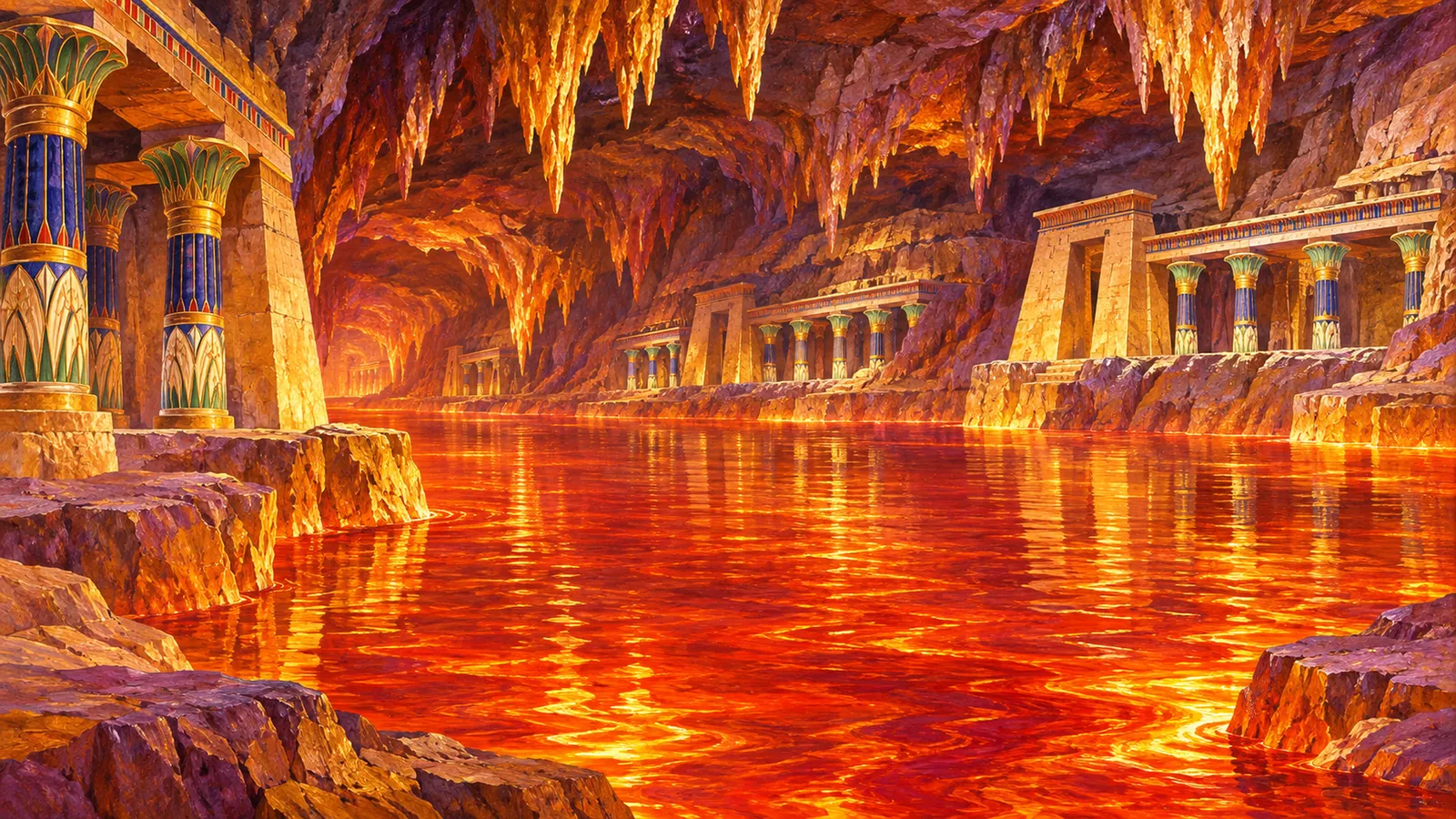
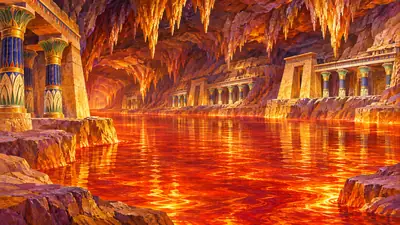
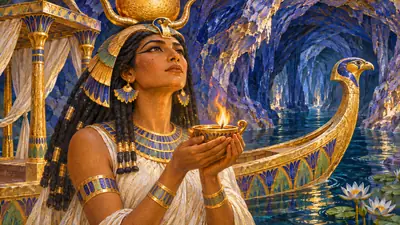
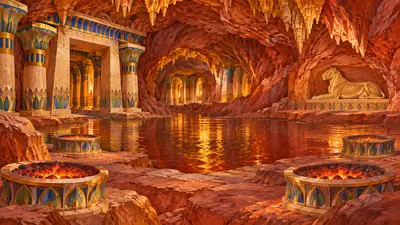
The fifth hour has a lake of fire. It lies below the path, with the hidden places of Sokar’s country. The crew keeps pulling toward the deeper reaches of the night.
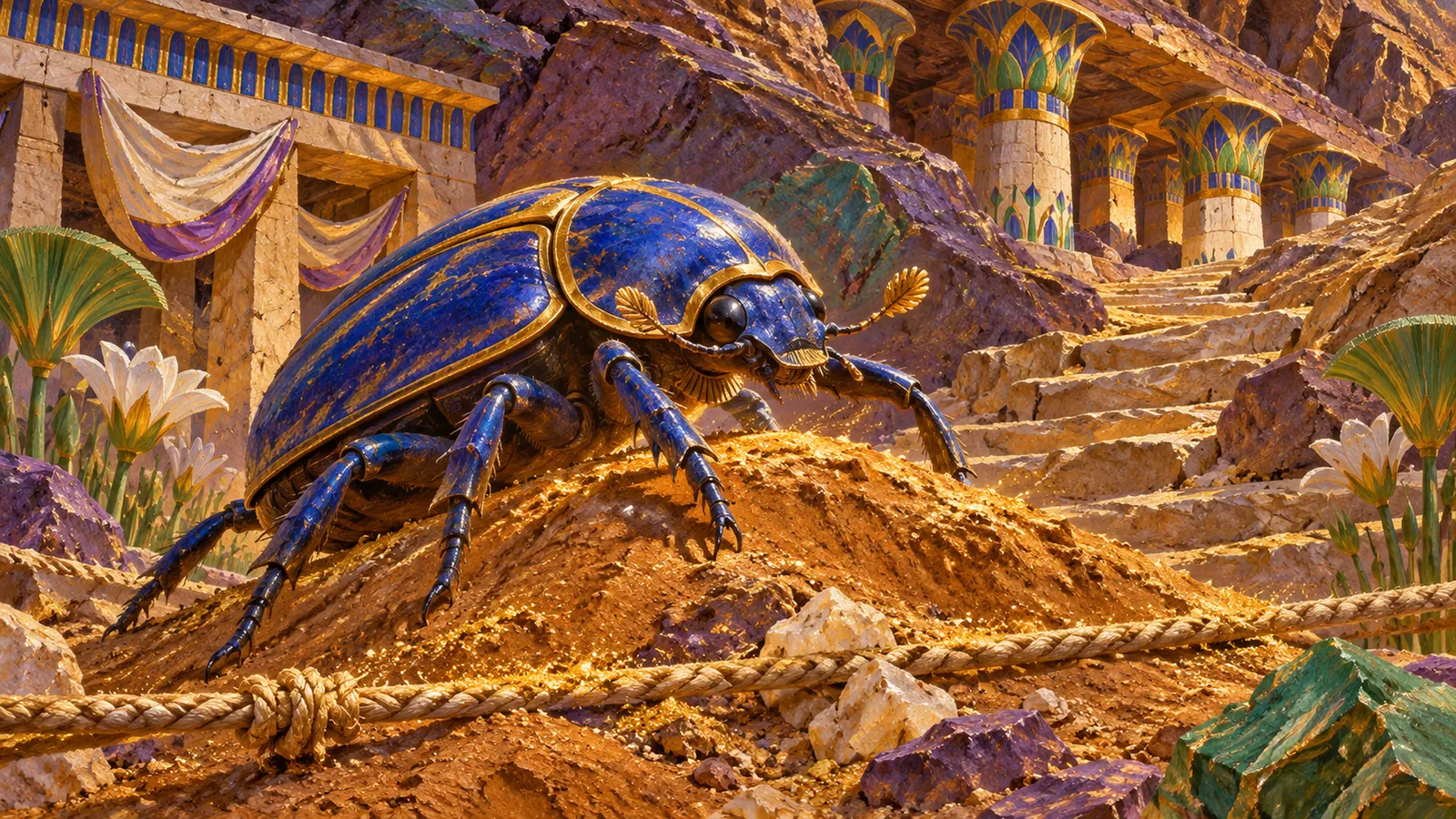
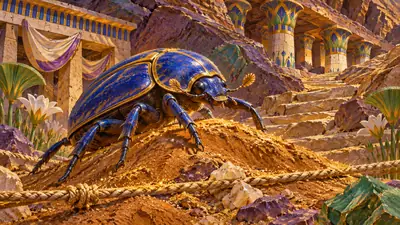
In the picture a scarab emerges above the mound and reaches the towing rope. The form that will come out of the Duat at dawn is already present under the desert.
HOUR 6
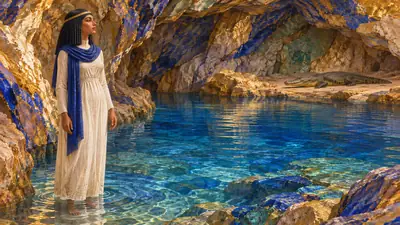
At the midpoint of the night, the boat reaches the deepest region. The sixth hour calls it a waterhole of the netherworld. Here the sun reaches the place of its renewal.
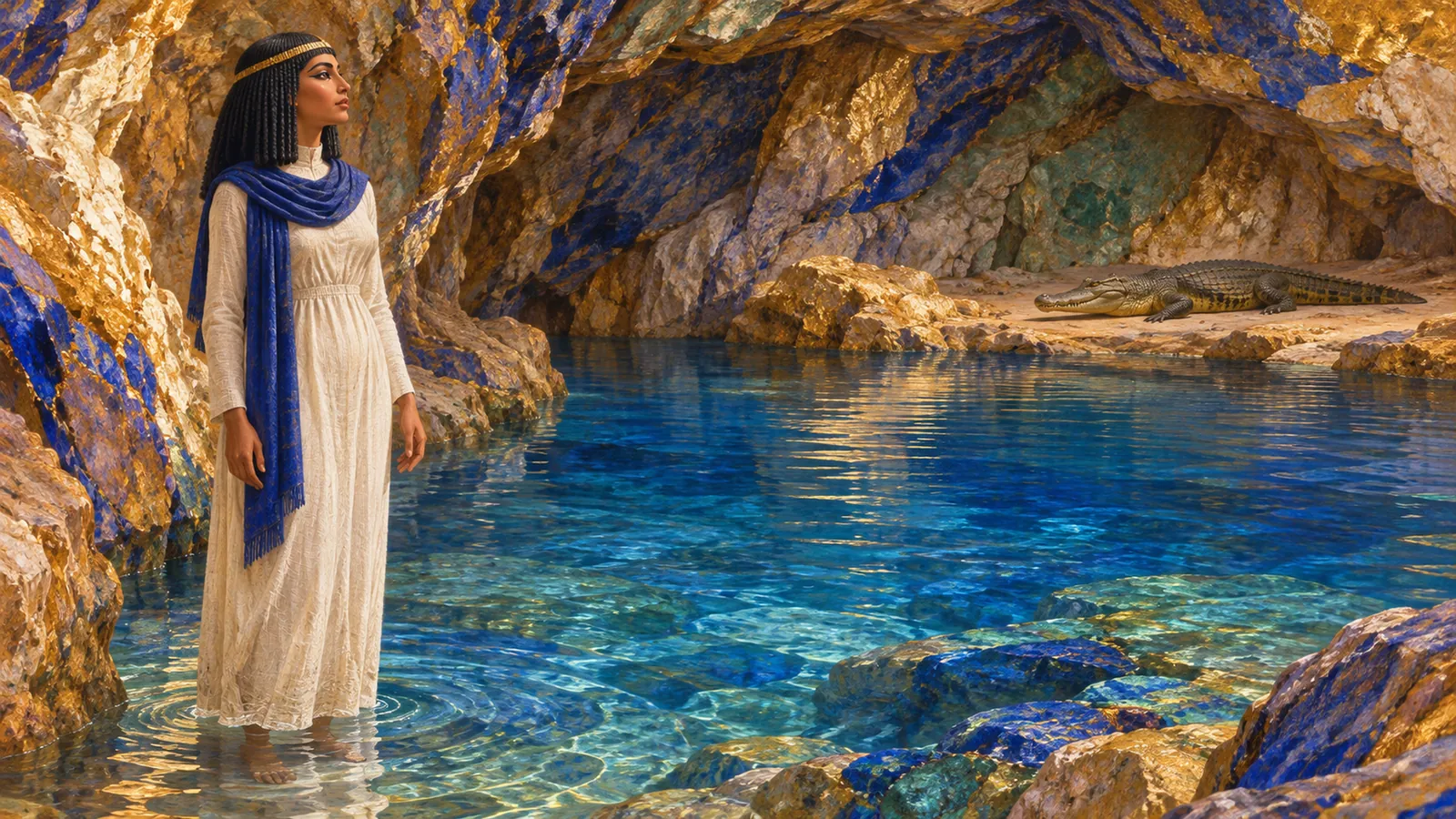
The primeval waters belong to this hour. In Nesmin’s copy they are personified by a goddess who appears in two forms. These waters hold the power of beginning life again.
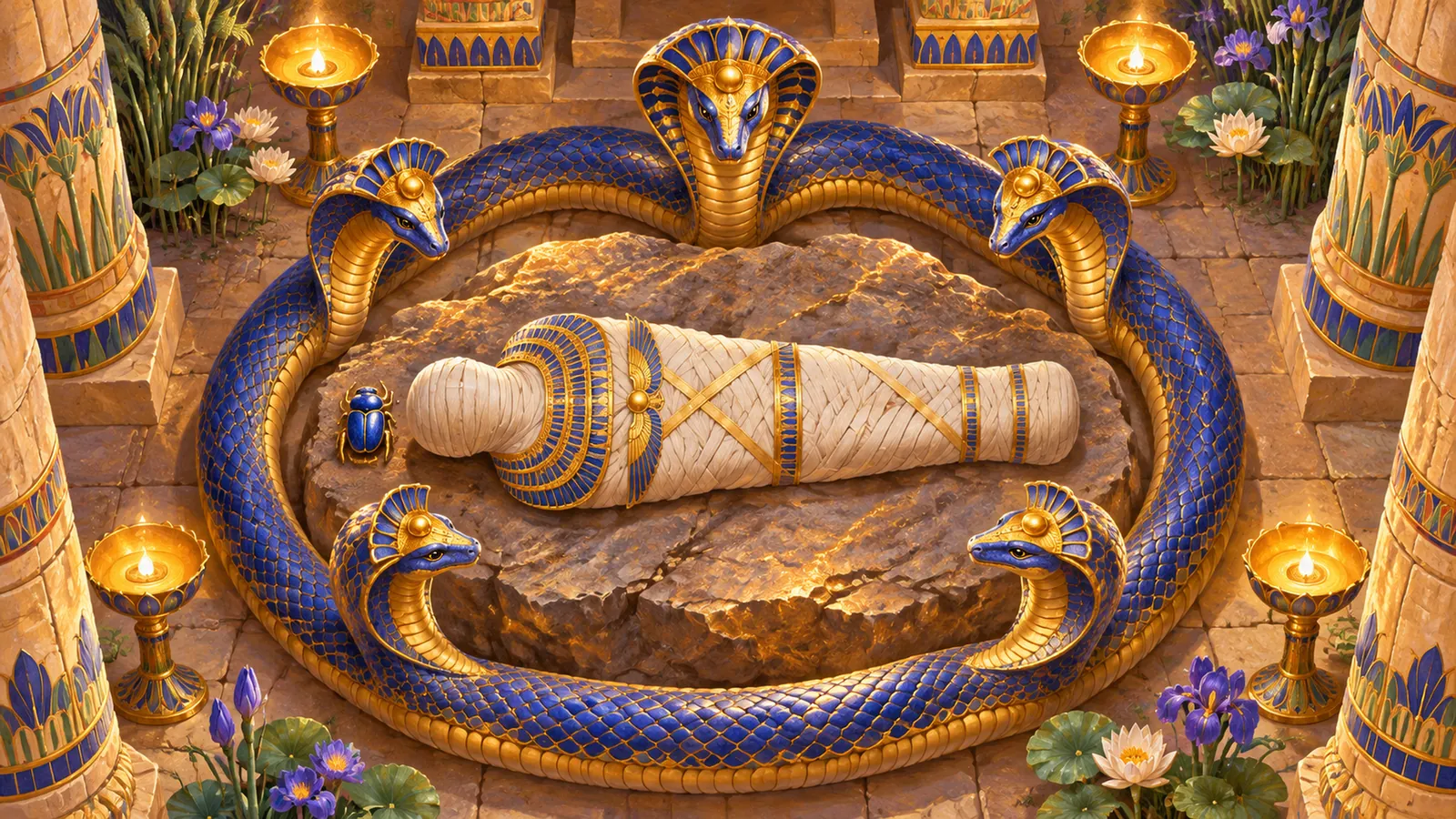
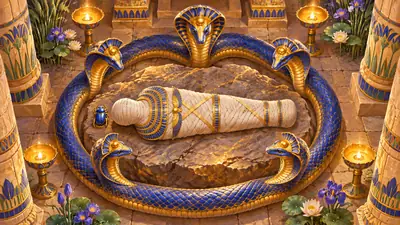
The image at the center of the sixth hour shows a body with a scarab upon its head. A many-headed serpent encloses it, guarding the still figure from what lies outside.
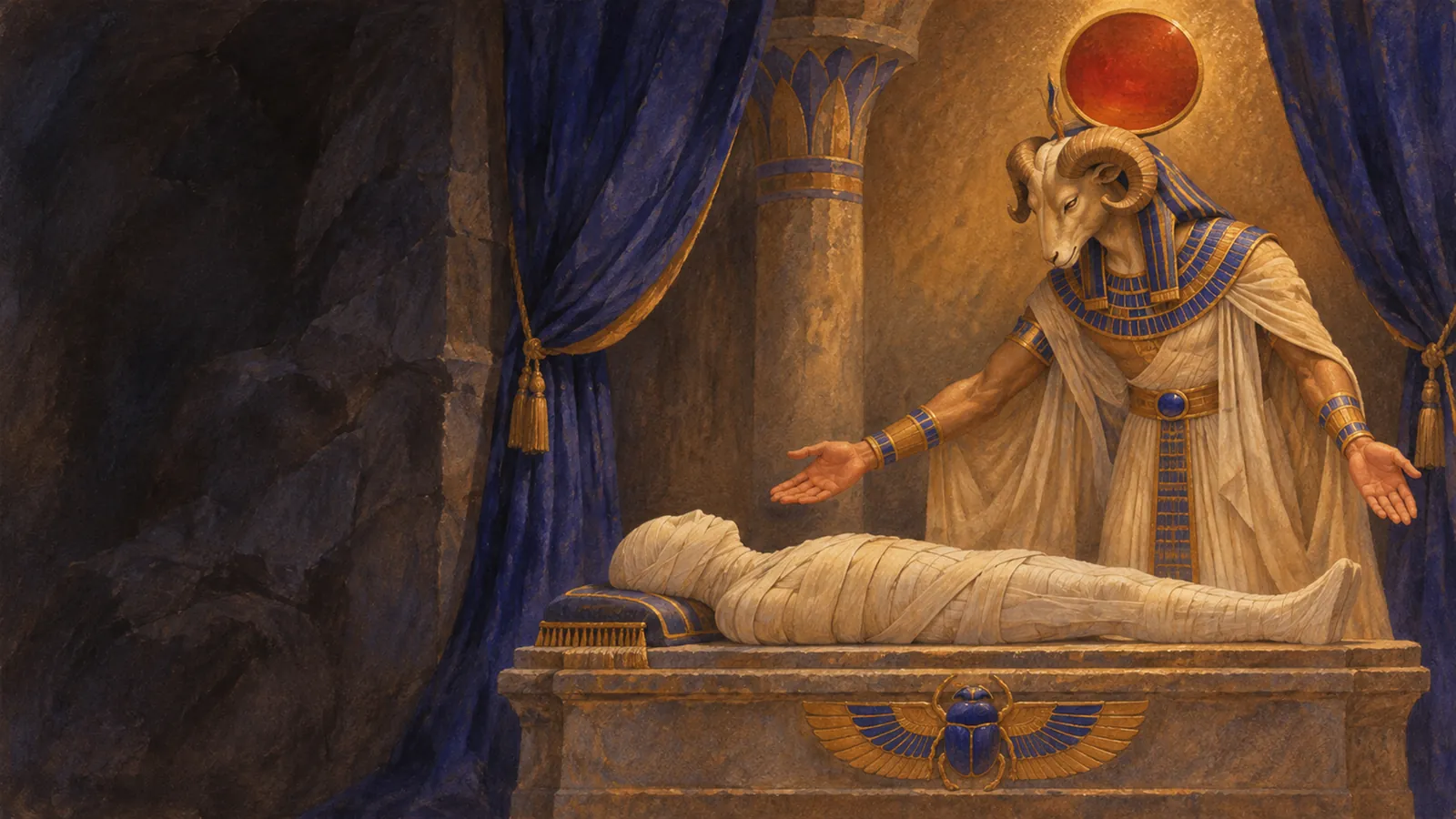
Ra’s ba rejoins the body at this depth of the Duat. The sun god unites with Osiris, lord of the dead, and receives the power of life again.
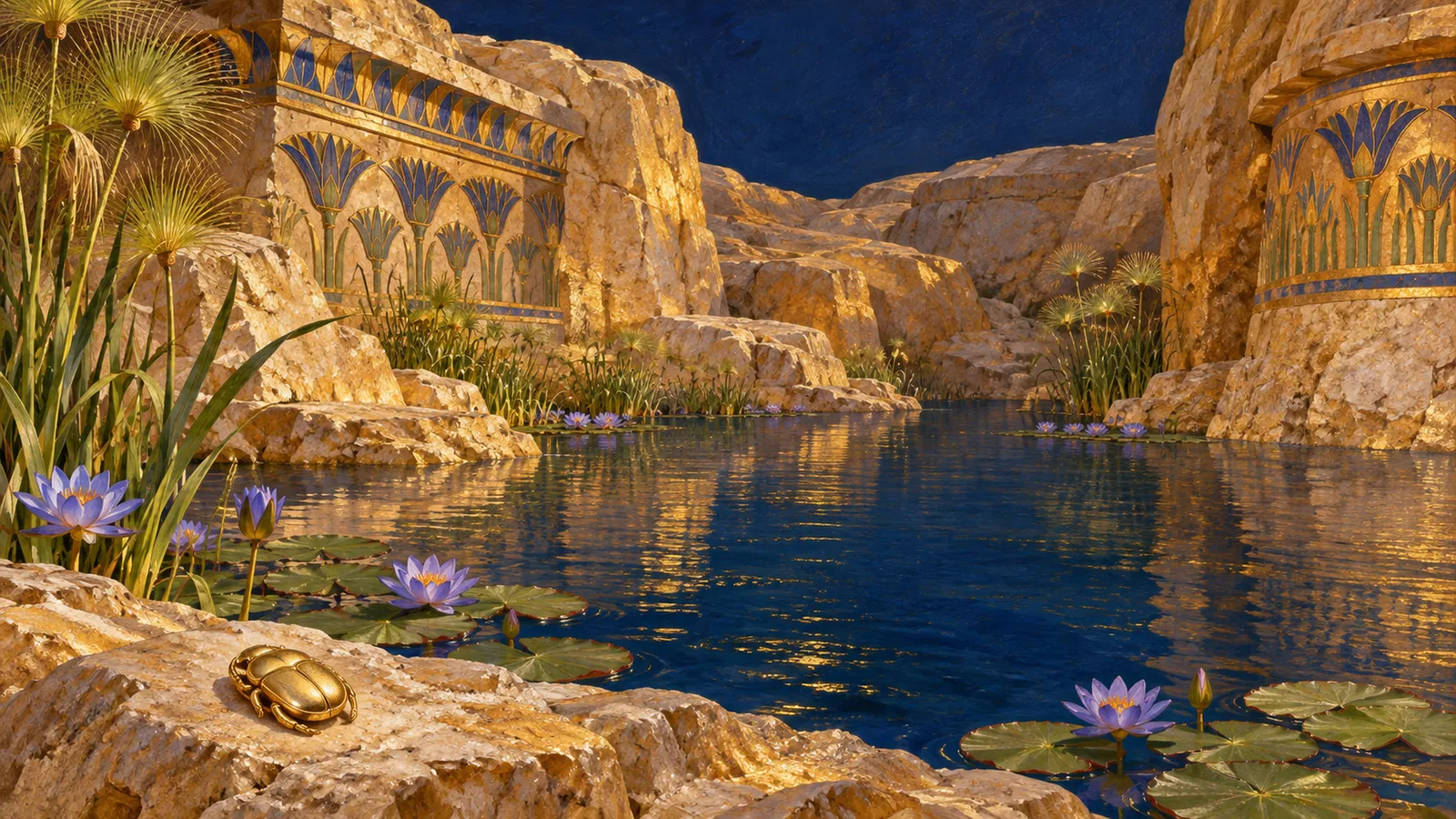
The words beside the hidden images speak of darkness lit up and a body given voice. Midnight is the moment of renewal, even though the sun has several hours still to travel.
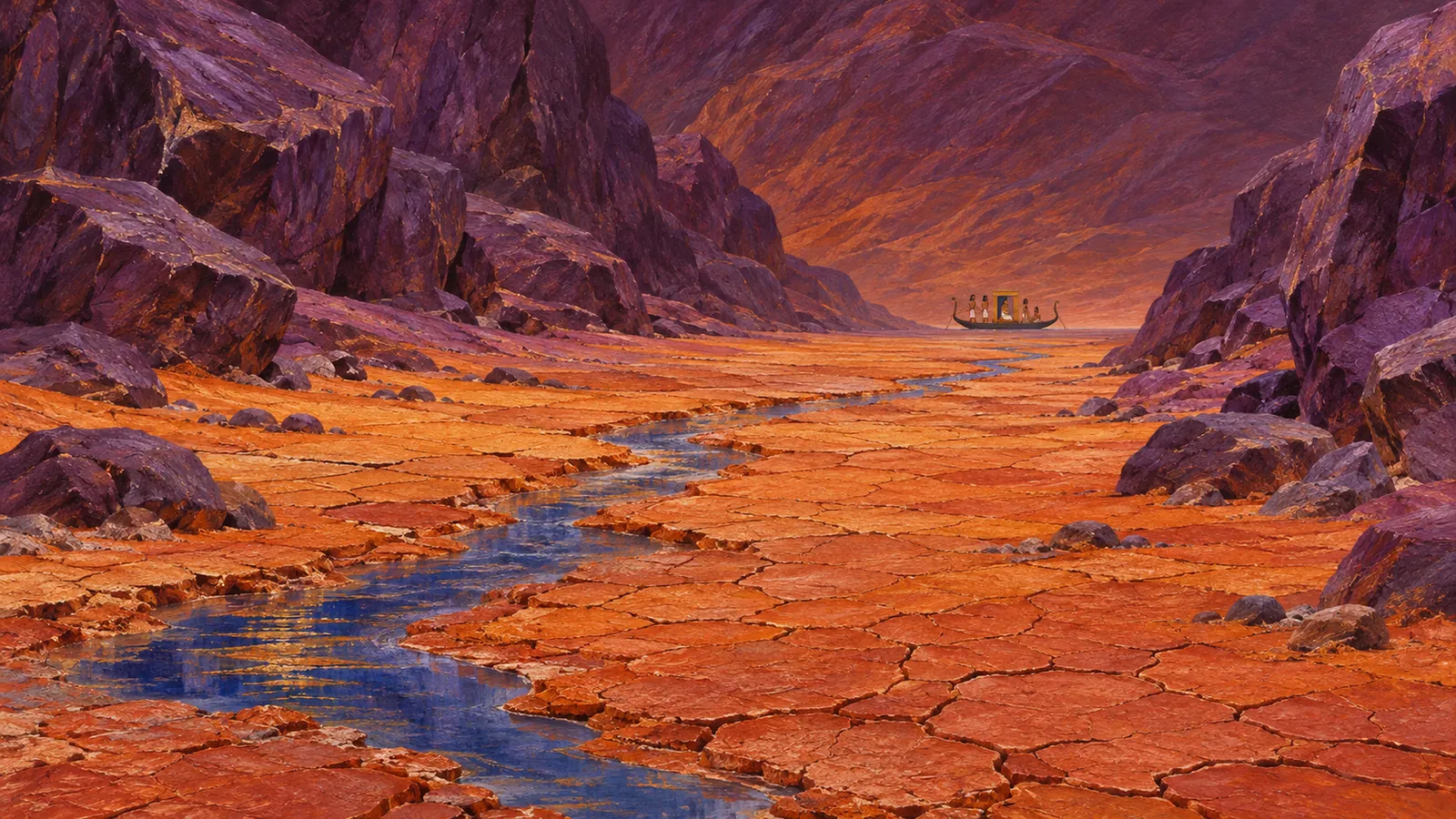
The god’s renewal has taken place, but the crew must bring him to the eastern horizon. In the next hour the vessel itself will come under threat, far from the world above.
HOUR 7
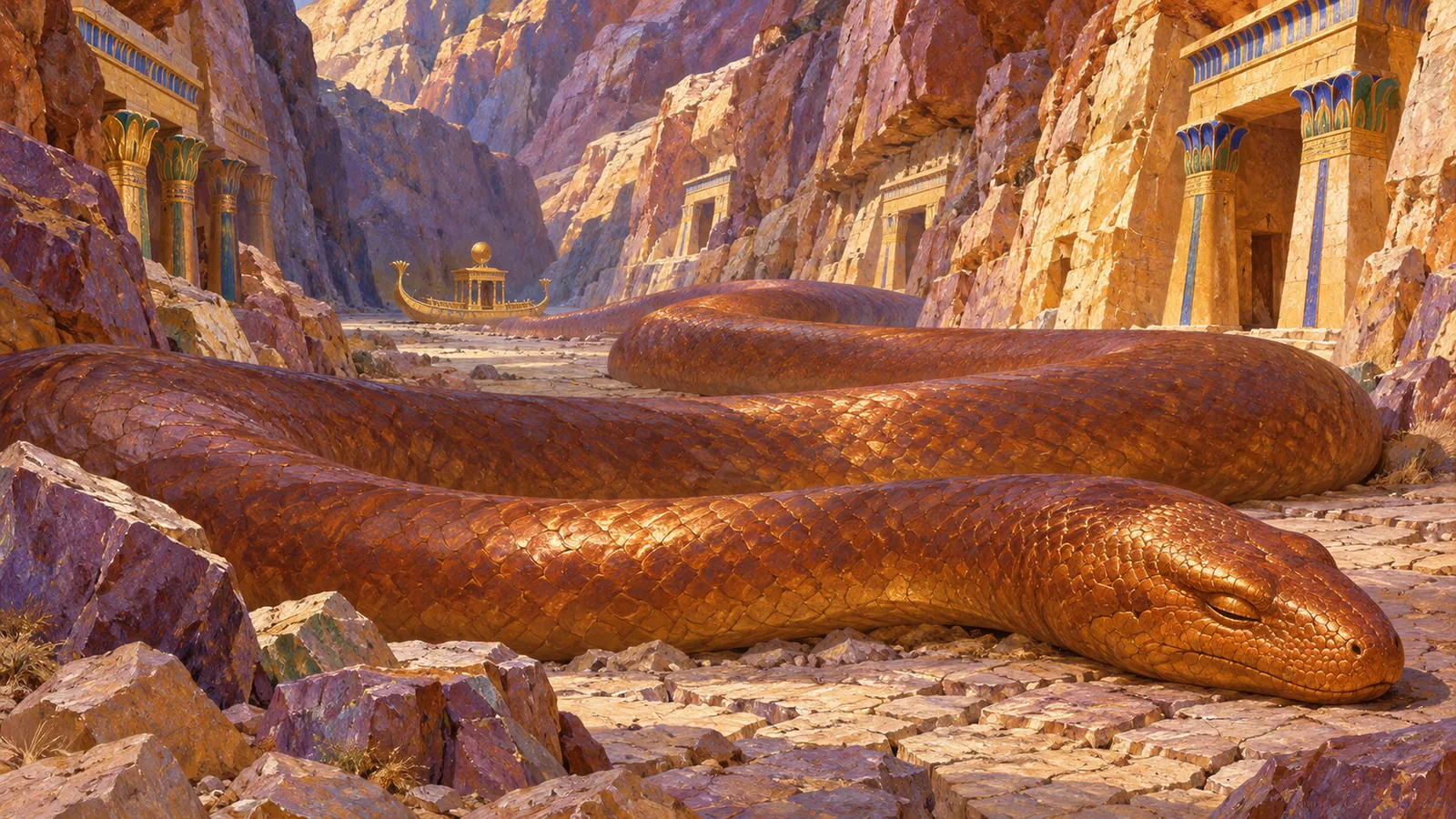
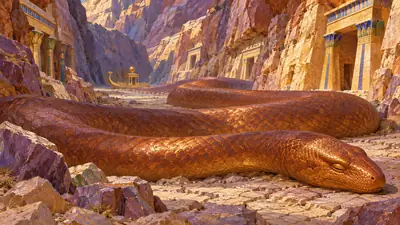
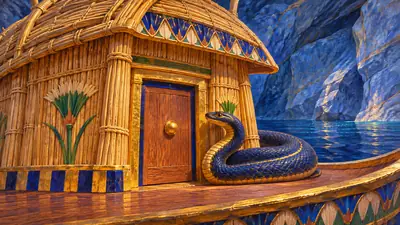
In the seventh hour Apophis blocks the way. The great serpent stops the boat in a stretch of dry sand. At this point of the passage Ra is especially vulnerable.
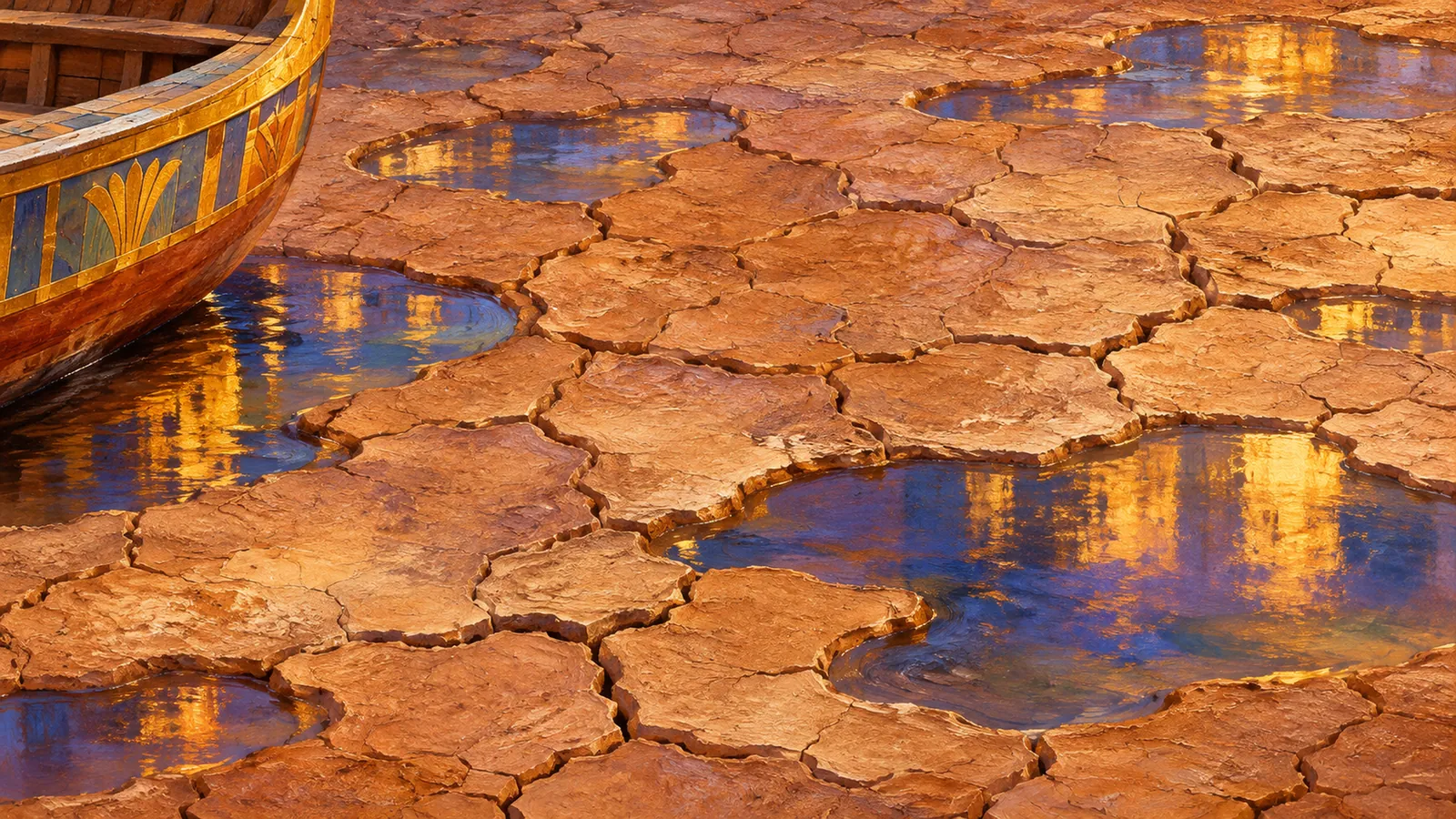
The story puts the boat on a sandbank associated with Apophis. The serpent has taken away the water it needs. Even a boat that carries the sun can be brought to a halt.
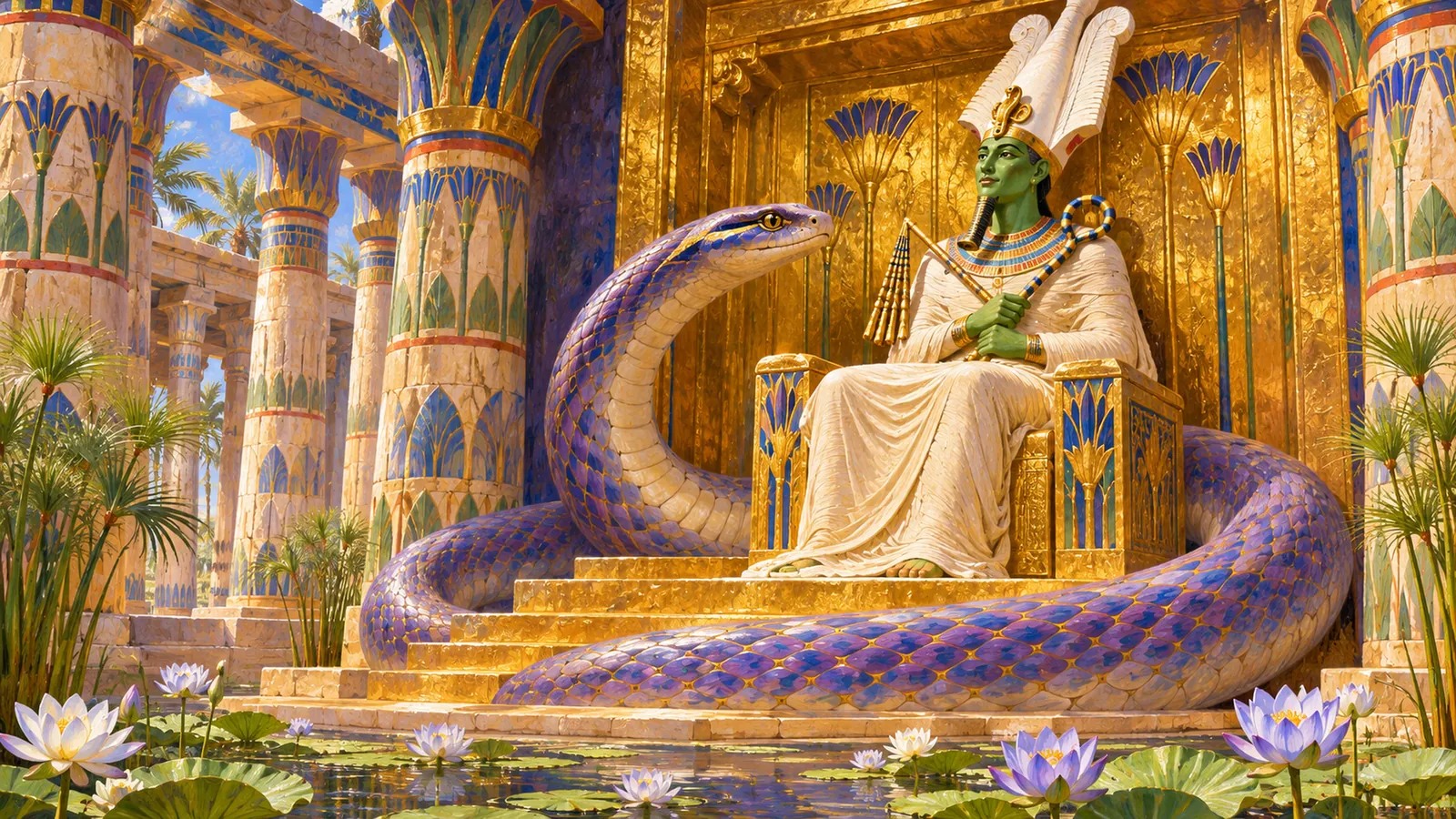
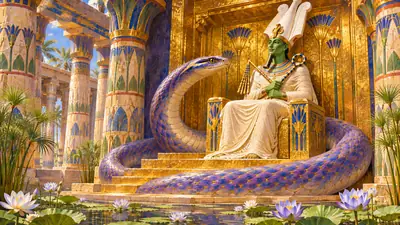
Above the stranded boat the seventh-hour picture shows Osiris in his own chamber. The serpent Mehen coils protectively around his throne. The two serpents of this hour serve opposite purposes.
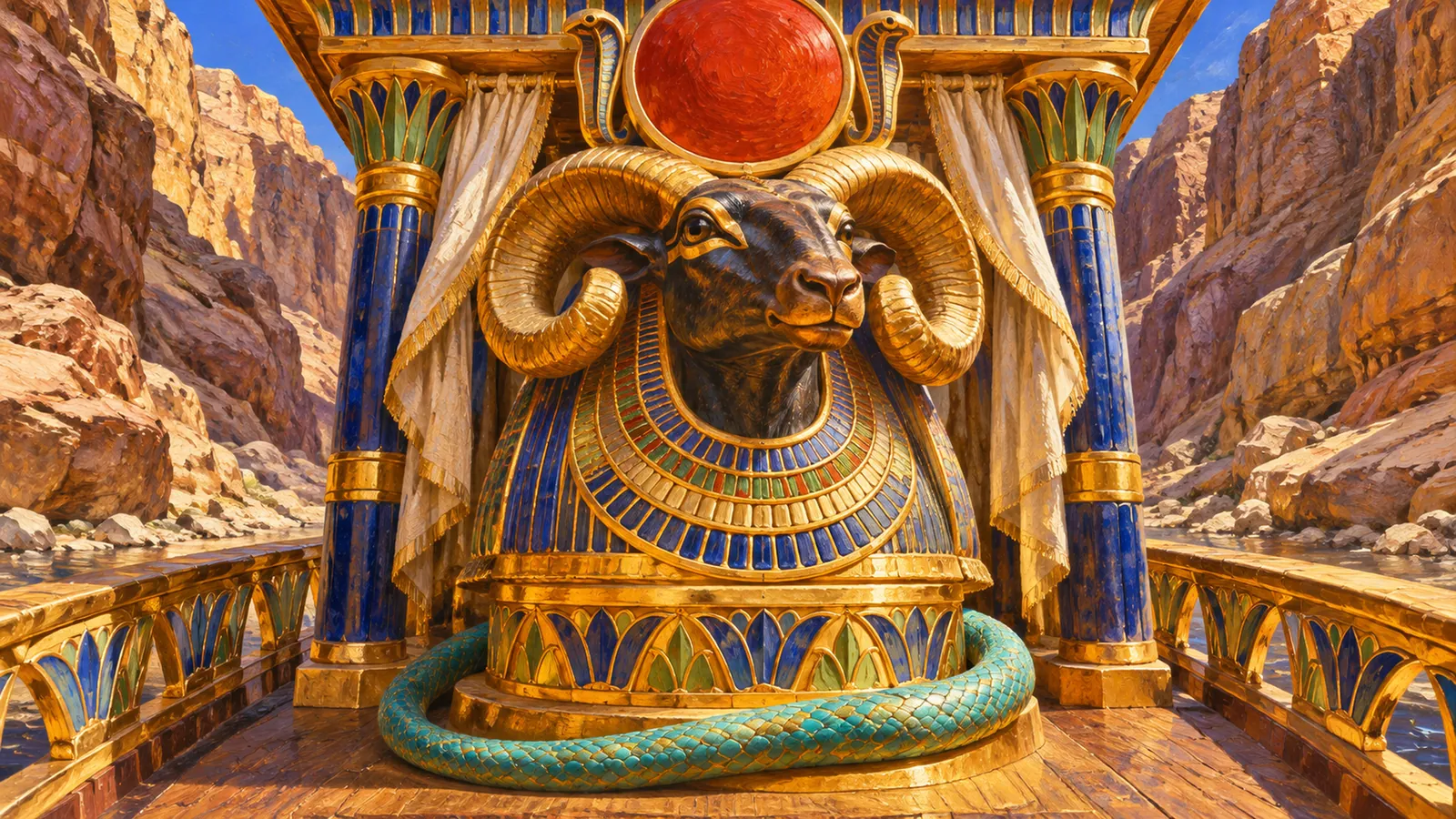
Mehen also shields the ram-headed sun in his boat. Ra receives that protection while his companions deal with the obstruction. The creature around the shrine is a guardian of the passage.
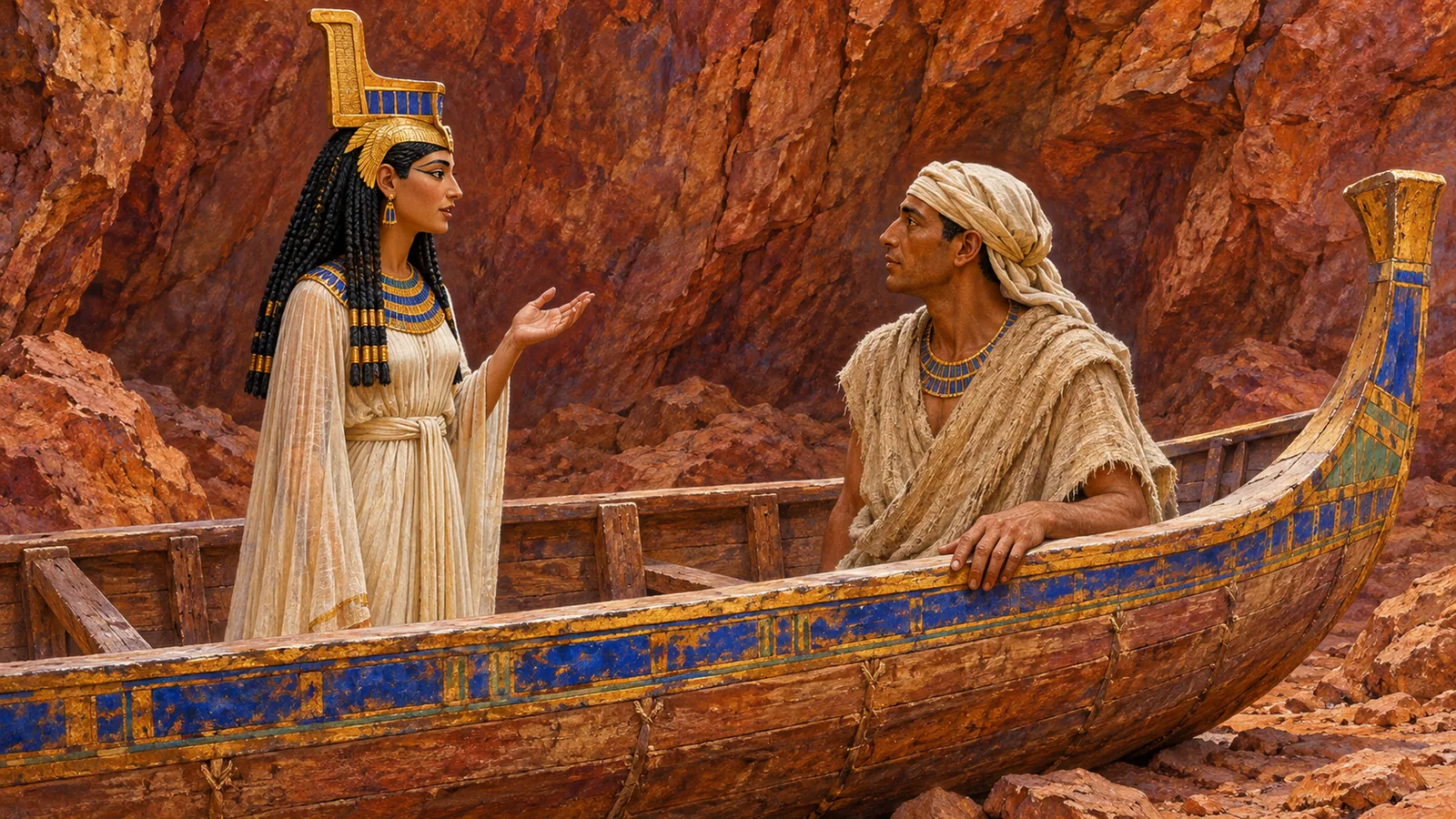
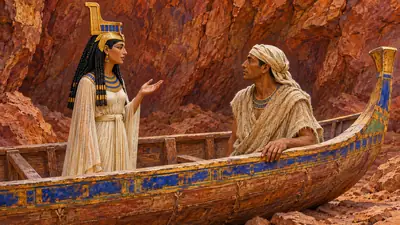
Isis and a great magician act from the boat. They use words of power against Apophis. In the Nesmin fragment, the magician has been identified with the god Set.
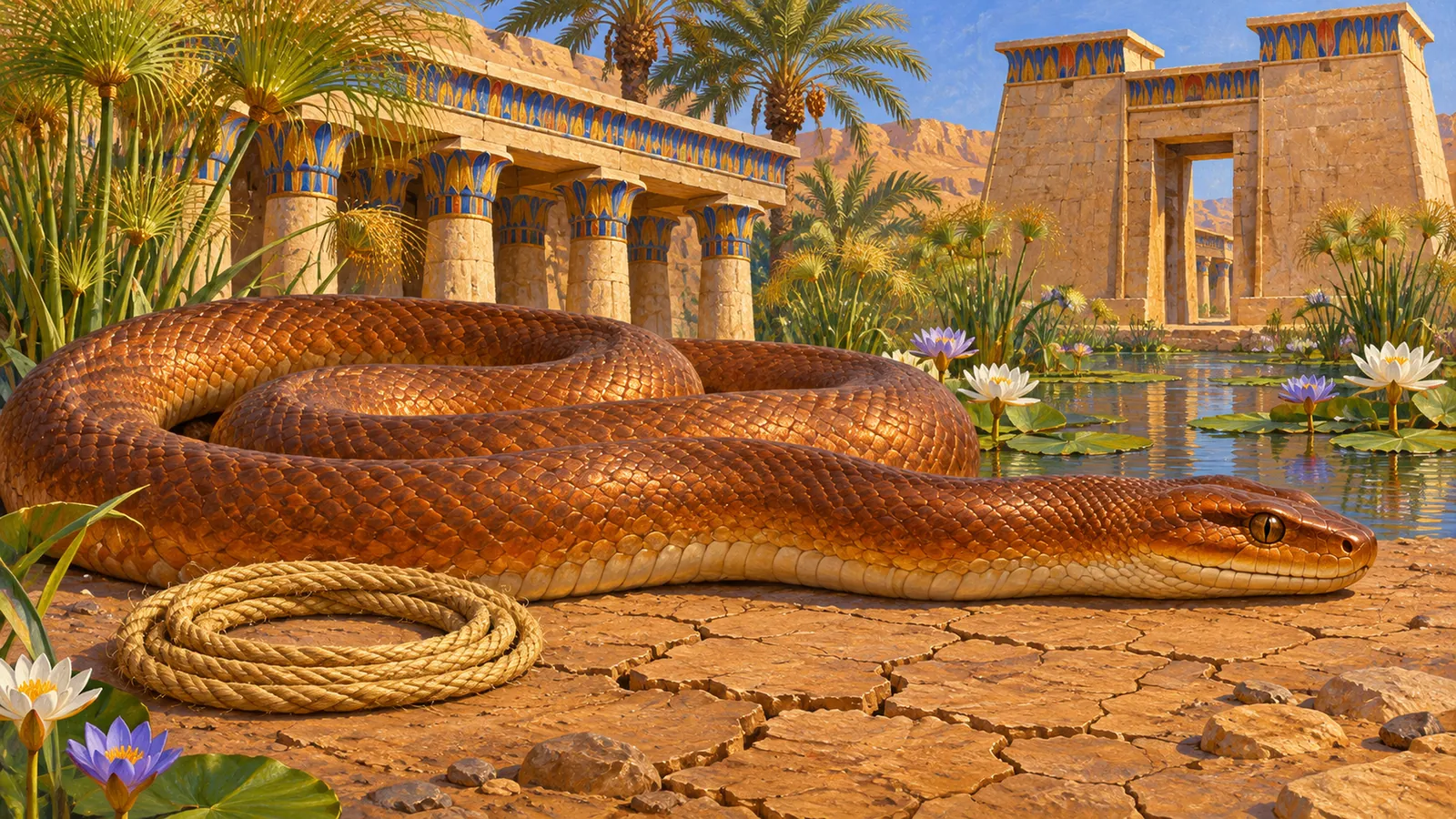
Other gods hold Apophis fast while Isis and the magician speak. The old picture is severe. Once the serpent’s power is broken, the boat can go on through the seventh hour.
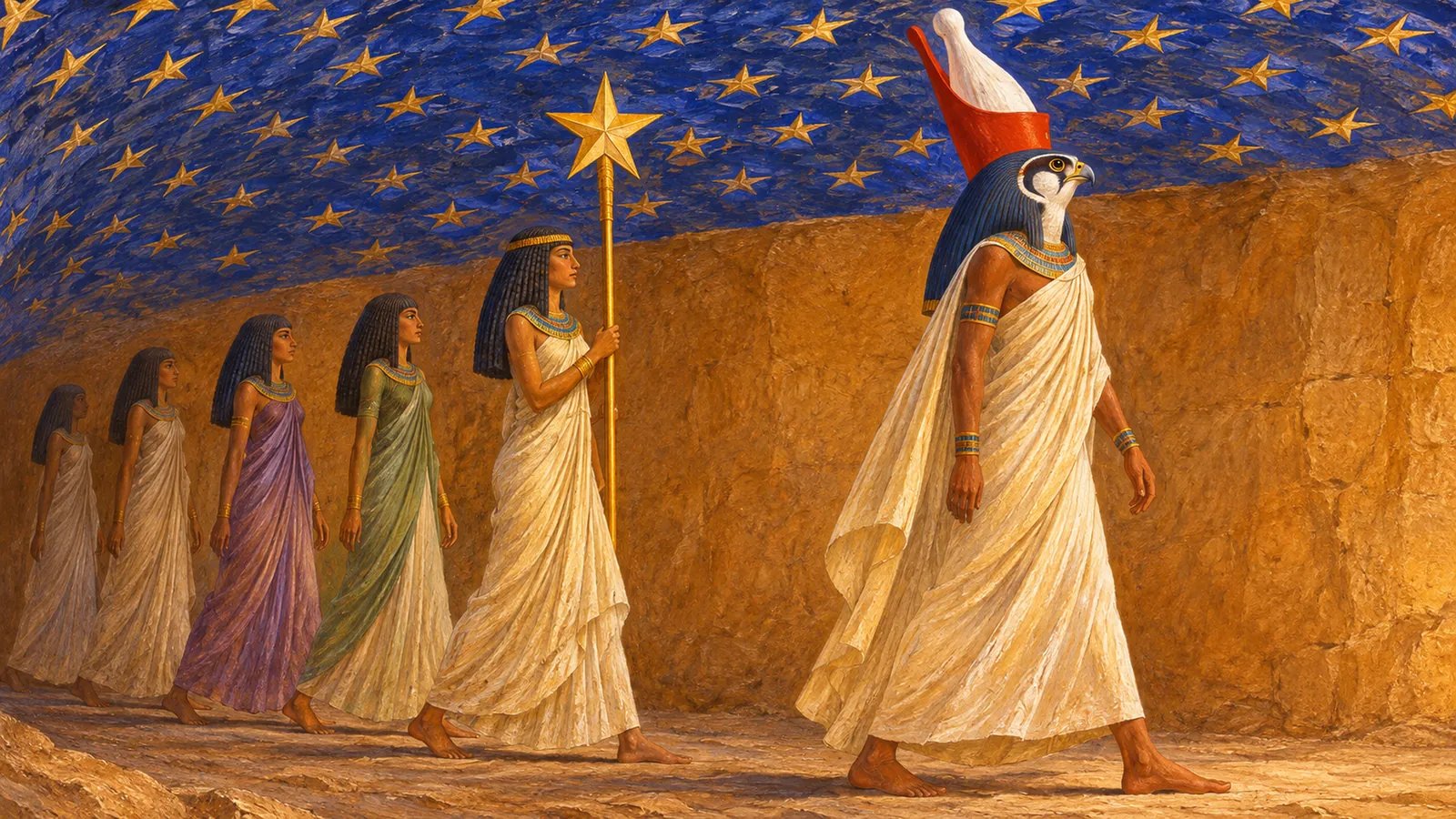
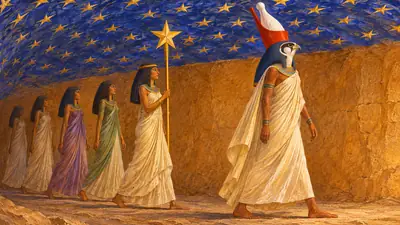
Below the scene of Apophis, Horus attends the star gods and the goddesses of the hours. With the sun’s progress restored, their work continues through the remainder of the night.
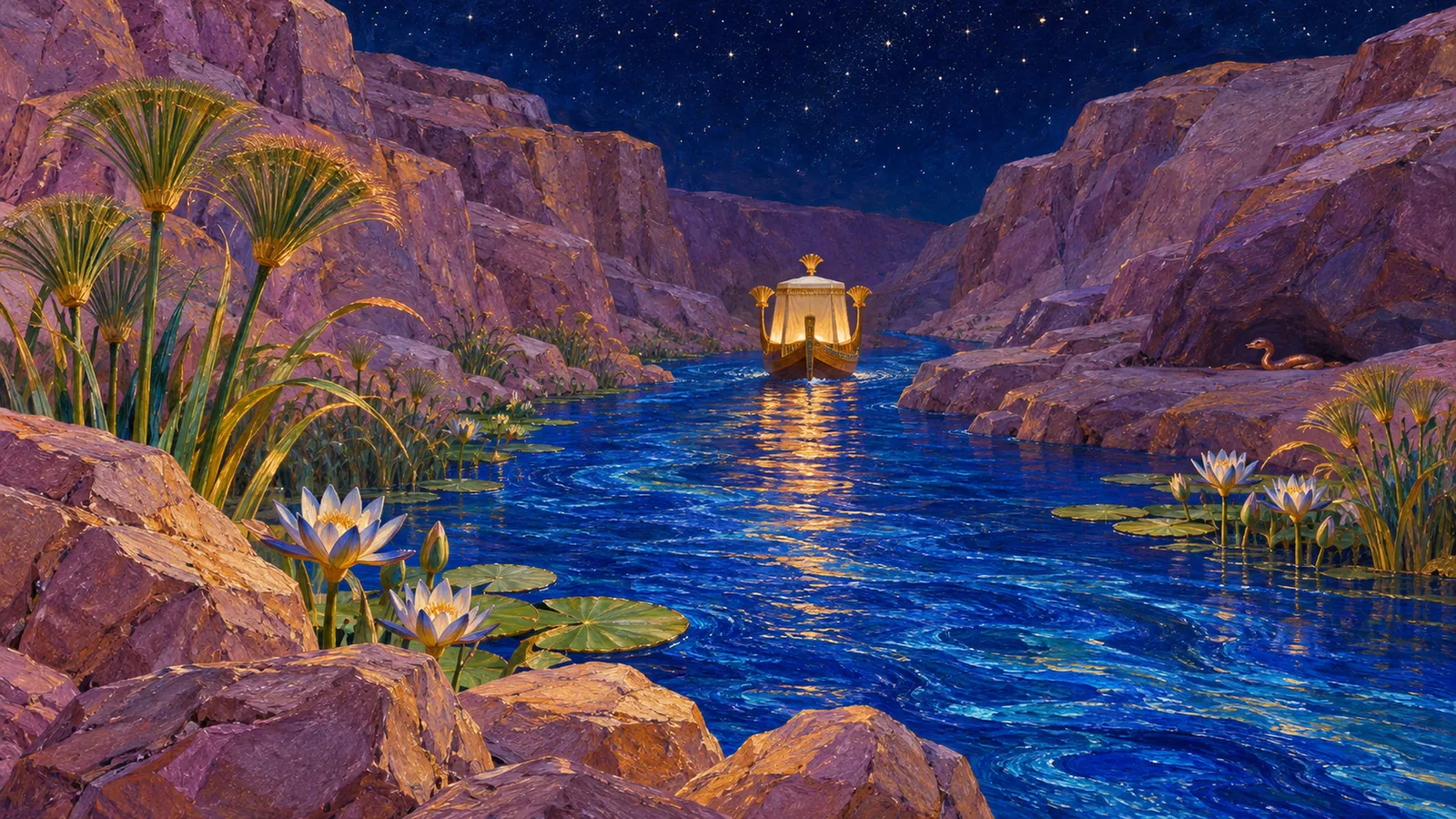
The company has cleared a passage through the sand. Ra continues through the Duat, and the seventh hour ends with other deities still watching over the places they protect.
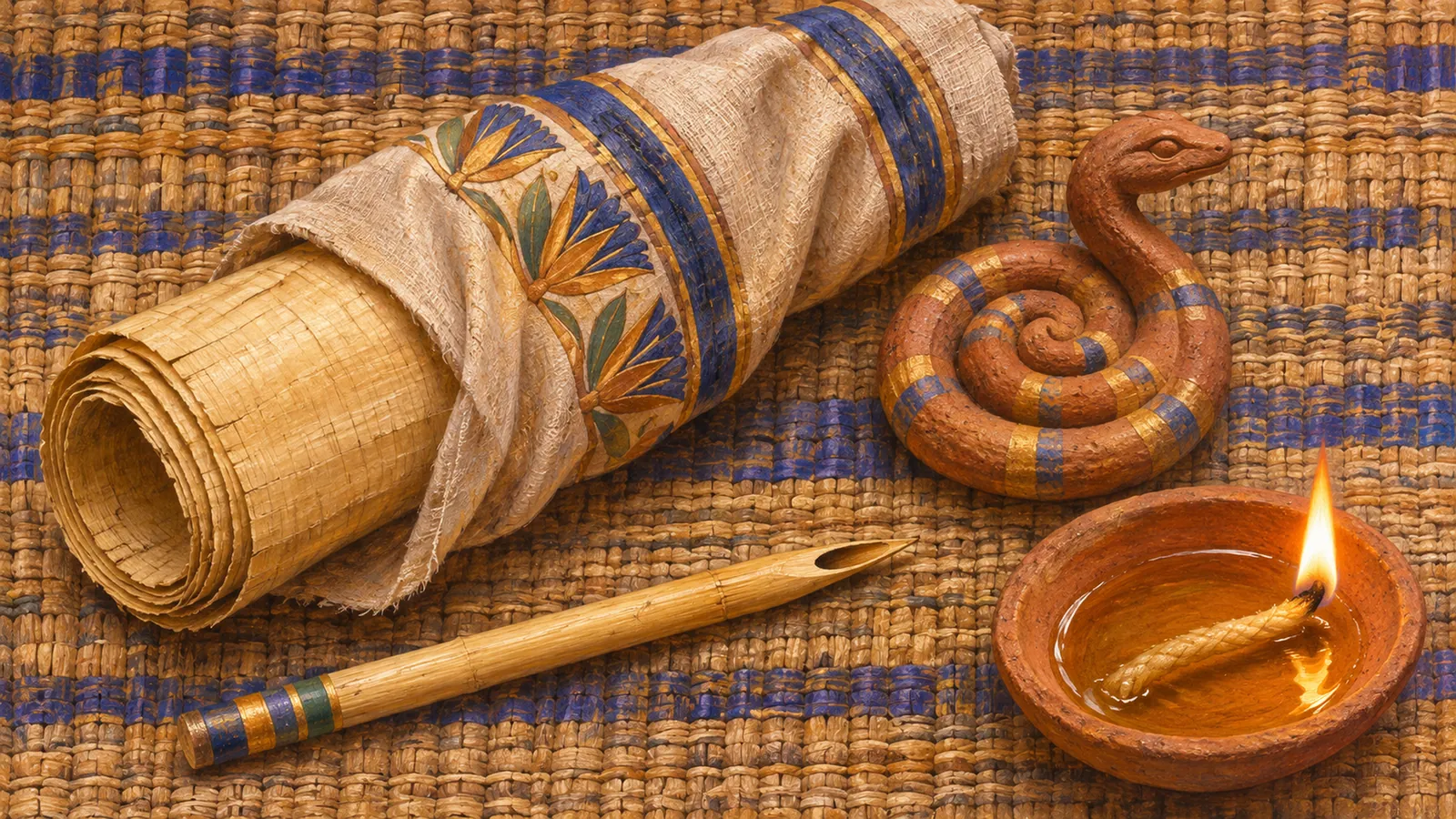
Centuries later the Bremner–Rhind Papyrus preserved a separate ritual text against Apophis. Its spells and rites show how the threat to the morning sun also mattered in Egyptian temple worship.
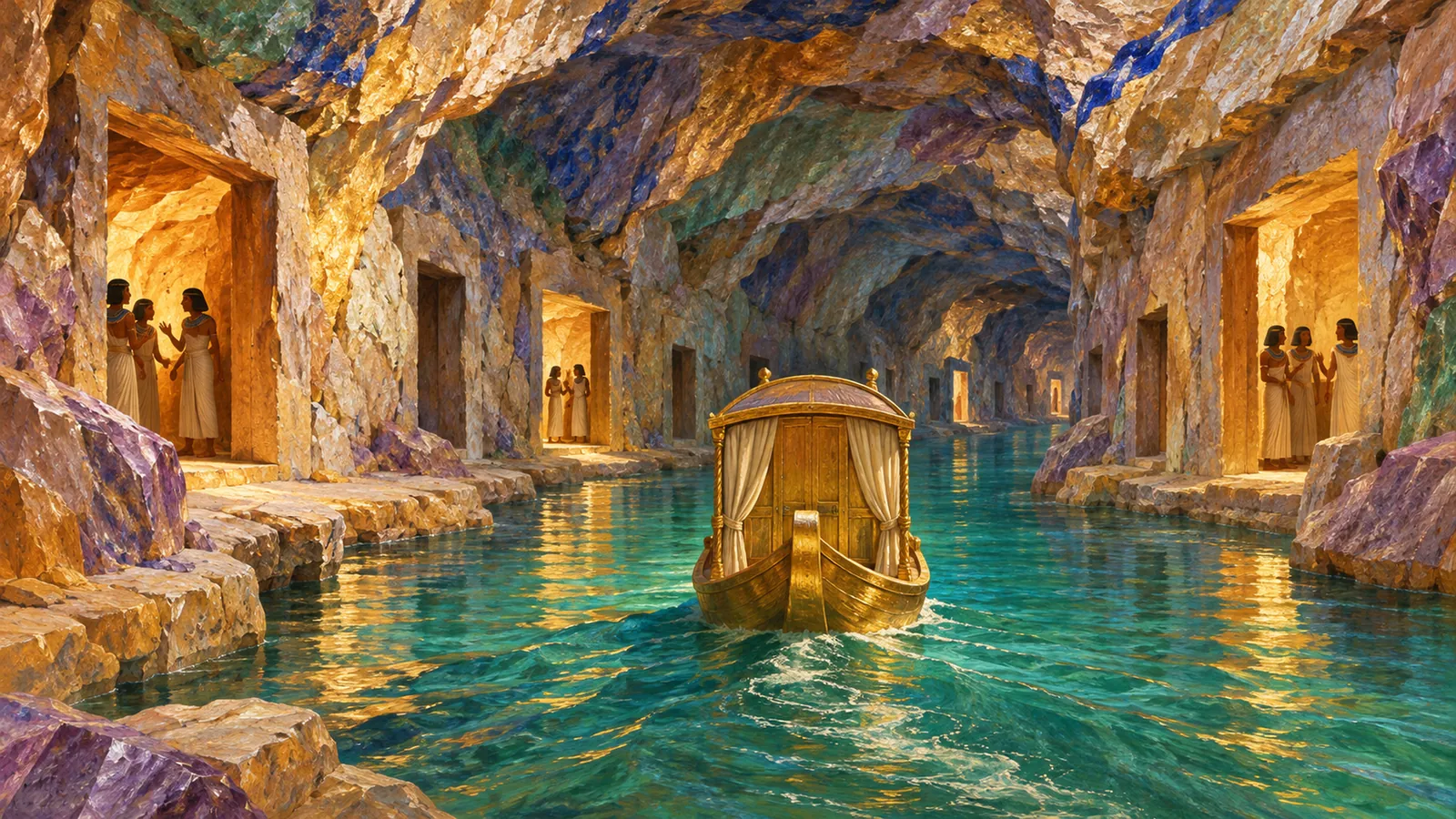
HOUR 8
The Amduat’s eighth hour brings the barque to a row of chambers. Ra calls to the beings inside, and they answer as he goes by. Each chamber has its own voice.
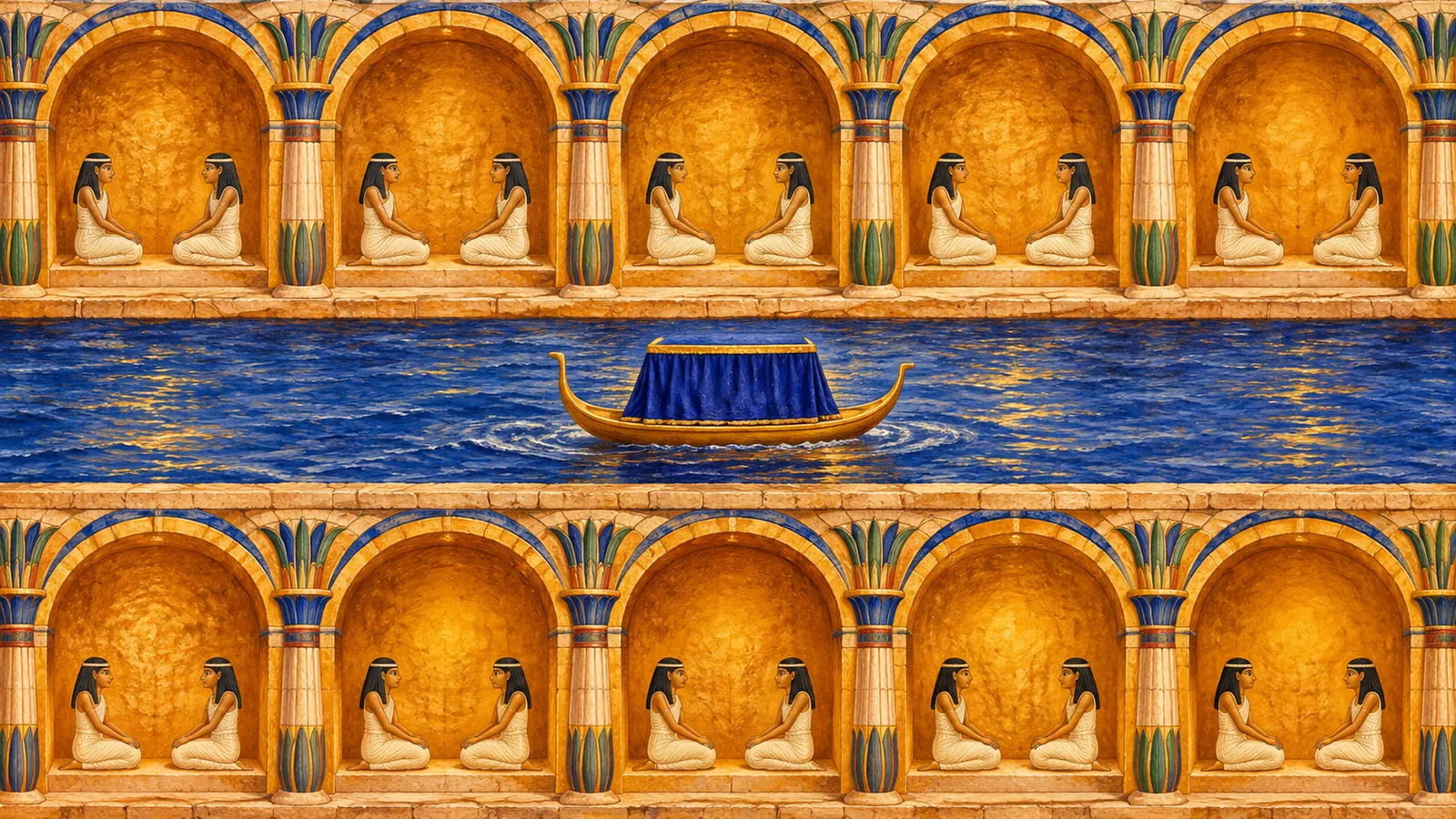
Five chambers sit above the boat and five below in Nesmin’s fragment. Even through the wear on the papyrus, the two rows show an image of order restored after the danger.
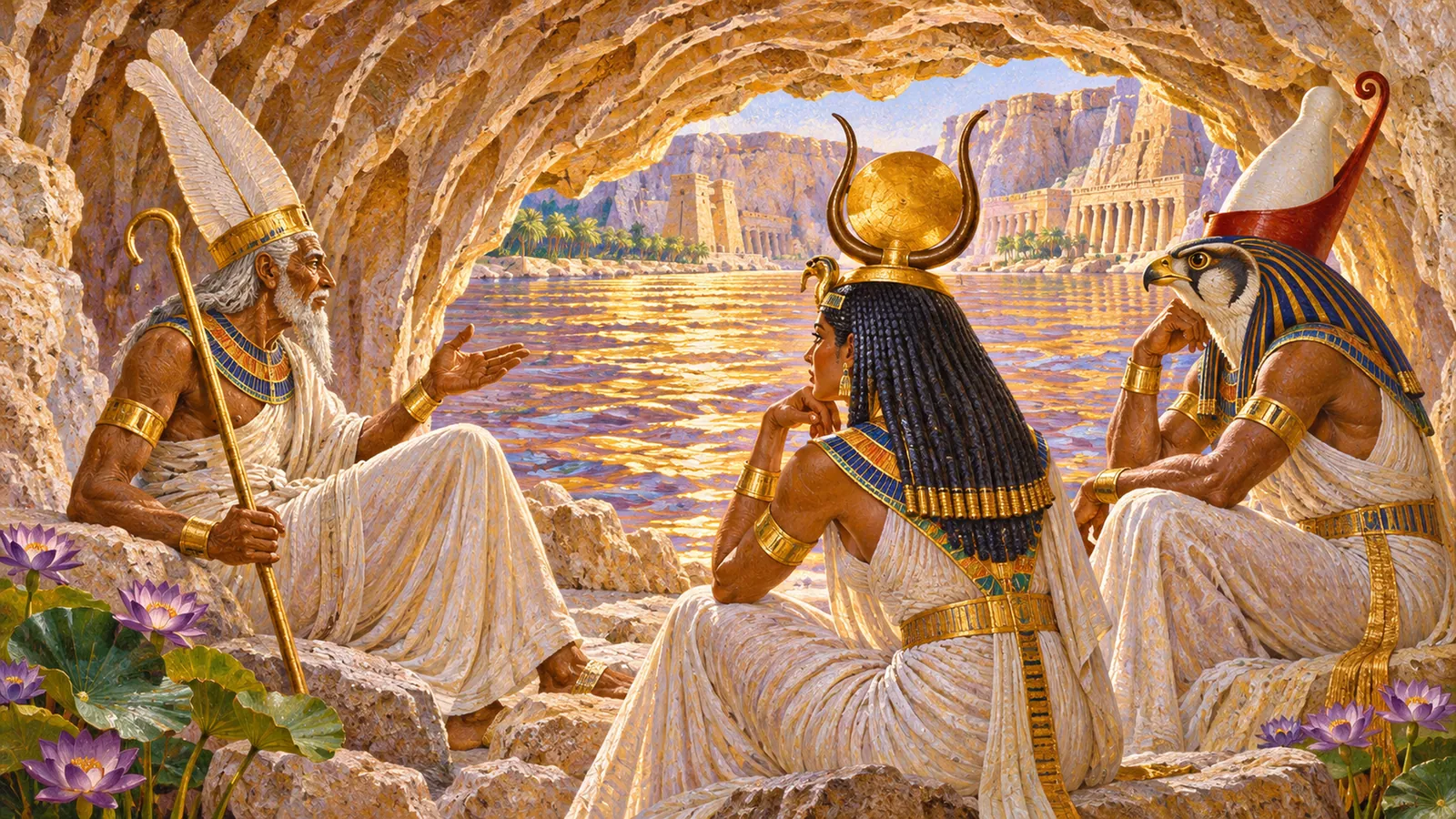
The text likens the voices within the chambers to different sounds. The little groups sit in their own spaces, close enough for the traveling god to hear them as he passes.
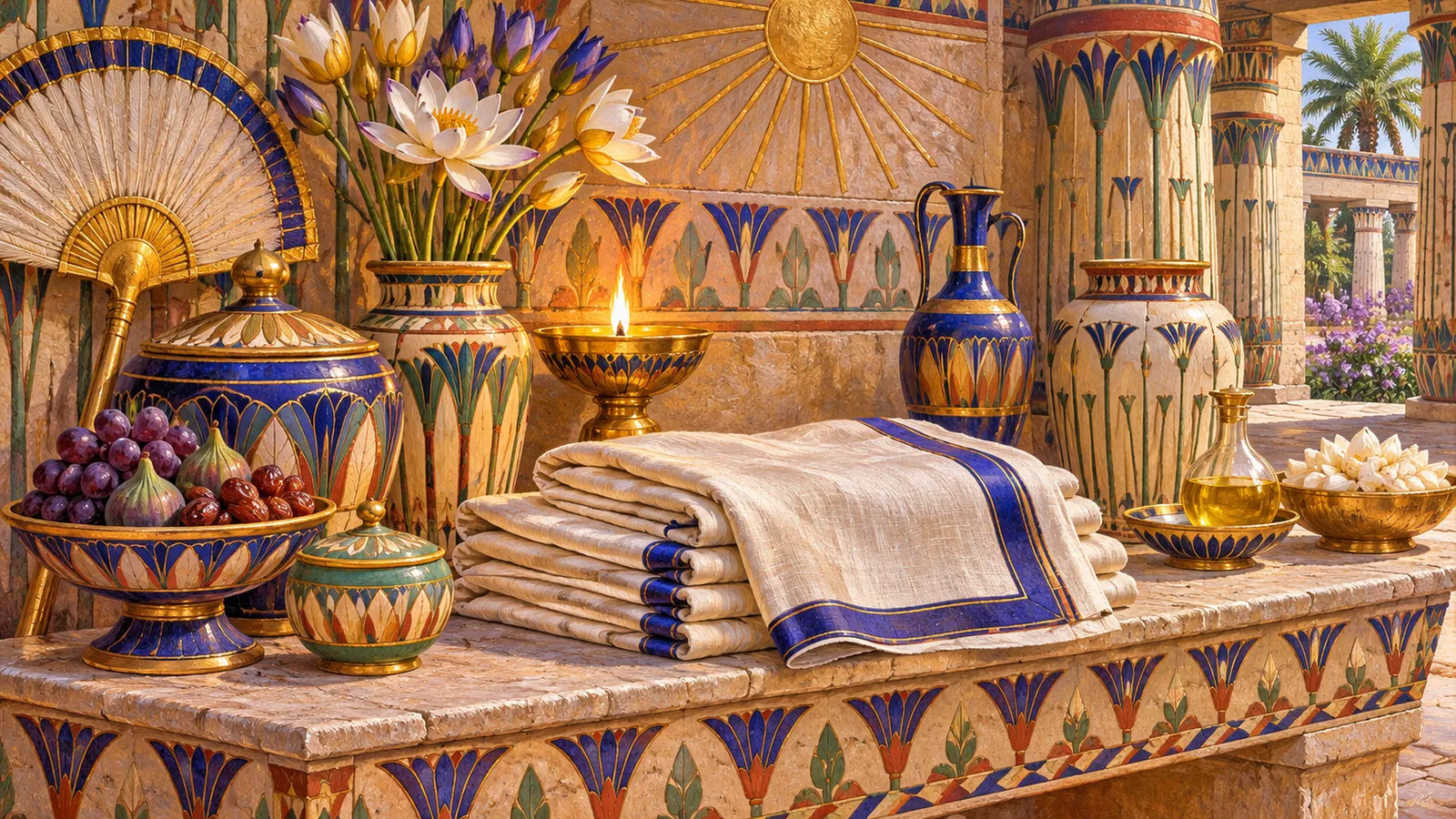
A sign for clothing appears beneath the gods in the chambers. It means that they have been given fresh garments. The new cloth is another image of life renewed in the dark.
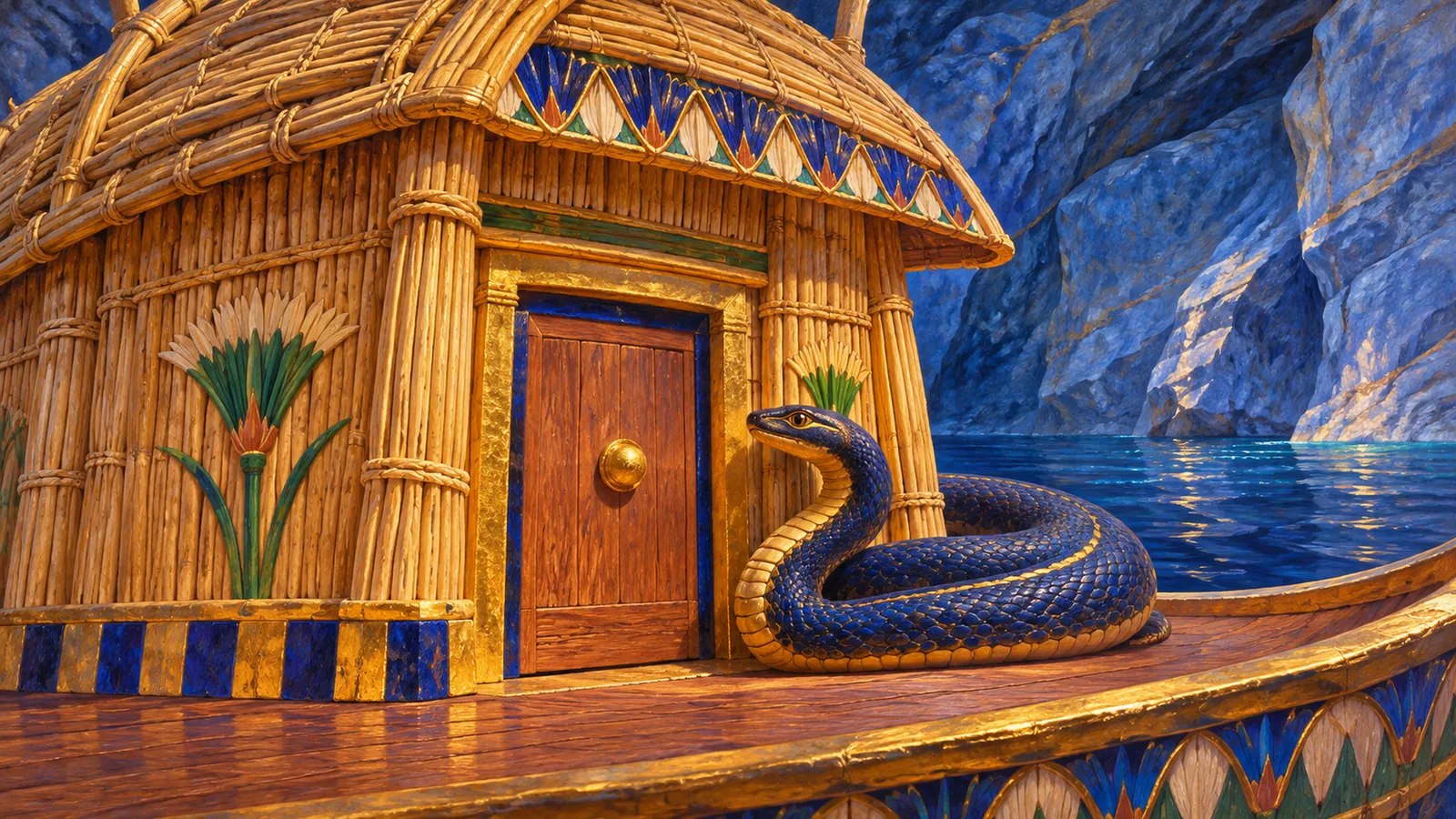
Mehen is still with Ra in this part of the journey. The barque crosses among the caverns with its crew, keeping the light moving where the beings of the dark can see it.
The dwellers keep their places as the barque moves on. Behind the boat the openings are shut. Light and voices that met for the passage return to their different parts of the Duat.
HOUR 9
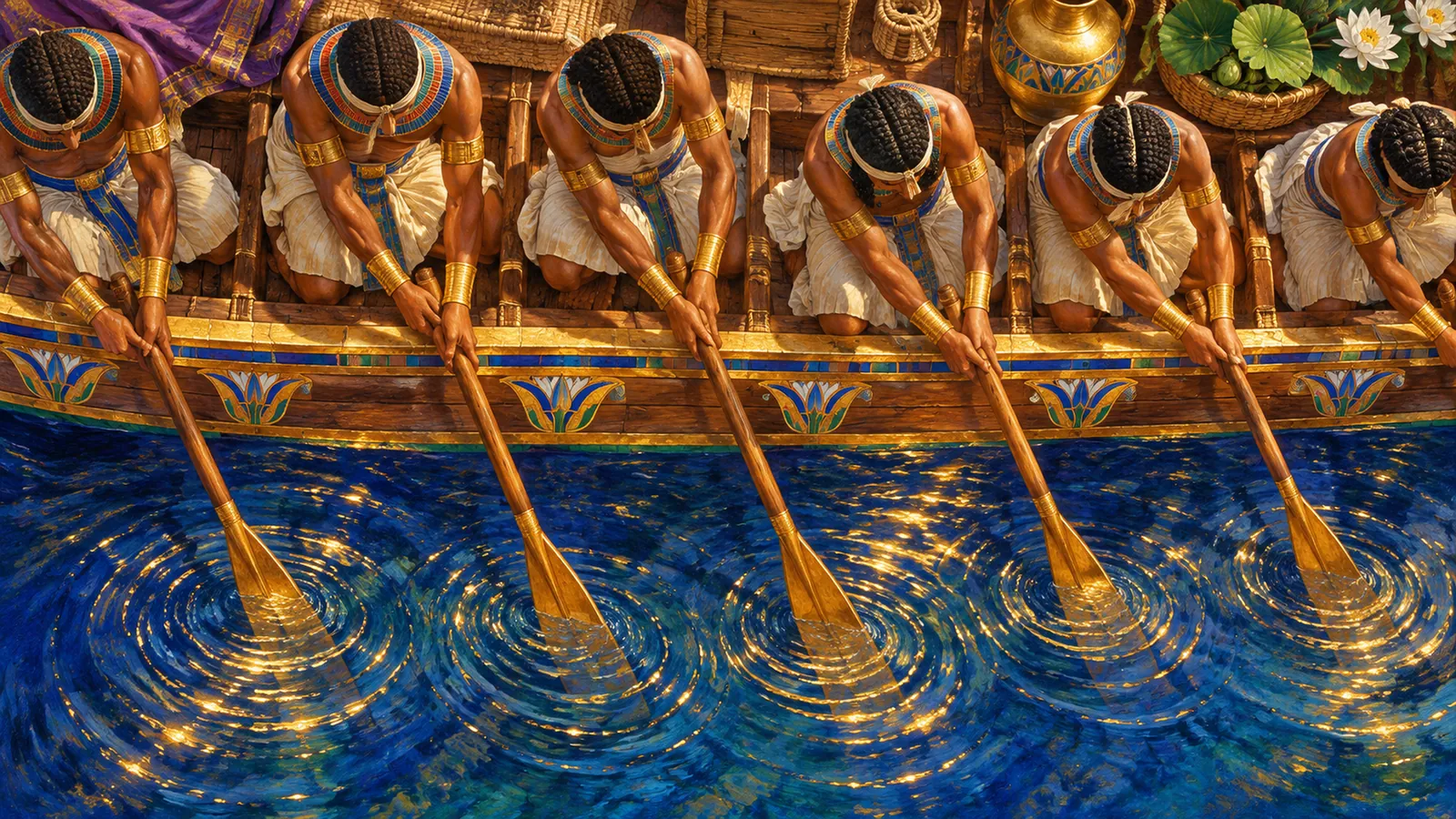
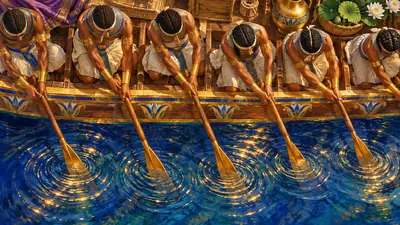
The ninth hour gives the journey a new rhythm. Twelve rowers appear together in the middle row. Their combined work stands for the forward movement of the boat across the water.
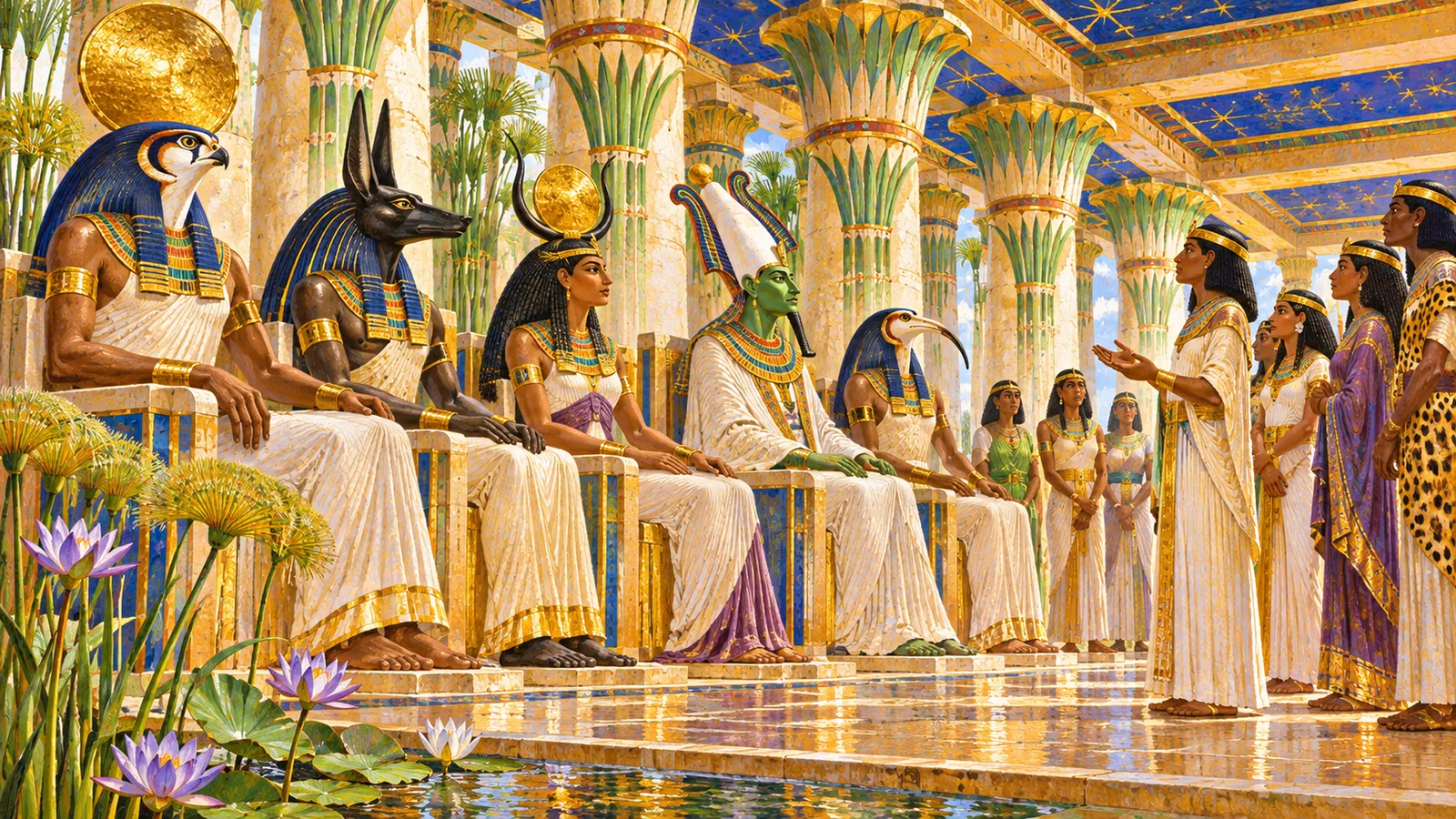
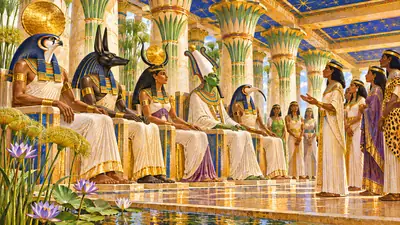
Above the rowers, the Turin papyrus shows a seated court and companions of Osiris. The inhabitants of these regions have their own stations while the sun travels past them.
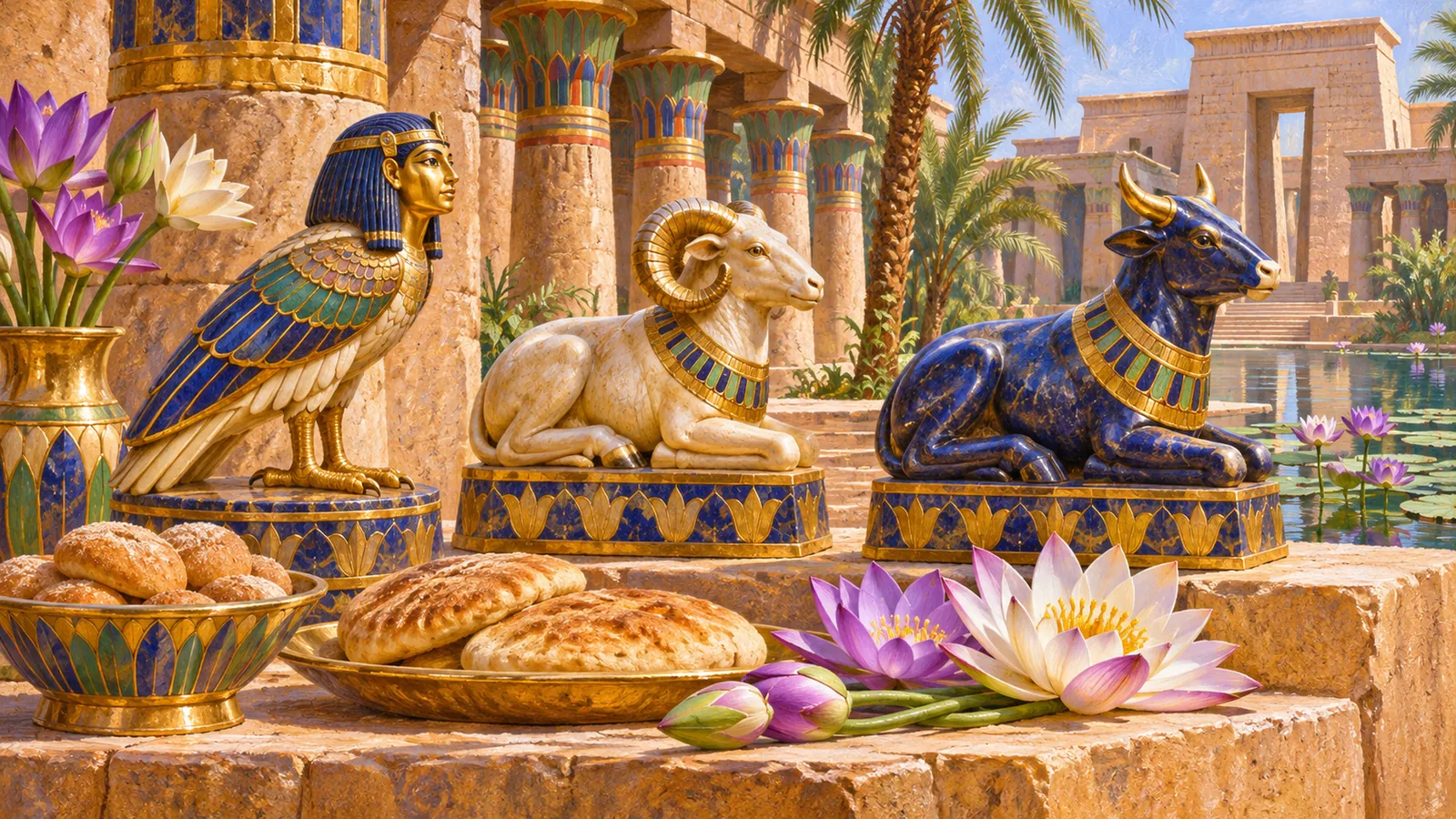
Three givers appear before the rowers. In the Turin papyrus they have the forms of a ba bird, a ram and a bull. They make offerings for the traveling god.
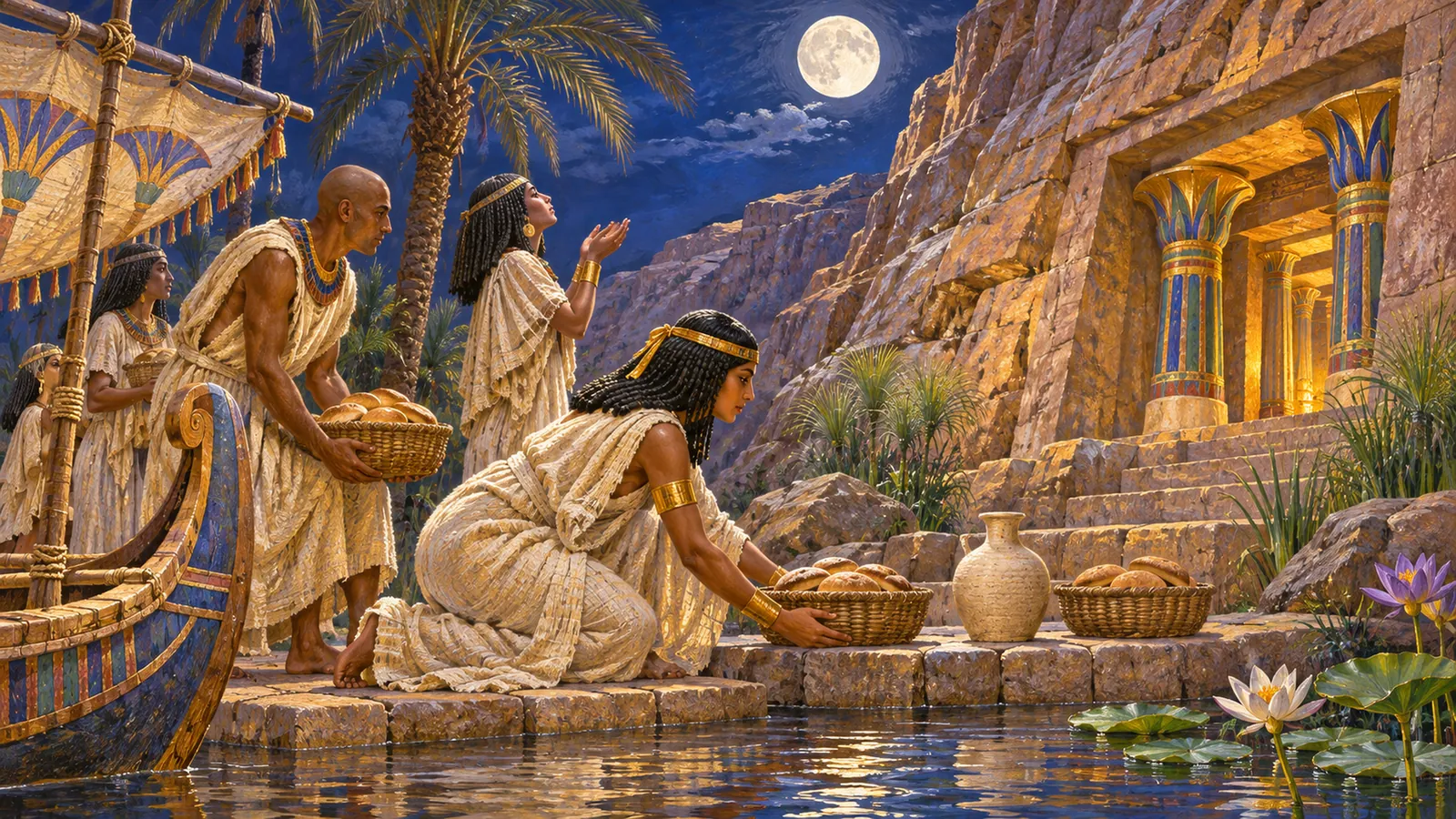
The offerings in the middle band stand at the head of the rowers. Here the passage is made possible by a community whose work includes giving as well as moving the boat.
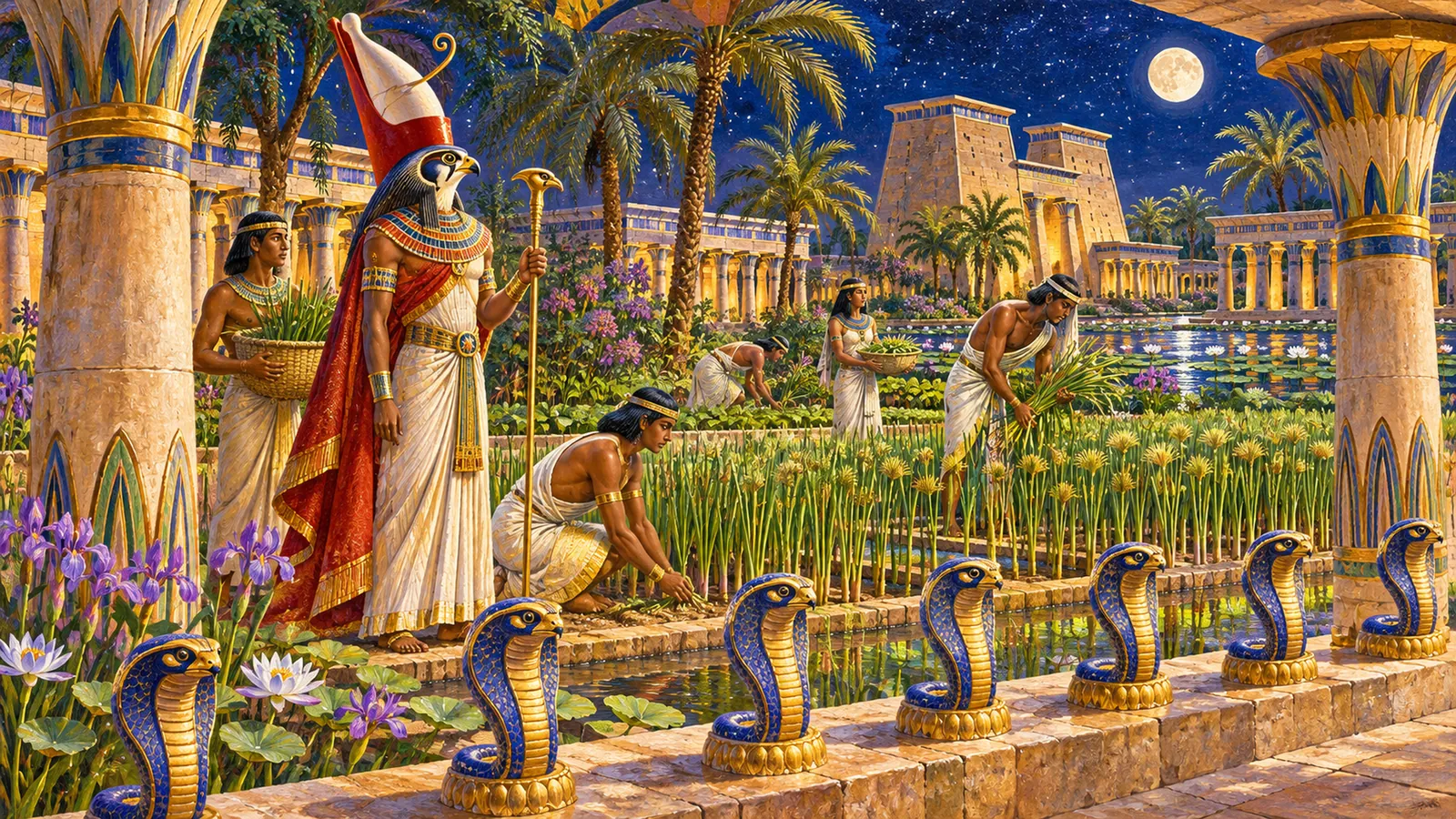
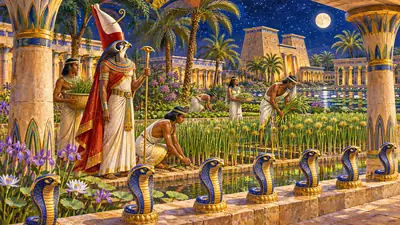
Below the rowers, protective cobras appear. In Turin’s copy they share the lower band with Horus and the gods of his garden. The land again has space for cultivation and care.
HOUR 10
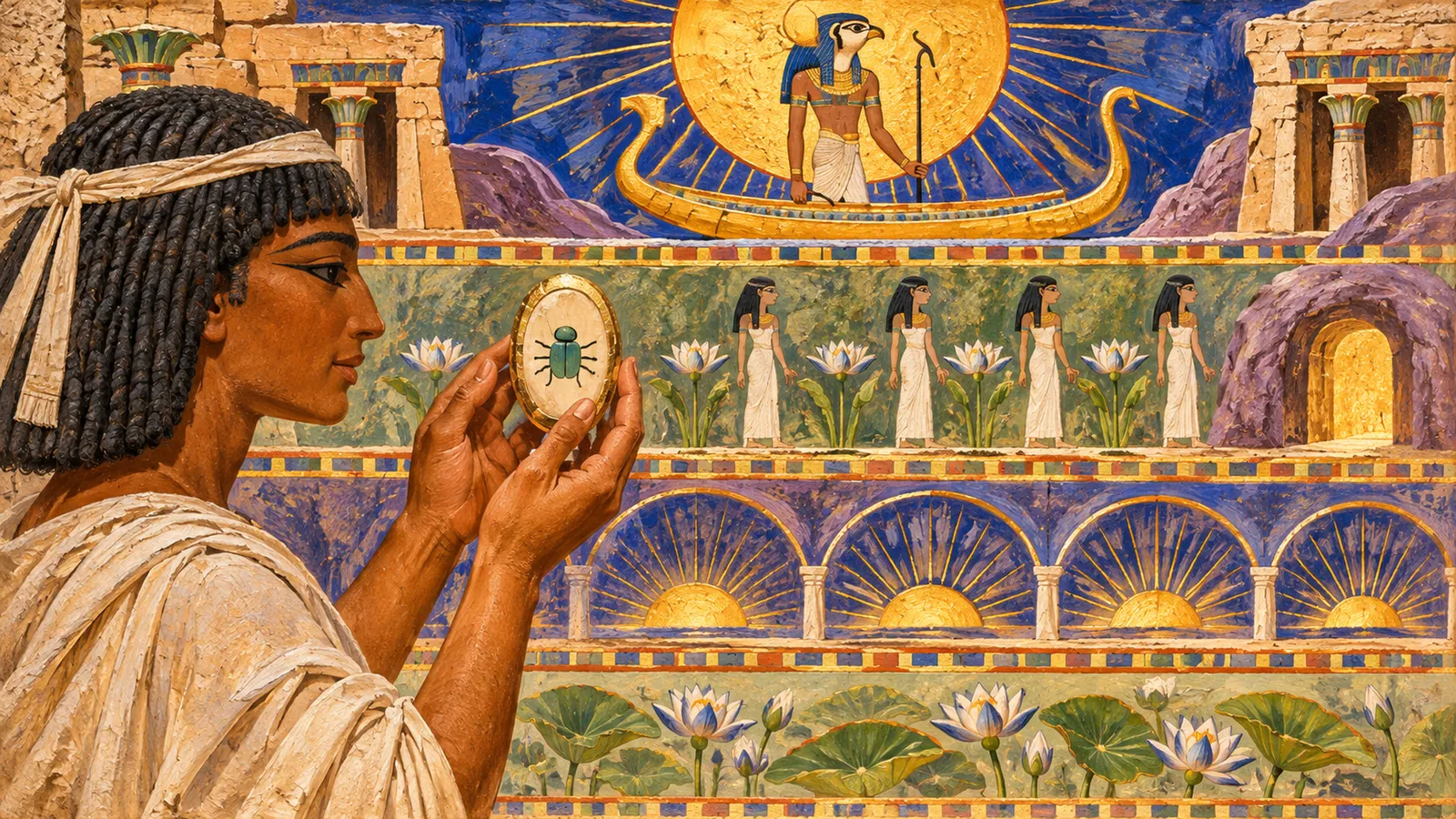
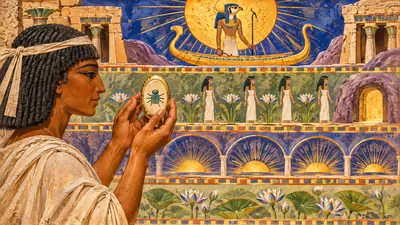
As the tenth hour begins, a god carries an oval with a beetle in it. The miniature scene gives a shape to the hidden world and recalls Ra’s form at dawn.
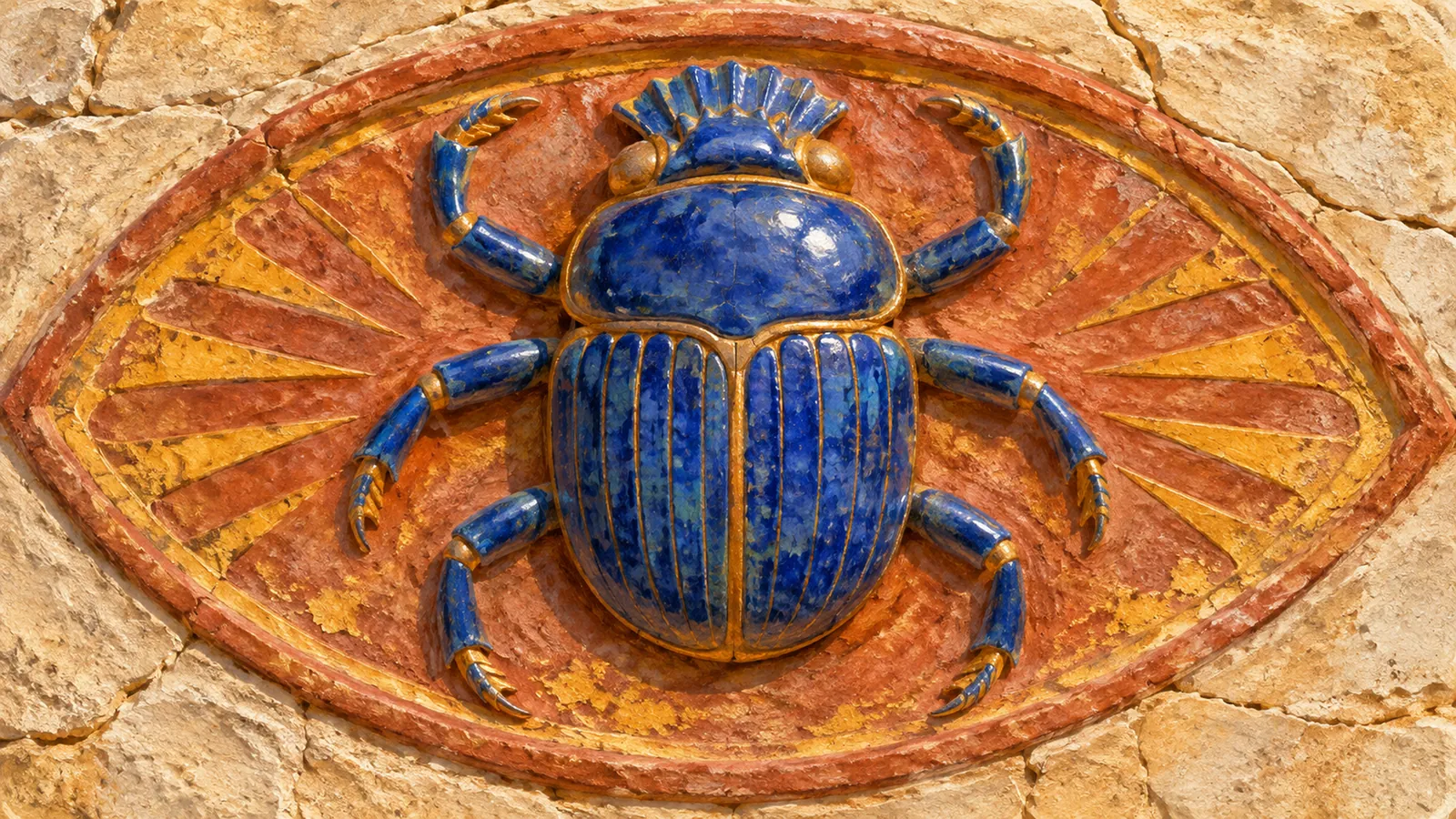
The beetle appears inside the oval, just as the sun is still inside the Duat. Its presence recalls the scarab at midnight, before Ra reaches the place from which he will rise.
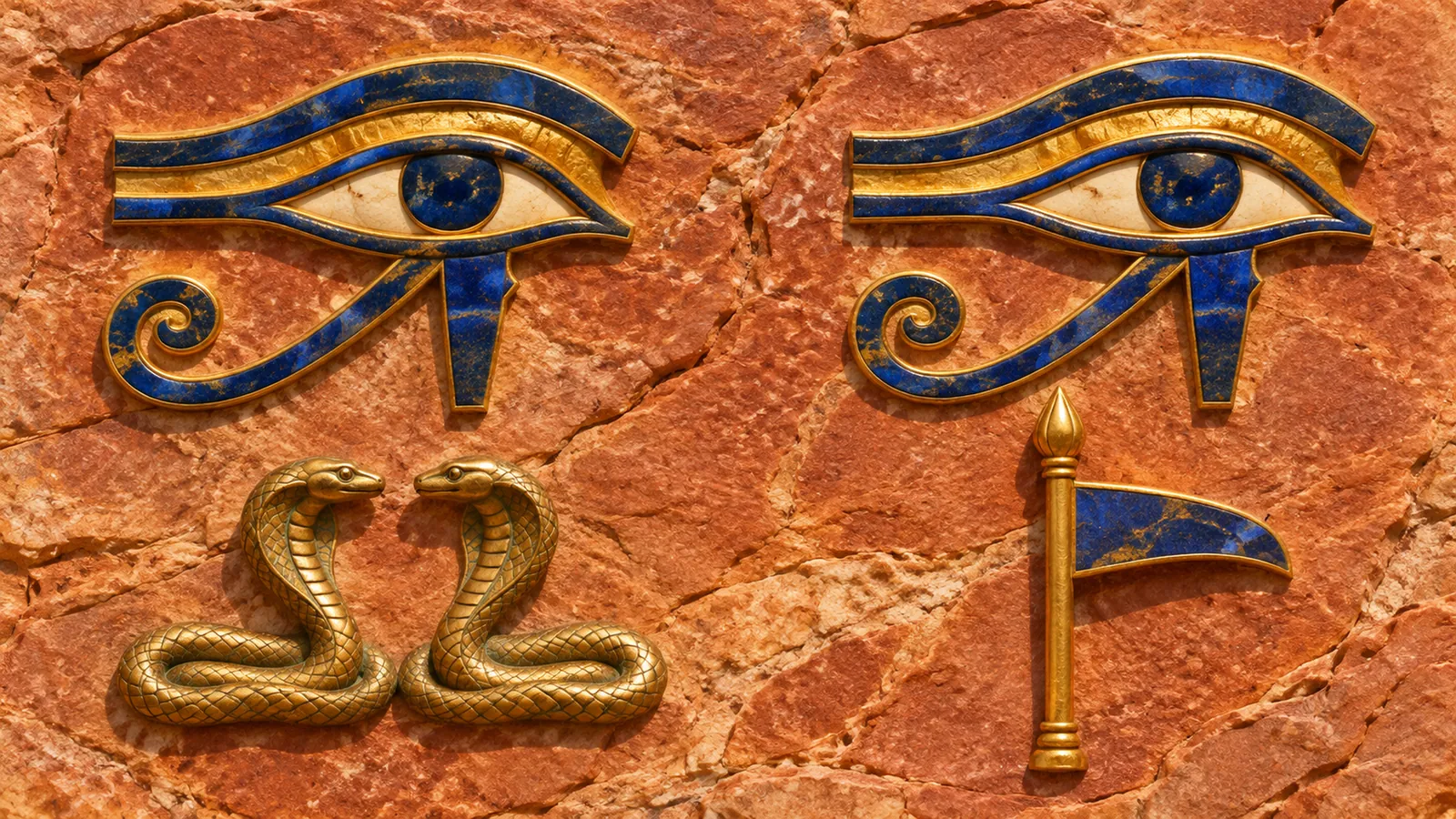
The upper band shows the renewal of the sun’s two eyes. In the Turin papyrus one emerges between two coiled serpents. The other comes out at the top of the sign for a god.
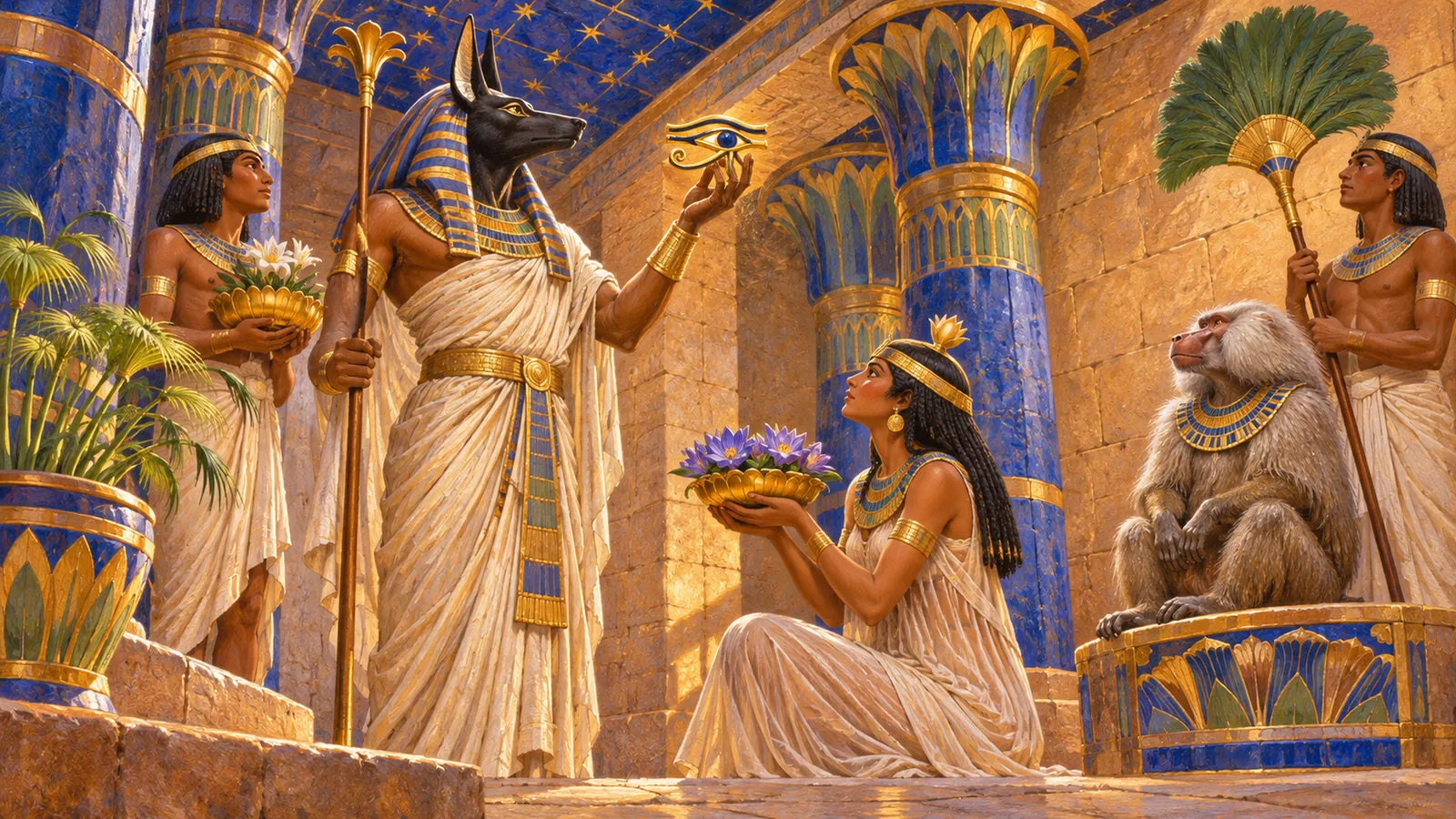
An assembly attends the sacred eye. In the drawings a wrapped canine-headed god holds it, and goddesses approach to examine, heal and guard it. The sun’s power to see is restored.
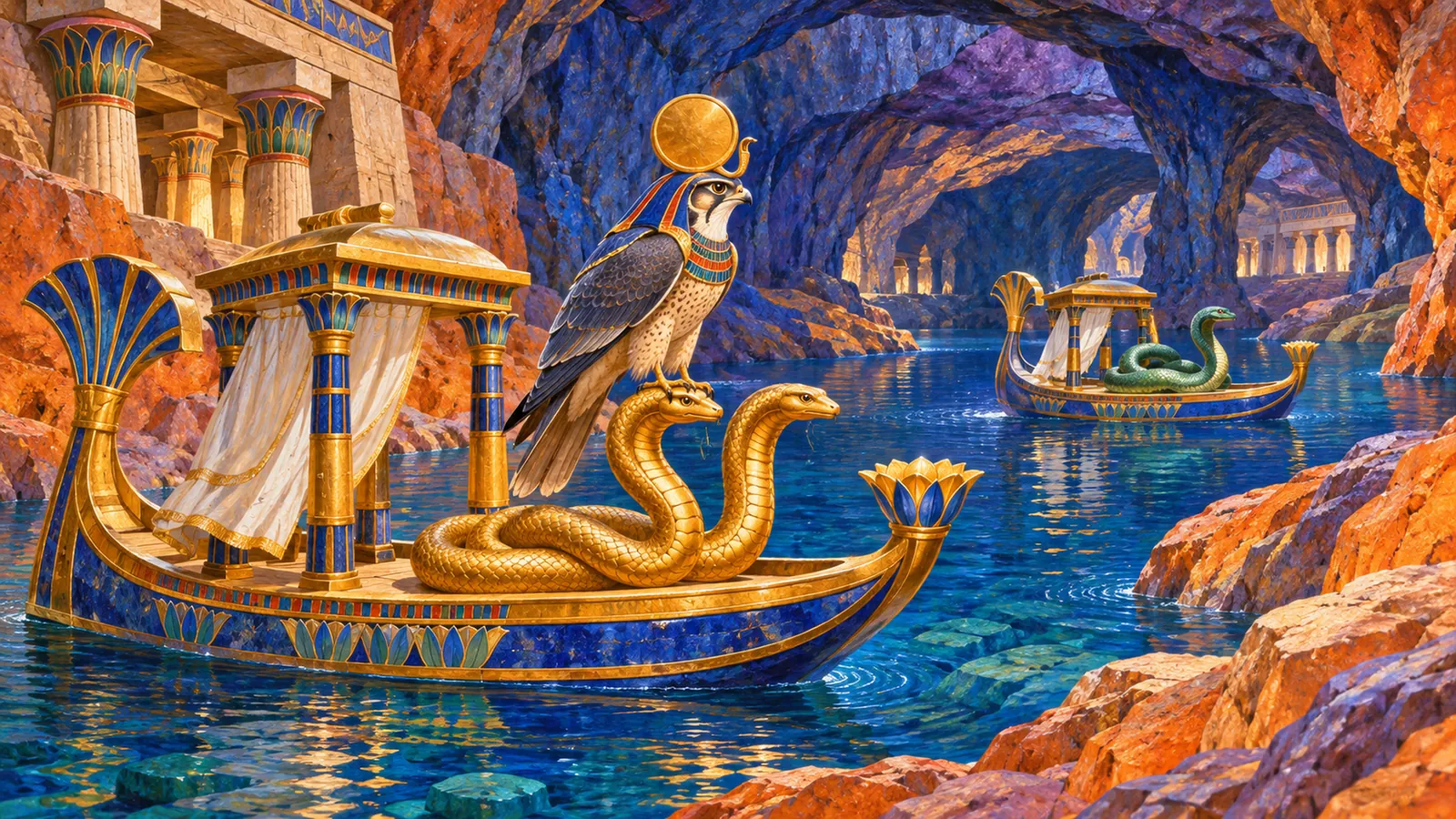
Near Ra’s boat travel forms of Sokar and Osiris. One appears as a falcon on a double-headed serpent. In a second vessel a serpent stands for the ba of Osiris.
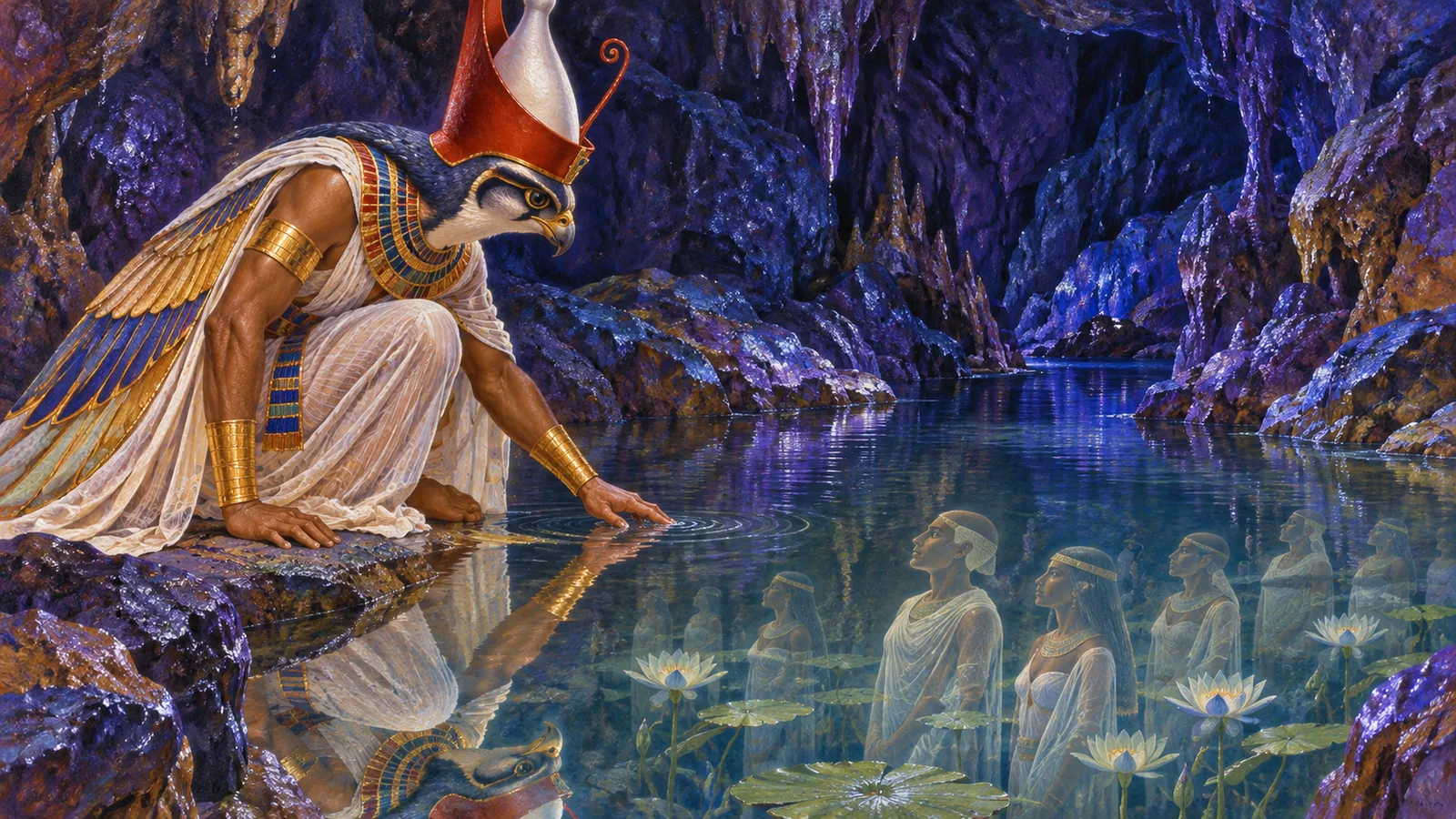
Below the boat, Horus speaks to people who died in the water. Although they were lost to the river, he gives them care and a place among the inhabitants of the Duat.
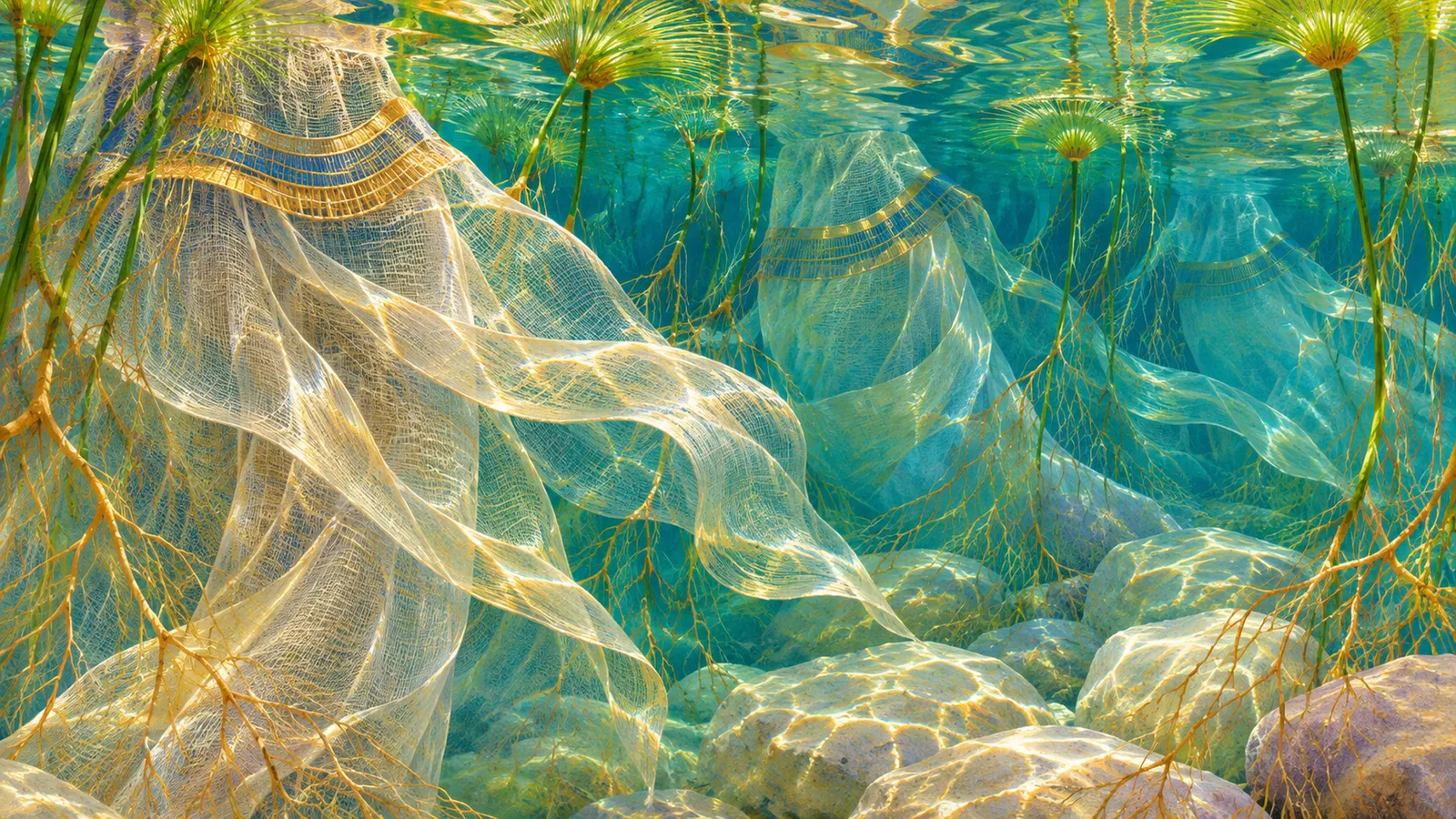
The drowned share a fate associated with Osiris. The text gives their bodies protection where they are. The barque passes over the water while their lives in the hidden country continue below.
HOUR 11
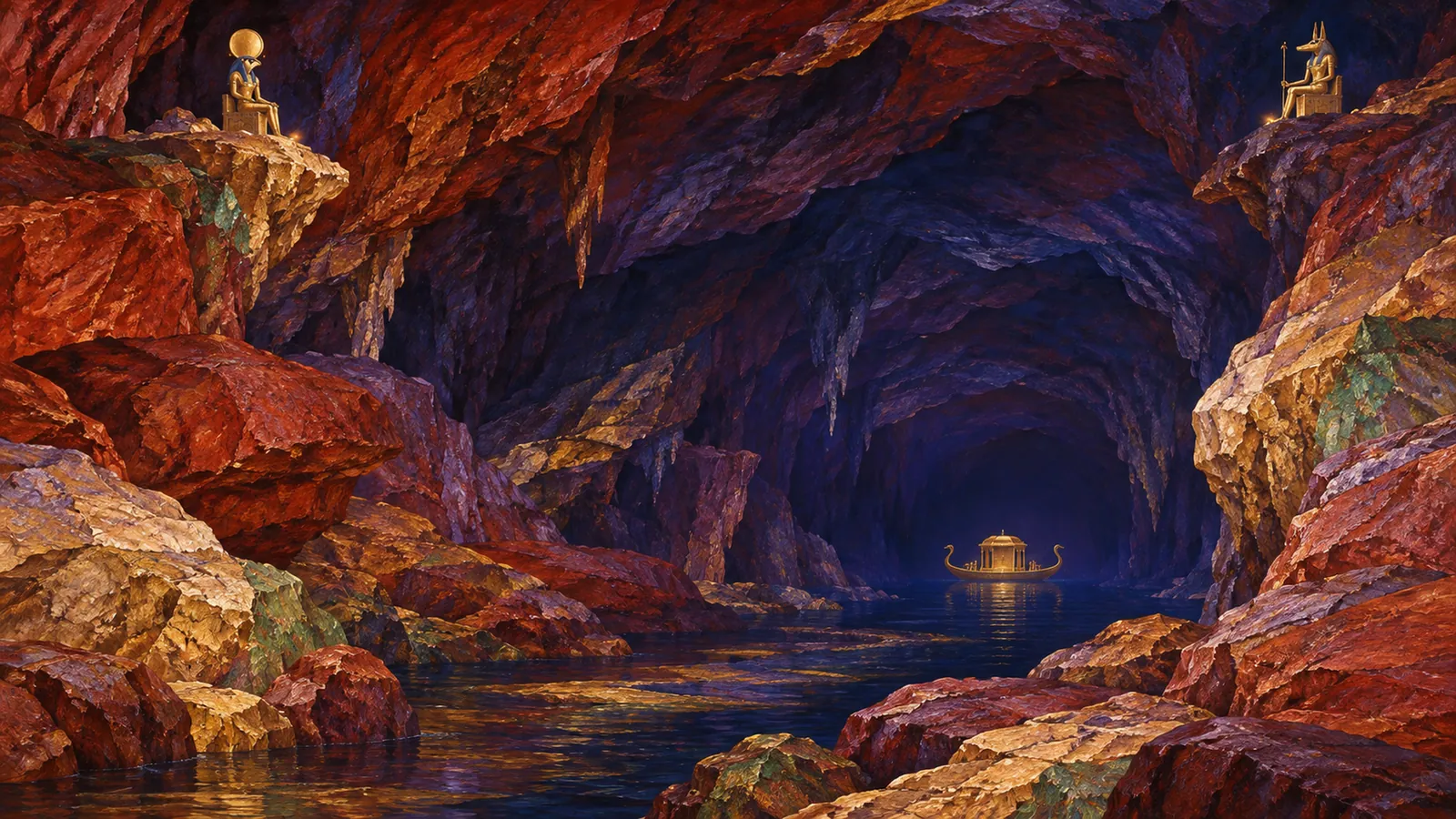
By the eleventh hour the east is close. Above the boat another set of images shows how time moves and how it endures. The figures below keep dangers away from the sun.
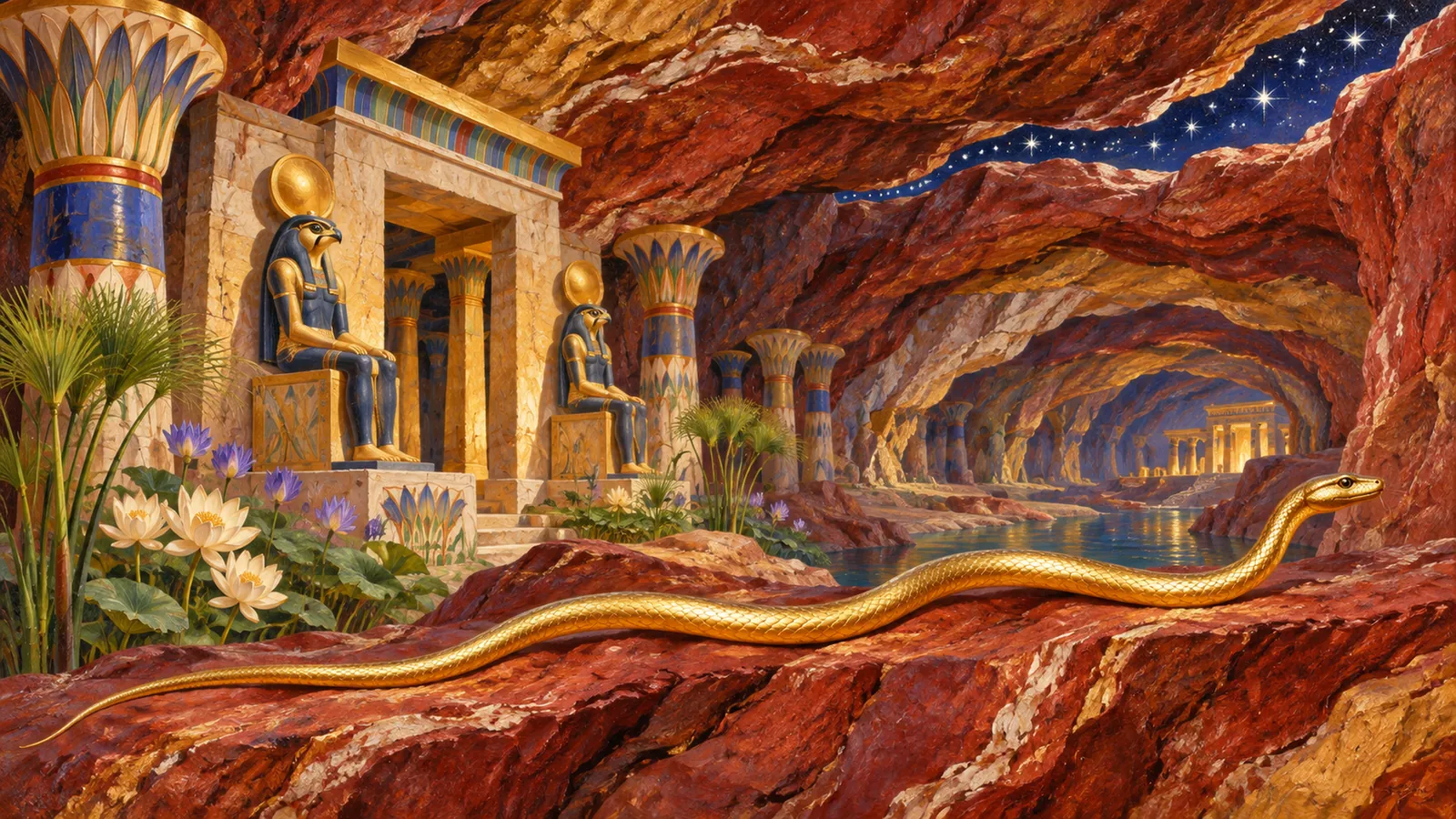
An image above the vessel belongs to the hour’s account of time. Its serpent is different from Mehen, whom another group carries. These figures appear side by side in the same hour.
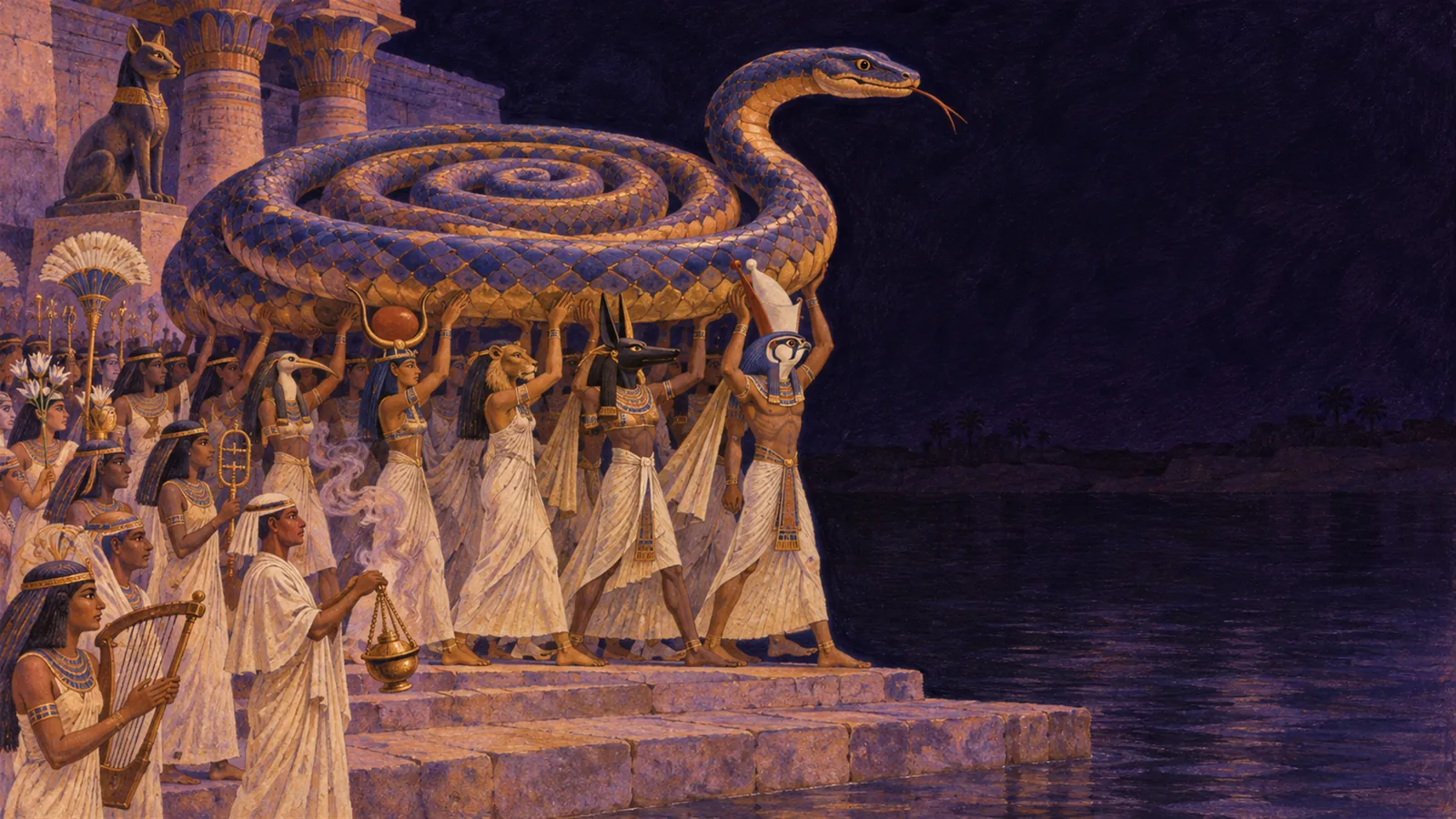
Twelve deities link the movement of the boat with the protective serpent Mehen. The Turin copy shows them towing the barque and carrying the great serpent over their shoulders.
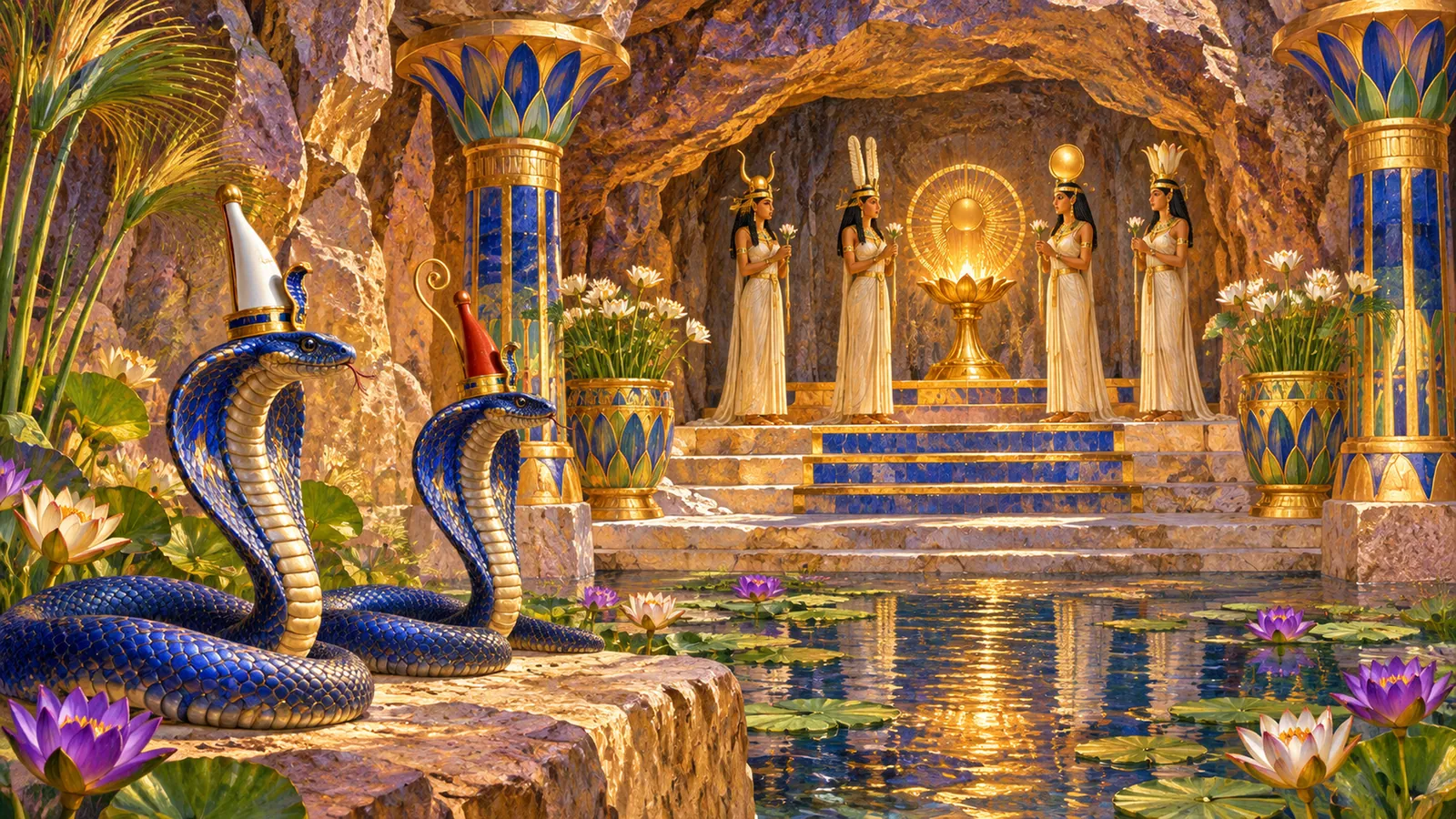
Two crowned cobras recall Isis and Nephthys. Beside them appear four figures linked to Neith. The eleventh hour brings these guardians close to the boat as it approaches the east.
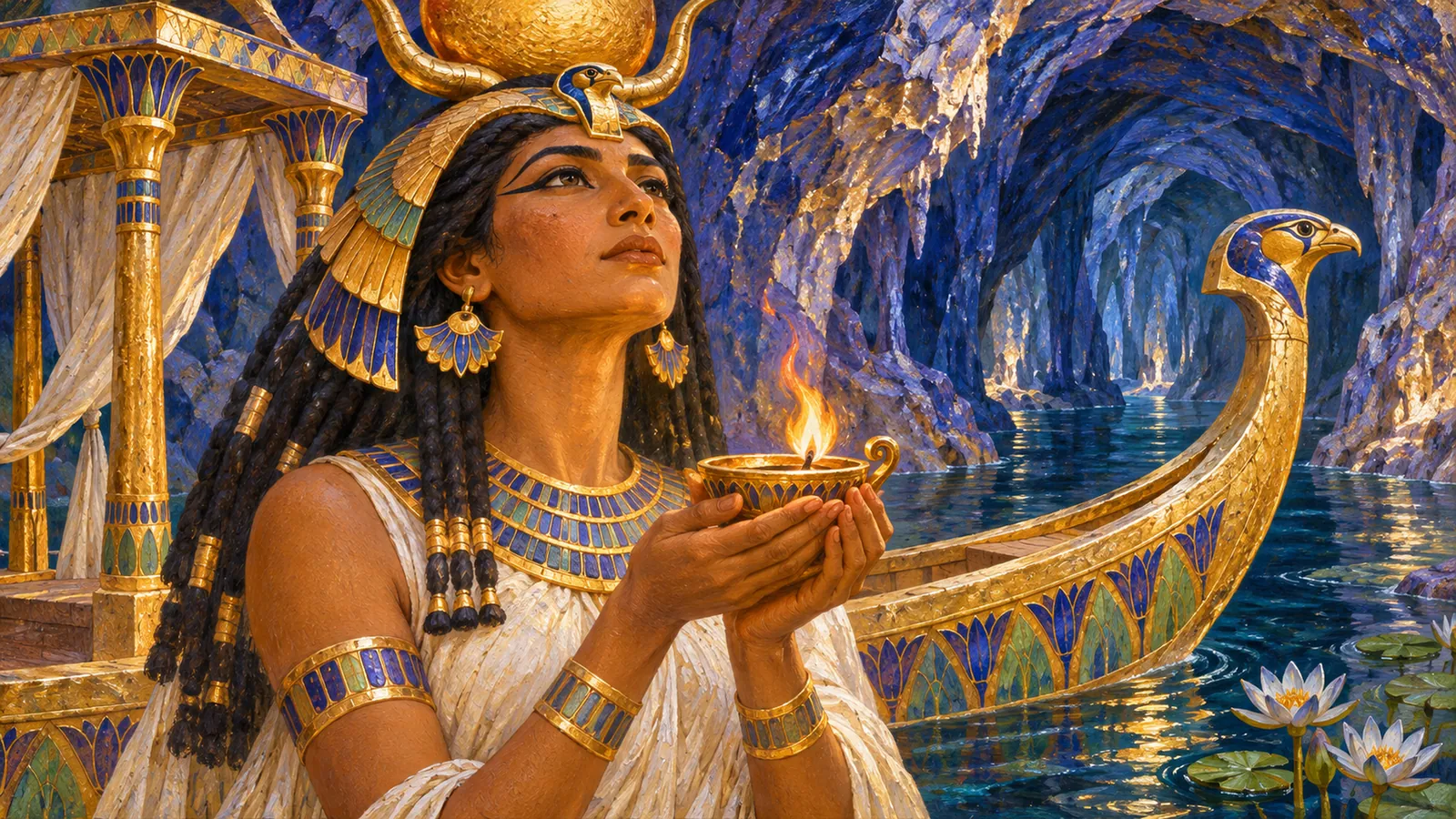
A figure brings light toward the far end of the night. The sun is still traveling in its hidden form. It is the company of the boat that carries light toward the place of sunrise.
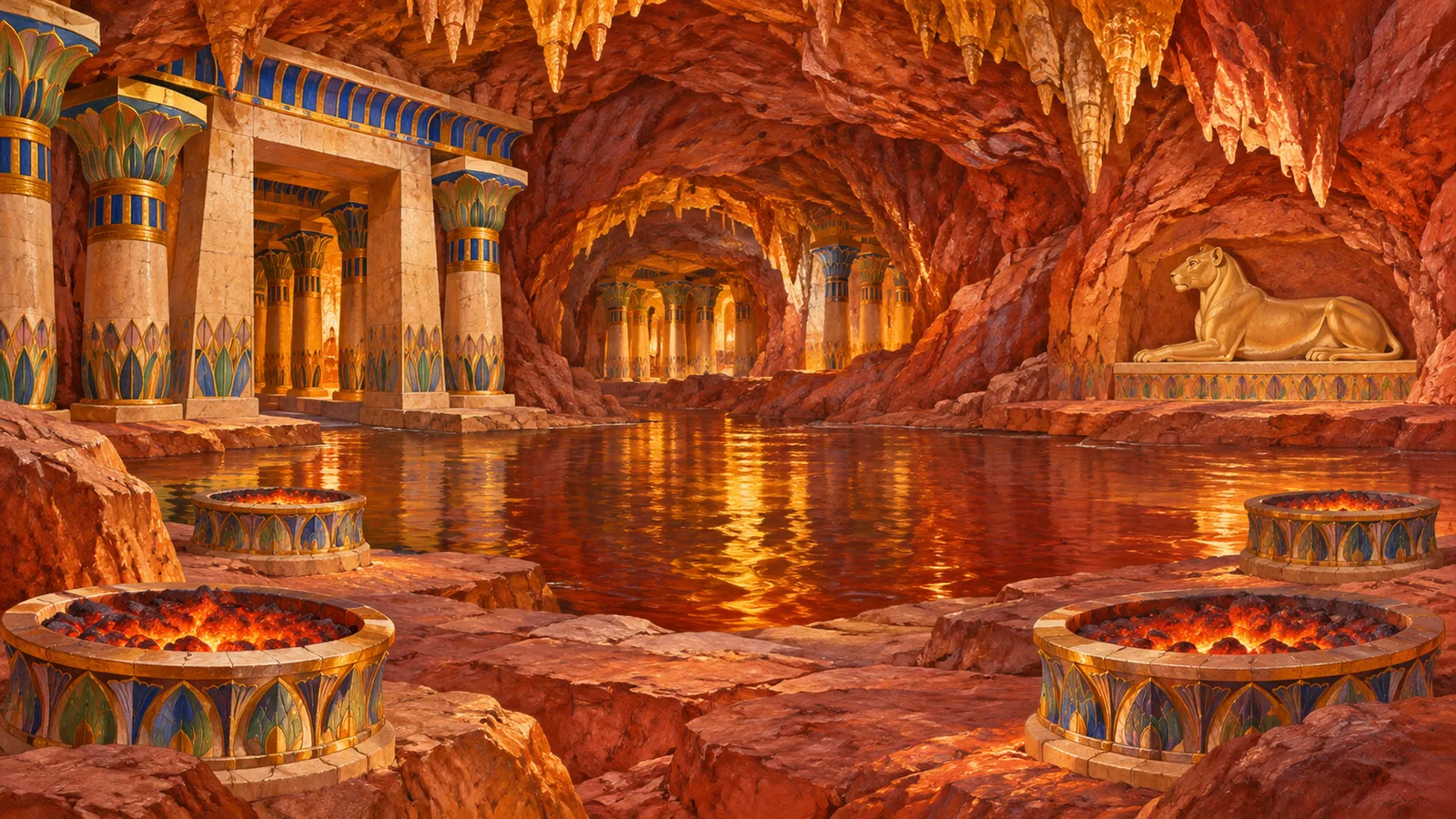
In the lowest band of the eleventh hour the enemies of Ra and Osiris are punished. Empty fire pits stand here for that scene of danger and its defeat.
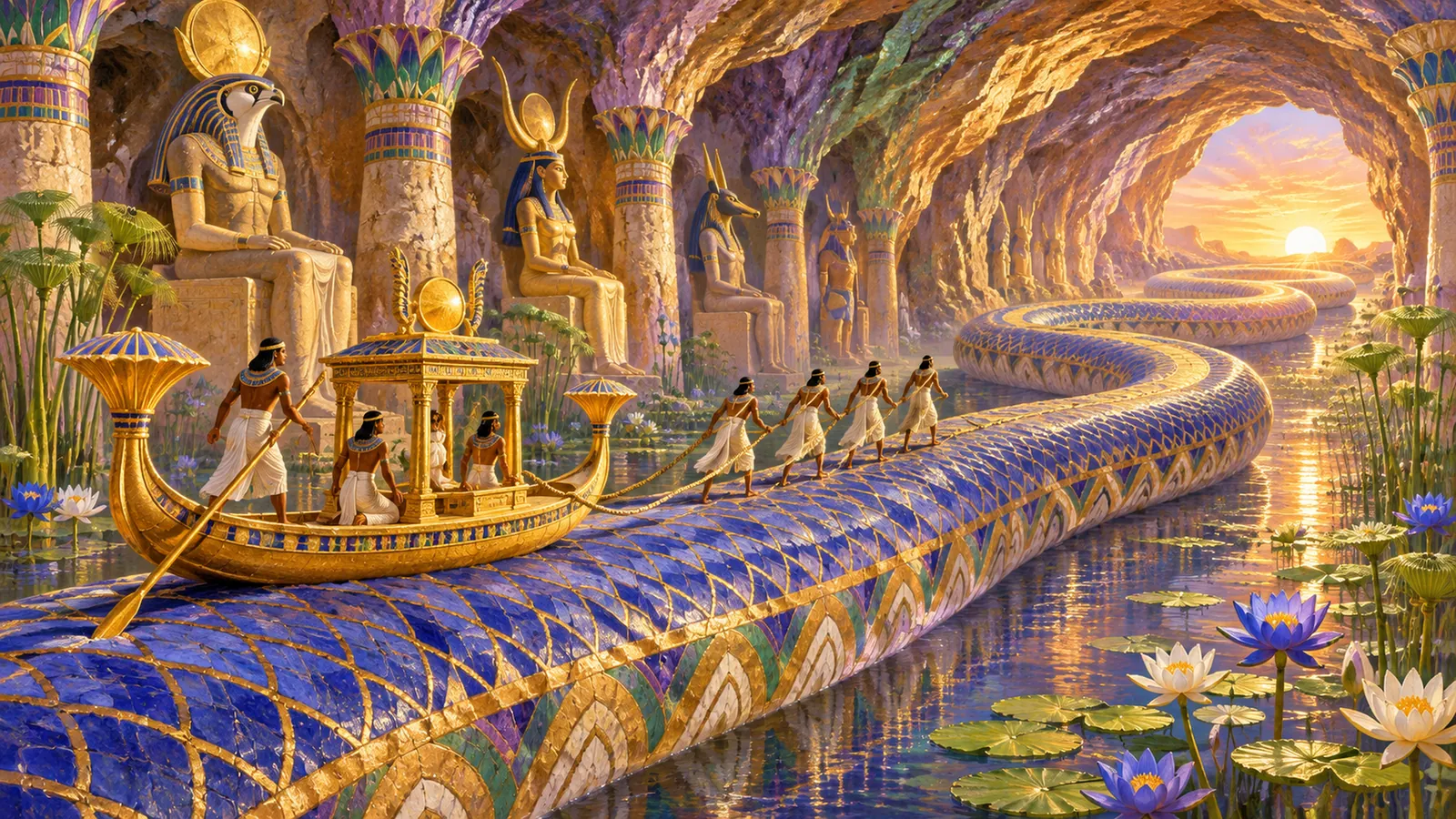
HOUR 12
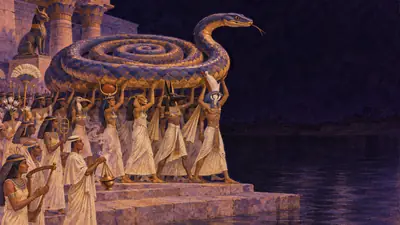
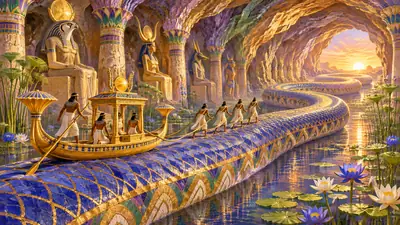
At the start of the twelfth hour, gods and goddesses take up the towing rope. Ra has one last passage to make, through the serpent called Life of the Gods.
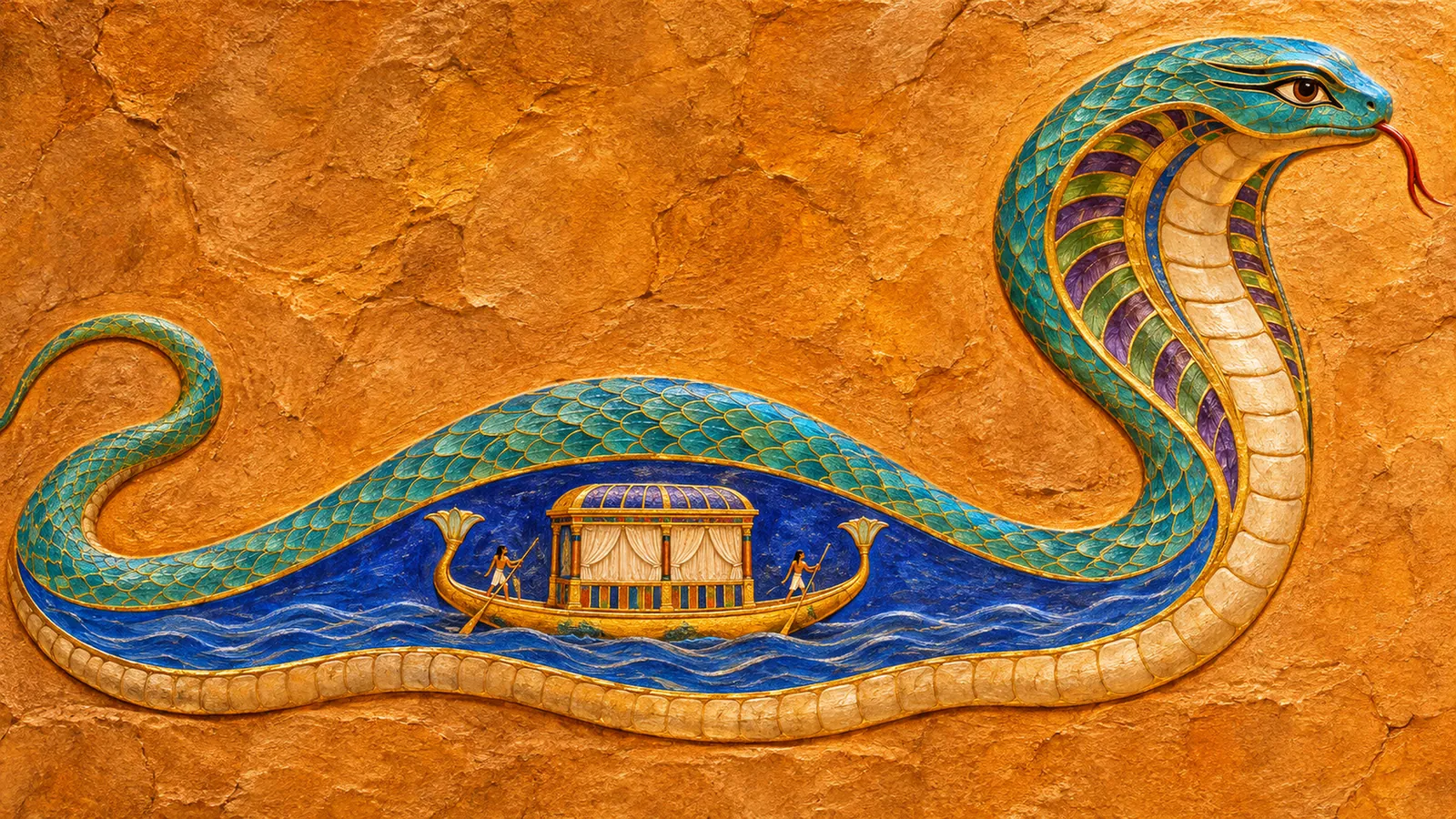
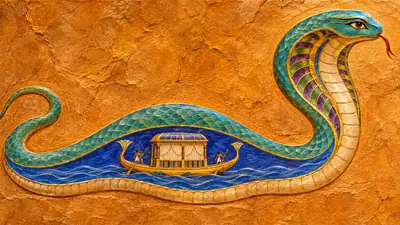
The boat enters at the tail and passes through the body toward the mouth. This serpent is part of the sun’s renewal, and its passage brings the travelers toward the dawn.
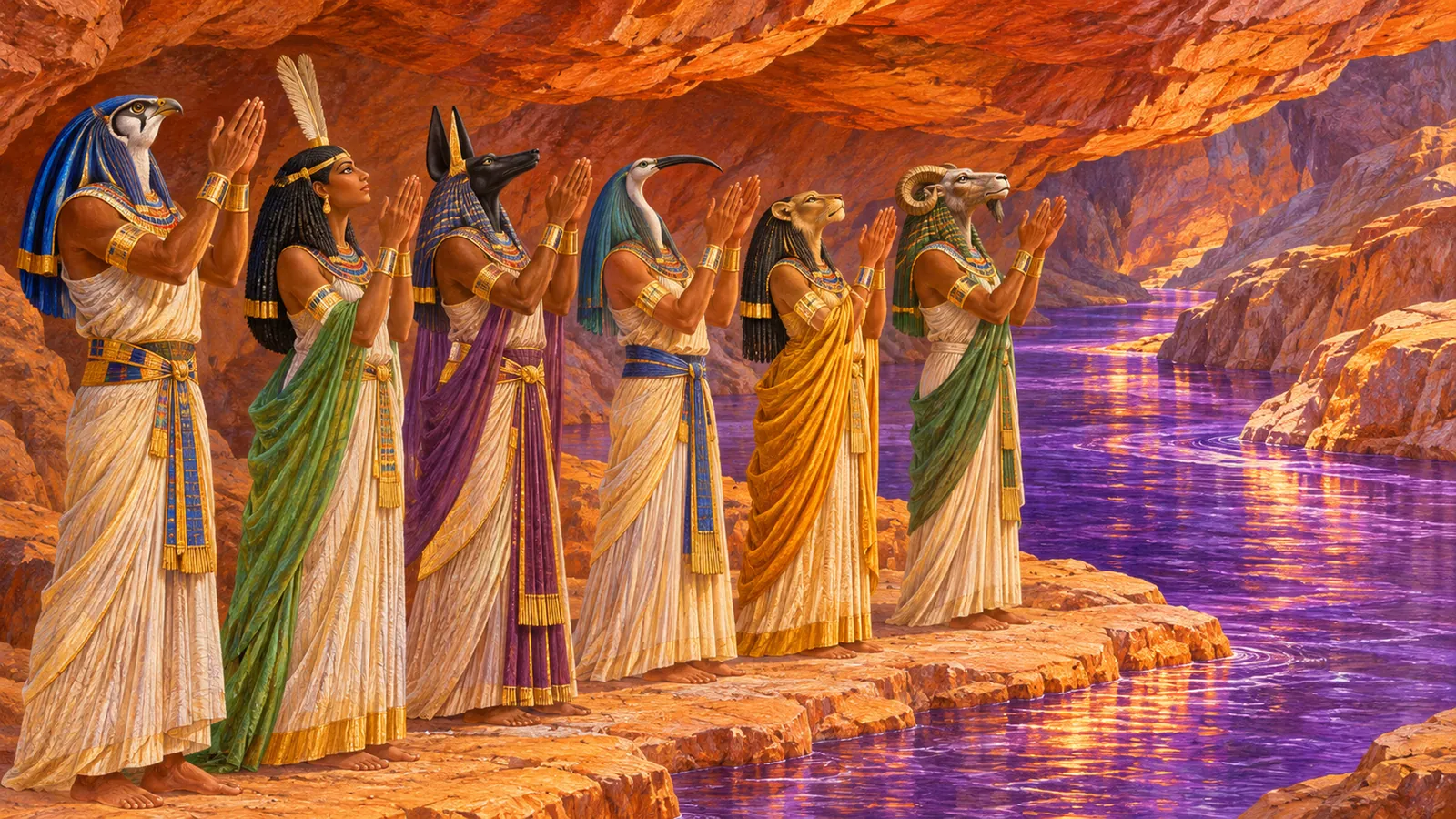
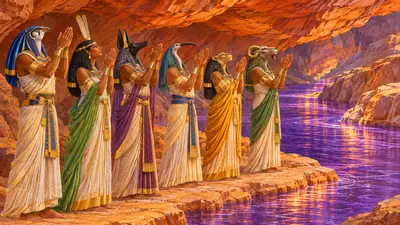
Groups of gods and goddesses look on as Ra approaches the exit. They praise the sun and stand guard against Apophis. The work of keeping the passage open continues until the end.
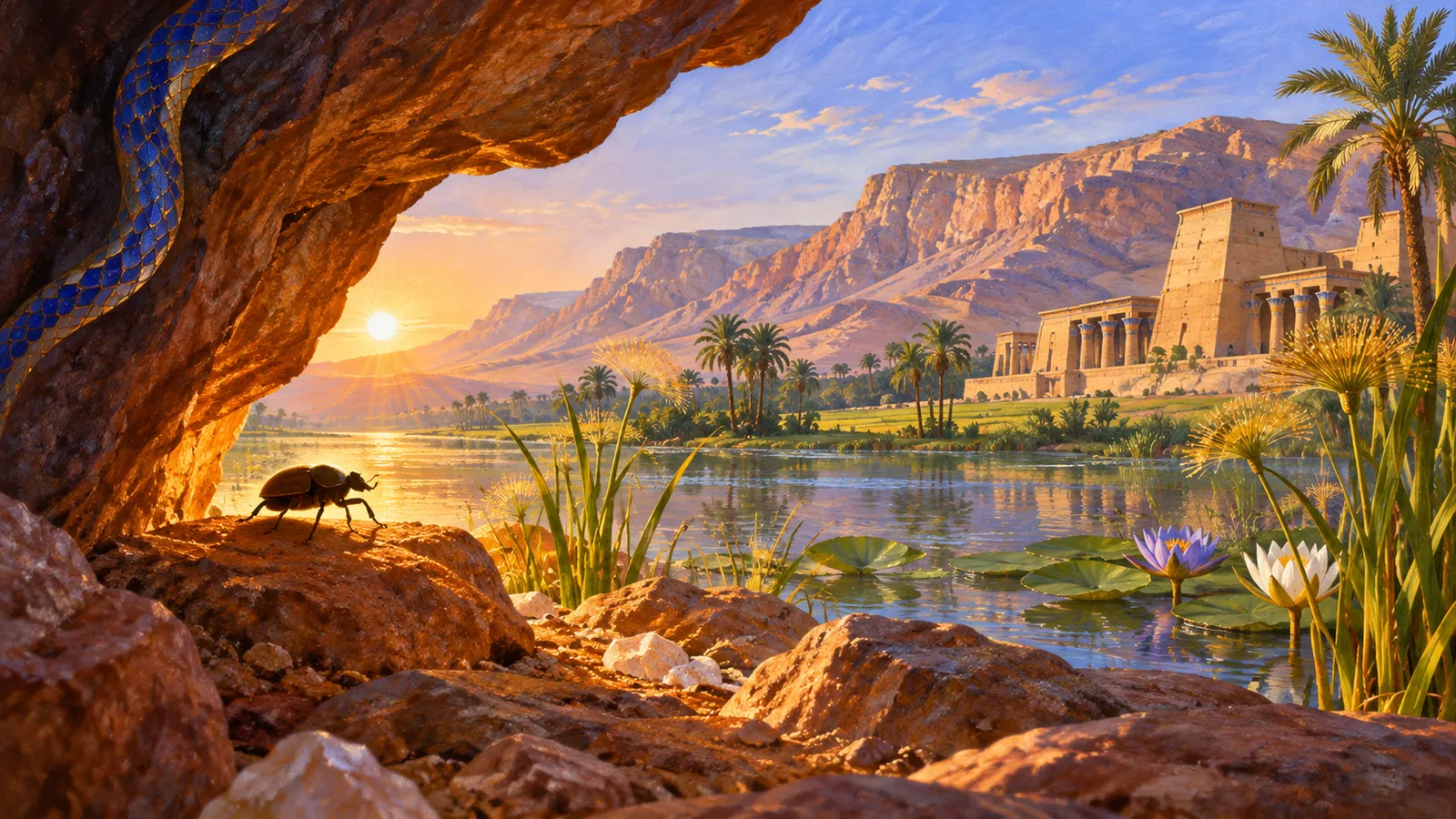
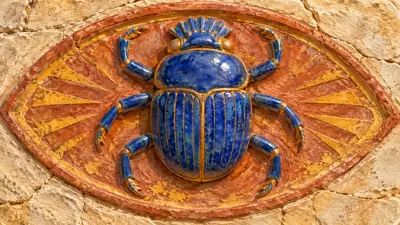
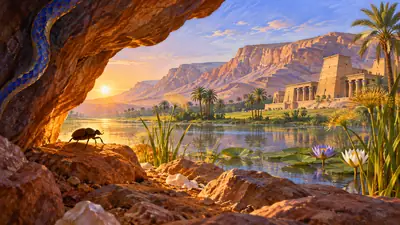
At the mouth of the serpent, Ra appears as Khepri. The scarab seen earlier in the depths now goes out toward the horizon, where the world can see the sun again.
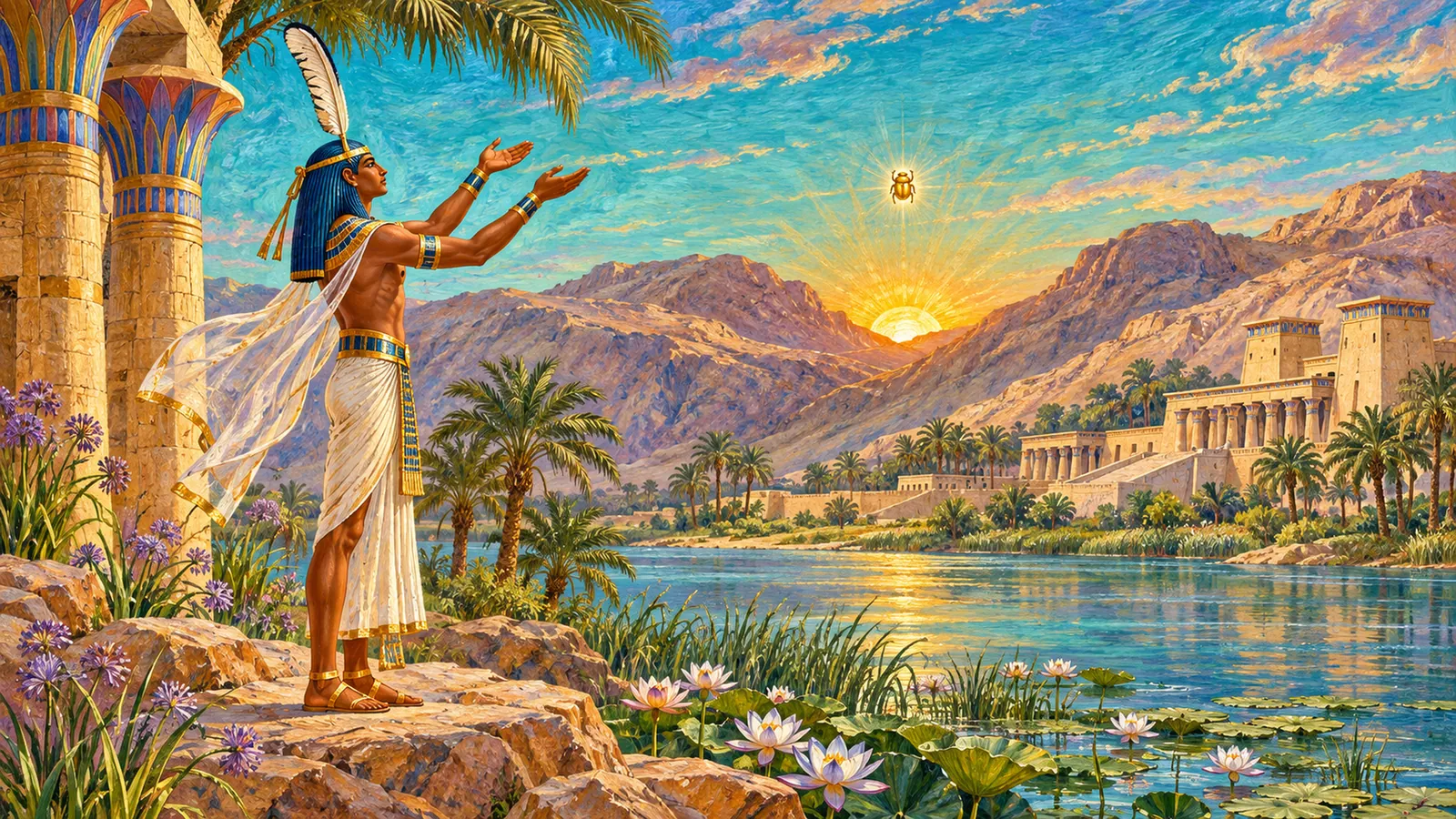
Shu, the god of air, raises his arms at the eastern horizon. Khepri passes into the open and the sun rises as a disk. The journey reaches the world of the living.
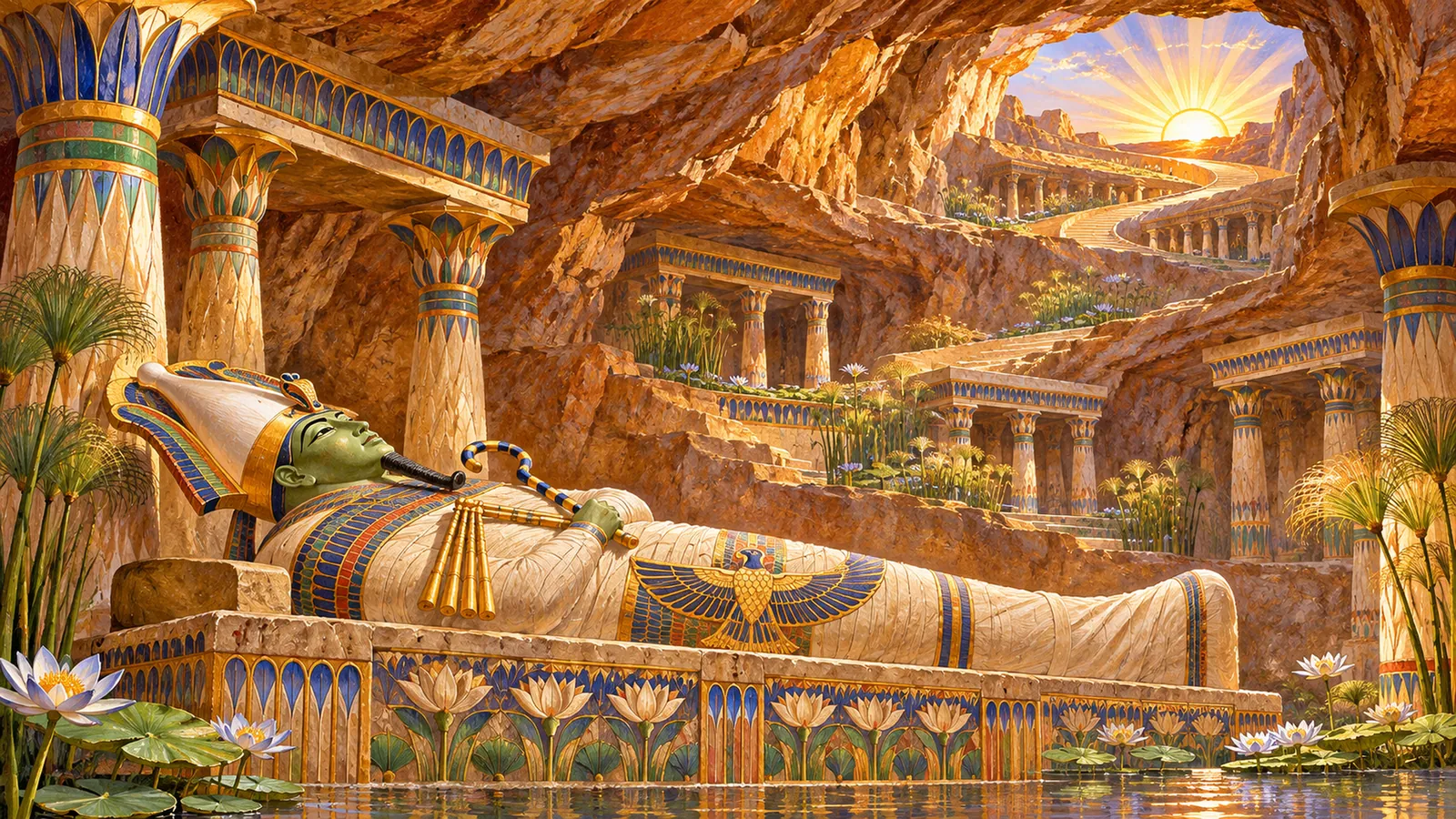
The final band still holds the body of Osiris. As the sun ascends, the ruler of the dead remains in his own country. The picture brings both fates together at dawn.
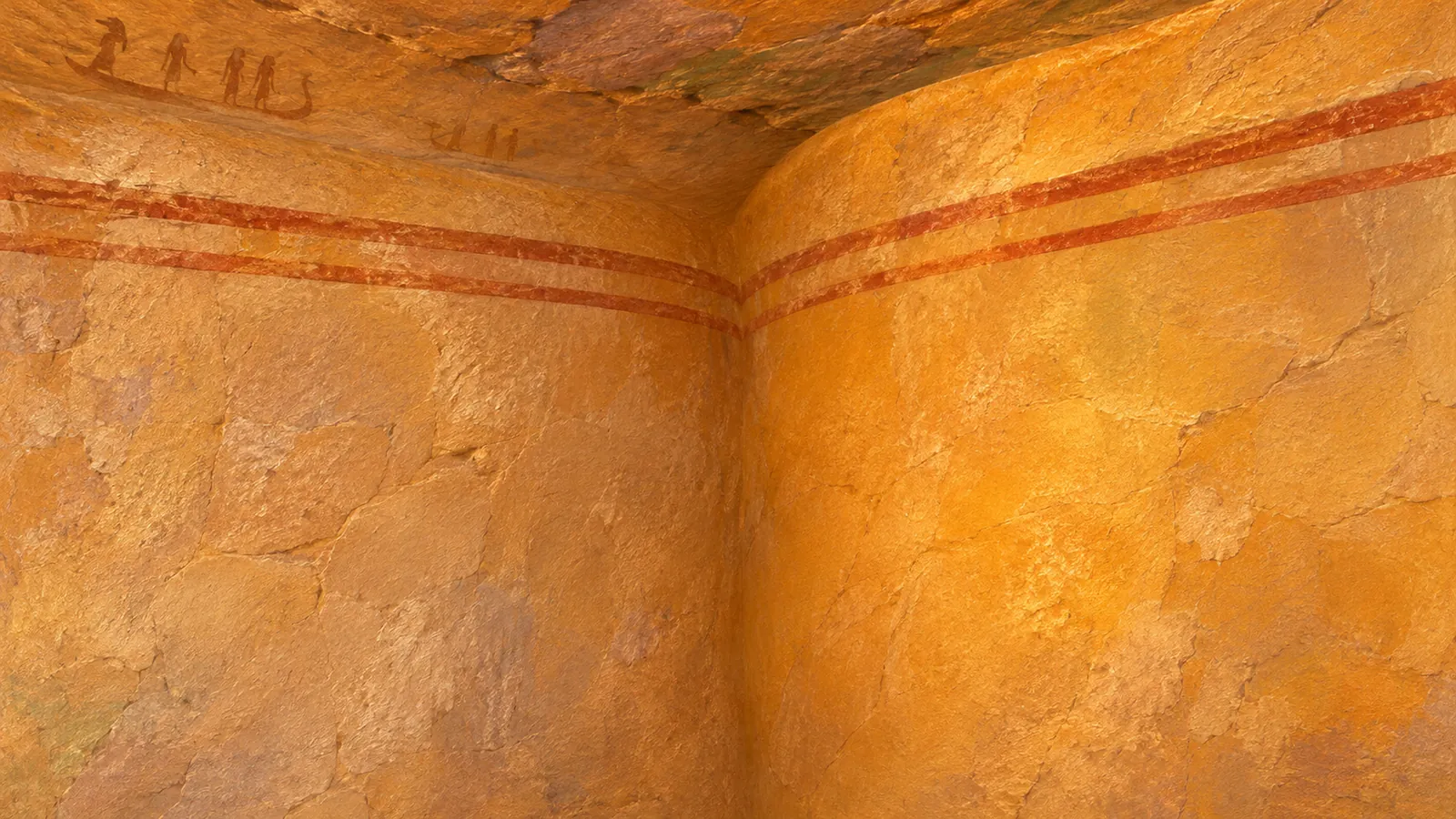
The arrangement of the twelve hours in Thutmose’s tomb brings the end back toward the beginning. The eastern horizon concludes a passage that will open again in the west at sunset.
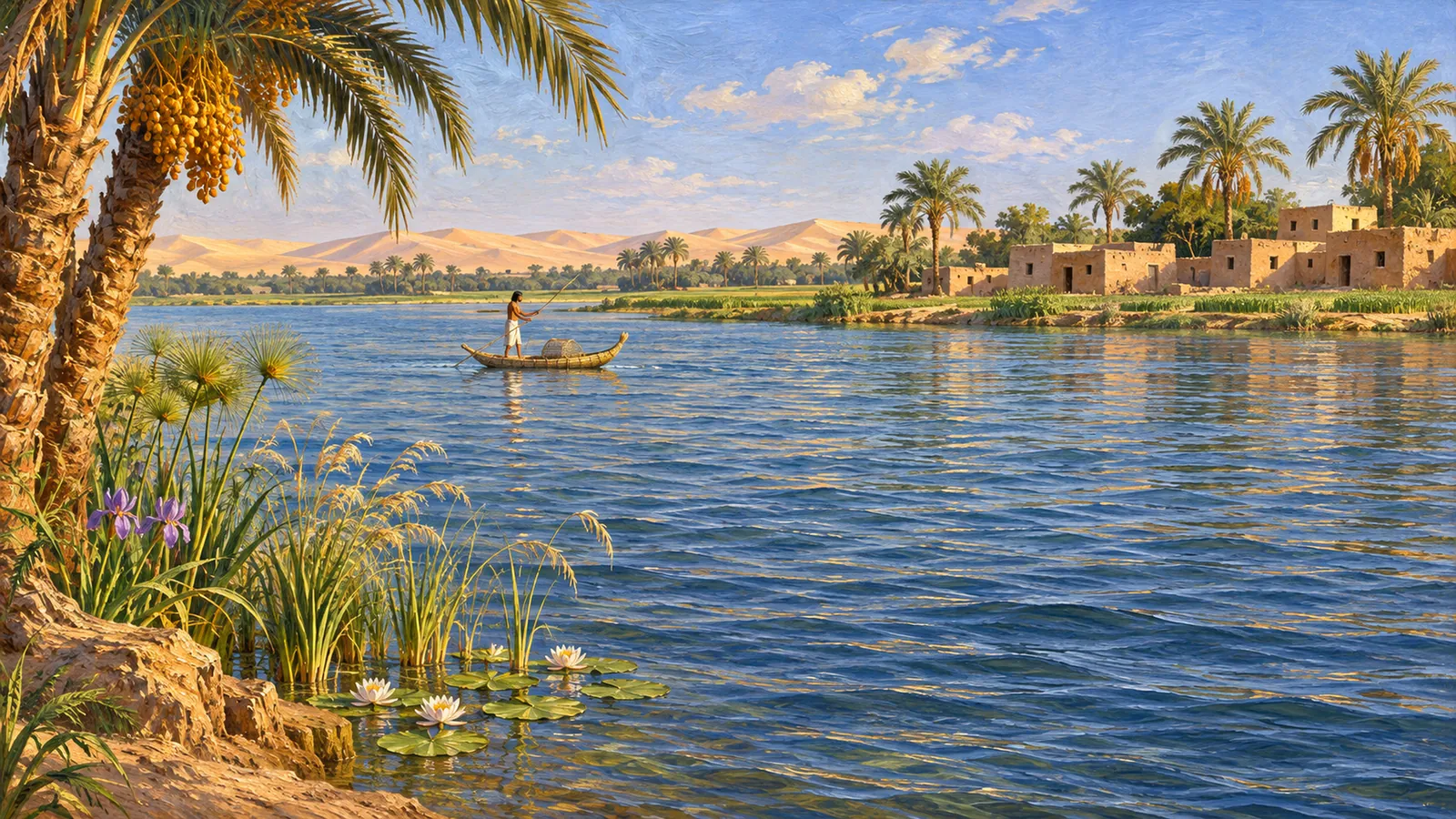
DAWN
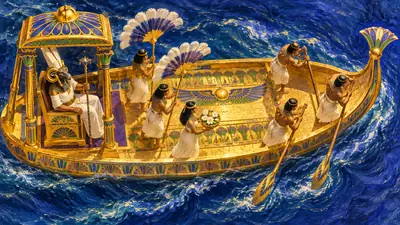
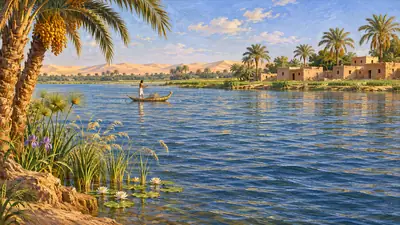
Morning comes to the Nile. A fishing boat goes out and work resumes at the water. Above them the sun rises, carrying the light that was made ready in the dark.
End of chapter 1
All pages
Sources
Editions consulted
- The Egyptian Amduat, English edition by Erik Hornung and Theodor Abt, translated by David Warburton
- Royal Collection Trust, Nesmin’s Amduat fragments, seventh hour
- Museo Egizio, Turin Cat. 1776, Amduat hours nine to twelve
- Bibliotheca Alexandrina Antiquities Museum, papyrus with hours nine to twelve
- The Egyptian Book of Gates, edition by Erik Hornung and Theodor Abt
- Thesaurus Linguae Aegyptiae, Book of Overthrowing Apophis, British Museum papyrus 10188
- Joshua Aaron Roberson, The Iconicity of the Vertical, including the disposition of the Amduat in royal tombs
- Royal Collection Trust, Nesmin’s Amduat, second hour
- Royal Collection Trust, Nesmin’s Amduat, third hour
- Royal Collection Trust, Nesmin’s Amduat, fourth hour
- Royal Collection Trust, Nesmin’s Amduat, fifth hour
- Royal Collection Trust, Nesmin’s Amduat, sixth hour
- Royal Collection Trust, Nesmin’s Amduat, eighth hour
- Museo Egizio, The Amduat Papyri in the Museo Egizio
Ancient lines behind each page
- Page 1: Amduat, Hours 1 and 12; imagined framing
- Page 2: ISAC, analysis of KV34 and layout
- Page 3: Book of Gates, Hornung and Abt
- Page 4: Amduat, Introduction
- Page 5: Amduat, Hour 1
- Page 6: Amduat, Hour 1
- Page 7: Amduat, Hour 1
- Page 8: Amduat, Hour 1
- Page 9: Amduat, Hour 1
- Page 10: Amduat, Hour 2
- Page 11: Amduat, Hour 2
- Page 12: Amduat, Hour 2
- Page 13: Amduat, Hour 2
- Page 14: Amduat, Hour 2
- Page 15: Amduat, Hour 2
- Page 16: Amduat, Hour 3
- Page 17: Amduat, Hour 3
- Page 18: Amduat, Hour 3
- Page 19: Amduat, Hour 3
- Page 20: Amduat, Hour 3
- Page 21: Amduat, Hour 3
Consult the linked original manuscript for its writing. - Page 22: Amduat, Hour 4
- Page 23: Amduat, Hour 4
- Page 24: Amduat, Hour 4
- Page 25: Amduat, Hour 4
- Page 26: Amduat, Hour 4
- Page 27: Amduat, Hour 5
- Page 28: Amduat, Hour 5
- Page 29: Amduat, Hour 5
- Page 30: Amduat, Hour 5
- Page 31: Amduat, Hour 5
- Page 32: Amduat, Hour 5
- Page 33: Amduat, Hour 5
- Page 34: Amduat, Hour 6
- Page 35: Amduat, Hour 6
- Page 36: Amduat, Hour 6
- Page 37: Amduat, Hour 6
- Page 38: Amduat, Hour 6
- Page 39: Amduat, Hour 6
- Page 40: Amduat, Hour 7
- Page 41: Amduat, Hour 7
- Page 42: Amduat, Hour 7
- Page 43: Amduat, Hour 7
- Page 44: Amduat, Hour 7
The identification of the magician as Set follows the Royal Collection Trust reading of Nesmin’s fragment. - Page 45: Amduat, Hour 7
The source describes the serpent being wounded. - Page 46: Amduat, Hour 7
- Page 47: Amduat, Hour 7
- Page 48: Bremner–Rhind Papyrus, BM 10188, TLA
Separate temple ritual text in BM 10188, columns 22–32. - Page 49: Amduat, Hour 8
- Page 50: Amduat, Hour 8
- Page 51: Amduat, Hour 8
- Page 52: Amduat, Hour 8
- Page 53: Amduat, Hour 8
- Page 54: Amduat, Hour 8
- Page 55: Amduat, Hour 9
- Page 56: Amduat, Hour 9
- Page 57: Amduat, Hour 9
- Page 58: Amduat, Hour 9
- Page 59: Amduat, Hour 9
- Page 60: Amduat, Hour 10
- Page 61: Amduat, Hour 10
- Page 62: Amduat, Hour 10
- Page 63: Amduat, Hour 10
- Page 64: Amduat, Hour 10
- Page 65: Amduat, Hour 10
- Page 66: Amduat, Hour 10
- Page 67: Amduat, Hour 11
- Page 68: Amduat, Hour 11
- Page 69: Amduat, Hour 11
- Page 70: Amduat, Hour 11
- Page 71: Amduat, Hour 11
- Page 72: Amduat, Hour 11
- Page 73: Amduat, Hour 12
- Page 74: Amduat, Hour 12
- Page 75: Amduat, Hour 12
- Page 76: Amduat, Hour 12
- Page 77: Amduat, Hour 12
- Page 78: Amduat, Hour 12
- Page 79: ISAC, analysis of KV34 and layout
- Page 80: Amduat, Hours 1 and 12; imagined framing
Illustrations made with AI tools by IL Archive; the text is based on the ancient sources (see the sources at the end of each chapter).