Site · Region
The Duat in Egyptian Funerary Texts
- Names
- Dat · Duat · Dwꜣt
- Region
- Egypt
The Duat was a realm of the dead and of the sun’s passage at night. Pyramid inscriptions, painted coffins and funerary papyri describe it in different ways.
Estimated reading time: 5 min Published Last reviewed:
Share article
Text
Introduction
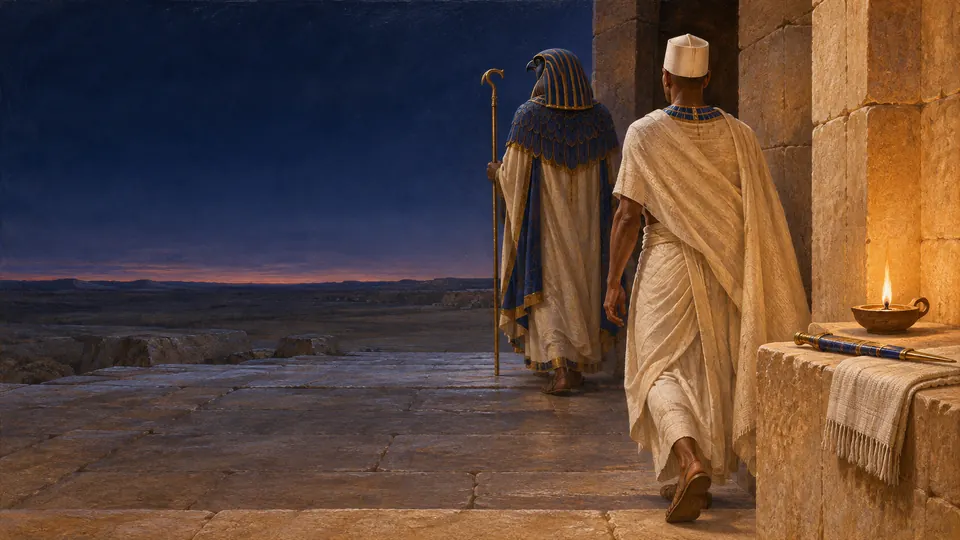
The Duat is a realm described in ancient Egyptian funerary texts. In the Pyramid Texts of King UnasUnasUnas was the last king of Egypt’s Fifth Dynasty, in the late third millennium BCEGlossary · Click to read the explanation, it can surround the king and the stars, and spells speak about his emergence from it. The later Amduat presents the night journey of ReRe, Egyptian sun godRe is the Egyptian sun god, associated with creation, life and renewal of cosmic orderGlossary · Click to read the explanation, the sun god, through twelve successive hours. In the depths of the night, Re meets OsirisOsirisOsiris was an ancient Egyptian deity associated with the dead, life after death, renewal, and kingship. His roles appear in changing funerary texts, rituals, and judgment scenes, notably the weighing of the heart.Glossary · Click to read the explanation, and the journey leads towards sunrise. In both settings, passing through the Duat is part of a process of renewal. [1][2][3]
The word covers different ideas of where the dead or the sun may go. Some passages associate it with stars and the horizon. Later texts and images can divide the realm into routes, gates or named stages. Egyptologist Silvia Zago traces changes in how writers described the Duat and even in the signs they used when spelling its name. The term makes the most sense when read in the context of the composition and object where it occurs. [2][4]
In the pyramid of Unas
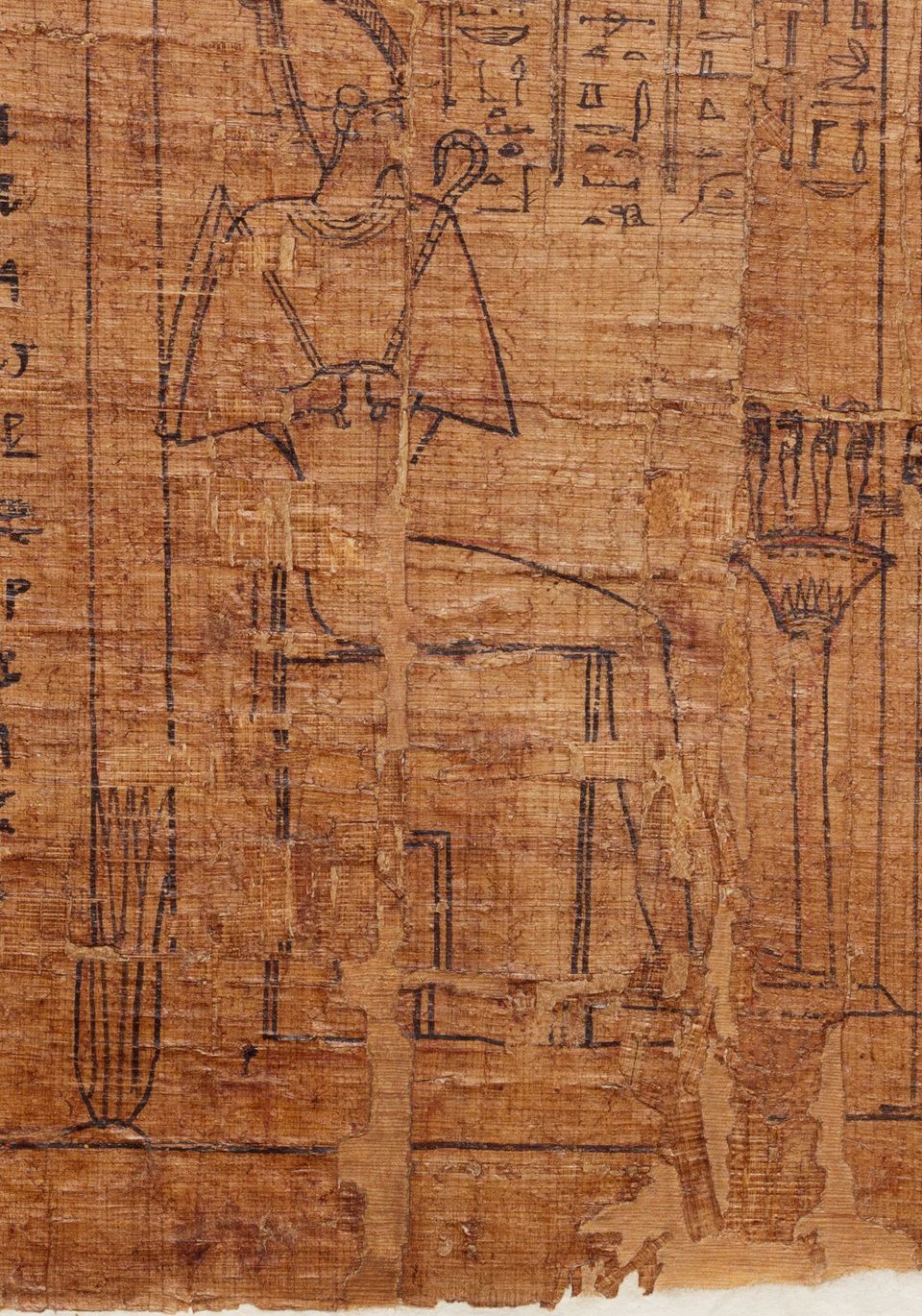
A recitation translated by James P. AllenJames P. AllenEgyptologist and Brown professor emeritus, studying ancient Egyptian language, literature and religion, including the Pyramid Texts.Glossary · Click to read the explanation places Unas in the company of Orion and Sothis, the star Sirius. It describes the Duat surrounding each in turn while another figure becomes clean in the Akhet. Allen calls this recitation a commendation to the Nightboat at dusk. The next recitation turns to the sun at dawn, addressing AtumAtumAtum is an Egyptian creator god associated with HeliopolisGlossary · Click to read the explanation and presenting Unas as an akh, an effective spirit. It speaks of rising from the Akhet, a term that Allen connects with the horizon and the process of becoming effective. The pair uses the night and the dawn to describe transitions the king is expected to undergo. [1]
Allen also reads the plan of the pyramid as part of the journey. A spell about emerging from the Duat opens the sequence in the antechamber, the room outside the burial chamber. In his interpretation, the following texts help the king move through the Akhet and then into the sky. Zago emphasises that the Pyramid Texts contain several overlapping ideas of the Duat, including associations with the stars. The architectural reading follows the placement of particular inscriptions at Unas’s tomb. The larger body of texts allows a wider range of associations. [1][2]
Routes painted on a coffin
Zago examines signs that scribes placed beside the word Duat to indicate its category. In one study, she counts a house-shaped sign in the great majority of instances on copies of the Coffin Texts. Such a sign can suggest a place or habitat. The regular use of this sign supports her reading that the otherworld took on a more defined character in this body of writing. There are other signs and combinations as well, and the context of a spell is still needed to understand what part of the otherworld it has in view. [2][4]
One group of Coffin Texts is known as the Book of Two Ways, a modern name for a composition in which two curving paths are drawn. The excavation team at Dayr al-Barsha reports an early Middle Kingdom witness on the base of a coffin belonging to a woman named Ankh, dating to about 2040 BCE. The painted and written material includes more than routes. It can show gates, beings and boats. The excavators describe two approaches to its purpose. One understands the composition as guidance for the person buried in the coffin. The other sees an association with knowledge and practices used by priests, including rites connected with Osiris. Some parts of the writing remain difficult to interpret. [4][5]
The sun’s night journey
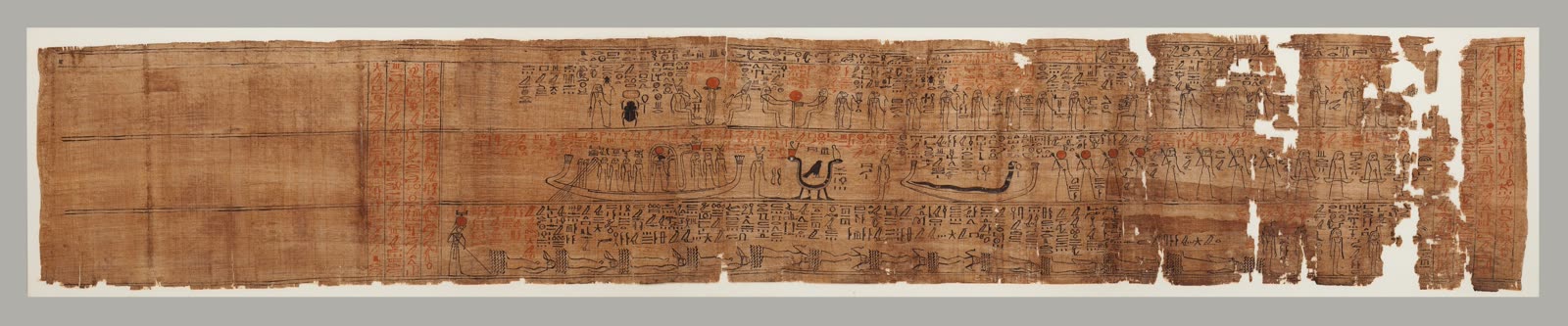
The Amduat gives the night a sequence of twelve hours. It appeared on the walls of New Kingdom royal tombs and was also copied on papyrus. One later example belonged to Henettawy, who was buried at Deir el-Bahri. The Metropolitan Museum of Art dates her papyrus to about 990–970 BCE. It was rolled and placed between the legs of her mummy. The museum identifies its illustration as the tenth hour, when beings in the Duat begin preparing for sunrise. It suggests that the blank area at the left may have been left for one or more additional hours. [3]
The Book of Gates also divides the passage of the night into stages. A copy was carved inside and outside the calcite sarcophagus of Seti I, now in Sir John Soane’s Museum. Its inscriptions and scenes were placed around the buried king. The museum’s description links the passage through the gates with the successive hours of the night. Henettawy’s papyrus and Seti’s sarcophagus both give the solar journey a place close to the deceased, using different compositions and different surfaces. [3][6]
At the head of Seti’s sarcophagus, in the scene of the twelfth hour, the museum identifies Nun rising from the primeval waters and lifting the sun’s boat. Nut receives the sun as he emerges. A figure of Nut also appears on the bottom of the sarcophagus. The figure’s position and the scene of emergence give the sky goddess a place in the route depicted on the object. [6]
The early recitations can describe a king emerging into the light. The coffin texts can describe paths and rites associated with Osiris. The illustrated night books show stages of the sun’s route and the beings encountered there. The Duat gives these compositions a shared setting for change, while each makes different aspects of that setting visible. [1][2][3][5][6]
References and notes (6)
- James P. Allen, The Ancient Egyptian Pyramid Texts, second edition Read the introduction on Duat and Akhet, the layout and recitations of Unis’s pyramid, and recitations PT 216, 217 and the description of PT 247. Return to the text ↑
- Silvia Zago, Classifying the Duat: Tracing the Conceptualization of the Afterlife between Pyramid Texts and Coffin Texts Read the discussion of the Pyramid and Coffin Text spellings and the conclusion on celestial and other settings and changing ideas of the Duat. Return to the text ↑
- Metropolitan Museum of Art, Amduat Papyrus of Henettawy, 25.3.28 Read the museum’s account of the solar journey and tenth hour, the left-hand blank, date, findspot and placement of the papyrus. Return to the text ↑
- Silvia Zago, Imagining the Beyond: The Conceptualization of Duat between the Old and the Middle Kingdoms Read the analysis of the change in writing, including note 81 on the house sign, and the discussion of the Book of Two Ways and the otherworld as a habitat. Return to the text ↑
- KU Leuven, Egyptologists from KU Leuven Discover an Early Book of Two Ways Read the excavation team’s account of the coffin of Ankh, its date and surviving decoration, and the interpretations of the composition’s use. Return to the text ↑
- Sir John Soane’s Museum, Sarcophagus of Pharaoh Seti I, M470 Read the curatorial description of the material, the placement of the inscriptions and the account of the division of the night in the Book of Gates. Read the twelfth-hour scene and the identification of Nut on the bottom of the sarcophagus. Return to the text ↑
Suggest a correction · Suggest a source for this record
Cite this record
IL Archive, «The Duat in Egyptian Funerary Texts», https://ilarchive.com/en/sites/duat
Continue reading
Related readings