Artifact
Sargon birth tablet K.3401
An object record bringing together its image, metadata, rights, and context.
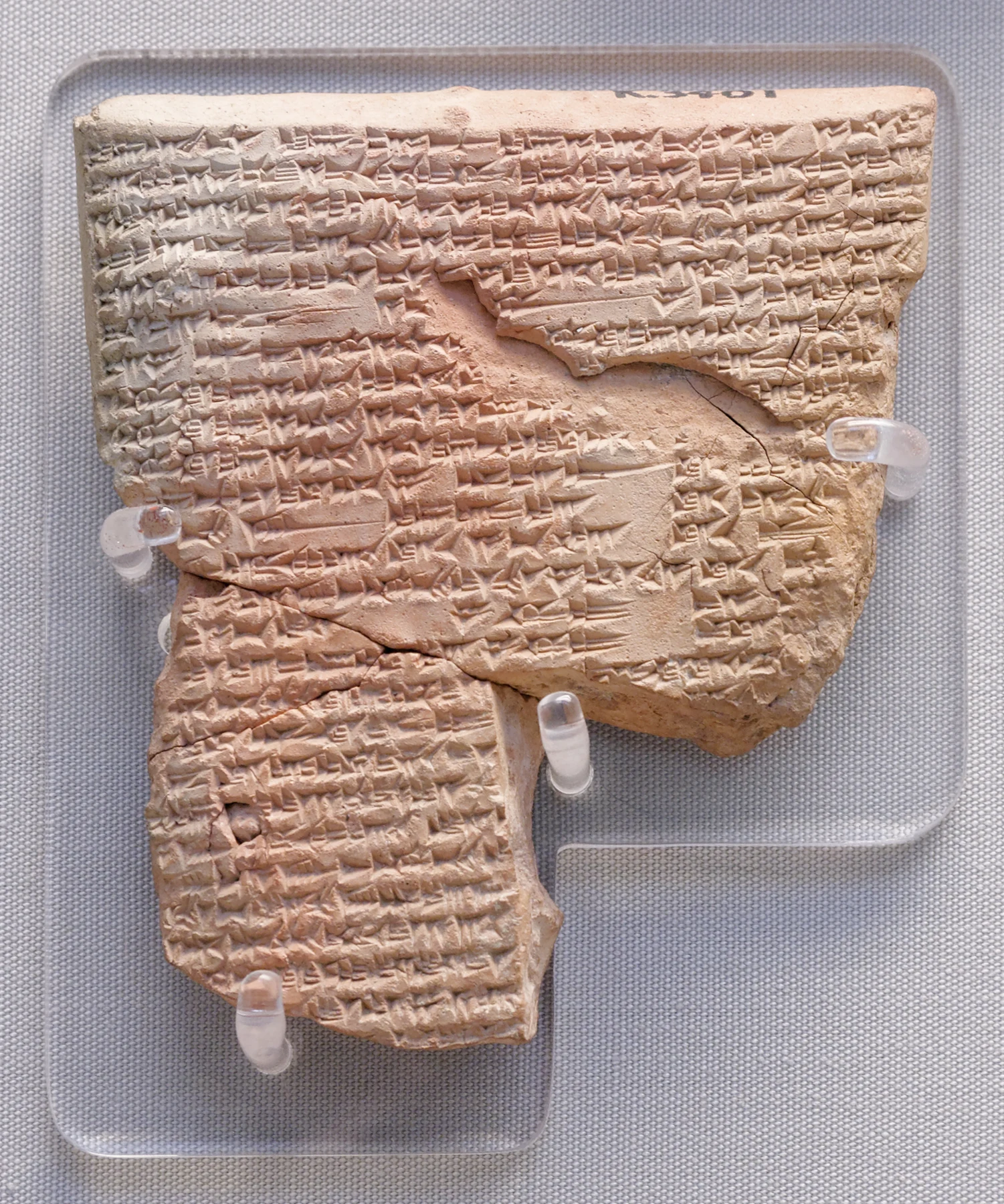
Akkadian clay tablet from Nineveh preserving Sargon’s birth story in the Neo-Assyrian period, many centuries after the king’s lifetime.
Original photograph
CC BY · © Marie-Lan Nguyen / Wikimedia Commons / CC BY 2.5
K.3401 from Nineveh, a Neo-Assyrian witness to Sargon’s birth legend, British Museum. A copy later than the king, not Moses’ basket or an image of the infant. © Marie-Lan Nguyen / Wikimedia Commons / CC BY 2.5
License · Image sourceObject details
- Title
- Sargon birth tablet K.3401
- Rights
- CC BY
Metadata
These are descriptive fields, not conclusions.
- Edition
- 4
Text
A clay tablet from NinevehNineveh and KuyunjikNineveh is an ancient Assyrian city near Mosul in northern Iraq; Kuyunjik is one of its archaeological moundsGlossary · Click to read the explanation, written in AkkadianAkkadianAn ancient East Semitic language written in cuneiform in Mesopotamia.Glossary · Click to read the explanation, preserving an account of the birth of Sargon of AkkadSargon of AkkadThird-millennium BCE king associated with later birth and ascent traditions.Glossary · Click to read the explanation, a king who ruled in the third millennium BCE. The tablet belongs to the Neo-Assyrian period (about 911–612 BCE), separating this copy’s date from the lifetime of the person it describes. [3][4]
The CuneiformCuneiformWriting with wedge-shaped signs, developed from Mesopotamian recording traditions and used for several languages from the third millennium BCE.Glossary · Click to read the explanation Digital Library Initiative records it as P365306, with the identity K.3401 + Sm.2118; it is held in the British Museum. These identifiers trace the object and its parts in catalogues and help locate the written witness used to read the story. [3]
Marie-Lan Nguyen’s photograph shows the actual tablet and is used under CC BY 2.5. It depicts a written witness; its relationship to stories of infants in baskets is studied by comparing the texts.
References and notes
- Artifact, language, period and findspot metadata consulted. These describe a surviving witness, not a certain original composition date. The direct Museum page was inaccessible and is not claimed as read. CDLI P365306; K.3401 + Sm.2118; CT 13, pl. 42 Return to the text ↑
- British Museum — Sargon I Royal metadata:2334–2279BCE in the museum chronology; this definition uses only the third millennium. Return to the text ↑
Research history
Substantive changes are retained here. Minor copy edits remain in the internal operational log.
-
Substantive record update
-
Substantive record update
-
Substantive record update
Archive records may be reviewed and refined as better evidence or sources become available. Suggest a correction
Suggest a correction · Suggest a source for this record
Cite this record
IL Archive, «Sargon birth tablet K.3401», Edition 4, https://ilarchive.com/en/artifacts/sargon-birth-tablet-k3401