Entity · Book
Atrahasis: Epic and Hero
A reference page linking a name, group, or concept to the materials that discuss it.
Akkadian epic: humans created for divine labor, multiplication, noise and flood. Atrahasis, “exceedingly wise,” survives through Enki’s warning; human reproduction is regulated afterward.
Text
More than a flood
Human multiplication and noise prompt EnlilEnlilProminent Mesopotamian god associated with Nippur and Ekur, highly ranked in Early Dynastic texts before the earliest known Anunna attestation.Glossary · Click to read the explanation’s plague, drought, famine and flood. EnkiEnkiMesopotamian deity associated with deep fresh water, wisdom and Eridu, known as Ea in Akkadian tradition. The earliest preserved written mention does not date his cult’s origin or identify Ubaid Eridu’s deity.Glossary · Click to read the explanation preserves the hero; reproduction limits follow. This ending should not be confused with UtnapishtimUtnapishtimGilgamesh’s flood hero narrates survival to a king seeking immortality. Ea warns him; life is preserved; hero and wife receive exceptional life. Literary character, not an archaeologically established person.Glossary · Click to read the explanation’s immortality.[1]
Copies and image
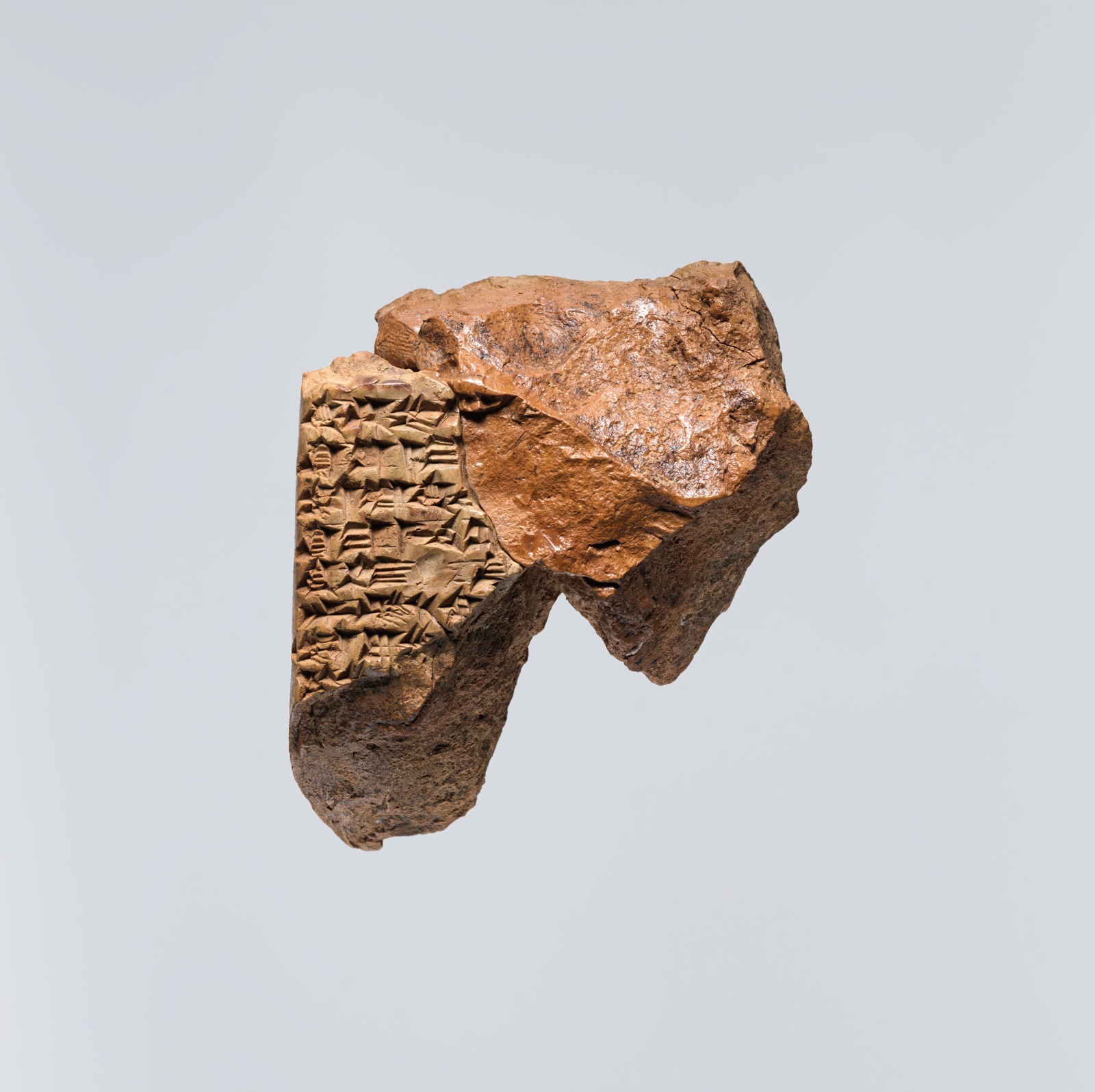
Old Babylonian witnesses include P285811.[2] The cover is Met 86.11.378a, c.seventh–sixth centuries BCE, a later fragment naming Utnapishtim on its reverse. It illustrates a varied tradition, not the Old Babylonian manuscript itself.[3]
References and notes
- John Day, The Mesopotamian Origin of the Biblical Flood Story, 2020. Author’s article read: argument for Atrahasis, weighing parallels and theological transformation. Birds hypothesized in an Atrahasis lacuna are not preserved evidence; route remains uncertain. Return to the text ↑
- CDLI, P285811, Old Babylonian Atrahasis witness. Artifact metadata: Old Babylonian c.1900–1600 BCE; reference to Ammi-saduqa year 12. Period range does not date all epic copies. Return to the text ↑
- The Met, 86.11.378a, Atrahasis-tradition fragment. Catalogue, obverse/reverse description and Open Access image metadata: c.seventh–sixth centuries BCE. Reverse names Utnapishtim; not an Old Babylonian copy. Return to the text ↑
Research history
Substantive changes are retained here. Minor copy edits remain in the internal operational log.
-
Substantive record update
Suggest a correction · Suggest a source for this record
Cite this record
IL Archive, «Atrahasis: Epic and Hero», Edition 2, https://ilarchive.com/en/entities/atrahasis