Entity
Sabbath, the weekly rest day
A reference page linking a name, group, or concept to the materials that discuss it.
Sacred seventh day in Jewish traditions, linked by commandments to household rest, creation and liberation.
Text
Sabbath is the sacred seventh day in Jewish traditions. The commandments in ExodusBook of ExodusTorah book recounting Israel’s departure from Egypt and containing different formulations of seventh-day rest.Glossary · Click to read the explanation and DeuteronomyBook of DeuteronomyTorah book presenting commandments in Moses’ discourse and grounding Sabbath rest in slavery and liberation from Egypt.Glossary · Click to read the explanation extend cessation to household, servants, animals and resident alienGēr: the Resident Outsider in Hebrew TextsA person living within an Israelite community; neither every foreigner nor a modern legal refugee category.Glossary · Click to read the explanation; the former invokes creation, the latter enslavement and liberation. [1][2]
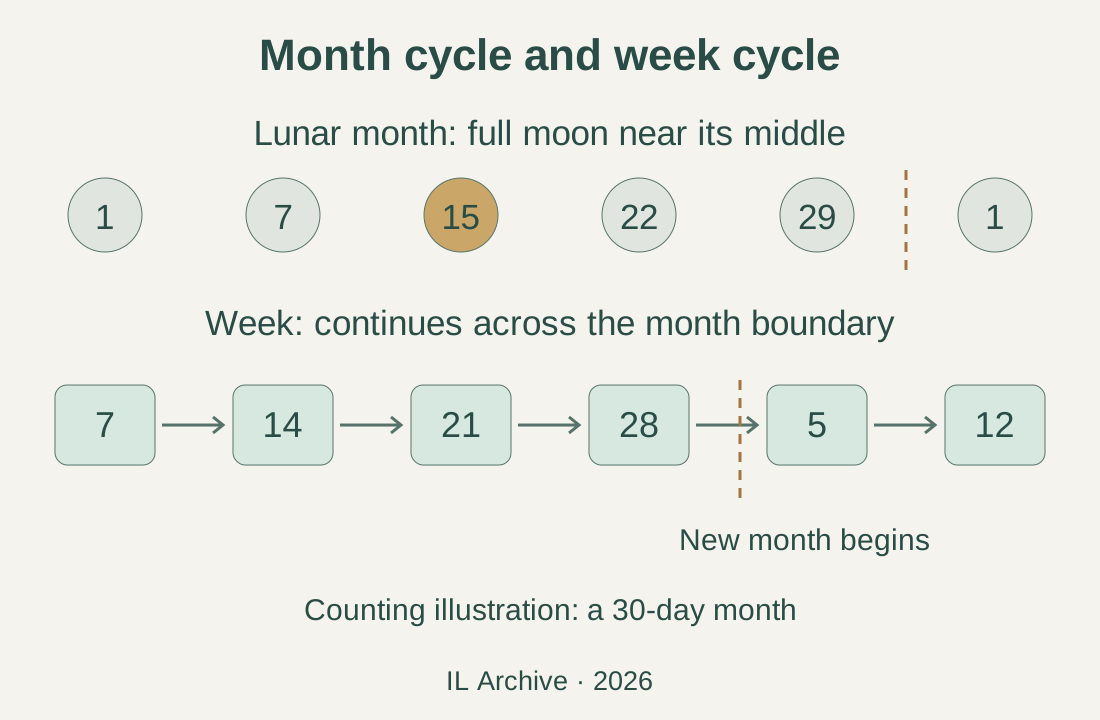
Sabbath recurs in a seven-day cycle independent of the month’s beginning. Its formation and possible relationship to AkkadianAkkadianAn ancient East Semitic language written in cuneiform in Mesopotamia.Glossary · Click to read the explanation šapattuAkkadian ŠapattuAn Akkadian term usually connected with the fifteenth day or a half-month, not an attested name for a weekly general rest day.Glossary · Click to read the explanation remain linguistic and historical questions. [3]
References and notes
- Exodus 20:8–11 in common numbering corresponds to 20:7–10 on this page; Hebrew and JPS 1917, Sabbath and creation rationale. Exodus 20:8–11 in common numbering corresponds to 20:7–10 on this page; Hebrew and JPS 1917, Sabbath and creation rationale. Return to the text ↑
- Deuteronomy 5:12–15 in common numbering corresponds to 5:11–14 on this page; Hebrew and JPS 1917, dependants’ rest and liberation memory. Deuteronomy 5:12–15 in common numbering corresponds to 5:11–14 on this page; Hebrew and JPS 1917, dependants’ rest and liberation memory. Return to the text ↑
- Ottilia Lukács, Sabbath in the Making, 2020, pp. 6–12, PDF pages 15–21: survey and conclusion, not the entire book. Ottilia Lukács, Sabbath in the Making, 2020, pp. 6–12, PDF pages 15–21: survey and conclusion, not the entire book. Return to the text ↑
Research history
Substantive changes are retained here. Minor copy edits remain in the internal operational log.
-
Substantive record update
-
Substantive record update
Suggest a correction · Suggest a source for this record
Cite this record
IL Archive, «Sabbath, the weekly rest day», Edition 3, https://ilarchive.com/en/entities/sabbath-weekly-rest