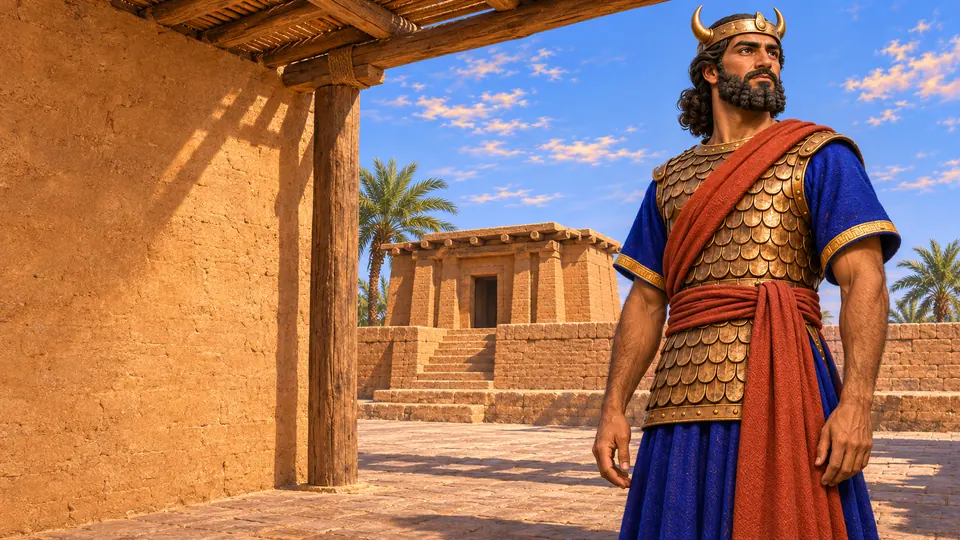
Entity · Figure
Asag, the Mountain Adversary of Ninurta
A reference page linking a name, group, or concept to the materials that discuss it.
- Names
- Asag · Asakku
- Region
- Mesopotamia
Asag is a mountain adversary in the Mesopotamian poem Lugale. He challenges Ninurta with an army of stones. After his defeat, the god names the stones and redirects the waters.
Estimated reading time: 5 min Published Last reviewed:
Share article
Text
Introduction
Asag, called Asakku in AkkadianAkkadianAn ancient East Semitic language written in cuneiform from the third millennium BCE; its varieties include Babylonian and Assyrian, and it served in international diplomacy.Glossary · Click to read the explanation, is the mountain adversary in the Sumerian poem known as Lugale or The Exploits of Ninurta. The story makes him a challenger with a throne, a following and armed support from the stones of the mountains. His appearance draws Ninurta into a struggle that reaches beyond the battlefield. After the victory, the god determines the uses of stones and arranges for water to reach the fields. [1][2]
The poem preserves several kinds of action around Asag. Ninurta hears a description of his rival from his speaking weapon, Sharur. He confronts him in the mountains. After his death, his body and the stones that supported him receive new names or roles. The poem moves from the report of a rival power to the use of earth, water and stone in the country the gods rule. [1]
The challenger in the mountains
The opening places Ninurta on his throne at a festival. Sharur sees trouble in the mountains and begins to speak. It describes Asag as an extraordinary child brought forth after Heaven joined with Earth. He has the strength of a warrior and grows in power. Sharur gives the threat political as well as physical form. Asag has set up a throne dais, hears lawsuits and receives offerings. Local gods are described as bowing before him. His authority grows while Ninurta is still hearing the report. [1]
His followers include named stones, among them stones read by the Oxford edition as diorite and haematite. They are called warriors and are said to raid cities. Later in the poem, these names acquire importance again when Ninurta speaks directly to the individual stones. What begins as an account of a rival army becomes part of the poem’s explanation for the value and treatment of particular materials. [1]
A battle described through the land
Sharur warns Ninurta about the danger and describes Asag through a succession of images. He is likened to a whirlwind, a lion and a snake. In the combat the disturbance reaches the landscape. Water dries up, trees are dragged away and reed-beds burn. The poem lets the storm and its damage convey the scale of Asag’s presence. The injuries to the earth make the effects of the struggle visible at the level of fields and waterways. [1]
Other passages show Sharur travelling between Ninurta and his father EnlilEnlilEnlil/Ellil: a major Mesopotamian god associated with destinies, kingship, and Ekur at Nippur, already prominent in third-millennium god lists. His name’s origin and cult beginnings remain debated.Glossary · Click to read the explanation at Nippur. The weapon brings encouragement from Enlil and continues to speak to Ninurta near the fighting. After the defeat, the poem compares the fallen enemy to a ship wrecked by a wave and has Sharur praise its master. A clay fragment now in the Metropolitan Museum of Art preserves part of this speech. Stefan Maul identifies the surviving line and considers that the fragment may come from a school copy or a commentary. [1][3][4]
Water and the fates of stones
Ninurta orders that Asag be called Stone. The poem then describes a land where water has yet to reach the fields properly. The Tigris fails to bring a full flood and people face hunger. Ninurta piles stones into a barrier, gathers waters scattered in the mountains and directs them into the Tigris. Fields receive water and the harvest improves. The transition makes the work of restoring the country one of the consequences of victory. [1]
Ninurta also determines the fates of stones individually. The verdict can depend on what a stone did during the conflict. In the Oxford edition, the stone identified as diorite is described as having held back from the attack and praised Ninurta. It is assigned work that fits the god’s purposes. The stone understood as emery is rebuked for rising against him and blocking his way. Its verdict assigns it a different fate. The different addresses make the campaign an account of how materials acquired particular properties and uses. [1]
The pile of stones is also given a place in the divine landscape. NinmahNinmahSumerian mother goddess who assists human creation and contests Enki over the fates of different fashioned bodies; later Babylonian inscriptions also attest her worship.Glossary · Click to read the explanation comes to Ninurta in the mountains and sings to him. He declares that the pile will be called Mountain and that she will be known as its lady, Ninhursag. His speech describes herbs in its meadows and honey and wine from its slopes. The scene gives the former place of conflict a new name and a list of things that can grow or be gathered there. [1]
Where the poem was read
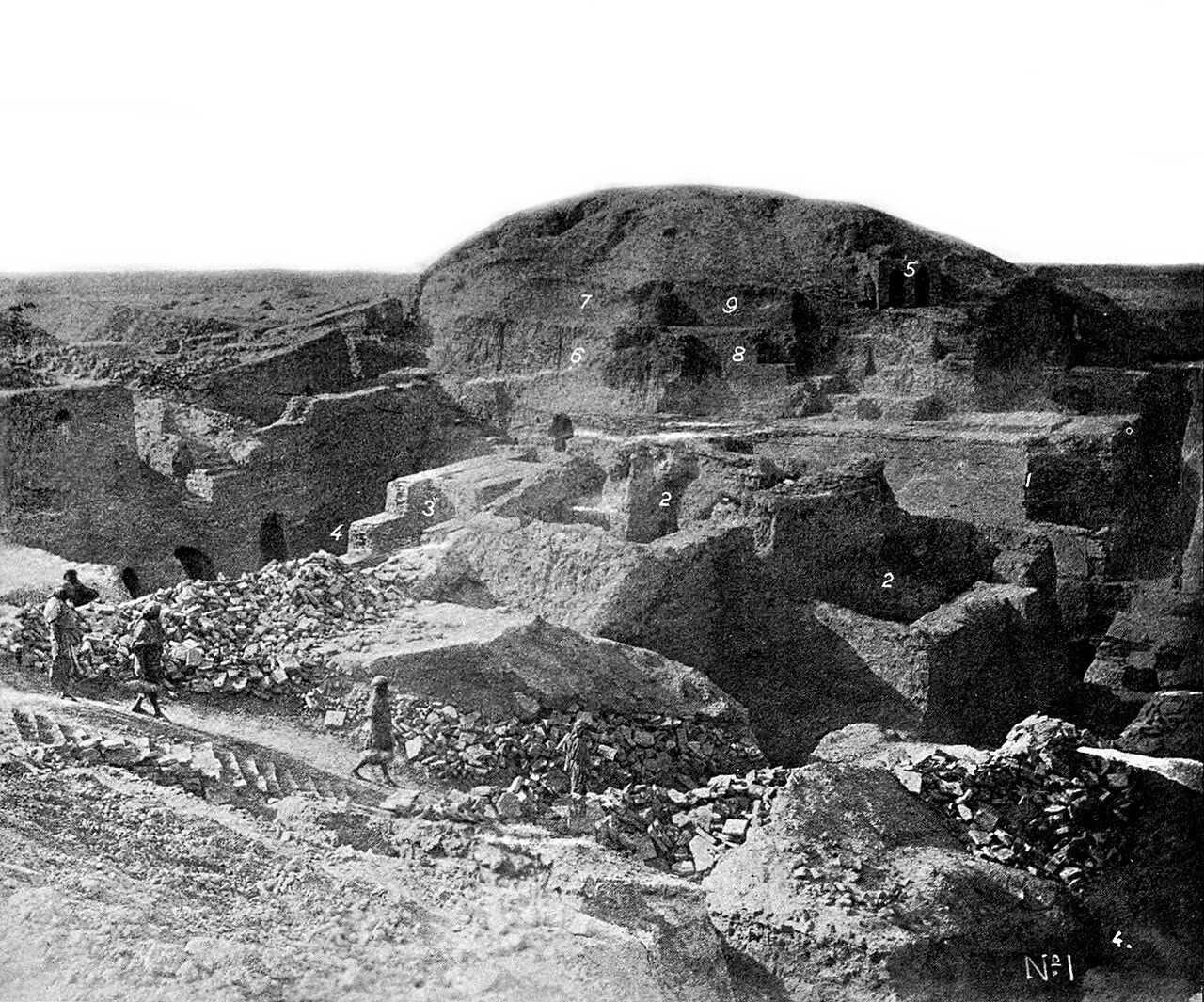
One Sumerian witness to The Exploits of Ninurta was recovered at Nippur. The Penn Museum identifies its tablet N3674 and records its join with a piece in Istanbul. Nippur was the cult centre of Enlil. The poem makes it the place to which Sharur travels to speak with Enlil during the confrontation. The excavation photograph shows the site of Enlil’s temple in the city where a witness to the story was recovered. [1][5][6]
Four other witnesses, issued with Sumerian and Akkadian text, were excavated in the temple library at Sippar. Three of their surviving ownership notes name Nabû-etir-napshati. The Sippar tablets and the Nippur find show some of the places where later readers and scribes had access to the poem. The character they encountered led an army of stone and spread disorder through the land. The text makes the treatment of stone and the return of usable water part of what happens once that challenge ends. [1][5][7]
References and notes (7)
- Electronic Text Corpus of Sumerian Literature, The Exploits of Ninurta Read the opening speeches at lines 17–69, the battle and exchanges with Sharur at lines 168–330, and the redirection of waters and judgments on stones at lines 331–478. Return to the text ↑
- Nili Wazana, Anzu and Ziz: Great Mythical Birds in Ancient Near Eastern, Biblical, and Rabbinic Traditions Read note 17 on the Sumerian and Akkadian names of the mountain adversary and the stone warriors in Lugale. Return to the text ↑
- Stefan M. Maul, Fragment of Lugal-e Read the identification and edition of Metropolitan Museum 86.11.459, the attribution to Sharur’s speech and the discussion of possible tablet types. Return to the text ↑
- Metropolitan Museum of Art, Cuneiform Tablet: Fragment of Lugal-e, Tablet 7 Read the collection entry for the fragment and confirmed the object number and its material. Return to the text ↑
- Penn Museum, Tablet N3674 Read the object’s Nippur provenance, the identification as Ninurta’s Exploits and the note on its join with the Istanbul fragment. Return to the text ↑
- University of Chicago Institute for the Study of Ancient Cultures, Nippur Expedition Read the account of Nippur as Enlil’s sacred centre and the excavation and publication references for the Temple of Enlil. Return to the text ↑
- F. N. H. Al-Rawi, Tablets from the Sippar Library IV. Lugale Read the excavation publication’s account of the four bilingual tablets, their ancient location and the colophons, with reference to Andrew George’s commentary. Return to the text ↑
Suggest a correction · Suggest a source for this record
Cite this record
IL Archive, «Asag, the Mountain Adversary of Ninurta», https://ilarchive.com/en/entities/asag
Continue reading
Related readings