Person
Pughat
- Names
- Paghit · Pugatu · Pughat · Puġatu
- Region
- Ugarit (Ras Shamra), Syrian coast
Danel’s daughter and Aqhat’s sister in the Ugaritic Tale of Aqhat. The last surviving tablet follows her from the signs of drought and her brother’s mourning to a tense encounter with Yatpanu.
Estimated reading time: 5 min Published Last reviewed:
Share article
Text
Introduction
Pughat is Danel’s daughter and Aqhat’s sister in a Late Bronze AgeLate Bronze AgeAn archaeological period around 1600–1200 BCE in much of the Near East, with international diplomacy, exchange and religious diversity; its endpoints vary by region.Glossary · Click to read the explanation poem from UgaritUgaritAncient city and kingdom at Ras Shamra on the Syrian coast, flourishing between the fourteenth and early twelfth centuries BCE and preserving multilingual archives.Glossary · Click to read the explanation. Her brother’s death shifts the story toward her household, its grief, and its response. She recognizes signs of distress in the crops, helps her father, and secures his blessing for a confrontation with the man implicated in the killing. The tablet leaves that encounter unfinished. [1] [2]
The clay witness
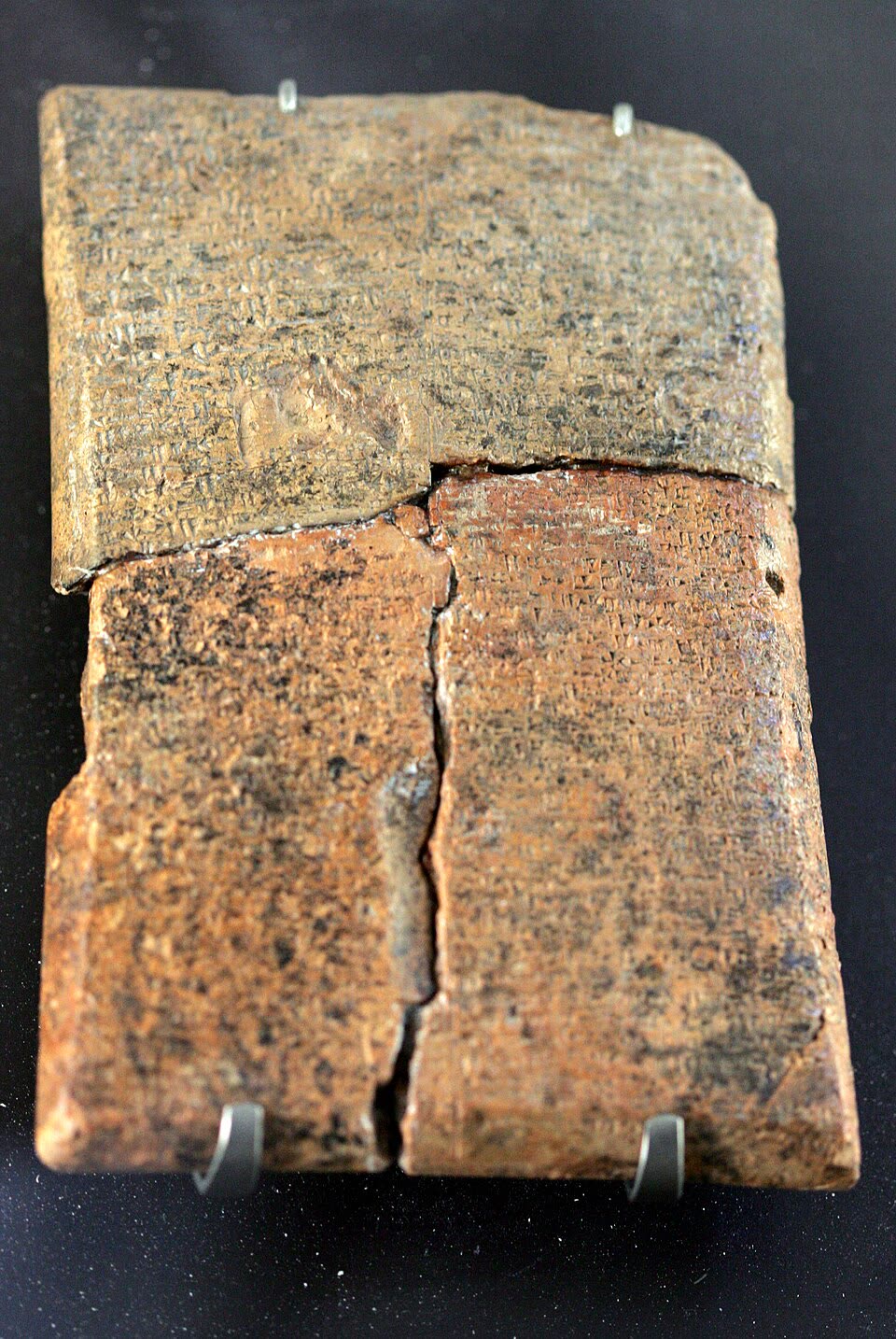
Three tablets preserve the Tale of Aqhat. Their standard references are KTU 1.17, 1.18, and 1.19. Pughat’s principal scenes are in KTU 1.19, the third tablet in narrative order. The Louvre identifies that object as AO 17323 and dates it broadly to 1400–1200 BCE. Its catalogue records that two of the fragments came from room 7 of the building known as the House of the High Priest on the acropolis at Ras Shamra. The archaeological date concerns the surviving written witness, while the dates of the events inhabited by the characters belong to the world of the poem. [1] [3] [4]
Photographs show the breaks in the tablet, which consists of joined pieces. Readers may encounter different tablet numbers in older editions. Baruch Margalit explains that the early publication order followed the relative size of the surviving tablets and that a later study established their narrative sequence. The old numbering can therefore place the object now called KTU 1.19 first. The Louvre also retains the excavation numbers for its separate pieces. Those references allow readers to identify the same artifacts across editions and museum records. [3] [4] [5]
The daughter who sees the fields
The poem begins with Danel seeking an heir. Baal appeals to El for him, naming duties a son will perform, and Aqhat is born after the divine answer to the petition. The adult or maturing Aqhat receives an exceptional bow made by Kothar-wa-Hasis. AnatAnatAnat is an ancient Near Eastern goddess attested at Mari, Ugarit and in Egypt. In Ugaritic narratives she is a warrior, Baal’s ally and a mourner for him; her roles vary by tradition and context.Glossary · Click to read the explanation desires it, and the encounter ends in Aqhat’s death through Yatpanu’s involvement. The third tablet places the death beside images of failing crops. Its opening column describes the withering of summer produce, then shows Pughat raising her eyes and seeing distress on the threshing floor and among new growth. [1] [2]
The text gives Pughat an unusually long description. It associates her with carrying water, collecting dew, and knowing the course of the stars. The dew phrase receives different renderings, including a version involving fleece and one involving her hair. Water and the night sky give the audience a way of recognizing her when the story turns to the drought. Her observation also gives the failing harvest a human witness. The seasonal imagery passes from the narrator’s account of Aqhat’s death into the experience of a member of his family. [1] [2]
Pughat brings the donkey and helps Danel mount in a passage marked by repeated weeping. The repetition keeps her work within the household’s mourning. Danel eventually finds remains attributed to Aqhat and buries him. The story also describes mourners assembling and counts the passage of days, months, and years. Stephanie Lynn Budin reads the seven-year mourning period alongside the seven-day visit of the birth goddesses early in the poem. Both groups enter Danel’s household at moments when the fate of his child defines the life of the family. [1] [2]
A blessing and a banquet
The final column places Pughat beside Danel again as he dismisses the mourners and makes an offering to the gods. Pughat recalls his ritualRitualAn organised or distinguished practice meaningful to a community; it may leave traces, but its form alone does not reveal an associated doctrine.Glossary · Click to read the explanation before asking him to bless and empower her for what she proposes to do. In Shirly Natan-Yulzary’s reading, the wording of her request links the action she seeks to the harm done to her brother. Danel answers her, so the poem places her initiative and his authorization in the same scene. [1] [2]
What follows concentrates on dress, appearance, and recognition. Pughat prepares with cosmetics and garments that the translations associate with both a hero and a woman. Budin reads the combination in light of the opening list of a son’s obligations. The daughter takes on duties that the narrative had initially imagined for the hoped-for son. This argument concerns the structure of the poem and the transfer of responsibilities inside Danel’s family. The character’s appearance also matters to the suspense, since the audience knows the purpose with which she approaches Yatpanu. [1] [2]
The final surviving scene takes place at a banquet in Yatpanu’s camp. In Natan-Yulzary’s translation the report of Pughat’s arrival describes a hired woman, and broken or restored wording affects how the scene is reconstructed. Yatpanu calls for wine and boasts of the deed that killed Aqhat. Pughat hears the boast, and the closing lines compare the movement of her heart to a snake before returning to the service of wine. Natan-Yulzary sets this beside the earlier comparison of Anat’s eyes to a serpent when she sees the bow. The two passages use related imagery at moments when a desire takes hold of a character. [2]
The surviving traces carry the reader into the encounter and leave the result open. An ending in which Pughat exacts vengeance is a scholarly reconstruction, supported by her request and by the narrative echoes, while proposals for a further restoration of Danel’s family go beyond those traces. Her place in the surviving poem rests on actions that can be read directly. She sees the effects of loss, supports her father, speaks for her brother, and brings the unfinished narrative to the camp. [1] [2]
References and notes (5)
- Stephanie Lynn Budin, Gender in the Tale of Aqhat, Eisenbrauns pp. 51–53 and 65–68, narrative outline, seven-year mourning, and Pughat’s actions, epithets, and clothing Return to the text ↑
- Shirly Natan-Yulzary, Measure for Measure in the Aqhat Epic, Religions §§5.1–5.4 and discussion of KTU 1.19 i 17–31, with transliterations, translations, and proposals for the ending Return to the text ↑
- Musée du Louvre, Tablet AO 17323 Physical characteristics, discovery context, Bronze récent II date, fragment numbers, and KTU reference Return to the text ↑
- University of Göttingen, Edition des ugaritischen poetischen Textkorpus, Texte, Tafeln, Forschung Catalogue entries KTU 1.17–1.19, cross-identifiers, excavation numbers, and findspots Return to the text ↑
- Baruch Margalit, The Ugaritic Poem of Aqht, de Gruyter Part I, §§1–2, early edition by Virolleaud and the establishment of narrative tablet order Return to the text ↑
Suggest a correction · Suggest a source for this record
Cite this record
IL Archive, «Pughat», https://ilarchive.com/en/people/pughat