Site · Region
Kulaba in the Texts of Early Uruk
- Names
- Kulab · Kulaba · Kullab · Kullaba
- Region
- Mesopotamia
Kulaba is a name associated with Uruk in poems about Enmerkar and Lugalbanda and in Utu-hegal's victory inscription. The texts link it with a city, a court and a sacred precinct.
Estimated reading time: 5 min Published Last reviewed:
Share article
Video
Lugalbanda: The mountain cave, the Anzud bird and the road to Kulaba
The mountain cave, the Anzud bird and the road to Kulaba. The whole story in two illustrated chapters, told from the ancient clay tablets; where the tablets are broken, the narration says so. Illustrations, narration voice and visual effects were created with AI tools by IL Archive; the text is a faithful retelling based on the ancient tablets.
The YouTube player loads only when you press play. Watch on YouTube
Text
Introduction
Enmerkar is called both lord of Unug, the Sumerian name of UrukUrukAncient city at Warka in southern Iraq, a major urban centre around 3200 BCE that preserved early writing and accounting tablets.Glossary · Click to read the explanation, and lord of Kulaba. In a different poem, the stranded Lugalbanda longs for Kulaba as the place where his mother bore him. An account of Utu-hegal's victory names the people of Unug and Kulaba together. These uses raise a question about ancient Uruk's geography. The name can stand for a hero's home, and the texts can also distinguish it from the wider city to which that home belonged. [1][2][3]
A title from the court of Enmerkar
In Enmerkar and the Lord of Aratta, the messenger repeatedly identifies Enmerkar as lord of Kulaba. He connects the title with the places where he expects to deliver a reply. He will report at E-ana, the shrine of InanaInanna / IshtarA prominent Mesopotamian goddess whose Sumerian name Inanna became associated with Akkadian Ishtar across diverse traditions. She was associated with desire, war, royal authority and Venus, while local forms and genealogies varied among texts.Glossary · Click to read the explanation, and repeat the words to his king in the jipar, a place the speech compares with a flourishing tree. Later he returns to Kulaba and rushes to the courtyard of the throne room. The poem thus puts the town name, the shrine and the king's court inside the same sequence of journeys. The connection is already present in the opening request for people from Aratta to bring stone down from their mountains and make the divine powers flourish in Kulaba. [1]
Kulaba also figures in the claim that the rival cities make on Inana. The messenger presents her as the divine queen installed at E-ana, and the lord of Aratta later denies that she has transferred his city's standing to Uruk. In that denial he pairs the two cities, their sanctuaries and their rulers. Kulaba appears alongside Unug again when the envoy says his master holds lordship in both. These repeated pairings matter more for the poem than any indication of a precinct boundary. [1]
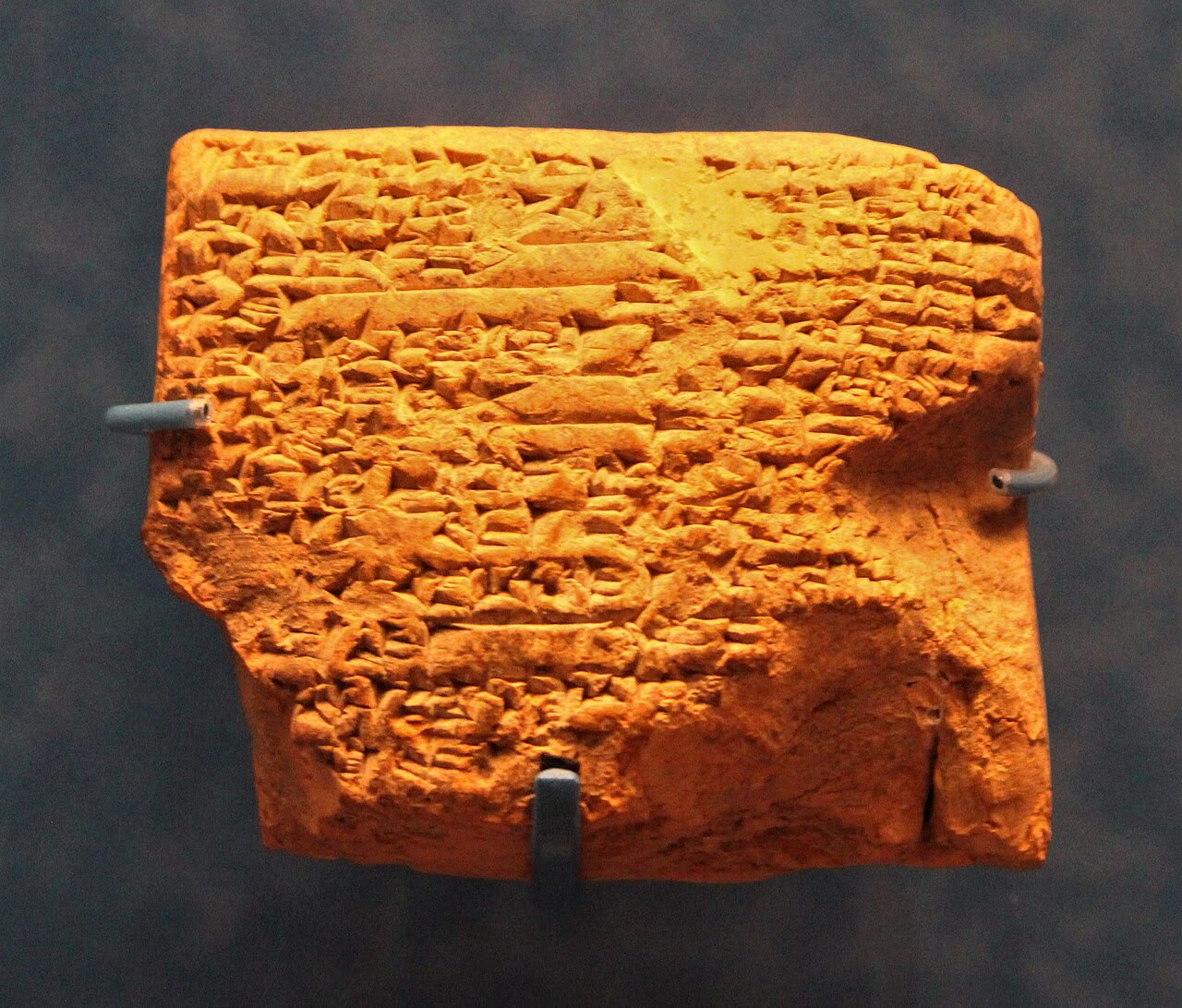
In the same poem, Enmerkar writes a message on clay when it grows too long for the messenger to repeat. The poet attributes the act to the lord of Kulaba and narrates it as a first. It belongs to the story's account of the rivalry. The Ashmolean fragment in the cover is an Old Babylonian copy of another passage of the composition, identified by the museum as part of the account of a Golden Age. Its survival shows how an episode from the story could be preserved independently of the place where its events are set. [1][4]
The home Lugalbanda hopes to see
In Lugalbanda in the Mountain Cave, Lugalbanda falls ill during the expedition toward Aratta. As he petitions Inana, he imagines the mountain place transformed into his home and names Kulaba as his birthplace. The preserved words bring the city's people and E-ana into the same appeal. Inana receives his tears and allows him to sleep. The poem then says she went to Kulaba. Here the name brings the power of the goddess and the memory of home into a scene set far away from both. [2]
The companion poem, often called Lugalbanda and the Anzud Bird, places the name in speeches about return. When the bird grants him speed, it speaks of the time when Utu will let him reach his city, Kulaba. Still later, Enmerkar speaks of returning there if his campaign fails and he must put aside his weapons. The two men have different reasons for picturing that return. For both, Kulaba is a familiar destination that gives the distance to Aratta emotional weight. [5]
Uruk and Kulaba in a royal account
A victory text presents Utu-hegal as a king of Unug favored by EnlilEnlilEnlil/Ellil: a major Mesopotamian god associated with destinies, kingship, and Ekur at Nippur, already prominent in third-millennium god lists. His name’s origin and cult beginnings remain debated.Glossary · Click to read the explanation and Inana. Before encountering Tirigan of Gutium, he addresses the people of his city and describes the divine support he has received. The account says the people of Unug and Kulaba respond together before he arranges his troops. The double designation occurs in a passage that has already treated the audience as the citizens of his own city. That wording supplies a reason to look for a distinction within the city while allowing that the pairing could have carried a ceremonial force. [3][6]
Walther Sallaberger compares this inscription with Sumerian poems and temple hymns. The poems associate several legendary rulers with Kulaba, and early hymns put Inana and Ninirigal there. He proposes that Kulaba designated the monumental center of Uruk, including Inana's E-ana and probably the royal palace. On that reading the two groups in Utu-hegal's speech might represent the center and the rest of Uruk. Even where the texts make such a reading possible, the identification of specific structures and the extent of the area remain inferences. [3][6]
The difficulty of placing the name on a map
The monuments at Warka include the EannaEanna at UrukAn archaeological precinct and institutional centre at Uruk associated with Inanna; its name does not fix every early building’s function.Glossary · Click to read the explanation area and the mound conventionally associated with Anu's zigguratZigguratZiggurat: a monumental stepped or terraced cult structure of ancient Mesopotamia. Not every raised temple platform was a ziggurat, and the form and specific use of lost upper stages often remain uncertain.Glossary · Click to read the explanation. Scholarship has also connected Kulaba with that latter area. Claus Ambos discusses how later traditions about Anu and the rebuilding of his sanctuary drew on a remembered cultic landscape. Sallaberger questions whether the distinct archaeological areas justify dividing early Uruk into two originally separate settlements and names the hymns for Inana at Kulaba as part of his objection. The excavated precincts and the ancient place-name therefore cannot be matched on the basis of a label alone. The strongest evidence for the name remains the way a particular document uses it, whether for a royal title, a home or a group of citizens. [1][2][3][6][7]
References and notes (7)
- Electronic Text Corpus of Sumerian Literature, Enmerkar and the Lord of Aratta Read the opening and passages 208–235, 294–307 and 500–576, including Kulaba, E-ana, the throne room, the message and the parallel city names. Return to the text ↑
- Electronic Text Corpus of Sumerian Literature, Lugalbanda in the Mountain Cave Read lines 183–200 on Lugalbanda's appeal to Inana, the place of his birth and Inana's return. Return to the text ↑
- Electronic Text Corpus of Sumerian Royal Inscriptions, Utu-hegal 4 Read RIME 2.13.06.04, especially the king's title, address and the citizens of Unug and Kulaba. Return to the text ↑
- Ashmolean Museum, Schools and Scholars Gallery Case List Read the AN1924.475 catalog row identifying the Old Babylonian fragment and the Golden Age passage. Return to the text ↑
- Electronic Text Corpus of Sumerian Literature, Lugalbanda and the Anzud Bird Read the promise of reaching Kulaba at 184–202 and Enmerkar's message for Inana in the later section. Return to the text ↑
- Walther Sallaberger, Uruk in der Frühen Bronzezeit Read pp. 360–366 on early texts, the inhabitants named in Utu-hegal's text, competing identifications of the precinct and the proposed location near E-ana and the palace. Return to the text ↑
- Claus Ambos, The History of the Cult of the Sky-God Anu in Uruk Read the discussion of archaic sacred topography, the later Anu sanctuary and the relationship proposed between Kullaba and Eanna. Return to the text ↑
Suggest a correction · Suggest a source for this record
Cite this record
IL Archive, «Kulaba in the Texts of Early Uruk», https://ilarchive.com/en/sites/kulaba