Entity · Concept
Ugaritic language
A reference page linking a name, group, or concept to the materials that discuss it.
Ancient Semitic language preserved in Ugarit’s tablets on the Syrian coast, from the fourteenth–twelfth centuries BCE, written in a cuneiform alphabet.
Text
Ugaritic is an ancient SemiticSemitic languagesA language family including Akkadian, Ugaritic, Hebrew, Aramaic and Arabic.Glossary · Click to read the explanation language attested on tablets from UgaritUgaritAncient city and kingdom at Ras Shamra on the Syrian coast, flourishing between the fourteenth and early twelfth centuries BCE and preserving multilingual archives.Glossary · Click to read the explanation, the city and kingdom at Ras Shamra on the Syrian coast. These archives belong to the fourteenth–twelfth centuries BCE, within the Late Bronze AgeLate Bronze AgeAn archaeological period conventionally around 1600–1200 BCE in much of the Near East, with regional variation.Glossary · Click to read the explanation. [1]
It was used for documents and literary and religious texts, including the Baal CycleBaal CycleA group of Late Bronze Age Ugaritic religious texts recounting Baal’s conflicts, relationships with the gods and the building of his palace.Glossary · Click to read the explanation. It was written in an alphabet of cuneiformCuneiformWriting with wedge-shaped signs, developed from Mesopotamian recording traditions and used for several languages from the third millennium BCE.Glossary · Click to read the explanation signs, while the city’s archives also contain other languages, such as AkkadianAkkadianAn ancient East Semitic language written in cuneiform in Mesopotamia.Glossary · Click to read the explanation. The language’s name is thus distinguished from the wedge-shaped form of its signs. [1]
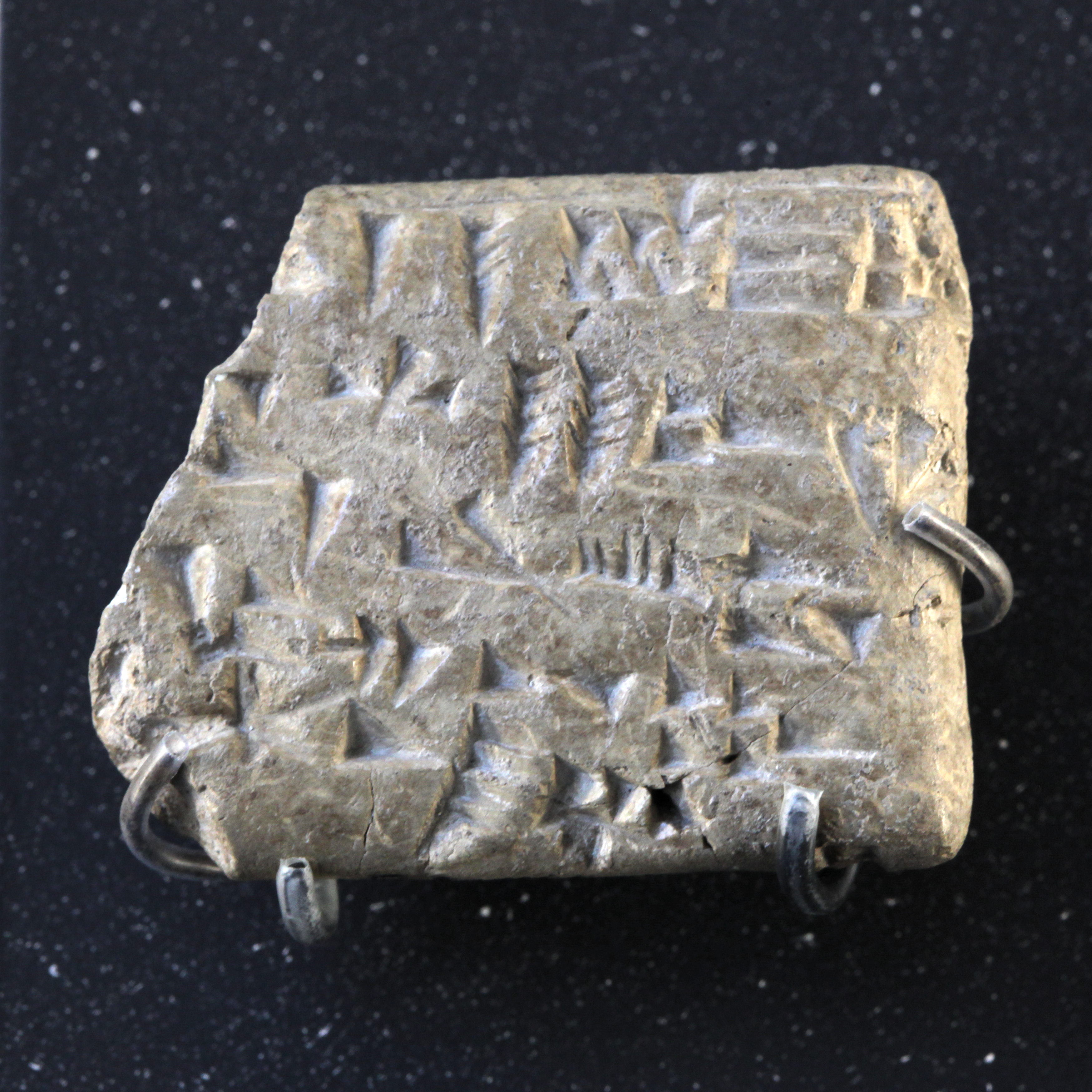
The photograph shows a fragment bearing the sequence of Ugaritic alphabetic letters, held in the Louvre as AO 19992 and dated in its catalogue to about 1400–1200 BCE. It provides a material example of the script. [2]
References and notes
- Department of Ancient Near Eastern Art (2004) — Ugarit, Metropolitan Museum Main text: fourteenth–twelfth-century BCE archives, multilingual writing, the local Semitic language and alphabet. Return to the text ↑
- Musée du Louvre — AO 19992 Identity of the incomplete alphabetic tablet, Ugaritic language and catalogue date1400–1200 BCE. Return to the text ↑
Research history
Substantive changes are retained here. Minor copy edits remain in the internal operational log.
-
Substantive record update
-
Substantive record update
Suggest a correction · Suggest a source for this record
Cite this record
IL Archive, «Ugaritic language», Edition 3, https://ilarchive.com/en/entities/ugaritic-language