Entity · Literary figure
Bilulu in Inanna and Bilulu
A reference page linking a name, group, or concept to the materials that discuss it.
- Names
- Bilulu · Bilulu the old woman · Old woman Bilulu
- Region
- Mesopotamia
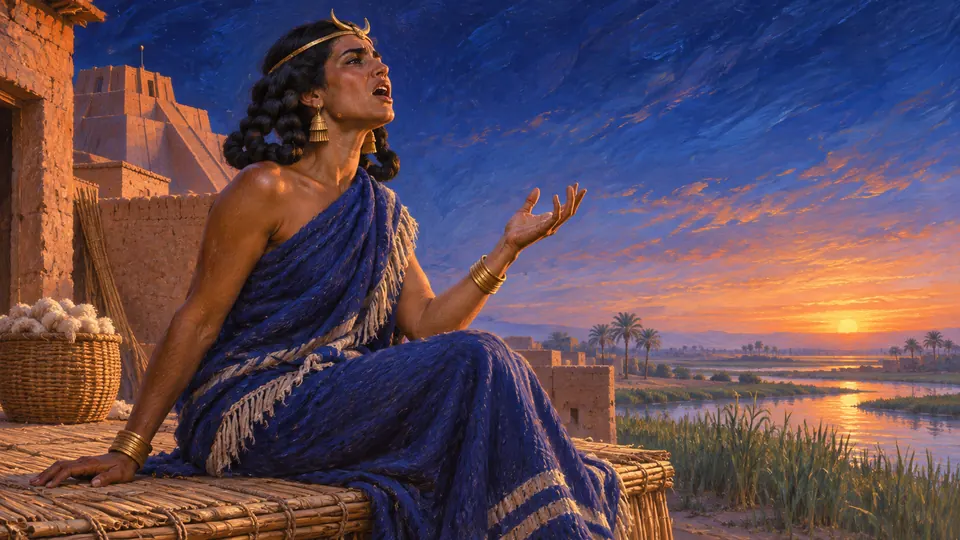
An old woman with a divine name, blamed for Dumuzi's death in a broken Sumerian song. Inanna turns her into a desert waterskin that serves the offerings for the dead shepherd.
Estimated reading time: 6 min Published Last reviewed:
Share article
Text
Introduction
Bilulu is the figure whom the goddess InannaInanna / IshtarA prominent Mesopotamian goddess whose Sumerian name Inanna became associated with Akkadian Ishtar across diverse traditions. She was associated with desire, war, royal authority and Venus, while local forms and genealogies varied among texts.Glossary · Click to read the explanation punishes in a Sumerian song known today as Inanna and Bilulu. The poem calls her "old woman Bilulu", a matriarch who is "her own mistress", and writes her name with the sign that marks divine beings. In the song, Inanna's young husband DumuziDumuzi / TammuzDumuzi is a deity of ancient Mesopotamian traditions associated with shepherding and Inanna; Tammuz appears as the name in later linguistic and textual traditions.Glossary · Click to read the explanation is killed in the steppe. Inanna holds Bilulu to account, goes to her, and turns her into a waterskin for cold water. [1][2]
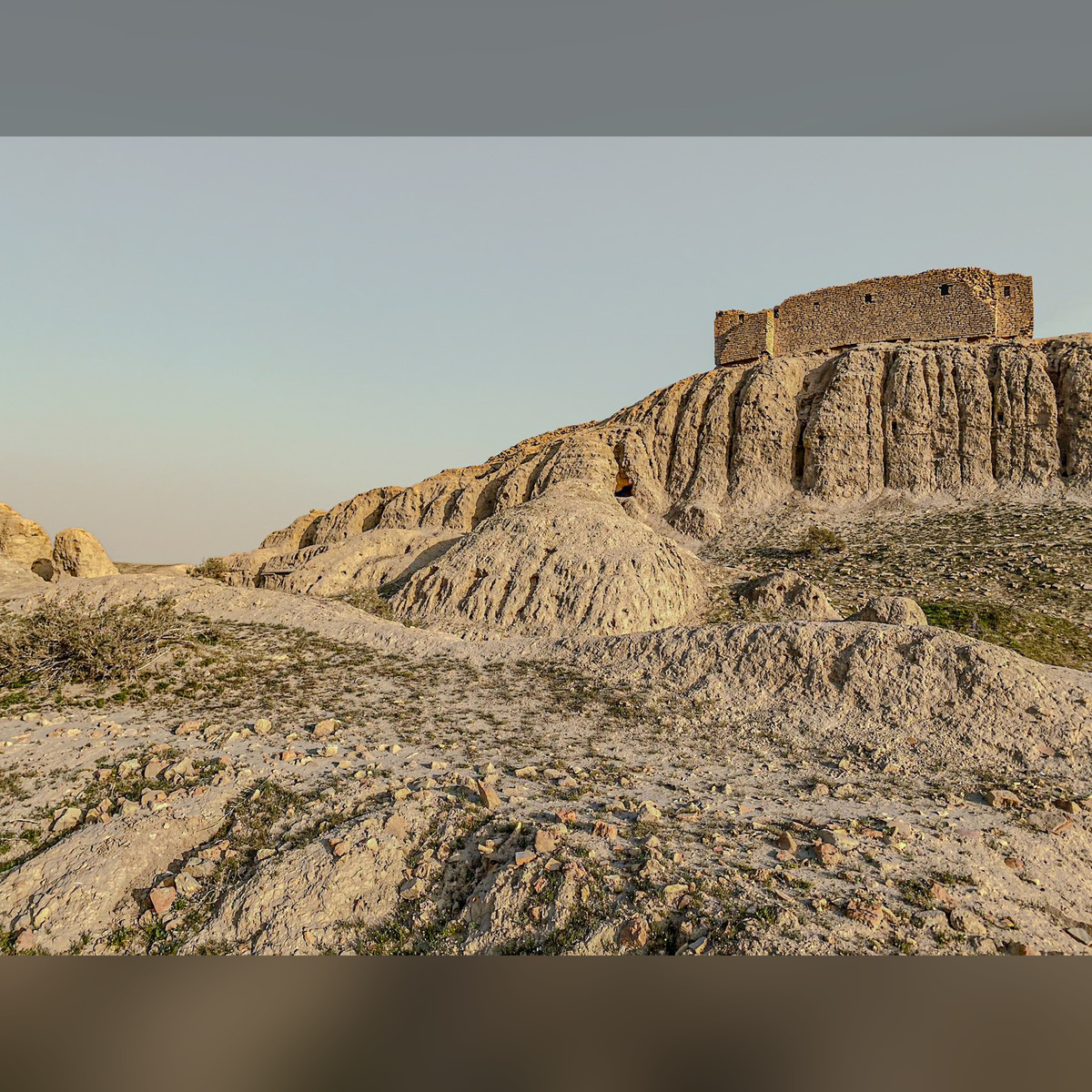
Almost everything we know about her comes from this one song of mourning, preserved on a single damaged tablet from NippurNippur / NuffarAncient Nippur (modern Nuffar, Iraq), major cult centre of Enlil and Ekur; excavations revealed sanctuaries, houses and thousands of cuneiform tablets across many periods.Glossary · Click to read the explanation. Its broken lines hide exactly how Dumuzi died and what part Bilulu played. [1][3]
The song and its tablet
The poem is written in SumerianSumerian languageAncient language of southern Mesopotamia, clearly attested in third-millennium BCE texts and maintained in learning and ritual after its spoken use declined.Glossary · Click to read the explanation on a clay tablet from Nippur, catalogued as Ni 4486. Like most Sumerian songs about Dumuzi, it is known from a copy of the Old Babylonian period (about 2000–1600 BCE). No second copy is listed by the Oxford edition. [3][4]
Thorkild Jacobsen and Samuel NoahNoahNoah is the flood-story figure in Genesis and a prophet in the Qur’anGlossary · Click to read the explanation Kramer published the tablet in 1953, with a hand copy, a translation and a commentary. Later translations, including the English one of the Oxford corpus of Sumerian literature, build on that edition. [3][5]
In the Oxford numbering the song has 177 lines, but whole passages are lost: about twenty lines near the start, nineteen before Bilulu appears and twelve after her punishment. The last line calls it "An ulila song of Inana". [1]
What the song tells
The song opens with Inanna's lament for Dumuzi, which travels across the steppe to Arali, Bad-tibira, Dul-šuba and the sheepfold. She then asks her mother Ningal for leave to go to the sheepfold. [1]
After a long gap the text speaks of "the house of old woman Bilulu" and of the shepherd with his head beaten in. The scribe once wrote her name as Belili, which the Oxford edition marks as an error. A voice tells Inanna that a man who was not the shepherd was coming back beside Dumuzi's sheep. Inanna answers with a song in his praise. [1]
Then the poem introduces the household in Edin-lila, a place in the steppe:
- Girgire, Bilulu's son, "a man on his own", fills pen and fold with captured cattle, piles up grain, and leaves his victims struck down with the mace in the fields.
- Sirru of Edin-lila, "no one's child and no one's friend", sits and talks with him.
In the surviving lines, Bilulu is never shown striking anyone. But Inanna's purpose is clear: "To kill old woman Bilulu was in her heart", so as to "make good the resting place" of her husband. She goes to Bilulu in Edin-lila. [1]
The waterskin
Inanna enters an alehouse, sits down and pronounces a fate, a binding divine decision. "Begone! I have killed you," she says, "and with you I destroy also your name." Then she speaks the sentence:
(Inana and Bilulu, line 101, Oxford translation.) [1]
The sentence goes on. Girgire and his mother are to become the udug and the lama of the steppe, two kinds of protective spirit; the Oxford translation renders them "the protective god … and the protective goddess of the desert". Sirru is to walk the steppe and keep count of the flour. When water is poured and flour scattered for "the lad wandering in the desert", the two spirits will call out "Pour!" and "Sprinkle!", and so make the lost shepherd present at the place where he vanished. And "old woman Bilulu" will gladden his heart. [1][2]
The poem then repeats every clause: "under the sun of that day, it truly became so." [1]
Put simply, the punishment becomes a service. A waterskin is an animal skin sewn into a bag, the way herders in dry country still carry water. Bilulu becomes the vessel for the cool water poured out for Dumuzi, and her household the spirits who announce the offering. The poem thus works as an origin story for the water and flour offered in the steppe to the dead shepherd. [1]
Mourning and revenge
After another gap, Inanna reaches out to Dumuzi's body. A francolin, a bird of the steppe, reflects that only Dumuzi's mother Durtur can comfort him. His sister Geštin-ana then raises the lament: "Brother, let me utter the lament for you" in Arali, Dul-šuba, Bad-tibira and the shepherds' country. [1]
Twice the poem gives its verdict: by killing Bilulu, Inanna "proved the equal" of Dumuzi, because she avenged him and made good his resting place. [1]
This is a different account of Dumuzi's death from the better-known one in Inanna's Descent to the Netherworld, where Inanna herself hands him over to the demons of the underworld. [4][6] Bendt Alster notes that most Sumerian texts show Inanna as innocent of Dumuzi's death, searching for him and mourning him. Inanna and Bilulu belongs to that group and goes further: she becomes his avenger. [4] In his overview of Inanna's myths, Claus Wilcke lists the song among the stories that show her fighting side: here she takes revenge on Bilulu as Dumuzi's killer. [6]
Who was Bilulu?
The poem gives three clues. Her name carries the sign used for gods. She is called um-ma, "old woman". And she is a mistress of her own house, with a raiding son and a companion in the steppe. Beyond this, the text is silent. [2]
Scholars have looked further, with uncertain results:
- A rain-cloud figure? Jacobsen and Kramer suggested in their 1953 edition that Bilulu was a personified rain cloud or thunderstorm. [5] Her son's name, Girgire, is close in sound to Nim-ĝirĝire, "the one who makes lightning flash", a title of the storm god, which may fit this reading. [7] The poem itself never says that Bilulu is a cloud, so this remains a proposal.
- An older goddess? A deity called Nin-Bilulu appears centuries earlier, in god listsGod ListsTexts collecting divine names for preservation, teaching and classification, with varying theological organization.Glossary · Click to read the explanation from Fara and Abu Salabikh and in a hymn that also names the Euphrates and the Tigris. The specialist encyclopedia of Assyriology compares this name with Enbilulu, a later god of irrigation. Whether Nin-Bilulu and the old woman of the song are the same figure is not known. [8]
What is certain is narrower: one Old Babylonian song blames Bilulu for Dumuzi's death and makes her, by Inanna's word, part of the rites for him.
Quick answers
Who was Bilulu?
The old woman with a divine name whom Inanna punishes in the Sumerian song Inanna and Bilulu for the death of Dumuzi. [1][2]
What did Inanna do to her?
She declared her dead and turned her into a waterskin for cold water, part of the offerings poured out for Dumuzi in the steppe. [1]
Is the story complete?
No. It survives on one broken tablet from Nippur, and the lines that describe Dumuzi's death are among the damaged ones. [1][3]
References and notes (8)
- J. A. Black, G. Cunningham, E. Robson and G. Zólyomi, “Inana and Bilulu: translation,” c.1.4.4, The Electronic Text Corpus of Sumerian Literature, Oxford, 1998–2006 Whole translation, lines 1–177 (the lament, lines 1–45; Bilulu's house and Dumuzi's death, 65–80; Girgire and Sirru, 81–89; Inanna's decision, 90–97; the curse and its fulfilment, 98–124; the mourning, 137–176; the label “An ulila song of Inana”, 177), with the marked gaps. Return to the text ↑
- J. A. Black, G. Cunningham, E. Robson and G. Zólyomi, “Inana and Bilulu: composite text,” c.1.4.4, The Electronic Text Corpus of Sumerian Literature, Oxford, 1998–2006 Lines 95–124 (the name written with the divine sign, d-bi-lu-lu; um-ma “old woman”, lines 110 and 121; kuš ummud “waterskin”, lines 101 and 112; d-udug edin-na and d-lama edin-na, lines 103, 107, 114 and 118). Return to the text ↑
- The Electronic Text Corpus of Sumerian Literature, “Inana and Bilulu: bibliography,” c.1.4.4, Oxford Whole page: print sources (Jacobsen and Kramer 1953; Bottéro and Kramer 1989, pp. 330–337), electronic sources, and the single cuneiform source Ni 4486 from Nippur (ISET 2 63ff.; JNES 12 pl. 66ff.). Return to the text ↑
- Bendt Alster, “Tammuz(/Dumuzi),” Reallexikon der Assyriologie und Vorderasiatischen Archäologie 13, De Gruyter, 2011–2013, pp. 433–439 Pp. 435–438, §§ 3–5: the major text groups (Sumerian Dumuzi compositions mostly Old Babylonian), the two traditions of Dumuzi's death, Inanna's Descent, and Inanna innocent and mourning in most of the literary tradition. Return to the text ↑
- Thorkild Jacobsen and Samuel Noah Kramer, “The Myth of Inanna and Bilulu,” Journal of Near Eastern Studies 12 (1953): 160–188, pls. 66–68 First edition (composite text, translation, hand copy, commentary). Not read directly for this entry (not open access); cited for the edition and for the editors' rain-cloud interpretation as reported in later scholarship. Return to the text ↑
- Claus Wilcke, “Inanna/Ištar (Mesopotamien). A. Philologisch,” Reallexikon der Assyriologie und Vorderasiatischen Archäologie 5, De Gruyter, 1976–1980, pp. 74–87 P. 83: Inanna's Descent (Dumuzi handed over to the netherworld) and the combative Inanna in “Inanna und Bilulu”, where she takes revenge on Bilulu, Dumuzi's murderess. Return to the text ↑
- Manfred Krebernik, “Nim-ĝiĝre,” Reallexikon der Assyriologie und Vorderasiatischen Archäologie 9, De Gruyter, 1998–2001, p. 319 Whole entry: a title of the storm god Iškur/Adad in An = Anum and other god lists, with spellings nim-ĝir-ĝir(-re); a doubled form of nim-ĝir “lightning”, meaning “the one who makes lightning flash”. Return to the text ↑
- Antoine Cavigneaux and Manfred Krebernik, “Nin-Bilulu,” Reallexikon der Assyriologie und Vorderasiatischen Archäologie 9, De Gruyter, 1998–2001, p. 336 Whole entry: the deity in the great god list from Fara (SF 1 vi 17), the Abu Salabikh god list (IAS 83 vi' 7') and Zame Hymn no. 15 (with Nin-mar, the Euphrates and the Tigris); compared with the later irrigation god Enbilulu. Return to the text ↑
Suggest a correction · Suggest a source for this record
Cite this record
IL Archive, «Bilulu in Inanna and Bilulu», https://ilarchive.com/en/entities/bilulu
Continue reading