Entity · Concept
Embodied identity
A reference page linking a name, group, or concept to the materials that discuss it.
Embodied identity is a framework for how the body mediates belonging and social difference; cranial modification offers material traces, not self-evident social meanings.
Estimated reading time: 3 min Published Last reviewed:
Share article
Text
Introduction
How can the body be a way of experiencing belonging and displaying social distinctions? “Embodied identity” is a modern analytical framework linking bodily appearance, practice and lived experience to identity, not the name of a documented prehistoric belief. Head shaping illustrates both what skeletal evidence can establish and what remains a hypothesis about its social meaning.[1][3]
What the concept means
Embodied identity concerns bodily appearance, adornment, dress, movement and learned habits. The body is not merely a surface displaying symbols: it is also a site of action and experience that develop over time. This is a way to examine relationships between people and communities, not a biological diagnosis of a bounded group or proof of a single ancient doctrine.[3]
From fleeting appearances to skeletal traces
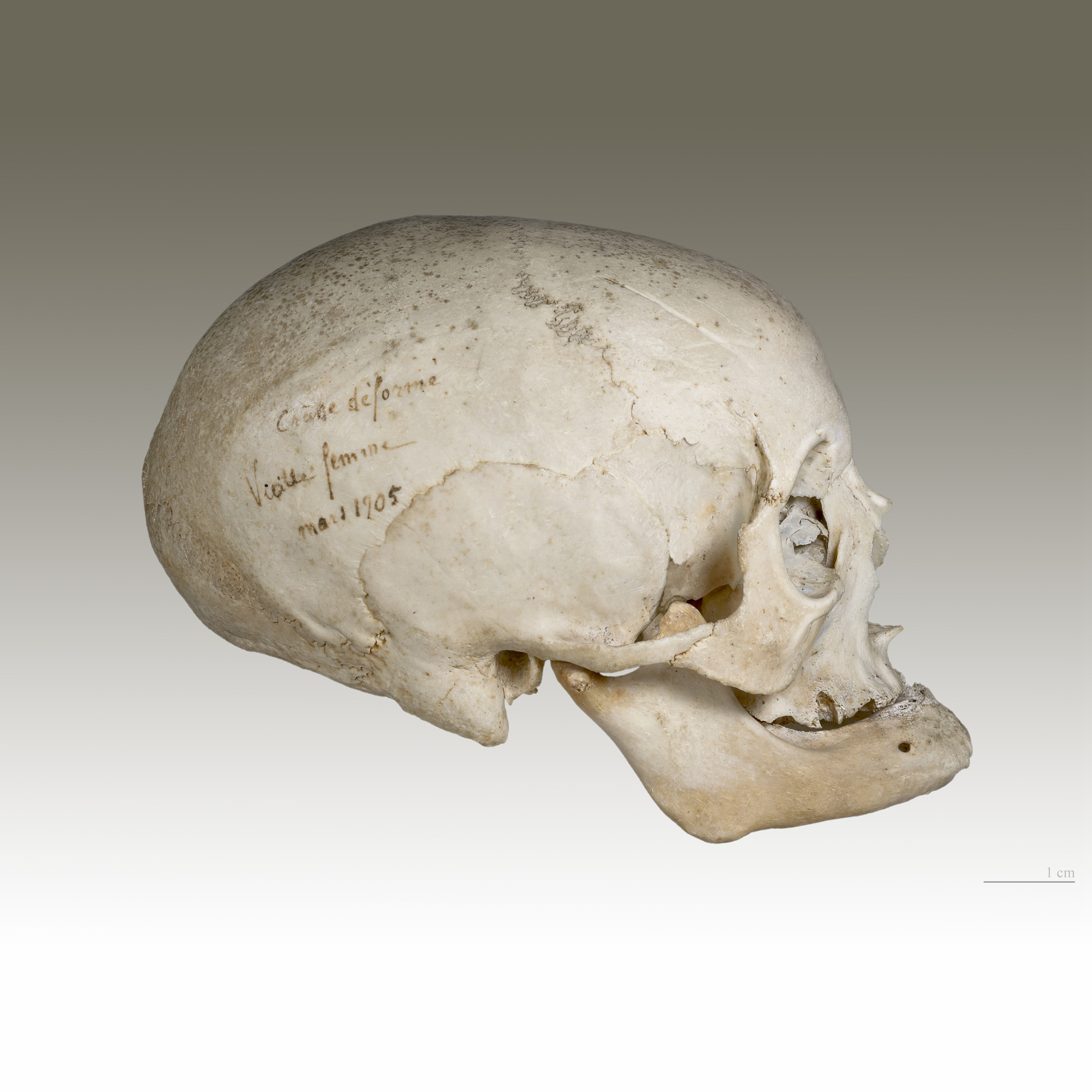
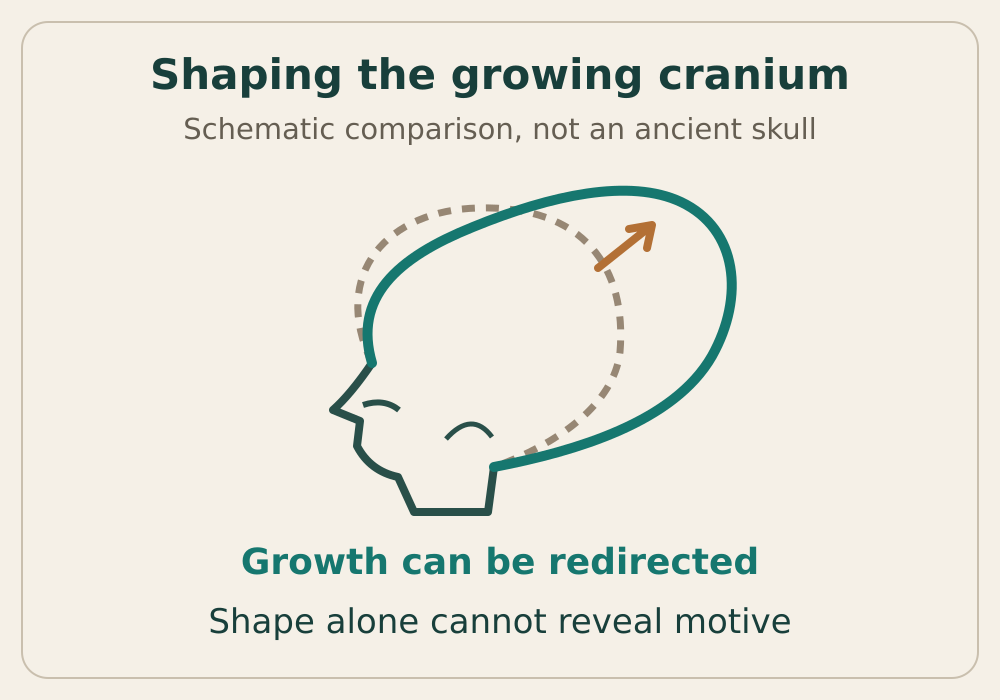
Paint, hairstyles and textiles often disappear, whereas some changes persist in bone. Cranial modificationCranial modificationReshaping a child’s growing cranial vault through pressure or restraint. Techniques and meanings vary; it differs from postmortem skull treatment and cannot be inferred from a figurine alone.Glossary · Click to read the explanation in early childhood is an example: sustained binding or pressure during growth can leave a lasting shape. Yet habitual positioning or a cradle can also affect head form unintentionally. An unusual skull alone does not prove deliberate modification, and its morphology cannot disclose the motives of those involved.[1][2]
Childhood and ascribed identity
Where shaping was intentional and began in infancy, an adult caregiver generally initiated it before the child could make such a choice. A household might transmit an aesthetic practice, an affiliation marker or a learned technique. Whether it signalled kinship, gender or status requires independent contextual evidence. The identity attributed to a child must also be distinguished from that person's later understanding of self.[1][3]
Tell Arpachiyah: presence and absence
For the Ubaid horizonUbaid cultureAn archaeological designation for material traditions associated with southern Mesopotamia and its regional connections. The broad southern sequence spans c. 6500–3800 BCE, with regional variation; the label alone identifies neither a people nor a language.Glossary · Click to read the explanation in MesopotamiaMesopotamiaHistorical region associated with the Tigris and Euphrates: Uruk, Ur, Eridu, cuneiform, Sumer, Akkad, Babylon and Assyria, their languages and cults, and the limits of archaeological evidence.Glossary · Click to read the explanation, Kirsi Lorentz examined the published Tell Arpachiyah crania. Of nine individuals classified as Ubaid in her table, five are recorded as modified and four as unmodified, with limitations of preservation and attribution. Some proposed examples of circumferential head shapingCircumferential head shapingA pattern of early-growth head shaping associated with circumferential constraint and an elevated or extended vault.Glossary · Click to read the explanation depend on drawings or photographs and require re-examination; the dating of some Halaf-period crania is uncertain. This small published series cannot establish a population-wide prevalence rate.[1]
The Zagros example: one site, successive analyses
Lorentz's 2010 chapter presented a preliminary table of eleven individuals at Tepe Abdul Hosein in western IranIranIran is the modern country containing Shush, ancient SusaGlossary · Click to read the explanation, not all assessable for cranial form. Her 2017 study reported twelve individuals from eight burial contexts; only five adult crania could be assessed, and four showed circumferential modification. The later publication revisits evidence from the same site; the two counts must not be added together as independent samples. These numbers are too small to establish gender or hierarchical rules.[1][4]
Figurines represent; they do not diagnose
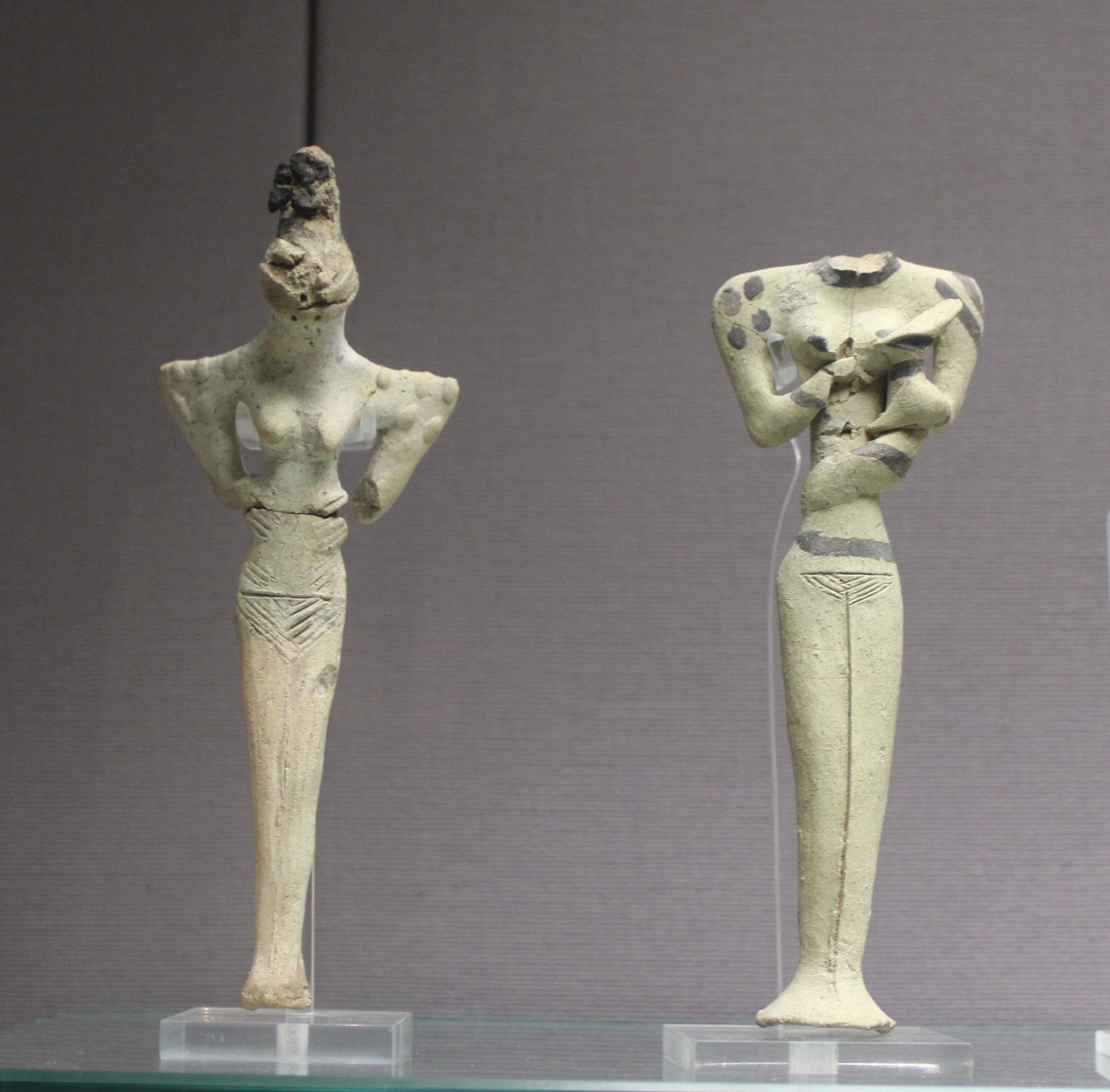
Some figurinesFigurineA small shaped object depicting a human, animal or abbreviated form, in clay, stone or another medium. Its form alone does not establish its use; manufacture, handling traces and find context matter.Glossary · Click to read the explanation from Ubaid-related and prehistoric Iranian contexts have elongated or accentuated heads. These may evoke hairstyles, headgear, an aesthetic ideal or modified crania. Yet a modelled figure is not a human skull, and figurines and skeletal finds from a site need not belong to the same phase. Figurines alone demonstrate neither a head-binding practice nor a particular religious or ethnic identity.[2][5]
Testing the social hypothesis
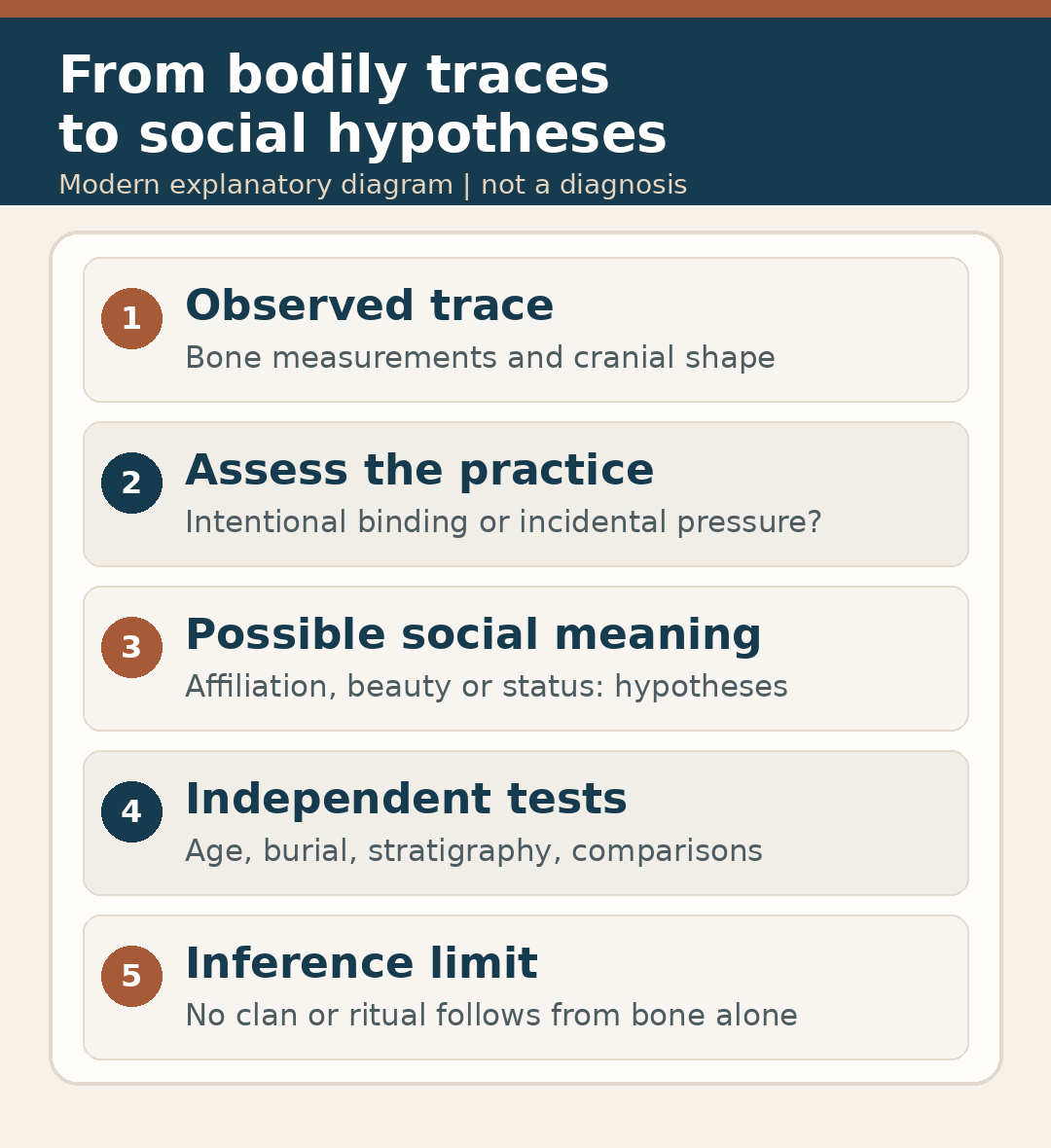
Researchers first examine the morphology, preservation and possible causes of a cranial form, then compare stratigraphic dates, burial contexts, age groups, modified and unmodified people, and associated ornaments or objects. Mobility and kinship studies can add evidence where samples permit, but neither distinctive morphology nor shared custom automatically defines an “ethnic” group, migration or direct contact.[1][2][4]
Conclusion: graded inferences
The direct evidence is a describable, measurable bodily trace in particular human remains. Reading that trace as a sign of beauty, affiliation or rank is an interpretation requiring independent support. Clan names, ritualRitualAn organised or distinguished practice meaningful to a community; it may leave traces, but its form alone does not reveal an associated doctrine.Glossary · Click to read the explanation doctrines and the motives of individual families cannot be recovered from head shape alone. Embodied identity is most useful when it opens testable questions rather than turning possibilities into certainties.[1][3]
References and notes (5)
- Kirsi O. Lorentz (2010), “Ubaid Headshaping: Negotiations of Identity through Physical Appearance?”, in Robert A. Carter and Graham Philip (eds.), Beyond the Ubaid, SAOC 63, pp. 125–148. Consulted printed pp. 125–126, 129–131, 134–135, 139–142 in the PDF; visually inspected Table 9.1 on p. 130, Table 9.2 and Figure 9.5 on p. 135. Not a continuous reading of the full chapter, nor direct re-examination of skeletal remains. Return to the text ↑
- Aurélie Daems and Karina Croucher (2008; updated 2015), “Prehistory of Iran: Artificial Cranial Modifications”, Encyclopaedia Iranica. Read the online article body, from definition and skeletal examples to figurines and social interpretations; selected citations checked. Site and skull counts synthesize earlier studies and were not independently verified against the original osteological tables. Return to the text ↑
- Rosemary A. Joyce (2005), “Archaeology of the Body”, Annual Review of Anthropology 34, pp. 139–158. Published abstract and article metadata only; full text not accessed for this review. Used solely for the theoretical framing of lived bodies and bodily practice. Return to the text ↑
- Kirsi O. Lorentz (2017), “Marking Identity through Cultural Cranial Modification within the First Sedentary Communities (Ninth to Eighth Millennium BCE) in the Near East: Tepe Abdul Hosein, Iran”, International Journal of Osteoarchaeology 27(6), pp. 973–983. Publisher abstract only: n=12 from eight mortuary contexts, five assessable adult crania, four modified. Article body and figures not accessed; counts must not be added to the 2010 table. Return to the text ↑
- Aurélie Daems and Karina Croucher (2007), “Artificial Cranial Modification in Prehistoric Iran: Evidence from Crania and Figurines”, Iranica Antiqua 42, pp. 1–21. Publisher abstract and university bibliographic metadata only; full article and its plates/results were not accessed. Return to the text ↑
Suggest a correction · Suggest a source for this record
Cite this record
IL Archive, «Embodied identity», https://ilarchive.com/en/entities/embodied-identity
Continue reading