Entity · Deity
Geb, the Egyptian Earth God
A reference page linking a name, group, or concept to the materials that discuss it.
- Names
- Geb
- Region
- Egypt
Geb embodies the earth in Egyptian funerary art. In the Pyramid Texts he aids the king’s ascent, and on the Shabaka Stone he decides who should inherit the Two Lands.
Estimated reading time: 5 min Published Last reviewed:
Share article
Text
Introduction
In a papyrus made for the priestess Nesitanebtashru, Geb lies beneath the arched body of the sky goddess Nut. He represents the earth and she represents the sky. Their father Shu holds her over Geb with both hands. The British Museum describes the scene as an episode in the creation tradition associated with HeliopolisHeliopolis, ancient IunuHeliopolis is the Greek name of Egyptian Iunu, at Matariya in northern present-day CairoGlossary · Click to read the explanation. The separation makes the positions of earth and sky visible in a single image. [1]
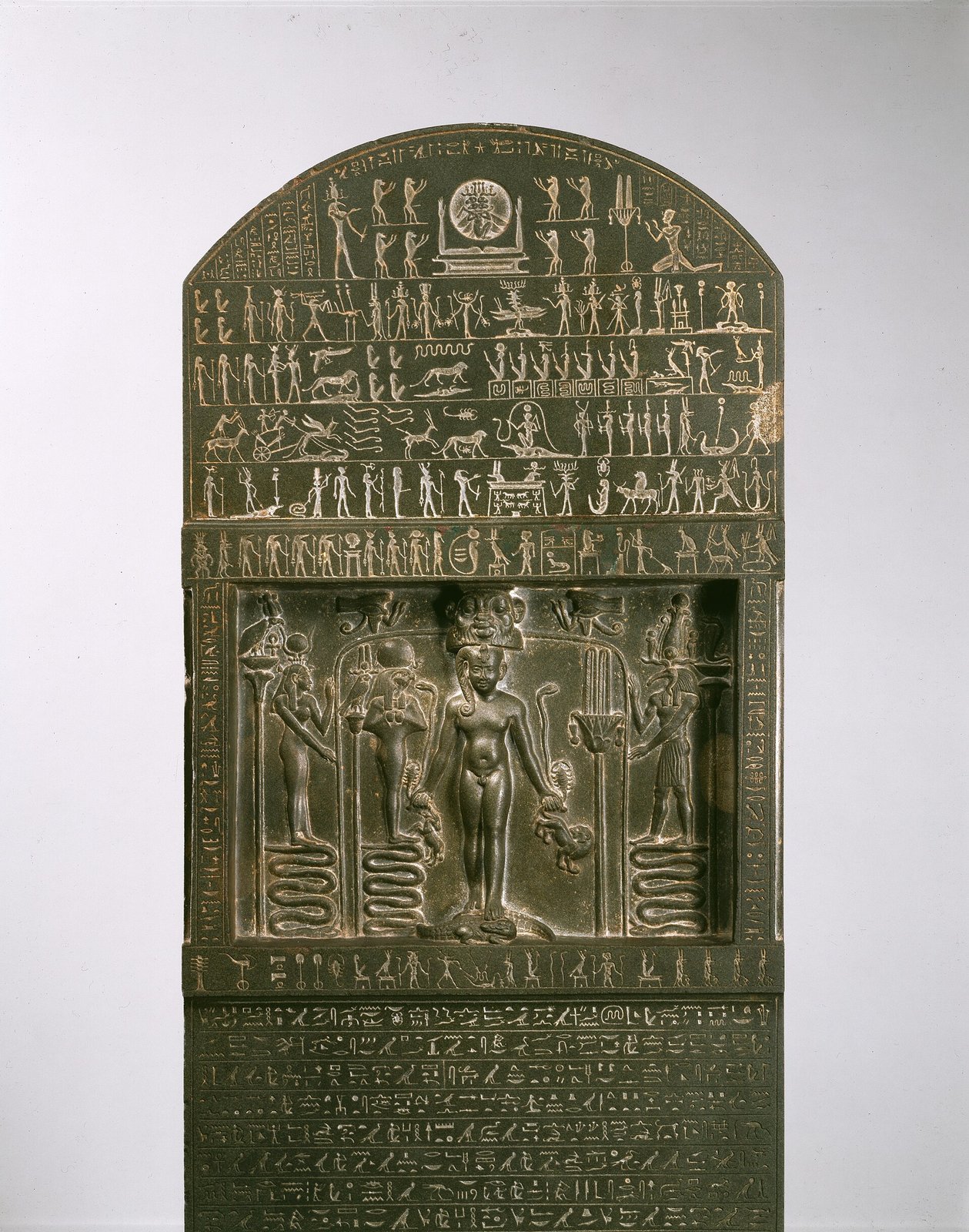
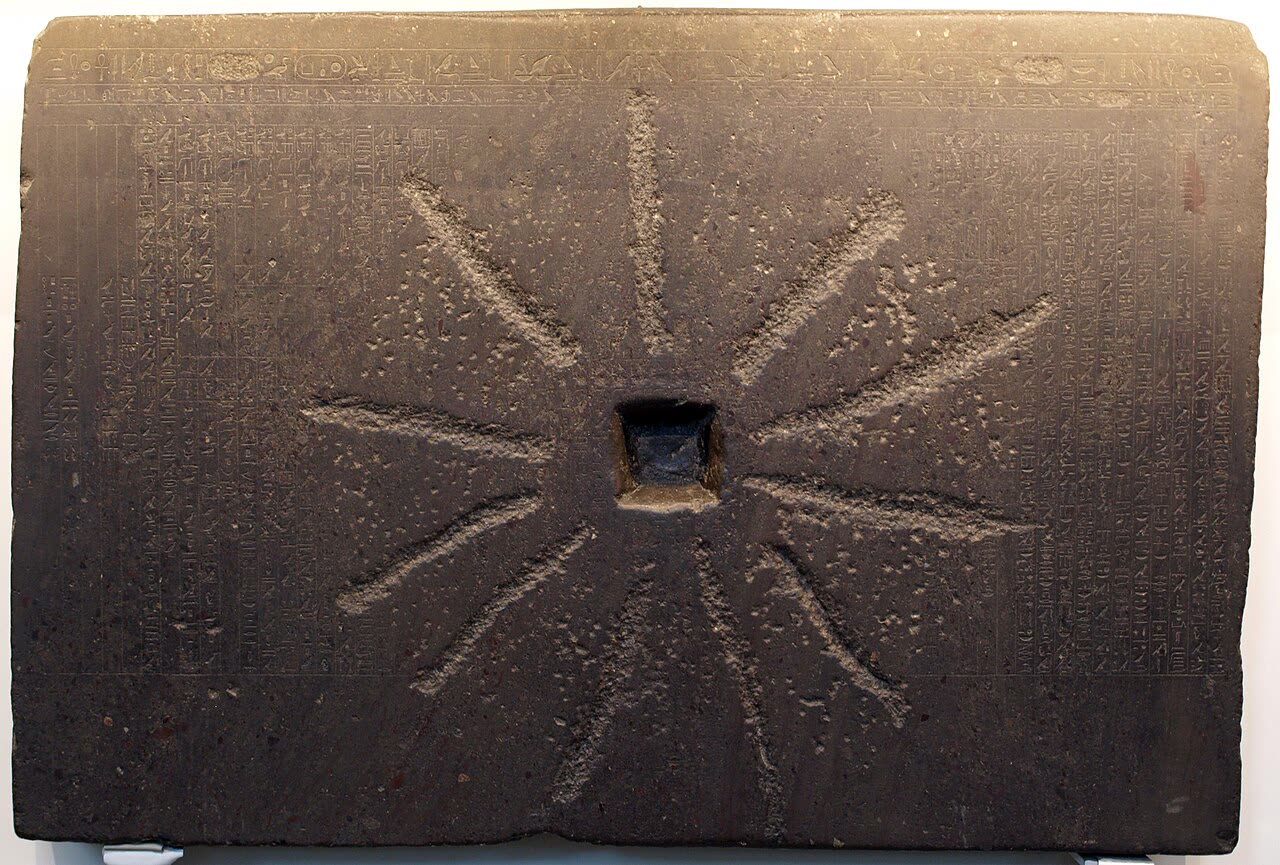
Other Egyptian sources place Geb in very different scenes. In the Pyramid Texts of Pepi I, he helps the dead king reach the sun. On the Shabaka StoneShabaka StoneThe Shabaka Stone (British Museum EA498), inscribed c. 710 BCE, links Ptah, heart, speech, creation, and kingship; its damage, textual readings, and alleged older papyrus remain central questions.Glossary · Click to read the explanation, he hears a dispute between Horus and Seth and awards the inheritance. Each source places him in a relationship with other gods. Reading those relationships together shows how a god who embodies the ground can also act in the skyward passage of a king and in the division of the land. [2][3]
Earth and sky in funerary art
The British Museum dates the Greenfield Papyrus vignette to 940 BCE. It explains that in the genealogy associated with Heliopolis, the creator AtumAtumAtum is an Egyptian creator god associated with HeliopolisGlossary · Click to read the explanation brings forth Shu and Tefnut, who become parents to Geb and Nut. The children of Geb and Nut in this account are OsirisOsirisOsiris was an ancient Egyptian deity associated with the dead, life after death, renewal, and kingship. His roles appear in changing funerary texts, rituals, and judgment scenes, notably the weighing of the heart.Glossary · Click to read the explanation, Isis, Seth and Nephthys. In the vignette, Nut’s toes and fingertips mark opposite horizons. Shu’s raised arms keep her apart from Geb below. Both the relationship between the figures and their positions in the scene matter. Shu separates two gods who are siblings and parents, and that act also establishes the space between earth and sky. [1]
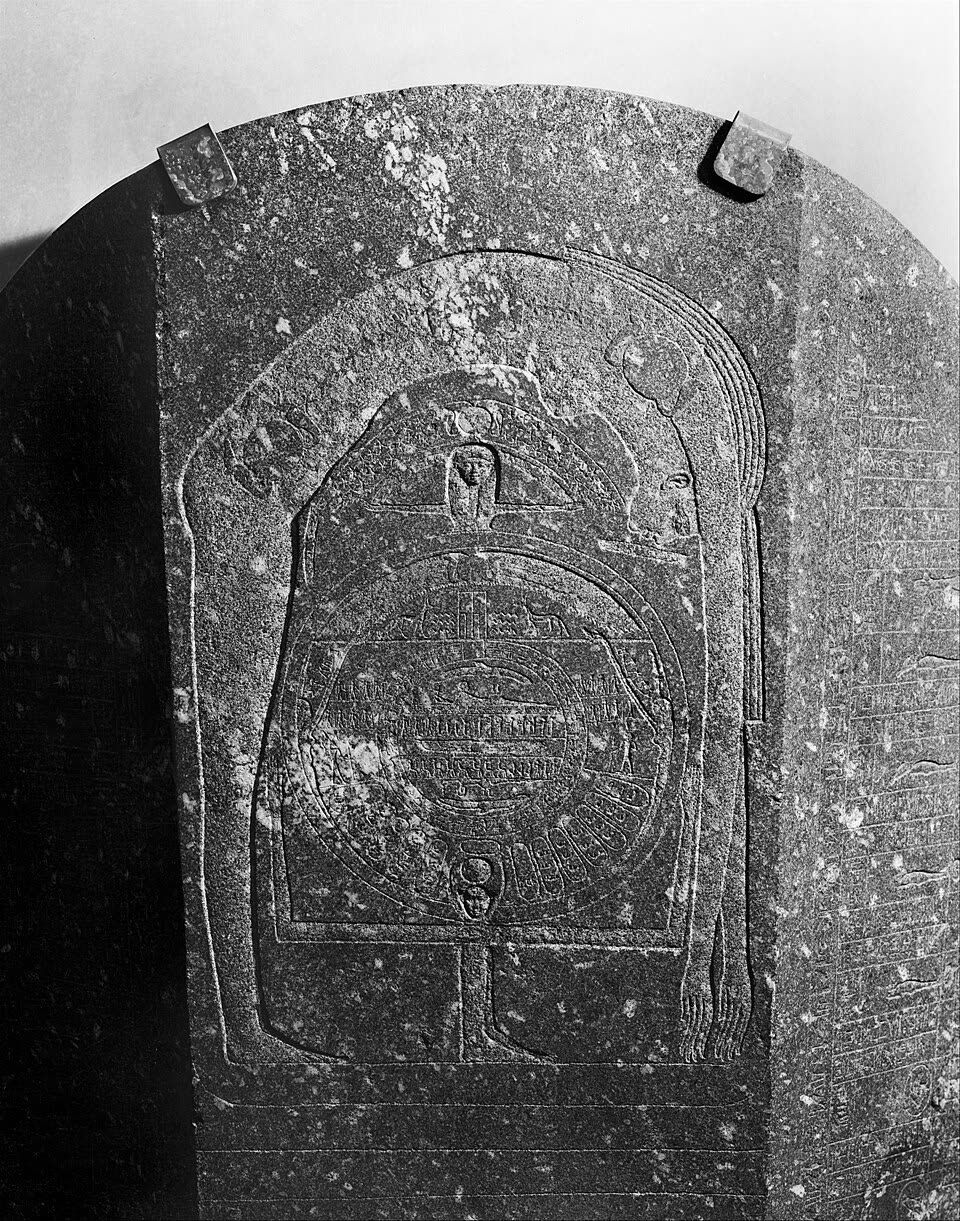
A later image presents the same relationship in a different form. On the stone sarcophagus of Wereshnefer, dated 380–300 BCE by the Metropolitan Museum of Art, Nut bends around a map of the world and Shu supports her. The museum reads a pair of uplifted arms on legs at Nut’s feet as a rebus, a picture used to suggest the sound of a name. Here it signifies Geb. The museum identifies three rings within the figure of Nut. The outer ring represents lands and waters around Egypt, the middle ring shows Egypt’s districts and the inner ring shows the day and night skies. On this lid, a sign for Geb takes the place occupied by his reclining figure in the earlier papyrus. [1][4]
Geb and the king’s ascent
In James P. AllenJames P. AllenEgyptologist and Brown professor emeritus, studying ancient Egyptian language, literature and religion, including the Pyramid Texts.Glossary · Click to read the explanation’s translation of the texts from Pepi I’s pyramid, the royal speaker reaches a point where his field and boundary markers can no longer be found. Geb extends him toward the Sun with one arm toward the sky and the other toward the earth. The king says that he will direct the god’s boat. In the following recitation, Geb and Nut respond with laughter as the king goes up to the sky, and the sky and earth respond with sound and movement. The two passages make Geb an active participant in the ascent. In the first, his gesture spans the very spaces that he and Nut represent in the papyrus. [1][2]
The inheritance of Horus
On the Shabaka Stone, Geb brings the Nine Gods together and settles a dispute between HorusHorusEgyptian god associated with kingship and the sky, also appearing as the child protected by his mother Isis in marsh and nursing traditions.Glossary · Click to read the explanation and Seth. He first assigns Upper Egypt to Seth and Lower Egypt to Horus. The text connects each portion with an event in the divine family. Seth’s share includes his birthplace and Horus’s includes the place where his father drowned. Geb then changes the ruling. He gives Horus his whole inheritance because Horus is the son of his firstborn son. The inscription goes on to describe Horus as the ruler who unites Upper and Lower Egypt. [3]
The decision concerns the world of the gods. Within the story, Geb has both the authority to divide the land and the standing of a grandfather who can designate an heir. That combination gives the dispute its force. The same source that names him as the judge makes kinship the reason for his final judgment. [3]
Reading a figure below Nut
A drawing catalogued by the Museo Egizio shows why recognising Geb can depend on more than finding a person beneath Nut. The outlines are black, and traces of a red grid show how the figures were laid out. The museum describes the figure beneath Nut as smaller and at some distance from her. It provisionally identifies the figure as Geb, and also considers whether it could be a separate picture of a dancer. On the Greenfield Papyrus the relations between Geb, Nut and Shu are clear enough to anchor the identification. In the sketch, scale and spacing leave open whether the figures were intended as a single composition. [1][5]
A recitation in Pepi I’s pyramid gives the king a seat at the head of the Ennead, the group of gods that met at Heliopolis. It says he sits there as Geb, and then names roles he takes as Osiris and Horus. In that passage becoming like Geb gives the king a position among the gods. The earth also had a more immediate meaning for the dead. The Global Egyptian Museum points to passages in which entering Geb means being shut in the ground and subject to decay. The same divine name can identify the earth a burial enters, the god who helps a king ascend and the figure whose place represents royal standing. [2][6]
References and notes (6)
- British Museum, Vignette from the Book of the Dead of Nesitanebtashru, 1910,0509.1.87 Read the museum’s full vignette description and object details on Google Arts & Culture, including the date, named owner, the positions and relationships of the gods, and the four named children. Return to the text ↑
- James P. Allen, The Ancient Egyptian Pyramid Texts, 2nd ed. (2015) Read the translations of the adjacent Pepi I recitations on ascent with Geb, and PT 468 (Receiving the Spirit as King), printed pp. 129–130. Return to the text ↑
- Miriam Lichtheim, trans., The Shabaka Stone, hosted by Attalus Read the opening through the division and reunion of the Two Lands, including Geb’s successive rulings, his speeches to the Nine Gods and the account of Horus’s inheritance. Return to the text ↑
- Metropolitan Museum of Art, Sarcophagus of Wereshnefer, 14.7.1a, b Read Depiction of the World, Lid of the Sarcophagus and Artwork Details. Used the identification of Geb’s name sign, the three rings, the object date and the location of the scene on the lid. Return to the text ↑
- Museo Egizio, Papyri online, Cat. 1879, drawing with figures identified as Nut and possibly Geb Read the description of the black outlines and red grids, and the alternative interpretations of the small figure. Return to the text ↑
- The Global Egyptian Museum, Geb Read the glossary entry on vegetation in depictions of Geb, the dead in the earth and the identification of Horus as Geb’s heir. Return to the text ↑
Suggest a correction · Suggest a source for this record
Cite this record
IL Archive, «Geb, the Egyptian Earth God», https://ilarchive.com/en/entities/geb
Continue reading