Entity · Deity
Seth, the Egyptian God Who Contests and Protects Kingship
A reference page linking a name, group, or concept to the materials that discuss it.
- Names
- Set · Seth · Stš · Stẖ · Sutekh
- Region
- Egypt
Seth contests Horus’s claim to the throne and defends the sun god’s boat. Royal monuments also show him as a god under whose protection a king could rule.
Estimated reading time: 4 min Published Last reviewed:
Share article
Text
Introduction
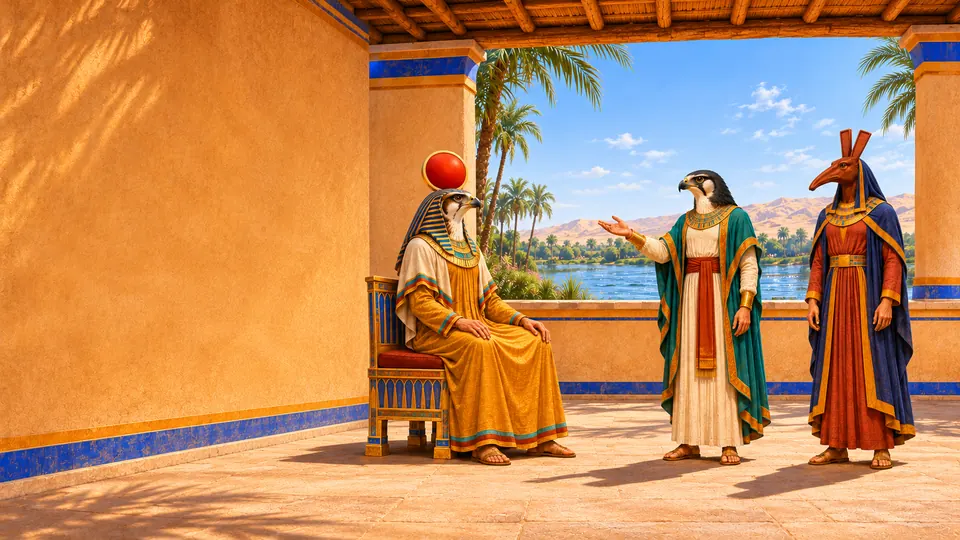
In an Egyptian story written down in the New Kingdom, Seth tells an assembly of gods why he should inherit the office of OsirisOsirisOsiris was an ancient Egyptian deity associated with the dead, life after death, renewal, and kingship. His roles appear in changing funerary texts, rituals, and judgment scenes, notably the weighing of the heart.Glossary · Click to read the explanation. He says that he stands at the front of the sun god’s boat and defeats its opponent every day. HorusHorusEgyptian god associated with kingship and the sky, also appearing as the child protected by his mother Isis in marsh and nursing traditions.Glossary · Click to read the explanation appeals to a different right. He is Osiris’s son and claims his father’s office. The story makes Seth’s strength part of his claim to kingship. [1][2]
On a stone monument from much earlier in Egyptian history, Seth’s animal appears over the name of a king. On a later statue group from Medinet Habu, Seth joins Horus in placing a crown on Ramesses III. These monuments show ways Egyptian rulers associated themselves with the god whose claim to rule the story puts in question. [3][4]
A dispute over the office of Osiris
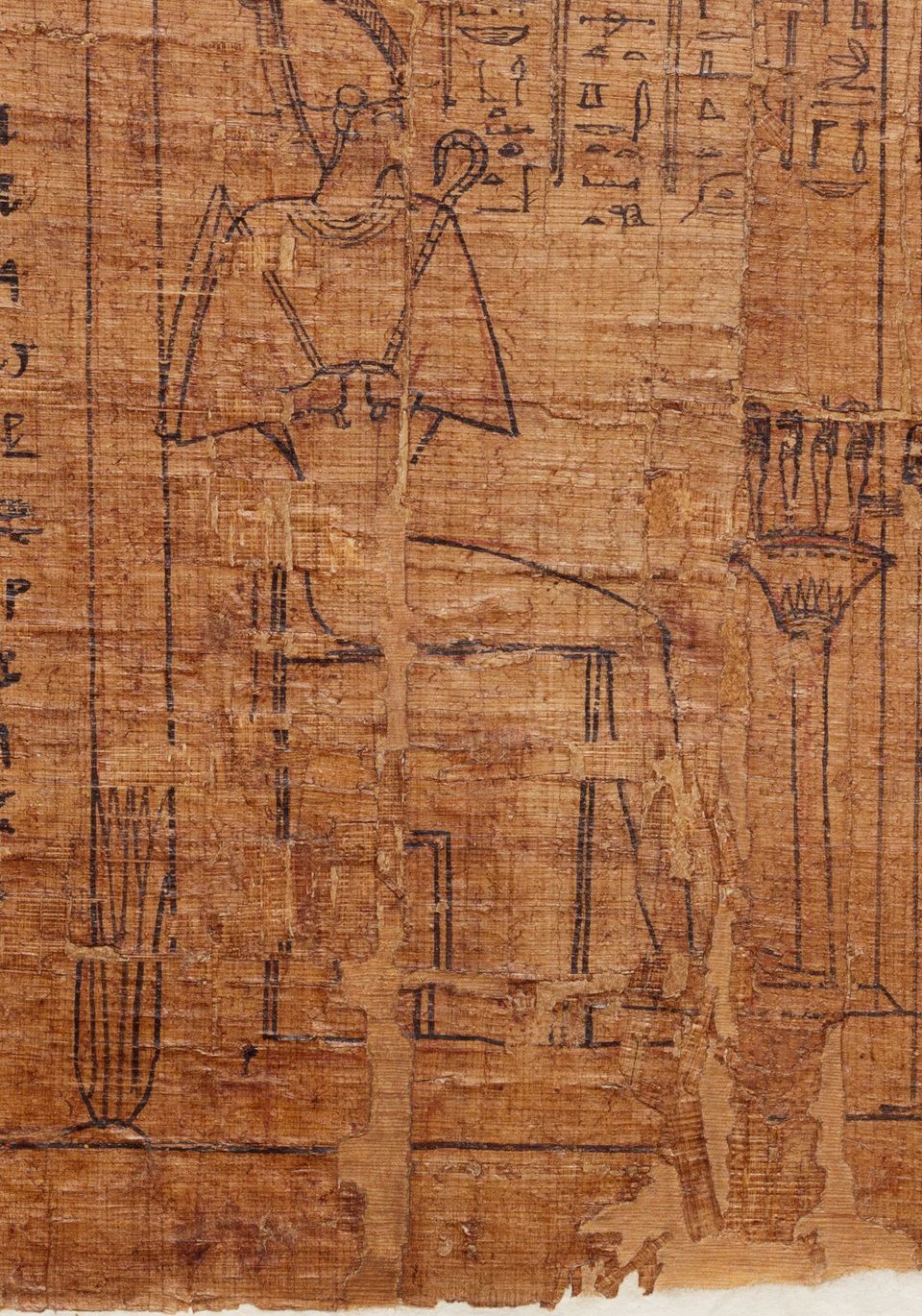
The story survives on the front of Papyrus Chester Beatty I. Miriam Lichtheim dates the surviving copy to the reign of Ramesses V and identifies its origin as Thebes. The story begins with a hearing. Shu favours Horus and Thoth asks whether an office should go to Seth while Osiris’s son is alive. The sun god Pre-Harakhti favours Seth. The written text calls Seth the son of Nut and repeatedly describes his strength. These descriptions are parts of the characters’ arguments about who should succeed Osiris. [1][2]
After years of dispute, the gods ask Neith for a ruling. She advises giving the office to Horus and making other provisions for Seth, including increasing his possessions. The debate continues. In one scene Isis approaches Seth in disguise and tells him of someone trying to take cattle that ought to pass from a dead man to his son. Seth decides that the son ought to inherit. Isis then uses his answer against him. Her argument makes him state, in a dispute about a household, the principle that could settle the succession of Osiris. [1]
The contest also tests force. Lichtheim’s translation gives a scene in which both contenders turn into hippopotamuses and descend into the water. Later Seth injures Horus’s eyes and Hathor heals them. The gods have to hear the rivals again. At the close, Seth agrees to let Horus receive his father’s office. Pre-Harakhti takes Seth into his company and says that Seth will thunder in the sky. The ending gives the two gods places of their own after the question of succession has been settled. [1][2]
The animal above a king’s name
The British Museum holds a stela placed outside the tomb of the Second Dynasty king Peribsen at Abydos. It shows his name in a serekh, a rectangular frame used for a royal name. The museum explains that a falcon representing Horus normally stands on top of this frame. On Peribsen’s stela that place is occupied by Seth’s animal. Its species is uncertain. The important identification on the stone is the god the figure represents and the king whose name it accompanies. [3]
The next king, Khasekhemwy, used the Seth animal and the Horus falcon together. The British Museum notes an interpretation linking the different choices of emblem to internal conflict. UCL’s Digital Egypt describes their political and religious significance as unclear. The two signs can be read on royal monuments, while the reason for the change remains open. [3][5]
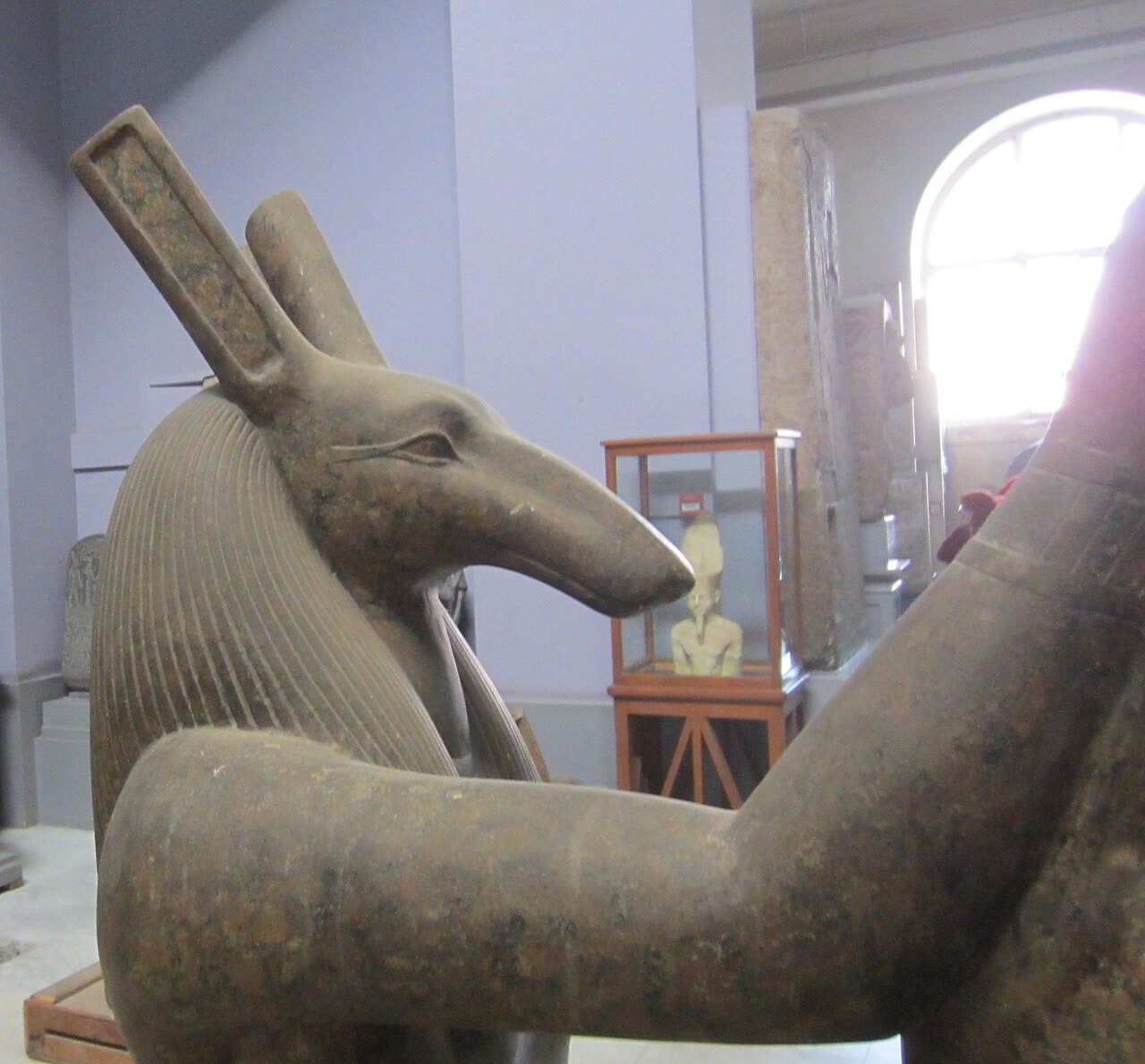
The much later granite group from Medinet Habu depicts Ramesses III between the two gods. Horus and Seth each touch the king’s White Crown, the crown of Upper Egypt. The photograph shows the head and raised arm of Seth, one part of that larger group. The two gods stand in matching postures and both take part in the coronation. [4]
At the prow of the sun god’s boat
When Seth speaks before the gods in the Contendings, he names his post at the prow. The boat carries the sun god and has to face an opponent on its daily passage. A fragment exhibited by the Metropolitan Museum of Art shows a winged, bull-headed Seth at the front of the solar boat, thrusting a spear. The head on that fragment differs from the one on the statue from Medinet Habu. The position and action in the image bring to mind the service that Seth describes in the story. [1][4][6]
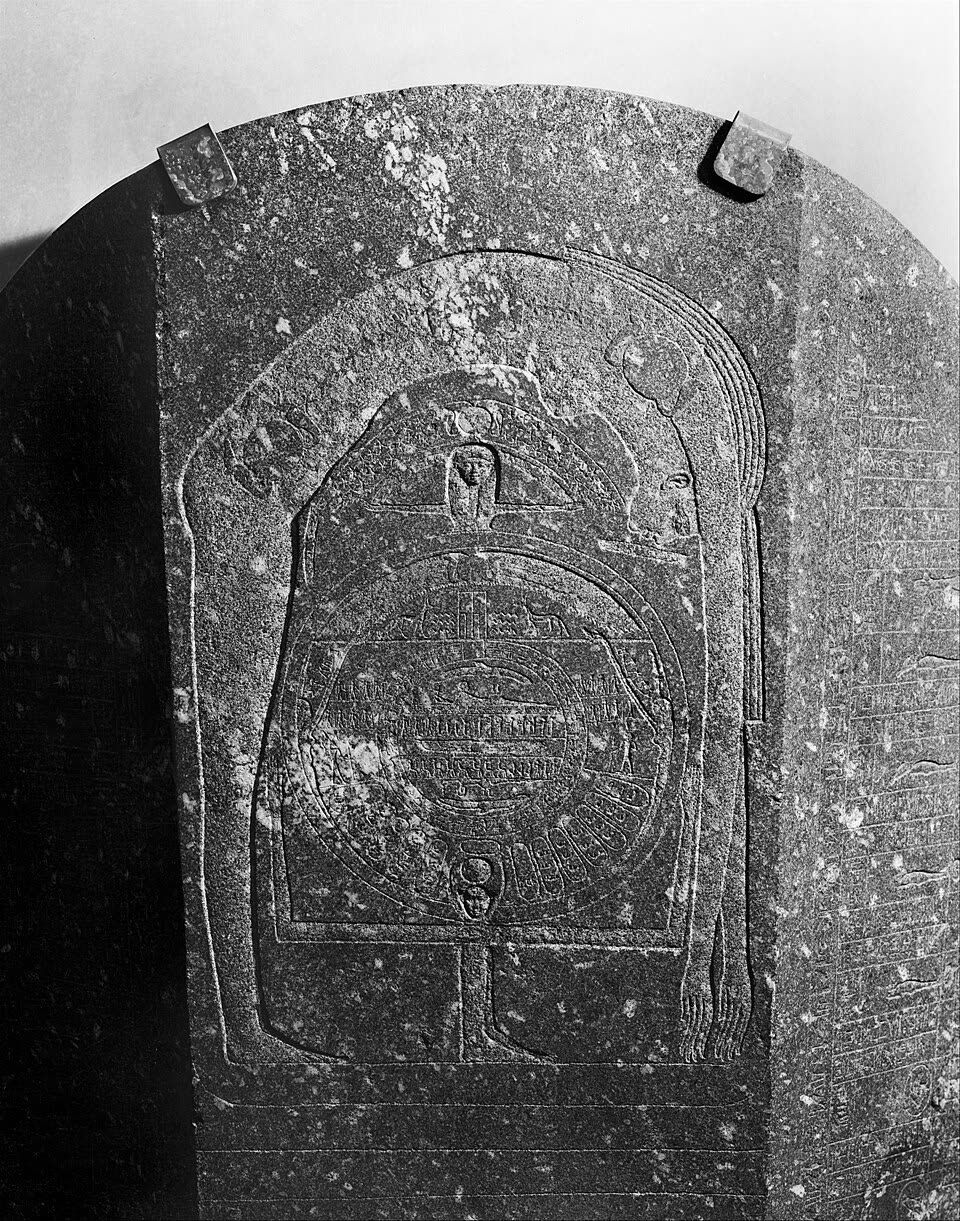
The Shabaka StoneShabaka StoneThe Shabaka Stone (British Museum EA498), inscribed c. 710 BCE, links Ptah, heart, speech, creation, and kingship; its damage, textual readings, and alleged older papyrus remain central questions.Glossary · Click to read the explanation presents another account of the dispute. Geb first gives one part of Egypt to Seth and the other to Horus, then gives Horus the whole inheritance. Later lines speak of the rivals being pacified in the temple of PtahPtahPtah is an Egyptian god associated with Memphis, craftsmanship and creationGlossary · Click to read the explanation. The text connects them with reed and papyrus placed on the two leaves of a door. It makes their reconciliation part of a description of how the Two Lands belong together. [7]
The papyrus, the temple inscription and the group statue tell their stories in different ways. In the papyrus Seth lists the strength he brings to the sun god’s service. In the written account from Memphis his reconciliation with Horus belongs to a story of royal unity. The statue group gives that unity a physical form, with both gods’ hands on the king’s crown. [1][4][7]
References and notes (7)
- Bibliotheca Alexandrina, The Digital Library of Inscriptions and Calligraphies, The Contending of Horus and Seth Read the English translation’s opening hearing, Neith’s letter, Seth’s account of his work on the sun boat, Isis’s cattle story and the award of the office to Horus. Return to the text ↑
- Miriam Lichtheim, Ancient Egyptian Literature, Volume II: The New Kingdom, Horus and Seth Read the introduction and selected passages, pp. 214–223, on the provenance and date of Chester Beatty I, the start of the hearing, the hippopotamus contest, Horus’s eyes and the decision on succession. Return to the text ↑
- British Museum, Granite stela of Peribsen, 1901,1012.97, hosted by Google Arts & Culture Read the object entry on Peribsen’s tomb, the serekh and Seth animal, and the comparison with Khasekhemwy. Return to the text ↑
- The Global Egyptian Museum, Group Statue of Ramesses The Third with Horus and Seth Read the identification of the three figures, posture of the gods, their gestures toward the White Crown, material and provenance. Return to the text ↑
- UCL Digital Egypt, King Peribsen Read the discussion of Seth in Peribsen’s name and the uncertainty about the political and religious meaning of the different signs. Return to the text ↑
- Metropolitan Museum of Art, Divine Egypt, Inside the Exhibition Read the description of the calcite fragment with winged, bull-headed Seth standing at the prow of the solar boat. Return to the text ↑
- The Shabaka Stone, translated by Miriam Lichtheim, hosted by Attalus Read the English rendering on Geb’s two rulings, the unification of Upper and Lower Egypt, and the signs on the door of the temple of Ptah. Return to the text ↑
Suggest a correction · Suggest a source for this record
Cite this record
IL Archive, «Seth, the Egyptian God Who Contests and Protects Kingship», https://ilarchive.com/en/entities/seth-egyptian-deity
Continue reading
Related readings