Entity · Deity
The Kotharat, Goddesses of Marriage and Birth at Ugarit
A reference page linking a name, group, or concept to the materials that discuss it.
- Names
- Kathirat · Kotharat · Kōṯarātu · Kṯrt
- Region
- The Levant
The Kotharat visit Danel's household in the Tale of Aqhat and are invoked in the song of Nikkal's wedding. Their titles, number and relationship to the moon are interpreted in several ways.
Estimated reading time: 5 min Published Last reviewed:
Share article
Text
Introduction
The Kotharat enter Danel's house after he receives a promise of a son. He gives them food and drink, and they depart on the seventh day. In a song about the marriage of the moon god Yarikh and Nikkal, an invocation to the same goddesses closes the tablet. The two poems belong to the Late Bronze AgeLate Bronze AgeAn archaeological period around 1600–1200 BCE in much of the Near East, with international diplomacy, exchange and religious diversity; its endpoints vary by region.Glossary · Click to read the explanation written tradition of UgaritUgaritAncient city and kingdom at Ras Shamra on the Syrian coast, flourishing between the fourteenth and early twelfth centuries BCE and preserving multilingual archives.Glossary · Click to read the explanation, but they put the goddesses in different situations. Their arrival in one story and their invocation in the other connect a household's hopes for children with the occasions on which divine help was sought. [1][2][3]
A visit to Danel's house
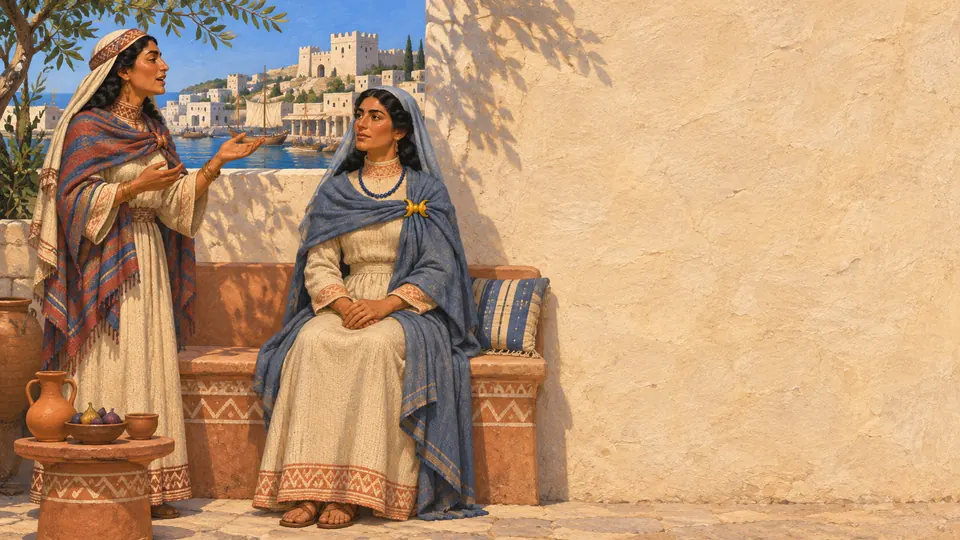
In the first tablet of the Tale of Aqhat, Danel's desire for a son prompts Baal to appeal to El. El blesses Danel and speaks of the conception of a child and of the duties the son will perform. Danel repeats the promise and goes home, where the Kotharat enter. Their arrival follows the promise, and the narrative pauses to recount how Danel receives them. He slaughters an ox and gives them food and drink. The lines repeat the hospitality in pairs of days, through day six, and mark the goddesses' departure on the seventh. [1]
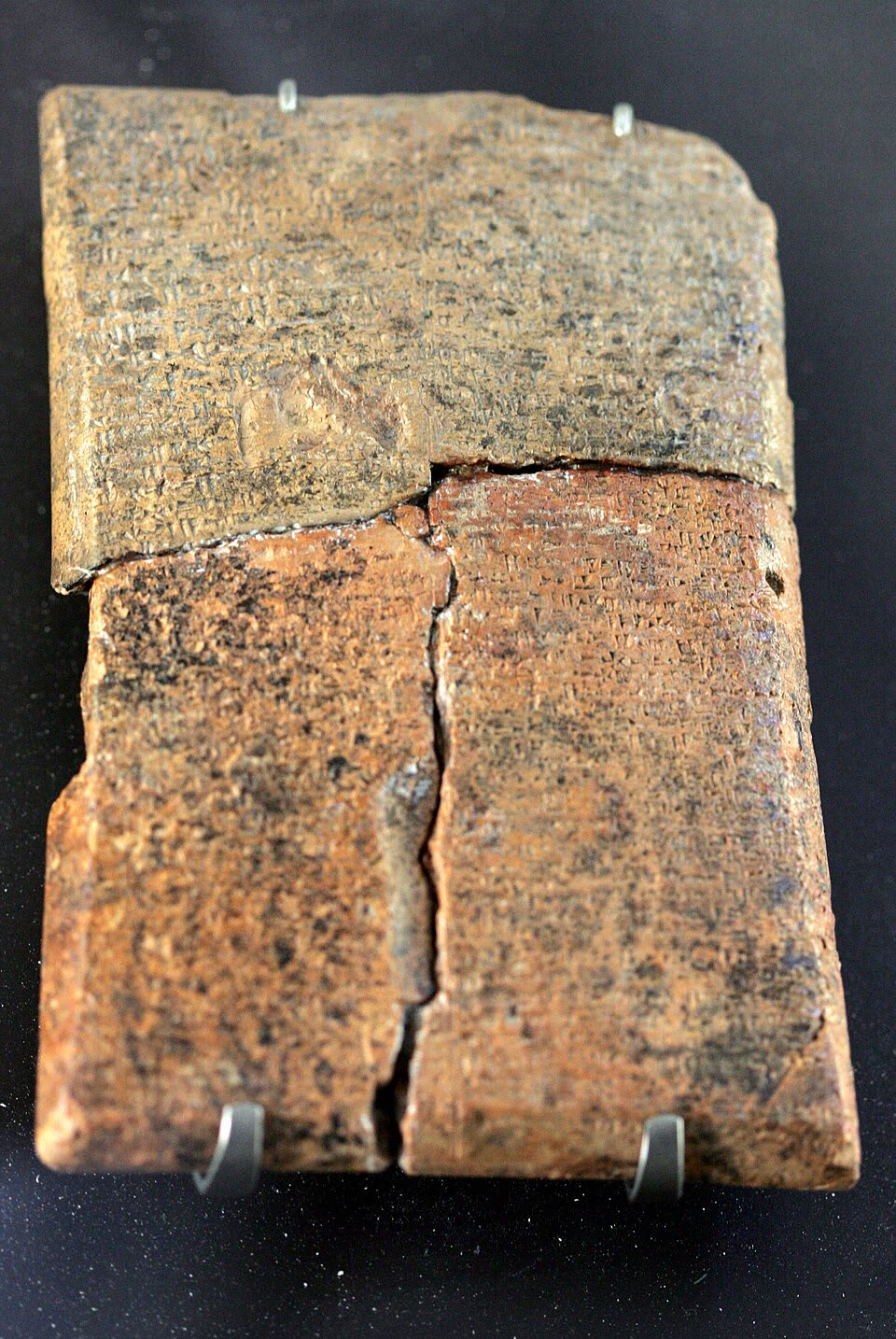
After the women leave, the poem calls them skilled in matters of conception and childbirth. Danel sits down to count the months, but the text then breaks off. The preserved episode tells how the goddesses were received and what was expected from them. The actual moment of birth falls outside the surviving lines. The third tablet, shown here, belongs to the later part of the same narrative. The Kotharat's visit is recorded on the first tablet, Louvre AO 17324. [1][4][5]
In the song of Nikkal's marriage
The Nikkal tablet, AO 19995, is a clay tablet from the acropolis of Ras Shamra, excavated in 1933. In the song on it Yarikh offers a marriage payment, with precious materials and land, to secure Nikkal. A broker proposes other brides, but Yarikh insists on Nikkal. Near the end of that part of the poem the wedding gift is brought and Nikkal's relatives take part in weighing it. Then the singer turns to the Kotharat. The arrangement links the invocation with the marriage through its place on the tablet and through the language of gifts and celebration. [1][2]
Dennis Pardee has compared the handwriting with that of a scribe named Ṯabʾilu, whose name occurs on other tablets discovered in the same area. He considers the attribution likely because of the overall forms of the signs and the proximity of the finds. In his account, the most distinctive signs associated with that scribe are absent from this particular tablet. The inscription's subject and the question of who wrote this copy rest on different evidence. [6]
The final lines are difficult. In Gibson's translation the singer knows a formula for addressing the goddesses and asks a younger Kotharat to applaud in the presence of a woman named Prbht. Aicha Rahmouni discusses another approach, in which the expressions that follow the invocation are names or epithets of individual goddesses. She regards the proposed identifications as uncertain. The references to the group and to wedding gifts place the lines in the context of marriage whatever the resolution of those details. [1][3]
Damage affects the earlier parts of the song as well. Robert Allan's examination of photographs of line 15 identifies surfaces and wedges that differ from the signs reported in earlier copies. He proposes a changed reading of certain signs and leaves interpretation for further study. The differences explain why printed versions can give quite different accounts of individual invocations while agreeing that the Kotharat appear in the song. [3][7]
Titles and ritual company
An epithet for the group occurs in both compositions. Gibson translates it as daughters of the crescent moon with a comparison to swallows. Rahmouni examines several other readings, including an association with brightness and a reference to a deity named Hll in one part of the Nikkal song. She distinguishes that possibility from the passages where the moon god Yarikh acts and speaks. The title can suggest a lunar association without giving a straightforward account of the goddesses' parentage. [1][3]
RitualRitualAn organised or distinguished practice meaningful to a community; it may leave traces, but its form alone does not reveal an associated doctrine.Glossary · Click to read the explanation and scholarly texts set the Kotharat among other gods. In one Ugaritic list the group is entered before Yarikh. The corresponding AkkadianAkkadianAn ancient East Semitic language written in cuneiform from the third millennium BCE; its varieties include Babylonian and Assyrian, and it served in international diplomacy.Glossary · Click to read the explanation list places the divine midwives before Sin, the moon god. In a different part of the Ugaritic sacrificial list the goddesses follow El, without an adjacent entry for Yarikh. Rahmouni draws attention to both placements. The correspondence with divine midwives gives a separate basis for understanding their role, alongside the literary descriptions of the bed of conception and the preparations of a bride. [1][3]
The group is often understood to number seven. Rahmouni cites the parallels with groups of divine birth attendants and leaves room for uncertainty about the individuals. Alfonso Archi discusses an earlier EblaEblaAncient city at Tell Mardikh, southwest of Aleppo, Syria. Its Palace G archives illuminate third-millennium BCE administration, language, and cult; the site has later occupation phases.Glossary · Click to read the explanation record in which seven cloaks were supplied for a group he identifies with these goddesses. The record is evidence from a different place and time. It supports the comparison of the groups while the number and names in the Ugaritic wedding song depend on how its closing lines are read. In the Aqhat episode, the number of days is explicit. What Danel offers is described in detail, and the group moves through the house together. [1][3][8]
References and notes (8)
- John C. L. Gibson, Canaanite Myths and Legends, second edition Read the translation and notes on KTU 1.17 columns I–II and KTU 1.24, especially Danel's offering, the seventh-day departure and the two parts of the wedding tablet. Return to the text ↑
- Musée du Louvre, Ugaritic Tablet AO 19995 Read the inventory, findspot, excavation date, material, date range and identification as KTU 1.24. Return to the text ↑
- Aicha Rahmouni, The Epithets of the Kôtarātu Goddesses at Ugarit Read pp. 55–65 on attestations, titles, proposed number and names, and the bilingual god and sacrificial lists. Return to the text ↑
- Musée du Louvre, Tale of Aqhat, AO 17324 Read the first tablet's inventory, archaeological origin and identification as KTU 1.17. Return to the text ↑
- Edition des ugaritischen poetischen Textkorpus, Corpus of Ugaritic Tablets Read the catalog rows identifying KTU 1.17–1.19 and the separate find and inventory data for the Nikkal tablet. Return to the text ↑
- Dennis Pardee, Oriental Institute Annual Report 2009–2010 Read the discussion of RS 5.194, neighboring finds and the palaeographic grounds for attributing the tablet to Ṯabʾilu. Return to the text ↑
- Robert Allan, KTU 1.24 (= RS 5.194):15, A Revised Reading Read the examination of the disputed line's surviving wedges, their relation to breaks and Allan's conclusions about earlier readings. Return to the text ↑
- Alfonso Archi, Nouvelles Assyriologiques Brèves et Utilitaires, 2018/1, Note on the Goddesses in the Ebla Texts Read the text of ARET XII 344, the seven cloaks, and the proposed parallel to goddesses in the closing lines of KTU 1.24. Return to the text ↑
Suggest a correction · Suggest a source for this record
Cite this record
IL Archive, «The Kotharat, Goddesses of Marriage and Birth at Ugarit», https://ilarchive.com/en/entities/kotharat
Continue reading