Entity · Deity
Yarikh, the Moon God of Ugarit
A reference page linking a name, group, or concept to the materials that discuss it.
- Names
- Yaraḫ · Yariḫ · Yariḫu · Yrḫ
- Region
- The Levant
Yarikh is the moon god of Ugarit and the bridegroom of Nikkal in an Ugaritic wedding song. The city’s offering lists also name him, including in a ceremony for the month of new wine.
Estimated reading time: 5 min Published Last reviewed:
Share article
Text
Introduction
Yarikh is the moon god named in the late Bronze AgeLate Bronze AgeAn archaeological period around 1600–1200 BCE in much of the Near East, with international diplomacy, exchange and religious diversity; its endpoints vary by region.Glossary · Click to read the explanation texts of UgaritUgaritAncient city and kingdom at Ras Shamra on the Syrian coast, flourishing between the fourteenth and early twelfth centuries BCE and preserving multilingual archives.Glossary · Click to read the explanation. In the wedding song catalogued as KTU 1.24 he seeks Nikkal, promises a bride-price in precious materials, and insists on the match when offered other brides. RitualRitualAn organised or distinguished practice meaningful to a community; it may leave traces, but its form alone does not reveal an associated doctrine.Glossary · Click to read the explanation texts place him among the recipients of offerings, including alongside Nikkal at a ceremony timed by the lunar month. The two kinds of evidence let us see a god addressed in ceremony and a character who speaks for himself in a song. [1] [2]
The name of the moon
The consonants yrḫ can designate the moon, the lunar month, or the moon god in Ugaritic. Gabriele Theuer compares this range of meanings with related forms in HebrewHebrewA Northwest Semitic language of the Canaanite group, encompassing Iron Age epigraphy, Biblical, Rabbinic, medieval and Modern Hebrew; its scripts and pronunciations changed over time.Glossary · Click to read the explanation, Aramaic, and Phoenician. In the wedding song the same name belongs to a figure identified by his celestial light. Nicolas Wyatt translates an epithet in the scene of the marriage proposal as the luminary of the heavens. At another point in the song an address to Yarikh names him for his graciousness among the gods. Light and graciousness enter there as ways of speaking about one participant in the negotiations. [1] [2]
The promises to Nikkal
In the best-preserved part of the negotiation, Yarikh makes his appeal to Harhab. Translations differ in their understanding of Harhab’s title. John W. Welch renders it as king of summer, while Robert Allan argues that the noun in this context may concern circumcision, a reading followed by Wyatt. The title is debated because a word for summer or its produce makes sense elsewhere in the Ugaritic corpus. The scene itself clearly gives Harhab a speaking role in the choice of bride. [1] [3] [4]
The proposal imagines Nikkal entering Yarikh’s household. Yarikh offers a thousand units of silver, ten thousand of gold, and gems of lapis lazuli. His speech also promises to turn her land into vineyards and orchards. The cultivated fields are part of the bridegroom’s offer, alongside the wealth that can be counted and weighed. Harhab puts forward an alliance involving Pidray, daughter of Baal, and another involving a bride whose name is often given in consonants as Ybrdmy. Yarikh answers that his wedding will be with Nikkal. [1] [3]
In the weighing scene, Nikkal’s relatives handle the balance and its contents. Her father sets the beam, her mother tends the pans, and her brothers arrange the ingots. Welch reads this part of the song as an echo of the earlier list of promised gifts. A later section, set off on the tablet by a horizontal line, invokes the goddesses known as the Kotharat. Klaas Spronk identifies features of an incantation in the group’s invocation and naming. The association with marriage and childbirth is present in the text. The specific circumstances of a performance remain difficult to recover. [3] [5]
Offerings and a divine banquet
Yarikh is listed in KTU 1.47 and KTU 1.118, two documents that name gods in a sequence, in each case near the Kotharat. Theuer cautions that the relative place of a name in a list gives only a limited indication of general rank. The occasion and purpose of a rite affect which gods appear and in what order. In the harvest ritual preserved in KTU 1.41 and KTU 1.87, the text sets offerings at specified times during the month of new wine. A sequence at the full moon in the temple of the goddess names Yarikh and then Nikkal. This is an occasion on which the pair found in the wedding song occurs in a record of offerings. [2]
A third setting appears in KTU 1.114, a text that opens with a feast of El and ends with directions for a remedy. Yarikh is likened to a dog as he handles meat under the table. A deity who knows him feeds him, and one who does not recognize him strikes him. Astarte and AnatAnatAnat is an ancient Near Eastern goddess attested at Mari, Ugarit and in Egypt. In Ugaritic narratives she is a warrior, Baal’s ally and a mourner for him; her roles vary by tradition and context.Glossary · Click to read the explanation give him different cuts of meat, and the gatekeeper protests that such food should not be served to a dog. Gregorio del Olmo Lete discusses the possible functions of the comparison in the story and its relation to the ending. The figure dignified by the title of celestial luminary in the wedding song can also appear in an awkward position among the gods. [2] [6]
The tablet found at Ras Shamra
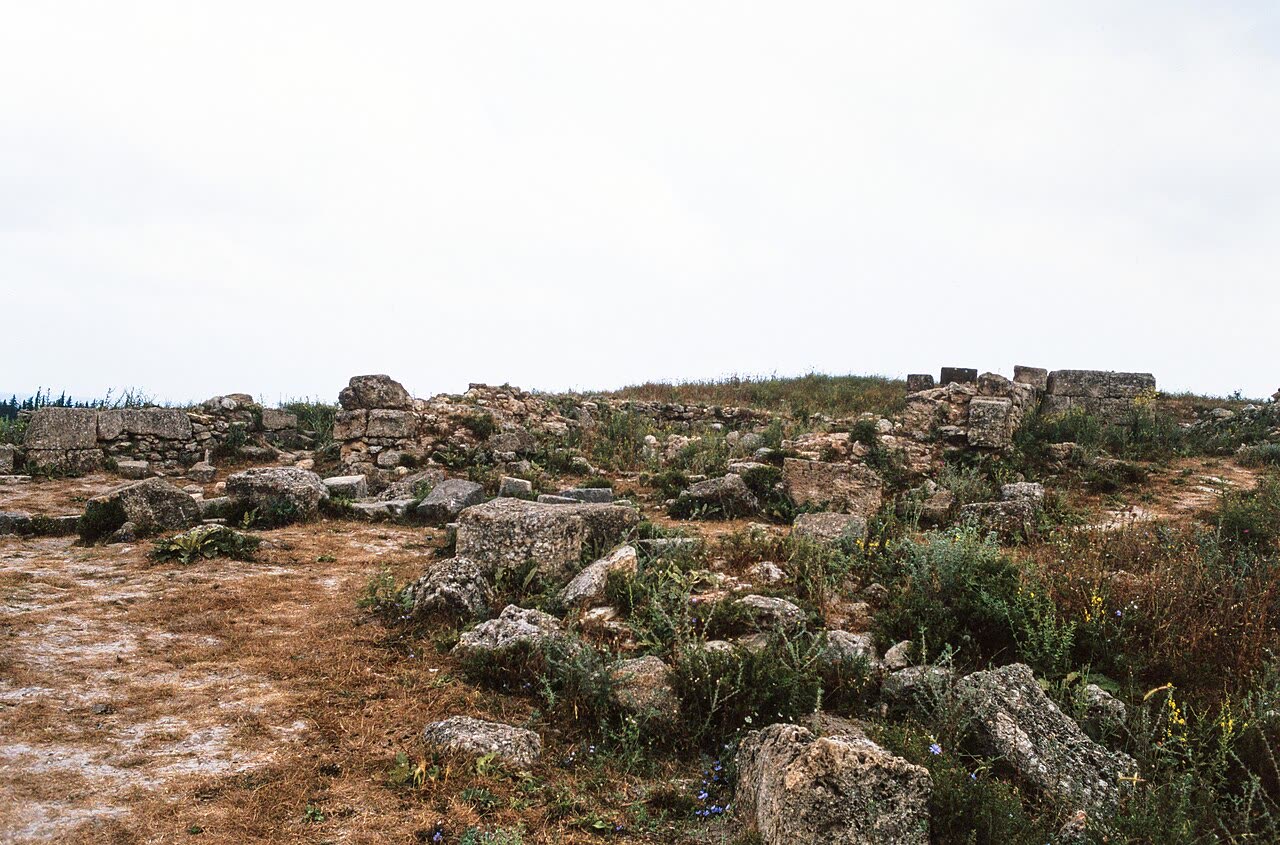
The Louvre catalogues the clay wedding tablet as AO 19995, excavated in 1933 on the acropolis of Ras Shamra. The Göttingen corpus index gives both the excavation number, RS 5.194, and the traditional findspot label Tomb IV. A study of the excavation notes places the tablet in the trench associated with Tomb IV at survey points 81–82, where several other clay fragments were found. The photograph shows the Temple of Baal area of the acropolis. It gives the setting of the excavation district in which the wedding song was recovered. [7] [8] [9]
Dennis Pardee compared the wedges on the wedding tablet with those in other texts associated with the Ugaritic scribe Ṯabʾilu. He proposed the same scribe for the wedding song on the basis of the general execution of the signs and the proximity of related finds. The writing fixes one form of the song in the local scribal record, where Yarikh appears alongside the records of offerings and the account of El’s feast. [10] [2] [6]
References and notes (10)
- Nicolas Wyatt, Religious Texts from Ugarit Pp. 335–341, translation and notes on KTU 1.24, divine epithets, bride-price, rivals and the closing invocation Return to the text ↑
- Gabriele Theuer, Der Mondgott in den Religionen Syrien-Palästinas Section 1.2.1, the name and common noun, pp. 54–55, 85–86 and 103–104, harvest offerings, god lists and KTU 1.114 Return to the text ↑
- John W. Welch, Chiasmus in Ugaritic In Chiasmus in Antiquity, pp. 43–45, KTU 1.24 lines 16–50, promises and weighing of the bride-price Return to the text ↑
- Robert Allan, Now That Summer’s Gone: Understanding Qz in KTU 1.24 Discussion of Harhab, the competing translations of qz, and parallels in KTU 1.19 and 1.20 Return to the text ↑
- Klaas Spronk, The Incantations P. 285, KTU 1.24 lines 40–50, the paragraph divider and invocation of the Kathirat Return to the text ↑
- Gregorio del Olmo Lete, The Marzeaḥ and the Ugaritic Magic Ritual System Pp. 225–226 and 232–234, role of the dog and translation of KTU 1.114 lines 1–14 and 29–31 Return to the text ↑
- Musée du Louvre, Ugaritic tablet AO 19995 Inventory and physical characteristics, Ras Shamra acropolis, excavated in 1933 Return to the text ↑
- Edition des ugaritischen poetischen Textkorpus, Corpus of Ugaritic Tablets Row for RS 5.194, KTU 1.24, AO 19995 and the acropolis Tomb IV designation Return to the text ↑
- Robert Hawley, Dennis Pardee and Caroline Sauvage, The Scribe Ṯabʾilu as Attested in the Epigraphic Finds from the Fifth Season Findspot table and discussion of the Tomb IV trench and the neighboring acropolis finds, pp. 396–401 Return to the text ↑
- Robert Hawley, Dennis Pardee and Carole Roche-Hawley, The Scribal Culture of Ugarit The scribe Ṯabʾilu among the scribes of Ugarit, with Pardee’s identification of his hand Return to the text ↑
Suggest a correction · Suggest a source for this record
Cite this record
IL Archive, «Yarikh, the Moon God of Ugarit», https://ilarchive.com/en/entities/yarikh