The Shepherd and the Farmer Chapter 1
The Wooing of Inanna
Utu favors Dumuzi, but Inanna says she wants to marry a farmer. Dumuzi sets his wool and milk against the farmer’s cloth and beer. A speaker whom Jacobsen tentatively identifies as Inanna offers grazing, water, wheat and beans. Jacobsen reads the close as a reconciliation.
SourcesTurn the pages with the arrows, the arrow keys or a swipe.
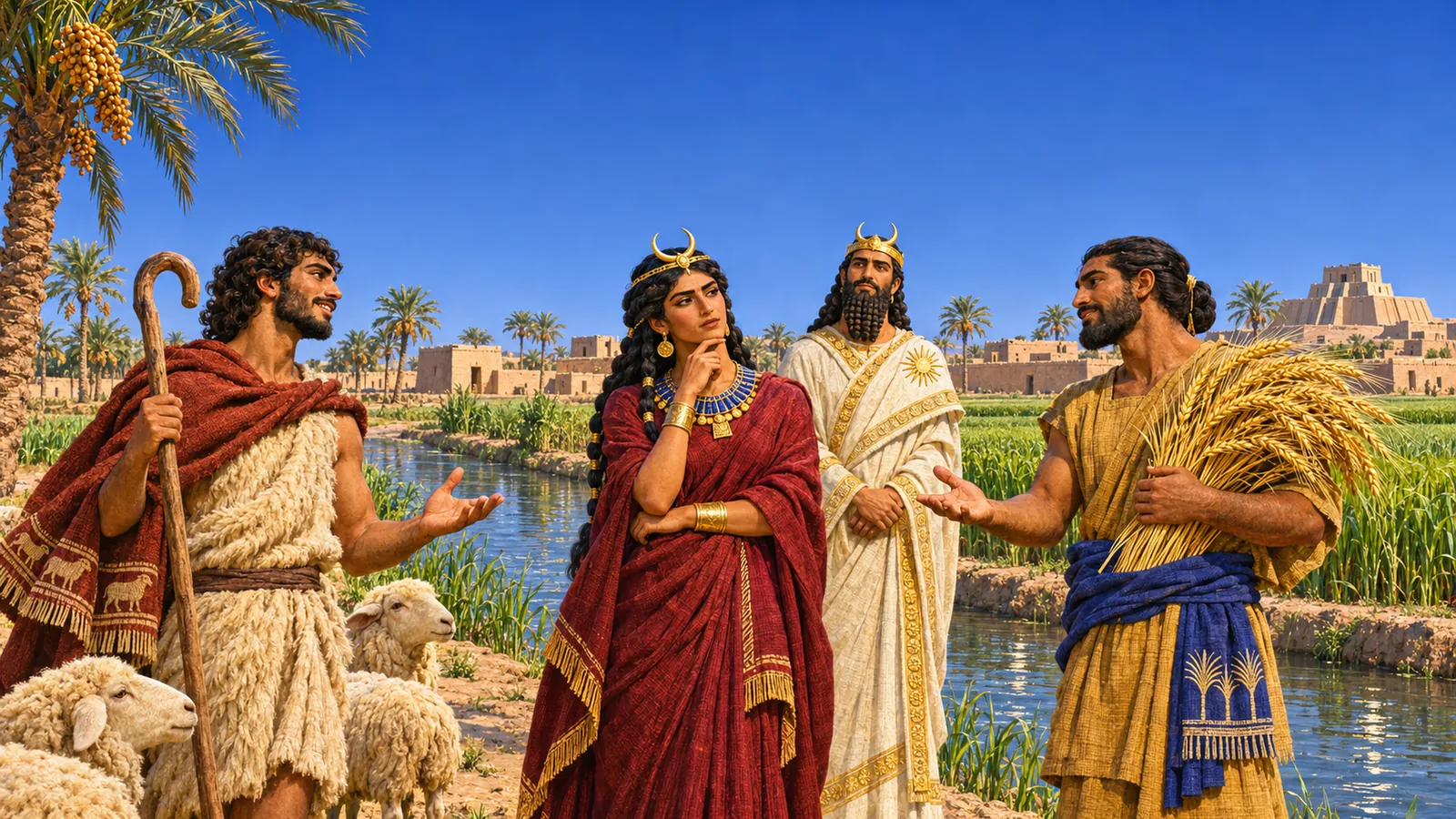
TWO SUITORS
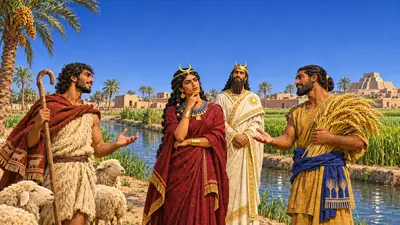
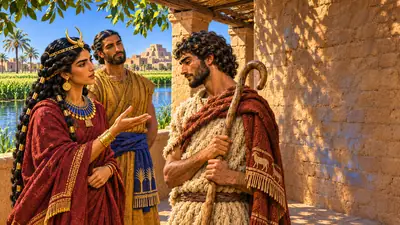
In Thorkild Jacobsen’s account, the farmer Enkimdu and the shepherd Dumuzi both seek to marry Inanna. Her brother Utu favors Dumuzi.
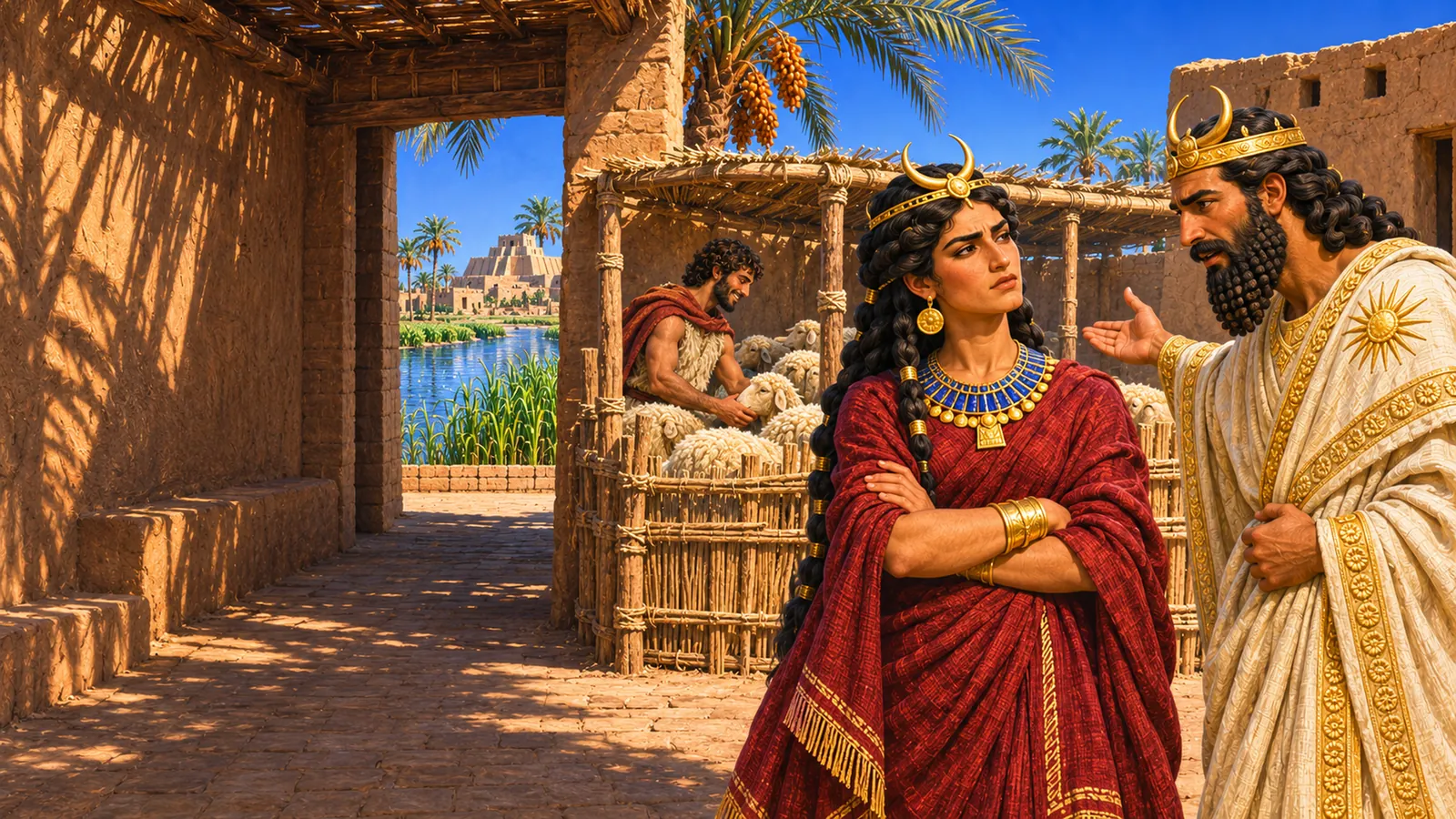
The verse introduces Inanna’s brother Utu as a warrior and a hero. He tells his sister to marry the shepherd and asks why she is unwilling.
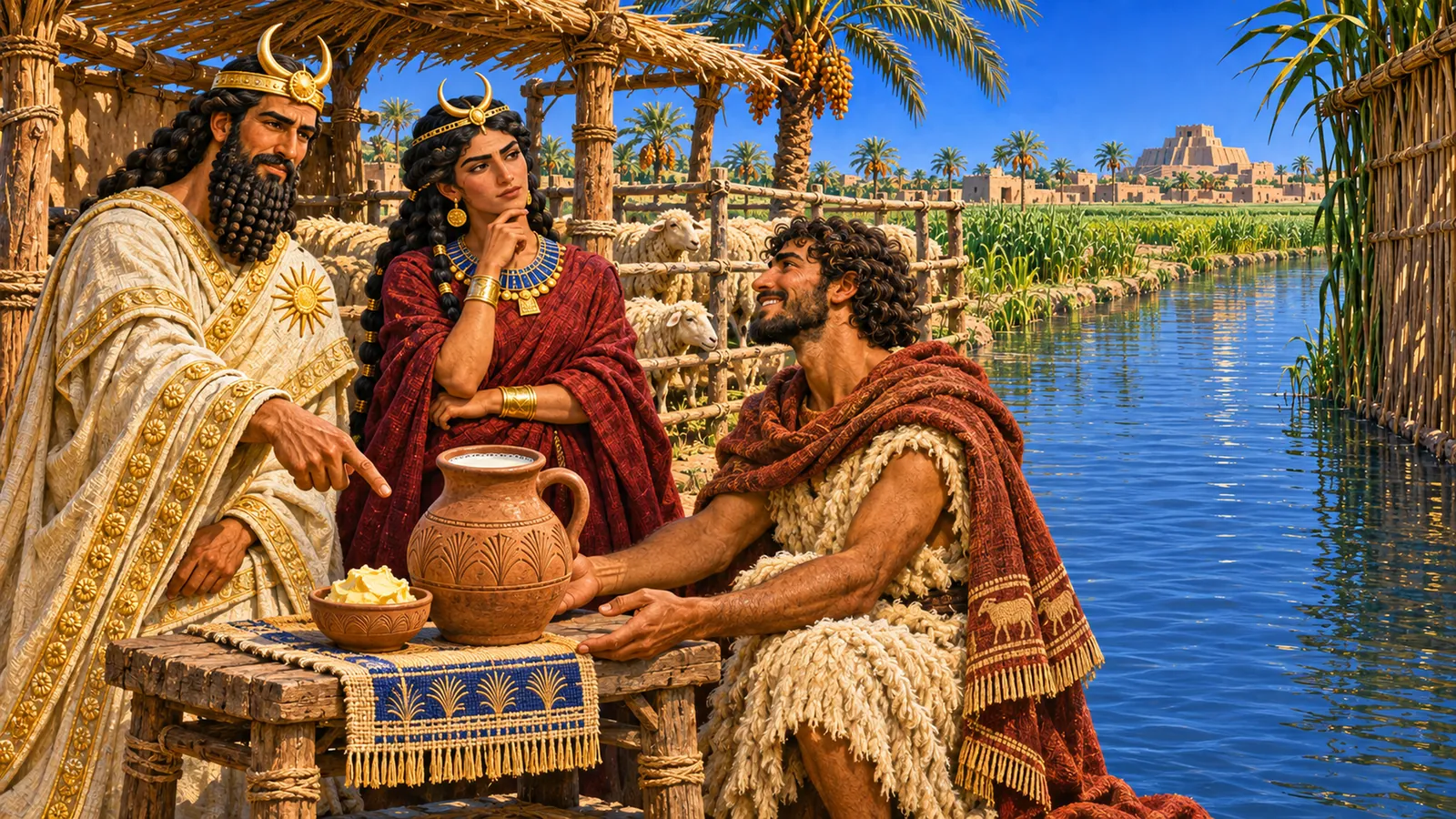
Utu praises the quality of the shepherd’s butter and milk. He says all the shepherd’s produce is excellent and names Dumuzi as the man Inanna should marry.
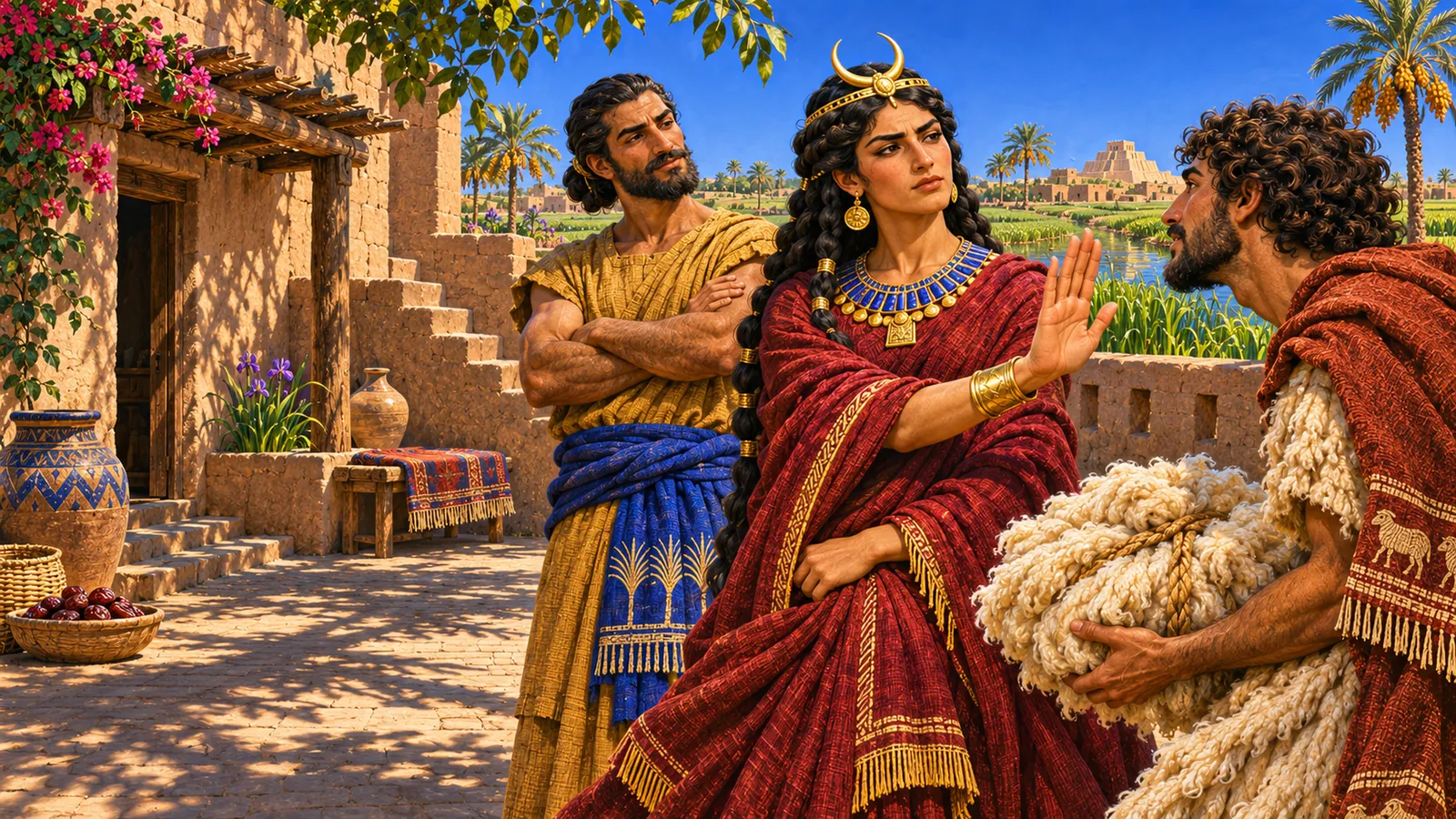
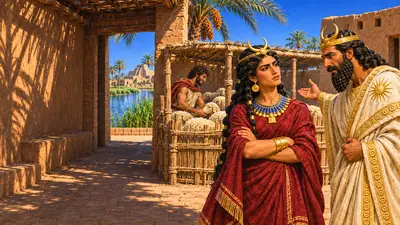
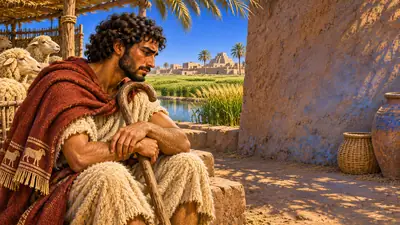
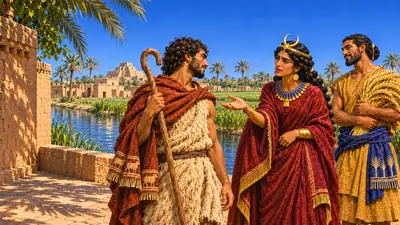
Inanna says she will never marry the shepherd. She will never wear his tufted cloth, and she will never let even his finest wool touch her.
THE FARMER
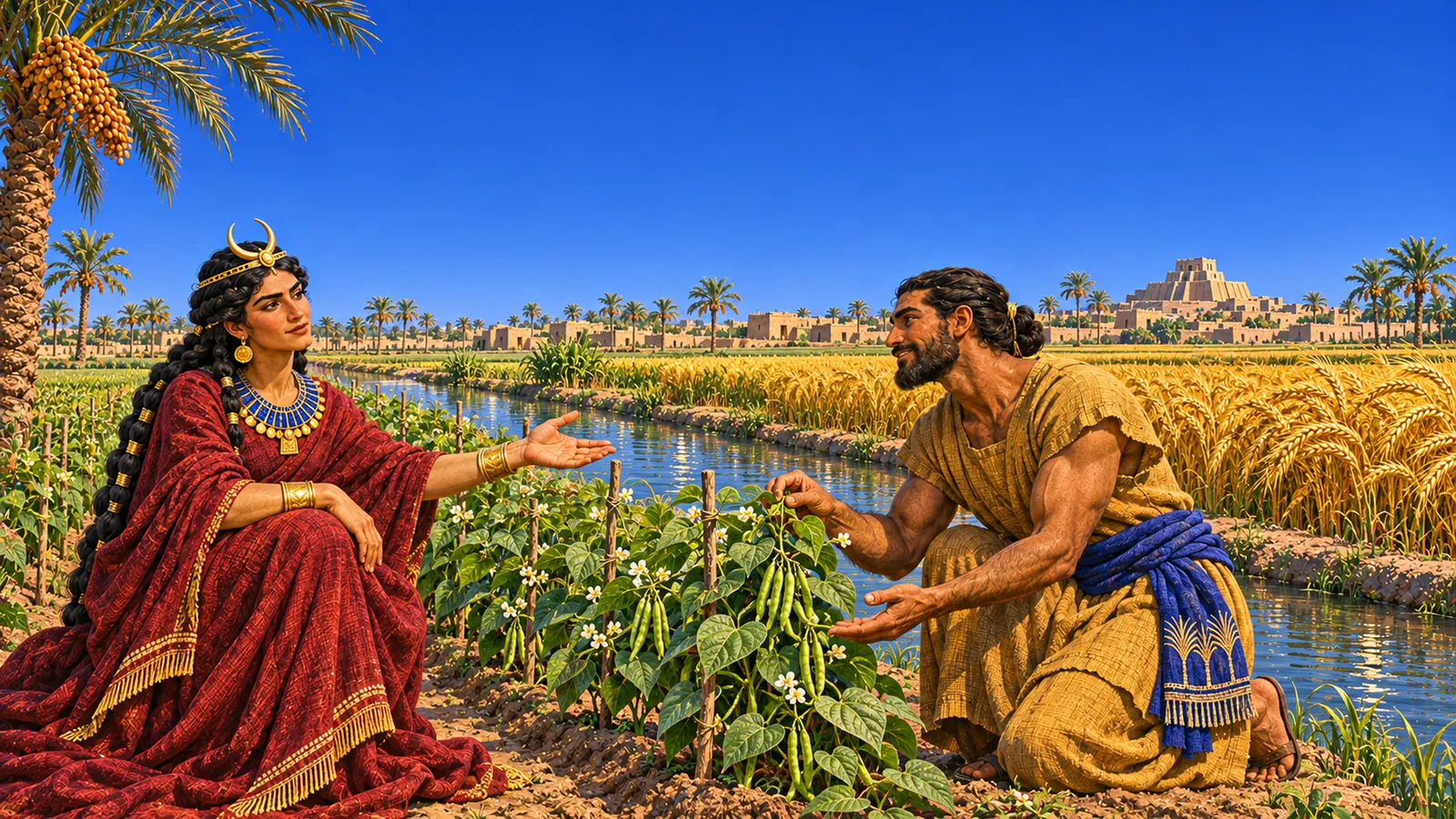
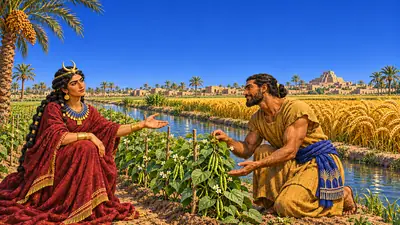
Inanna insists that only a farmer will marry her. She describes the husband she wants as a man who knows how to grow beans and grain.
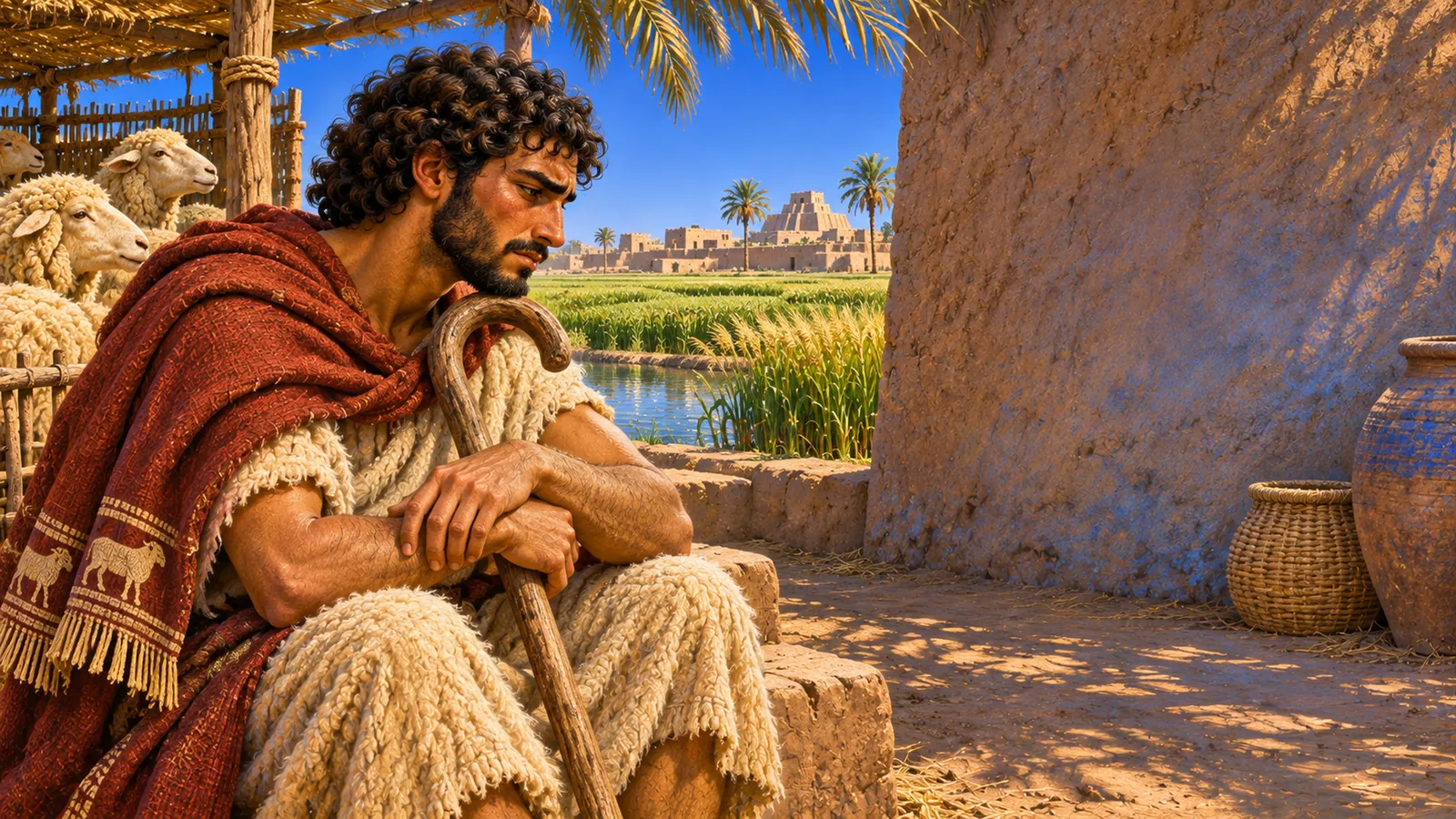
In Jacobsen’s telling, the rejection leaves Dumuzi discouraged and wounds his pride. He begins to consider what he can offer to match everything the farmer produces.
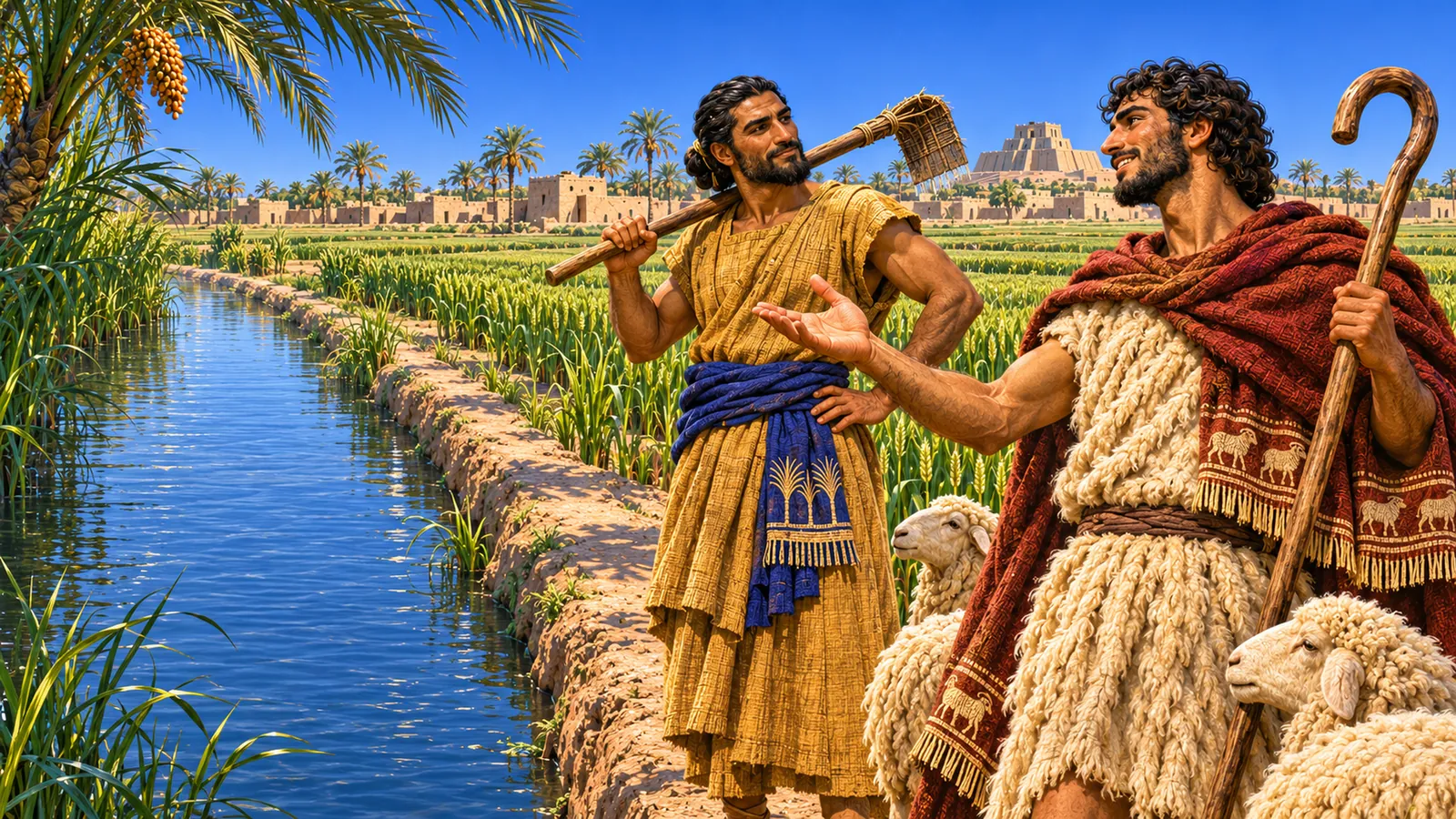
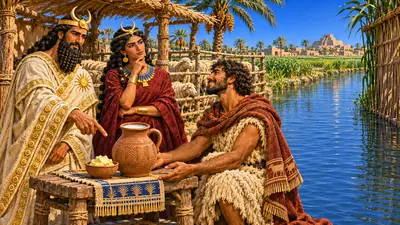
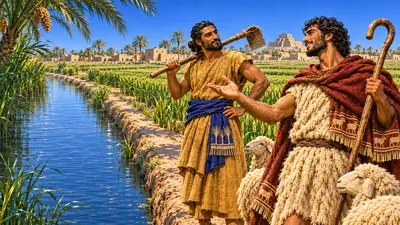
Dumuzi asks what makes the farmer better than him. He names Enkimdu as the man of the dike and canal, and returns to the same question.
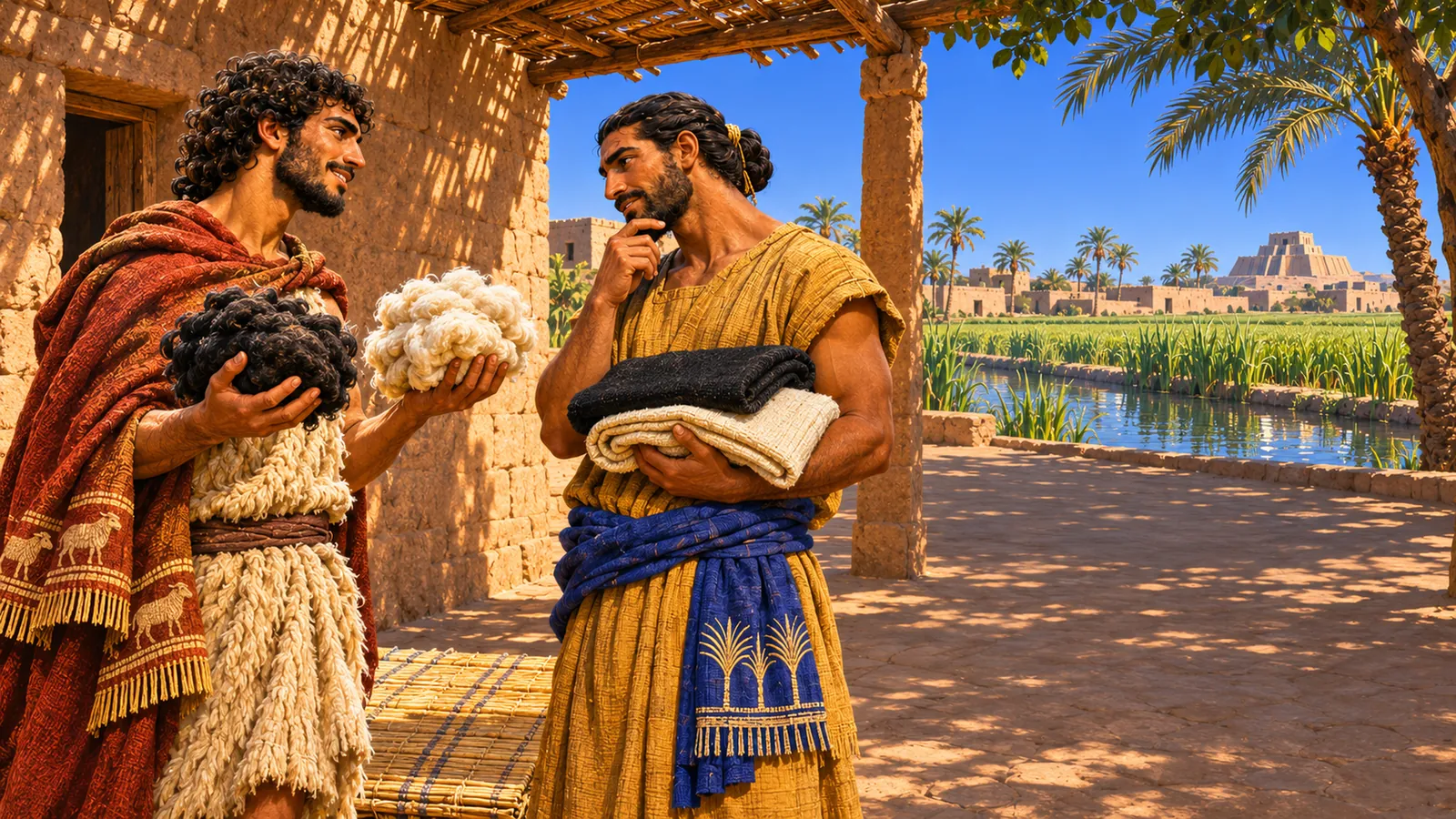
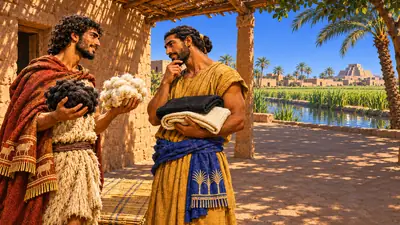
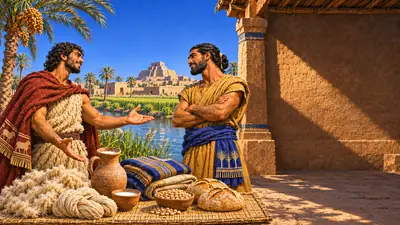
Dumuzi imagines what he would give if Enkimdu offered him cloth. He would give black wool in return for black cloth and white wool in return for white cloth.
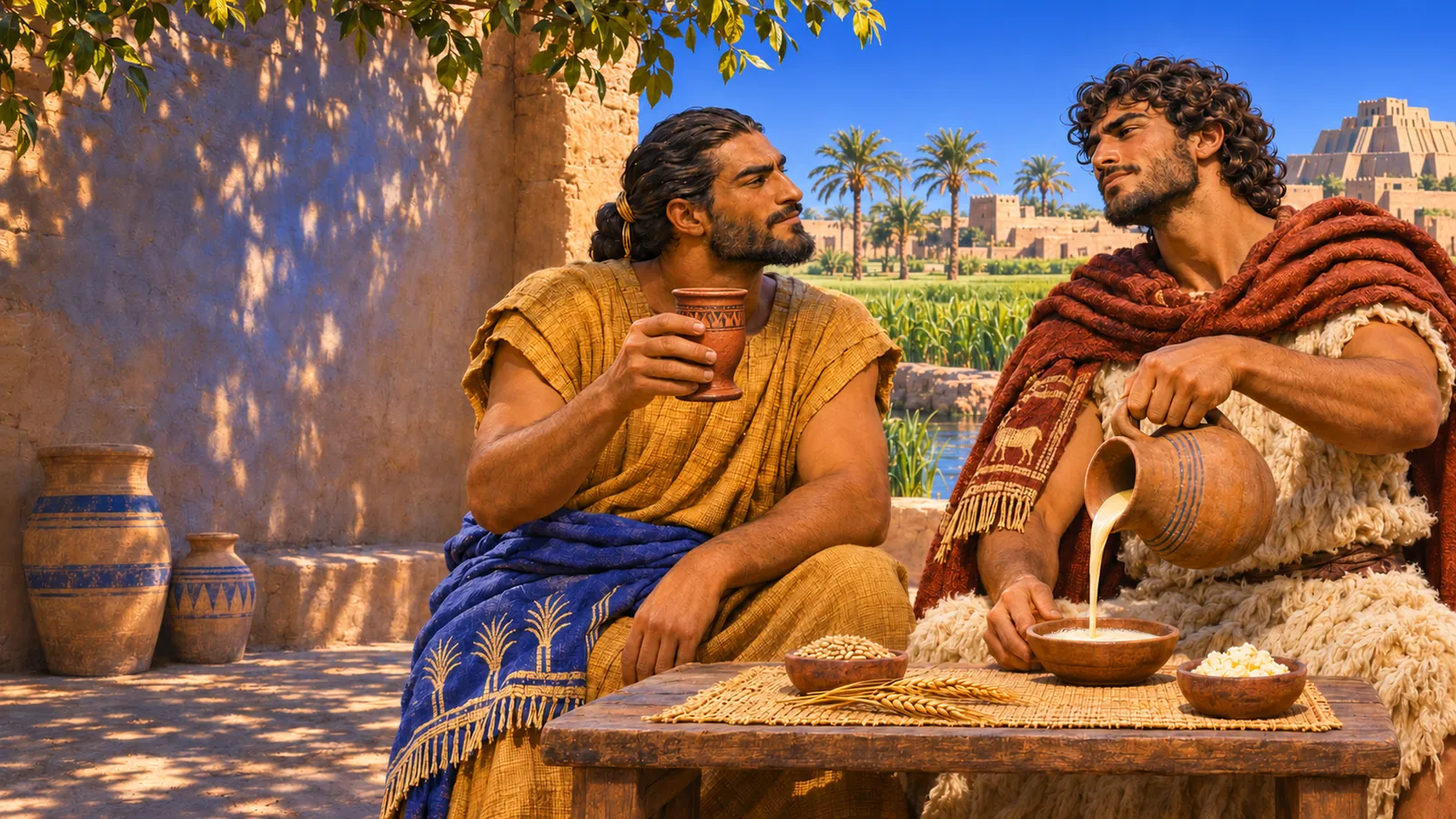
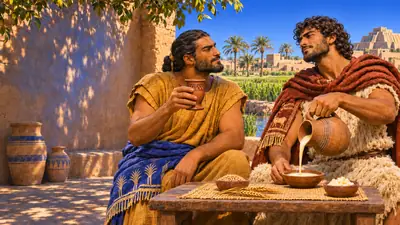
Dumuzi continues his comparison with two drinks. If the farmer poured him some of his best beer, he would pour the farmer some of his yellow milk in return.
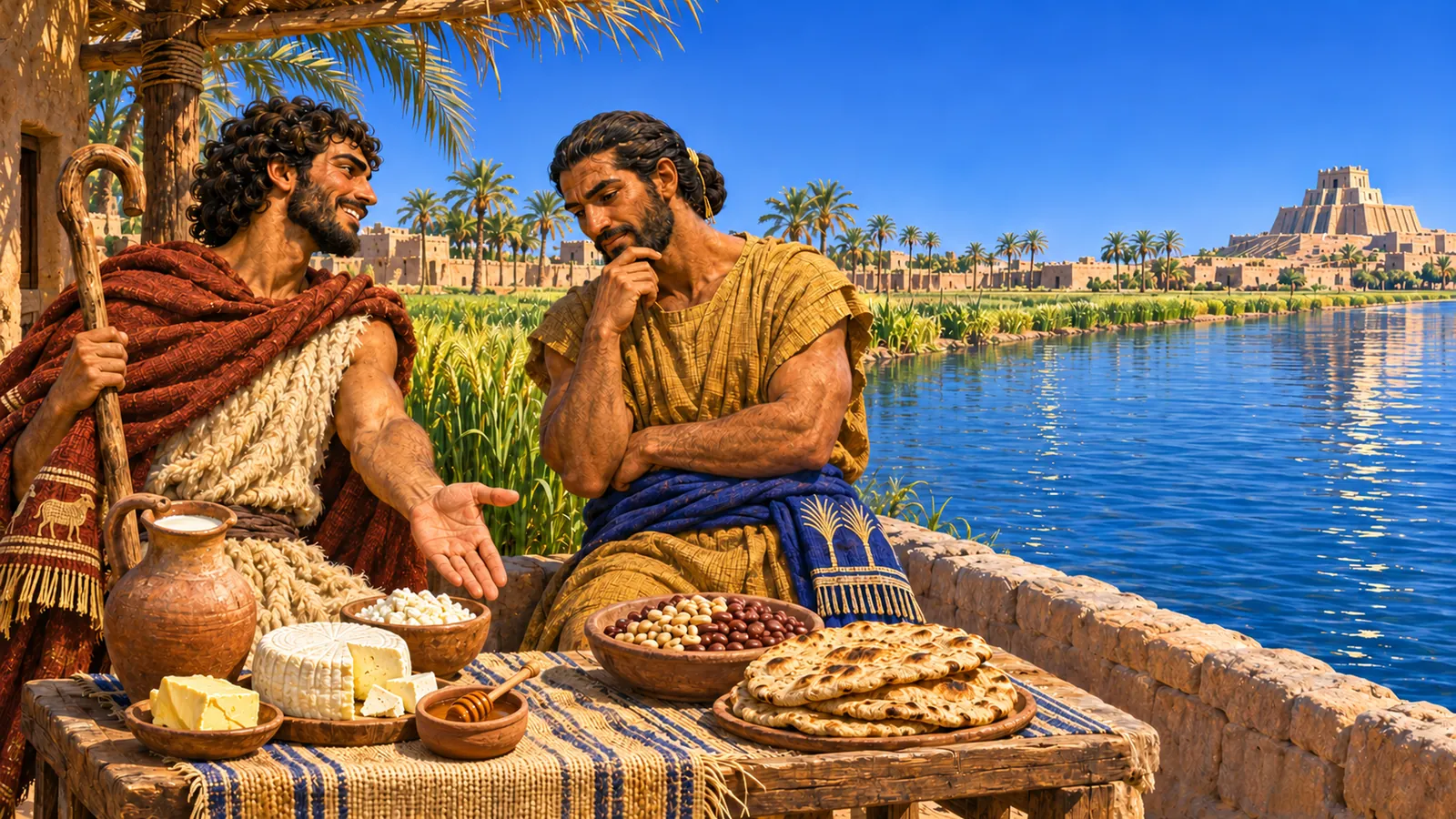
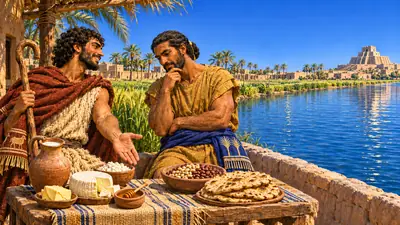
Jacobsen lists more of Dumuzi’s matches for the farmer’s produce, including small cheeses for beans and fresh curds with honey for bread. Dumuzi reckons he will still have butter and milk left over.
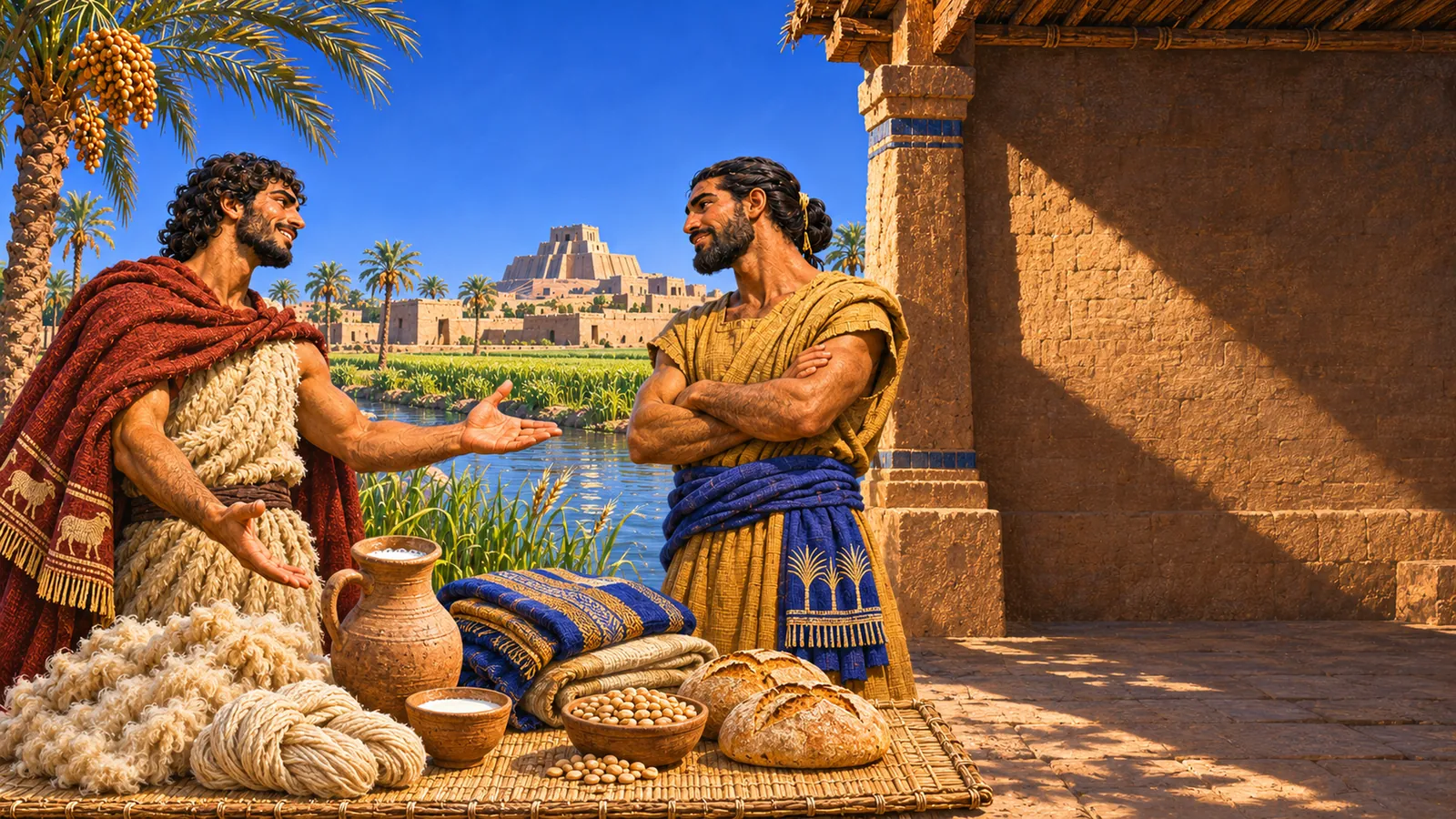
Jacobsen reads the imagined exchange as a contest of gifts. In his reading, the one who gives more owes nothing and leaves the other in debt.
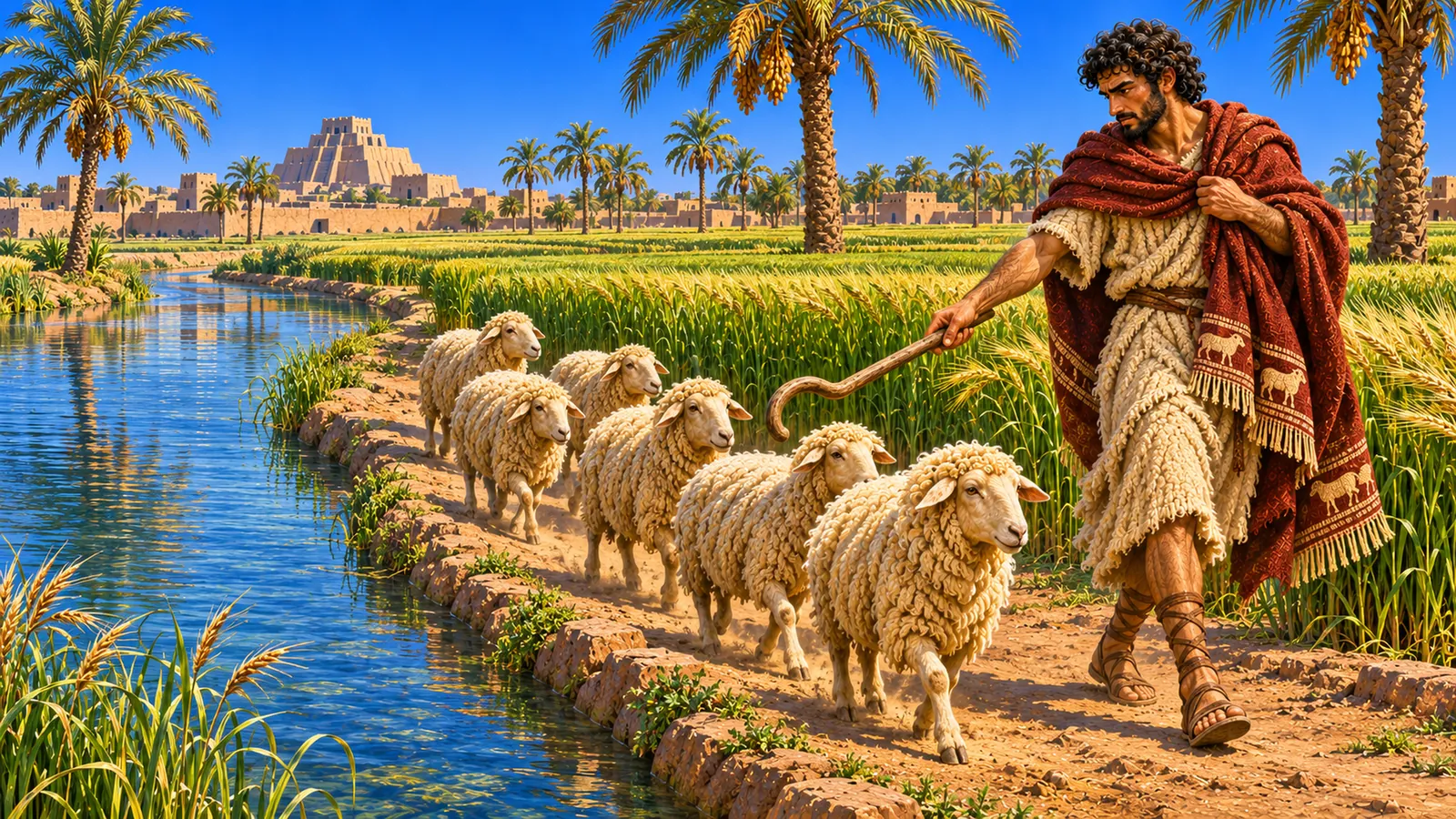
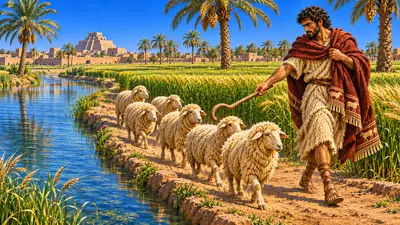
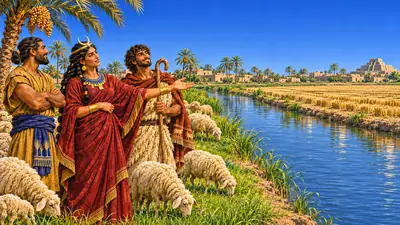
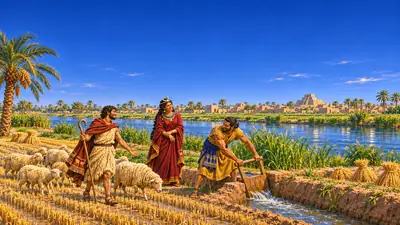
In Jacobsen’s summary, the shepherd gains confidence as he compares what each of them can offer. He drives his sheep to the riverbank in the middle of cultivated ground.
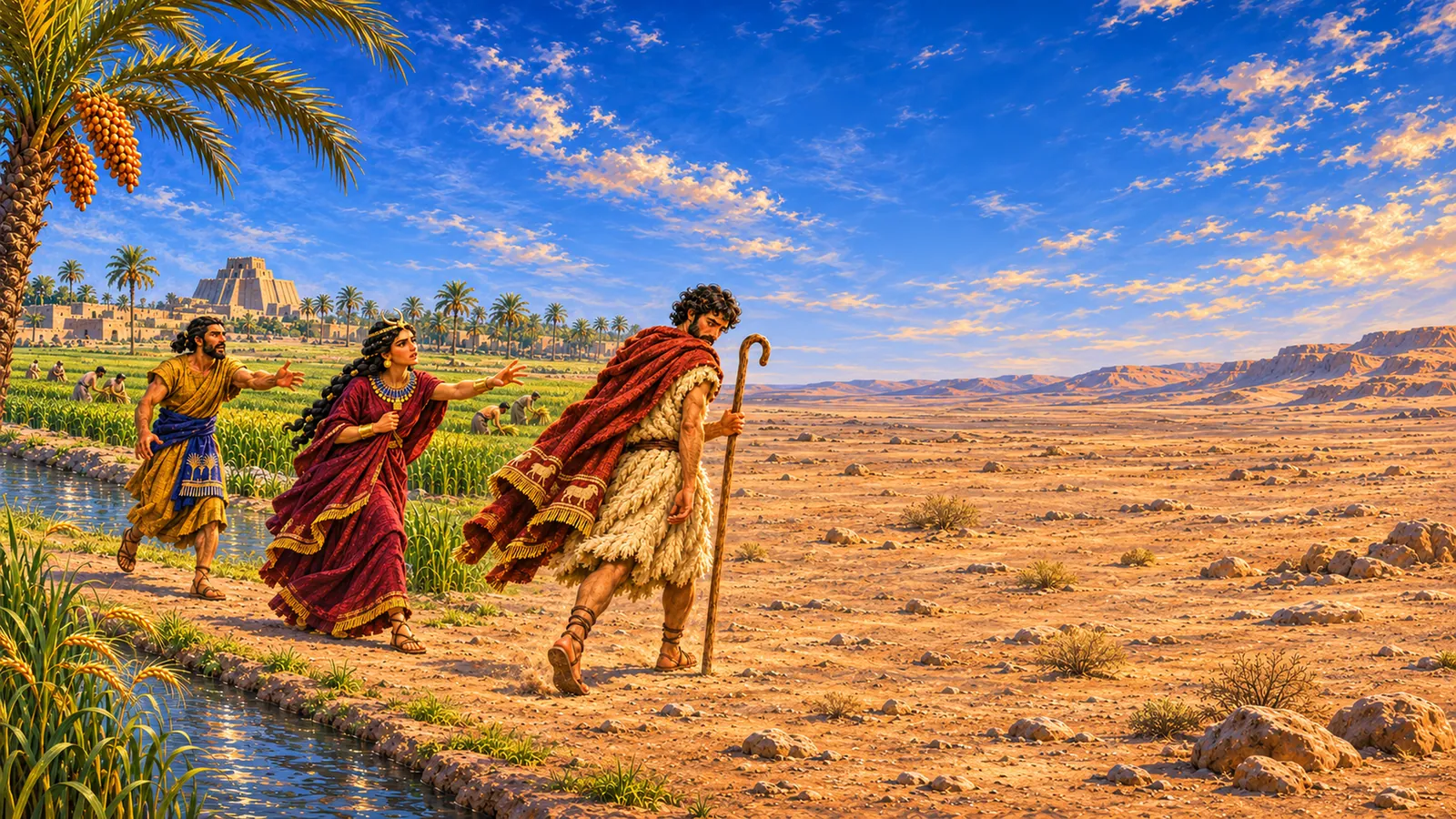
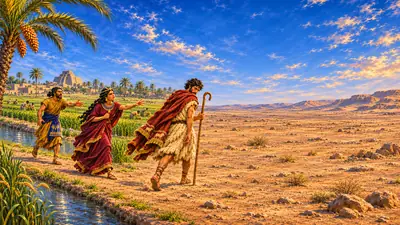
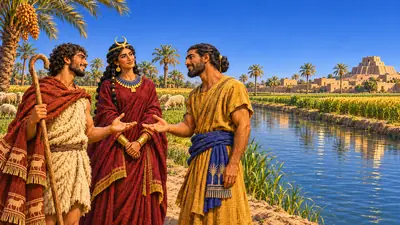
Jacobsen says Dumuzi sees Enkimdu and Inanna, then retreats in embarrassment toward the desert. Both follow him, and Jacobsen tentatively assigns the next speech to Inanna.
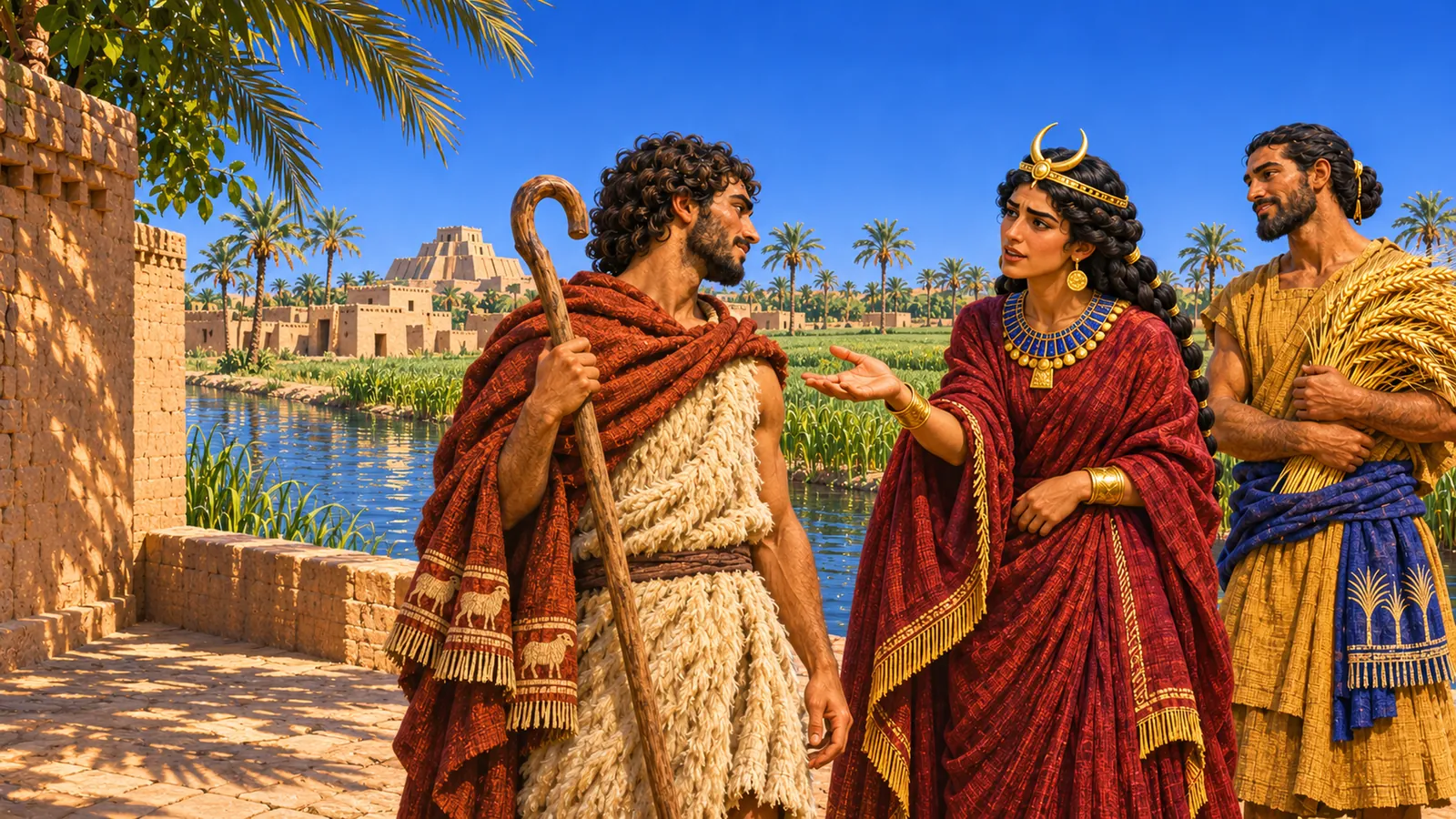
In lines Jacobsen tentatively assigns to Inanna, the speaker asks the shepherd why the two must race. The address to the shepherd is repeated.
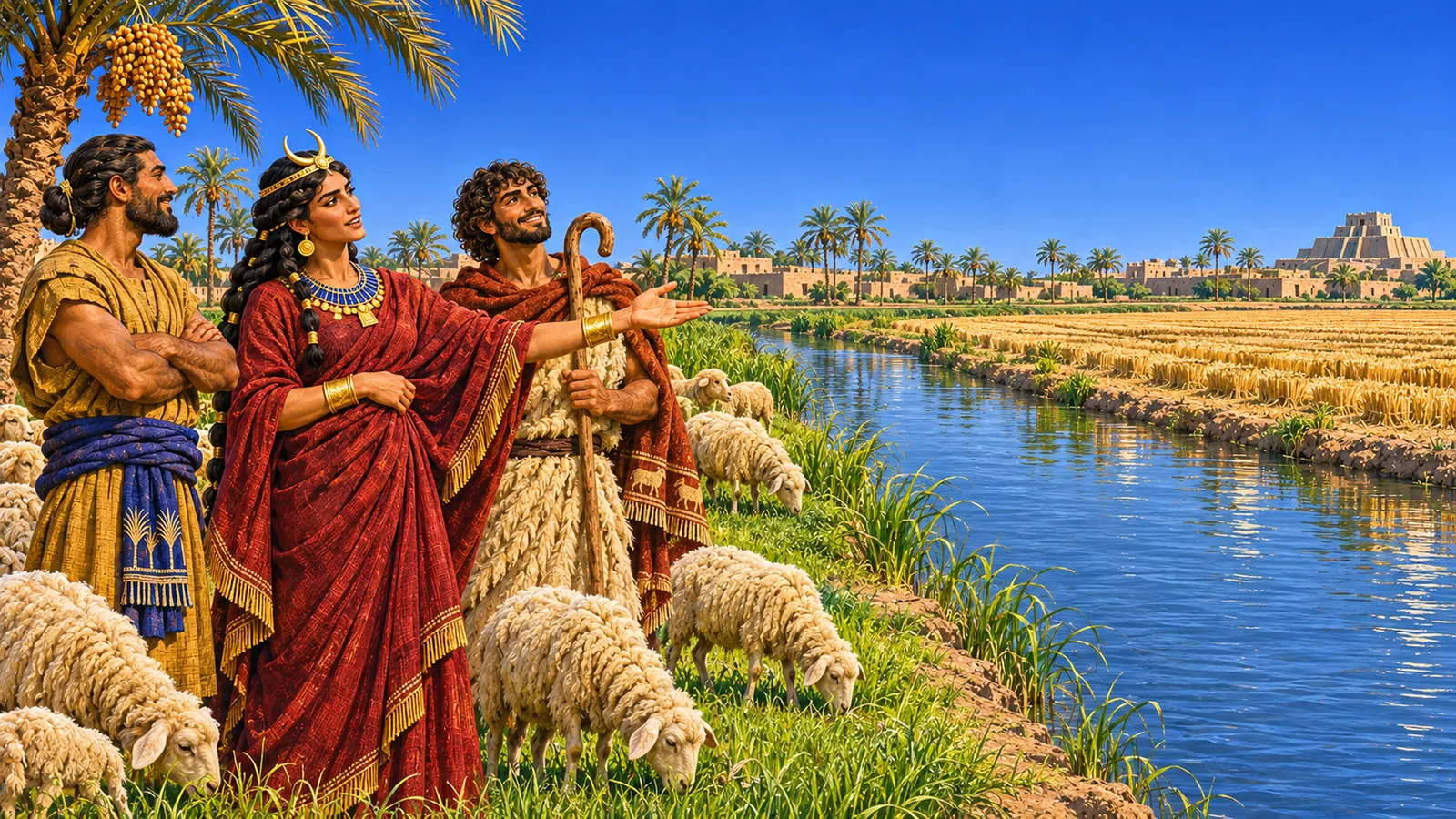
In the speech Jacobsen tentatively assigns to Inanna, the sheep may eat grass on the bank and graze in the speaker’s stubble field. Jacobsen marks the words for grazing and stubble as uncertain.
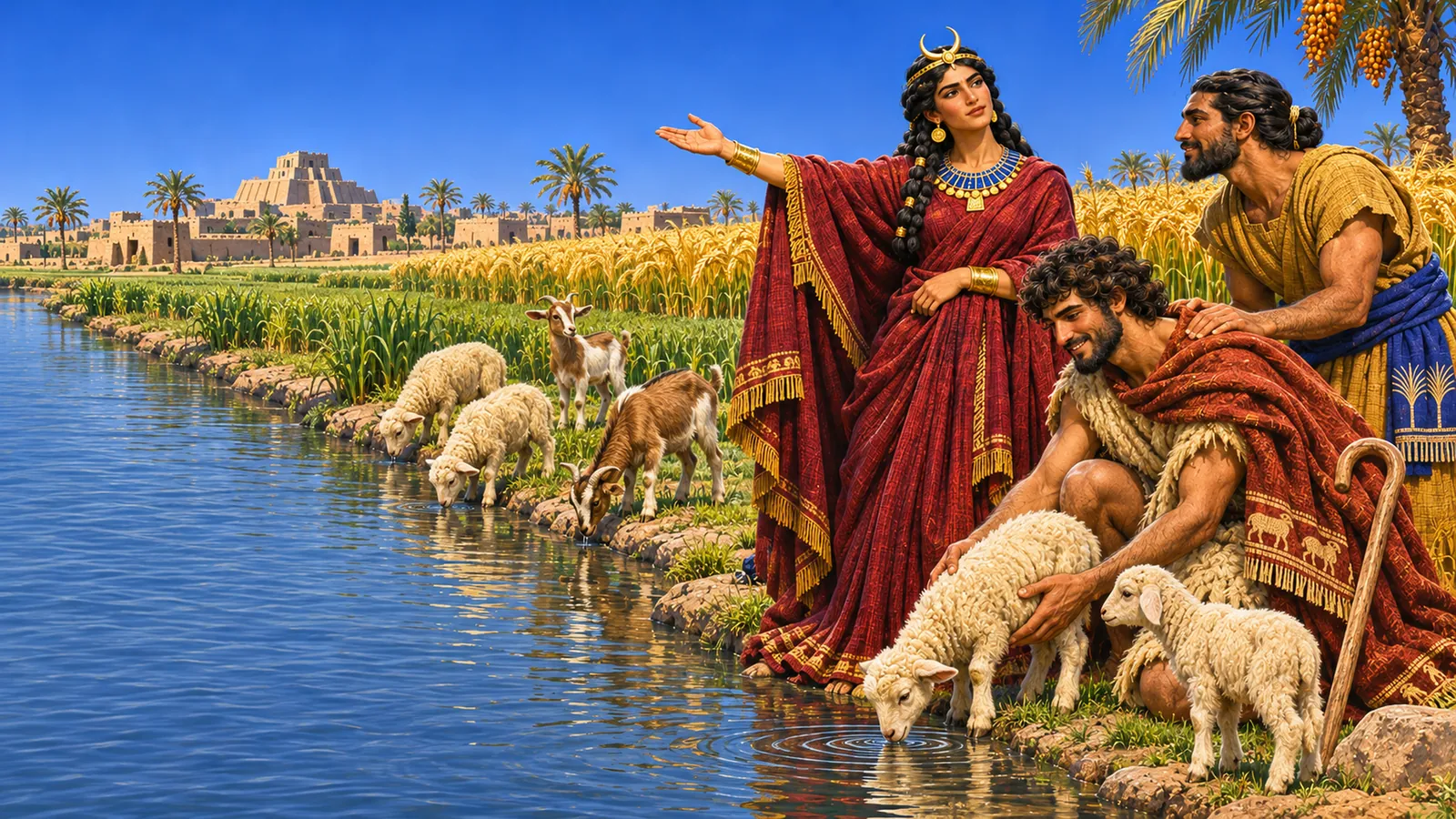
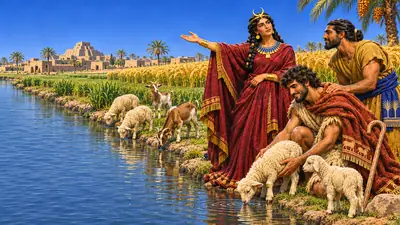
In the speech Jacobsen tentatively attributes to Inanna, the sheep may eat grain in Uruk’s fields. The lambs and young goats may drink from the speaker’s Adab canal.
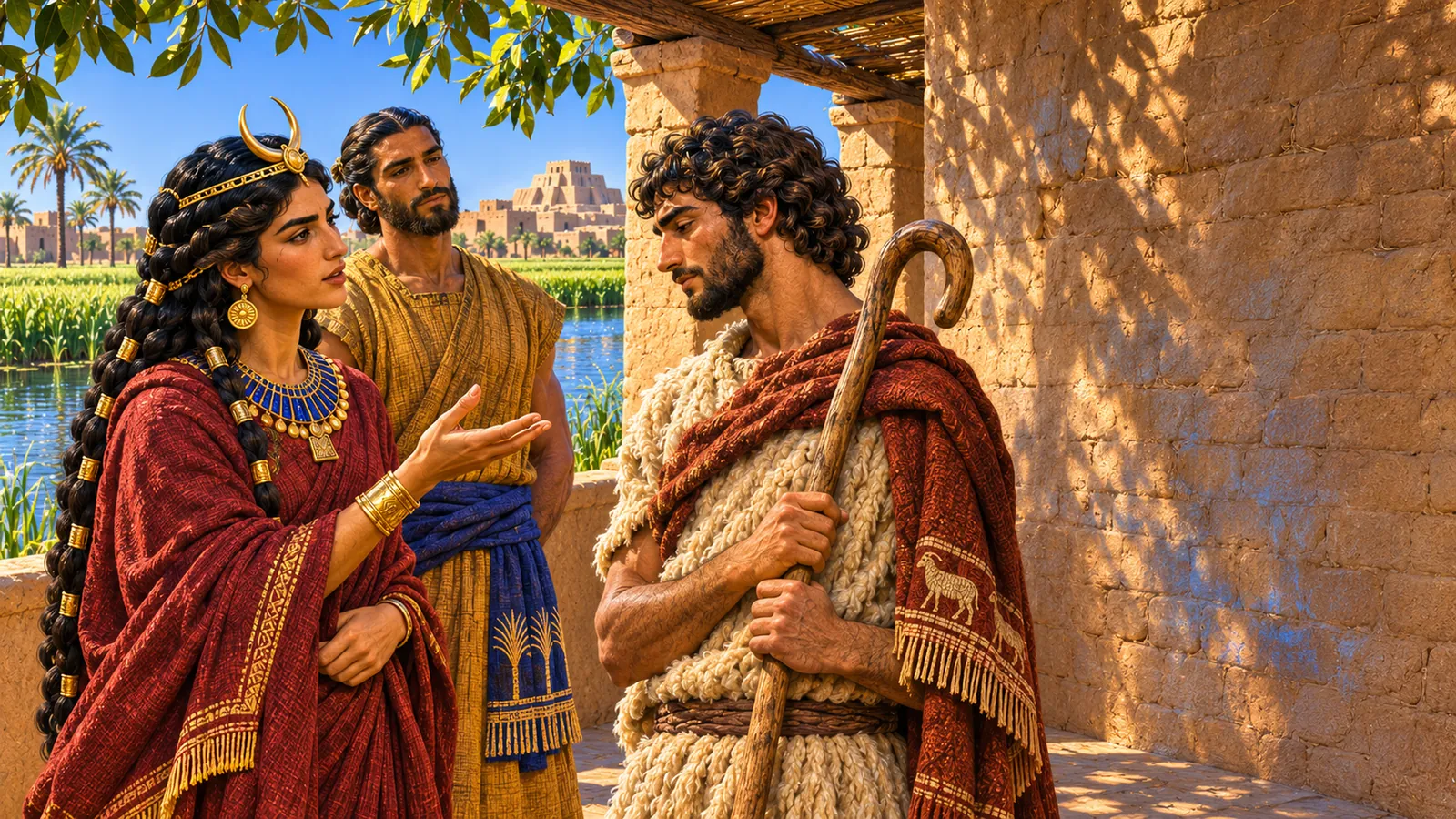
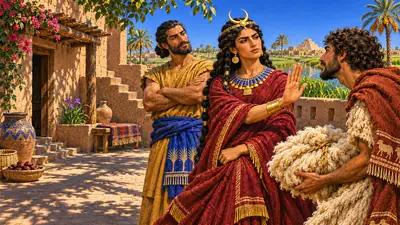
Jacobsen hears a preference for the farmer without ill will toward the shepherd. In lines he tentatively assigns to Inanna, the shepherd cannot turn into the farmer Enkimdu, a friend, simply to become the speaker’s husband.
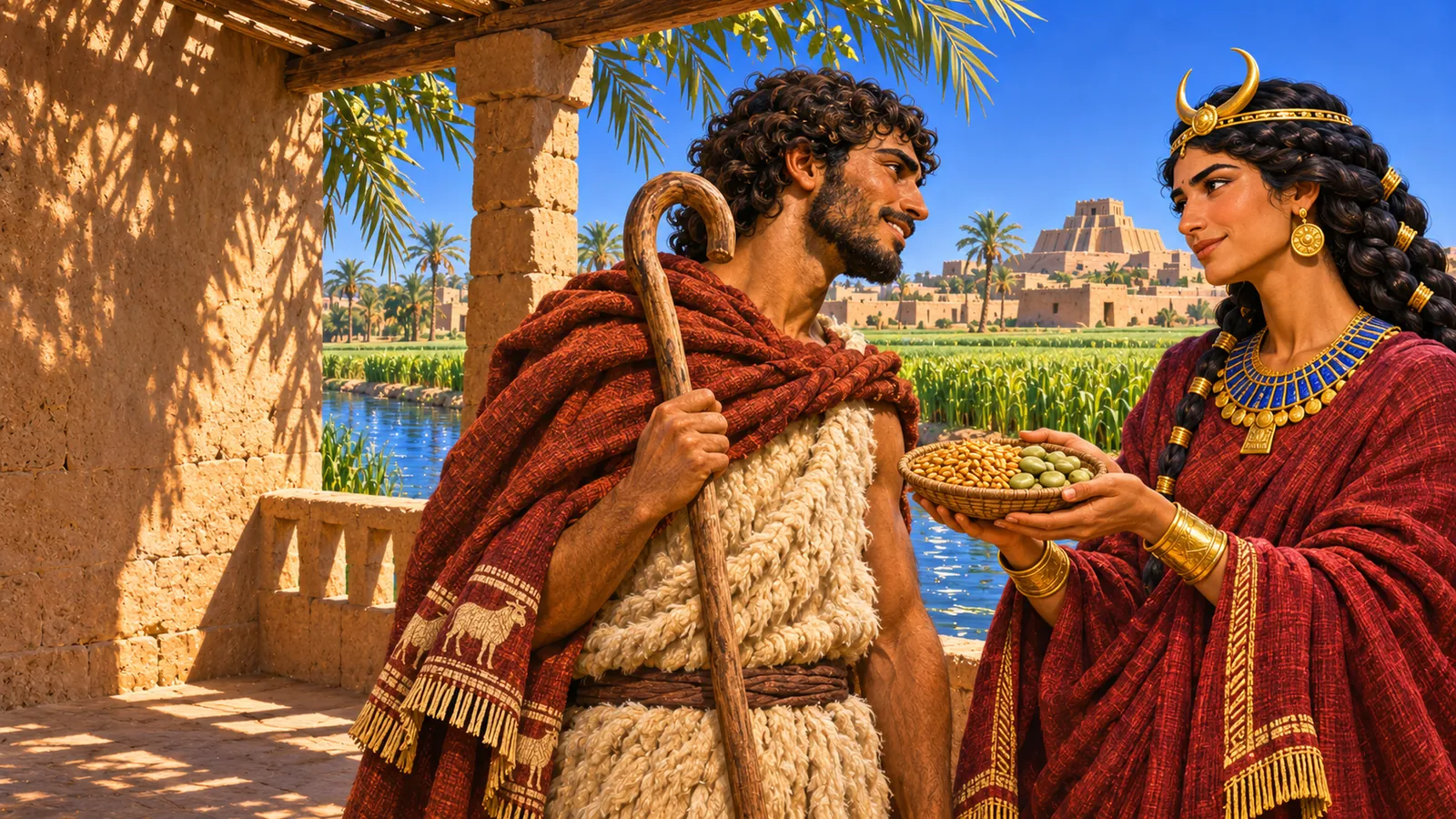
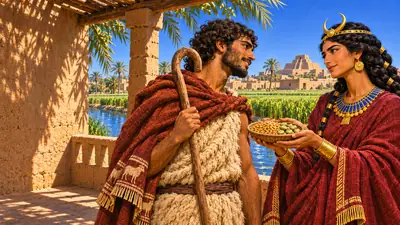
The speaker, whom Jacobsen tentatively takes to be Inanna, promises to bring the shepherd wheat and beans. Jacobsen’s translated excerpt ends with this offer.
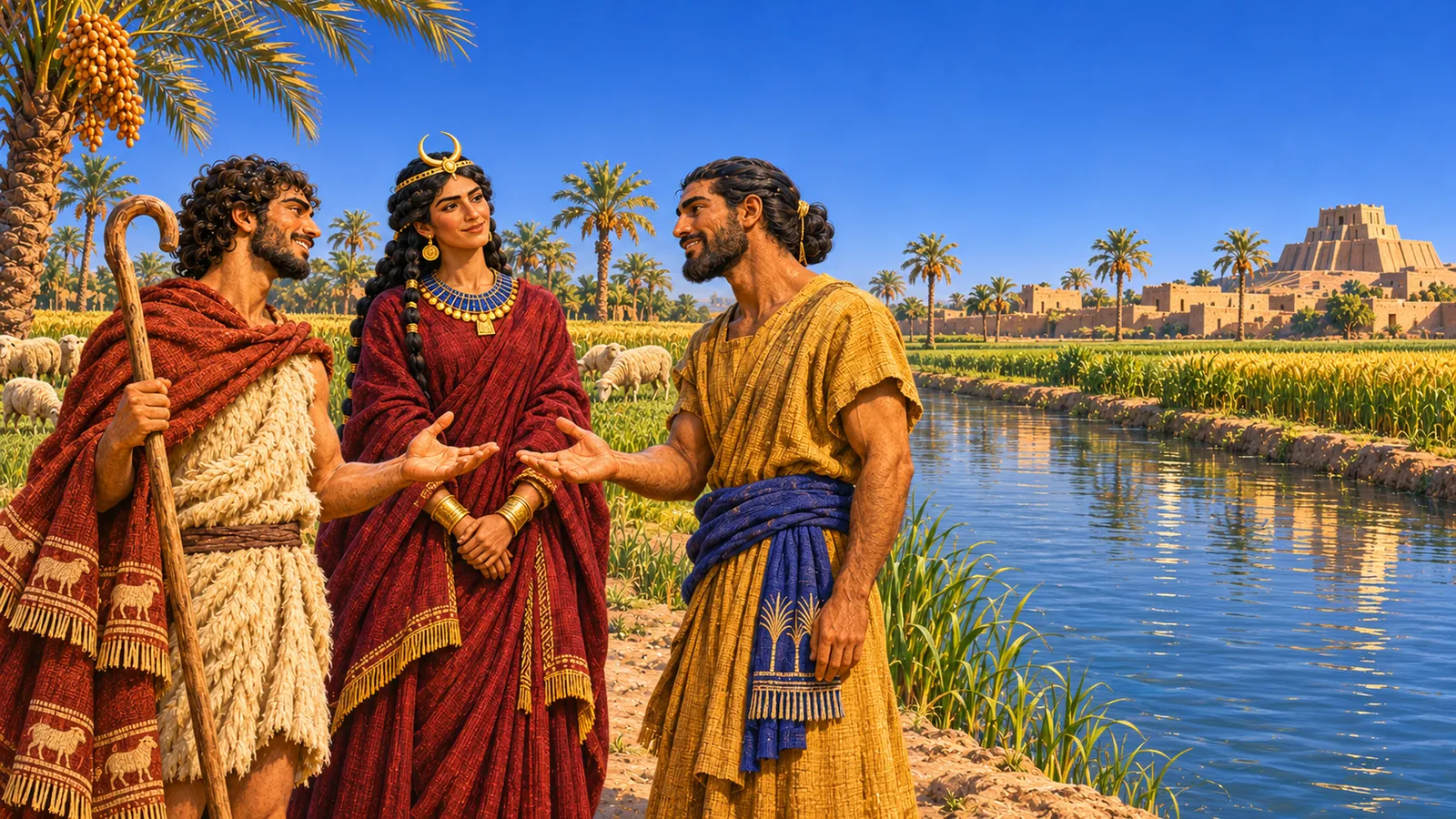
Jacobsen takes the ending to be a reconciliation and reads Enkimdu as the one Inanna marries. This is his interpretation after the last translated lines.
FARM AND PASTURE
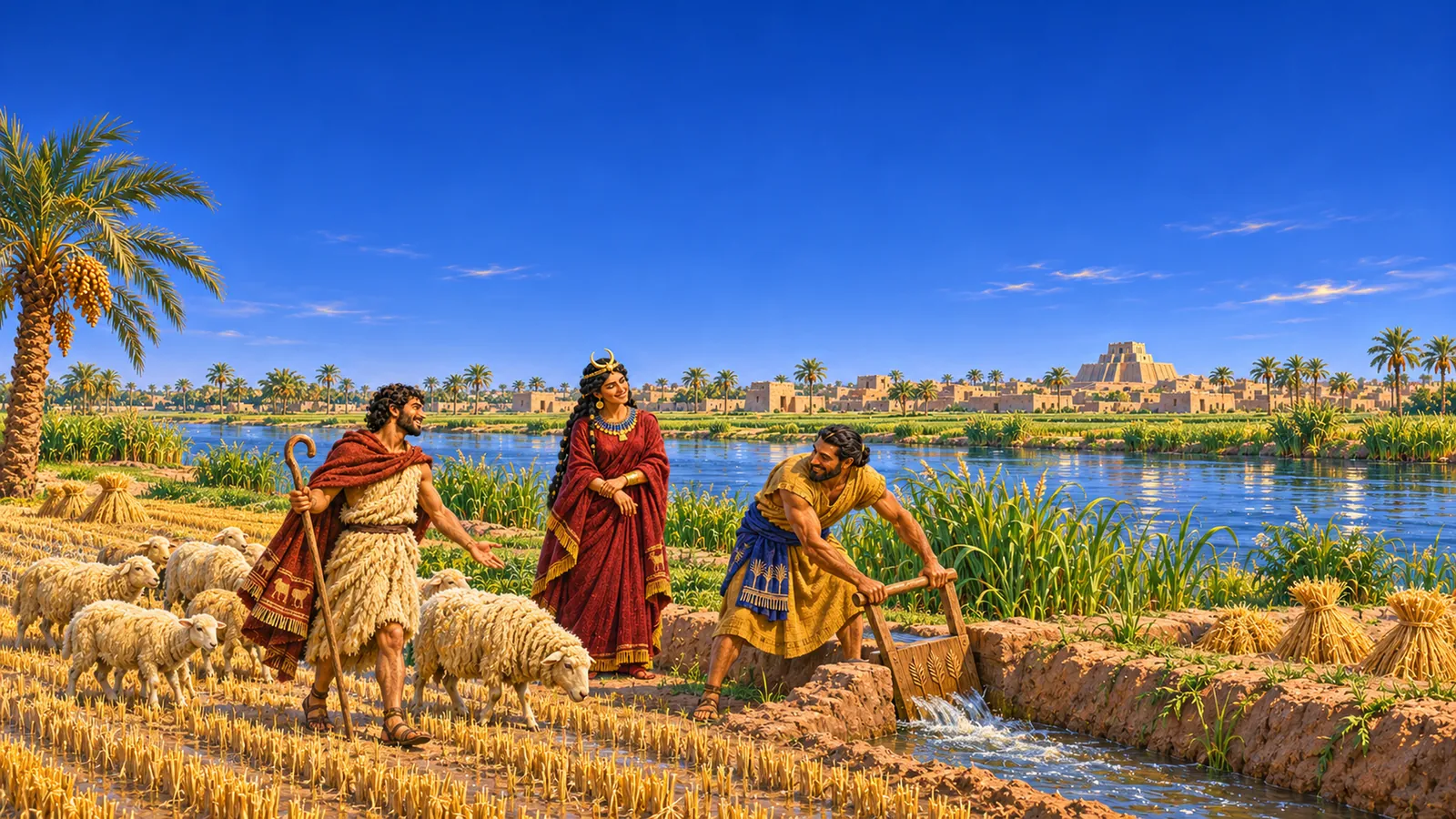
Jacobsen concludes that farmer and shepherd are equally necessary and that their produce complements each other. He says the shepherd can use the stubble fields and the farmer’s canals despite the rivalry, and that the two should get along.
End of chapter 1
All pages
Sources
This reading follows the printed subsection on the shepherd and the farmer in Thorkild Jacobsen’s The Cosmos as a State, The Intellectual Adventure of Ancient Man, University of Chicago Press, 1946, first Phoenix edition 1977, pp. 166–168. The volume credits H. A. Groenewegen Frankfort for the English poetic form (preface p. vi and p. 184, note 3). Chapter note 28 on p. 184 cites Chiera, SRT, no. 3 as the textual source.
Editions consulted
- University of Chicago, The Intellectual Adventure of Ancient Man
- University of Chicago, printed pages 166–168, The Wooing of Inanna
- University of Bern catalogue record, Dumuzi et Enkimdu, 4.08.33
Notes on this retelling
Page 1, opening account. The first paragraph under the heading on p. 166 identifies Enkimdu as the farmer, Dumuzi as the shepherd, and both as suitors of Inanna. The introduction’s identification of Utu as her guardian is Jacobsen’s contextual prose. The verse identifies him as her brother and introduces him as a warrior and hero.
Pages 2–3, Utu. The first verse selection on p. 166 gives Utu’s preference, his question to Inanna, his praise of butter, milk and the other products, and his recommendation of Dumuzi by name. The English verses are paraphrased; the volume credits H. A. Groenewegen Frankfort with the English poetic form of its ancient quotations (preface p. vi and p. 184, note 3).
Pages 4–5, Inanna. The reply on p. 166 repeats her refusal of the shepherd, his tufted cloth and his finest wool, before naming the cultivation of beans and grain in her preference for a farmer. These lines express her preference during the exchange.
Page 6, the connecting account. Jacobsen describes Dumuzi’s despondency and wounded pride in the prose that crosses pp. 166–167. He connects that reaction to Dumuzi’s comparison of what each man produces.
Page 7, Dumuzi’s repeated question. The third verse selection on p. 167 gives a repeated challenge and calls Enkimdu the man of the dike and canal. The printed dots in the repeated question signal wording absent from this presentation. The reading leaves those words unsupplied.
Pages 8–9, imagined exchanges. The translation distinguishes the farmer’s cloth from the shepherd’s wool in two matching colors. The comparison proceeds to the farmer’s prime beer and the shepherd’s yellow milk. The pairs are imagined offers in Dumuzi’s speech.
Page 10, the remaining pairs. He says Dumuzi expects to have butter and milk left over.
Pages 11–12 · p. 167, Jacobsen’s explanatory and connecting prose. Jacobsen interprets the exchange as a contest of gifts, where the larger giver incurs no debt and leaves the other in debt. He then describes Dumuzi recovering confidence as he compares the goods and driving his sheep to the riverbank amid cultivated ground.
Pages 13–14 · p. 167, connecting prose and fourth verse selection. Jacobsen says Dumuzi sees Enkimdu and Inanna, withdraws toward the desert in embarrassment and is followed by both. He tentatively assigns the following speech to Inanna. The first lines question why the speaker must race with the shepherd, addressing the shepherd repeatedly.
Pages 15–16 · p. 167, fourth verse selection. The sheep are offered grass on the bank and access to a field. Jacobsen prints question marks after “pasture” and “stubble.” The following lines offer grain from the fields of Uruk and water at the speaker’s Adab canal for lambs and young goats. The two names are retained as printed. The unoccupied views are symbolic landscapes.
Page 17 · p. 167, connecting prose and fifth verse selection. The speech says that the shepherd cannot turn into the farmer Enkimdu simply to become the speaker’s husband. Enkimdu is called a friend. The words “(the kind of man)” are printed as a parenthetical supply. The speaker attribution remains Jacobsen’s tentative reading.
Page 18 · p. 167, end of fifth verse selection. The offered provisions close the excerpted ancient verse in this subsection.
Pages 19–20 · p. 168, Jacobsen’s closing interpretation. Jacobsen reads the outcome as a reconciliation and interprets the farmer as the one Inanna marries. He then argues that farmer and shepherd are equally useful, their produce complements each other and rivalry can coexist with the shepherd’s access to stubble and canal water. He closes by saying the two should get along. Both pages speak in Jacobsen’s name. The following discussion opens a different subject.
Ancient lines behind each page
- Page 1: Jacobsen, “The Wooing of Inanna,” 1977 Phoenix ed., p. 166, opening prose
- Page 2: Jacobsen, “The Wooing of Inanna,” 1977 Phoenix ed., p. 166, verse block 1 opening
- Page 3: Jacobsen, “The Wooing of Inanna,” 1977 Phoenix ed., p. 166, verse block 1 close
- Page 4: Jacobsen, “The Wooing of Inanna,” 1977 Phoenix ed., p. 166, verse block 2 opening
- Page 5: Jacobsen, “The Wooing of Inanna,” 1977 Phoenix ed., p. 166, verse block 2 close
- Page 6: Jacobsen, “The Wooing of Inanna,” 1977 Phoenix ed., p. 166–167, connecting prose
- Page 7: Jacobsen, “The Wooing of Inanna,” 1977 Phoenix ed., p. 167, verse block 3 opening
- Page 8: Jacobsen, “The Wooing of Inanna,” 1977 Phoenix ed., p. 167, verse block 3, fabric exchanges
- Page 9: Jacobsen, “The Wooing of Inanna,” 1977 Phoenix ed., p. 167, verse block 3 close
- Page 10: Jacobsen, “The Wooing of Inanna,” 1977 Phoenix ed., p. 167, prose summary after verse block 3
- Page 11: Jacobsen 1977, The Intellectual Adventure of Ancient Man, ch. V, The Wooing of Inanna, p. 167, Jacobsen’s explanatory prose on gift exchange
- Page 12: Jacobsen 1977, The Intellectual Adventure of Ancient Man, ch. V, The Wooing of Inanna, p. 167, Jacobsen’s connecting prose, first movement
- Page 13: Jacobsen 1977, The Intellectual Adventure of Ancient Man, ch. V, The Wooing of Inanna, p. 167, Jacobsen’s connecting prose, encounter and retreat
- Page 14: Jacobsen 1977, The Intellectual Adventure of Ancient Man, ch. V, The Wooing of Inanna, p. 167, fourth translated verse selection, opening
- Page 15: Jacobsen 1977, The Intellectual Adventure of Ancient Man, ch. V, The Wooing of Inanna, p. 167, fourth translated verse selection, grass and stubble
- Page 16: Jacobsen 1977, The Intellectual Adventure of Ancient Man, ch. V, The Wooing of Inanna, p. 167, fourth translated verse selection, grain and water
- Page 17: Jacobsen 1977, The Intellectual Adventure of Ancient Man, ch. V, The Wooing of Inanna, p. 167, Jacobsen’s connecting prose and fifth translated verse selection, opening
- Page 18: Jacobsen 1977, The Intellectual Adventure of Ancient Man, ch. V, The Wooing of Inanna, p. 167, fifth translated verse selection, closing offer
- Page 19: Jacobsen 1977, The Intellectual Adventure of Ancient Man, ch. V, The Wooing of Inanna, p. 168, Jacobsen’s closing interpretive prose, opening
- Page 20: Jacobsen 1977, The Intellectual Adventure of Ancient Man, ch. V, The Wooing of Inanna, p. 168, Jacobsen’s closing interpretive prose, end of first paragraph
Illustrations made with AI tools by IL Archive; the text is based on the ancient sources (see the sources at the end of each chapter).