Ancient text
Book of Deuteronomy
A text for line-by-line reading, with transliteration, translation, and resources.
Torah book presenting commandments in Moses’ discourse and grounding Sabbath rest in slavery and liberation from Egypt.
Metadata
These are descriptive fields, not conclusions.
- Edition
- 3
Text
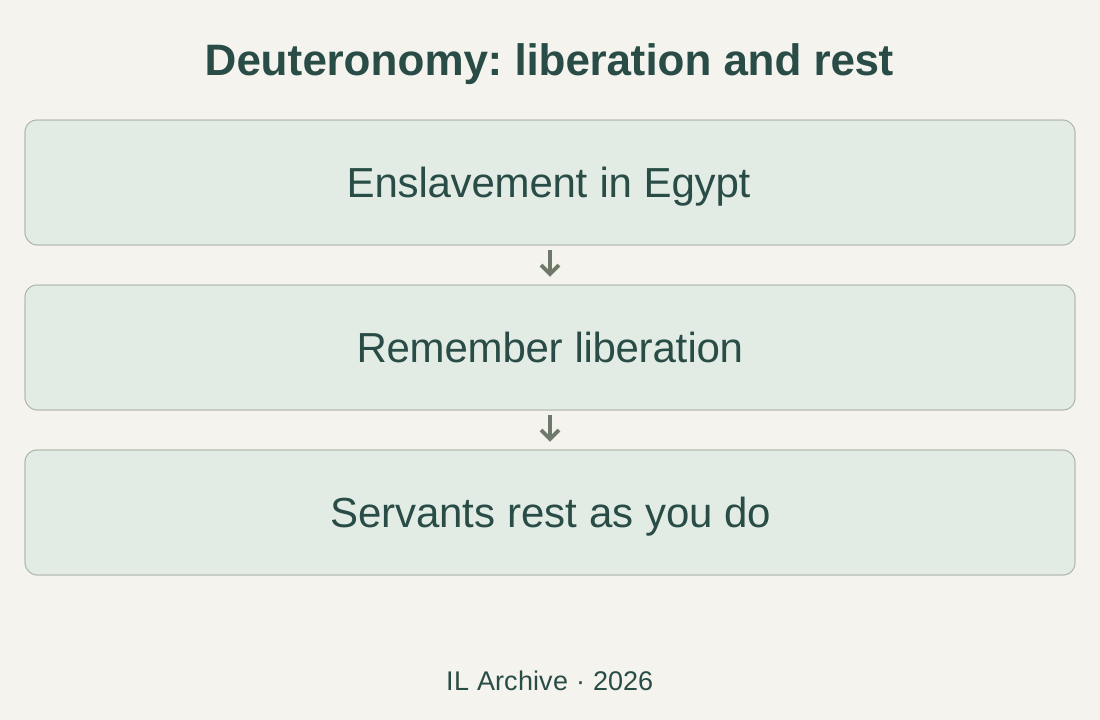
Deuteronomy is a book of the HebrewHebrewA Northwest Semitic language in the Canaanite group, with ancient and modern forms.Glossary · Click to read the explanation TorahTorah / PentateuchGenesis, Exodus, Leviticus, Numbers and Deuteronomy: Mosaic corpus with a compositional history. Torah can also mean teaching or law beyond these five books.Glossary · Click to read the explanation whose narrative presents laws through MosesMosesCentral figure in Exodus, Torah traditions and the Qur’an; childhood accounts differ in detail.Glossary · Click to read the explanation’ discourse. In 5:12–15 SabbathSabbath, the weekly rest daySacred seventh day in Jewish traditions, linked by commandments to household rest, creation and liberation.Glossary · Click to read the explanation rest includes dependants, animals and resident alienGēr: the Resident Outsider in Hebrew TextsA person living within an Israelite community; neither every foreigner nor a modern legal refugee category.Glossary · Click to read the explanation, grounded in memory of enslavement and departure from Egypt. [1]
This differs from ExodusBook of ExodusTorah book recounting Israel’s departure from Egypt and containing different formulations of seventh-day rest.Glossary · Click to read the explanation’s creation rationale. Comparing them illuminates interpretation within the texts; the difference alone does not date each formulation. [1][2]
References and notes
- Deuteronomy 5:12–15 in common numbering corresponds to 5:11–14 on this page; Hebrew and JPS 1917, dependants’ rest and liberation memory. Deuteronomy 5:12–15 in common numbering corresponds to 5:11–14 on this page; Hebrew and JPS 1917, dependants’ rest and liberation memory. Return to the text ↑
- Exodus 20:8–11 in common numbering corresponds to 20:7–10 on this page; Hebrew and JPS 1917, Sabbath and creation rationale. Exodus 20:8–11 in common numbering corresponds to 20:7–10 on this page; Hebrew and JPS 1917, Sabbath and creation rationale. Return to the text ↑
Research history
Substantive changes are retained here. Minor copy edits remain in the internal operational log.
-
Substantive record update
-
Substantive record update
Archive records may be reviewed and refined as better evidence or sources become available. Suggest a correction
Suggest a correction · Suggest a source for this record
Cite this record
IL Archive, «Book of Deuteronomy», Edition 3, https://ilarchive.com/en/texts/deuteronomy-hebrew-book