Entity
Levirate Marriage
A reference page linking a name, group, or concept to the materials that discuss it.
Marriage of a widow to her late husband’s brother under defined circumstances; a source-based comparison of Deuteronomy, Hittite and Assyrian law and their distinct limits.
Estimated reading time: 9 min Published Last reviewed:
Share article
Text
Introduction
Levirate marriage, in its strict sense, is a kinship arrangement in which a man marries the widow of his deceased brother under specified circumstances. Ancient HebrewHebrewA Northwest Semitic language of the Canaanite group, encompassing Iron Age epigraphy, Biblical, Rabbinic, medieval and Modern Hebrew; its scripts and pronunciations changed over time.Glossary · Click to read the explanation, Hittite, and Assyrian sources describe arrangements involving widows and their husbands’ families, but they do not set out a single, uniform institution. They differ over whether the deceased must be childless, which relative may act, what rights the widow has, and whether marriage is already contracted or merely contemplated. This entry compares what the texts actually say, keeping legal prescriptions, narratives, translations, and modern interpretations distinct.
The best-known Hebrew provision, DeuteronomyBook of DeuteronomyTorah book presenting commandments in Moses’ discourse and grounding Sabbath rest in slavery and liberation from Egypt.Glossary · Click to read the explanation 25:5–10, expressly concerns the deceased man’s name and a public procedure when the surviving brother refuses. Hittite and Middle Assyrian provisions address different patterns of succession, kinship, betrothal, and family arrangements. Resemblance by itself does not demonstrate that one community copied a particular law from another. [1][8][9]
Contents
- Terminology and the limits of the category.
- The rule in Deuteronomy and the procedure for refusal.
- Why Genesis 38 and Ruth 4 are not interchangeable cases.
- The Hittite and Middle Assyrian provisions, with their relatives identified.
- Adjacent prohibitions, competing interpretations, and what can be inferred.
What does “levirate” mean?
The scholarly term levirate derives from Latin lēvir, “a husband’s brother”; it has no etymological connection to the Levites. The Hebrew expression associated with the duty is yibbum, based on the term for a brother-in-law in this relationship. As a comparative label, “levirate” identifies a kinship configuration. The word does not in itself prove that a child legally belongs to the dead man, that the brother has no right to decline, or that the widow has no alternative in every society so described. [2]
A written law collection must also be distinguished from lived practice. Ancient collections select and formulate cases; they are neither demographic records of actual marriages nor proof that every community enforced the prescriptions in the same way throughout its history.
Deuteronomy 25: the specified case and the dead man’s name
Deuteronomy 25:5–10 envisages brothers “dwelling together” when one dies without a ben. Literally the Hebrew noun means “son”; some translations render it “child” in this context. The Hebrew wording, its subsequent interpretation, and the modern shorthand “without offspring” should not be treated as identical linguistic evidence. Within its stated case, the passage bars the widow from marrying outside the family and calls on the deceased husband’s brother to take her as his wife. The first child she bears is linked to the dead brother’s name so that it will not disappear from Israel. [1]
The passage does not furnish a complete deed of inheritance or say that the living brother automatically acquires every asset of the deceased. Its explicit concern is the continuation of the name. The clause “dwelling together” belongs to the text’s conditions, but its precise legal scope is debated; later rabbinic requirements should be identified as later interpretation rather than silently read back into the passage.
Refusal: removing the sandal before the elders
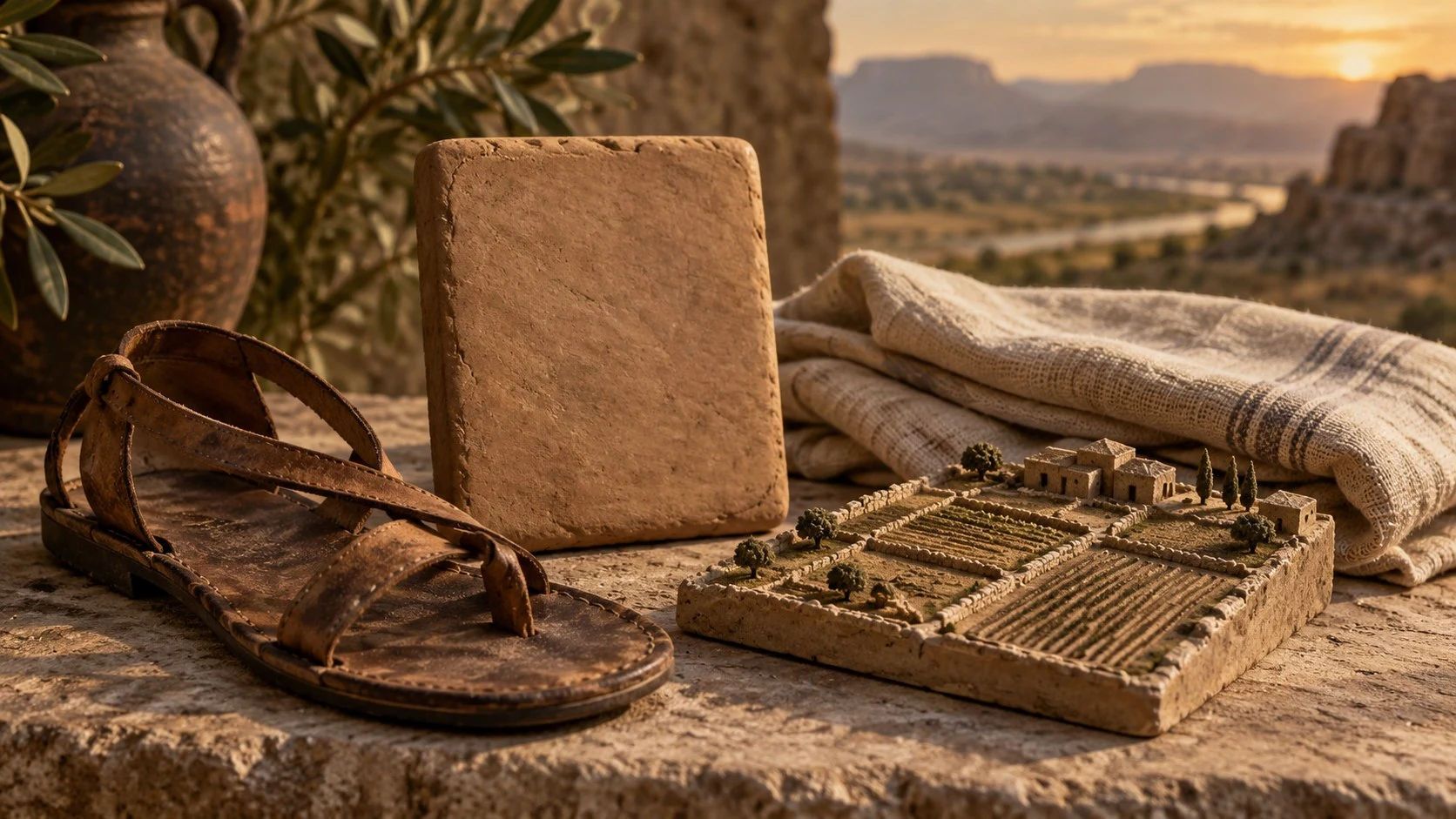
Refusal is anticipated within the procedure itself: this is not a command with no described avenue of release. If the brother will not undertake the duty, the widow goes to the elders at the city gate and states his refusal to perpetuate his brother’s name. He is summoned and questioned. If he persists, she removes his sandal before the elders, spits in his presence, and utters a public reproach. His house then acquires a designation recalling the removed sandal. Later Jewish tradition knows the release ceremony as ḥalitzah. [1]
This is a particular public renunciation and shaming procedure. A sandal does not therefore mean “land sale” in every ancient text; nor does Deuteronomy authorize an unrestricted sequence of husbands drawn from the deceased man’s wider family.
Genesis 38: Tamar and Onan in a narrative, not the Deuteronomic statute
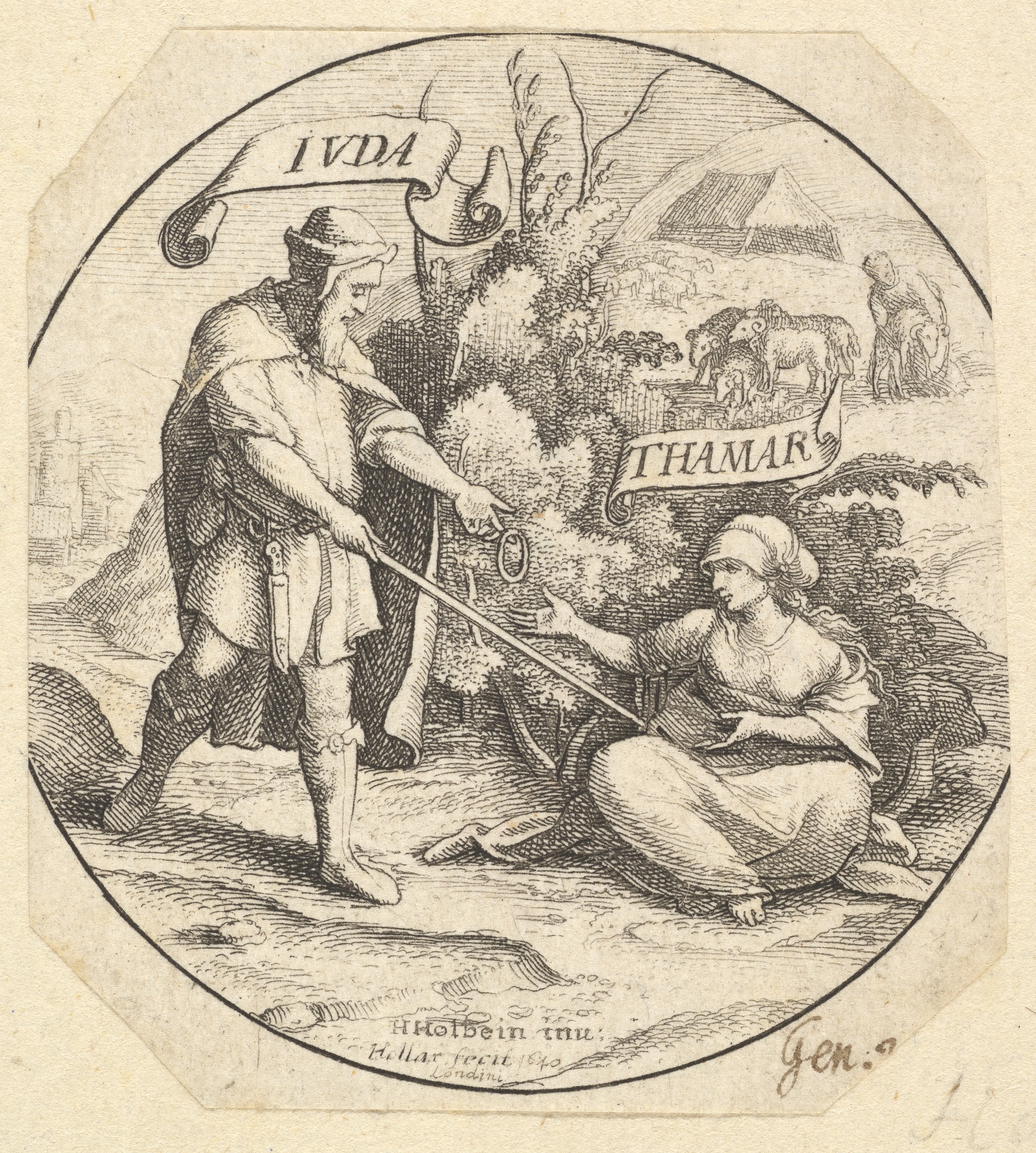
In GenesisBook of GenesisHebrew book of the Torah containing Noah’s flood, survival offering and covenant with living creatures.Glossary · Click to read the explanation 38, TamarTamar in Genesis 38Genesis 38 widow who exposes Judah’s unfulfilled promise concerning Shelah.Glossary · Click to read the explanation marries ErEr, son of JudahJudah’s firstborn and Tamar’s husband, whose death is narrated in Genesis 38.Glossary · Click to read the explanation, the eldest son of JudahJudah in GenesisFather of Er, Onan and Shelah and Tamar’s father-in-law in Genesis 38, distinct from Judah’s kingdom.Glossary · Click to read the explanation. After Er dies, Judah instructs his second son, OnanOnan, son of JudahEr’s brother, directed to raise offspring for him through Tamar in Genesis 38.Glossary · Click to read the explanation, to fulfil the brother-in-law’s duty and raise descendants for his brother. Onan deliberately prevents that outcome, knowing the offspring will not be counted as his. After Onan’s death, Judah delays Tamar’s marriage to the third son, ShelahShelah, son of JudahJudah’s son whose promised marriage to Tamar is withheld after maturity.Glossary · Click to read the explanation. The story subsequently takes a different turn: Tamar conceives by Judah himself and gives birth to Perez and Zerah. [3]
The account places the duty of providing a deceased brother with descendants at the centre of the conflict. It does not depict a council of elders, sandal-removal ceremony, or express citation of Deuteronomy 25. Nor does Tamar’s relationship with her father-in-law establish a generally applicable statute allowing such marriages. The relationship between the literary histories of Genesis and Deuteronomy is a research question, not a warrant to call one a literal case report of the other.
Ruth 4: family redemption is not marriage to a brother’s widow
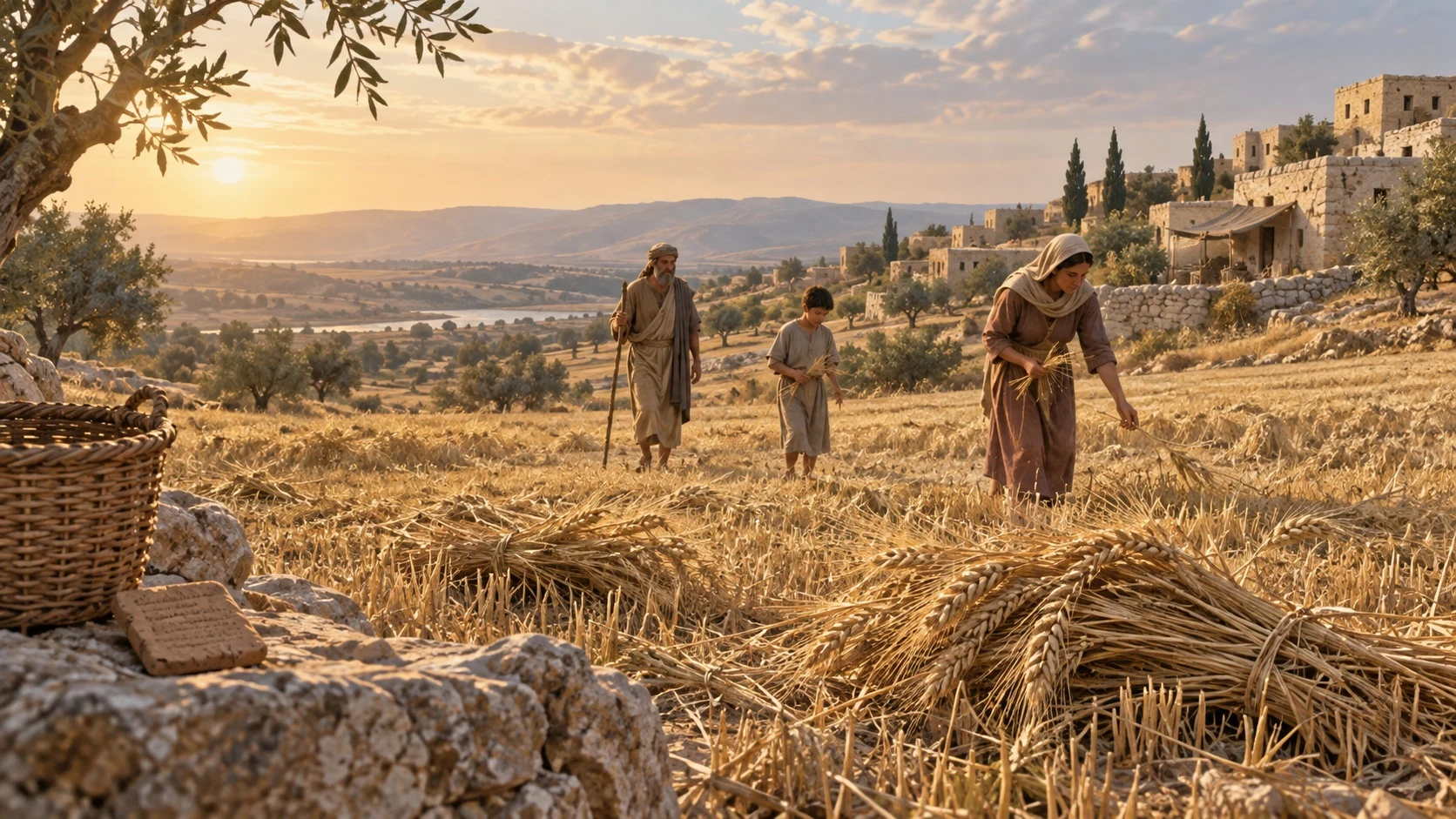
RuthBook of RuthHebrew narrative whose ending joins land, redemption, marriage and name preservation.Glossary · Click to read the explanation 4 connects land and marriage. NaomiNaomi in RuthRuth’s mother-in-law, linking land redemption with household continuity.Glossary · Click to read the explanation’s family field is discussed, and BoazBoaz in RuthKinsman-redeemer who marries Ruth, not her deceased husband Mahlon’s brother.Glossary · Click to read the explanation brings the claim of a closer kinsman-redeemer before the elders. The closer relative relinquishes his claim because of its effect on his inheritance. Boaz takes over and marries RuthRuth, biblical characterMahlon’s widow and Naomi’s daughter-in-law, marrying Boaz in Ruth.Glossary · Click to read the explanation, widow of MahlonMahlon in RuthRuth’s deceased husband, named in the marriage scene of chapter 4.Glossary · Click to read the explanation, announcing his intention to preserve the deceased man’s name on his property. Yet Boaz is not Mahlon’s brother; he is a relative acting in a broader system of family redemption. [4]
The sandal also functions differently. Here the relative transferring his claim removes his own sandal to ratify the transaction. Ruth does not strip a brother-in-law’s sandal or spit. Some scholars therefore describe Ruth as a combination of redemption and concern for a deceased man’s name, while others reject classifying the marriage as levirate in the strict sense. The common sandal motif is not evidence that the two ceremonies are the same. [7]
Hittite law 193: a succession of the husband’s relatives
In the Hittite law collectionHittite law collectionHittite kinship and relationship provisions from a collection whose earliest copies date around 1650–1500 BCE.Glossary · Click to read the explanation, §193, as translated by Martha T. Roth, says that if a husband dies, his brother takes the widow as wife; if that brother dies, his father takes her; and if that father subsequently dies, the father’s brother takes the woman. The sequence is therefore the husband’s brother, the widow’s father-in-law, and that father-in-law’s brother, subject to the stated deaths—not three successive brothers. This provision does not expressly require the deceased to have left no children or specify that a future child must carry his name. [9]
Surrounding provisions clarify the limits of the analogy. Section 192 permits a widower to marry his deceased wife’s sister; §195a prohibits relations with a brother’s wife while the brother is alive. Together they address kinship boundaries under different circumstances; they do not grant blanket permission to marry any relative. The earliest witnesses to the Hittite collection belong to the Old Hittite period in the second millennium BCE. Our comparison uses a modern translation and its editorial introduction, not an independent collation or reading of the Hittite tablets. [9]
Middle Assyrian Laws A: three distinct legal cases
Middle Assyrian Laws, Tablet AMiddle Assyrian Laws ACuneiform marriage and household provisions distinguishing widowhood, betrothal and residence.Glossary · Click to read the explanation, preserved on KAV 1 / VAT 10000 / CDLI P281779, discusses betrothal, widowhood, and the disposition of members of a household. The tablet is a concrete, identified artifact; the details below follow published Middle Assyrian transliteration and scholarly translation, not a personal decipherment of the signs. [8][10]
Section 30 involves a father who has paid a marriage gift to arrange a marriage for one son but has not yet received that intended bride. Meanwhile a different son of the same father has died, and that deceased son’s wife remains in her own father’s home. The provision allows the widow of the dead son to be assigned to the son already engaged elsewhere and then sets out alternatives if the other bride’s family objects, together with rules about reimbursing gifts. The betrothed son and the deceased son are two people. Retelling the case as “a betrothed man died and his brother married his fiancée” reverses the legal facts. [8][10]
Section 33 concerns a woman living in her father’s house after her husband’s death, but significant lines are damaged or restored. It refers to a possible arrangement involving her father-in-law and concludes with a widow, whose husband and father-in-law have died and who has no son, being free to go where she wishes. The gaps do not justify presenting a comprehensive, unqualified rule that the father-in-law must marry her. [10]
Section 43 allows a father, when the son to whom a woman was assigned dies or flees, to redirect the arrangement to another son, subject to conditions including a minimum age. It additionally treats the case in which both father and designated son die and the deceased son has a son aged ten or over; alternatives involve restitution of marriage gifts. Flight and an existing betrothal arrangement matter just as much as death. Not every reassignment in this provision can be identified as an already-married widow entering a new marriage. [8][10]
Prohibition of a brother’s wife: a neighbouring interpretive difficulty
LeviticusLeviticusA Torah book concerning offerings, priesthood, and purity; chapter 16 describes sanctuary purification and a living goat carrying iniquities away.Glossary · Click to read the explanation 18:16 prohibits sexual relations with a brother’s wife, and 20:21 supplies a related prohibition. On the surface this sits uneasily beside Deuteronomy’s exceptional instruction to marry a dead brother’s widow in a specified situation. Later Jewish interpretation reconciles the texts by restricting the exception to the defined circumstances after death and without descendants. Other scholars argue that the priestly legislation represents a more substantial legal difference and may have rejected the Deuteronomic form of the custom. These are rival interpretations of the textual relationship, not an explicit ancient report recording when one command was repealed. [5][11]
Historical relationships: resemblance is not a proven route of borrowing
The overlap is real but limited: widows remain connected to their husbands’ kin, the death of a man alters household arrangements, and family continuity or property can be at stake. Sound comparison asks who died, who was merely betrothed, who could choose, what happened to marriage gifts, and to whom any child would be attributed. Deuteronomy explicitly articulates the dead brother’s name and the refusal procedure; the Assyrian texts work through alternatives in betrothal and repayment; Hittite §193 prescribes a succession among relatives. The label “levirate” is not a substitute for these distinctions.
Sara MilsteinSara MilsteinScholar of biblical texts, scribal education and legal formation.Glossary · Click to read the explanation has proposed that the formulation of Deuteronomy’s law developed out of older contractual clauses restricting a widow’s marriage outside the family, perhaps through exercises used in scribal education. That is a scholarly hypothesis about textual formation, argued from parallels. It is not a surviving document demonstrating that a named author of Deuteronomy copied an Assyrian or Hittite law. Differences of time, manuscript transmission, and legal setting likewise prevent establishing a specific transmission route from these witnesses alone. [6]
Conclusion: what the evidence supports
The sources establish that different written forms of marriage or remarriage within a deceased husband’s family were envisioned in several ancient legal traditions. They let us compare Deuteronomy 25, Hittite §193, and particular provisions of Middle Assyrian Laws A closely. They do not, on their own, reveal how often these arrangements occurred, how much choice an actual widow enjoyed in every circumstance, or whether one surviving text directly influenced another. Keeping prescriptions, stories, modern translations, and scholarly reconstructions apart is essential to understanding the evidence.
References and notes (11)
- Deuteronomy 25:5–10, Hebrew text alongside the older Jewish Publication Society (1917) English translation at Mechon-Mamre; the complete five-to-ten passage, including refusal and sandal procedure, was checked. Deuteronomy 25:5–10 (complete passage) Return to the text ↑
- Charlton T. Lewis and Charles Short, A Latin Dictionary, s.v. lēvir, hosted by Tufts’ Scaife ATLAS; the entry defines the husband’s brother, not a Levite. Dictionary headword lēvir only Return to the text ↑
- Genesis chapter 38 in Hebrew and JPS 1917 English; the narrative of Er, Onan, Shelah, Tamar, Judah, and the birth was checked as a narrative, not a statute. Genesis 38:6–30, with chapter context Return to the text ↑
- Ruth chapter 4, Hebrew with the 1917 JPS English; verses 1–22 consulted, especially 4:7–10 on the closer redeemer’s withdrawal, his own sandal and Mahlon. Ruth 4:1–22, especially 4:7–10 Return to the text ↑
- Leviticus 18:16, Hebrew/JPS at Mechon-Mamre; also checked 20:21 at https://mechon-mamre.org/p/pt/pt0320.htm. Competing assessments of the legal tension are interpretations, not an explicit record of repeal. Leviticus 18:16; 20:21 Return to the text ↑
- Sara Milstein, “The Levirate Law: A Marriage Contract Clause That Became Legislation,” TheTorah.com (2021); read sections on ancient comparanda, Deuteronomy and scribal model cases. The contract-to-legislation account is her argued hypothesis, not a documented chain of borrowing. Sections on the custom, long-form scribal cases and proposed formation Return to the text ↑
- Jun Kim, “Obed the Son of Boaz: Is the Marriage of Ruth and Boaz a Levirate Marriage?”, Korean Journal of Old Testament Studies 26/4 (2020), pp. 38–65. Only the journal’s English abstract was read, not the whole paper; it argues against strict levirate classification. Published abstract only; article pp. 38–65 not read in full Return to the text ↑
- Middle Assyrian law tablet KAV 1 (VAT 10000), CDLI P281779; tablet identity and §§30, 33, 43. Their readings were actually checked in Oracc TCMA (note [10]), not deciphered personally. Original CDLI link retained. KAV 1 / VAT 10000 / P281779, §§30, 33, 43 Return to the text ↑
- Martha T. Roth (translator/editor), “Hittite Laws,” in Law Collections from Mesopotamia and Asia Minor (1997), printed pp. 236–237 = PDF pp. 24–25 (1-based), §§192–195; editorial introduction on printed pp. 213–216 consulted. Roth notes that some clarifying words are unmarked; no Hittite tablets were collated here. Hittite Laws §§192–195, printed 236–237 = PDF pp.24–25; intro pp.213–216 Return to the text ↑
- Oracc TCMA, “KAV 001 (MAL A),” published Middle Assyrian transliteration with English rendering; §§30, 33 and 43 read, including breaks and the column iv/vi loci. Section 33 contains lacunae; no independent Akkadian reading was performed. KAV 001, obv. col. iv lines 20–39 (§30), 56–70 (§33); rev. col. vi lines 19–39 (§43) Return to the text ↑
- Isaac S. D. Sassoon, “The Priestly Repudiation of Yibbum,” TheTorah.com (2016); sections on Leviticus–Deuteronomy tensions and the author’s proposed priestly rejection read. This is a contestable modern interpretation, not evidence of a dated ancient repeal. Sections “Levirate Marriage”, “Absence of a Yibbum Option”, “Why the Rejection” Return to the text ↑
Suggest a correction · Suggest a source for this record
Cite this record
IL Archive, «Levirate Marriage», https://ilarchive.com/en/entities/levirate-marriage
Continue reading