Entity · Deity
Zarpanitu
A reference page linking a name, group, or concept to the materials that discuss it.
- Names
- Bēltīya · Erua · Sarpanitum · Zarpanītu · Ṣarpānītu
- Region
- Mesopotamia
Zarpanitu was Marduk’s consort at Babylon. A prayer asks her to save the city’s people, royal inscriptions record work on her shrine, and the closing lines of Ludlul credit her with giving a sufferer back his life.
Estimated reading time: 5 min Published Last reviewed:
Share article
Text
Introduction
In the closing thanksgiving of Ludlul bēl nēmeqiLudlul bēl nēmeqiBabylonian Akkadian poem about Šubši-mešrê-Šakkan, his suffering, recovery, and praise of Marduk, examined through its five tablets, manuscript witnesses, dating, and qualified comparison with Job.Glossary · Click to read the explanation, a man who has recovered from what he calls a descent to the grave kisses Zarpanitu’s feet at a gate in EsagilEsagil, Marduk’s templeEsagil, also written Esagila, is Marduk’s temple in ancient Babylon, in present-day Iraq, and a central sanctuary of the city’s god.Glossary · Click to read the explanation. The people of BabylonBabylonBabylon is an ancient city in central present-day Iraq, south of BaghdadGlossary · Click to read the explanation then ask which goddess besides her could have given him back his life. Other sources locate her shrine in the same temple and show kings claiming to have equipped it. The poem gives the place a voice and a personal encounter. [1] [2]
The goddess at the gate
A Babylonian list of gates identifies Edaraʾana, whose name Andrew George translates as the House of the Heavenly Ibex, as Zarpanitu’s inner shrine. Its entrance is Kaḫilisu, rendered as the Gate Sprinkled with Luxury. A parallel list calls the same entrance the gate of Erua’s shrine. That is a specific context in which Erua can be read as another name for the goddess. The lists identify entrances by their users, locations or ceremonial functions, so the distinction between a named room and its gate matters. [2]
Other records use the names more flexibly. The scholarly series Tintir = Babylon lists Eḫalanki as Zarpanitu’s seat. Royal inscriptions can use Kaḫilisu for the shrine or chamber itself. In an edition of the Babylonian building inscriptions, the editors locate the shrine in the unexcavated northwestern sector of Esagil and identify a way in via the temple’s north gate, also called the Gate of Bēltīya. The tablet lists and the proposed architectural location supply different kinds of evidence for the same cult. [2] [3]
What kings recorded
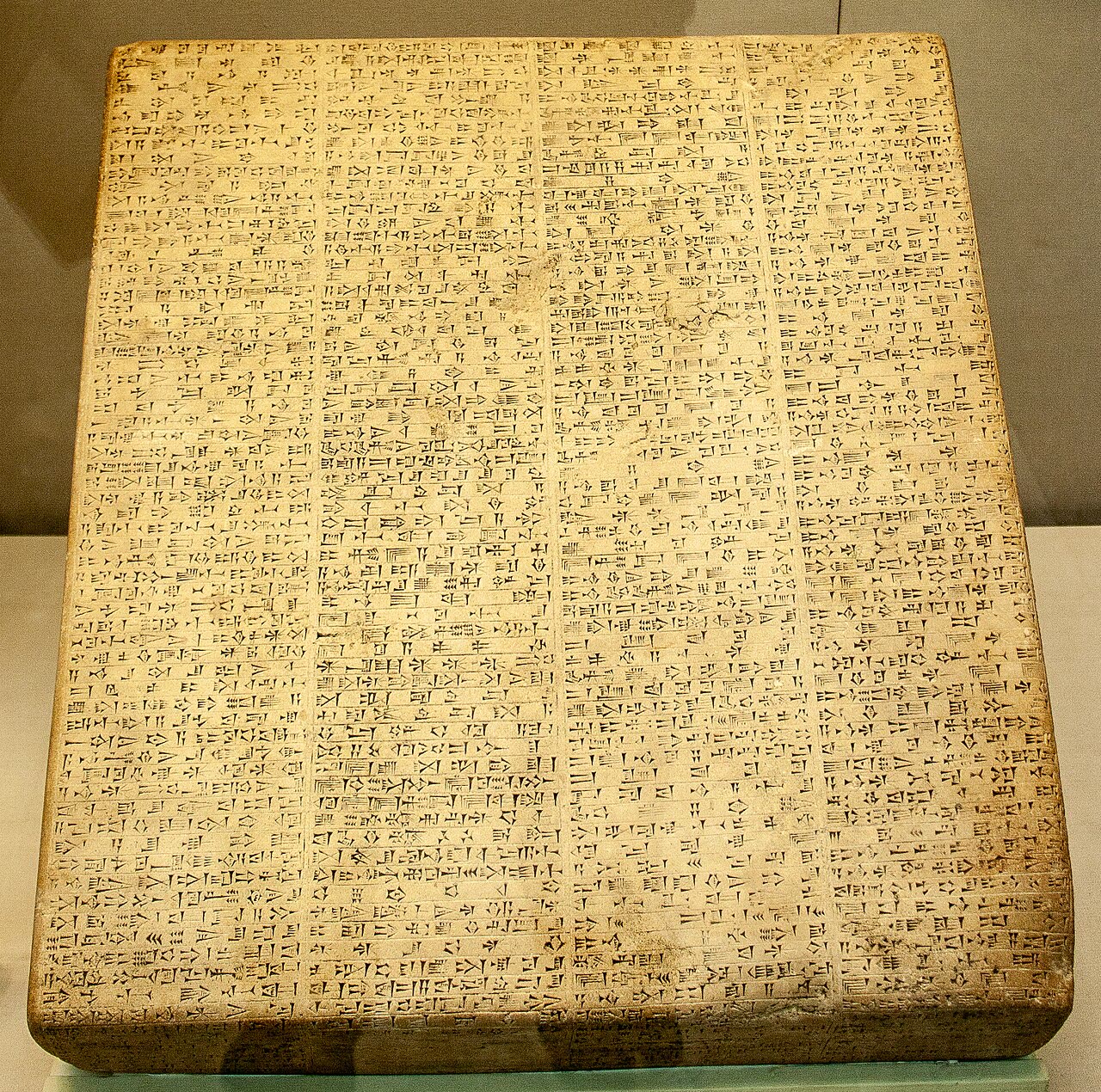
The stone tablet pictured here is one copy of a long inscription of Nebuchadnezzar IINebuchadnezzar IIBabylonian king, 605–562 BCE, appearing in Daniel and independently attested in inscriptions and building remains.Glossary · Click to read the explanation known as the East India House Inscription. Its main building report concerns the North Palace, while its prologue reviews earlier work. The king says he made Kaḫilisu and the gate of Ezida inside Esagil shine with solar brilliance. He describes decorating the shrine of MardukMardukBabylon’s leading god, worshipped at Esagil and elevated in the Akkadian Enūma eliš. His symbols include a spade and mušḫuššu dragon. His earliest origins remain obscure; Nibiru is no evidence of a planetary homeland.Glossary · Click to read the explanation immediately beforehand, naming materials that include gold, lapis lazuli and alabaster. The passage places the goddess’s gate among a series of improvements to the city’s main sanctuary. [3] [4]
Another inscription of the same king spells out the association. It calls Zarpanitu his lady, says that he clad Kaḫilisu with gold and describes how he adorned her chamber. Earlier in the same column he enumerates a daily provision of livestock and other foods, milk, oils, honey and drinks for the table of Marduk and Zarpanitu. The paired dedication concerns the recurring provision of food as well as the adornment of distinct rooms. A fragmentary clay tablet has a gap where an equivalent account of the gate would stand. George uses the parallel Wadi Brisa inscriptions to restore the passage about its gilding and the delight of Zarpanitu’s chapel. [3] [5]
A statue and a bed
Royal records also show objects and cult images moving between cities. Esarhaddon had craftspeople at Aššur refurbish the statues of Marduk and other Babylonian gods, including Zarpanitu under the name Bēltīya. The editors of the Assyrian inscriptions place the return of this group in 668 BCE, when AshurbanipalAshurbanipalAshurbanipal was an Assyrian king of the seventh century BCE, reigning about 668–631 BCEGlossary · Click to read the explanation and his brother Šamaš-šuma-ukīn went south to Babylon. Their account distinguishes the preparations in Assyria from the return under Esarhaddon’s successors. [6]
Ashurbanipal later reclaimed a bed and a throne that had been taken to Assyria under his grandfather Sennacherib. His scribes copied the older inscriptions, and the furnishings were refurbished and given new dedications under Ashurbanipal’s name. The bed was returned to Esagil and placed in Kaḫilisu, described here as Zarpanitu’s bedchamber. A contemporary inscription dates the return to the twenty-seventh day of Simānu in 655 BCE. The editors also discuss a Babylonian chronicle entry that would place the return a year later if read by the regnal years of Šamaš-šuma-ukīn. [6]
Whom the goddess protects
In a ritualRitualAn organised or distinguished practice meaningful to a community; it may leave traces, but its form alone does not reveal an associated doctrine.Glossary · Click to read the explanation text assembled from two fragments, the officiant leaves the presence of Bēl and addresses Bēltīya. The prayer names her as Zarpanitu and depicts her as a brilliant star, clothed in light, crossing the sky and watching over the earth. The text also gives that radiance a practical meaning. The goddess can overturn wealth and poverty, release a captive and take a fallen person’s hand. The speaker asks her to act in favor of the worshipper and the king and to preserve the lives of Babylon’s inhabitants. [7]
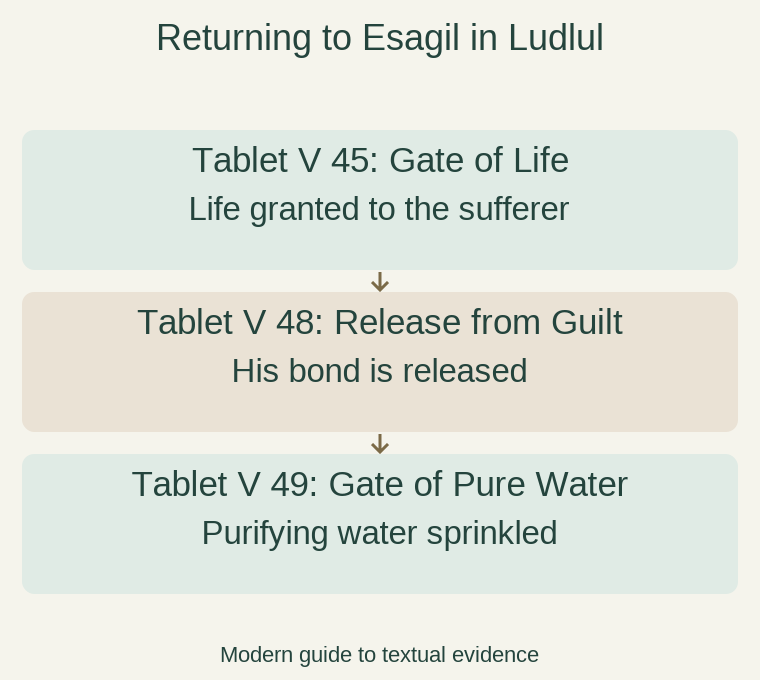
The closing portion of Ludlul, Tablet IV in the edition by Alan Lenzi and Amar Annus, works from an individual case. The narrator passes gates whose names echo what happens there. At the Gate of Life he receives life. At the Gate of Pure Water he is sprinkled for purification. He is received in connection with Marduk at the Gate of Well-Being, then kisses Zarpanitu’s feet at the gate associated with her shrine. The scene continues with prayer, incense, gifts and sacrifice before both deities. The people of Babylon go on to marvel at his return to ordinary life, including the simple act of walking his own street again. They praise Marduk for restoring a man from the grave and Zarpanitu for her ability to spare someone from calamity. The goddess who takes the fallen by the hand in the ritual prayer thus has a counterpart in a poem about what it feels like to be able to stand and walk again. [1] [7]
References and notes (7)
- Alan Lenzi and Amar Annus, A Six-Column Babylonian Tablet of Ludlul Bēl Nēmegi and the Reconstruction of Tablet IV 2011, pp. 197–198, Tablet IV 37–76 Return to the text ↑
- Andrew R. George, Babylonian Topographical Texts 1992, pp. 92–97, Esagil gate lists 6–7 and parallel entries Return to the text ↑
- Jamie Novotny and Frauke Weiershäuser, RINBE 1/1 Nebuchadnezzar II 2 ii 43–53 and commentary, 19 i 16–38 Return to the text ↑
- Cuneiform Digital Library Initiative, East India House Inscription P522992 BM 129397, object and edition record Return to the text ↑
- Andrew R. George, Babylonian Texts from the Folios of Sidney Smith, Part One 1988, pp. 143–145, BM 45619 and Wadi Brisa A iii 41–46 and B i b 9–14 Return to the text ↑
- Jamie Novotny and Joshua Jeffers, RINAP 5/3 Introduction pp. 16–20, divine statues and recovered furnishings Return to the text ↑
- Sources of Early Akkadian Literature, BM 32485 + BM 92707 Ritual tablet, column i 11′–30′ Return to the text ↑
Suggest a correction · Suggest a source for this record
Cite this record
IL Archive, «Zarpanitu», https://ilarchive.com/en/entities/zarpanitu
Continue reading
Related readings