Person
Jacob of Serugh
- Names
- Jacob of Sarug
- Timeline
- From 451 CE to 521 CE
Jacob of Serugh (c. 451–521), Syriac poet, preacher and bishop in Roman Mesopotamia. The entry covers his life, metrical homilies and letters, and the limits of attributing the Ephesus Sleepers homily and the Alexander Poem.
Estimated reading time: 9 min Published Last reviewed:
Share article
Text
Introduction
Jacob of Serugh (c. 451–521 CE) was a SyriacSyriacAn Aramaic literary language rooted in Edessa, first attested in non-Christian inscriptions and later prominent in Christian writing, scholarship, translation and liturgy.Glossary · Click to read the explanation poet, preacher, and writer in Roman northern MesopotamiaMesopotamiaHistorical region associated with the Tigris and Euphrates: Uruk, Ur, Eridu, cuneiform, Sumer, Akkad, Babylon and Assyria, their languages and cults, and the limits of archaeological evidence.Glossary · Click to read the explanation who became bishop of Batnae in the district of Serugh late in life. His importance is not confined to the homily on the youths of Ephesus associated with his name: the verse homilies transmitted under his name had a wide influence on biblical interpretation, church preaching, and Syriac Christian literature. [1][2]
This article asks what near-contemporary evidence can establish about his life, how his writing combined biblical narrative with poetry and pastoral teaching, and why works attributed to him in later manuscripts cannot all be treated alike. It examines a short excerpt of published Syriac, then places the homily on the Sleepers of Ephesus in the history of that narrative without assuming that every later parallel arose through direct textual borrowing.
A life between contemporary testimony and church memory
According to a tradition that dates his birth to about 451, Jacob came from Kurtam near Serugh, in the Euphrates region of northern Mesopotamia, within the Syriac-speaking cultural world of Edessa (modern Urfa). Later church accounts say he studied at Edessa and experienced a miraculous sign of his gifts as a child. Such accounts reveal his standing in Syriac Orthodox memory; they do not constitute contemporary documentation establishing the miracle or every stage of his education. [2][5]
A historical witness much closer to his lifetime is more specific. The anonymous author of the Chronicle of Pseudo-Joshua the Stylite, recounting the Roman–Sasanian war and its hardships in the early sixth century, describes Jacob as a church visitor (periodeutes). In chapter 54 the chronicler says that he composed biblical homilies and verse about the locust plague and sent admonitory letters to towns, urging residents to remain steadfast rather than flee. Instead of an idealized childhood or an exhaustive list of works, we encounter a writer engaged in teaching and pastoral action during an actual emergency. Reference works place his appointment as bishop of Batnae around 519 and his death in 521, although traditions differ over the precise day of his death. [3][2]
A short chronology
- Around 451 CE: the traditional date of his birth, also the year of the Christian Council of Chalcedon.
- Early sixth century: Pseudo-Joshua attests his preaching and correspondence amid the Roman–Sasanian war of 502–506.
- Around 519: appointment to the see of Batnae, followed by his death in 521 according to the prevailing reference chronology.
- Seventh and eighth centuries onward: early surviving copies of certain homilies. Nineteenth- and twentieth-century editions and modern studies belong to still later stages of transmission, not to the date when he composed his works. [2][3][6]
Metrical homilies, letters, and transmission
Jacob's characteristic literary form is the memrā (ܡܐܡܪܐ; plural memre), a long didactic homily or poem that often retells a biblical episode in order to draw out its theological or ethical meaning. It differs from the stanzaic madrāšā hymn: the Syriac memrā is generally a continuous composition in a consistent syllabic metre, probably recited rather than sung to a fixed tune. Jacob's characteristic line has twelve syllables, rhythmically divided into three groups of four and organized in couplets. The resulting pattern helps listeners follow a narrative and its interpretation; it is not merely verbal ornament. [7]
The topics span creation, MosesMosesCentral figure in Exodus, Torah traditions and the Qur’an; childhood accounts differ in detail.Glossary · Click to read the explanation, Mary, Peter, resurrection, repentance, martyrs, and the consecration of churches. Alongside the poems stand prose letters responding to monasteries, congregations, and officials in Jacob's own time. Later testimony credits him with over 760 memre, but that traditional total is not a list of independently authenticated autograph works. Modern reference works discuss roughly four hundred surviving homilies whose transmission and authorship must be assessed individually. Roger-Youssef Akhrass and Imad Syryany published a two-volume collection entitled 160 Unpublished Homilies of Jacob of Serugh in 2017; inclusion in an edition does not automatically place every text at the same level of authorial certainty. [1][2][10]
Poetry as biblical interpretation
The opening of the memrā listed as On Repentance and an Admonition in Paul Bedjan's edition offers a compact example. The following two Syriac lines have been checked against the online transcription of that printed edition; they are not presented as a fresh collation of a manuscript or an independently established critical reading. [8]
In a close, approximate translation: “The great road of repentance is very easy; words of peace are spread along it for those who walk it.” The image makes repentance into a road traversed by a person, and peace into words laid out upon that road. The poem then invokes Gospel figures, including the sinful woman and the crucified thief, to teach about return and forgiveness. This is pastoral interpretation through scriptural examples, not an independent historical report about people whom the poet knew. [8]
Near the beginning of On the Consecration of the Church and on Moses the Prophet, printed in Bedjan's first volume, p. 38, the speaker appeals to the giver of gifts with the brief request, “You who are rich, give to the needy person who asks you.” The image develops into a supplicant who repeatedly returns for more. Images of wealth and thirst thus introduce an interpretation of Moses and the Church: the poet moves from familiar experience into biblical symbolism, without every detail becoming a literal claim about Moses's lifetime. The passage was checked in the published digital Syriac transcription, not in the manuscript or manuscripts underlying Bedjan's edition. [9]
Christology and the disputes after Chalcedon
Jacob lived after the Council of Chalcedon (451), as churches disputed how to speak about Christ's divinity and humanity. The modern analytical label miaphysite can describe a position affirming the unity of the incarnate Christ without making his humanity unreal. It requires explanation rather than being projected unchanged onto every verse. Because his biblical imagery is often less explicit than his letters, scholars long disagreed about his allegiance. [11][12]
The letters enter the controversy more directly, especially where they discuss Christ's “miracles and sufferings” and whether both can be predicated of the one acting subject without compromising the reality of the incarnation. Philip Michael Forness examined correspondence with the monastery of Mar Bassus, the military commander Bessas, and a Christian community at Najran in South Arabia, alongside a homily on Chalcedon and exegetical homilies. His argument is not that biblical sermons were detached from such controversies, but that episodes about Moses or Peter's confession could teach Christology to wider audiences. The particular date, venue, and first audience of each homily remain less securely known than the existence of debate in the correspondence. [11][12][14]
The homily on the youths of Ephesus
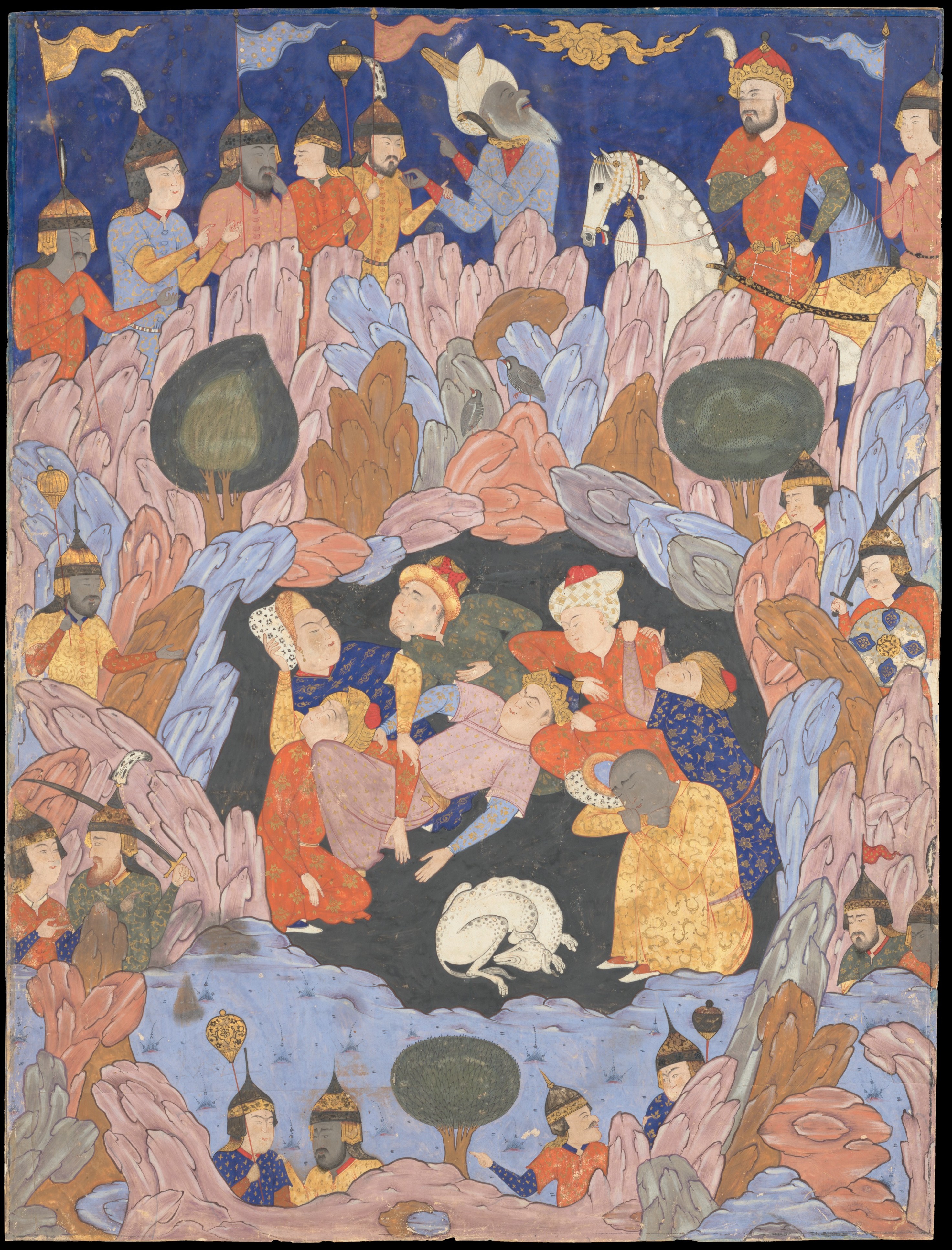
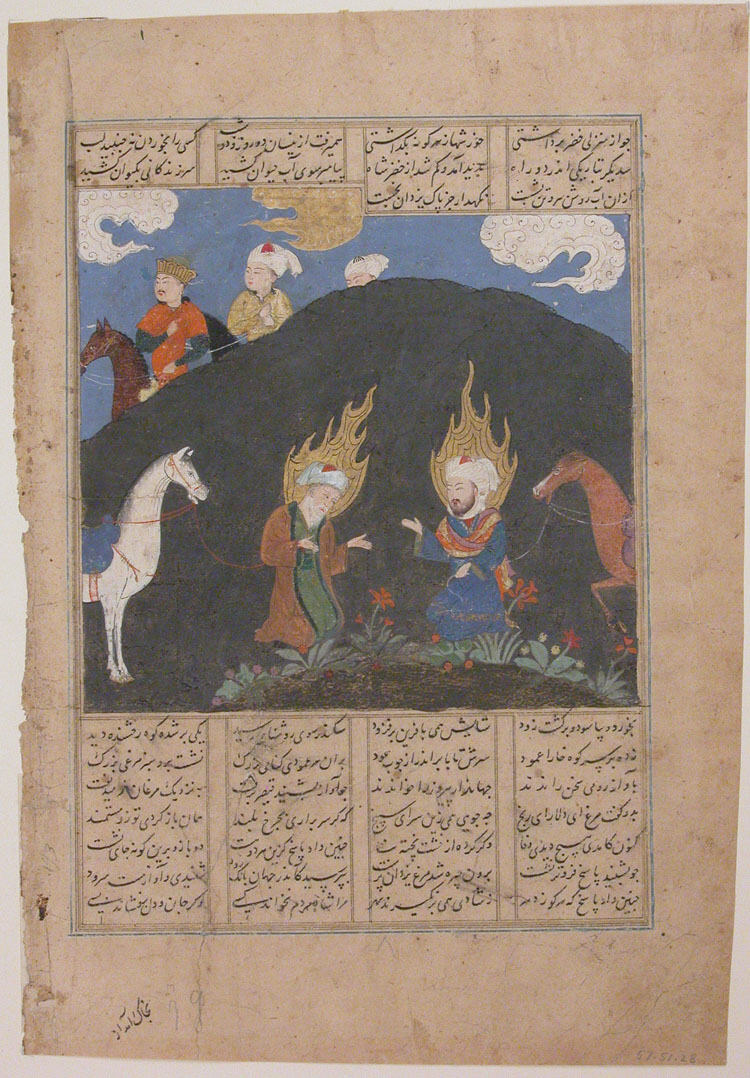
Among the homilies whose attribution to Jacob scholars regard as highly probable is the one about the youths of EphesusEphesusAncient city in western Türkiye with major Roman and early Christian phases.Glossary · Click to read the explanation, young Christians who hide in a cave from persecution that the story places under Emperor Decius (249–251), then awake in the reign of Theodosius II (408–450). The form summarized by an Oxford research project has eight youths, even though other traditions conventionally speak of the “Seven Sleepers.” Yamlikha goes out to purchase bread with old coins; the money and the transformed city make the passage of time visible, and the awakening becomes a narrative argument for resurrection. [6]
Three times must be kept separate. The first is the reigns within the story: these dates do not in themselves demonstrate that the event happened. The second is the likely composition of a homily attributed to a poet living in the late fifth and early sixth centuries. The third is the date of surviving witnesses and scholarly editions. The Oxford entry discusses two slightly different Syriac versions published by Ignazio Guidi from manuscripts including Vatican Syriac 115, dated approximately to the seventh or eighth century, and Vatican Syriac 217. Neither a witness's date nor the appearance of a line in an edited text dates every detail of the story, or licenses attributing an uncollated line to one specific manuscript. [4][6]
The homily helps explain affinities between the Christian Sleepers tradition and the Qur'anic story of the Companions of the Cave, but cannot by itself identify a manuscript that was transmitted into the Qur'an. Nor should it be collapsed into the separate Latin witness of Gregory of ToursGregory of ToursBishop of Tours (573–594) and Gallo-Roman historian; author of ten books of Histories and works on miracles and saints. He rendered the Ephesian Sleepers tale into Latin with a Syrian interpreter, without establishing the source language or later channels of influence.Glossary · Click to read the explanation and his named intermediary John the SyrianJohn the Syrian, Gregory's interpreterInterpreter named in the ending of the Latin Sleepers of Ephesus account, dated to the sixth century CE.Glossary · Click to read the explanation: these have their own contexts of transmission, treated more fully in the separate comparative study. [6]
Disputed attribution: the Alexander Poem
Jacob's name also appears in the manuscript tradition of the Syriac Alexander PoemSyriac Alexander PoemSyriac metrical homily on Alexander, life-water, and the gate against Gog and Magog, attested by a ninth-century manuscript catalogue and described in scholarship as having three recensions. Traditionally attributed to Jacob of Serugh; Brock proposes composition after 629/630 CE. Recensions are not collated here.Glossary · Click to read the explanation, about the journeys of Alexander the GreatAlexander the GreatMacedonian king who lived from 356 to 323 BCE and became a hero of stories in different languages and traditions after his death.Glossary · Click to read the explanation and a barrier against Gog and Magog. Similar metre or a name in a late heading is insufficient to establish authorship. The Gorgias Encyclopedic Dictionary of the Syriac Heritage, in its entry on the Alexander cycle, dates the poem very probably after Heraclius's victory over Persia in 629/630, more than a century after Jacob's death. That chronological and textual evidence outweighs the bare ascription; the poem should therefore be studied as attributed to Jacob, not as an authenticated product of his lifetime. The earlier history of Alexander traditions remains a distinct question. [13]
Manuscripts, editions, and legacy
Jacob's writings survive not as his own manuscript notebook but in copies from different periods, sometimes embedded in liturgical collections or anthologies of mixed homilies. Paul Bedjan published extensive Syriac selections in five volumes between 1905 and 1910; modern digital corpora transcribe parts of these editions and connect them to identifiers for individual works. A printed edition, a digital transcription explicitly marked as not fully edited, and a particular manuscript are three different levels of evidence. The discovery of letters and previously unknown manuscripts has altered scholarly judgments about Jacob's Christology: Forness's study of those disputes reconstructs both the new evidence and the history of its interpretation. [1][8][9][12]
His historical importance rests on a near-contemporary account of a preacher acting in a crisis, a large body of poetic instruction through narrative, metre, and imagery, and letters revealing live theological debate. A responsible account nevertheless tests authorship, witnesses, and editions work by work. Jacob is more than a name attached to a celebrated tale, and his name is not an automatic guarantee of authenticity for everything later traditions assigned to him.
References and notes (14)
- Philip Michael Forness, “Jacob of Serugh,” syri.ac catalogue (2016): author profile and homily bibliography; counts qualified. Author profile and bibliography shown on the page. Return to the text ↑
- Jeanne-Nicole Mellon Saint-Laurent, “Jacob of Serugh, Metrical Homilies…,” The Cambridge Edition of Early Christian Writings (2022), pp. 266–293; publisher summary consulted for biography and genre. Public chapter summary only, not the full pp. 266–293. Return to the text ↑
- Anonymous Chronicle of Pseudo-Joshua the Stylite, ch. LIV, William Wright’s English translation (1882), and note 26. Chapter LIV, the paragraph on Jacob’s letters, plus translator’s note 26; English translation, not direct Syriac. Return to the text ↑
- Ignazio Guidi, Testi orientali inediti sopra i Sette Dormienti di Efeso (1884 article; 1885 offprint), pp. 16–18 as inherited; not directly consulted for this revision; recensions cross-checked against Oxford catalogue [6]. Inherited bibliographic pointer only; pp. 16–18 and manuscript readings not directly checked. Return to the text ↑
- Syriac Orthodox Patriarchate, “Encyclical on the Jubilee of the 1500 Years of Mor Jacob of Serugh” (2021); commemorative biography, not contemporaneous verification. Opening biographical paragraphs, including village, schooling, and childhood sign. Return to the text ↑
- Sergey Minov, Cult of Saints in Late Antiquity, Oxford, E02525 (2017), “Homily on the Youths of Ephesus”: attribution, narrative, and manuscripts. Full entry and narrative summary, manuscript/editorial note; Brock’s full translation not accessed. Return to the text ↑
- Gorgias Encyclopedic Dictionary of the Syriac Heritage, “Poetry”: memrā, madrāšā, Jacob’s 12-syllable 4+4+4 metre, probable recitation. Opening description of poetic genres and metres. Return to the text ↑
- Jacob of Serugh, On Repentance and an Admonition, Paul Bedjan, Homiliae selectae I (1905), Digital Syriac Corpus no. 368, transcription by Fr. Shlimon, encoded by James E. Walters. Title, opening two lines and immediately following passage read on the digital transcription, labelled unedited; no manuscript collation. Return to the text ↑
- Jacob of Serugh, On the Consecration of the Church and on Moses the Prophet, ed. Paul Bedjan, Homiliae selectae I (1905), printed p. 38; Digital Syriac Corpus 342. Opening at the printed p. 38 marker, approximately four Syriac lines in the transcription; underlying manuscript(s) not collated. Return to the text ↑
- Roger-Youssef Akhrass and Imad Syryany, 160 Unpublished Homilies of Jacob of Serugh, 2 vols. (Damascus: Syriac Orthodox Patriarchate, 2017). Syriaca.org bibliography metadata only (title, editors, year, publisher); none of the 160 homilies read. Return to the text ↑
- Philip Michael Forness, Preaching Christology in the Roman Near East (Oxford, 2018), chapter 3, pp. 89–133; publisher abstract only. Chapter 3 abstract: Mar Bassus, Bessas, Najran, miracles and sufferings; full chapter unavailable. Return to the text ↑
- Philip Michael Forness, “Manuscript Discoveries and Debates over Orthodoxy…,” Harvard Theological Review 115.3 (2022): 416–440. Abstract and reference notes 6, 15, 16, 23, not the paywalled full article. Return to the text ↑
- Gorgias Encyclopedic Dictionary of the Syriac Heritage, “Alexander Cycle,” sections 1–3; Reinink 1983 identified, not read. The beginning of the entry, especially item 2 on poem attribution and post-629/30 dating. Return to the text ↑
- Philip Michael Forness, Preaching Christology in the Roman Near East (2018), chapter 6, pp. 186–224. Public abstract mentioning Moses in Deuteronomy 18 and Peter in Matthew 16; full chapter not read. Return to the text ↑
Suggest a correction · Suggest a source for this record
Cite this record
IL Archive, «Jacob of Serugh», https://ilarchive.com/en/people/jacob-of-serugh
Continue reading