Site · Region
Ganzer in Sumerian Netherworld Texts
- Names
- Ganzer · Ganzir · Palace Ganzer
- Region
- Mesopotamia
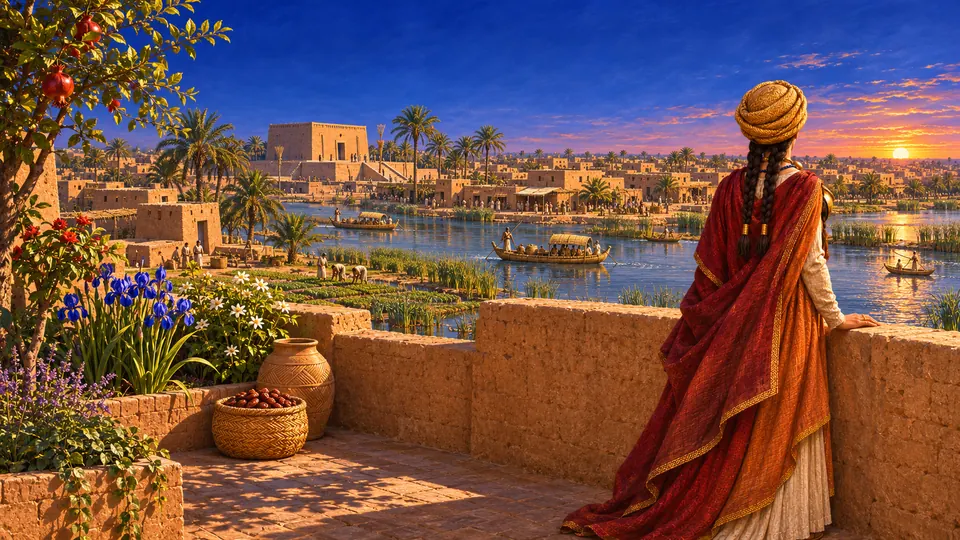
Ganzer is named where Inana enters the underworld and where Gilgamesh waits over his lost objects. The surviving poems use the name for a palace, a gateway or the realm associated with it.
Estimated reading time: 5 min Published Last reviewed:
Share article
Text
Introduction
Ganzer, also written Ganzir, is associated with the entrance to the Sumerian underworld. In InanaInanna / IshtarA prominent Mesopotamian goddess whose Sumerian name Inanna became associated with Akkadian Ishtar across diverse traditions. She was associated with desire, war, royal authority and Venus, while local forms and genealogies varied among texts.Glossary · Click to read the explanation’s Descent, the goddess comes to a place the Oxford edition calls the palace Ganzer. She demands that its doorman let her in. In Gilgamesh, Enkidu and the Netherworld, Gilgamesh sits at the gate of Ganzer after two of his possessions fall below. The name connects the two episodes through the problem of reaching the realm of the dead. [1][2]
In both poems a person can reach the boundary without being free to cross it in either direction. Inana is admitted on conditions set by the ruler below. Enkidu enters with instructions from Gilgamesh and finds himself detained. The accounts give the boundary a place in the plot as well as a name in the written text. [1][2][3]
Inana waits before the gates
When Inana arrives at Ganzer, she strikes or pushes at the door and calls for Neti, the chief doorman. She says she has come because the husband of her sister EreshkigalEreshkigalMesopotamian goddess ruling the netherworld; Inanna’s sister in descent texts, with varying accounts of her relationship with Nergal.Glossary · Click to read the explanation has died and rites are being observed. Neti tells her to remain outside while he reports to his mistress. His account repeats her arrival at the palace and her demand at the gate. There is a pause between the goddess’s claim to enter and the order that governs her admission. [1]
Ereshkigal tells Neti to bolt the seven gates and open the doors of Ganzer one by one. At the successive gates, items of clothing and insignia are taken from Inana. The Oxford edition normally puts the removal of the measuring rod and line at the sixth gate, but notes a copy that adds their removal at the first. The dress that marks her rank is taken at the seventh. Her objections receive the same reminder about submitting to the rites of the underworld. [1][3]
The name returns when Inana emerges. After she has been brought back to life, the powers below demand a substitute before she can leave. Her minister NinshuburNinshubur: Divine Messenger of Inanna and AnMesopotamian divine messenger and intermediary associated with Inanna in Sumerian narratives and with An in inscriptions and hymns; identity and gender vary by context and must not be equated automatically with Papsukkal.Glossary · Click to read the explanation falls at her feet at the door of Ganzer. The encounter puts the named doorway at the point where Inana sees someone who had waited for her. Crossing out has brought her back to the world of the living, with the question of who must go below still to be resolved. [1]
Enkidu goes after the lost objects
In the second Sumerian poem, Gilgamesh mourns two named implements, the ellag and the ekidma. The Oxford version leaves their names in Sumerian, while Katz renders the items as a hoop and a stick. He sits in front of the underworld at the gate of Ganzer and asks who will retrieve them. When Enkidu volunteers, his promise pairs bringing one object from the underworld with bringing the other from Ganzer. The parallel wording is important for understanding the range of the name. [2][3]
Gilgamesh tells Enkidu what conduct would draw attention below. He should avoid fresh clothing, scented oil and the signs of attachment or anger that would raise an outcry. The story has him disregard the advice, and the underworld detains him. Gilgamesh appeals first to EnlilEnlilEnlil/Ellil: a major Mesopotamian god associated with destinies, kingship, and Ekur at Nippur, already prominent in third-millennium god lists. His name’s origin and cult beginnings remain debated.Glossary · Click to read the explanation and then to EnkiEnkiMesopotamian deity also known as Ea, linked with Eridu and the Abzu (deep fresh waters), wisdom, incantations, and narratives of creation and cosmic order. Later written attestations do not identify the deity of Eridu’s earliest layers.Glossary · Click to read the explanation. Enki directs Utu to open a hole and bring the servant up. The way back is described as an opening made at a god’s command. The two men then speak about what Enkidu saw among the dead. [2]
How far the name extends
Niek Veldhuis calls the palace Ganzer an entry to the netherworld and points to the doors, gates and bolts associated with it. His study is centered on another Sumerian text that he interprets as a plea for admission. In that text a speaker invokes Inana’s assistance and asks for protection while approaching the realm below. The imagery lets a reader compare the arrangements for entry in a prayer with the narrative treatment of the gate in Inana’s Descent. [1][4]
Dina Katz discusses whether a phrase in the Gilgamesh poem means the gate called Ganzer or the gate of a place called Ganzer. She observes that Enkidu’s offer pairs the name with a general term for the netherworld. The usage is broader there than a reference to the door itself would suggest. In the descent poem, by contrast, the wording about the palace and its doors supplies a more explicit architectural setting. The two passages give reasons to use the name carefully where a map or a translation would otherwise have to assign it a single boundary. [1][2][3]
A related account in Akkadian
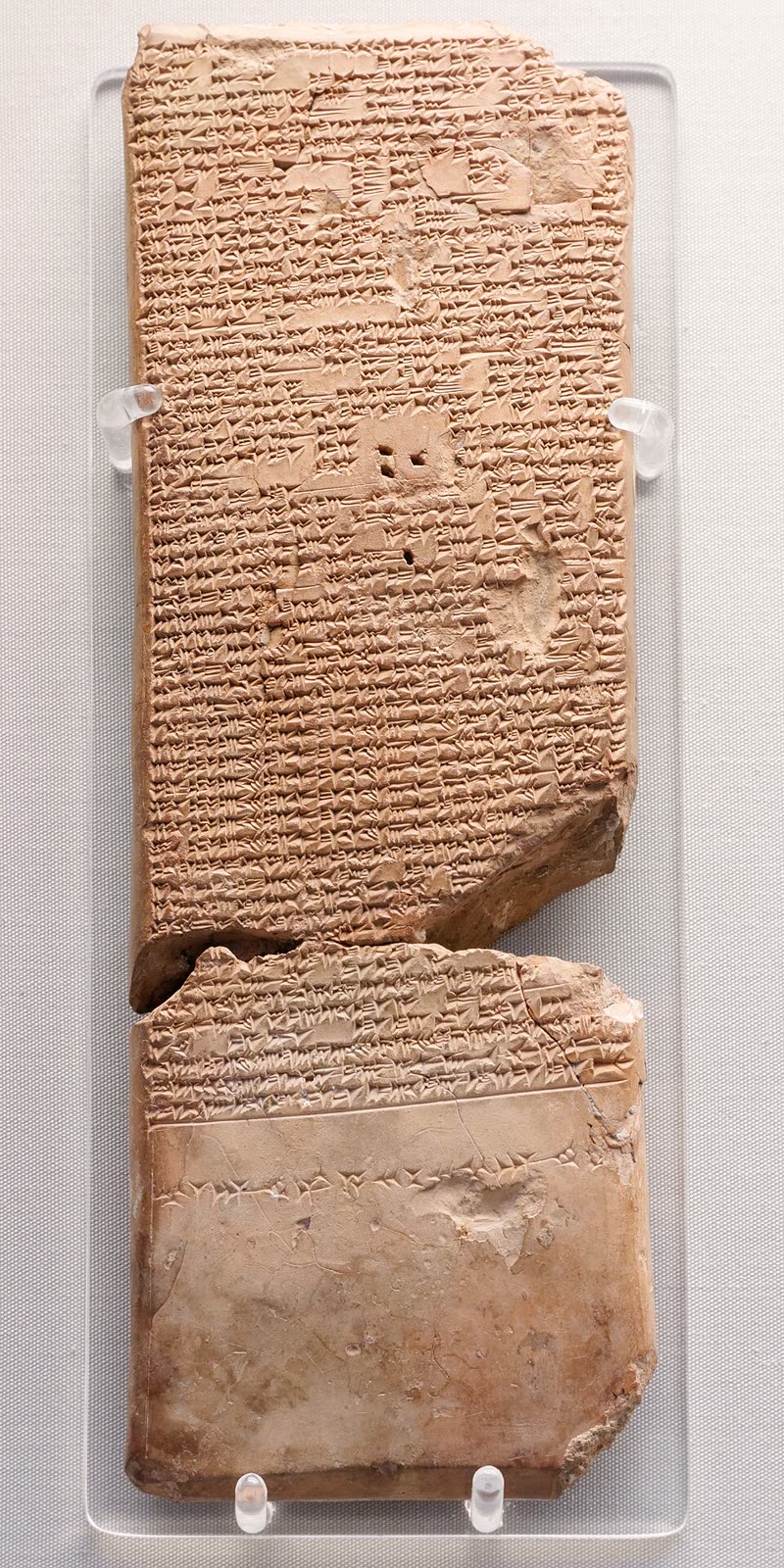
The pictured clay tablet, British Museum K.162, carries the AkkadianAkkadianAn ancient East Semitic language written in cuneiform from the third millennium BCE; its varieties include Babylonian and Assyrian, and it served in international diplomacy.Glossary · Click to read the explanation Descent of Ishtar. The Akkadian text gives its gate a different geographical expression, placing it at the land of no return. It too has a doorkeeper admit the goddess and remove objects at seven successive gates. The order and the objects have their own details, including earrings at the second gate and a belt at the fifth. The tablet gives material evidence of a related way of telling the passage into the world below. [5][6]
Ganzer itself is the name used in the two Sumerian narratives discussed here. The Akkadian tablet makes the comparison visible through a differently named gate, a numbered sequence of doorways, a doorkeeper and an authority who decides how a goddess may pass. [1][2][5][6]
References and notes (6)
- Electronic Text Corpus of Sumerian Literature, Inana’s Descent to the Netherworld Read lines 73–163, including Ganzer, Neti, the admission orders and manuscript variant, and lines 273–321 on revival, exit and the meeting with Ninshubur. Return to the text ↑
- Electronic Text Corpus of Sumerian Literature, Gilgamesh, Enkidu and the Netherworld Read lines 166–253 on the lost objects, gate of Ganzer, Enkidu’s conduct, the appeals to Enlil and Enki, and Utu’s opening. Return to the text ↑
- Dina Katz, The Image of the Netherworld in the Sumerian Sources Read the discussion of Ganzir and its grammar in Inana’s Descent and Gilgamesh, Enkidu and the Netherworld, especially the interpretation of the gateway and the two objects. Return to the text ↑
- Niek Veldhuis, Entering the Netherworld Read the proposed interpretation of RBC 2000 and paragraphs 11–16 on Ganzer, gates, difficulty of admission and Inana’s role in the prayer. Return to the text ↑
- British Museum, Cuneiform Tablet Telling the Legend of Ishtar’s Descent to the Underworld Read the object’s museum number, Akkadian language, find context and description of the seven doorways. Return to the text ↑
- Cuneiform Digital Library Initiative, Descent of Ishtar, composite P497322 Read the transliteration and English of the arrival at the gate of Kurnugi’a and the sequence of removals through the seventh gate. Return to the text ↑
Suggest a correction · Suggest a source for this record
Cite this record
IL Archive, «Ganzer in Sumerian Netherworld Texts», https://ilarchive.com/en/sites/ganzer