Enki and the World Order Chapter 1
Enki Organizes the World Manor
This illustrated adaptation follows Thorkild Jacobsen’s prose account of Enki attending to rivers, rains, cultivation, construction and animals. The closing analogy is Jacobsen’s. He compares the organization of the various kinds of work to the running of a large estate.
SourcesTurn the pages with the arrows, the arrow keys or a swipe.
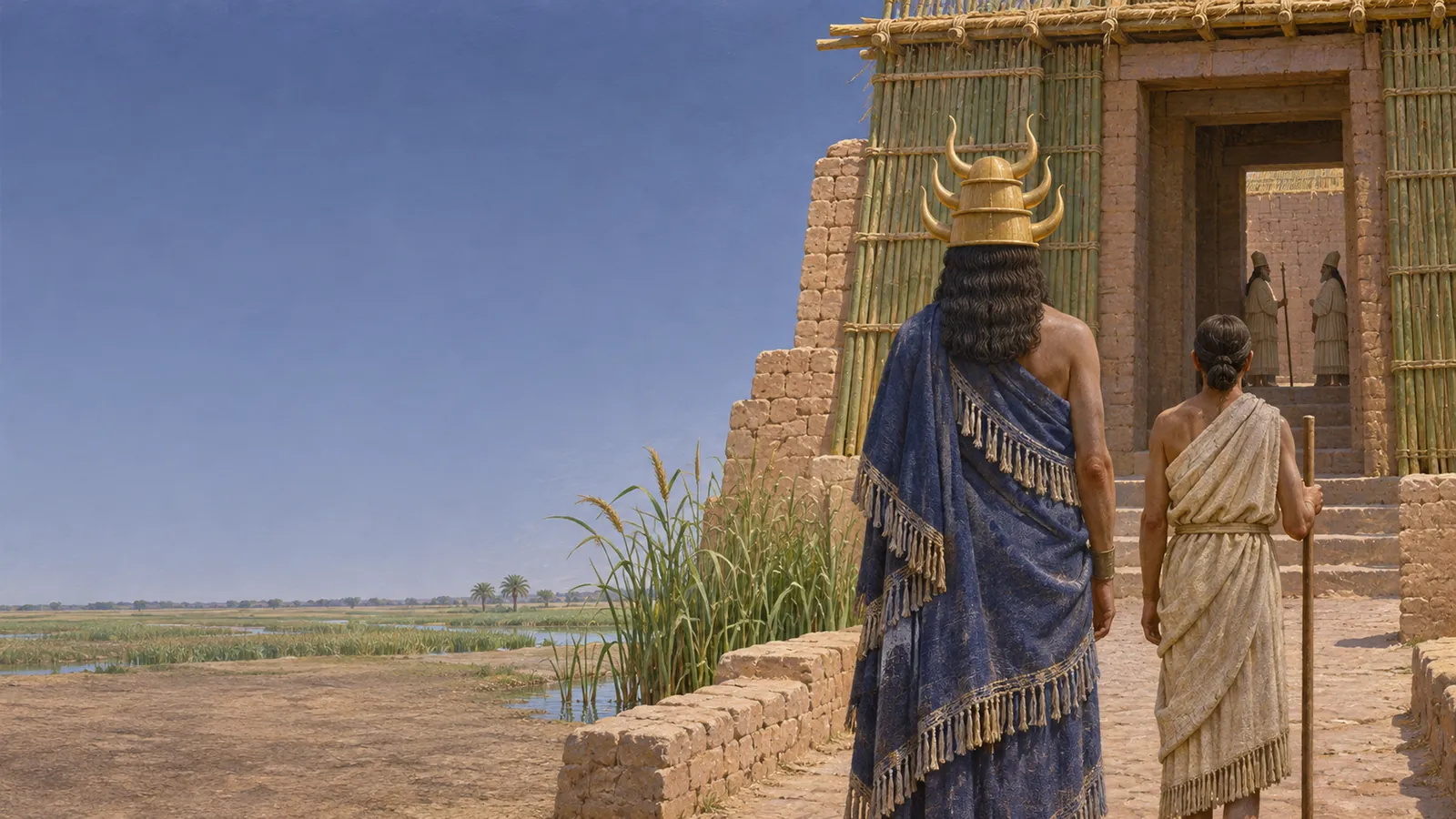
JACOBSEN’S ACCOUNT
This episode adapts Thorkild Jacobsen’s published prose account. Jacobsen says the beginning is lost and suggests that it may have told how Anu and Enlil appointed Enki.
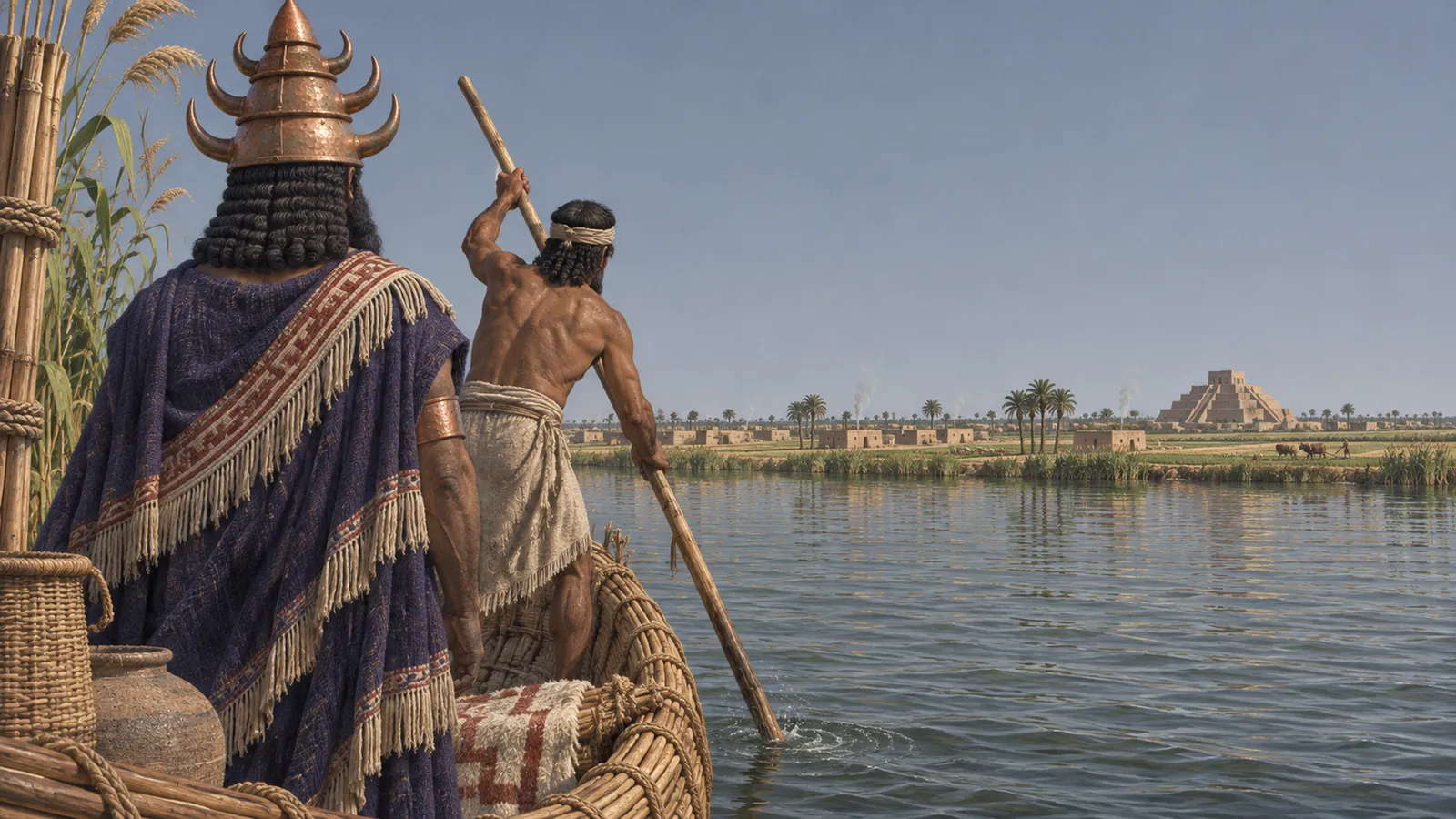
Where the text becomes readable, Jacobsen describes Enki inspecting his territory. It covers most of the world then known in Jacobsen’s account, and Enki visits its larger administrative areas.
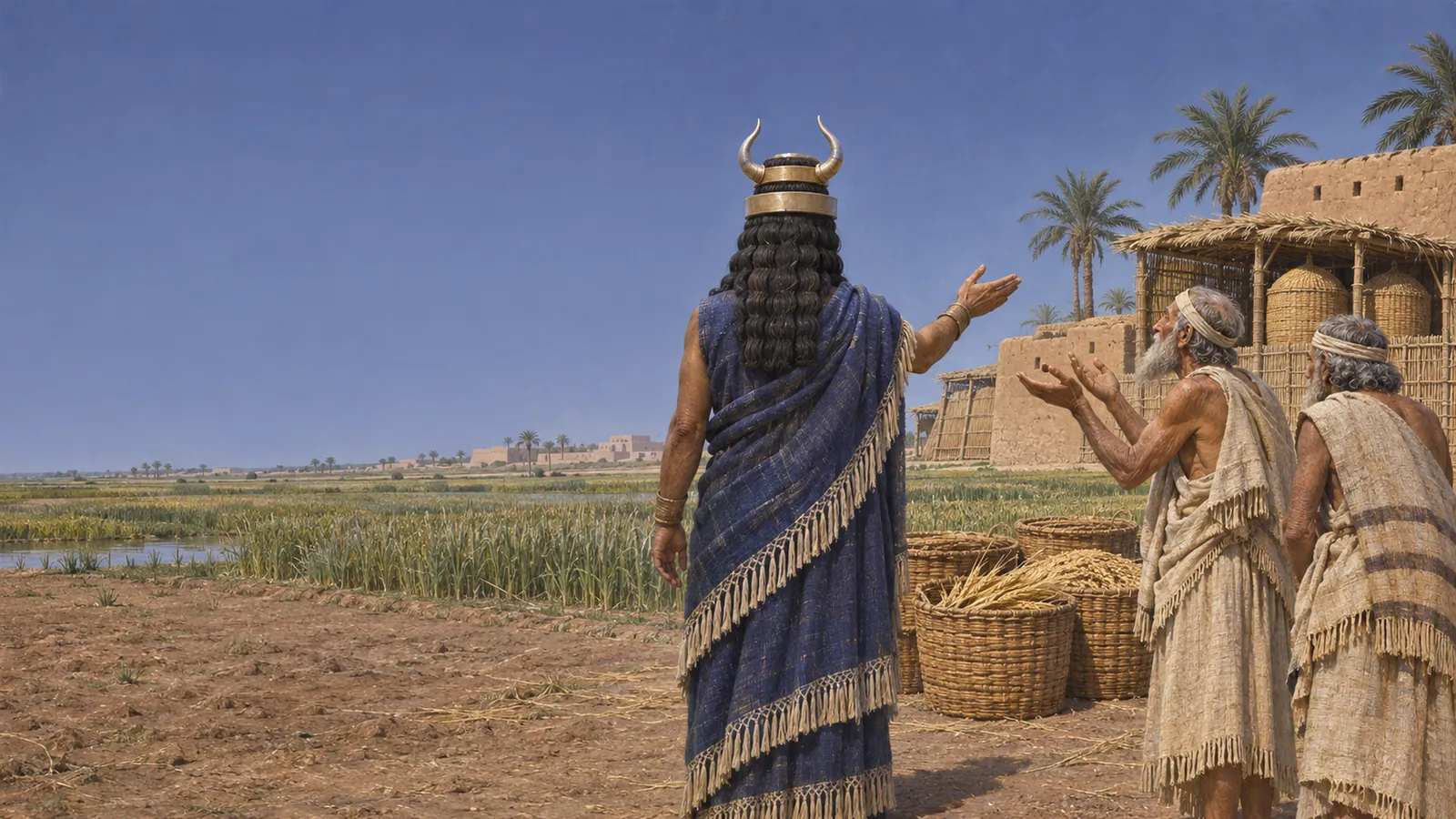
Jacobsen says Enki stops in each country and blesses it. The blessing brings that country prosperity and confirms the particular duties it is meant to carry out.
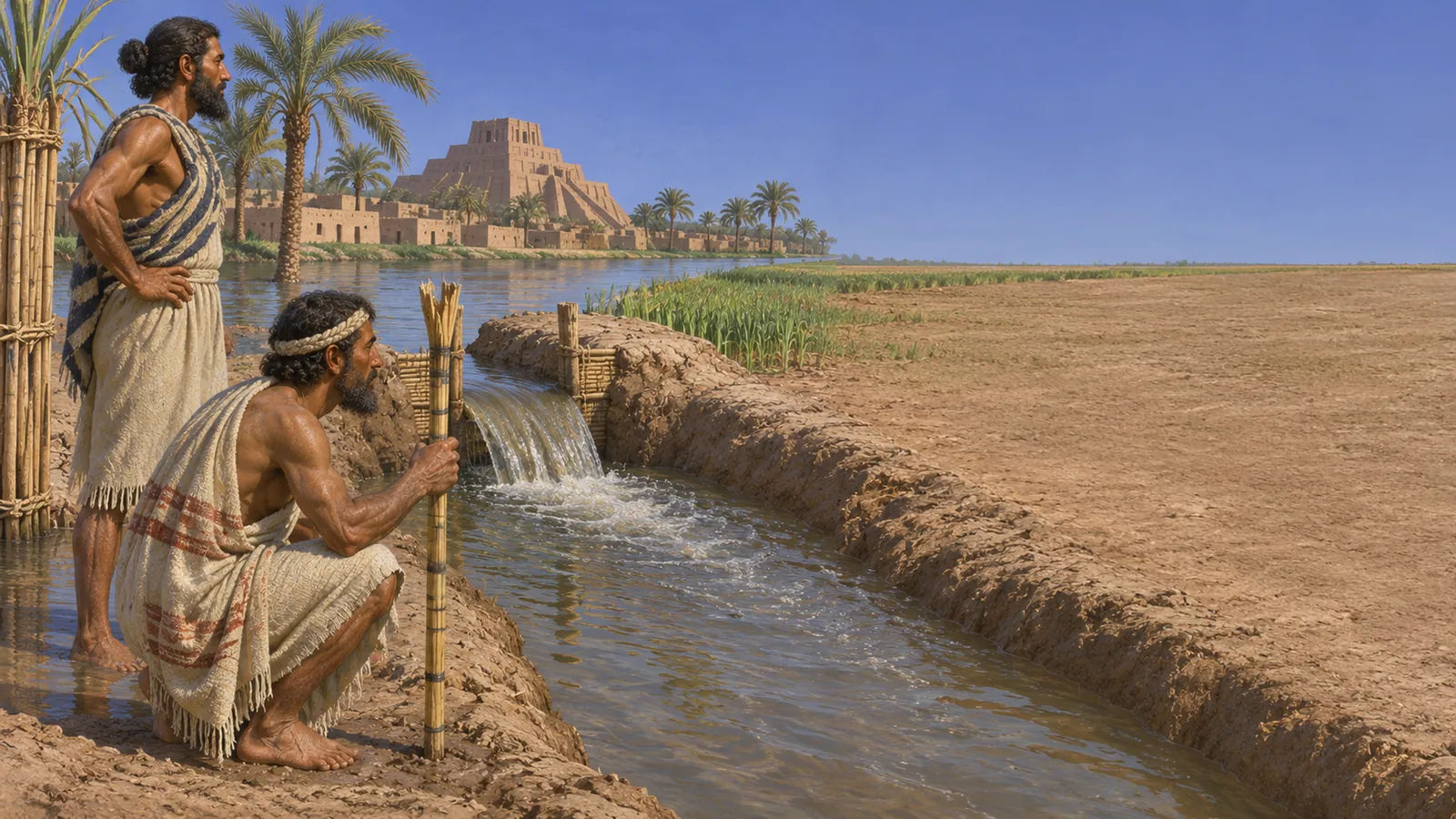
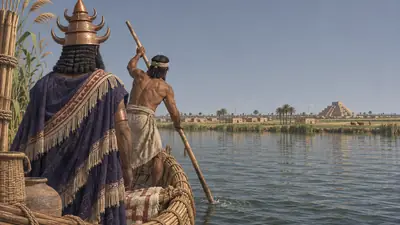
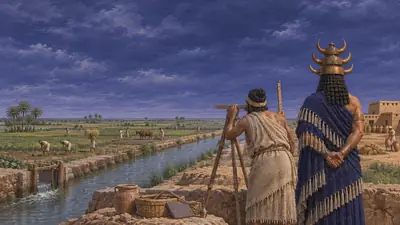
In Jacobsen’s account, Enki turns to water and the things that depend on it. He fills the Euphrates and Tigris with clear water and puts a god in charge of them.
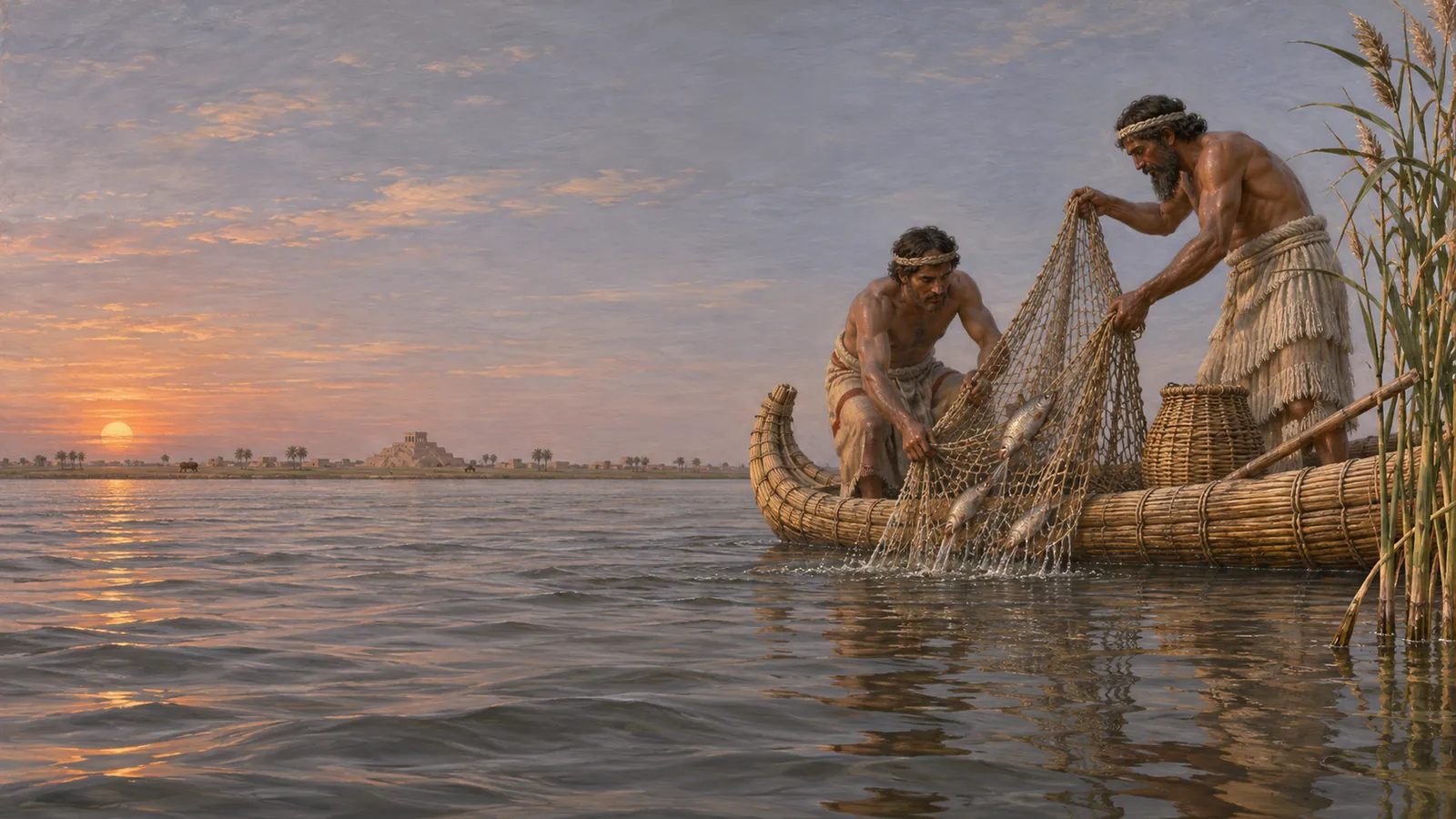
FISH AND REEDS
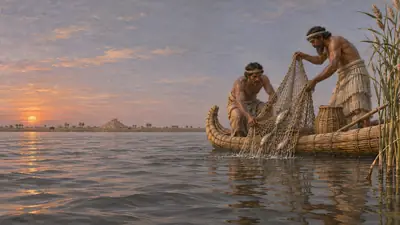
Jacobsen says Enki fills the rivers with fish and establishes stands of cane. He appoints another god to look after the fish and cane.
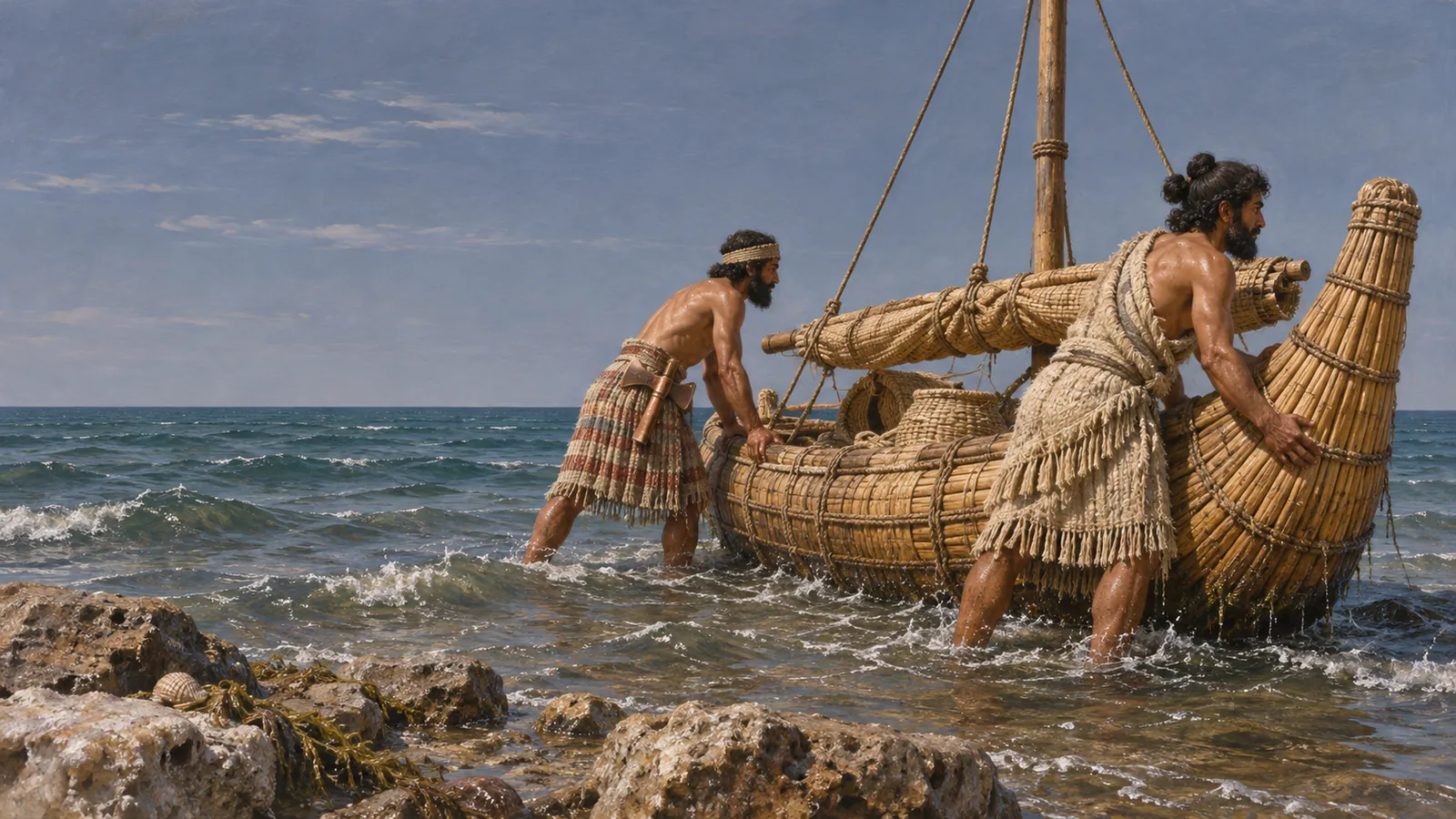
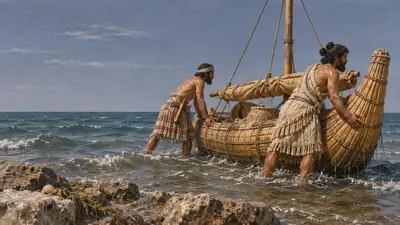
Jacobsen next describes Enki putting the sea in order and appointing a god to oversee it. His account leaves the sea and its overseer unnamed.
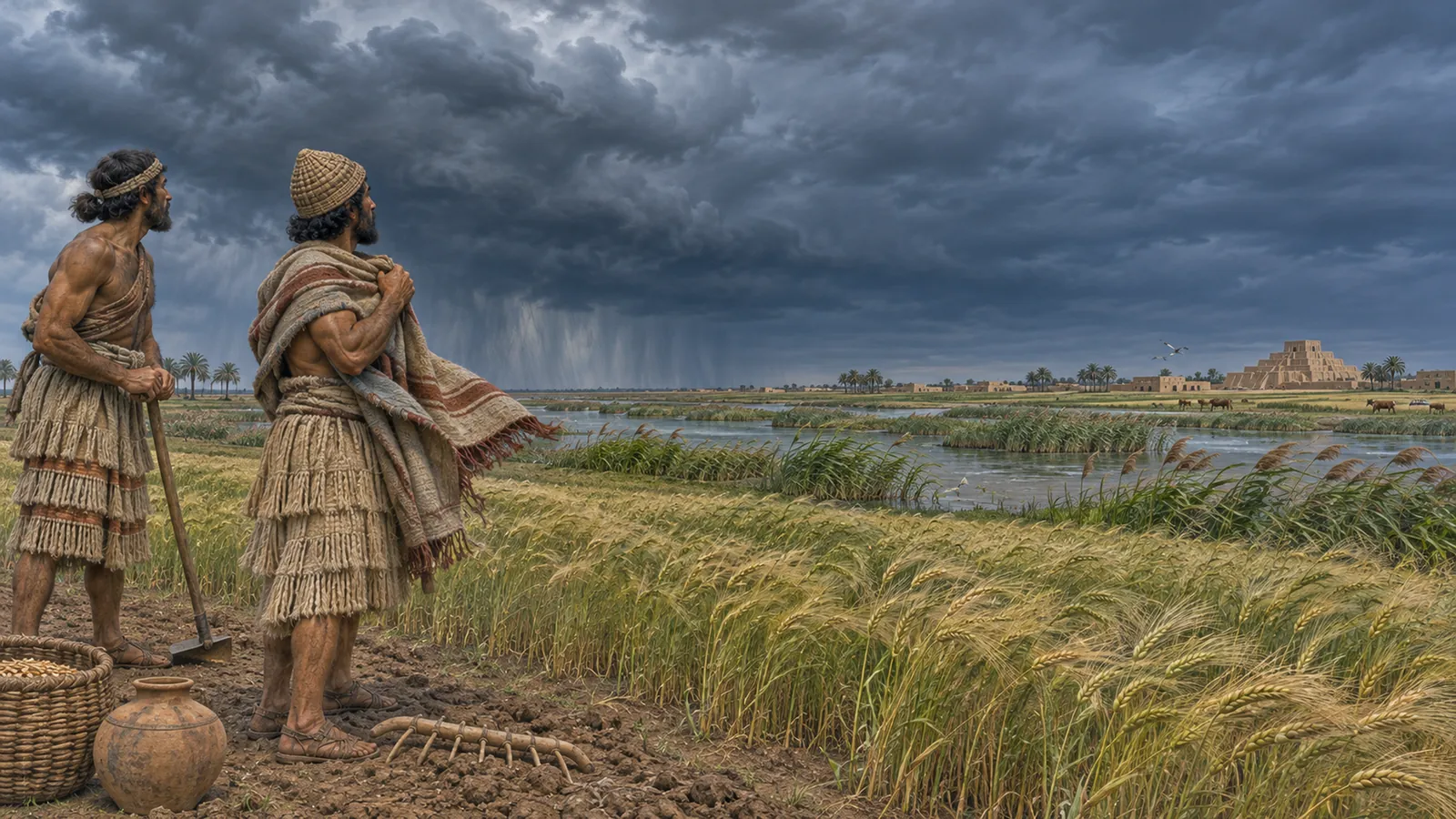
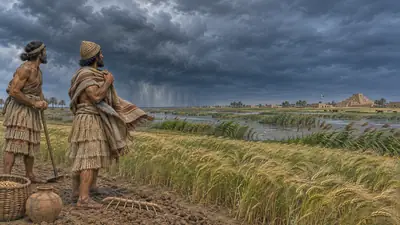
In Jacobsen’s account, Enki turns from his work on the sea to the winds that bring the rains.
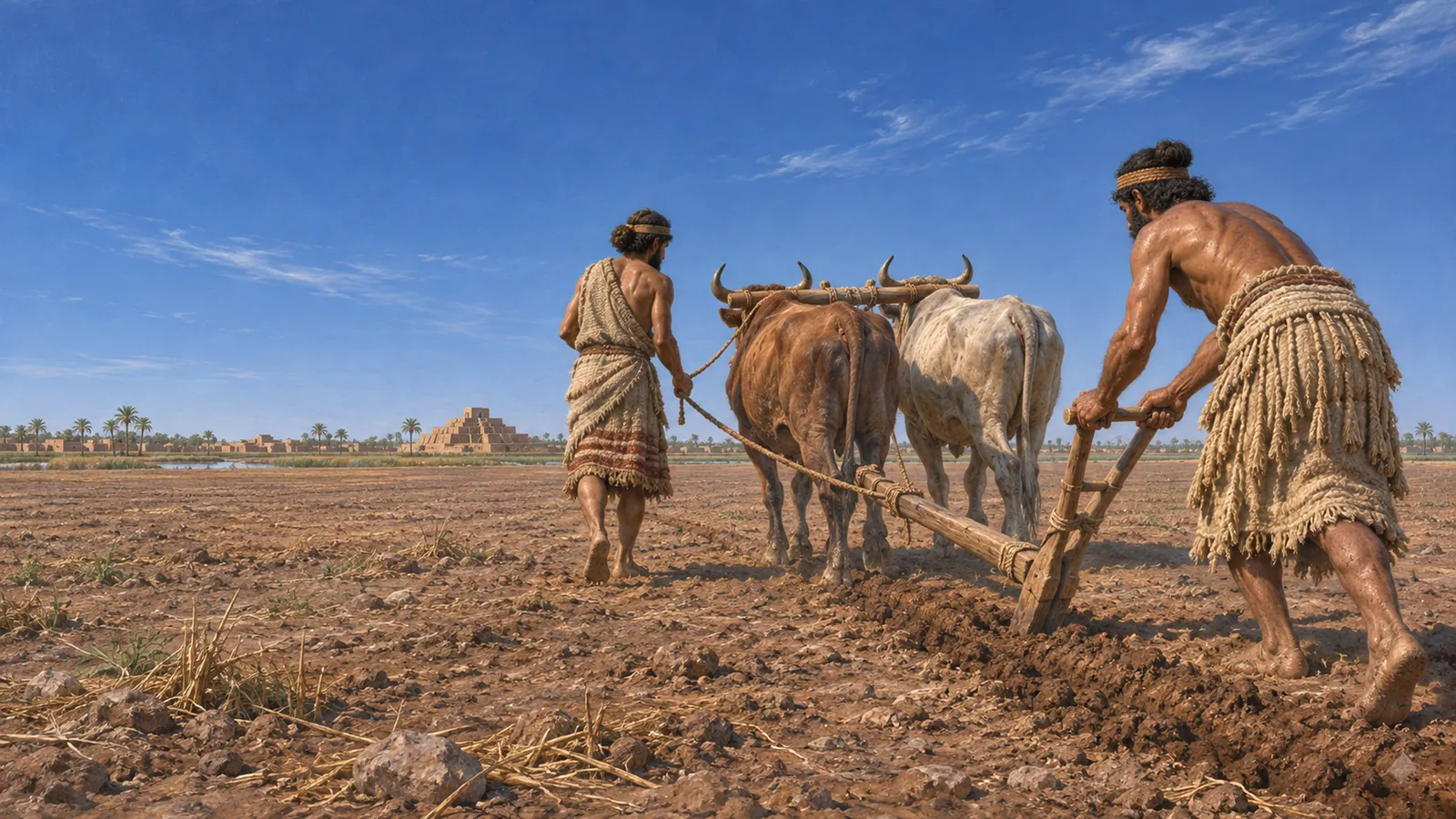
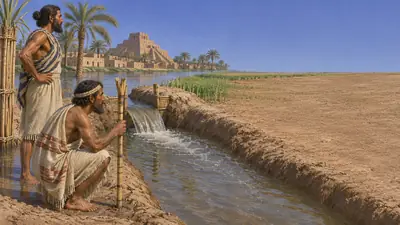
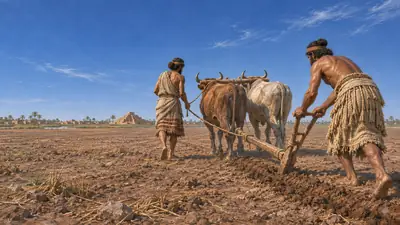
Jacobsen’s account then turns to agriculture. Enki attends to the work of the plow and opens the furrows in the fields.
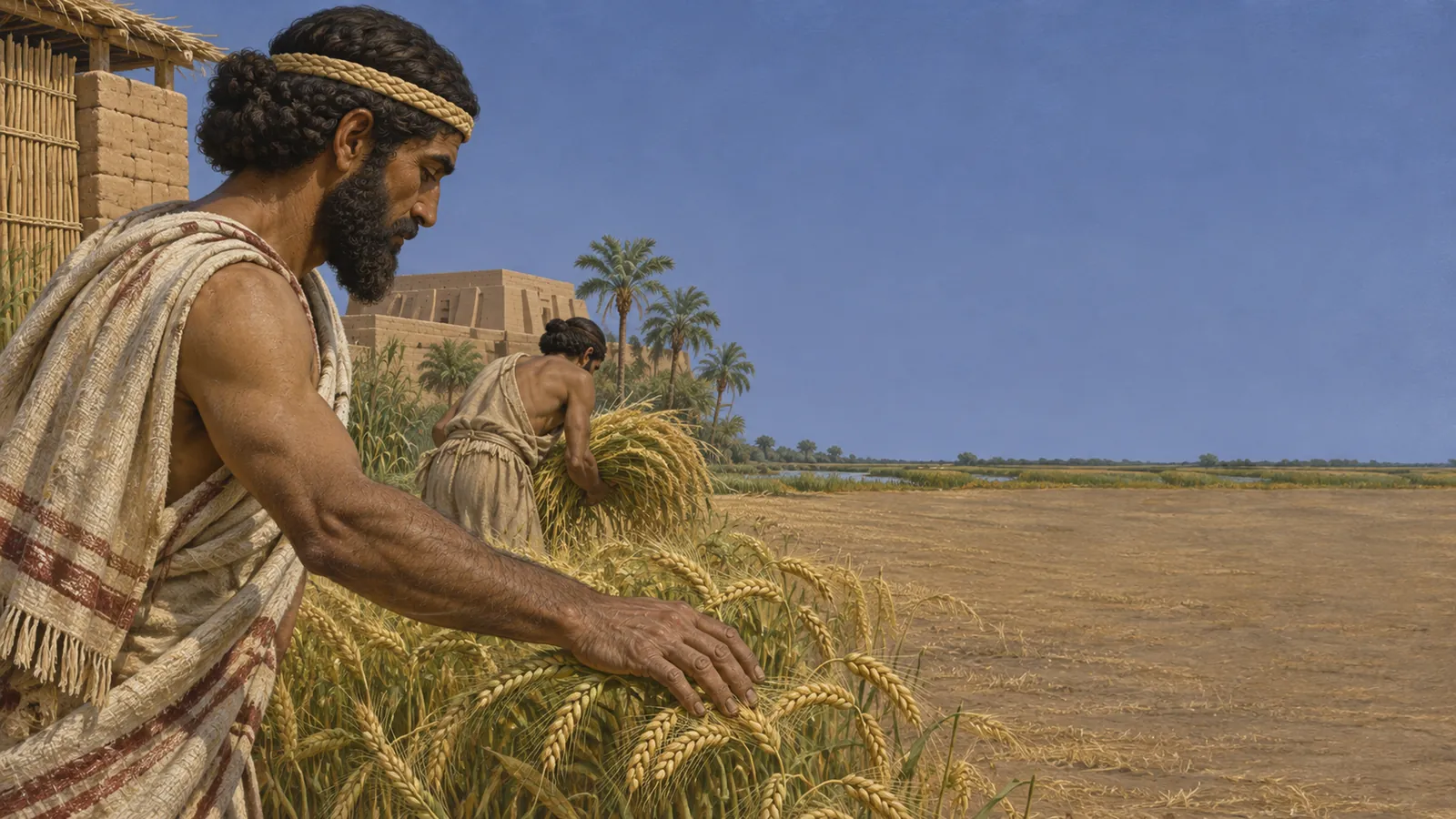
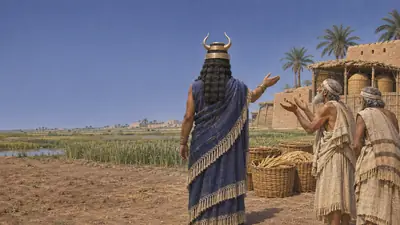
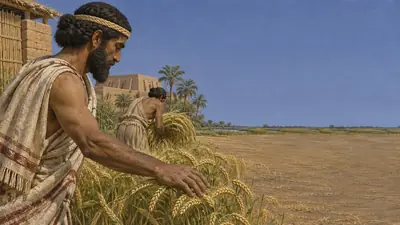
In Jacobsen’s account of how agriculture is organized, Enki lets grain grow in the field.
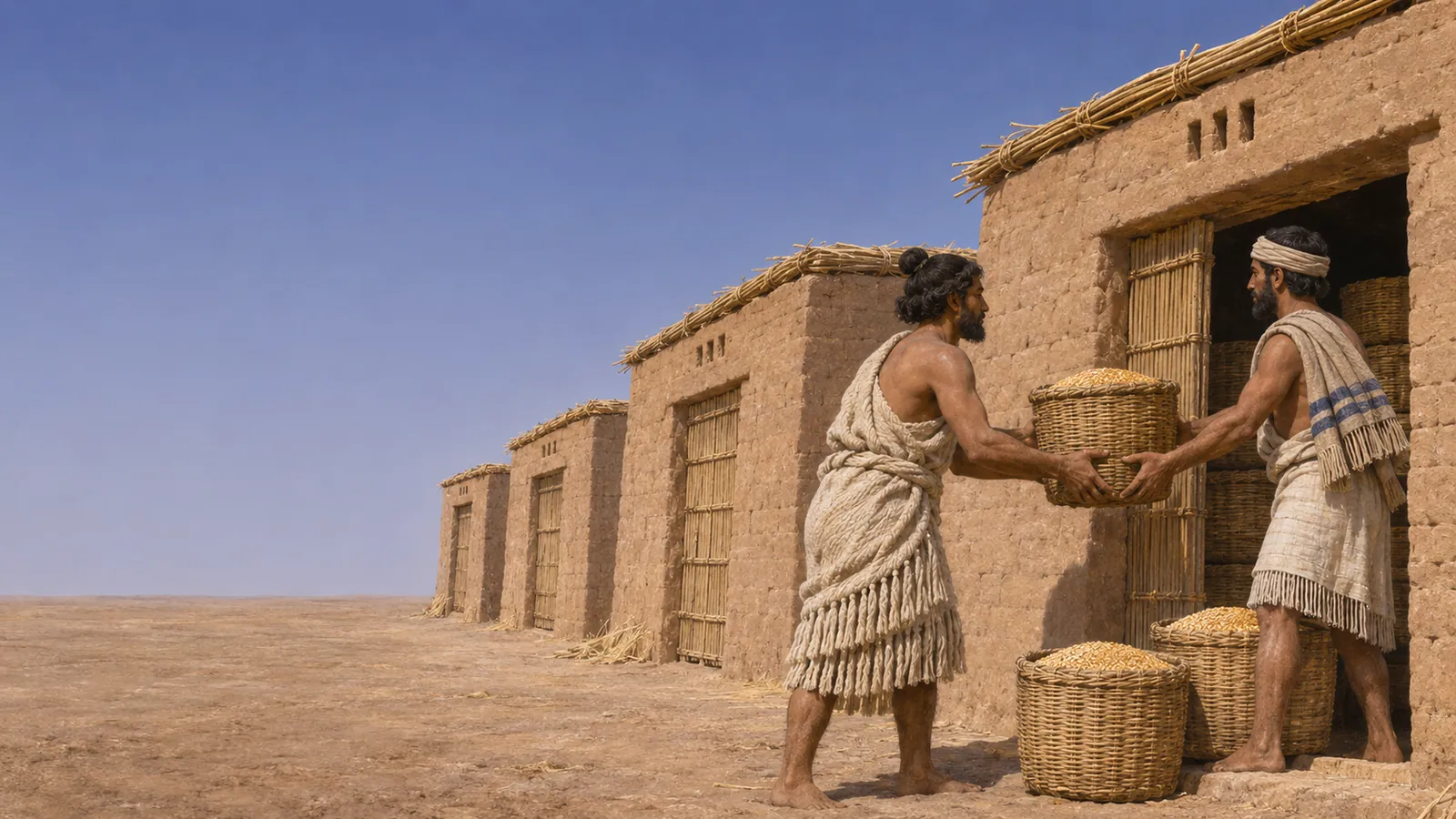
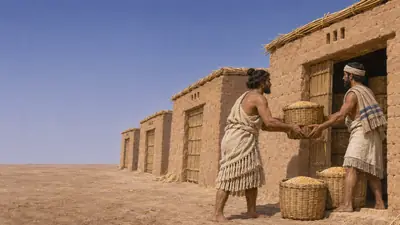
The next task in Jacobsen’s account is storage. Enki sets the granaries in a row.
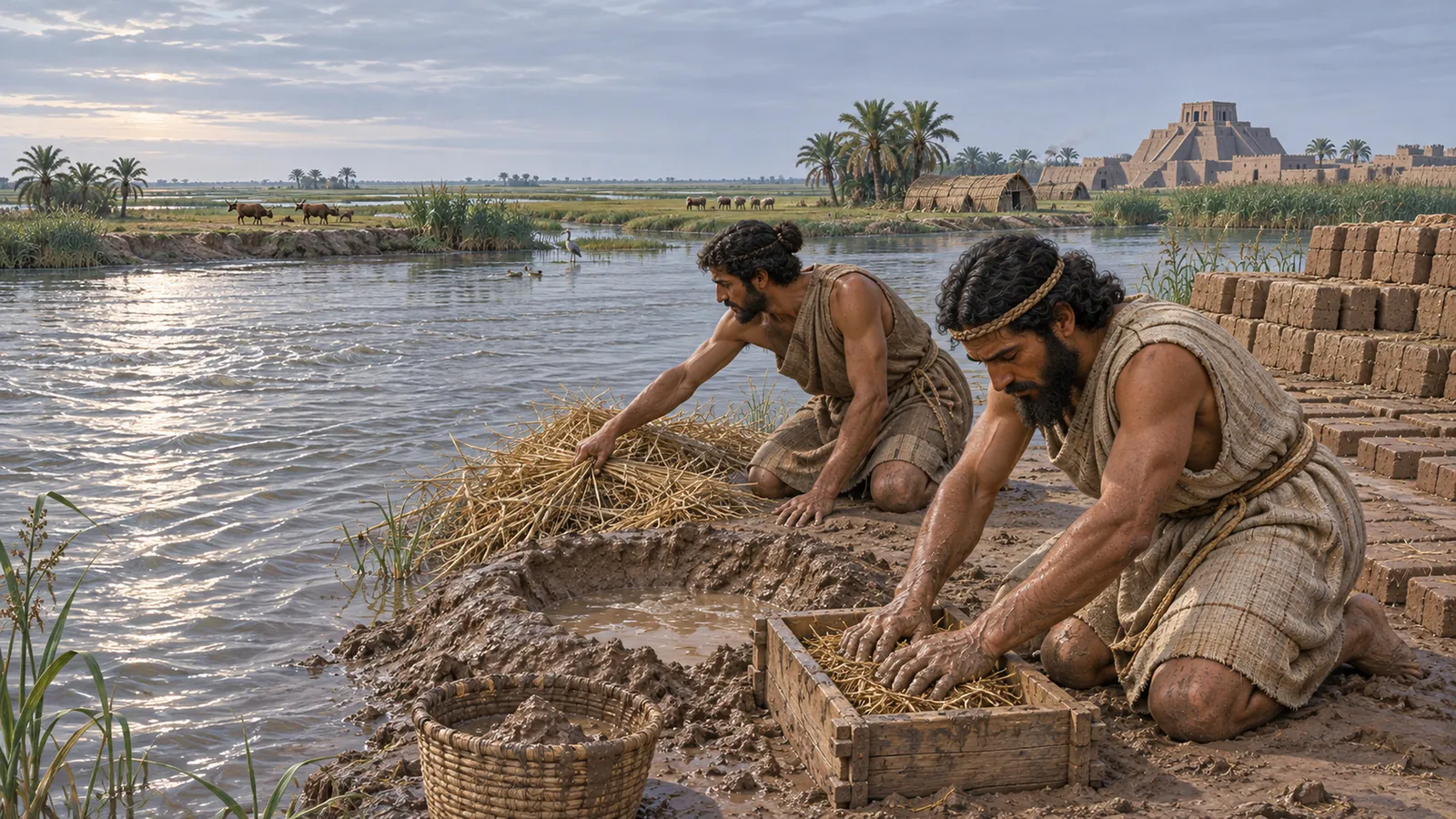
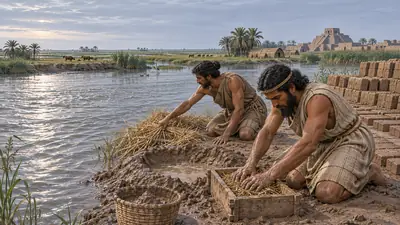
Jacobsen says Enki moves from the fields to towns and villages and appoints the brick god to oversee brickmaking. The account gives no personal name for this god.
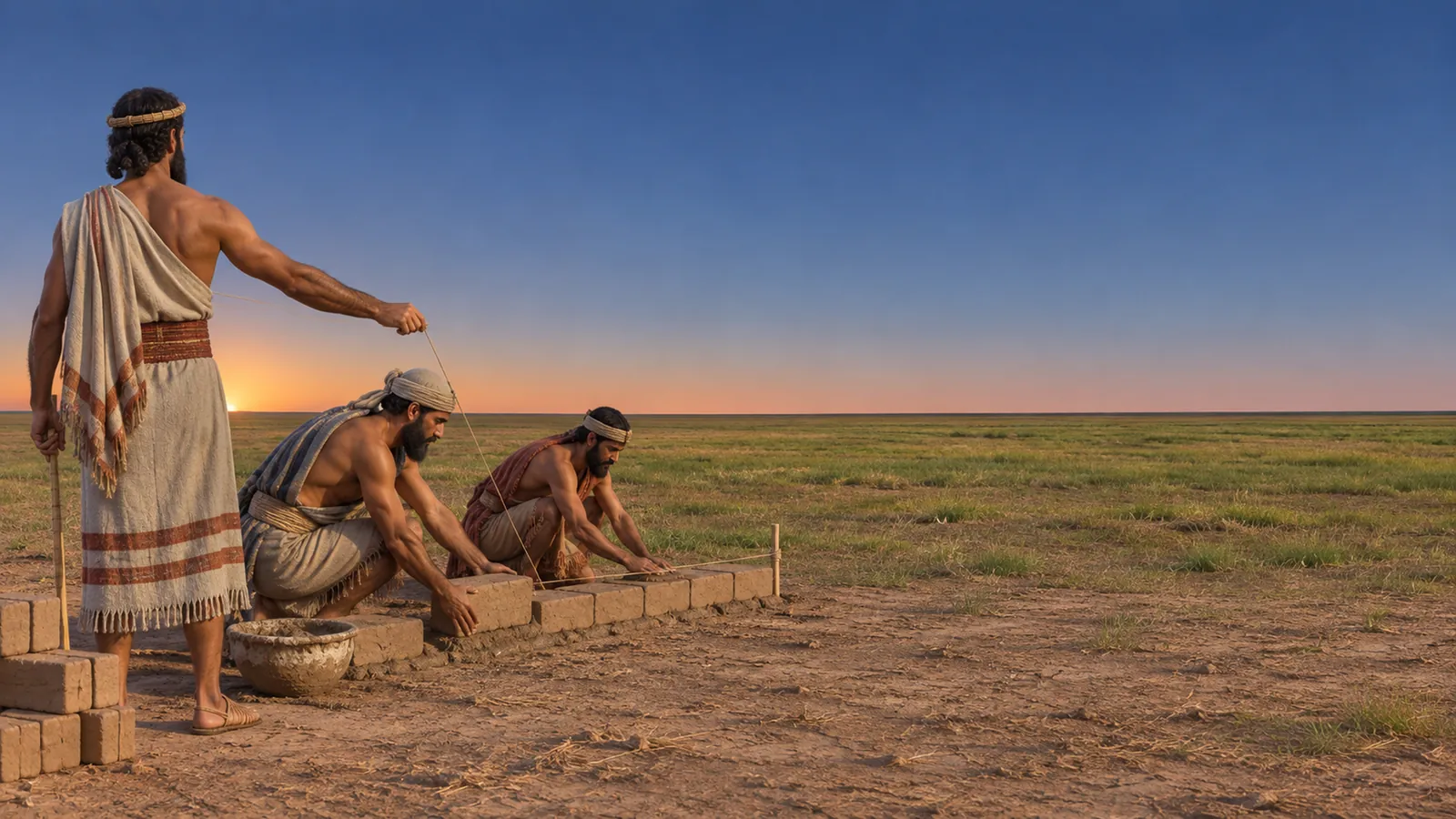
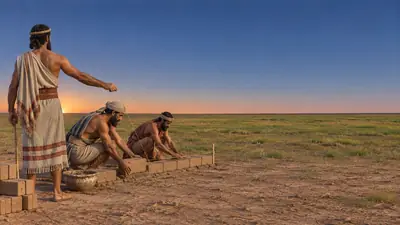
In Jacobsen’s account, Enki lays foundations and builds walls. He appoints Mushdama, the divine master builder, to oversee the work.
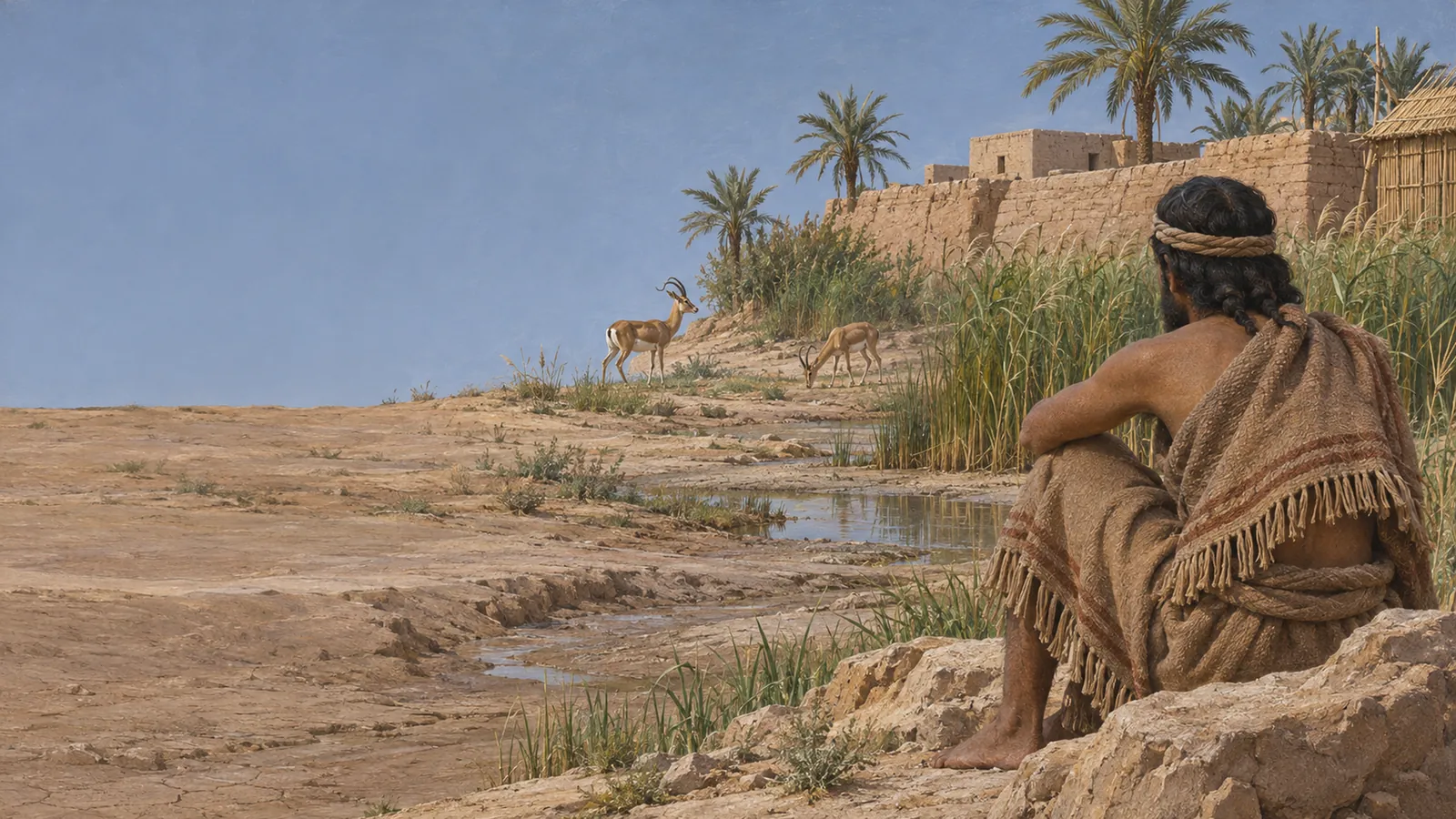
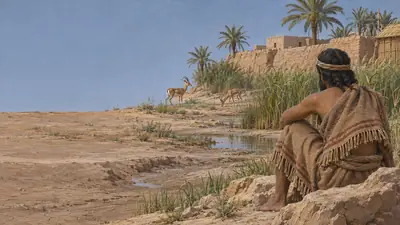
Jacobsen next turns to the desert, where Enki places the wild animals in the care of the god Sumukan.
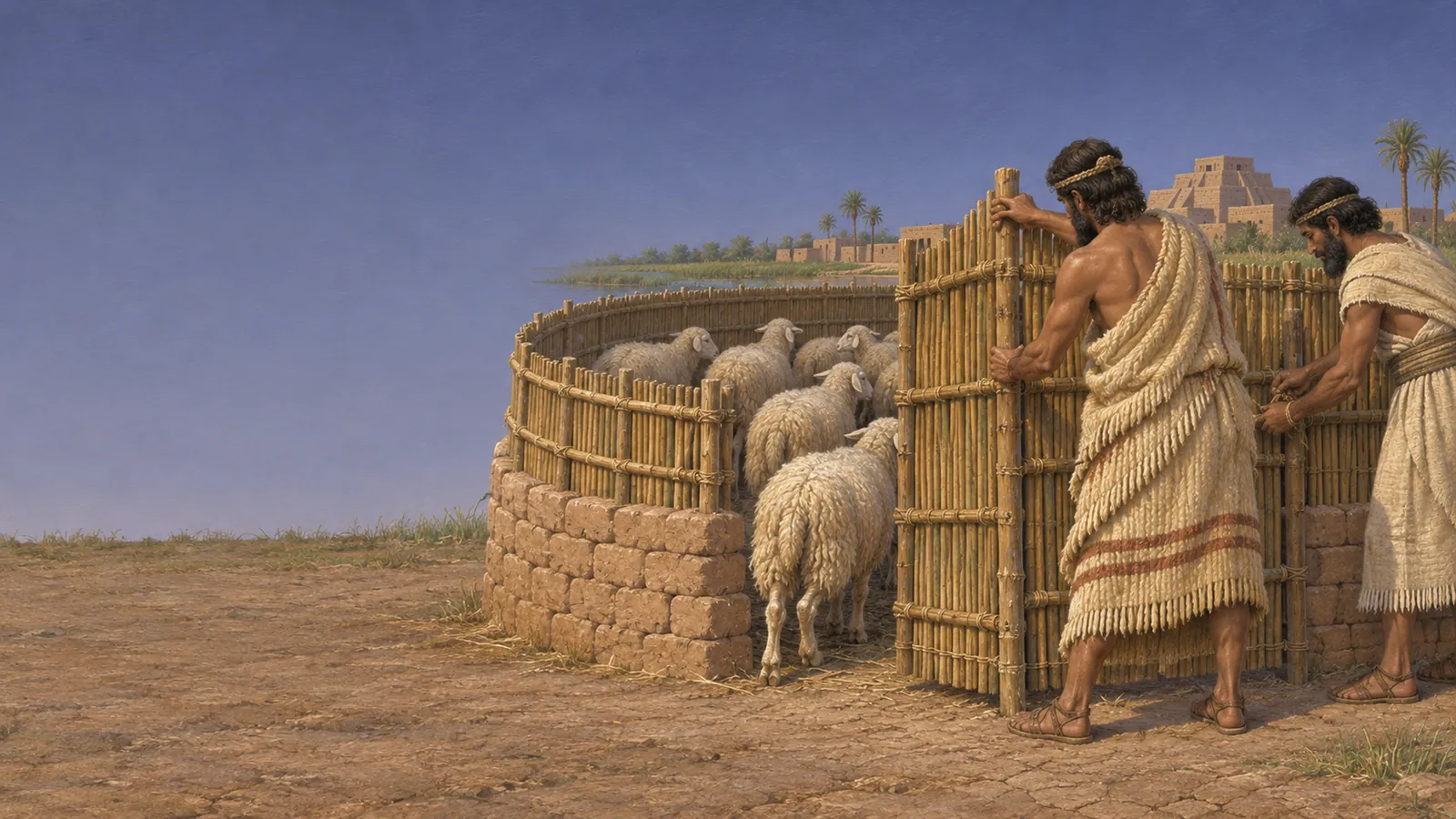
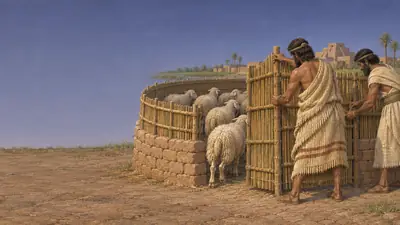
Jacobsen says Enki builds pens and sheepfolds for domestic animals. He puts them in the care of the shepherd god Dumuzi, whom Jacobsen also calls Tammuz.
THE WORLD MANOR
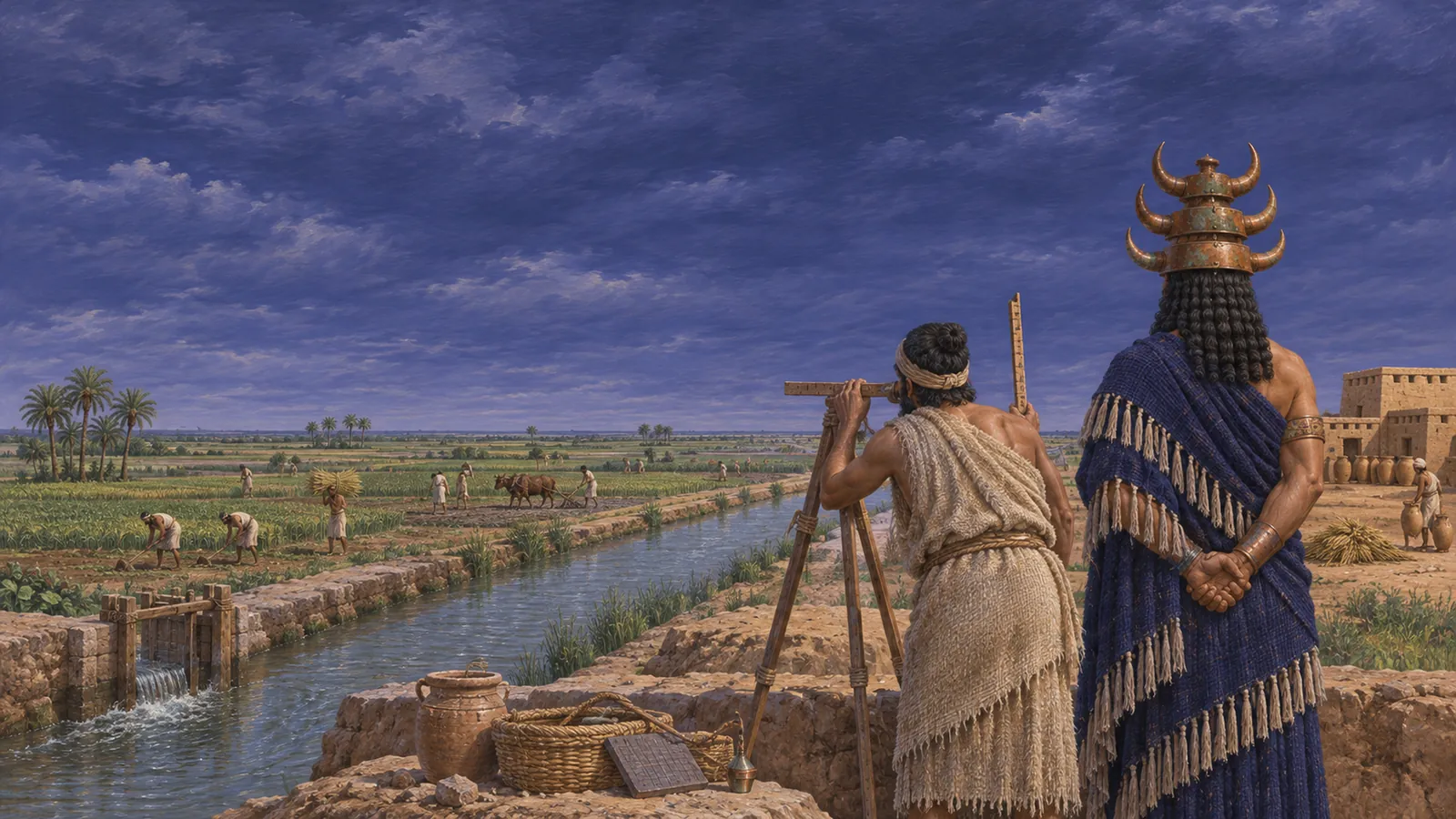
Jacobsen presents Enki as setting up the main activities of Mesopotamia’s economy, getting them started and appointing divine overseers. He compares this order in nature to an estate run by a capable manager.
End of chapter 1
All pages
Sources
160–161. Chapter note 25 directs readers to Kramer’s Mythology, note 59. Jacobsen’s subsection gives a prose summary and an interpretation. The ancient poem itself has no directly translated verses under this heading. Jacobsen explicitly treats the original opening as conjectural.
Editions consulted
- University of Chicago, The Intellectual Adventure of Ancient Man
- Jacobsen’s printed subsection, pp. 160–161
- Chapter note 25, p. 184
Notes on this retelling
Page 1, attribution and the lost opening. 160. Jacobsen reports that the beginning is lost. He proposes that it probably described how Anu and Enlil appointed Enki. Note 25 on p. 184 refers to note 59 in Samuel Noah Kramer’s *Sumerian Mythology*.
Pages 2–3, territory and prosperity. Jacobsen resumes his account on p. 160 with Enki’s tour and visits to the larger administrative areas. He describes Enki stopping in each country and assigning it prosperity and particular functions by his blessing. The countries and functions remain unspecified in these sentences.
Pages 4–5, rivers, fish and reeds. Jacobsen gives the names Euphrates and Tigris and describes the clear water and one divine overseer. He then separates the stocking of fish and the establishment of stands of cane from the previous act, giving those resources to another overseer. Jacobsen does not supply the names of either overseer here.
Pages 6–7, sea and rain. The sentence across pp. 160–161 gives responsibility for the sea to another divine overseer. Both the sea and its overseer are unnamed. On p. 161, Jacobsen next mentions the winds that bring rain. The passage gives no named season.
Page 8, the plow and the furrows. The summary on p. 161 then turns to Enki’s concern with the plow and the opening of furrows.
p. 161, first paragraph. Jacobsen says that Enki lets grain grow on the field after the work involving the plow and furrows. He sets granaries side by side.
p. 161, first paragraph. Enki moves from the fields to town and village in Jacobsen’s account. He appoints the brick god to oversee brickmaking. Jacobsen gives that god no personal name here. Enki lays foundations and builds walls, appointing Mushdama, the divine master builder, to oversee this work.
p. 161, second paragraph. Jacobsen says the wild animals of the desert are placed under the god Sumukan. Enki builds pens and sheepfolds for the domestic animals and puts them in the charge of the shepherd god Dumuzi, whom Jacobsen also calls Tammuz. These names belong to Jacobsen’s printed account.
p. 161, end of second paragraph. Jacobsen sums up Enki’s work as establishing economic activities in Mesopotamia, getting them started and appointing divine overseers. His comparison interprets natural order as a well-run estate. The selection ends before the heading for the distinct Enki and Ninmah story.
Ancient lines behind each page
- Page 1: Jacobsen, “Enki Organizes the World Manor,” 1977 Phoenix ed., p. 160, subsection opening and conjecture
- Page 2: Jacobsen, “Enki Organizes the World Manor,” 1977 Phoenix ed., p. 160, first paragraph, Enki’s inspection
- Page 3: Jacobsen, “Enki Organizes the World Manor,” 1977 Phoenix ed., p. 160, second paragraph, visits and blessings
- Page 4: Jacobsen, “Enki Organizes the World Manor,” 1977 Phoenix ed., p. 160, second paragraph, river water and oversight
- Page 5: Jacobsen, “Enki Organizes the World Manor,” 1977 Phoenix ed., p. 160, second paragraph, fish and canebrakes
- Page 6: Jacobsen, “Enki Organizes the World Manor,” 1977 Phoenix ed., pp. 160–161, sentence on the sea
- Page 7: Jacobsen, “Enki Organizes the World Manor,” 1977 Phoenix ed., p. 161, first paragraph, winds and rain
- Page 8: Jacobsen, “Enki Organizes the World Manor,” 1977 Phoenix ed., p. 161, first paragraph, plow and furrows
- Page 9: Jacobsen 1977, The Intellectual Adventure of Ancient Man, ch. V, Enki Organizes the World Manor, p. 161, first paragraph, grain
- Page 10: Jacobsen 1977, The Intellectual Adventure of Ancient Man, ch. V, Enki Organizes the World Manor, p. 161, first paragraph, storage
- Page 11: Jacobsen 1977, The Intellectual Adventure of Ancient Man, ch. V, Enki Organizes the World Manor, p. 161, first paragraph, the brick god
- Page 12: Jacobsen 1977, The Intellectual Adventure of Ancient Man, ch. V, Enki Organizes the World Manor, p. 161, first paragraph, building and Mushdama
- Page 13: Jacobsen 1977, The Intellectual Adventure of Ancient Man, ch. V, Enki Organizes the World Manor, p. 161, second paragraph, desert and Sumukan
- Page 14: Jacobsen 1977, The Intellectual Adventure of Ancient Man, ch. V, Enki Organizes the World Manor, p. 161, second paragraph, domestic animals and Dumuzi
- Page 15: Jacobsen 1977, The Intellectual Adventure of Ancient Man, ch. V, Enki Organizes the World Manor, p. 161, second paragraph, Jacobsen’s closing comparison
Illustrations made with AI tools by IL Archive; the text is based on the ancient sources (see the sources at the end of each chapter).