Entity
Apsû
A reference page linking a name, group, or concept to the materials that discuss it.
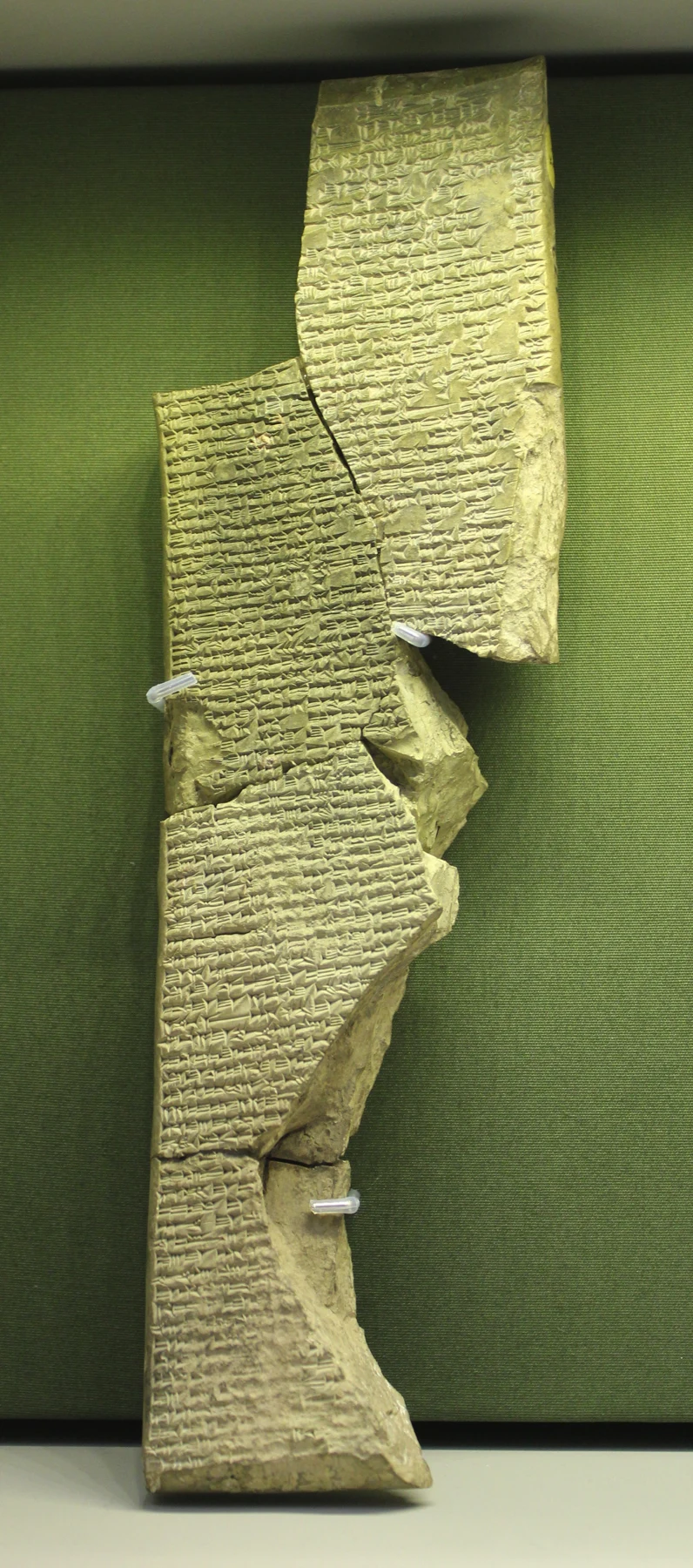
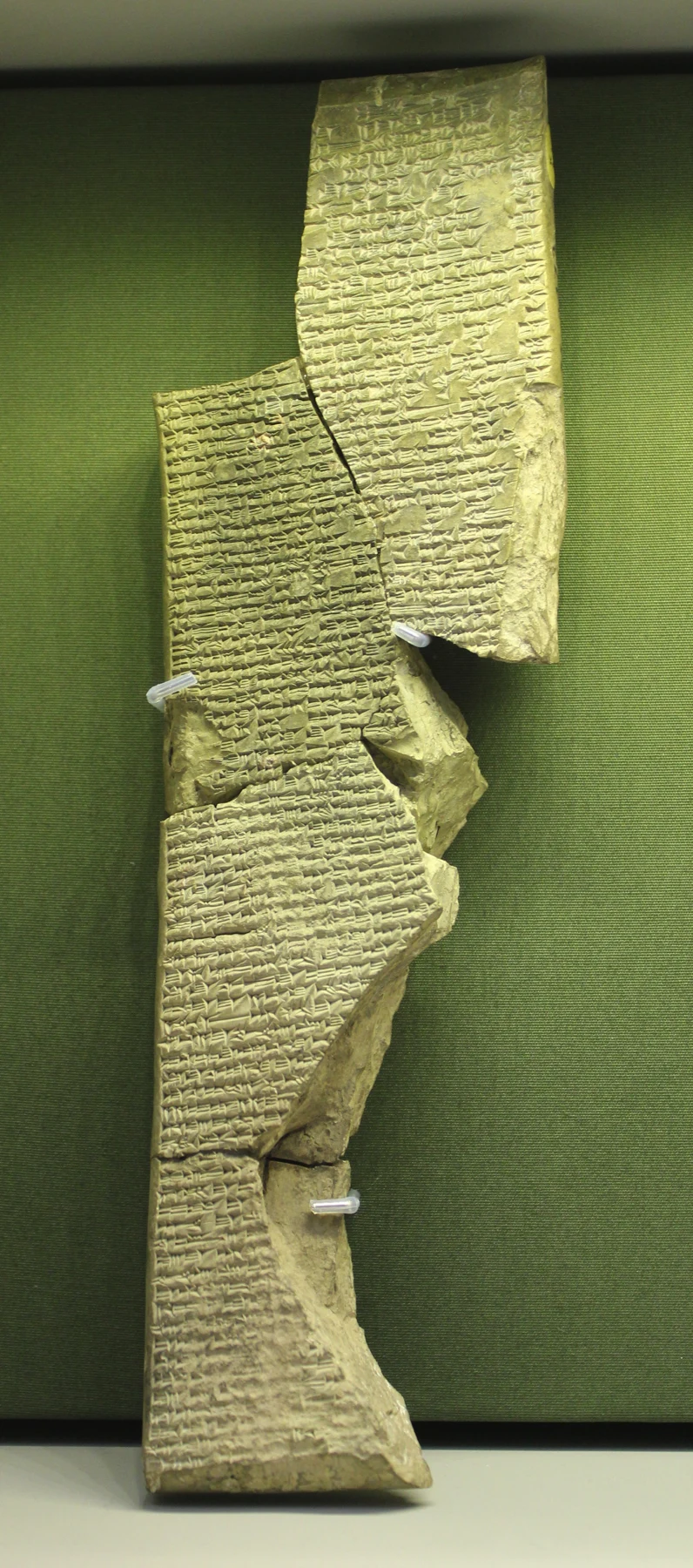
Apsû is a primeval watery ancestor in Enuma Elish. Ea kills him after his plot against the younger gods and establishes a dwelling called Apsû. The cosmic Abzu is a related concept; pictured K.3473 witnesses Tablet III, not I.
Estimated reading time: 7 min Published Last reviewed:
Share article
Video
Enuma Elish: The first waters, the storm and the fifty names
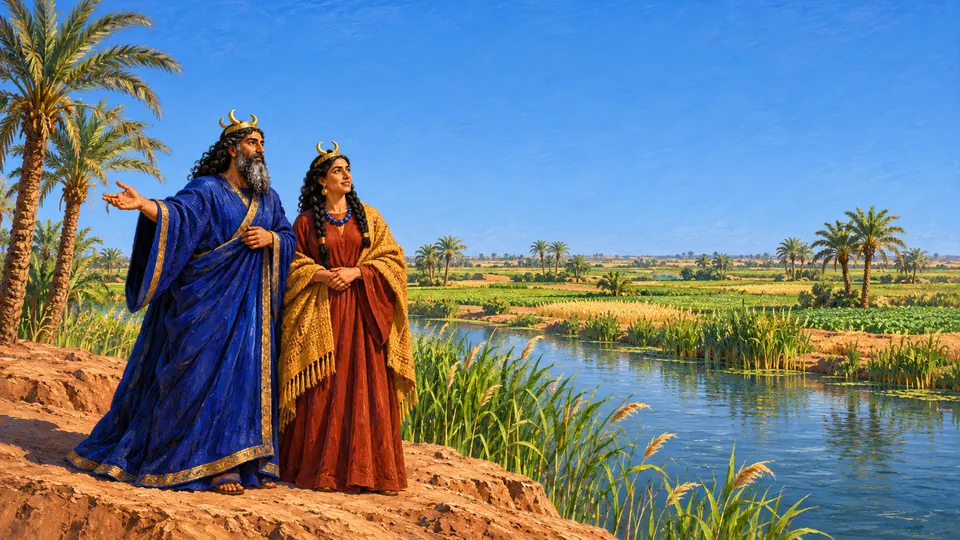
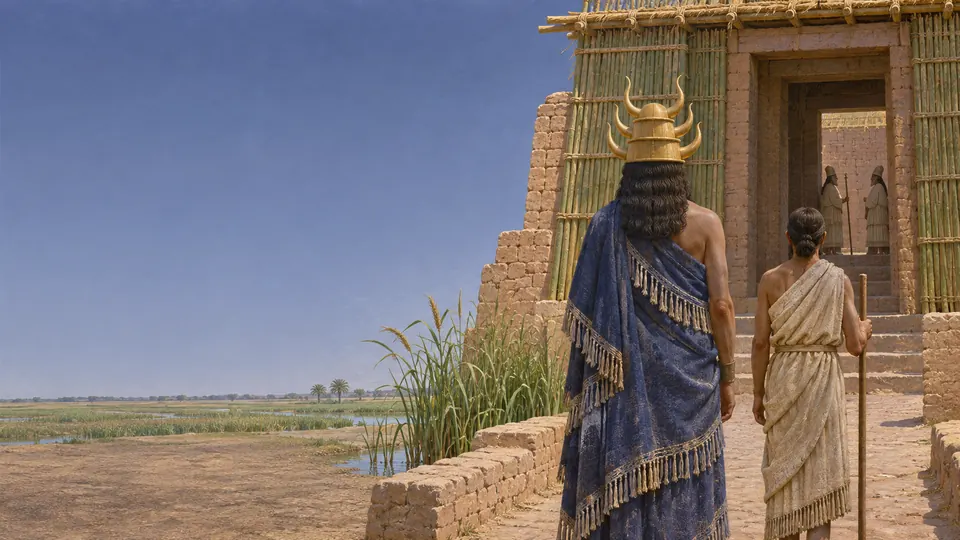
The first waters, the storm and the fifty names. The whole story in four illustrated chapters, told from the ancient clay tablets; where the tablets are broken, the narration says so. Illustrations, narration voice and visual effects were created with AI tools by IL Archive; the text is a faithful retelling based on the ancient tablets.
The YouTube player loads only when you press play. Watch on YouTube
Text
Introduction
Apsû appears at the beginning of the Babylonian poem Enuma ElishEnuma ElishA seven-tablet Babylonian creation poem in Akkadian, recounting Marduk’s rise, victory over Tiamat, cosmic ordering and human creation, and culminating in praise through fifty names. Its composition date is debated; later manuscripts and recitation traditions preserve it.Glossary · Click to read the explanation as a primordial ancestor of the gods, associated with waters that precede the ordered world. Yet his name is not simply a synonym for every body of water in MesopotamiaMesopotamiaHistorical region associated with the Tigris and Euphrates: Uruk, Ur, Eridu, cuneiform, Sumer, Akkad, Babylon and Assyria, their languages and cults, and the limits of archaeological evidence.Glossary · Click to read the explanation: elsewhere it denotes the watery depths inhabited by EaEnkiMesopotamian deity also known as Ea, linked with Eridu and the Abzu (deep fresh waters), wisdom, incantations, and narratives of creation and cosmic order. Later written attestations do not identify the deity of Eridu’s earliest layers.Glossary · Click to read the explanation. This entry examines what the poem actually says about Apsû, TiamatTiamatTiamat is a primeval divine mother and watery figure in Enūma eliš who later opposes Marduk; he divides her body in making the cosmos. No Babylonian portrait of her is securely identified.Glossary · Click to read the explanation, and the younger gods, then distinguishes the narrative character, the cosmic place, and the physical manuscript illustrated here.
The epic has been studied and translated repeatedly, including in Alexander HeidelAlexander HeidelAssyriologist who wrote The Gilgamesh Epic and Old Testament Parallels, second edition 1949.Glossary · Click to read the explanation’s influential work, alongside more recent editions and studies. [1]
One name, two contexts: ancestor and cosmic waters
The AkkadianAkkadianAn ancient East Semitic language written in cuneiform from the third millennium BCE; its varieties include Babylonian and Assyrian, and it served in international diplomacy.Glossary · Click to read the explanation word apsû corresponds to Sumerian abzu. In Mesopotamian traditions, the AbzuAbzuCosmic subterranean freshwater in Mesopotamian religion, associated with Enki/Ea. The name occurs in E-abzu, “House of the Abzu”, at Eridu. Distinct from the narrative figure Apsû in the Enūma eliš and unnamed excavated structures.Glossary · Click to read the explanation is the vast body of subterranean freshwater and the home of EnkiEnkiMesopotamian deity also known as Ea, linked with Eridu and the Abzu (deep fresh waters), wisdom, incantations, and narratives of creation and cosmic order. Later written attestations do not identify the deity of Eridu’s earliest layers.Glossary · Click to read the explanation, called Ea in Akkadian, the god associated with wisdom and incantations. This is a religious conception of cosmic geography, not a modern hydrogeological identification. Nicole Brisch summarizes that meaning in a specialist encyclopaedia entry. [2]
These depths were also associated with EriduEriduEridu (Abu Shahrain), a multi-mound site in southern Iraq occupied since the Ubaid, later home to a religious precinct associated with Enki. Its eighteen sounding levels are not proof that every early building was a temple.Glossary · Click to read the explanation, in southern Mesopotamia, where the god's temple was known as E-abzu, the “House of the Abzu.” That connection does not erase Apsû's identity as a character in the opening of Enuma Elish; instead, it helps explain why the poem moves from a primeval being to the name of a divine dwelling. A study of the poem's cosmology also describes the Abzu as the lower limit of the structured world. [3]
Before names and order: the mingling of waters
The poem opens before heaven and earth had been named or the gods' destinies allotted. Apsû is described as their first father, while TiamatTiamatTiamat is a primeval divine mother and watery figure in Enūma eliš who later opposes Marduk; he divides her body in making the cosmos. No Babylonian portrait of her is securely identified.Glossary · Click to read the explanation is the mother who gave birth to them all. Their waters mingle, and successive divine generations appear: Lahmu and Lahamu; Anshar and Kishar; Anu; and then Nudimmud, a learned name for Ea. This genealogy belongs inside the story. It is not an independently datable chronology of deities who had different cult histories. The CDLI composite edition preserves this sequence in Tablet I, lines 1–20. [4]
Line 4 raises a particular problem of translation. An older English version renders its wording in a way that suggests a double name, “Mummu-Tiamat”; Sophus HelleSophus HelleSophus Helle is a scholar and translator of ancient Mesopotamian literature.Glossary · Click to read the explanation’s 2025 translation instead understands mummu here as an epithet meaning Tiamat's “creative force.” Yet later in the same poem Mummu is a named character, Apsû's minister. The alternative renderings therefore do not establish that a third, independent primeval god must be present in the first scene. This review does not claim an independent translation of Akkadian. [5]
Noise, sleeplessness, and Apsû's decision
The younger gods become active and noisy, disturbing the original state of rest. Apsû complains that he cannot find peace during the day or sleep at night. He summons his minister Mummu and consults with Tiamat, proposing to destroy the younger gods in order to recover quiet. This is not an attempt to create the cosmos from nothing: it is a crisis within a divine family over space, authority, and the possibility of rest. [6]
Tiamat's first response is crucial. She rejects the destruction of the beings they have brought into existence, preferring to tolerate their troublesome behaviour. Mummu, on the other hand, urges Apsû to proceed. Apsû welcomes the advice, but the plan reaches the younger gods and terrifies them. Tiamat must not be portrayed as an accomplice in the original extermination plot: her decisions and position change only in later developments. [6]
Ea defeats Apsû and builds a home upon him
The perceptive Ea intervenes before the planned attack takes place. He devises an incantation that sends Apsû into a deep sleep, strips him of the regalia and terrifying radiance of his power, binds him, and kills him. Mummu is bound and confined. Ea, not MardukMardukBabylon’s leading god, worshipped at Esagil and elevated in the Akkadian Enūma eliš. His symbols include a spade and mušḫuššu dragon. His earliest origins remain obscure; Nibiru is no evidence of a planetary homeland.Glossary · Click to read the explanation, kills Apsû in this episode; Marduk has yet to be born. The sequence is explicit in the modern rendering of Tablet I, lines 59–75. [7]
Having defeated Apsû, Ea settles upon the vanquished being, names the place Apsû, and establishes his sanctuary there. He lives with Damkina, his wife; it is in that sacred dwelling that Marduk is conceived and born in the poem. The narrative thus makes the name refer both to the defeated ancestor and to Ea's abode. This does not mean that every appearance of apsû in cuneiformCuneiformWriting with wedge-shaped signs, developed from Mesopotamian recording traditions and used for several languages from the third millennium BCE.Glossary · Click to read the explanation literature describes a speaking, acting character. Context determines whether the expression denotes a personification or a cosmic place. [7]
Tiamat and Marduk: a later conflict
After the birth of MardukMardukBabylon’s leading god, worshipped at Esagil and elevated in the Akkadian Enūma eliš. His symbols include a spade and mušḫuššu dragon. His earliest origins remain obscure; Nibiru is no evidence of a planetary homeland.Glossary · Click to read the explanation, new winds and disturbances anger a group of gods. They remind Tiamat that she did not defend her consort Apsû and encourage her to avenge him. Only at this later stage does Tiamat agree to war, muster formidable allies, and appoint QinguQinguQingu (Kingu): a god whom Tiamat appoints commander and gives the Tablet of Destinies; captured after Marduk’s victory, his blood is used to make humans in Tablet VI.Glossary · Click to read the explanation as commander. The conflict subsequently culminates in Marduk's victory over her. Apsû's death and the confrontation between Tiamat and Marduk are therefore different episodes, even though the narrative connects them causally. [8]
Karen Sonik observes that Apsû's and Tiamat's names at the poem's opening lack the cuneiform divine determinativeThe divine determinative in cuneiformA cuneiform sign used mostly before a divine name to classify it without being spoken independently; shown as raised d or {d} in transliteration. Usage depends on language and context.Glossary · Click to read the explanation found with the names of some younger gods. This is an important feature of their portrayal as primordial beings, but on its own it cannot settle how all ancient audiences classified them in every context. Sonik also reads Tiamat's transformation as an exploration of kinship, motherhood, and legitimate rule rather than an undifferentiated tale about an evil monster. [9]
The poem's date and the photograph's date
Apsû belongs to the story's mythic beginning; assigning him a historical birth or death date would be a category error. The composition date of the poem is a different question. A widely discussed hypothesis links it to Nebuchadnezzar I (1125–1104 BCE), though direct evidence for his commissioning its final form is lacking. Enrique JiménezEnrique JiménezAssyriologist and scholar of Babylonian literature, professor of ancient Oriental languages at LMU Munich, working on reconstructing and dating cuneiform texts.Glossary · Click to read the explanation analyses evidence from the reign of Marduk-nadin-ahhe (1099–1082 BCE), including a curse formula he considers a possible early quotation. His investigation places the development of relevant traditions in the thirteenth or twelfth century BCE, without turning the Nebuchadnezzar hypothesis into a demonstrated fact. [10]
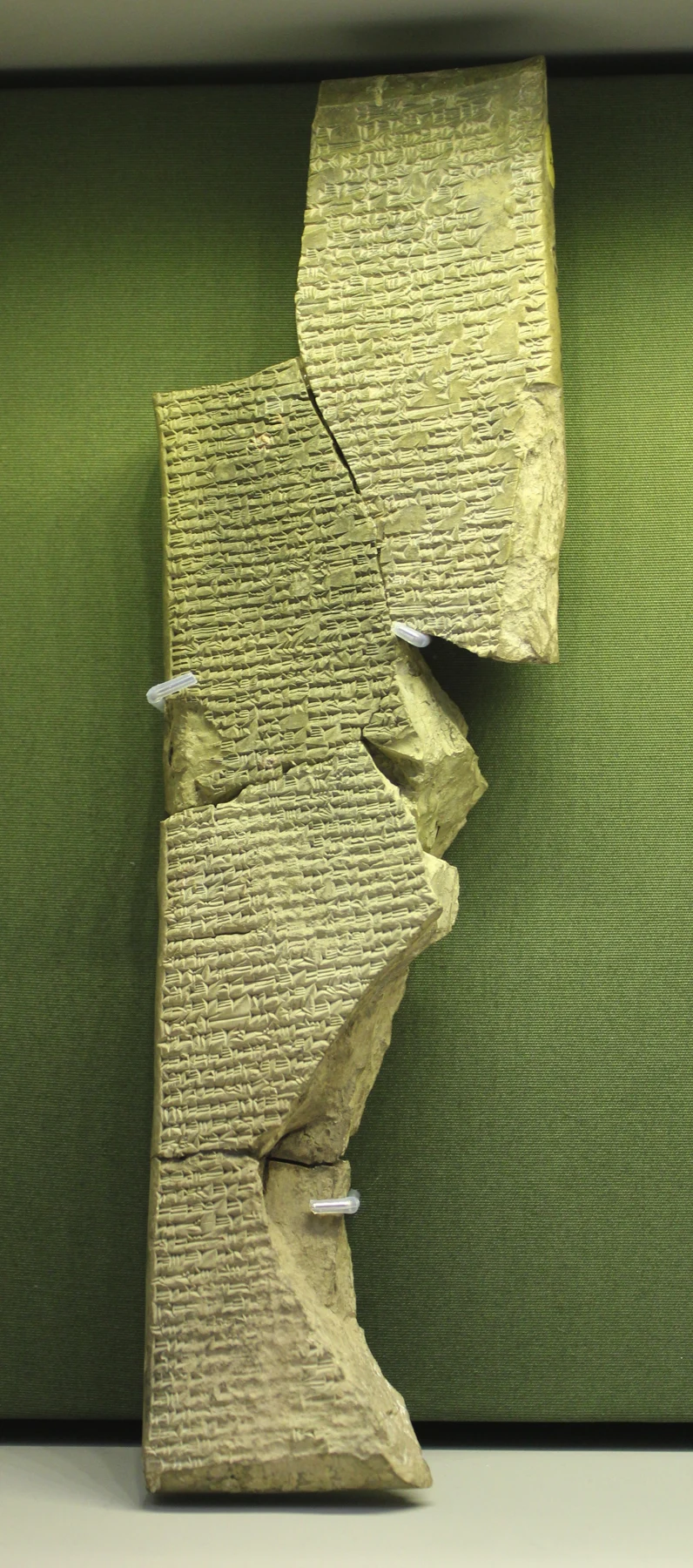
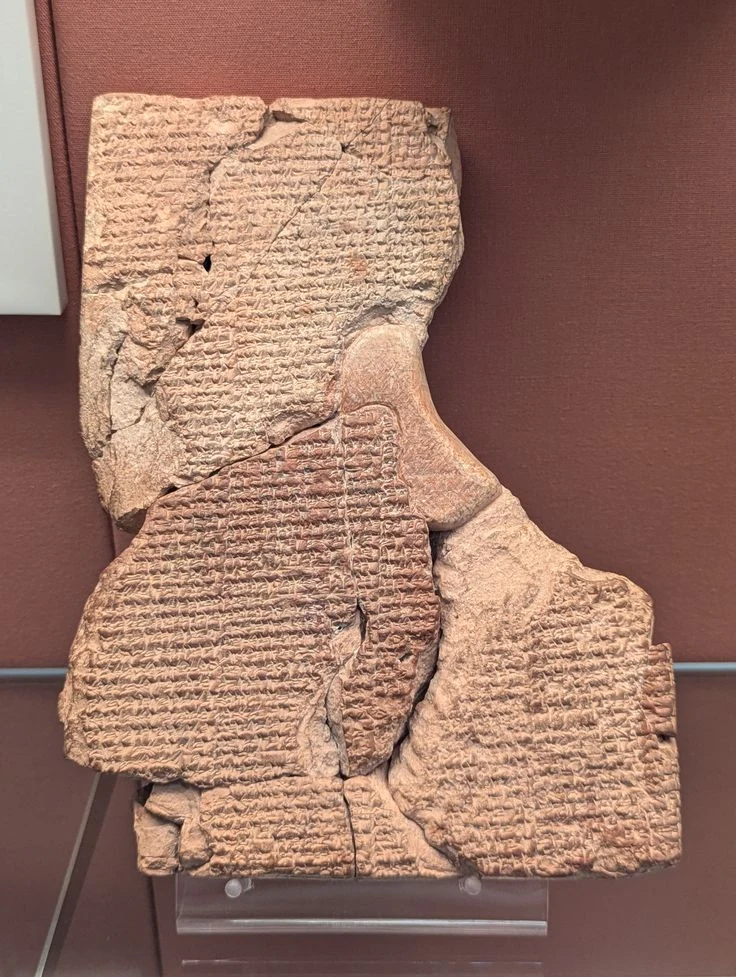
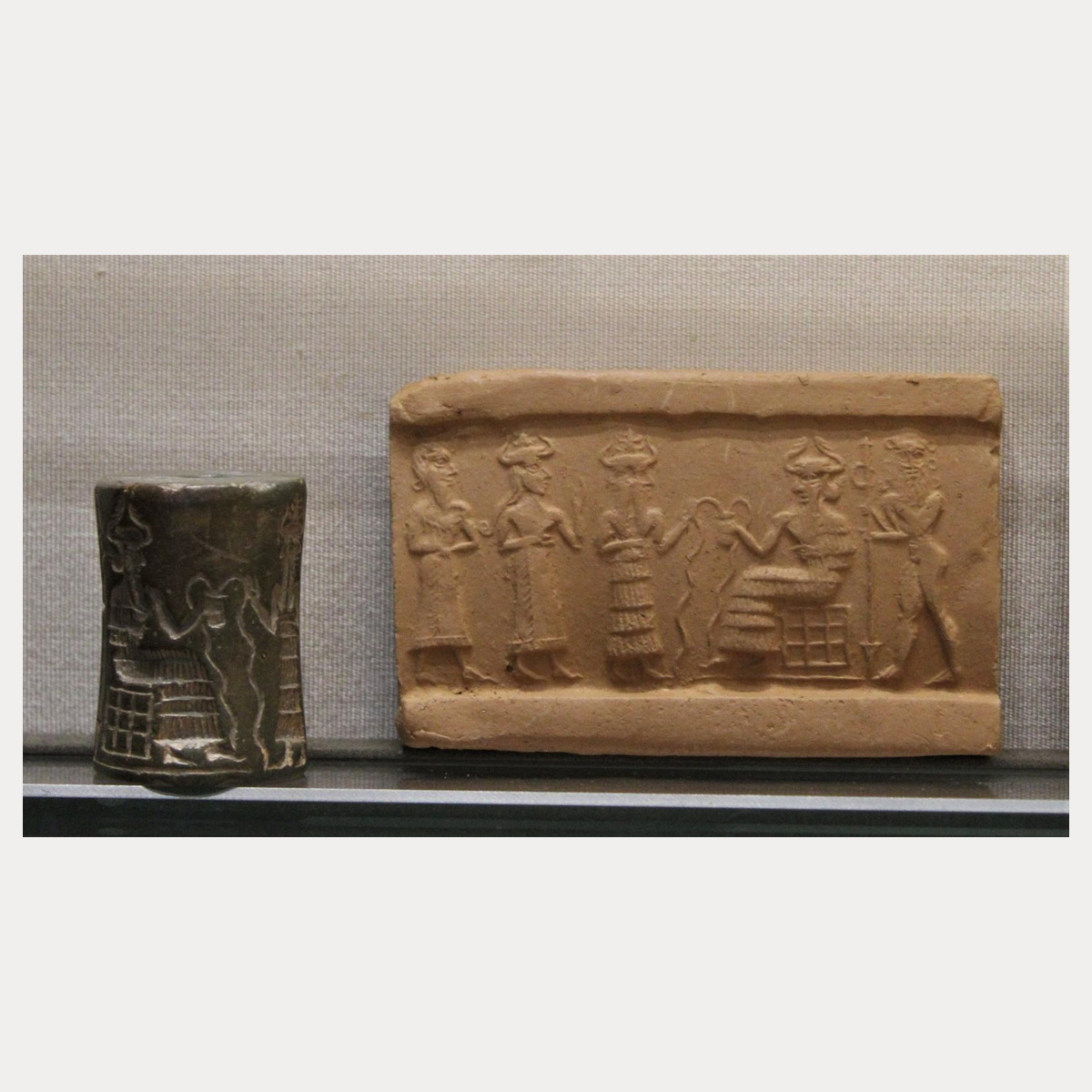
The cover photograph, meanwhile, shows British Museum fragment K.3473, excavated at Nineveh/KuyunjikNineveh and KuyunjikNineveh is an ancient Assyrian city near Mosul in northern Iraq; Kuyunjik is one of its archaeological moundsGlossary · Click to read the explanation and assigned to the Neo-Assyrian period. The Cuneiform Digital Library Initiative catalogues it as P365283, a manuscript witness to Tablet III of Enuma Elish, associated in the composite reconstruction with joined fragments. It should not be described as the piece preserving the opening lines of Tablet I on which the story of Apsû above is based. Nor is the photograph a likeness of the god or a depiction of his death. [11]
This is a photograph by Zunkir, made in 2020 and released through Wikimedia Commons under CC BY-SA 4.0. This independent photograph must not be confused with the British Museum's separately licensed institutional images. [12]
Reading a myth without erasing its alternatives
Enuma Elish was not the sole Mesopotamian explanation of how the world acquired its order. Other Sumerian and Akkadian narratives told different stories about primordial beings and acts of creation. Ira Spar's Metropolitan Museum of Art essay makes that variety clear. Similar water imagery or a shared conflict motif cannot by itself demonstrate that two texts are identical or reveal a particular route of transmission. The Babylonian poem also has a political and religious purpose: it accounts for Marduk's supremacy and divine order, rather than offering an empirical theory of subterranean geology. [13]
What the text establishes is that Apsû is a primordial watery ancestor who planned the destruction of the younger gods and was killed by Ea, after which Ea's dwelling bore the same name. The precise imagery of primordial waters, the reading of ambiguous words, and the date when the poem acquired its form require separate treatment of the story, its translations, manuscript witnesses, and scholarly interpretations. That distinction keeps Apsû from being mechanically equated with every occurrence of the word abzu.
References and notes (13)
- An older translation and study retained from the original record. The page range was inherited; Heidel’s book, including pp. 18–60, was not reread for this review. The present narrative is checked against the 2025 edition and the CDLI composite, not against an asserted new reading of Heidel. Alexander Heidel, The Babylonian Genesis, 2nd ed. (1951), pp. 18–60; Tablets I–VII [locator inherited, not independently rechecked]. Return to the text ↑
- The available abstract was read in full, not the encyclopedia chapter. It identifies Sumerian abzu / Akkadian apsû as subterranean waters and Enki/Ea’s abode; it is not the source for the poem’s narrative particulars. Nicole Brisch, “Abzu (apsû),” The Encyclopedia of Ancient History (2012), abstract only, DOI 10.1002/9781444338386.wbeah24001. Return to the text ↑
- Selected passages were read, especially printed p. 249: the Abzu as Ea’s abode, E-abzu at Eridu, and the Abzu as a lower boundary of the ordered world. The entire chapter was not read. Francesca Rochberg, “Enuma Elish, Knowledge of the Heavens, and World Order,” in Enuma Elish (Bloomsbury, 2025), printed pp. 247–250 (esp. p. 249); PDF pp. 259–262 (1-based). Return to the text ↑
- Tablet I, lines 1–20, were consulted in CDLI’s displayed transliteration and provided English translation. No independent Akkadian philological translation was undertaken. Cuneiform Digital Library Initiative, Enuma elish composite, Tablet I, lines 1–20, transliteration and supplied English translation; accessed 2026-10-21. Return to the text ↑
- Printed p. 27 and n. 2 were examined, comparing Helle’s “creative force” at line 4 with CDLI’s “Mummu-Tiamat”; the named minister occurs later on p. 29. This is a translation/interpretive distinction, not proof of a separate primeval deity. Sophus Helle (trans.), in Enuma Elish: The Babylonian Epic of Creation (2025), Tablet I, printed p. 27, lines 1–28 and n. 2; PDF p. 40 (1-based). Compare CDLI Tablet I, line 4. Return to the text ↑
- Helle’s translation at printed pp. 27 and 29 was read for the noise, Apsû’s plan, Tiamat’s opposition, Mummu’s advice, and the younger gods’ alarm. The basis is a modern translation, not an independent Akkadian edition. Sophus Helle (trans.), Enuma Elish (2025), Tablet I, lines 22–62; printed pp. 27–29; PDF pp. 40 and 42 (1-based). Return to the text ↑
- Translated lines covering Ea’s spell, Apsû’s sleep, capture and death, Ea’s dwelling, and Marduk’s subsequent birth with Damkina were read. The text explicitly distinguishes Ea from the not-yet-born Marduk. Sophus Helle (trans.), Enuma Elish (2025), Tablet I, lines 59–95; printed pp. 29–31; PDF pp. 42 and 44 (1-based). Return to the text ↑
- Printed pp. 33–35 were read for the appeal to Tiamat to avenge Apsû, her later consent, preparations for battle, and Qingu’s appointment. The later Marduk conflict is separate from the killing of Apsû. Sophus Helle (trans.), Enuma Elish (2025), Tablet I, lines 105–159; printed pp. 33–35; PDF pp. 46 and 48 (1-based). Return to the text ↑
- Selected sections of Sonik’s essay were read, including the missing divine determinatives at the opening and her analysis of kinship and Tiamat’s development. Her analysis is attributed to the scholar, not passed off as the ancient narrator’s statement. Karen Sonik, “A Mirror for Queens: Gender, Motherhood, and Power in Enuma Elish,” in Enuma Elish (2025), printed pp. 219–223 (esp. p. 220); PDF pp. 232–236 (1-based). Return to the text ↑
- Selected argument passages and Jiménez’s conclusion were read, especially the possible early quotation in a Marduk-nadin-ahhe inscription (1099–1082 BCE). He leaves Nebuchadnezzar I’s role in the final composition hypothetical. Enrique Jiménez, “Marduk and the Battle with the Sea: On the Dating of Enuma Elish,” in Enuma Elish (2025), printed pp. 99–107, especially conclusion p. 106; PDF pp. 112–119 (1-based). Return to the text ↑
- The CDLI artifact record was read, explicitly identifying “enuma elish 3 (witness),” K.3473, period, and provenance. The British Museum K.3473 collection page returned HTTP 403; CDLI’s cross-referenced museum identifier and the photo source were used instead. CDLI, “Literary 002718.03, ex. 001,” artifact P365283, K.3473 + related fragments; Enuma elish Tablet III witness; Neo-Assyrian; Nineveh/Kuyunjik. Return to the text ↑
- The Commons file page, history, and Zunkir’s CC BY-SA 4.0 grant were checked. The unchanged WebP and archived JPEG hashes were compared; attribution, a license link, and notice of prior format/size changes are retained. Zunkir, “Enuma Elish K.3473.jpg,” Wikimedia Commons file description and file history, photo 9 March 2020, CC BY-SA 4.0; original JPEG 2170 × 4908. Return to the text ↑
- The complete short museum essay was read for the diversity of Mesopotamian creation accounts, the two conflict episodes, and the elevation of Marduk. Its proposed dating is more confident than Jiménez’s later reassessment. Ira Spar, “Mesopotamian Creation Myths,” Metropolitan Museum of Art, Heilbrunn Timeline of Art History, April 2009, entire short essay. Return to the text ↑
Suggest a correction · Suggest a source for this record
Cite this record
IL Archive, «Apsû», https://ilarchive.com/en/entities/apsu
Continue reading
Related readings