Entity · Deity
Allat
A reference page linking a name, group, or concept to the materials that discuss it.
- Names
- Alilat · Allāt · al-Lāt
- Region
- Northern Arabia, Jordan and the Syrian steppe; Nabataean and Palmyrene evidence and later narratives about Taif
Allāt was an ancient Arabian goddess attested in Safaitic and Nabataean inscriptions and remains at Palmyra, and mentioned in the Quran; the entry separates evidence of prayer, protection and art from later Ṭāʾif accounts.
Estimated reading time: 6 min Published Last reviewed:
Share article
Text
Introduction
Allāt was a goddess known in parts of Arabia and the Syrian desert before Islam. Her name survives in prayers carved by mobile pastoralists, in the religious monuments of cities such as Palmyra, and in the QuranThe QuranThe central scripture of Islam, consisting of 114 Arabic surahs; its study distinguishes Quranic discourse from manuscript history, reading traditions, and historical inference.Glossary · Click to read the explanation. These sources describe different settings rather than a single, uniform cult. This entry asks what the inscriptions say about addressing her and how later texts and images reshaped the interpretation of her name.
Each witness has its own date and setting: a rock bearing someone's prayer is not an image of the goddess, and a later literary account is not an excavation report for a centuries-old sanctuary.
An inscription and a Quranic name
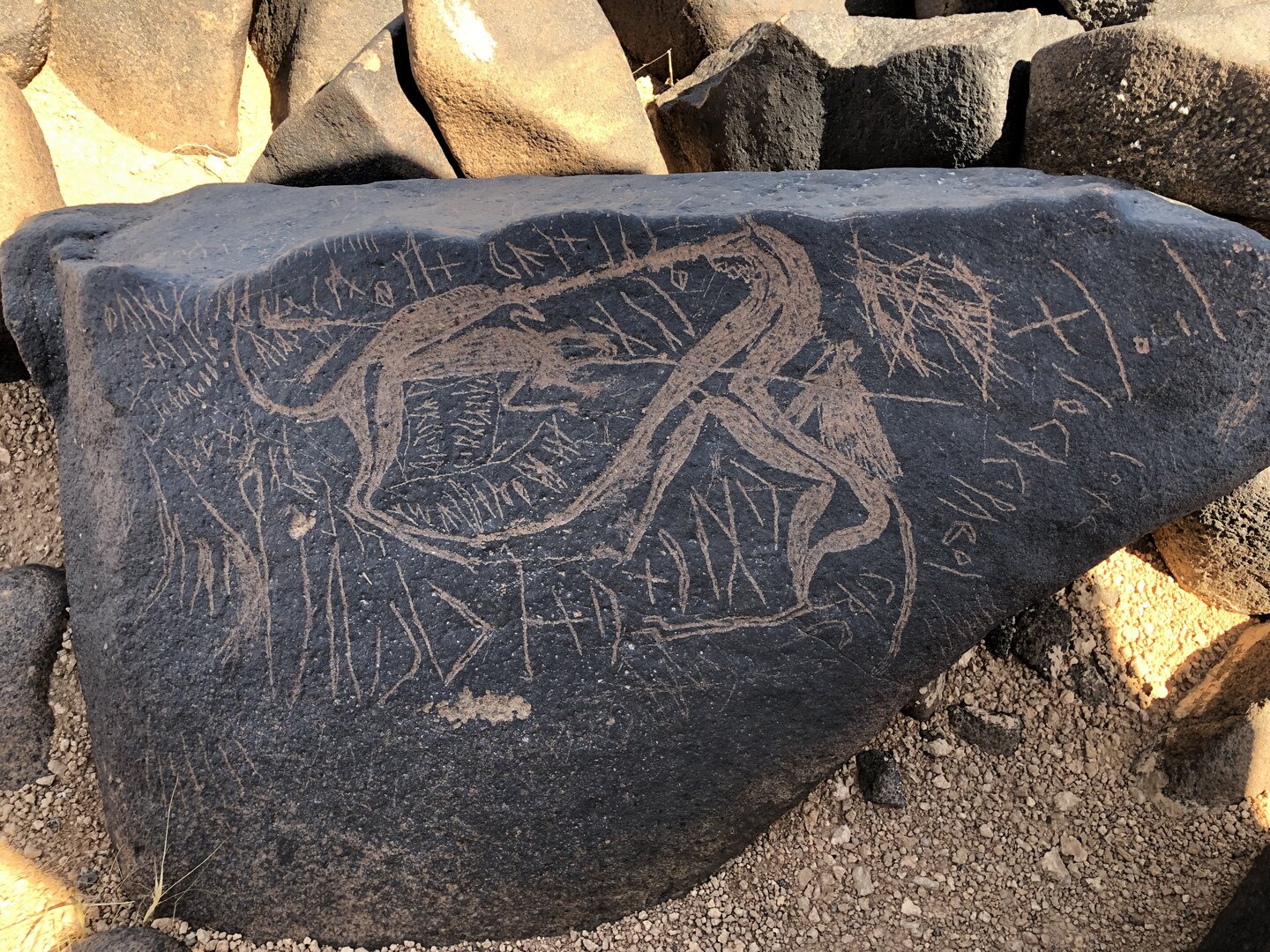
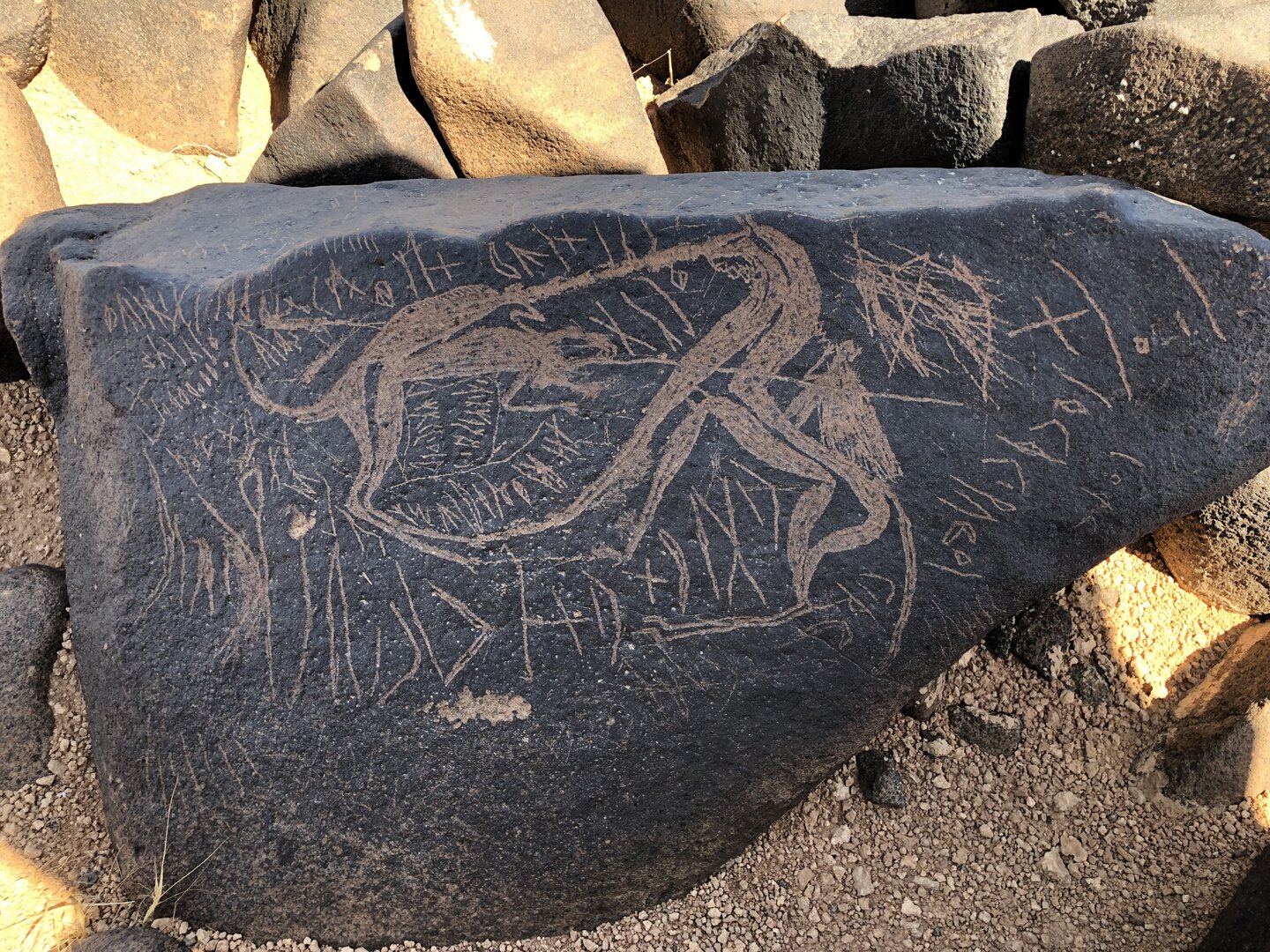
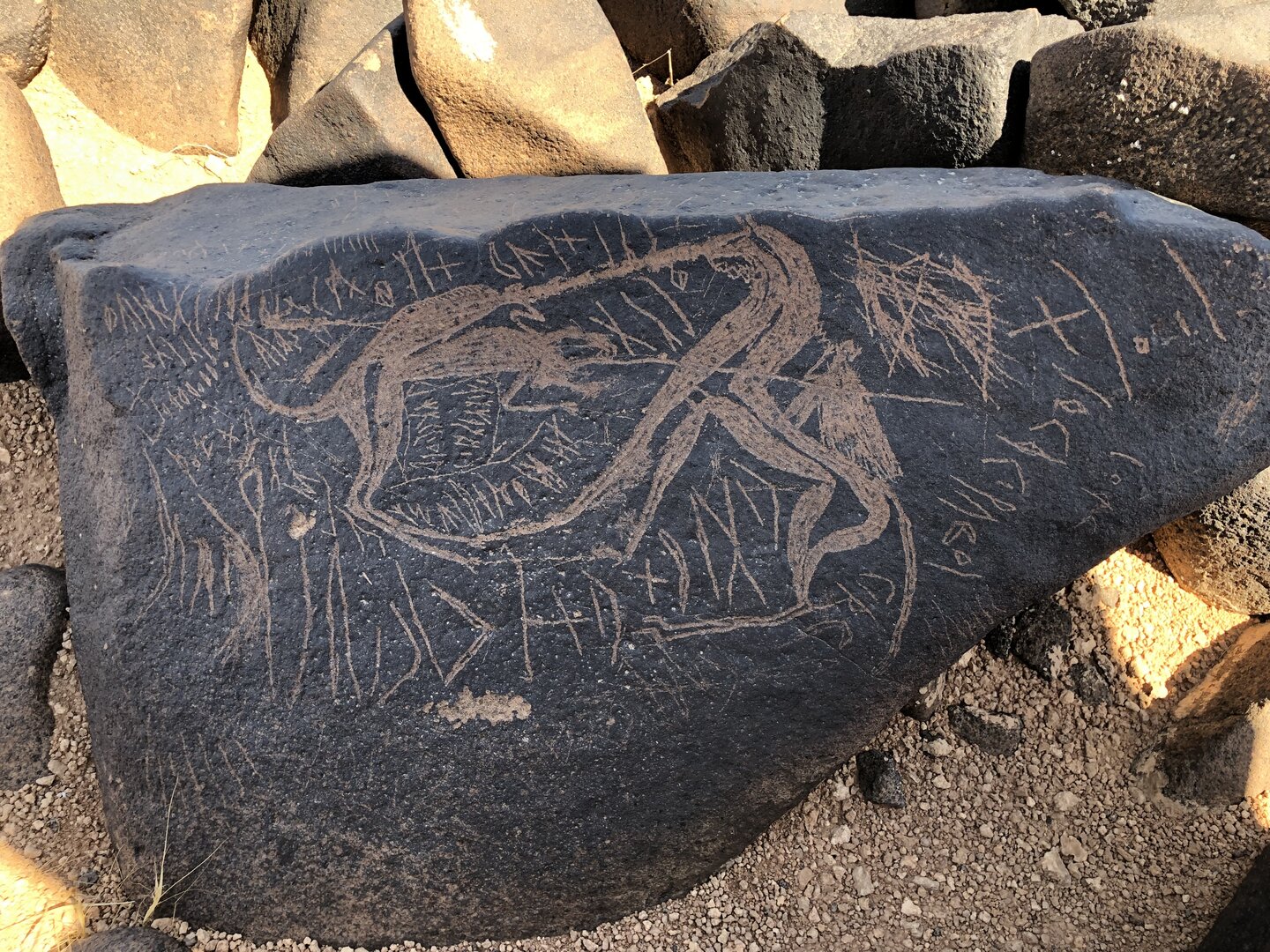
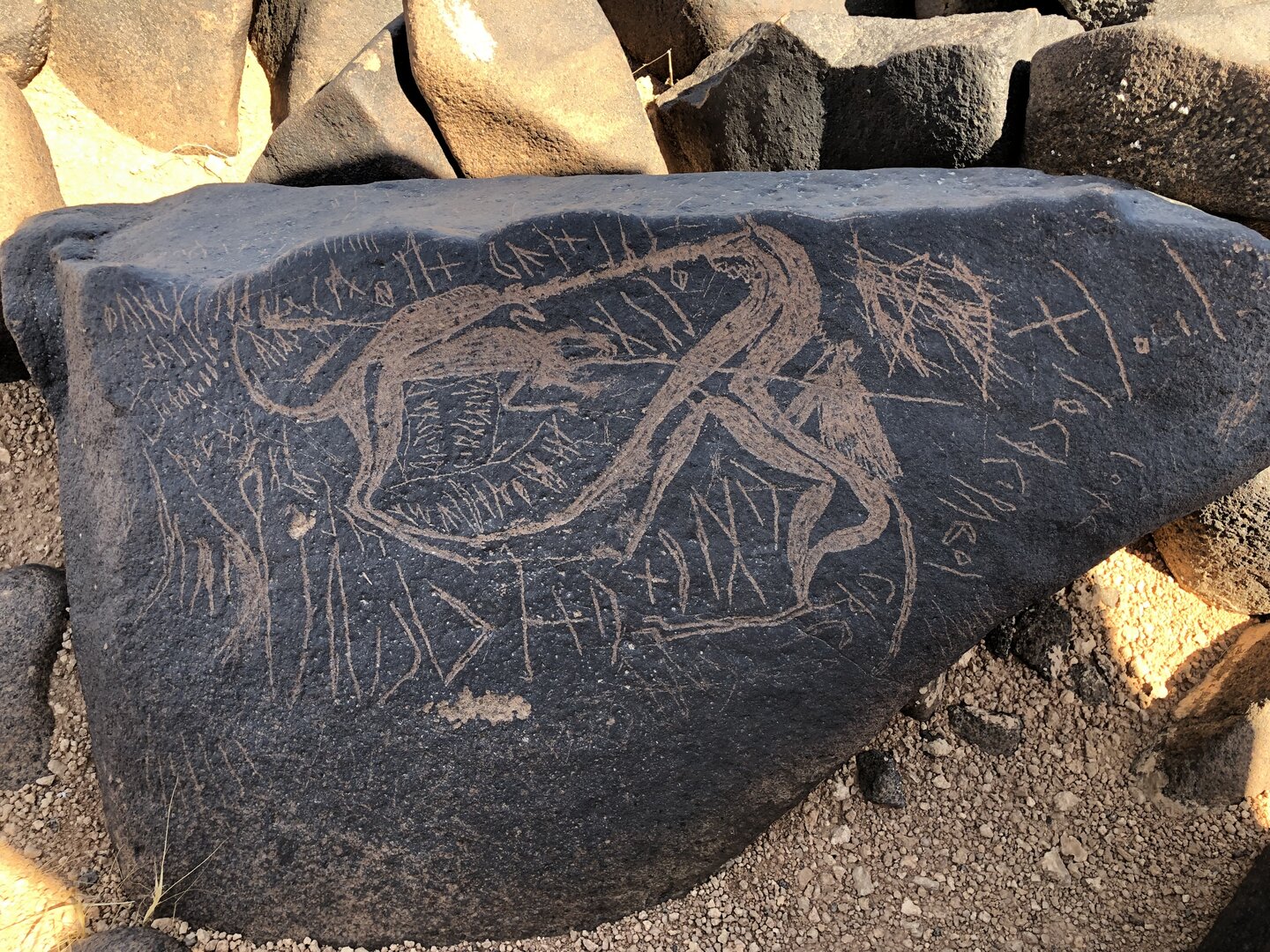
A SafaiticSafaiticAn Ancient North Arabian consonantal script used for rock inscriptions recording names, kinship, pastoral movement and prayers in the pre-Islamic deserts of Syria, Jordan and northern Arabia.Glossary · Click to read the explanation inscription on a rock at Firʿ Wādī al-Khuḍarī in Jordan's Mafraq governorate records movement, pastoral life, and seasons marked by stars; its writer calls upon Lt (Allāt) at one point and Lh (Allāh) later. OCIANAOCIANA: Ancient North Arabian InscriptionsOCIANA is an evolving academic database of ancient North Arabian inscriptions, with edited transliterations, translations, commentary, references, photographs and provenance; not a substitute for the stones.Glossary · Click to read the explanation catalogues the text as BES19s 77.1, documented by a survey in 2019. Its reference to the “year of ʿbdt” invokes a royal name borne by more than one Nabataean king and does not supply a uniquely identifiable calendar year. Linking the final appeal to a drought is part of the editor's commentary, not a separate sentence preserved on the stone. [1]
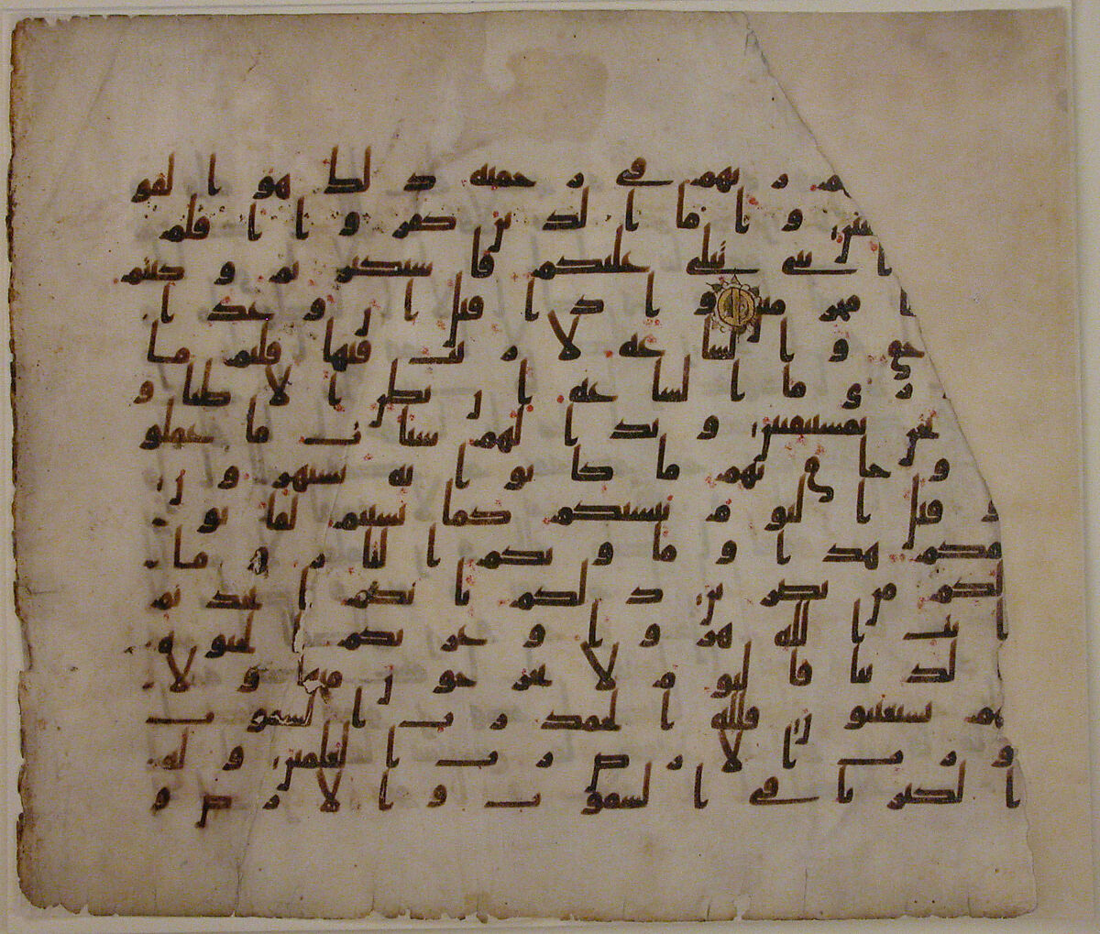
The QuranThe QuranThe central scripture of Islam, consisting of 114 Arabic surahs; its study distinguishes Quranic discourse from manuscript history, reading traditions, and historical inference.Glossary · Click to read the explanation names Allāt together with al-ʿUzzā and Manāt in al-Najm 53:19–23. It rejects the attribution of daughters to God and challenges the inherited authority of the names. This directly attests to their place in seventh-century religious argument; it offers neither a detailed map of sanctuaries nor portraits of the beings named. G. R. Hawting asks how much later Islamic narratives add to that testimony. For his chapter, the publisher's summary, not the full text, was available for this review. [2][3]
A name across languages and periods
Northern Arabian inscriptions write the name using the consonants lt. A related form, “Alilat,” occurs in HerodotusHerodotusFifth-century BCE Greek historian whose account of the Persian Wars includes reports on peoples, court and empire.Glossary · Click to read the explanation, the fifth-century BCE Greek historian. In Histories 3.8 he associates the Arabian name Alilat with what he calls Heavenly AphroditeAphroditeGreek goddess whose origin Hesiod relates to foam after the assault on Ouranos.Glossary · Click to read the explanation. This is a Greek author's interpretation of an unfamiliar divinity, not proof that Aphrodite's complete mythology was shared by everyone venerating Allāt. A proposed linguistic relationshipLinguistic relatednessCommon linguistic descent demonstrated by systematic sound and morphological correspondences, unlike borrowing or accidental resemblance.Glossary · Click to read the explanation to the expression “the goddess” likewise cannot by itself establish kinship between deities or reconstruct a community's theology. [4]
What did worshippers ask of Allāt?
Safaitic inscriptionsSafaiticAn Ancient North Arabian consonantal script used for rock inscriptions recording names, kinship, pastoral movement and prayers in the pre-Islamic deserts of Syria, Jordan and northern Arabia.Glossary · Click to read the explanation are short texts scratched into rocks by people moving through northern Arabian and Syrian desert landscapes. In KRS 1422 a writer describes pasturing camels and missing his companions, then asks Allāt for safety and a reunion. In C 2446 another mourns a brother killed while grazing livestock and seeks vengeance from Allāt—tentatively described by the editors as Allāt of Ammon—alongside several other divine names. The inscriptions convey their authors' immediate concerns more clearly than a fixed catalogue of the goddess's powers. [5][6]
Allāt may also be invoked in ritualsRitualAn organised or distinguished practice meaningful to a community; it may leave traces, but its form alone does not reveal an associated doctrine.Glossary · Click to read the explanation and alongside other divine beings. AHS 21 mentions a sacrifice and then asks Allāt and Dushara (Ḏs²r) for safety. HATD 1 invokes Allāt among several named beings in a plea for winds bringing rain. These conjunctions document whom an author addressed in a given prayer; they do not establish a shared genealogy or a universal pantheon. [7][8]
Frequency, functions, and the problem of images
Ahmad Al-Jallad's synthesis of Safaitic religion identifies Allāt among the most frequently invoked deities, while noting that petitions for help and safety were not restricted to one specialist deity. Nor does a drawing next to a prayer identify its figures as gods. The photograph of BES19s 77.1 shows carved writing and a scene involving a predator, a person, and a mounted rescuer; no label identifies these figures as Allāt or Allāh. Only chapter previews and page listings of the relevant portions of Al-Jallad's 2022 book were accessible here. The identification of this particular rock and image therefore rests on its original catalogue entry, not a claimed reading of that entire book. [9]
Nabataean settings and northwestern Arabia
Nabataean evidence places Allāt outside the Safaitic rock-writing tradition. The Nabataean inscription of tomb IGN39 at Hegra, in northwestern Arabia, dates to about the turn of the Common Era (1 BCE–1 CE). It invokes Dushara, “Allāt of Amnad,” and Manōtu in curses protecting the tomb made by Kamkam daughter of Waʾilat and her daughter Kulaybat. The Hegra Conservation Project publishes the monument and its wording directly, allowing the object and its legal setting to be identified independently of a modern synthesis. The funerary and contractual purpose differs from a pastoralist's request for protection or rain. It proves that these names circulated in related regions without demonstrating that all their rituals were identical. [10]
Palmyra: a sanctuary and several artistic forms
At Palmyra in present-day Syria, a sanctuary of Allāt was excavated by a Polish-Dutch mission. H. J. W. Drijvers examined the inscriptions, architectural phases, and objects recovered: a dedication dated to 64 CE records a group honoring a benefactor of the goddess, while later building remains reveal changes in the sanctuary. He discussed both representations of a seated goddess accompanied by lions and images bearing Athena's helmet, spear, and shield. These types coexisted; they should not be forced into a simple sequence in which the first was replaced by the second. [11]
In a geographical interpretation, Aleksandra Kubiak-Schneider brings together sanctuaries at Palmyra, Ṣalkhad, Wadi Rum, and Hatra, considering the goddess's relationship to desert routes and protective landscapes. This is a scholarly model developed from the location and distribution of evidence, not a function explicitly declared by every ancient text. Only the published abstract of this article was consulted here. [12]
Taif in later Islamic literature
After the Quranic mention, Islamic literary traditions supply accounts of Allāt's sanctuary. In the “Allāt” section of the Book of Idols, Hishām ibn Muḥammad ibn al-Kalbī, an author of the early Abbasid period, describes a square stone, custodians from Thaqīf, and a structure at Ṭāʾif, along with personal names such as Zayd al-Lāt and Taym al-Lāt. Written long after Islam's emergence, this is a transmitted narrative, not an excavated plan or independent confirmation of every detail at earlier dates. Other reports derive her name from a person who prepared grain meal. They are explanatory traditions, not a settled linguistic etymology. [13]
A changing religious landscape in Late Antiquity
In a full open-access article published in 2026, Al-Jallad and Sidky contrast older inscriptions addressing numerous gods with sixth-century Arabic inscriptions in which invocations to Allāh predominate. They propose that, in this changed environment, certain older divine figures were reinterpreted as subordinate beings or intermediaries. This is a historical explanation assembled from dated and literary witnesses. The absence of Allāt from the sampled late inscriptions does not prove the extinction of every form of veneration everywhere, nor a uniform view among all of the Quran's addressees. [14]
A September 2026 epigraphic review also stresses uneven distribution: the Safaitic evidence in northern Arabia and southern Syria is much richer than the contested Dadanitic mention at al-ʿUlā. The survival and publication of inscriptions cannot be treated as a census of all the inhabitants of the Hijaz, just as narratives about Ṭāʾif cannot date the origin of Allāt's cult. Only this study's published abstract was consulted. [15]
What can be established?
Allāt is attested by carved prayers, Greek ethnographic writing, and urban sanctuary remains; her name appears again in the Quran and in later Islamic accounts. Each source answers a different question: Safaitic writers described their needs, dedicatory inscriptions recorded urban institutions, artworks represented local visual conventions, and later authors interpreted the past. Reconstructing a single homogeneous cult extending from Palmyra to Ṭāʾif, or a divine family tree based only on similar names, goes beyond the evidence now available.
References and notes (15)
- Ahmad Al-Jallad / OCIANA. “BES19s 77.1.” Updated 25 June 2026. Firʿ Wadi al-Khudari, Jordan: Allat then Lh; drought explanation is commentary, and ʿbdt does not identify which Obodas here. Original image © Al-Jallad, CC BY as stated, no version number supplied. Return to the text ↑
- Quran, sura al-Najm 53:19–23, Quranic Arabic Corpus (text and translation). Arabic verses 53:19–23 and displayed translation checked; religious polemic, not an archaeological report. Return to the text ↑
- G. R. Hawting (1999). “The daughters of God.” The Idea of Idolatry and the Emergence of Islam, pp. 130–149. Cambridge University Press. Only publisher summary and chapter metadata read; pages 130–149 not read in full. Return to the text ↑
- Herodotus, Histories, book 3, chapter 8, trans. A. D. Godley (1920). Section 3.8 read in the available English translation; no claim to a complete critical Greek edition. Return to the text ↑
- OCIANA, “KRS 1422,” Safaitic inscription, transcription, translation and commentary. Individual inscription record and translation read: safety and reunion petitions; not the entire corpus. Return to the text ↑
- OCIANA, “C 2446,” inscription record, reading, translation, and commentary. C 2446 record read; the qualifier interpreted as “of Ammon” is tentative. Return to the text ↑
- OCIANA, “AHS 21,” Safaitic text invoking Allāt and Dushara. Inscription record and the offering/safety petition read. Return to the text ↑
- OCIANA, “HATD 1,” inscription and invocation text. Individual record read, including the request for rain-bearing winds and multiple divine names. Return to the text ↑
- Ahmad Al-Jallad, The Religion and Rituals of the Nomads of Pre-Islamic Arabia: A Reconstruction Based on the Safaitic Inscriptions (Brill, 2022), chapter previews. Chapter headings and short available previews only; no complete chapters read. OCIANA directly documents the figure. Return to the text ↑
- Hegra Conservation Project, “IGN39: Tomb of Kamkam daughter of Wa’ilat,” monument entry and Nabataean inscription; citing J. F. Healey, The Nabataean Tomb Inscriptions of Mada’in Salih (1993), p. 154. Full on-page inscription translation and dating (1 BCE–1 CE) read; Healey’s printed monograph not consulted. Return to the text ↑
- H. J. W. Drijvers (1981), “Tempel en cultus van de Arabische Godin Allât te Palmyra,” Handelingen van het Nederlands Filologencongres 36, pp. 249–254 (Dutch). Electronic Dutch paper examined, printed pp. 249–254 on 64 CE inscription and iconography. Return to the text ↑
- Aleksandra Kubiak-Schneider, “Allāt and the Desert ‘Kultlandschaft’ of Allāt in the East,” Journal of Ancient History and Archaeology 10(4), DOI:10.14795/j.v10i4.932. Published abstract and publication metadata only; full paper not read. Return to the text ↑
- Hishām ibn Muḥammad ibn al-Kalbī, Kitāb al-Aṣnām (Book of Idols), “al-Lāt” passage, Arabic digital edition (ed. Aḥmad Zakī Pasha). Arabic “al-Lāt” entry read, on stone, Ṭāʾif, custodians, and names; not the entire book. Return to the text ↑
- Ahmad Al-Jallad and Hythem Sidky (2026), “Late Antique Allāh: Ancestral Arabian Religion and the Monotheistic Zeitgeist,” Arabian Archaeology and Epigraphy, online 15 February 2026. Open-access full HTML text, sections 1–5 and conclusions read; intermediary status is an interpretation. Return to the text ↑
- Burak Taşdüvenci (2026), “The Goddess al-Lāt in Ancient North Arabian Epigraphy: Evidence from Safaitic, Dadanitic, and Hismaic Inscriptions,” EKEV Akademi Dergisi, early online 13 September 2026. Turkish and English abstracts and publication metadata read; full article not read. Return to the text ↑
Suggest a correction · Suggest a source for this record
Cite this record
IL Archive, «Allat», https://ilarchive.com/en/entities/allat
Continue reading