Study
Allah in the Quran
An extended study of a topic, with evidence and references.
Traces Allah before the Quran, then examines divinity, al-Raḥmān, angels, intercession and prophets in its discourse, separating linguistic kinship from doctrinal identity.
Share article
![Quran manuscript folio, Met 1979.201, late eighth–early ninth century, Central Islamic Lands; ink, colours and gold on parchment. Later codex transmission, not a seventh-century copy or an image of the verses cited here. [28]](/media/1332)
Text
An old name in Quranic discourse
When the QuranQuranCentral text of Islam, used here as evidence of its religious discourse.Glossary · Click to read the explanation began to be recited in seventh-century Arabia’s Hijaz, AllahAllahThe Arabic name for God, used before Islam and in several Arabic-speaking religious traditions.Glossary · Click to read the explanation was not an unknown word awaiting invention. Older attestations existed, alongside Jewish, Christian and local Arabian traditions. What we investigate as new here is the Quran’s particular arrangement of language about worship, creation and revelation, rather than the first emergence of belief in one God. [1][2][26]
A name can survive while people’s understanding of it changes. Three questions must therefore be separated: when is the word attested, what did it mean in a particular setting, and how does the Quran describe God’s relation to humans and heavenly beings? Linguistic history helps with the first question without answering the other two by itself.
Allah before the codex
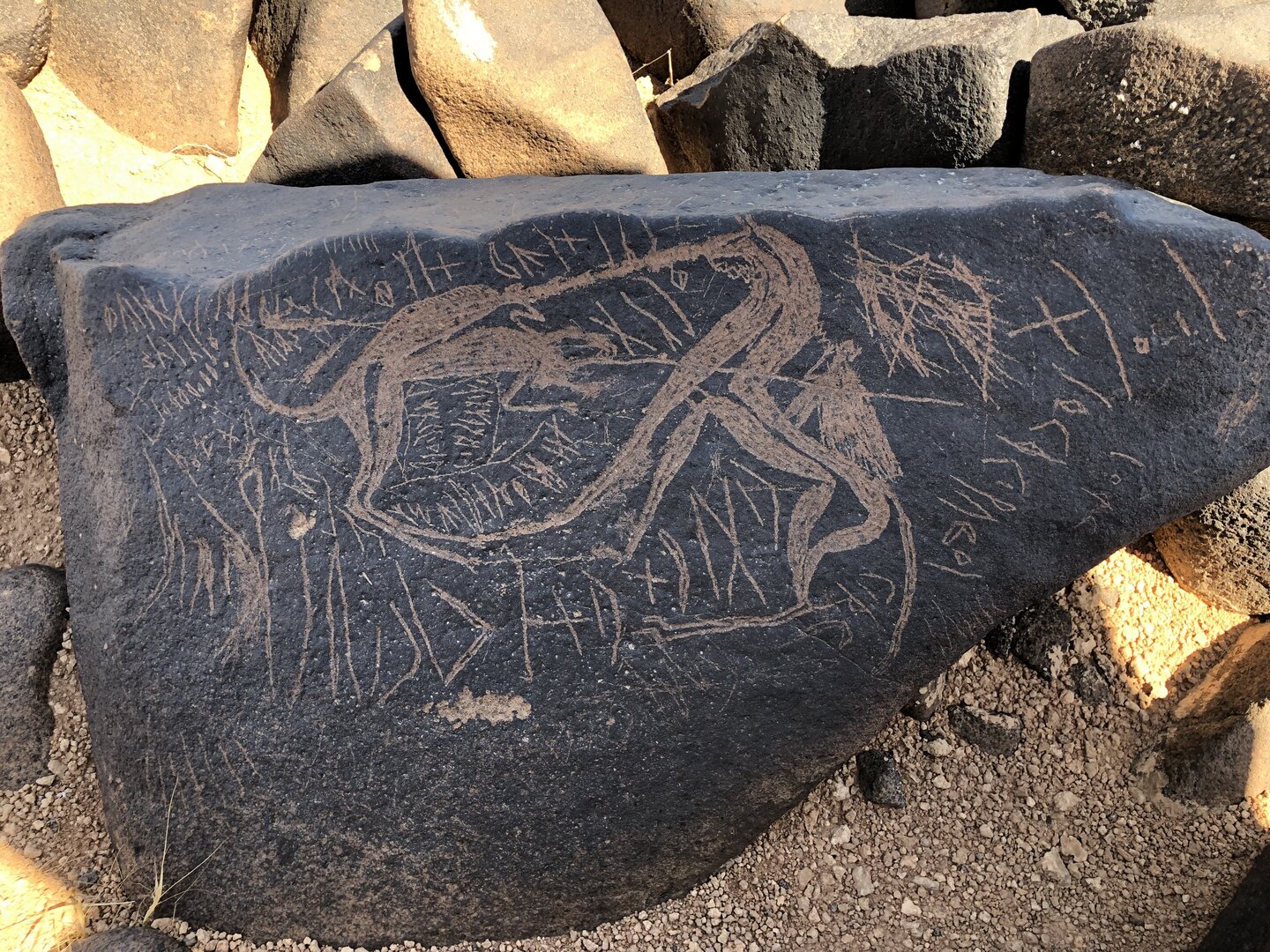
In 2025 Ahmad Al-Jallad presented a SafaiticSafaiticAncient North Arabian script preserving names and prayers; not one uniform creed.Glossary · Click to read the explanation inscription at MH09 in northeastern Jordan’s Ḥarrah, within a mortuary installation. He interprets it as evidence for Allah as a light-giving creator confronting death represented by darkness, roughly two thousand years ago. This is a scholar’s reading of a particular carving, not a Quranic statement discovered on stone. [1]
The witness strengthens the name’s antiquity and suggests attributes in that setting. It does not make all contemporary Arabians monotheists or establish a complete Quranic conception. Dating the earliest surviving attestation does not necessarily date the word’s first use or the beginning of worship: surviving evidence is not the whole history that occurred.
What changed in later inscriptions?
In a study published in 2026, Ahmad Al-Jallad and Hythem Sidky observe that the late Paleo-ArabicPaleo-ArabicDesignation for early Arabic inscriptions in writing traditions preceding Islam; the sample is limited.Glossary · Click to read the explanation inscriptions they discuss invoke Allah or al-ilāh, while gods common in earlier corpora are absent. They connect the change with late antiquityLate antiquityHistorical frame for late ancient transformations; boundaries vary by region and subject.Glossary · Click to read the explanation’s religious climate, while rejecting the assumption that inscriptions reveal a complete worldview. [2]
Changed written invocation establishes a change in public expression within a particular sample. It does not establish that every local cult disappeared simultaneously or every individual adopted one doctrine. The inscriptions are not a comprehensive referendum on Arabian religion. They must be read alongside poetry, the Quran and later accounts, with attention to each witness’s date and character.
Allah and al-ilāh: derivation and usage
A familiar explanation treats Allah as a contracted form of al-ilāh, “the deity.” Nicolai SinaiSinai: peninsula and biblical mountainSinai is a peninsula in eastern Egypt; in the Torah the name also denotes the mountain of revelation to MosesGlossary · Click to read the explanation discusses this account and notes that etymology does not dictate every later use. He also discusses al-ilāh in the inscription at Zabad dated 512, with uncertainty about its opening reading. Every written al-ilāh cannot be treated as the identical spelling Allah. [3]
A word may become an established name even when its origin can be analysed. Speakers need not reconstruct that origin whenever they pronounce it. Derivation, inscriptional spelling and the word’s function within a sentence must therefore be distinguished. Establishing one does not settle the others or automatically demonstrate an unchanged divine identity across centuries.
A linguistic family, not a chain of gods
Arabic ilāhArabic ilahThe Arabic common noun meaning “god” or “deity”, with the plural aliha.Glossary · Click to read the explanation belongs to a Semitic family including AkkadianAkkadianAn ancient East Semitic language written in cuneiform in Mesopotamia.Glossary · Click to read the explanation iluAkkadian iluThe Akkadian word for “god”; its occurrence does not automatically identify the deity El.Glossary · Click to read the explanation, Ugaritic il, HebrewHebrewA Northwest Semitic language in the Canaanite group, with ancient and modern forms.Glossary · Click to read the explanation El, and AramaicAramaicA group of Northwest Semitic language varieties with a long history across the Near East.Glossary · Click to read the explanation and SyriacSyriacA literary form of Aramaic, with an extensive Christian heritage and earlier non-Christian attestations.Glossary · Click to read the explanation forms. In 2025 Benjamin Suchard compares reconstructed *ʾil- with expanded *ʾilāh- and proposes an explanation for the latter’s origin. The asterisk denotes linguistic reconstructionLinguistic reconstructionA comparative method for inferring forms in an older language from related languages.Glossary · Click to read the explanation, not a word read in a Proto-SemiticProto-SemiticThe reconstructed common ancestor of the historically known Semitic languages.Glossary · Click to read the explanation manuscript. [4]
This is real linguistic kinshipLinguistic relatednessA relationship through shared linguistic ancestry, distinct from direct borrowing or identical beliefs.Glossary · Click to read the explanation, but turning it into a sequence “El, then ElohimElohimA Hebrew word with plural morphology, used for “gods” or for a singular deity according to context.Glossary · Click to read the explanation, then Allah” for one divine personality confuses vocabulary with belief. Related words can denote different conceptions in different communities. Tracing religious identity requires texts, worship and contact settings, rather than sound resemblance alone.
![Modern distinction between word, conception and interpretation histories. Semitic kinship alone establishes neither continuous religious identity nor a particular transmission route. [3][4]](/media/1342)
The interlocutors know Allah’s name
Quran 29:61 attributes the answer “Allah” to its interlocutors when asked who created heaven and earth and subjected sun and moon. Verse 29:63 gives them the same answer about rain and renewed land; 39:38 repeats the creation argument. In these passages the name supplies shared ground for debate, rather than a new designation requiring an initial definition. [5][6][7]
The witness nevertheless describes opponents from the perspective of the text arguing against them. It is not an independent survey of every Meccan household. We can identify the picture assumed by the Quran’s argument and compare it with inscriptions and poetry. Applying it indiscriminately to all sixth- or seventh-century Arabians goes beyond the verses.
Acknowledging the creator does not end the dispute
Sinai treats pre-Quranic poetry as evidence to compare with Quranic conceptions of creation, giving and death. Because poetry survives through later transmission, each citation requires attention to attribution and wording; the word Allah does not date a verse by itself. A transmitted collection is not equivalent to a directly dated inscription. [3]
Within the Quran, the question extends beyond knowing a creator. If Allah creates and grants mercy, what justifies invoking others as able to remove harm or withhold mercy? Quran 39:38 joins acknowledgment and criticism in one verse. The disagreement need not concern God’s existence; it can concern what follows from acknowledging Him. [7]
Allah as designation, ilāh as category
In “Allah: no deity except Him,” the two words perform different functions. Allah designates the intended object of worship; ilāh belongs to the denial of any deity besides Him. This is not an ordered list placing Him first among gods equally entitled to worship. It joins designation with exclusive divinity and worship. [25]
Linguistic analysis clarifies this distinction within the sentence without reconstructing every earlier stage. Even if the name historically relates to al-ilāh, every preceding use does not become a declaration of Quranic monotheismMonotheismBelief in a single God as the only deity, rather than merely the highest among several gods.Glossary · Click to read the explanation. Current grammatical function, possible derivation and religious history are three layers that should not dissolve into one another.
![Word functions in Quranic witnesses, not an etymological tree or four gods. Modern explanatory diagram; Allah’s possible derivation is a separate issue. [15][16][17][25]](/media/1336)
Al-Ikhlāṣ: no genealogy or equal
Surah al-Ikhlāṣ offers a compact formulation: Allah is one, ṣamad, neither begetting nor begotten, with no equivalent. The surah combines unity with rejection of genealogy and equality. Ṣamad has a history of interpretation and translation that this study does not reduce to one unquestionably settled foreign equivalent. [8]
Comparison with older divine families reveals a different relationship structure: no consort bears children for God, and no offspring inherits divinity by descent. That does not make the Quran history’s first text to distinguish creator from creature or its first tradition to reject plurality. Its particularity lies in formulation, arguments and contemporary debates, alongside earlier monotheisms.
Heaven does not become empty
Exclusive divinity does not erase all nonhuman beings from the narrative. The Quran includes angels, jinn, spirits and a throne, and revelation remains linked to a world beyond ordinary sight. Surah al-Jinn, for example, describes a group listening and believing. We are examining textual construction, not extracting archaeological proof that these beings exist. [27]
The decisive issue is their status: do they create independently, share divinity or deserve worship? Many beings in a text do not amount to many gods. An inhabited heaven can therefore belong to a monotheistic conception. Each being’s limits and function must be examined, rather than counting characters and inferring a doctrine from the number alone.
Angels as honoured servants
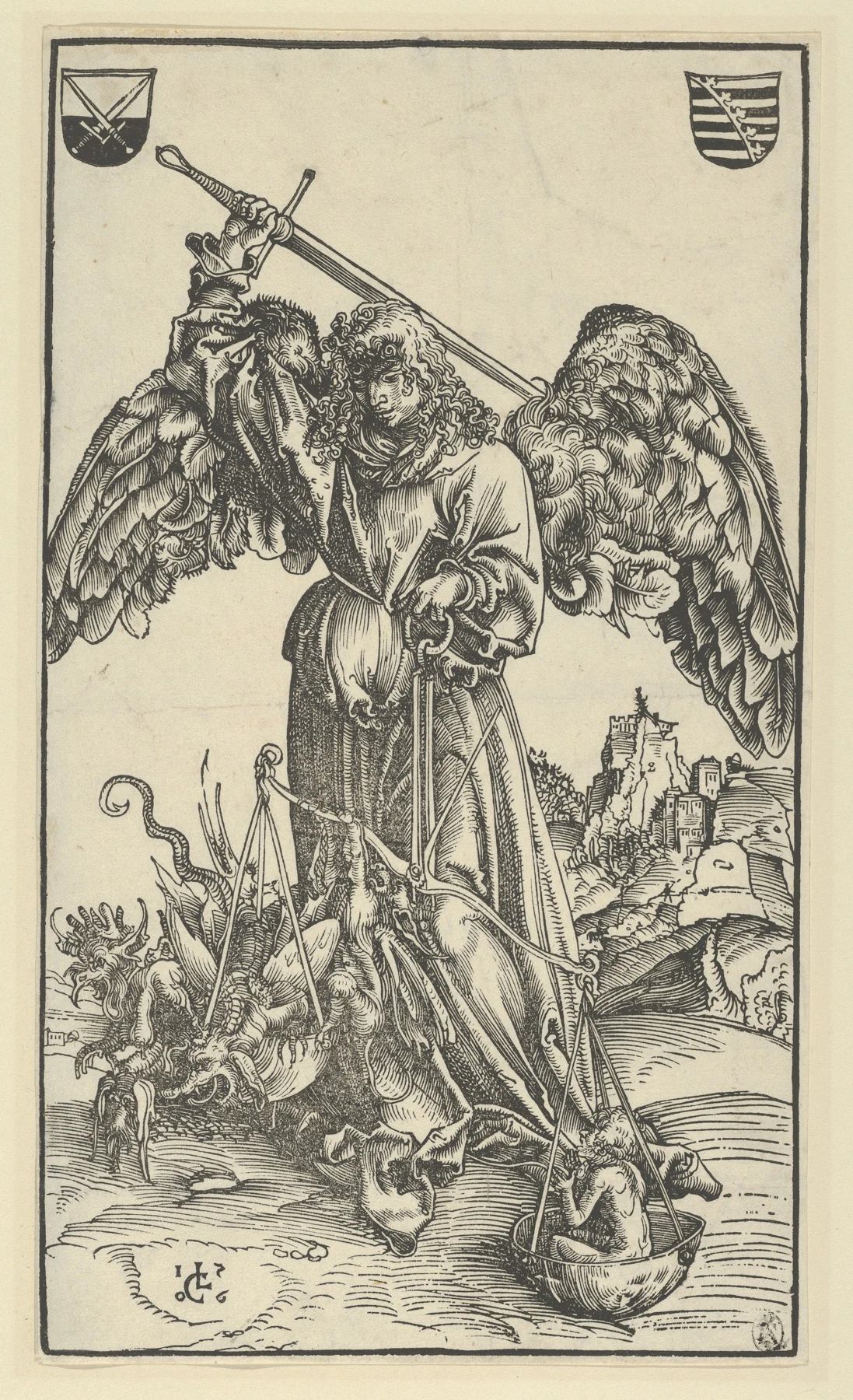
Quran 21:26 rejects offspring attributed to al-RaḥmānAl-RaḥmānQuranic divine designation co-referring with Allah.Glossary · Click to read the explanation and calls the relevant beings honoured servants. The context says they do not speak ahead of Him, act on His command and intercede only for those He approves. Authority is explicit: honour does not make them offspring in a family of independent gods. [9]
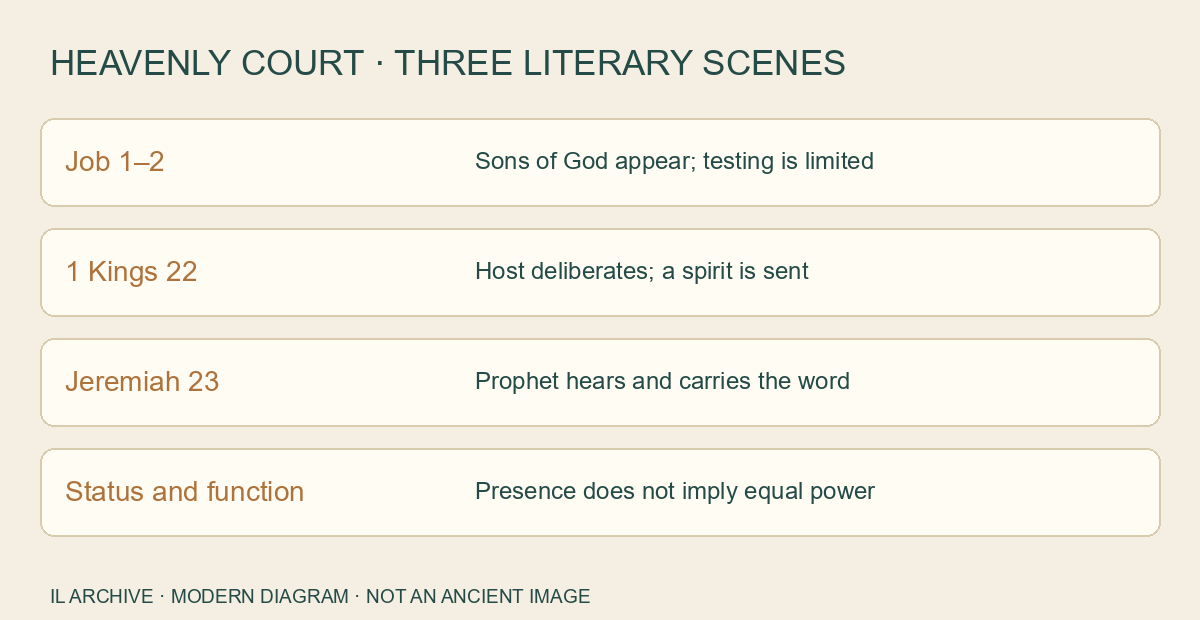
This allows structural comparison with an older divine councilDivine councilA representation of divine beings acting as an assembly with authority and differentiated roles.Glossary · Click to read the explanation, containing a head, members and messengers. Similar functions do not establish that every Quranic angel was a demoted Canaanite deity. Continuing court and messenger imagery must be separated from identifying a particular character across texts centuries apart. The comparison invites investigation; it is not a conversion table from gods to angels.
![Modern summary of passages about heavenly beings and Abraham, not depictions or an independent Abrahamic biography. Roles and surviving names do not establish a particular ancient god’s conversion into an angel. [9][10][11][27][23]](/media/1322)
Gabriel and Michael: inherited names
Quran 2:97 names GabrielGabriel / JibrīlName joining El with an element involving man or strength; interpreter in Daniel, messenger in Luke, named Jibrīl in the Qurʾan.Glossary · Click to read the explanation in connection with delivering revelation by God’s permission; 2:98 names him with MichaelMichael / MīkālTheophoric name asking who is like God; borne by humans and a heavenly figure in Daniel. It establishes no former Canaanite deity.Glossary · Click to read the explanation. Mīkāl is the written form in that verse, while Mīkāʾīl is familiar in other traditions. Both names predate the Quran, appearing in Daniel and then in Jewish and Christian traditions. [10][11][12][13]
Transmission of a name does not imply an unchanged function across texts or Quranic knowledge of every later story. Named characters can be established and their roles examined witness by witness. In the Quranic scene Gabriel does not operate as a deity sharing the source of revelation. Permission is itself part of how his relationship to God is described.
El within an angel’s name
Michael contains a Hebrew construction meaning “Who is like El/God?” Gabriel combines El with an element in the semantic field of man and strength; the University of Iowa presents “man of God” and “God is my strength.” The man reading should not disappear in favour of one more popular translation. [12][13]
The name speaks about God without declaring its bearer divine. In Arabic it may function as a whole unit that speakers do not mentally divide. The old element’s survival records linguistic and naming history, not a Muslim speaker’s use of Ugaritic El as a separate divine name. Names alone cannot reconstruct heavenly characters’ origins or the beliefs of their users.
Raḥmānān before the Quran
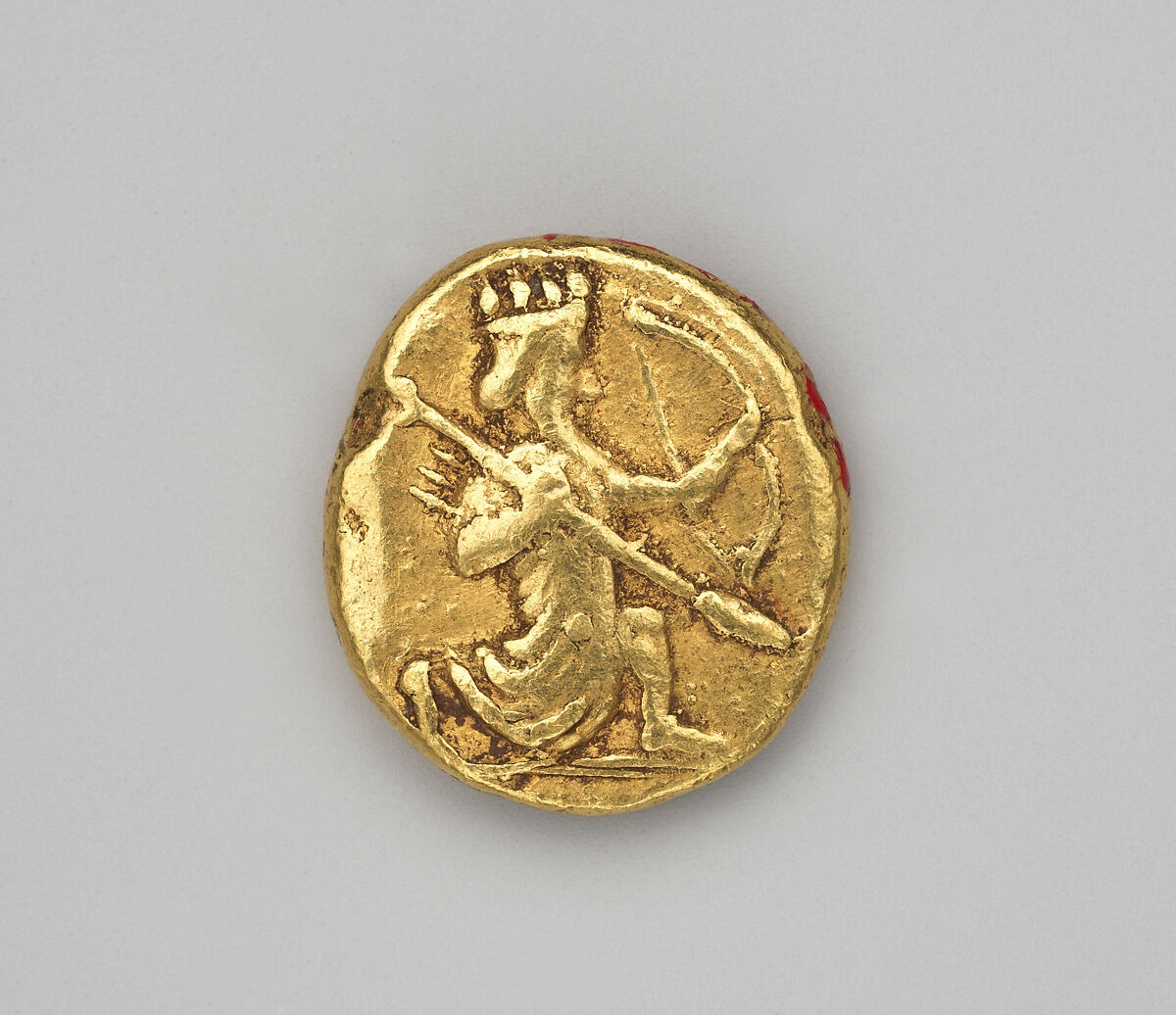
RaḥmānānRaḥmānānDivine designation rḥmnn in late Sabaic inscriptions before Islam.Glossary · Click to read the explanation, written rḥmnn in late Sabaic inscriptions, has a South Arabian history preceding Islam. Sigrid Kjær discusses public texts and oaths in differing settings, including Jewish and Christian ones. Changes from the fourth century onward affected the language used for the deity in public expression. [14]
One designation does not make all Yemen a community with one doctrine. Its relation to titles such as LordRabbTitle of lordship, ownership or care by context; applied to God in Lord of worlds.Glossary · Click to read the explanation of Heaven or God of the Jews requires examination of particular inscriptions; scholars differ over some readings. The clearest points are the title’s pre-Quranic existence and varied settings. A complete transmission from one Yemeni institution to the Hijaz does not follow from lexical resemblance alone.
Allah and al-Raḥmān in one verse
Quran 17:110 invites calling upon Allah or al-Raḥmān, assigning the beautiful names to Him whichever is invoked. Al-RaḥmānAl-RaḥmānQuranic divine designation co-referring with Allah.Glossary · Click to read the explanation and Allah co-refer in this formulation. Multiple names do not entail multiple divine persons; the verse presents them within a conception of unity. [15]
Claiming that the verse literally records the merger of two previously independent gods requires additional historical evidence. Different traditions can use one title, and titles can converge without a single documented founding moment. The text establishes co-reference within its discourse. The preceding path remains a question about contact, language and religion, rather than a ready-made grammatical conclusion.
Lord of the worlds
Al-Fātiḥah praises Allah as rabbRabbTitle of lordship, ownership or care by context; applied to God in Lord of worlds.Glossary · Click to read the explanation of the worlds. Rabb expresses lordship, ownership or care according to context; here it is not a second god beside Allah. Quran 6:102 brings the designations together: Allah your Lord, no deity except Him, creator of everything, therefore worship Him. Name, authority, creation and worship are joined. [16][17]
Worlds extends the horizon beyond one local group. Universal creation was nevertheless not first conceived in this verse; earlier traditions held cosmic conceptions of God. We examine the claim’s position within Quranic guidance, judgment and worship, rather than making a simple lexical change from local title into a general historical truth.
Rejecting a divine family
Quran 6:101 asks how God could have offspring without a consort and joins the question to creation of everything. Together with al-Ikhlāṣ and the honoured-servants passage, limits on divine genealogy recur. The Quran does not construct a family tree in which consort and offspring are gods with independent entitlements. [17][8][9]
Comparison with El’s older council must remain historical: more than a millennium and many Jewish, Christian and Arabian changes separate Ugaritic texts from the Quran. A similar offspring question does not establish a direct response to a Ugaritic tablet. Nor should Christian Son language automatically become bodily generation. Quranic criticism and other traditions’ self-descriptions must each be presented distinctly.
Shirk: the dispute over worship
Quran 39:3 presents the argument of people taking protectors: worshipping them serves to bring them nearer Allah. In 10:18 they call the objects of worship their intercessors with Allah. Knowledge of God does not disappear from the argument; it is used to justify worship of intermediaries. The text rejects this arrangement and treats associationShirkAssociating others with God in Quranic discourse; not equivalent to denying God’s existence.Glossary · Click to read the explanation as a problem. [18][19]
ShirkShirkAssociating others with God in Quranic discourse; not equivalent to denying God’s existence.Glossary · Click to read the explanation should therefore be defined here from the passage: what worship or partnership is assigned to someone besides God? “A high godHigh godA deity with a senior position among other gods; this does not itself mean monotheism.Glossary · Click to read the explanation with lesser beings” does not explain every case by itself. Attributed descent, power and mediationIntercessionMediation subject in the cited Quranic texts to permission and approval, not divine independence.Glossary · Click to read the explanation must be examined, followed by the text’s judgment. The difference between a being’s existence and its worship is central.
Intercession is not independence
Does the Quran deny every form of intercessionIntercessionMediation subject in the cited Quranic texts to permission and approval, not divine independence.Glossary · Click to read the explanation? The verses do not support that absolute statement. Quran 2:255 asks who can intercede with Him except by His permission; al-Anbiyāʾ connects intercession with approval. A worshipped intermediary used as an independent route to God differs from a being able to intercede only under permission. [25][9]
This does not settle the whole Islamic history of interpreting intercession in one sentence; commentators and theologians elaborated its conditions. The narrower point is methodological: a historical study must not erase an exception from its own cited text. Both categorical prohibition and an intercessor imposing a will upon God exceed this formulation.
![Modern comparison of intermediary arguments with the permission condition. Neither denial of all intercession nor a complete history of interpretation. [18][19][25][9]](/media/1328)
Hawting and the limits of reading opponents
Gerald Hawting proposes that shirk and idolatry language can operate in disputes among groups considering themselves monotheist, so an accusation does not necessarily reproduce an opponent’s self-description. This influential thesis encourages caution about turning religious charges into neutral social definitions. [20]
It does not prove that all Quranic interlocutors were monotheists in the same sense or that idol worship was absent. The model has faced criticism. Quranic knowledge of Allah, inscriptions invoking Him and accusations of association remain different lines of evidence. They can be weighed without erasing tensions. Acknowledging a creator alone does not establish how many beings a person worshipped or how intermediaries were understood.
Christ within Quranic boundaries
Quran 4:171 describes Jesus son of Mary as God’s messenger, His word delivered to Mary and a spirit from Him. It then rejects saying three, affirms one deity and denies offspring. Christ retains distinctive descriptions and honour without sharing God’s divinity. Reducing the passage to an ordinary person with no special status would misrepresent it. [21]
This describes the Quran’s position. Christians formulating the TrinityTrinityChristian formulation of divine unity and Father/Son/Spirit distinction, with a history of debate.Glossary · Click to read the explanation also call themselves monotheists; a Quranic objection does not make “worshippers of three gods” an adequate historical self-description. Critical language, another tradition’s own formulation and the researcher’s comparison must remain distinct. Real disagreement does not justify collapsing those levels.
Allah as the prophets’ God in the Quran
Quran 2:136 joins belief in Allah with what was revealed to Abraham, Ishmael, Isaac, Jacob and their descendants and given to MosesMosesCentral figure in Exodus, Torah traditions and the Qur’an; childhood accounts differ in detail.Glossary · Click to read the explanation, Jesus and the prophets. These figures belong to a connected revelation history. Within this discourse Allah is not a new Hijazi community’s deity detached from earlier prophets; He is the God to whom the text relates them. [22]
This unity is asserted by the Quran, rather than independently documenting that every historical figure bearing those names held identical doctrinal details. Historians can establish the text’s continuity claim and examine its retelling and identity construction. Dating a unity claim and proving uniformity of all earlier beliefs are different questions; one should not replace the other.
Abraham as hanif
Quran 3:67 presents Abraham as neither Jew nor Christian, but hanifHanifQuranic description of Abraham linked to submission and rejection of association.Glossary · Click to read the explanation, submitting to God and not an associator. The text places Abraham’s authority outside the division between those labels and makes him a model of devotion. The surrounding passage debates claims upon him and who is closest to him. [23]
The verse alone establishes neither a uniform pre-Islamic religious institution called hanifism nor an independent account of historical Abraham’s practices. Muslim here participates in the verse’s language of submission; later institutions should not automatically be projected into it. An old exemplary figure can enter a new dispute, remaining the same narrative person while his position is redefined.
Within a scriptural world, reinterpreting it
Moses, Jesus, Abraham and Gabriel show the Quran addressing a world of religious stories and figures predating it. Their presence does not make it a verbatim copy of one particular earlier book. Stories can circulate through recitation, preaching, ritualRitualAn organised or distinguished practice meaningful to a community; it may leave traces, but its form alone does not reveal an associated doctrine.Glossary · Click to read the explanation and oral language as well as manuscripts, and be reorganized for a different purpose. [22][10][26]
In late antiquityLate antiquityHistorical frame for late ancient transformations; boundaries vary by region and subject.Glossary · Click to read the explanation research, Arabia belongs to Jewish, Christian, Syriac and South Arabian relationships, rather than an absolute cultural vacuum. Valentina Grasso’s review displays this range of research contexts. Establishing a broad contact setting is nevertheless easier than tracing one verse through one manuscript and intermediary. Detailed claims need correspondingly detailed evidence.
Monotheism also precedes the Quran
A “new monotheistic conception” should not imply that monotheismMonotheismBelief in a single God as the only deity, rather than merely the highest among several gods.Glossary · Click to read the explanation began with the Quran. Judaism and Christianity articulated one God centuries before the seventh century; southern inscriptions attest varying monotheistic or exclusive forms before Islam. Not only the name is old: some religious questions and positions are older too. [14][26]
New is relative here: a Quranic Arabic formulation defining acknowledgment, worship, genealogy, intercession and revelation in its setting. Disagreement about Christ or sonship does not warrant erasing other traditions’ monotheist self-description. History examines differing meanings, arguments and practices of unity, rather than predetermining one definition that excludes every other conception from comparison.
Creator of all things
Allah as creator of all things in 39:62 gives creation universal scope. Quran 6:102 connects that universality with the command to worship. God is not formulated as a power restricted to rain or one city; creation, care and worship converge in one relationship. [24][17]
Comparison with older traditions distributing functions among multiple gods reveals an important rearrangement. It does not follow that every attribute passed directly from a named ancient deity. Creation, wisdom, kingship and justice cross many traditions and can also change within one. Shared functions open comparison without independently identifying a borrowing route or the date of transformation.
How do we test continuity and transmission?
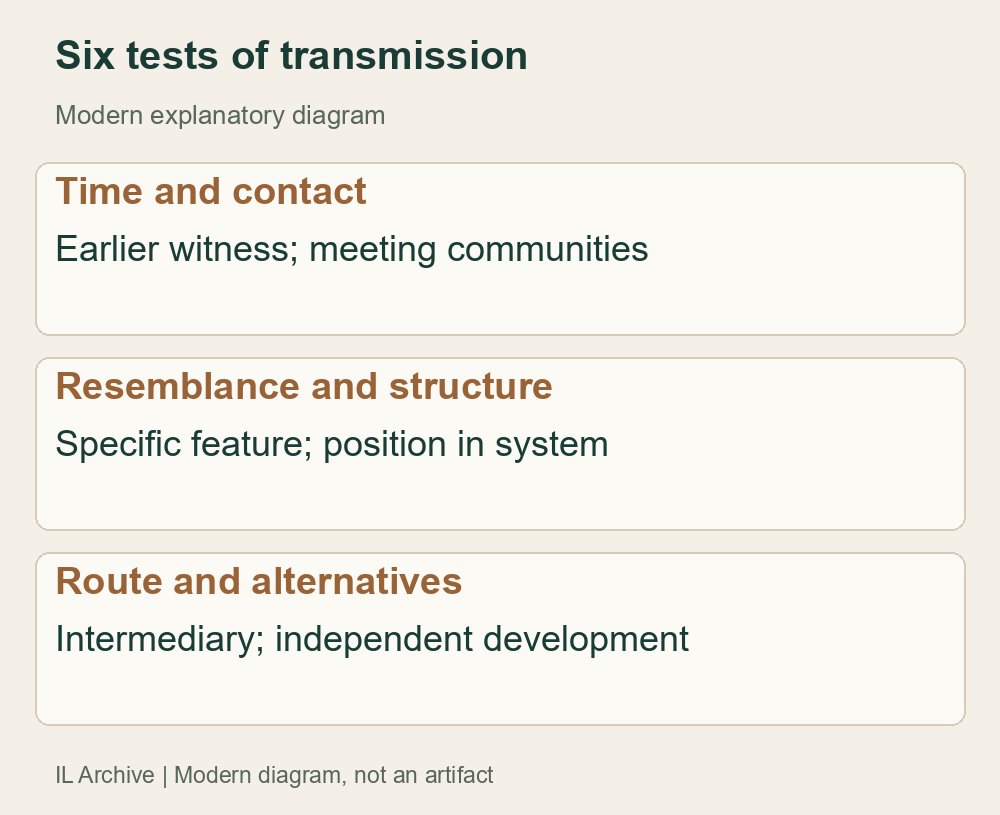
For any religious-transmission proposal stronger than possibility, six checks are required: time, contact, precision of resemblance, structure, transmission route and possible independent developmentIndependent developmentSimilar elements arising without historical transmission between them.Glossary · Click to read the explanation. Does one witness precede the comparison? Were communities in contact? Is similarity detailed or generic? Does the feature occupy the same structural position? Is there a plausible intermediary, or merely a line filling a gap on a map?
Word history, conception history and textual interpretation must also be separated. The cover illustrates evidential limits: Met folio 1979.201 dates to the late eighth–early ninth century, not seventh-century beginnings of recitation. It is neither an original first copy, an image of the quoted verses nor a depiction of God. It documents later material transmission of the codex. [28]
What survived, and what was redefined?
Allah’s name demonstrably predates the Quran, and deity vocabulary belongs to a Semitic linguistic family. The Quran explicitly makes Allah and al-Raḥmān co-refer, describes God as Lord of worlds and creator of everything, and subjects heavenly action to permission and command. The precise routes connecting every earlier tradition to the Hijaz, and each intermediary’s identity, are not established by the evidence used here. [1][4][15][16][24][9]
Names, prophetic stories and angelic figures survived, but their survival does not compress conceptual history into one unchanged belief. Quranic discourse brings creation, sovereignty and worship together in one God and places other beings in dependence upon Him. Disciplined comparison traces what persisted and what was redefined without turning related words into proof that doctrines never changed.
References and notes
- Ahmad Al-Jallad, “Ancient Allah: An Epigraphic Reconstruction”, Journal of Semitic Studies 70.2 (2025), 693–748. DOI 10.1093/jss/fgaf012. Abstract only: MH09 in northeastern Jordan; author interprets a Safaitic text as a light-giving creator opposing death/darkness, roughly two millennia ago. Full inscription analysis not read. Return to the text ↑
- Ahmad Al-Jallad and Hythem Sidky, “Late Antique Allāh: Ancestral Arabian Religion and the Monotheistic Zeitgeist”, Arabian Archaeology and Epigraphy, published 15 February 2026. DOI 10.1111/aae.70019. Abstract, introduction and selected sections 2–3: changed invocational language in late Paleo-Arabic inscriptions. Authors warn that public graffiti do not disclose a whole worldview; their synthesis is attributed. Return to the text ↑
- Nicolai Sinai, Rain-Giver, Bone-Breaker, Score-Settler: Allāh in Pre-Quranic Poetry, AOS Essays 15, 2019. Publisher synopsis and selected PDF passages, printed p. 7 and p. 38 on rain/death: allāh/al-ilāh, Zabad 512 and poetic transmission limits. Not a complete book reading. Return to the text ↑
- Benjamin D. Suchard, “Semitic *ʾilāh- and Hebrew אלהים: From plural ‘gods’ to singular ‘God’”, Journal for the Study of the Old Testament 49.4 (2025). DOI 10.1177/03090892251332286. Abstract and opening comparison of *ʾil-/*ʾilāh- and cognates. Expanded-form origin is the author’s linguistic proposal; linguistic kinship does not establish one deity’s identity. Return to the text ↑
- Qurʾān 29:61; displayed text, Quran.com / Quranic Arabic Corpus. Displayed verse translations: interlocutors acknowledge Allah as creator; polemical testimony, not a neutral religious census. Return to the text ↑
- Qurʾān 29:63; displayed text, Quran.com / Quranic Arabic Corpus. Displayed verse: interlocutors attribute rain and renewed land to Allah. Return to the text ↑
- Qurʾān 39:38; displayed text, Quran.com / Quranic Arabic Corpus. Displayed verse: acknowledging creation does not justify invoking others. Return to the text ↑
- Qurʾān 112:1–4; displayed text, Quran.com / Quranic Arabic Corpus. Whole surah: oneness, ṣamad, no begetting/birth or equal. No single settled lexical translation of ṣamad imposed. Return to the text ↑
- Qurʾān 21:26–29; displayed text, Quran.com / Quranic Arabic Corpus. Verse and displayed context: honoured servants, acting on command and interceding with approval; no divine offspring. Return to the text ↑
- Qurʾān 2:97; displayed text, Quran.com / Quranic Arabic Corpus. Displayed verse: Gabriel delivers revelation with God’s permission; name does not establish independent divinity. Return to the text ↑
- Qurʾān 2:98; displayed text, Quran.com / Quranic Arabic Corpus. Verse and displayed 97 context: Mīkāl and Jibrīl alongside His angels and messengers. Return to the text ↑
- Bible & Archaeology, University of Iowa, “Hello, My Name Is: GABRIEL”, 24 February 2022. Etymology paragraphs and Daniel 8:16, 9:21 / Luke references: man of El or El is my strength. Return to the text ↑
- Joseph Jacobs, M. Seligsohn and Mary W. Montgomery, “Michael”, Jewish Encyclopedia (1901–1906). Opening only: who is like El and Daniel 10/12 references. Later legends in the entry not adopted wholesale. Return to the text ↑
- Sigrid K. Kjær, “‘Rahman’ before Muhammad: A pre-history of the First Peace (Sulh) in Islam”, Modern Asian Studies 56.3 (2022), 776–795. DOI 10.1017/S0026749X21000305. Abstract and selected late-Sabaic/Jewish examples: Raḥmānān in differing southern contexts. Author’s distinct-deity readings not generalized as facts; no physical inscription examination. Return to the text ↑
- Qurʾān 17:110; displayed text, Quran.com / Quranic Arabic Corpus. Displayed verse: Allah and al-Raḥmān co-refer; verse alone does not establish a transmission route from Yemen. Return to the text ↑
- Qurʾān 1:2; displayed text, Quran.com / Quranic Arabic Corpus. Verse and displayed Fatihah context: Lord of worlds, worship and prayer. Return to the text ↑
- Qurʾān 6:101–102; displayed text, Quran.com / Quranic Arabic Corpus. Verses 101 and 102 read on their respective pages: no consort/offspring; Allah your Lord and creator of all things. Return to the text ↑
- Qurʾān 39:3; displayed text, Quran.com / Quranic Arabic Corpus. Displayed verse: worship for proximity to Allah; argument rejected by the text. Return to the text ↑
- Qurʾān 10:18; displayed text, Quran.com / Quranic Arabic Corpus. Displayed verse: these are our intercessors with Allah, followed by rejection of association. Return to the text ↑
- G. R. Hawting, “Shirk and idolatry in monotheist polemic”, The Idea of Idolatry and the Emergence of Islam (1999), 67–87; online 2009. Chapter summary only: Hawting reads shirk language within polemic among monotheist claimants. Contested thesis, not proof all interlocutors were monotheists. Return to the text ↑
- Qurʾān 4:171; displayed text, Quran.com / Quranic Arabic Corpus. Displayed whole verse: Christ messenger, word and spirit from Him; rejection of three. Quranic position, not neutral restatement of all Christian doctrine. Return to the text ↑
- Qurʾān 2:136; displayed text, Quran.com / Quranic Arabic Corpus. Displayed verse: Abraham, Ishmael, Isaac, Jacob, Moses and Jesus in a confession of faith. Return to the text ↑
- Qurʾān 3:67; displayed text, Quran.com / Quranic Arabic Corpus. Verse/context: Abraham hanif and submitting; Quranic definition, not independent ethnography of his historical religion. Return to the text ↑
- Qurʾān 39:62; displayed text, Quran.com / Quranic Arabic Corpus. Displayed verse: Allah creator of all things; universal creation claim. Return to the text ↑
- Qurʾān 2:255; displayed text, Quran.com / Quranic Arabic Corpus. Displayed verse: no deity except Him; intercession with permission, not categorical denial of all intercession. Return to the text ↑
- Valentina A. Grasso, “The Qu’rān through the Lens of Late Antiquity, Late Antiquity through the Lens of the Qu’rān”, Harvard Theological Review 115.3 (2022), 466–476. DOI 10.1017/S001781602200027X. Selected review passages on Arabia, Jewish/Christian and Syriac contexts and texts. Historiographical review, not an independent reading of every discussed chapter. Return to the text ↑
- Qurʾān 72:1–2; displayed text, Quran.com / Quranic Arabic Corpus. Verse 1 on Quran.com and verse 2 translations on Quranic Arabic Corpus: listening and believing in narrative, not archaeological proof of physical beings. Return to the text ↑
- The Metropolitan Museum of Art, Folio from a Qur’an Manuscript, accession 1979.201, object 452935. Record/image: late eighth–early ninth century, Central Islamic Lands, ink, colours and gold on parchment; public domain. Not a seventh-century copy or image of the verses cited here. Return to the text ↑
Suggest a correction · Suggest a source for this record
Cite this record
IL Archive, «Allah in the Quran», Edition 1, https://ilarchive.com/en/studies/allah-in-quran
Continue reading