Entity · Concept
Proto-Semitic
A reference page linking a name, group, or concept to the materials that discuss it.
Proto-Semitic is a reconstructed ancestor, not an extant ancient text. How do sound and morphological correspondences reveal Semitic language history, and what are the limits of forms such as *ʾil-?
Estimated reading time: 4 min Published Last reviewed:
Share article
Text
Introduction
How can we discuss a language for which no inscription survives? “Proto-Semitic” names the common linguistic stage whose features scholars reconstruct by comparing attested Semitic languages. This entry explains what sound, vocabulary and grammatical comparisons can establish, how a reconstructed form differs from an inscribed word, and why linguistic resemblance alone cannot date a religious belief. [1][2]
What does Proto-Semitic mean?
Proto-Semitic is neither the oldest Semitic inscription yet discovered nor a language whose speakers left us their own name for it. It is the scholarly term for the shared linguistic ancestor inferred to precede the divergence of the known Semitic languagesSemitic languagesA branch of the Afroasiatic language family, including Akkadian, Ugaritic, Hebrew, Aramaic, Arabic, Ethio-Semitic and South Arabian languages; a linguistic, not racial or religious, classification.Glossary · Click to read the explanation. Scholars reconstruct that ancestor from later evidence, not from a text written directly in Proto-Semitic. The historical speech community was probably more diverse than the necessarily simplified common-language model. [1][3]
Semitic belongs to the wider Afroasiatic family. Its documented members include AkkadianAkkadianAn ancient East Semitic language written in cuneiform from the third millennium BCE; its varieties include Babylonian and Assyrian, and it served in international diplomacy.Glossary · Click to read the explanation in MesopotamiaMesopotamiaHistorical region associated with the Tigris and Euphrates: Uruk, Ur, Eridu, cuneiform, Sumer, Akkad, Babylon and Assyria, their languages and cults, and the limits of archaeological evidence.Glossary · Click to read the explanation, UgariticUgaritic languageAncient Semitic language preserved in Ugarit’s tablets on the Syrian coast, from the fourteenth–twelfth centuries BCE, written in a cuneiform alphabet.Glossary · Click to read the explanation, HebrewHebrewA Northwest Semitic language of the Canaanite group, encompassing Iron Age epigraphy, Biblical, Rabbinic, medieval and Modern Hebrew; its scripts and pronunciations changed over time.Glossary · Click to read the explanation and AramaicAramaicNorthwest Semitic language varieties documented since the early first millennium BCE, including Old and Imperial Aramaic, Syriac, Jewish dialects, and living Neo-Aramaic forms.Glossary · Click to read the explanation in the LevantThe LevantThe Levant is a regional name for lands along the eastern MediterraneanGlossary · Click to read the explanation, as well as Arabic and other Semitic languages in Arabia and the Horn of Africa. Each language has its own history; none is simply a direct copy of the proto-language as represented in a comparative dictionary. [2][3]
How is an unattested language reconstructed?
Historical linguists compare vocabulary and inflectional patterns from related languages, looking for recurring sound correspondences and regular morphological developments rather than accidental look-alikes. Roots, pronouns, and verb and noun forms all contribute evidence. Reconstruction requires examining evidence across eastern and western branches: a resemblance found only between neighbouring languages might instead reflect later borrowing or contact. [1][3]
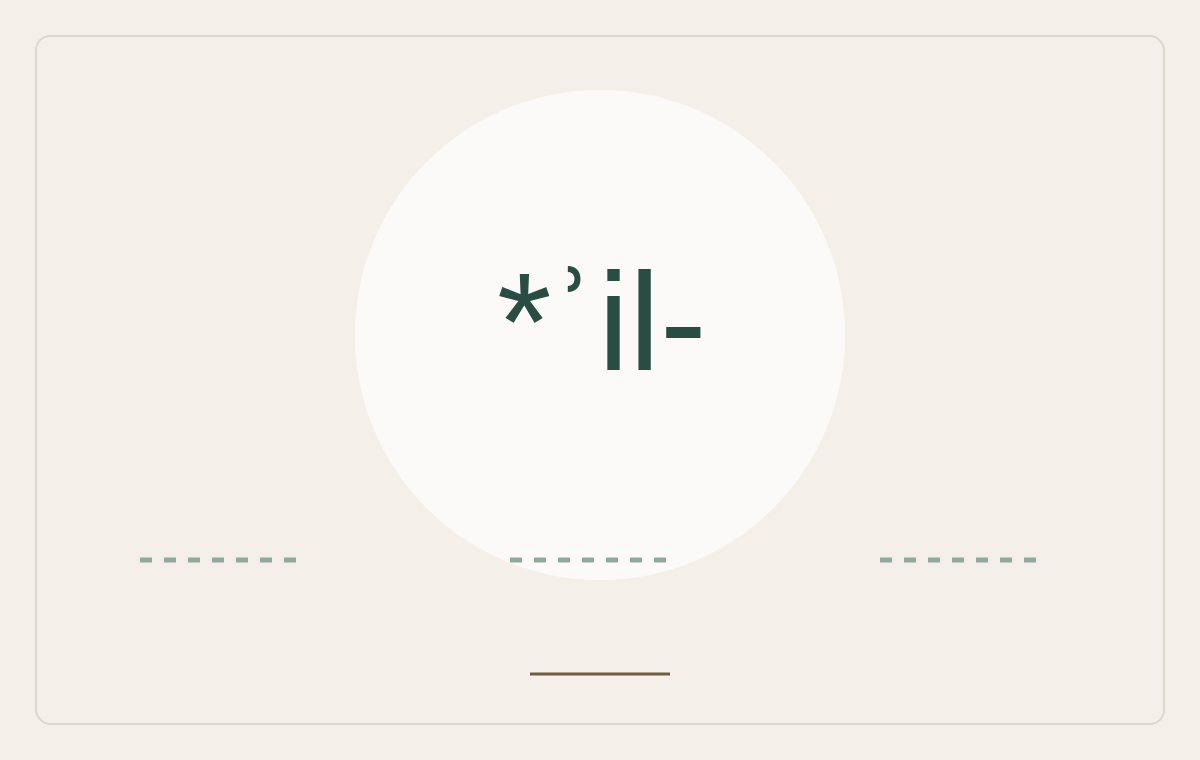
A reconstructed form is conventionally preceded by an asterisk, as in ʾil-. This means it is a comparative inference*, not an attested inscription written in precisely that form. Some reconstructed consonants or vowels are more secure than others, so researchers can disagree about details while accepting the family's overall relationship. [1][5]
What do the earliest records tell us?
AkkadianAkkadianAn ancient East Semitic language written in cuneiform from the third millennium BCE; its varieties include Babylonian and Assyrian, and it served in international diplomacy.Glossary · Click to read the explanation and other early East Semitic evidence survive from the third millennium BCE; Akkadian and Eblaite texts are attested from approximately the twenty-fourth century BCE. West Semitic is documented in later texts, alongside earlier isolated names and loanwords. Such evidence confirms an early split, but it does not record Proto-Semitic itself. The date writing appears is not the date a spoken language first arose. [3][4]
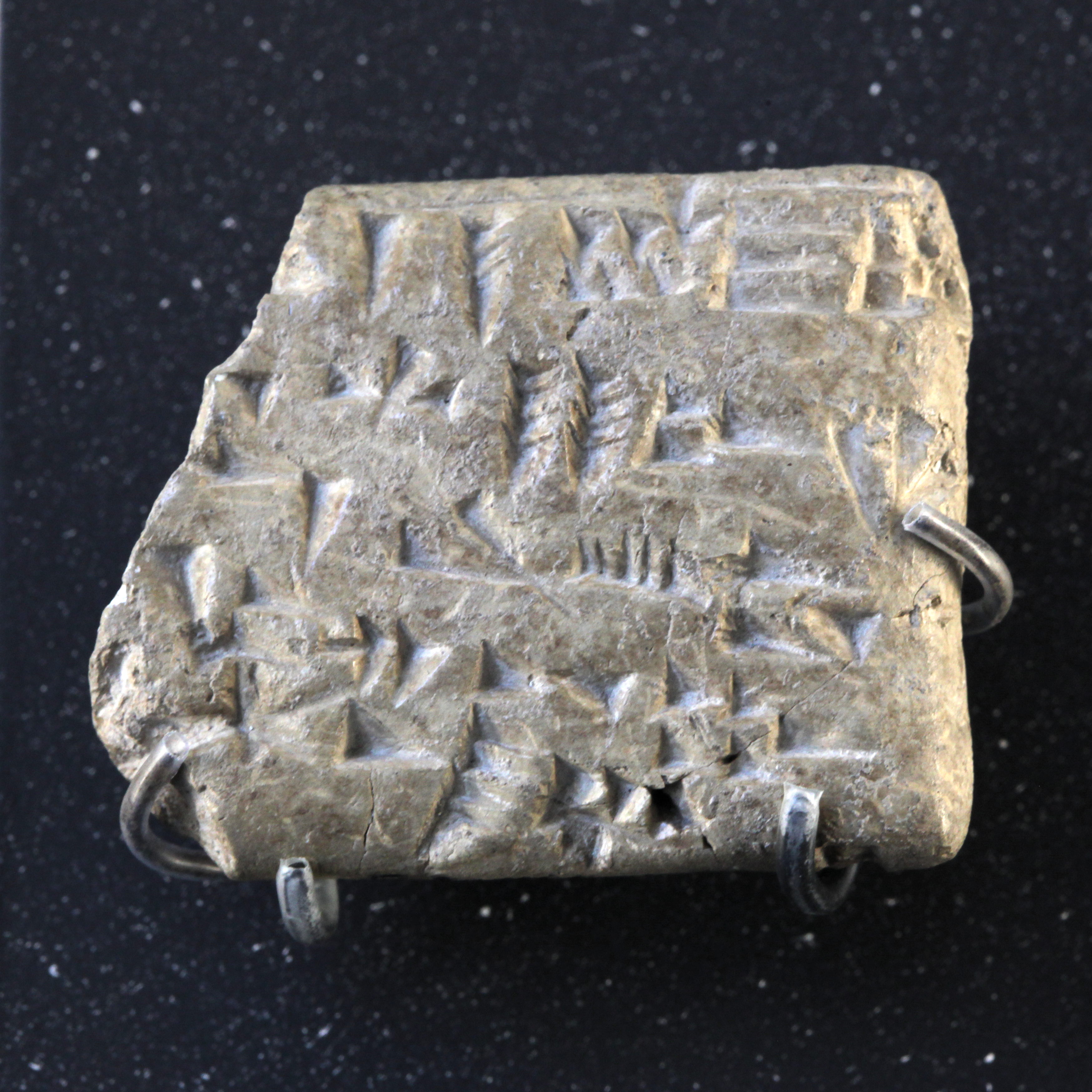
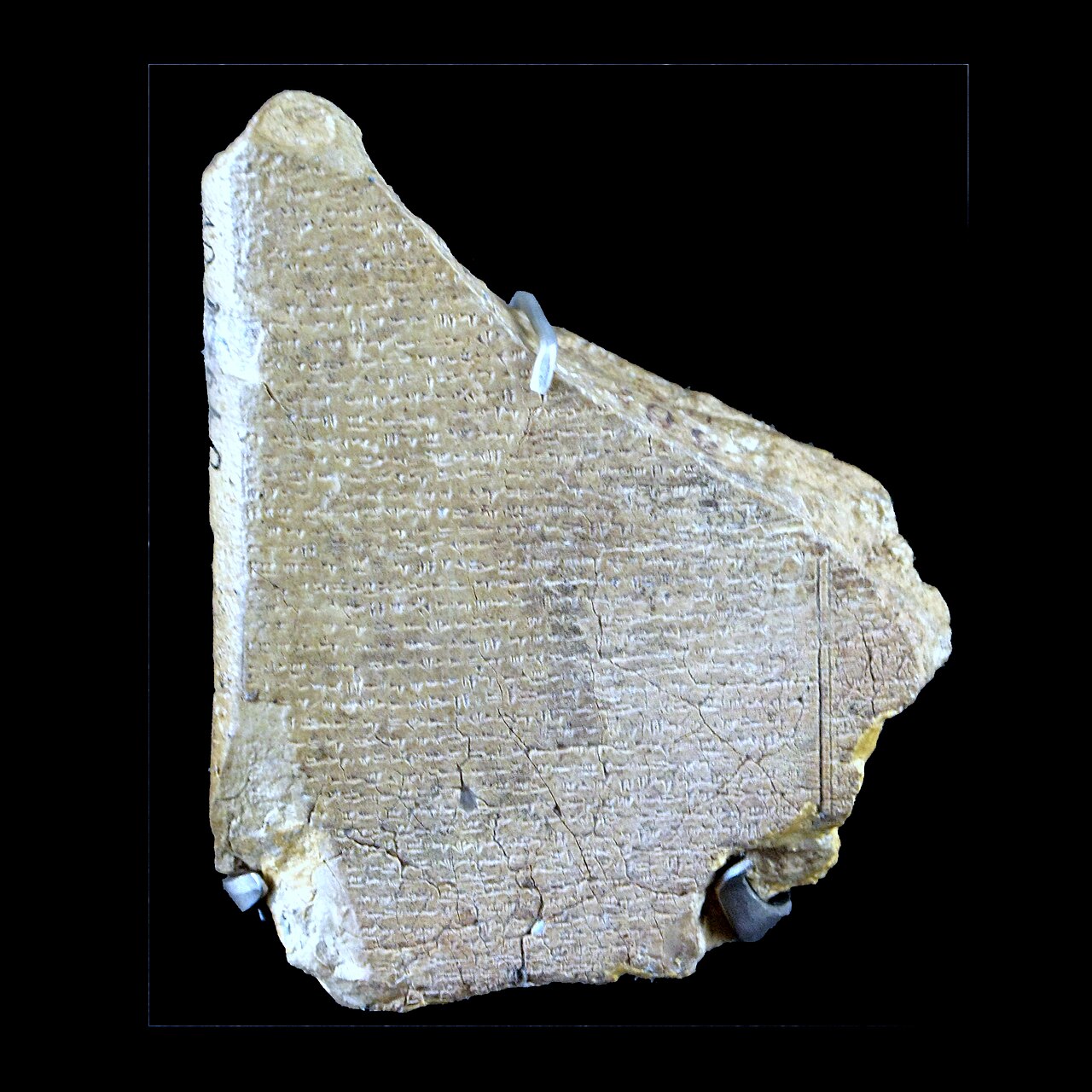
The cover photograph shows a Ugaritic tablet from the Baal CycleBaal CycleA group of Late Bronze Age Ugaritic religious texts recounting Baal’s conflicts, relationships with the gods and the building of his palace.Glossary · Click to read the explanation, held by the Louvre as AO 16640. It is genuine evidence for alphabetic cuneiformUgaritic alphabetAlphabetic cuneiform system of Late Bronze Age Ugarit, using thirty chiefly consonantal written signs, distinct from Akkadian syllabic cuneiform.Glossary · Click to read the explanation writing in Late Bronze AgeLate Bronze AgeAn archaeological period around 1600–1200 BCE in much of the Near East, with international diplomacy, exchange and religious diversity; its endpoints vary by region.Glossary · Click to read the explanation Ugaritic, not a Proto-Semitic document; nor does the caption claim that the visible face contains any particular word.
An example: from “El” to a reconstructed stem
Related words meaning “god” occur in multiple Semitic branches: Akkadian ilu, Ugaritic il, and Hebrew ʾēl. On the basis of correspondences across these and other languages, linguists reconstruct an older stem ʾil-. The ORACC database records Akkadian ilu, while Benjamin Suchard's 2025 study discusses the distinction between this stem and the longer reconstruction ʾilāh-, together with the morphological history proposed for the latter. [5][6]
Not every occurrence designates the same divine figure. ElSemitic ilAn ancient Semitic word meaning “god,” with cognates across several languages. It may function as a common noun or a proper name according to context; it is not always Ugaritic El.Glossary · Click to read the explanation may be an ordinary noun meaning “god” or, in a Ugaritic context, the proper nameProper nameA name that identifies a particular person, place, group, or entity in context, unlike a common noun denoting a class. Spelling alone may not settle the distinction.Glossary · Click to read the explanation of a particular deity. Arabic ilāhArabic ilahʾIlāh: Arabic common noun for a god or deity, with the broken plural āliha; distinct from the specific designation Allāh and understood from context.Glossary · Click to read the explanation is related to this lexical family, but shared etymology alone cannot yield a list of Proto-Semitic deities or establish that all its later speakers shared an unchanged religion. [5]
Limits of chronology, geography and religion
The distribution and divergence of attested branches indicate that the common stage predates the surviving Semitic texts; they do not establish a precise year or original city. Proposals about the first speakers' homeland and subsequent dispersals remain debated because linguistic, archaeological and historical evidence must be connected carefully, without treating a language as identical to one people or culture. [1][3][4]
The central point is that Proto-Semitic is a revisable scholarly reconstruction. Some ancestral features can be inferred with considerable confidence, whereas others remain tentative. Asterisked forms help us study the history of words; to investigate the actual use of a divine name, ritualRitualAn organised or distinguished practice meaningful to a community; it may leave traces, but its form alone does not reveal an associated doctrine.Glossary · Click to read the explanation or belief, we must still return to dated documents from identifiable societies.
References and notes (6)
- Roger Lass, Historical Linguistics and Language Change, chapter 5: The nature of reconstruction (1997), pp. 215–276 Available chapter summary on correspondences, reconstruction and its limits; the complete chapter was not consulted. Return to the text ↑
- University of Chicago, Comparative Semitics Overview of the field and principal languages; not a detailed classification or history of every language. Return to the text ↑
- John Huehnergard and Na’ama Pat-El (eds.), The Semitic Languages, 2nd ed., Routledge, 2019; publisher description and chapter list. Publisher overview and table of contents, especially Huehnergard, “Proto-Semitic,” pp. 49–79; full chapter not consulted. Return to the text ↑
- Øyvind Bjøru and Na’ama Pat-El, “How a subordinate marker changed the West-Semitic TAM,” Italian Journal of Linguistics 36.2 (2024), pp. 107–124. Read pp. 109–110 (§1.1) on East/West Semitic, the Akkadian and Eblaite attestations and an example of morphological innovation. Return to the text ↑
- Benjamin D. Suchard, “Semitic *ʾilāh- and Hebrew אלהים: From plural ‘gods’ to singular ‘God’,” Journal for the Study of the Old Testament 49.4 (2025), pp. 460–474. Article introduction and opening discussion of ʾil- / ʾilāh-, plus conclusion; the proposed plural-to-singular development is the author’s argument. Return to the text ↑
- ORACC, Akkadian dictionary entry ilu [GOD], CAMS/AKNO corpus-based glosses and normalized forms. Dictionary entry for “god” and normalized forms ilu/ili/ilāni; the entry alone does not prove a Proto-Semitic etymology or the date of a proper name. Return to the text ↑
Suggest a correction · Suggest a source for this record
Cite this record
IL Archive, «Proto-Semitic», https://ilarchive.com/en/entities/proto-semitic
Continue reading