Entity · Concept
Arabic ilah
A reference page linking a name, group, or concept to the materials that discuss it.
Arabic ʾilāh is a common noun for a deity, plural āliha. The entry traces its grammar, Qur’anic and inscriptional usage, and relation to Allāh and other Semitic terms without equating vocabulary with belief.
Estimated reading time: 6 min Published Last reviewed:
Share article

Video
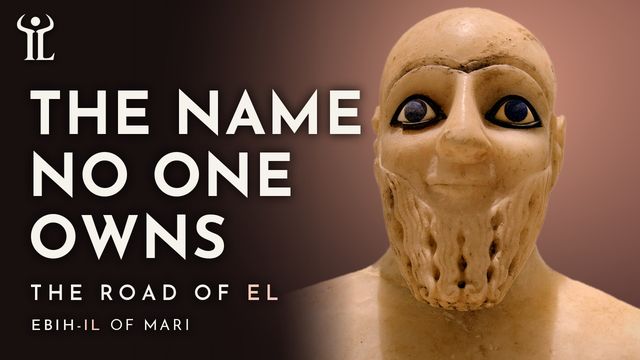
The Name No One Owns | The Road of El
More than four thousand years ago a palace burned at Ebla, and one small word waited in its clay: ʾl, El. We follow it through names and inscriptions, from Ebla, Mari and Ugarit to the kings of Samʾal, Karatepe and Saba and the stones of the basalt desert, then set the Torah's names and the Arabic question side by side. Some scenes are AI-generated illustrations.
The YouTube player loads only when you press play. Watch on YouTube
Text
Introduction
What does the Arabic word ʾilāh mean, and what changes when it occurs in the plural or in the profession lā ʾilāha illā llāh? This article approaches it first as a common nounCommon nounA noun referring to a member of a class, such as “city” or “god”, unlike a proper name designating a particular entity. Semitic il/El may fulfill either function in context.Glossary · Click to read the explanation, then examines its Qur'anic, lexicographical and early inscriptional uses, alongside comparable Semitic terms. The meaning of a word must be distinguished from a speaker's beliefs about the existence of, or rightful worship owed to, its referent. [1]
A common noun, not a proper name
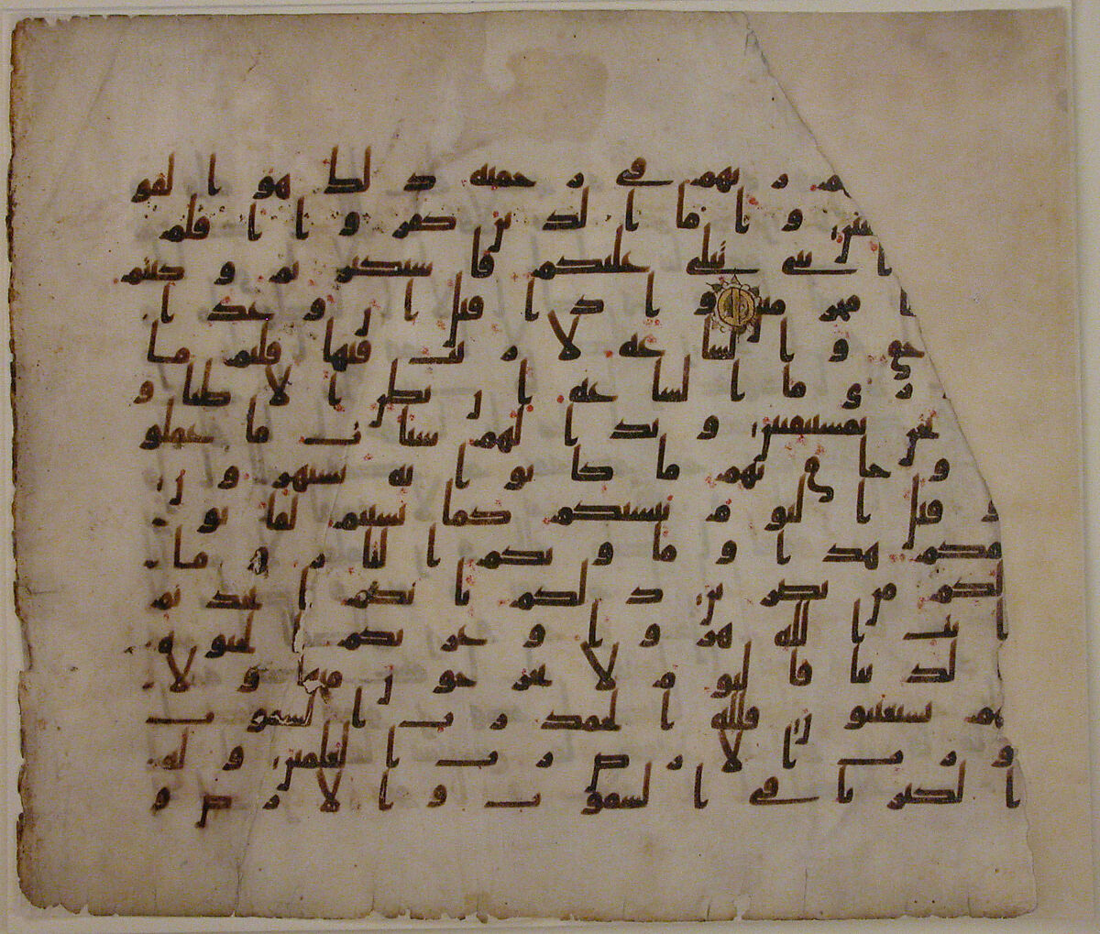
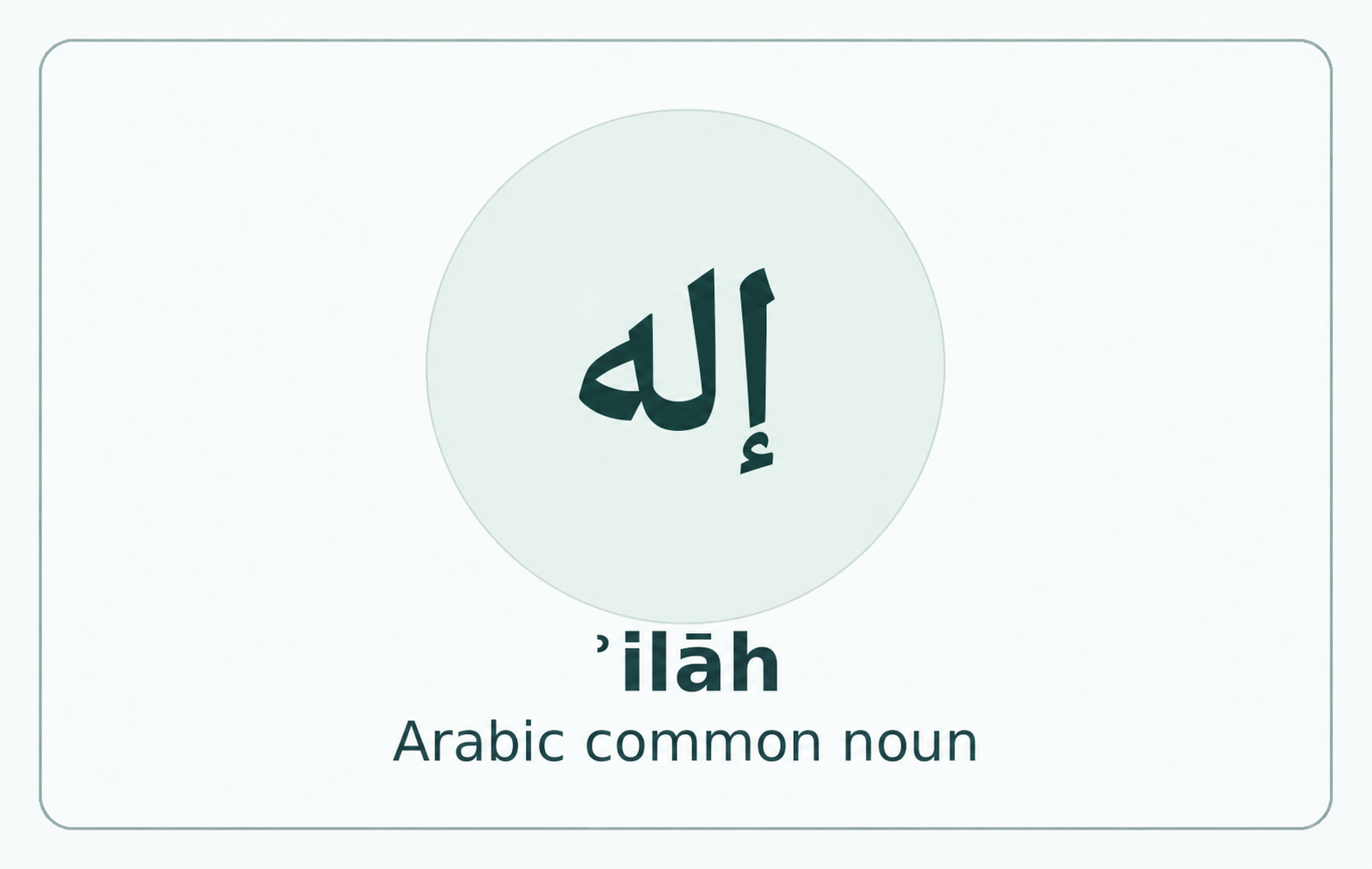
Arabic ʾilāh (إله) is a singular noun meaning “god,” “deity,” or an object of worship; its broken plural is āliha (آلهة). A speaker may use it for a particular god, divine beings generally, or what a community worships. This lexical description does not itself endorse any religious claim. Classical lexicographers also record an orthographic form with a fully written long vowel, ilāh, although إله is the familiar unvowelled spelling today. [2]
Definiteness, possession and number
The noun changes with its grammatical context: ʾilāhun (“a god”), al-ʾilāh (“the god”) and ʾilāhuhum (“their god”). A possessive suffix does not turn the common noun into an independent personal name. Its plural āliha is not the plural of the particular designation Allāh. These distinctions matter because the written form alone does not tell us whether an author speaks of a sole God or of one member of a larger pantheon. [3]
Singular and plural in the Qur'an
The Qur'anThe QuranThe central scripture of Islam, consisting of 114 Arabic surahs; its study distinguishes Quranic discourse from manuscript history, reading traditions, and historical inference.Glossary · Click to read the explanation uses both the singular for a single deity and the plural while arguing against plurality. At 2:163, “your god is one god” is followed by a statement denying any other deity; 21:22 uses āliha in a counterfactual argument that the heavens and earth would be ruined if other gods existed. This is an argument made by the text, not an inscriptional or historical finding about how many gods existed or which communities worshipped them. [4]
The logic of “no god but God”
The expression lā ʾilāha illā llāh is a religious profession, not merely an equation between synonymous words. Here ʾilāh is the generic noun within a negation and exception, while AllāhAllahAllāh: the Arabic designation of the one God in Islam, also used in other Arabic-speaking traditions. Its pre-Islamic attestations vary in context and historical meaning.Glossary · Click to read the explanation is the specific designation for God in Islamic usage. The formula rejects divine status for any other object of worship and affirms the exclusive worship of God. Further doctrinal implications were elaborated by different exegetical and theological traditions; they cannot all be derived from the word's morphology alone. [5]
Is Allāh derived from al-ʾilāh?
One account presented by classical grammarians derives Allāh from al-ʾilāh, with phonetic reduction and assimilation through frequent use. Other accounts regard the name as not derived in that manner. Edward William Lane records competing explanations rather than establishing one conclusive historical reconstruction. A clear semantic relationship therefore does not settle every question about the name's earlier history; actual dated witnesses must also be considered. [6]
Al-ʾilāh and Allāh before Islam
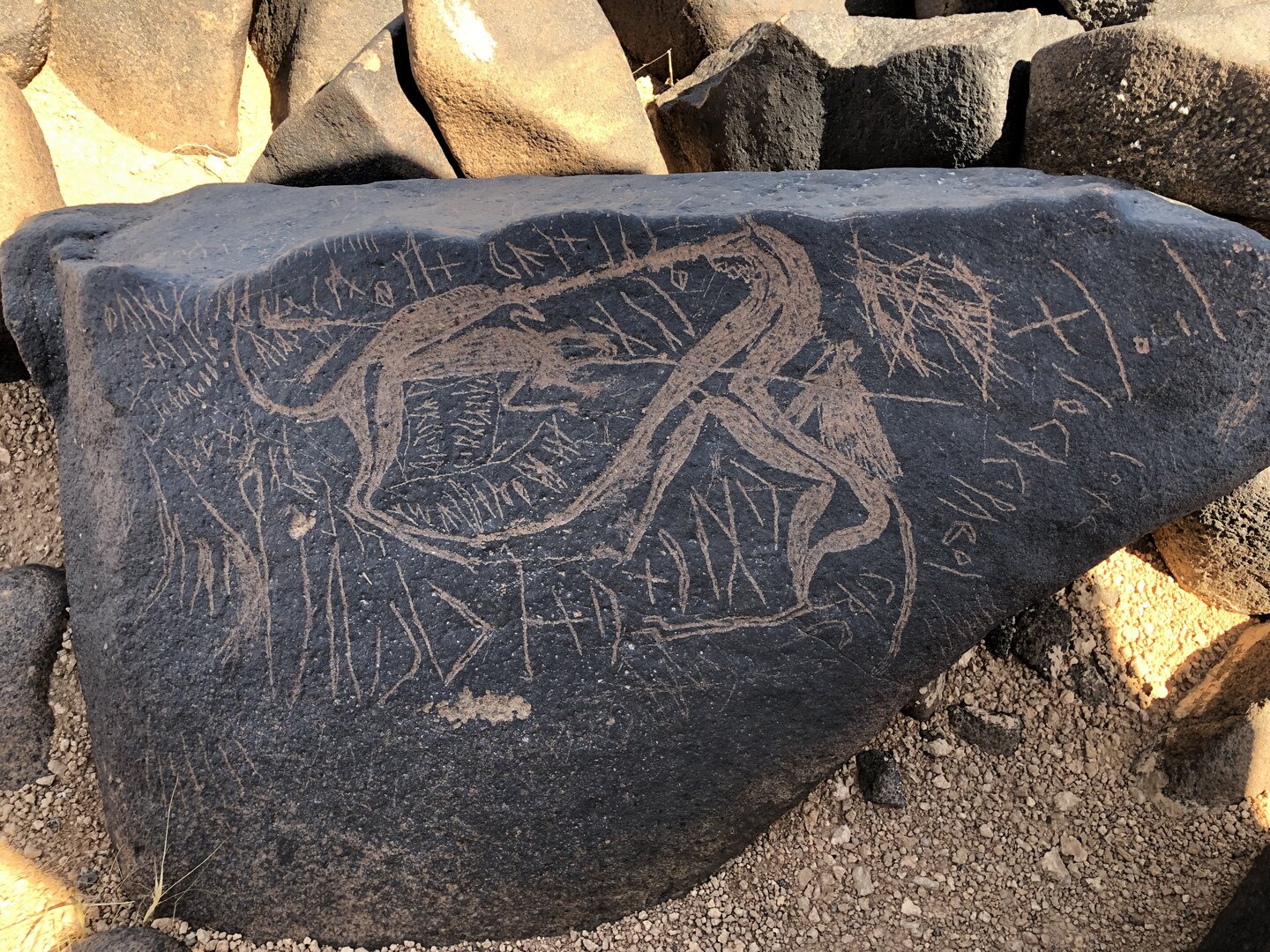
Fifth- and sixth-century Arabic inscriptions display forms of monotheistic or monotheism-oriented piety before Islam. Ahmad Al-Jallad and Hythem Sidky distinguish early Christian Arabic inscriptions that invoke al-ʾilāh from other Arabic inscriptions invoking Allāh without overt Christian markers. Their observation concerns the attested epigraphic sample and should not be turned into a universal rule about every Arabic-speaking Christian or other Arabian community. [7]
What an inscription can and cannot prove
Earlier Ancient North Arabian inscriptions name several deities, including AllātAllatAn ancient Arabian goddess attested by Safaitic and Nabataean inscriptions, monuments in Palmyra, and the Quran; her roles and interpretations vary with period and context.Glossary · Click to read the explanation, whereas numerous later Paleo-Arabic invocations focus on Allāh. But the absence of a divine name from the surviving invocations does not demonstrate its disappearance from all religious practice. Equally, invoking one god in an inscription does not, by itself, prove a fully articulated theology of exclusive monotheismMonotheismBelief that only one God possesses divinity in its fullest sense. Historically distinct from exclusively worshipping one deity without denying others; its theological forms vary.Glossary · Click to read the explanation. The history of inscriptional language must be separated from claims about everyone's beliefs. [8]
Related words in Semitic languages
Arabic ʾilāh belongs to a wider cluster of Semitic terms associated with divinity, including ʾil/ElSemitic ilAn ancient Semitic word meaning “god,” with cognates across several languages. It may function as a common noun or a proper name according to context; it is not always Ugaritic El.Glossary · Click to read the explanation, HebrewHebrewA Northwest Semitic language of the Canaanite group, encompassing Iron Age epigraphy, Biblical, Rabbinic, medieval and Modern Hebrew; its scripts and pronunciations changed over time.Glossary · Click to read the explanation ʾĔlōahEloahEloah (אֱלוֹהַּ) is a singular Hebrew noun meaning “a god” or “God,” common in Job but also used for other gods. It is not the proper name of a separate deity.Glossary · Click to read the explanation and SyriacSyriacAn Aramaic literary language rooted in Edessa, first attested in non-Christian inscriptions and later prominent in Christian writing, scholarship, translation and liturgy.Glossary · Click to read the explanation ʾAlāhāAlahaAlāhā (ܐܠܗܐ): a Syriac masculine singular common noun for “a god” or “God,” with Eastern and Western pronunciations; linguistic kinship does not itself establish shared doctrines.Glossary · Click to read the explanation. AramaicAramaicNorthwest Semitic language varieties documented since the early first millennium BCE, including Old and Imperial Aramaic, Syriac, Jewish dialects, and living Neo-Aramaic forms.Glossary · Click to read the explanation sources use related forms for the God of Israel and, in other contexts, for other gods. This is a linguistic comparison, not a genealogy of a single divine personality or proof that one community inherited all its beliefs from another. Nor should the Arabic form be simply identified with the Hebrew plural ʾĔlōhīmElohimA Hebrew word with plural morphology, used for “gods” or for a singular deity according to context.Glossary · Click to read the explanation, which has its own patterns of usage. [9]
A later material witness: an Umayyad dinar
A gold dinar minted in Syria in 79 AH / 698–699 CE, held at the Metropolitan Museum of Art as 99.35.2386, provides material evidence for the appearance of the profession of faith in official writing. It cannot establish the origin of the noun ʾilāh, nor the religion of the entire pre-Islamic peninsula. The coin has not been included among the media files because an actual reusable image file could not be retrieved during preparation. [10]
A word used across religious communities
Arabic speakers use ʾilāh in ordinary language, comparative scholarship and religious discourse. Arabic-speaking adherents of several religions use Allāh when referring to God, including in Christian Arabic Bible translations. Shared vocabulary does not imply that Jewish, Christian and Muslim theological accounts agree in every detail. The presence of the word alone cannot identify the religious affiliation of a text's writer without further evidence. [11]
Names of other deities and the author's stance
Qur'an 53:19–20 names Allāt, al-ʿUzzā and Manāt as part of a religious argument. The fact that the text names them is distinct from reconstructing the practices of their worshippers from contemporary material sources. A fair historical reading compares inscriptions, archaeology and later testimony without treating them as interchangeable. Likewise, plural āliha in a polemic does not require the writer to accept the gods in question as real. [12]
Divine elements in personal names
Words referring to a deity may enter theophoric namesTheophoric nameA personal name including a deity’s name or another divine element, often as part of a short sentence or invocation, interpreted in its original language and context.Glossary · Click to read the explanation, such as ʿAbd Allāh or ʿAbd al-ʾIlāh. Yet a personal name cannot disclose its bearer's complete creed. Epigraphic studies emphasize that the survival of names containing references to older cults need not demonstrate continued participation in those cults when the names were recorded. Each name must be placed in its own linguistic, regional and chronological setting. [13]
A method for assessing the evidence
Analysis begins by identifying the witness, its language and its date. Is the evidence a Qur'anic verse, a later lexicon, an independently dated inscription, or a coin? We then distinguish singular from plural, common noun from personal designation, and the primary text from a scholar's interpretation. A shared linguistic root cannot establish the continuity of one deity across all periods; nor can a small, growing inscriptional sample describe every practice across Arabia. These qualifications are part of a responsible account, not uncertainties to conceal. [14]
References and notes (14)
- Celene Ibrahim, Islam and Monotheism (Cambridge, 2022). Publisher description and available page-2 excerpt of “God in Islamic Theology” consulted; the full book was not read. Return to the text ↑
- Edward William Lane, An Arabic–English Lexicon, entry “ʾilāh”. The online entry was read for the common noun, the alternative spelling and the plural. Return to the text ↑
- Quranic Arabic Corpus (University of Leeds), syntactic analysis of Q 2:163. Word and morphological analysis, especially the singular and possessive forms in Q 2:163. Return to the text ↑
- Quranic Arabic Corpus, word-by-word analysis of Q 21:22. The word-by-word page was read; āliha is identified as a plural at 21:22:4. Return to the text ↑
- Quranic Arabic Corpus, Qur’an Dictionary, root ʾ-l-h. The root entry was read, distinguishing noun ʾilāh, proper name Allāh and the vocative Allāhumma. Return to the text ↑
- Edward William Lane, An Arabic–English Lexicon, entry “Allāh”. The opening of the entry and its competing derivational explanations were consulted. Return to the text ↑
- Ahmad Al-Jallad and Hythem Sidky, “Late Antique Allāh: Ancestral Arabian Religion and the Monotheistic Zeitgeist” (2026). Section 2 read for the Christian al-ʾilāh inscriptions and other Allāh invocations. Return to the text ↑
- Al-Jallad and Sidky, “Late Antique Allāh” (2026). Section 2 read on earlier North Arabian divine names, sixth-century invocations and sample limitations. Return to the text ↑
- Comprehensive Aramaic Lexicon, entry ˀlh / ˀlhˀ (accessed 18 October 2026). Entry read for the God of Israel and other divine referents, including Elephantine and Sefire examples. Return to the text ↑
- The Metropolitan Museum of Art, gold dinar 99.35.2386, dated 79 AH. Object record read for dating, mint region, inscription and accession number; image file not obtained. Return to the text ↑
- “Allah,” Encyclopedia.com, encyclopedic discussion of religious language. Opening discussion of Arabic-speaking Jewish, Christian and Muslim usage read; not used to date inscriptions. Return to the text ↑
- Qur’an 53:19–20, Arabic text via Quran.com. Both verses were read for the named figures Allāt, al-ʿUzzā and Manāt, not as standalone archaeological evidence. Return to the text ↑
- Al-Jallad and Sidky, “Late Antique Allāh” (2026), personal names in inscriptions. Section 2 examples read, including JPICM 2, for old theophoric elements alongside changed invocations. Return to the text ↑
- Al-Jallad and Sidky, “Late Antique Allāh” (2026), sections 1–4. Introduction and section 2 read, with selected passages from sections 3 and 4 on methodological uncertainty. Return to the text ↑
Suggest a correction · Suggest a source for this record
Cite this record
IL Archive, «Arabic ilah», https://ilarchive.com/en/entities/ilah
Continue reading