Entity
Jonah / Yunus
A reference page linking a name, group, or concept to the materials that discuss it.
- Names
- Jonah son of Amittai · Yunus · יונה בן אמתי
Jonah son of Amittai in Kings, the sea and Nineveh narrative, and Yunus in the Qur’an: a source-based comparison distinguishing chronology, textual variants and Christian reception.
Estimated reading time: 8 min Published Last reviewed:
Share article
Text
Introduction
Jonah appears in a short historical notice in Second Kings, becomes the central character of the Book of JonahBook of JonahA four-chapter Hebrew book about a fleeing prophet, rescue, Nineveh’s mission, and the final question of mercy.Glossary · Click to read the explanation, and is named Yunus in the Qur’anThe QuranThe central scripture of Islam, consisting of 114 Arabic surahs; its study distinguishes Quranic discourse from manuscript history, reading traditions, and historical inference.Glossary · Click to read the explanation. These sources differ in purpose and detail. This article therefore separates identification of the figure from the narrative's construction, possible date of composition, and subsequent readings; resemblances among accounts do not automatically establish that every detail was shared. [5][14]
That distinction allows the voyage, fish, mission to NinevehNineveh and KuyunjikNineveh is an ancient Assyrian city near Mosul in northern Iraq; Kuyunjik is one of its archaeological moundsGlossary · Click to read the explanation and debate over mercy to be read as elements of particular narratives rather than independent records of every event. We also distinguish what the Qur’anic verses say from later interpretation, translation and art, and assess similarities and differences at the level the evidence permits.
Name, historical notice and chronology
Second Kings 14:25 names ‘Jonah son of Amittai’ from Gath-hepher and associates a prophetic word attributed to him with the restoration of Israel's borders under Jeroboam IIJeroboam II, king of IsraelAn eighth-century BCE northern king; Second Kings 14:25 links restored borders to the word of Jonah son of Amittai.Glossary · Click to read the explanation, ruler in the eighth century BCE. The Book of Jonah opens with the same name and patronymic. Kings, however, recounts neither the sea voyage, the fish, nor a mission to NinevehNineveh and KuyunjikNineveh is an ancient Assyrian city near Mosul in northern Iraq; Kuyunjik is one of its archaeological moundsGlossary · Click to read the explanation. The shared identification is an important textual link, not independent verification of all episodes in the book. [5][1]
The period in which a narrative places its figure is not the date of the extant book's composition. A post-exilic composition is widely favoured, with ongoing disagreements about linguistic features, literary genre and redaction; the reference to Jeroboam II cannot by itself date the entire book to the eighth century. In a 2026 linguistic study, Aaron D. Hornkohl assessed 59 HebrewHebrewA Northwest Semitic language of the Canaanite group, encompassing Iron Age epigraphy, Biblical, Rabbinic, medieval and Modern Hebrew; its scripts and pronunciations changed over time.Glossary · Click to read the explanation features and argued that their cumulative weight supports a relatively late, post-exilic composition, without establishing an exact date or scholarly unanimity. This is a reasoned historical-linguistic assessment, not a dated inscription recording composition. [6]
Flight by sea and the fish narrative
In chapter 1, Jonah is commissioned to go to Nineveh but boards a ship at Joppa bound for TarshishTarshish in Jonah’s voyageA maritime destination in Jonah 1:3; locating it geographically differs from identifying its clear role as the destination of flight.Glossary · Click to read the explanation instead. A storm arises; the sailors throw cargo overboard, and their casting of lots singles Jonah out within the story. They do not immediately throw him into the sea: first they row hard to reach land, then, unable to do so, cast him overboard, whereupon the sea grows calm. The sequence matters for the text's presentation of the prophet's responsibility and the sailors' reluctance; it is more than the shorthand ‘lot, then fish’. [1]
The Hebrew narrative assigns a ‘great fish’ to swallow Jonah, specifies three days and three nights inside it, includes a prayer, and ends when the fish expels him onto dry land. It supplies no zoological description that would identify a modern marine species; calling the creature a ‘whale’ in some traditions does not settle its identity. Verse numbering also varies: the three days and nights appear at Jonah 2:1 in Hebrew numbering, often corresponding to 1:17 in Christian English editions. This duration must not simply be transferred into the Qur’anic account. [2][15]
Nineveh, repentance and an open-ended conclusion
In chapter 3 Jonah finally proclaims an approaching overturning of Nineveh. The city is called a three-day journey across, a narrative description rather than an independently measured archaeological dimension. Its inhabitants fast; an unnamed king issues a decree encompassing both people and animals; and the narrator describes God as relenting from the threatened destruction. Archaeological evidence establishes Nineveh as a major Assyrian city and, in particular periods, an imperial capital. It does not by itself establish that the king's decree in the story was historically issued. [3][16]
In chapter 4 Jonah becomes angry at mercy being extended to the city and says he already knew the deity's compassionate character when he fled. A qiqayon plant grows to shade him and is then destroyed by a worm; his concern for that plant is contrasted with the human and animal inhabitants of the city. The book closes with a divine question about compassion for Nineveh, without narrating Jonah's reply. This open ending is a feature of the book's argument, not a textual gap that later retellings can fill with certainty. [4]
A textual variant: forty days or three
In the Masoretic Hebrew form of Jonah 3:4, the warning allows forty days before Nineveh's overturning. The Greek SeptuagintSeptuagintA name for the varied ancient Greek translations and writings associated with Jewish scripture; beginning with the Torah, the texts differ across books and manuscripts.Glossary · Click to read the explanation tradition at the same verse instead reads three days. This is a genuine variant in the transmission or rendering of the warning, and a responsible citation identifies which textual tradition is being used. The Greek ‘three days’ here refer not to the time Jonah spent inside the fish: they occur in a different verse and narrative setting. [3][7]
The example shows why verbal or numerical agreement should not be assumed even between textual traditions of the same biblical story. This review compared accessible digital Hebrew and Greek texts at the specified verse; it did not collate all Hebrew and Greek manuscripts or consult a complete critical apparatus establishing the original reading. The existence of the two published readings is clear, but an account of how the difference arose requires further specialist work. [3][7]
Yunus in the Qur’an: related but distinct passages
Al-Saffat 37:139–148 names Yunus among the messengers and recounts the laden ship, drawing lots, being swallowed by the hut, his glorification of God, being cast onto open ground while ill, the growth of a gourd-like plant, and his mission to a hundred thousand people or more who believe. The verses themselves do not name Nineveh and do not specify three days and nights inside the creature. Place names and narrative explanations sometimes inserted in translations or commentaries must not be mistaken for the Qur’an's own wording. [14]
Other passages add different emphases. Yunus 10:98 speaks of ‘the people of Yunus’ whose belief benefited them when punishment threatened; al-Anbiya 21:87–88 recounts the supplication and deliverance of ‘Dhu al-Nun’; and al-Qalam 68:48–50 invokes the ‘companion of the fish’ in an exhortation to patience. These epithets are associated with Yunus in interpretation, but the passages are neither verbatim repetitions of the Book of Jonah nor a single detailed chronology of every episode. [8][9][10]
What the two narrative traditions share—and do not
Both traditions contain a sea voyage, the drawing of lots, engulfment by a sea creature, deliverance and a prophetic mission, inviting comparison of narrative motifs and their reception. Their differences are just as informative. The Book of Jonah explicitly names Nineveh, presents the warning and ends with a question about mercy; al-Saffat specifies the prophet's illness, the gourd-like plant and the number addressed, without naming the city. Comparison should therefore be passage-specific, rather than constructing a third composite story and treating it as the wording of both texts. [1][3][4][14]
The common motifs do not, by themselves, establish one simple path of direct borrowing for every detail. Equally, the absence of Nineveh from a particular Qur’anic passage does not imply that later exegetes never named it or that geographical identification is ruled out. Three questions must be kept separate: what each text states, how readers have interpreted it, and what independent evidence can date the transmission of a narrative. Distinguishing text from commentary limits the evidentiary claim; it does not dismiss the importance of later tradition. [14][8]
Early Christian reception and different emphases
In the Gospel of MatthewGospel of MatthewOne of the New Testament’s four Gospels, from the late first century CE, relating inherited law and Jesus’ sayings.Glossary · Click to read the explanation 12:38–42, Jonah provides a ‘sign’: three days and nights inside the sea creature are compared with the destiny of the Son of Man, and the Ninevites' response also appears. The Gospel of LukeGospel of LukeNew Testament gospel where Satan asks to test the disciples in 22:31–32.Glossary · Click to read the explanation 11:29–32 likewise invokes the sign of Jonah but stresses his proclamation and Nineveh's repentance, without the same explicit three-day comparison in that passage. Even within early Christian reception, different textual settings emphasize different aspects of the story. [11][12]
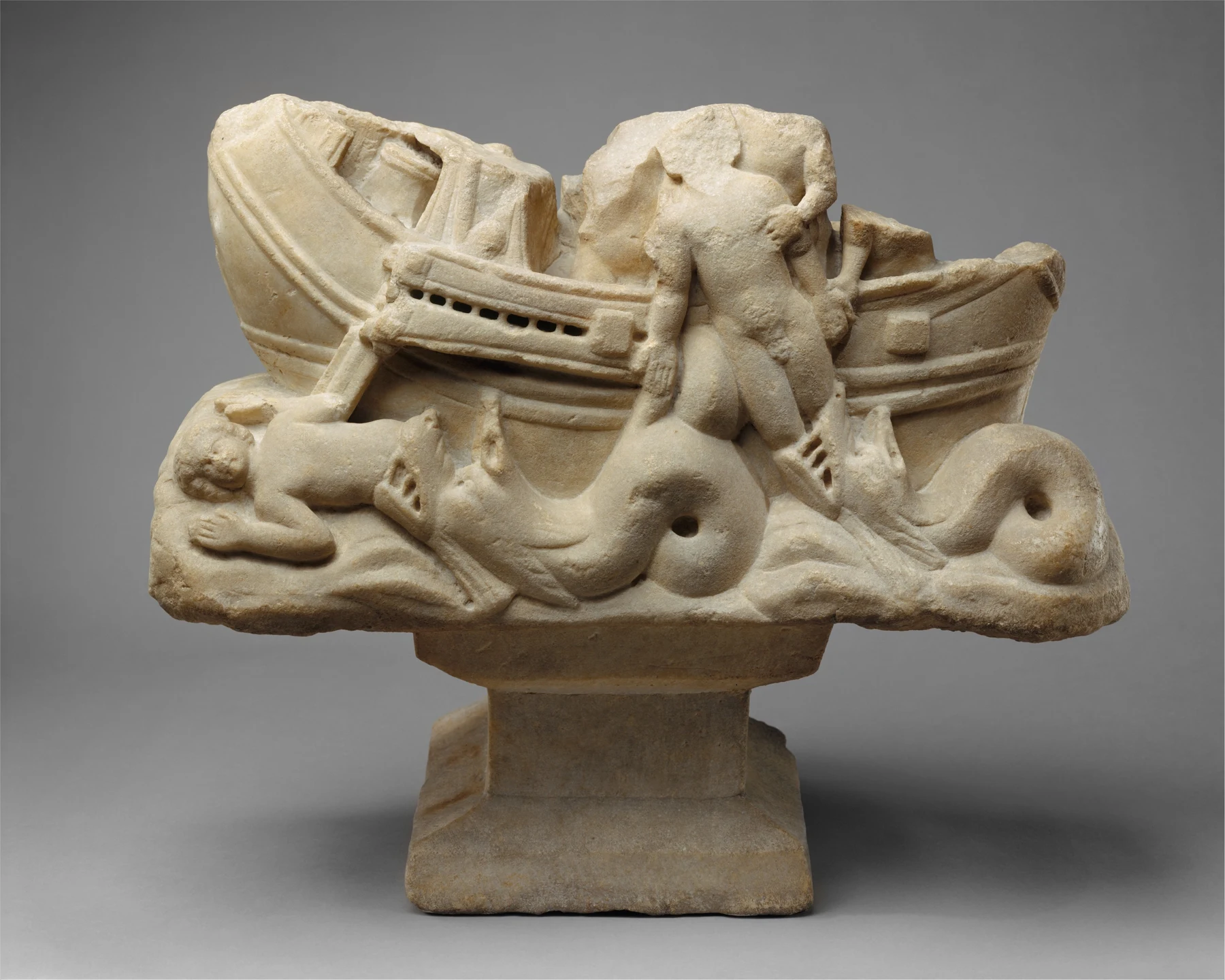
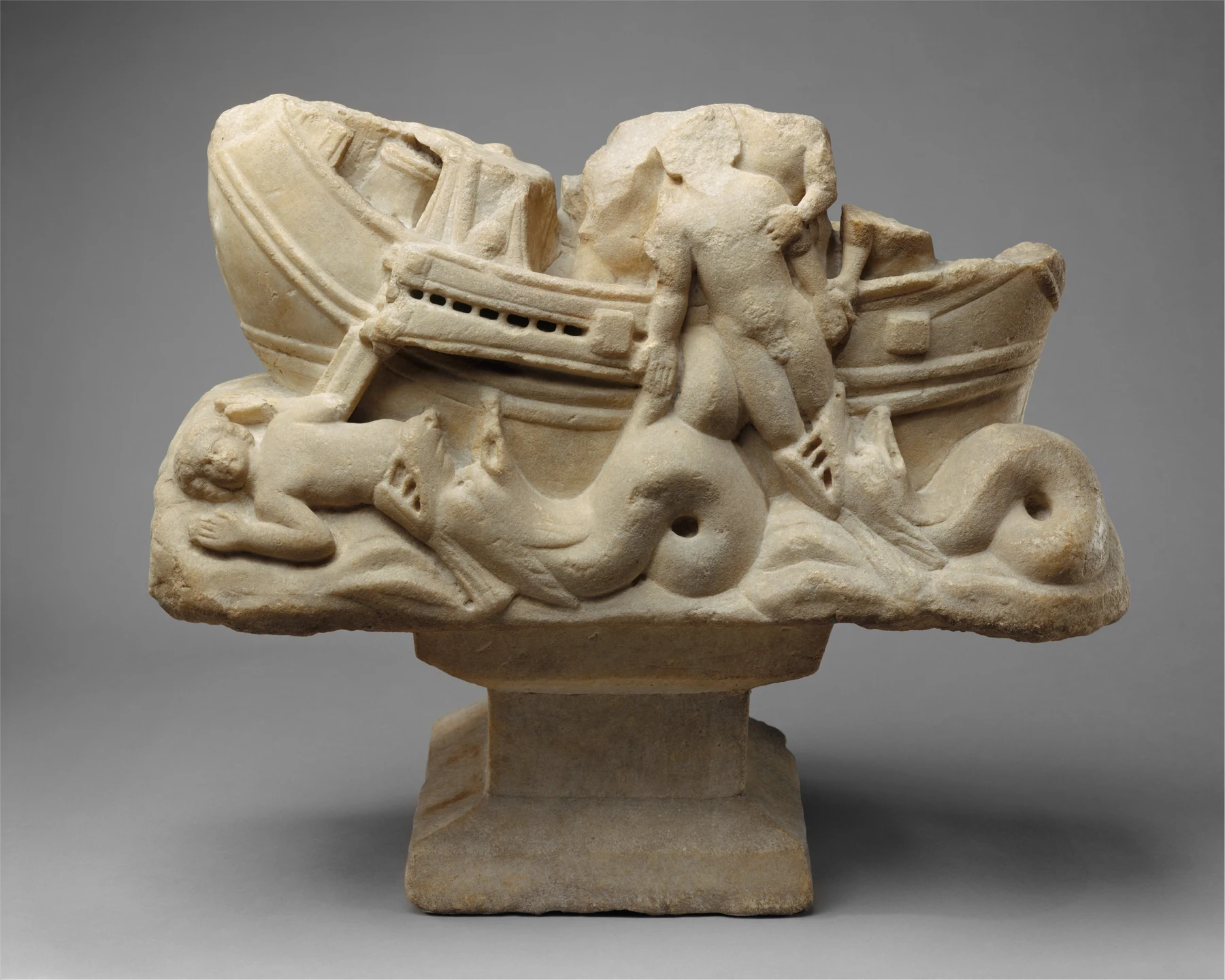
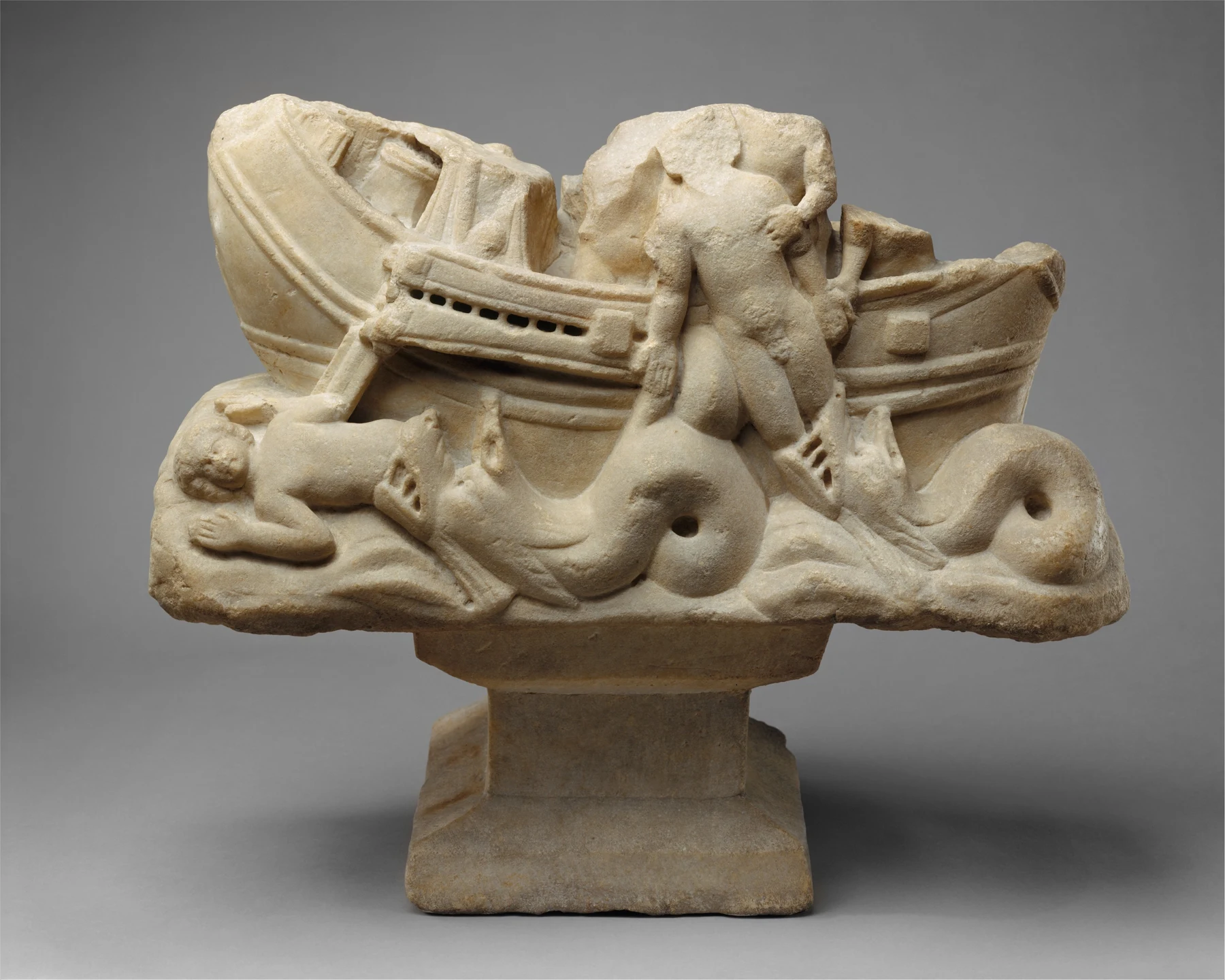
An important visual witness to this reception is a Roman marble table base in the Metropolitan Museum of Art, New YorkNew York CityNew York City is in the United States and houses the Metropolitan Museum of ArtGlossary · Click to read the explanation, accession 77.7, dated to the early fourth century CE. The museum identifies the subject as Jonah swallowed and cast up by a marine creature; its design belongs to the history of early Christian representation. The public-domain museum photograph retained as this article's cover is not a likeness from Jonah's lifetime and cannot identify the species intended by the Hebrew text. It is a dated artifact from the story's reception. [13]
Degrees of confidence and limits of the evidence
The wording of specific passages, the museum object's identity and the Hebrew–Greek difference in the Nineveh warning can be verified directly. Precise authorship dating, historical verification of the unnamed Ninevite king's decree, and identification of a zoological species for the miracle cannot be settled by those sources or by the image alone. Jonah's mention in Kings does not independently document every event in his book, while a story's ethical and literary force does not in itself decide whether the named figure was historical. [5][6][7][13]
A careful account of Jonah/Yunus therefore keeps three levels distinct: a prophetic notice situated under Jeroboam II; Hebrew and Qur’anic narratives with both overlaps and divergences; and later evidence of interpretation and artistic representation. This is not a ranking of religious traditions. It prevents assigning a detail to a source that does not contain it—or turning a fourth-century artwork into archaeological proof of an event situated centuries earlier. [5][14][13]
References and notes (16)
- Book of Jonah, chapter 1: mission, boat, lots and the sailors’ attempt to row ashore. Hebrew displayed with facing English; no original-manuscript inspection. Jonah 1:1–16, Hebrew numbering Return to the text ↑
- Jonah 2, especially 2:1–11 in Hebrew numbering: the fish, prayer and release. Facing English and displayed Hebrew; no manuscript collation. Jonah 2:1–11, Hebrew numbering Return to the text ↑
- Book of Jonah, chapter 3: Nineveh, the Masoretic “forty days” at 3:4 and communal fasting. Chapter read with displayed Hebrew and English. Jonah 3:1–10, esp. 3:4, Hebrew/Masoretic Return to the text ↑
- Jonah 4 in full: Jonah’s anger, the qiqayon plant and the closing question about mercy. Digital chapter with English translation consulted. Jonah 4:1–11, Hebrew numbering Return to the text ↑
- Second Kings 14:23–29, especially v. 25: Jonah son of Amittai, Gath-hepher and Jeroboam II, but no fish episode. English read against the displayed Hebrew. 2 Kings 14:23–29, esp. 14:25 Return to the text ↑
- Aaron D. Hornkohl, “Hebrew Diachrony and Jonah: The Periodization of a Linguistically Anomalous Work,” Religions 17(7), 754 (2026). Introduction, methods, results, discussion and conclusion read; not all 59 individual feature analyses. Hornkohl 2026, §§1–4, 6; §5 not exhaustively read Return to the text ↑
- Digital Septuagint text, Jonah 3:4: the “three days” variant contrasted with the Masoretic “forty days”; single verse, not a complete manuscript apparatus. Septuagint Greek Jonah 3:4; single verse Return to the text ↑
- Qur’an, Yunus 10:98: the “people of Yunus” and their belief. The specific Arabic verse and an accompanying translation, not the whole surah. Qur’an 10:98 only Return to the text ↑
- Qur’an, al-Anbiya 21:87–88: Dhu al-Nun, prayer in the darkness and deliverance; the two Arabic verses and English translation, not the complete surah. Qur’an 21:87–88 only Return to the text ↑
- Qur’an, al-Qalam 68:48–50: “companion of the fish” in a call to patience. Specified verses, not the full surah. Qur’an 68:48–50 only Return to the text ↑
- Gospel of Matthew 12:38–42, USCCB translation: Jonah’s sign and three days and nights. Passage and adjacent editorial notes consulted, not the entire gospel. Matthew 12:38–42 Return to the text ↑
- Gospel of Luke 11:29–32, USCCB: the sign of Jonah and Nineveh; no explicit three-day comparison in this passage. Luke 11:29–32 Return to the text ↑
- Metropolitan Museum of Art, “Table Base with Jonah Swallowed and Cast Up by the Big Fish,” Roman marble, accession 77.7, early fourth century CE; object identity and public-domain image status verified against the museum record. The Met, collection 468759, accession 77.7; object page Return to the text ↑
- Qur’an, al-Saffat 37:139–148: Yunus, ship, lots, creature, gourd and mission. Selected verses read in Arabic and English only; Nineveh and a fixed duration inside the creature do not occur in the Arabic wording. Qur’an 37:139–148 only, Arabic and facing translation Return to the text ↑
- Hebrew Jonah 2:1 corresponds to Jonah 1:17 in common Christian English numbering; division cross-checked, not every Bible edition. Jonah 2:1 Hebrew = Jonah 1:17 common English Return to the text ↑
- British Museum catalogue of a relief from Nineveh under Sennacherib, evidence of the Assyrian city, not of the book’s fasting decree. Museum catalogue entry only; no excavation report examined. British Museum object W_1851-0902-30, catalogue entry Return to the text ↑
Suggest a correction · Suggest a source for this record
Cite this record
IL Archive, «Jonah / Yunus», https://ilarchive.com/en/entities/jonah-prophet
Continue reading