Entity · Concept
Logogram
A reference page linking a name, group, or concept to the materials that discuss it.
A sign representing a word or meaningful unit in context; the same form may also serve phonetically or as a usually silent determinative.
Estimated reading time: 5 min Published Last reviewed:
Share article
Text
Introduction
What does a “logogram” represent in a cuneiformCuneiformWriting with wedge-shaped signs, developed from Mesopotamian recording traditions and used for several languages from the third millennium BCE.Glossary · Click to read the explanation text: a picture, a word, or a sound? This entry defines the logographic function and tests it against published Mesopotamian examples. It separates the written sign, the spoken word, and an editor’s reading, without turning the history of writing into an inevitable sequence of universal stages.
A function, not a shape
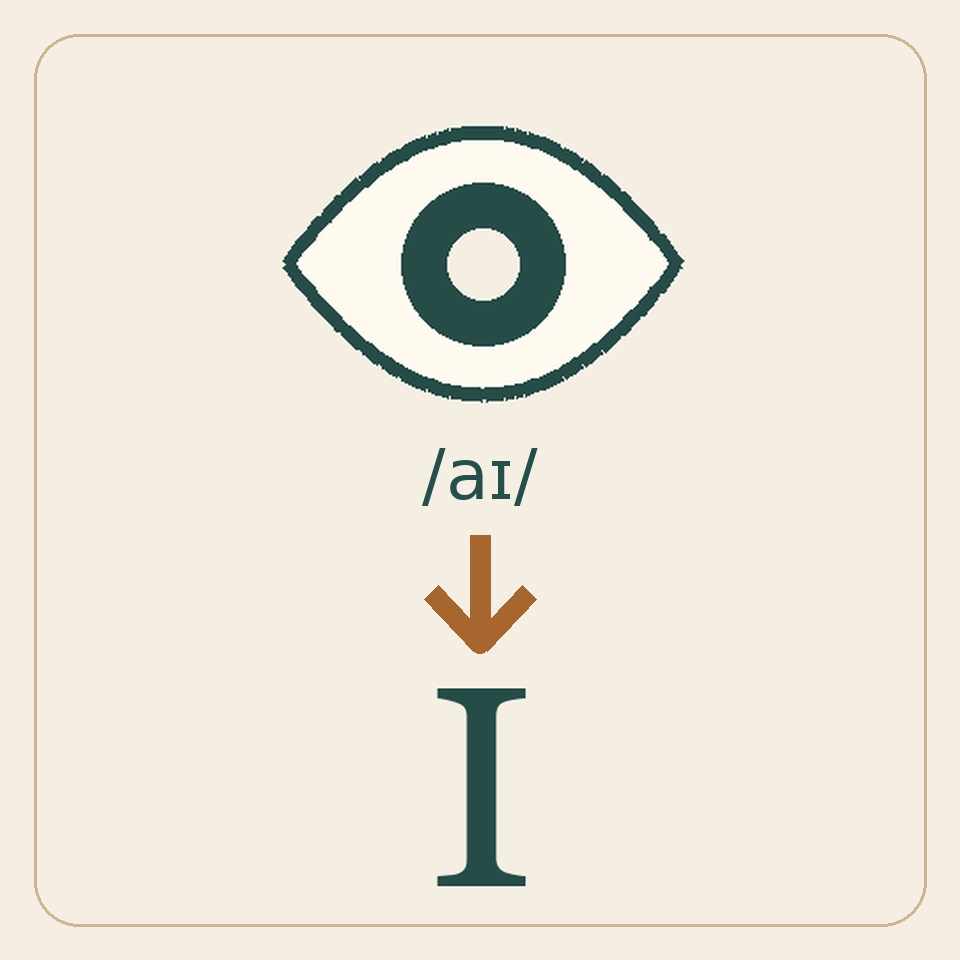
A logogram is a written sign used for a word or another meaningful linguistic unit, rather than spelling out its individual sounds. A single graphic sign may carry several word values; its isolated shape therefore need not establish which pronunciation a writer intended. Some scholars prefer morphography, since the relevant unit can be smaller than an independent word. This describes what a sign does in a particular context, not a permanently defined class of shapes or a picture-based system independent of speech.[1]
Nor is a logogram simply a pictograph. A sign may have begun as a recognizable image and then become increasingly conventional in scribal practice. Conversely, an abstract form may represent a word without resembling what it denotes. The resemblance of a drawn form to an object does not by itself disclose its original language or pronunciation.
Three roles in cuneiform
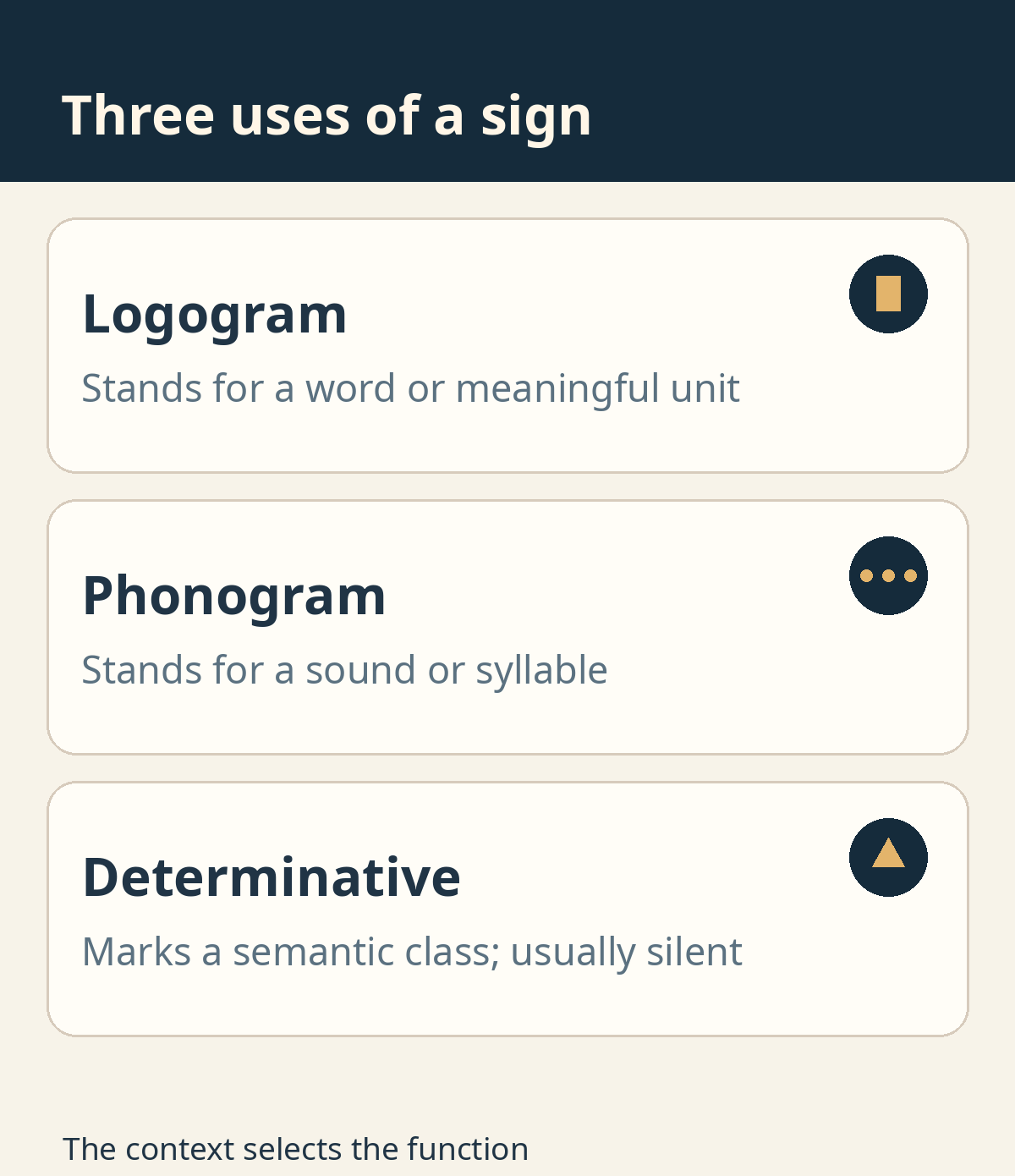
CuneiformCuneiformWriting with wedge-shaped signs, developed from Mesopotamian recording traditions and used for several languages from the third millennium BCE.Glossary · Click to read the explanation combines logographic uses, where signs stand for words, phonetic uses, where they represent sounds or syllables, and semantic determinatives, which classify words—for example as divine or place names—and are usually not pronounced. These functions may belong to the same graphic sign in different contexts, rather than to three wholly separate inventories. Ancient sign lists record multiple readings for individual signs. The appropriate choice is governed by the text, language, and period, not by shape alone.[2]
A testable example: AN and DINGIR
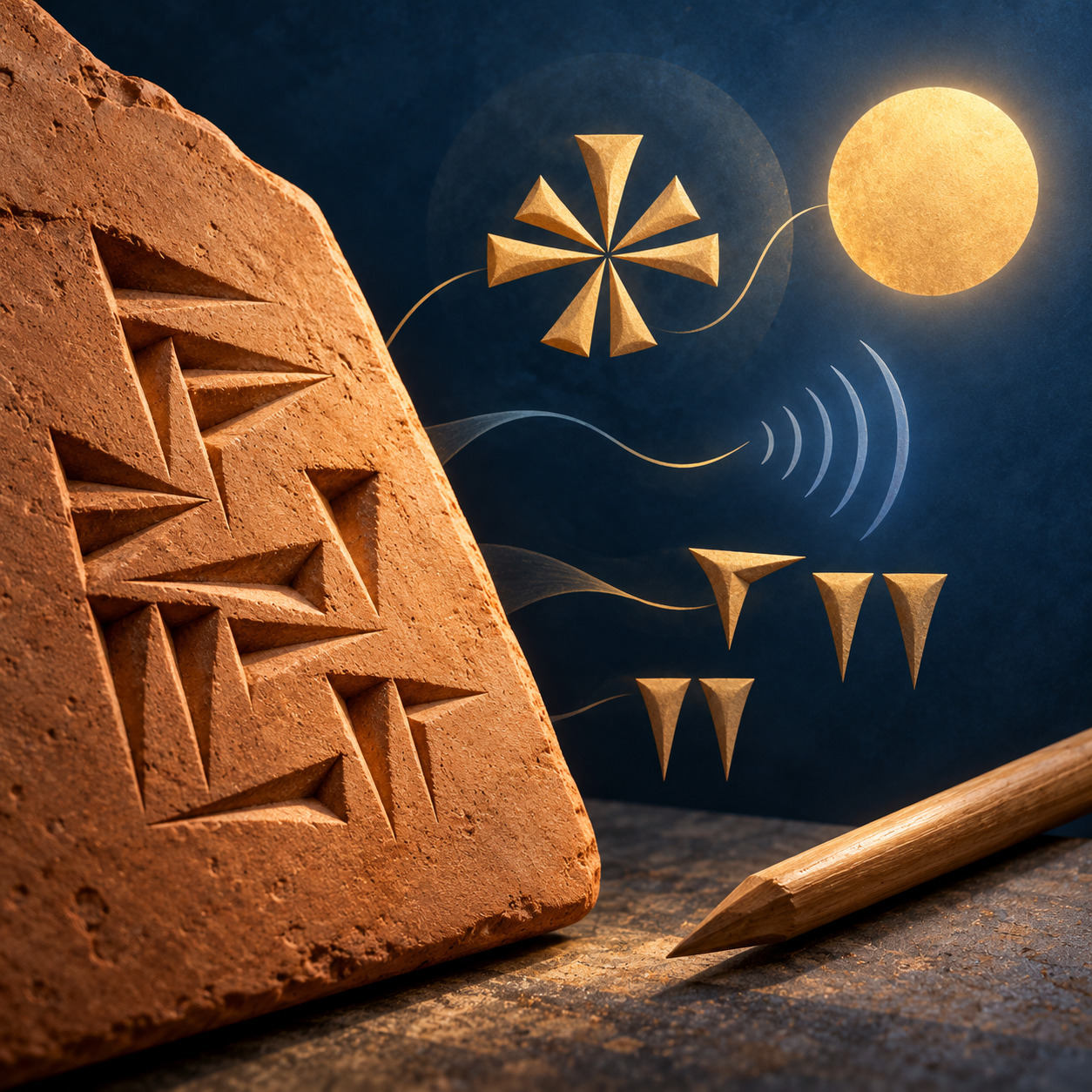
The cuneiform sign conventionally named AN, represented in digital type as 𒀭, illustrates the distinction. As a logogram it may stand for “sky” (AN) or “god” (DINGIR), depending on context and tradition. Phonetically it can stand for the syllable an. Before a divine name it can instead be the usually silent divine determinativeThe divine determinative in cuneiformA cuneiform sign used mostly before a divine name to classify it without being spoken independently; shown as raised d or {d} in transliteration. Usage depends on language and context.Glossary · Click to read the explanation, shown by editors with a raised d or with {d}. These are not three different archaeological drawings, nor proof that “sky” and every named deity are identical: they are different functions of one written form.[4]
We must keep apart the standardized name assigned to a sign, its Sumerian reading in a specific document, and any AkkadianAkkadianAn ancient East Semitic language written in cuneiform from the third millennium BCE; its varieties include Babylonian and Assyrian, and it served in international diplomacy.Glossary · Click to read the explanation equivalent supplied when reading that document. Assigning a value is not an automatic translation from a shape or a statement about a particular religious belief.
Word signs across languages
Scribes writing SumerianSumerian languageAncient language of southern Mesopotamia, clearly attested in third-millennium BCE texts and maintained in learning and ritual after its spoken use declined.Glossary · Click to read the explanation used word signs alongside syllabic signs. Once AkkadianAkkadianAn ancient East Semitic language written in cuneiform from the third millennium BCE; its varieties include Babylonian and Assyrian, and it served in international diplomacy.Glossary · Click to read the explanation was written in cuneiform, conventional Sumerian writings for words could occur within Akkadian sentences and be read aloud in Akkadian. Thus LUGAL can write “king” while an Akkadian context calls for šarru in the appropriate grammatical form: what is visible is not a direct phonetic transcript. Oracc’s editorial guidance also warns that apparent Sumerian writing in contexts such as year names requires specific judgment, rather than a blanket assumption that every uppercase group is an Akkadian logogram.[5]
The common Akkadian noun iluAkkadian iluAn Akkadian common noun meaning “god”; older case forms include ilum, ilam and ilim. It occurs in personal names but does not by itself identify Ugaritic El.Glossary · Click to read the explanation, “god,” is a linguistic word, not automatically the proper nameProper nameA name that identifies a particular person, place, group, or entity in context, unlike a common noun denoting a class. Spelling alone may not settle the distinction.Glossary · Click to read the explanation of one deity. Its written equivalent must not be used to collapse separate divine identities into one.
Transliterating, reading, and translating
In conventional transliterations of Akkadian, logograms are usually set in capitals (DINGIR, LUGAL), phonetic syllables in lowercase (an), and determinatives in superscript or within braces, such as {d} in the ATF digital format. A phonetic complement may be attached to a logogram to indicate how to read it, without making the underlying sign exclusively phonetic. These are scholarly notational conventions; they are not literally the marks an ancient scribe pressed into the clay.[5]
The distinction between a sign form, a reading, and a translation matters equally for computer fonts. A Unicode character is a standardized digital representation; handwritten cuneiform varied by time and place, and one encoding alone cannot decide between competing readings or historically related shapes.[7]
Early Uruk and later writing
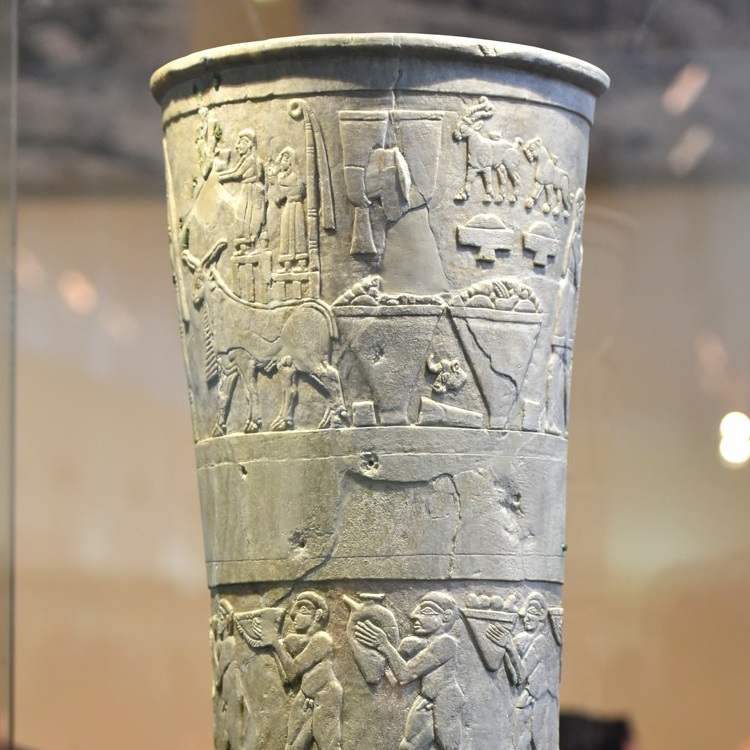
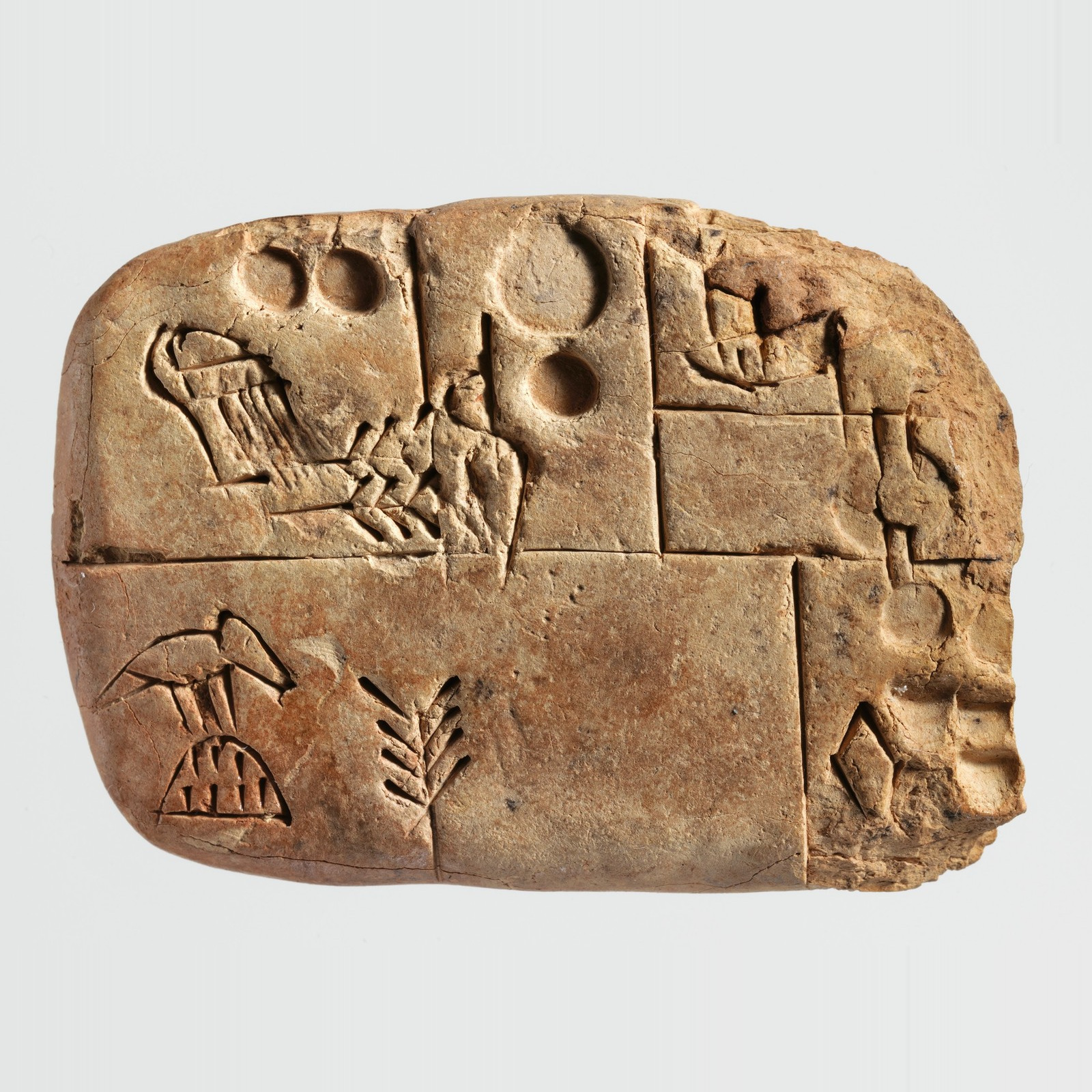
UrukUrukAncient city at Warka in southern Iraq, a major urban centre around 3200 BCE that preserved early writing and accounting tablets.Glossary · Click to read the explanation yielded early proto-cuneiformProto-cuneiformEarly southern Mesopotamian script (c. 3350–3000 BCE): clay tablets with counting systems and signs for commodities, people and offices, as well as lexical lists; not yet a full rendering of speech.Glossary · Click to read the explanation tablets from the late fourth millennium BCE, mostly recording quantities, commodities, and institutions. We cannot assume that every early sign was spoken as a visually related one was centuries later. The Metropolitan Museum’s administrative tablet 1988.433.3, dated approximately 3100–2900 BCE, provides a concrete example of early recording in which the subjects of accounts can be inferred more securely than a fully articulated spoken grammar.[6]
Woods emphasizes that sparse early phonetic notation neither proves that the earliest script could record connected speech comprehensively nor establishes beyond doubt that it had no identifiable linguistic connection. One mechanism important to phonetic values is the rebus principleRebus principleA writing principle in which a sign for one word is reused to write another word of similar pronunciation but different meaning; visual similarity alone does not prove an early phonetic use.Glossary · Click to read the explanation: using the sign for one word to evoke another word or syllable with a similar sound but different meaning. Its frequency and historical timing must be tested against particular texts, not compressed into a tale in which all pictures simply became letters.[1]
How scribes learned signs
Training lists show that multiple readings were not just a difficulty encountered by modern interpreters. The DCCLT introduction describes a school tablet from Nippur, UM 29-16-31, that teaches multiple uses of the sign IB and at least two word values of UN. Determinatives can disambiguate certain readings, though a few contexts remain ambiguous. This is evidence for later scribal instruction, not direct proof of exactly how people pronounced every sign at the dawn of writing in Uruk.[3]
Sign lists and parallel texts allow readings to be tested, but damage, variant copying, and modern editorial conventions still matter. An interpretation must be matched to the date and textual setting of its evidence.
What may legitimately be inferred?
Faced with a pictured or printed sign, first ask which object it comes from, when it was written, and which language is plausible. Is the proposed value logographic, phonetic, or determinative here? Neighboring signs, textual genre, and published sign lists may then help, while consequential alternative readings should remain visible. A resemblance between an ancient form and a modern word cannot by itself demonstrate etymological continuity or religious transmission.
Logography is thus a way of understanding how language and meaning were recorded in diverse contexts, not a shortcut to reading an inscription from one glyph. The cover is an AI-generated modern conceptual illustration, not an archaeological tablet; the explanatory diagram is likewise modern and does not reproduce an ancient document.
References and notes (7)
- Christopher Woods, “The Earliest Mesopotamian Writing” and “Visible Language: The Earliest Writing Systems,” in Visible Language: Inventions of Writing in the Ancient Middle East and Beyond, OIMP 32 (2010). Selected passages read from extracted PDF text: introduction pp. 20–23 and chapter pp. 33–45, especially pp. 36–37 and 43–45; not the entire volume; page images not re-inspected here. Return to the text ↑
- Digital Corpus of Cuneiform Lexical Texts (DCCLT/Oracc), “Introduction to Cuneiform Sign Lists.” Accessible introduction page, explanations of logographic/phonetic values, MI and DUGUD examples; not the full sign-list corpus. Return to the text ↑
- DCCLT/Oracc, “Introduction: What Is a Lexical List?”, section “Sign List.” Accessible webpage text, particularly §1.1 and teaching tablet UM 29-16-31 (IB and UN); the tablet photograph was not inspected. Return to the text ↑
- Shai Gordin et al., “Reading Akkadian Cuneiform Using Natural Language Processing,” PLOS ONE 15(10), e0240511 (2020). Introduction and “Problem statement” paragraphs on AN/DINGIR, phonograms and determinatives; the complete machine-learning methods and results were not read. Return to the text ↑
- Oracc, “Akkadian Stylesheet,” sections “Logograms,” “Determinatives” and “Phonetic Complements.” Specified sections, including year names and ATF notation; not the entire documentation suite. Return to the text ↑
- The Metropolitan Museum of Art, “Cuneiform Tablet: Administrative Account with Entries Concerning Malt and Barley Groats,” accession 1988.433.3, Jemdet Nasr period, ca. 3100–2900 BCE. Public collection record, identification, date and public-domain status only; museum photograph is not reproduced here and its signs were not individually read. Return to the text ↑
- Unicode Consortium, “Unicode Technical Report #56: Cuneiform Sign Lists” (2025 version). Abstract and §2.1 on sign identity and cataloguing; not the entire report. Return to the text ↑
Suggest a correction · Suggest a source for this record
Cite this record
IL Archive, «Logogram», https://ilarchive.com/en/entities/logogram
Continue reading