Person
Shamhat
- Names
- Shamhat · Shamkatum · Šamkatum · Šamḫat
- Region
- Mesopotamia
Shamhat guides Enkidu from the company of wild animals toward the herders and the city of Uruk. The Gilgamesh epic returns to her role when Enkidu recalls what he gained and lost.
Estimated reading time: 5 min Published Last reviewed:
Share article
Text
Introduction
Shamhat changes the course of Enkidu’sEnkidu, Gilgamesh’s companionGilgamesh’s companion in the Babylonian epic; his death sets the king searching for life beyond mortality.Glossary · Click to read the explanation life in the Epic of Gilgamesh. She meets him at a watering place, speaks to him after the wild animals refuse to accept him back, and introduces him to the people and customs he encounters on his way to the city. When Enkidu faces death, the poem returns to those experiences through a quarrel over what Shamhat gave him. Her scenes survive in several witnesses, including an Old Babylonian tablet that calls her Shamkatum. [1] [2]
At the watering place
In the Standard Babylonian version a trapper sees Enkidu living among the animals and interfering with the traps. The man brings Shamhat to the watering place, where they watch for Enkidu and his herd. The story gives their intimate encounter several days. At the end, Enkidu turns back to the gazelles, which run from him. The poem describes both the loss of his former speed and the acquisition of judgment and understanding. He sits before Shamhat and listens. [1]
She tells him that he resembles a god and asks why he should wander among the beasts. Her invitation gives him a destination, UrukUrukAncient city at Warka in southern Iraq, a major urban centre around 3200 BCE that preserved early writing and accounting tablets.Glossary · Click to read the explanation, and presents its temple, the home of Anu and IshtarInanna / IshtarA prominent Mesopotamian goddess whose Sumerian name Inanna became associated with Akkadian Ishtar across diverse traditions. She was associated with desire, war, royal authority and Venus, while local forms and genealogies varied among texts.Glossary · Click to read the explanation, as a place where he can see GilgameshGilgameshA king of Uruk in Mesopotamian tradition and the hero of Sumerian poems and a multi-tablet Akkadian epic, with his companion Enkidu, the loss of a friend and the search for life. In standard Tablet XI, Utnapishtim tells him of the flood.Glossary · Click to read the explanation. Enkidu wants to go and initially speaks of challenging the king. Shamhat describes the city’s people and festivals, Gilgamesh’s strength, and dreams that foretell a companion. Her words give Enkidu information about the world he is entering and give the reader grounds to imagine a relationship beyond the challenge. [1]
Food, clothes, and company
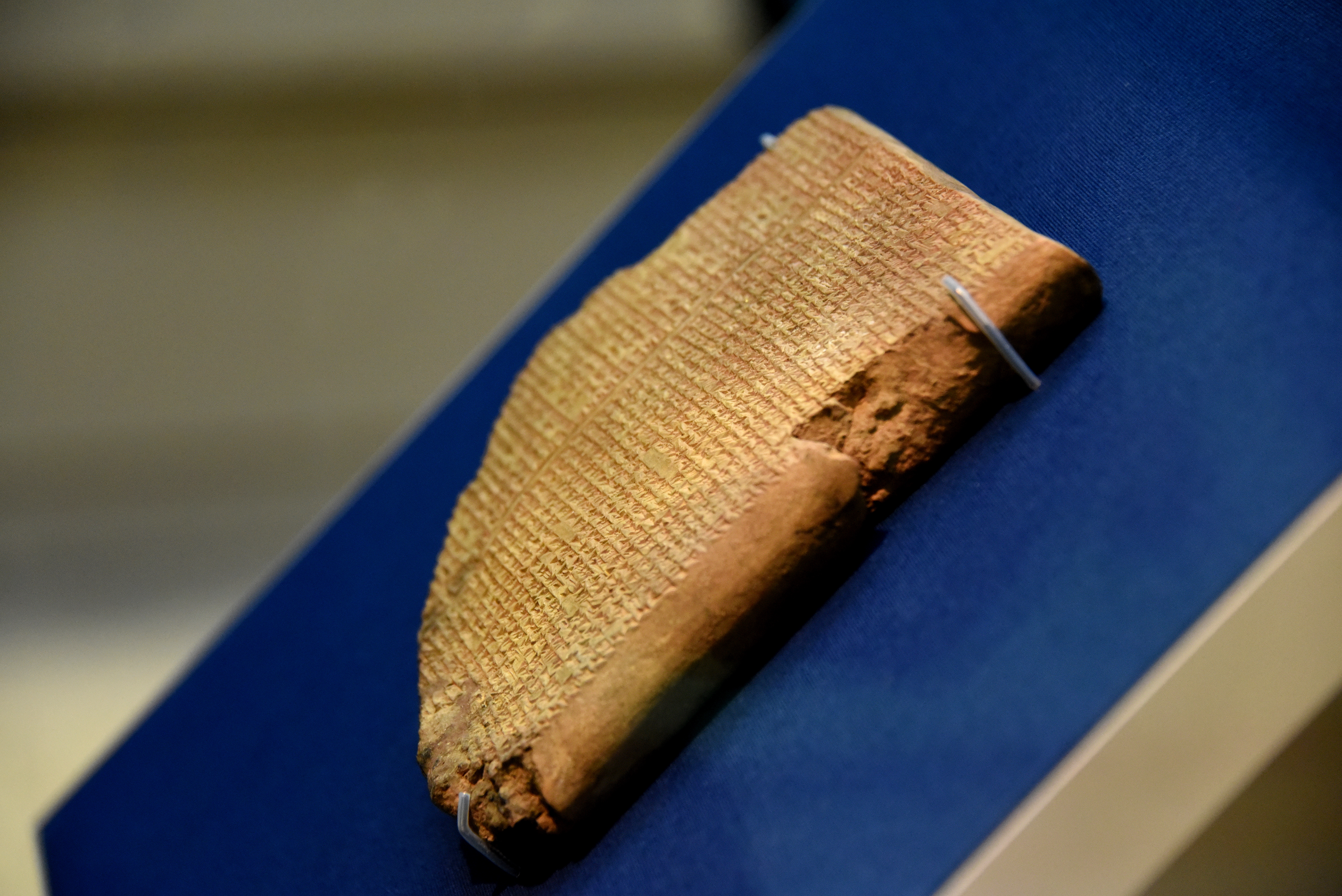
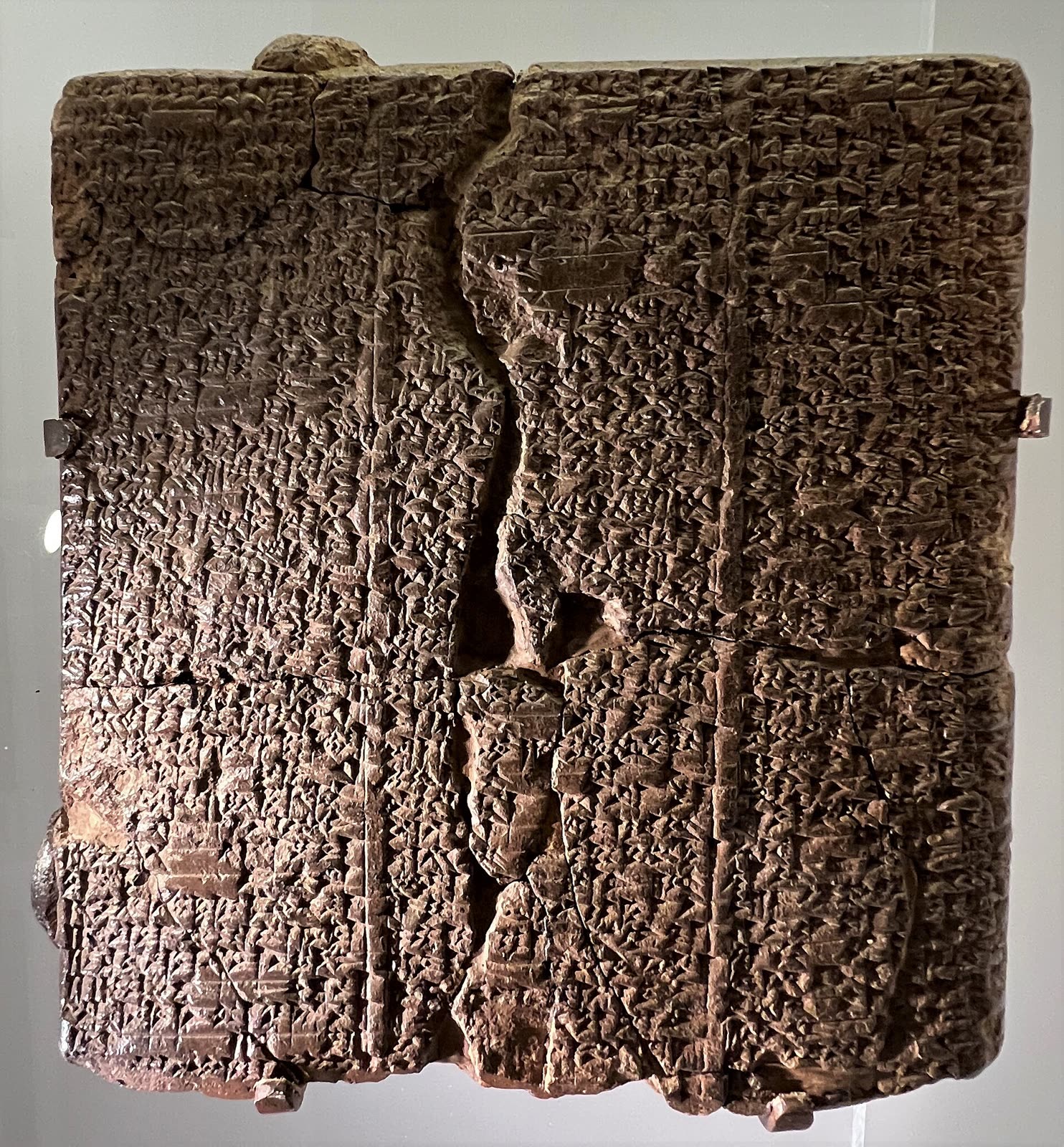
An Old Babylonian witness known as the Pennsylvania tablet preserves several stages of the transition. In Andrew George’s rendering, Shamkatum shares her clothing with Enkidu and takes him to the shepherds’ camp. The herders set out bread and beer, which are unfamiliar to him. She tells him to eat and drink, and the story goes on to describe him washing or being groomed, being anointed with oil, and taking on work guarding the herders at night. The pastoral camp gives him a place among other people before he enters the city. [1] [2]
Shamkatum also speaks to a man traveling to a wedding at Enkidu’s request. The traveler tells him what will happen at the wedding, including the king’s claim over the bride. The response is anger, and when the text resumes after a break Enkidu goes toward Uruk with Shamkatum following. George places passages from the older tablet beside gaps in Tablet II of the later version. The transitions identified in his edition show where the Old Babylonian text provides an account of events that the later manuscript witnesses preserve only in part. [1] [2]
Penn Museum catalogues the photographed tablet as CBS7771, with an approximate date of 1650 BCE. It lists Warka, ancient Uruk, with a question and reports that the original register said Sippar. The CuneiformCuneiformWriting with wedge-shaped signs, developed from Mesopotamian recording traditions and used for several languages from the third millennium BCE.Glossary · Click to read the explanation Digital Library Initiative lists Nippur. The catalogues agree on its identity as an Old Babylonian Gilgamesh tablet written in AkkadianAkkadianAn ancient East Semitic language written in cuneiform from the third millennium BCE; its varieties include Babylonian and Assyrian, and it served in international diplomacy.Glossary · Click to read the explanation. The exact provenance is uncertain. The tablet directly preserves Shamkatum’s part in the story, and the companion digital record makes the text available in transliteration, which writes its cuneiform signs in Roman letters. [2] [3]
The blessing after the curse
In Tablet VII of the Standard Babylonian poem, Enkidu curses the trapper and then Shamhat. He holds her responsible for what happened after he left the wild. His curse imagines a life without a secure household, good clothes, or a place at a well-provided table. The sun god ShamashShamashMesopotamian god of the sun and justice, shown before Hammurabi on an eighteenth-century BCE stele preserved in the Louvre.Glossary · Click to read the explanation recalls that she provided food, drink, and clothing and brought him to Gilgamesh. He describes the honors and mourning Enkidu will receive from his friend and the people of Uruk. [1]
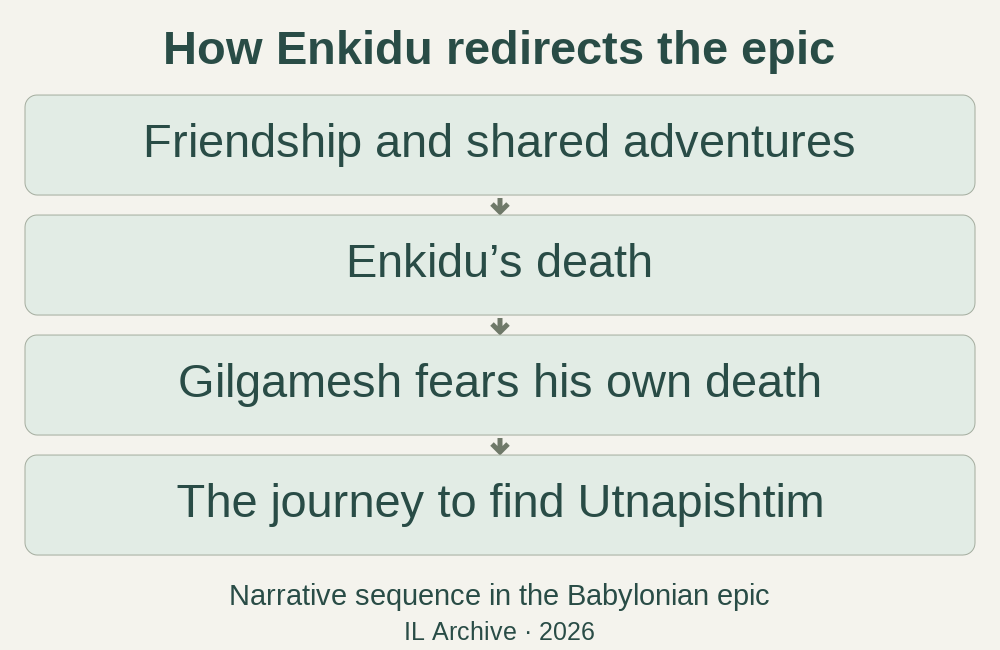
Enkidu’s anger subsides. He changes his curse to a blessing and imagines men of rank seeking Shamhat out and bringing her precious goods. Neither speech is a report about her subsequent life. They give voice to Enkidu’s changing judgment as the consequences of his own life come into view. The earlier episodes do something similar through action. Enkidu loses a place among the animals and gains a place in the human community, and Shamhat is the first person to remain with him during the change. [1]
Reading a name and a role
Akkadian ḫarimtu is the term George renders as harlot in the epic. Nicole Brisch examines arguments about whether it denotes sex work, independence from a male-headed household, or different circumstances in different texts. She also questions how securely the epic supports an identification with temple prostitution. Shamhat’s knowledge of Uruk and its temple is explicit in her speech. Her precise standing in any institution remains open. [1] [4]
George’s study of an additional Old Babylonian fragment also shows how readings of Shamhat’s role can change as more clay survives. The fragment preserves a passage about what happened after an encounter, close in wording to the later version and different from the corresponding portion of the Pennsylvania tablet. George reconstructs a possible sequence with two successive encounters and invitations to Uruk. That sequence involves gaps and must be distinguished from lines physically preserved on each witness. In both the older and later evidence, Shamhat’s invitations show her using words to help Enkidu understand where he can go and how he can belong. [1] [2] [5]
References and notes (5)
- Andrew George, The Epic of Gilgamesh, Penguin Classics Standard Babylonian Tablet I, lines 167–285, Tablet II with Old Babylonian parallels, Tablet VII lines 95–160, and Pennsylvania tablet P 45–185 in the complete volume Return to the text ↑
- Cuneiform Digital Library Initiative, Gilgamesh II, CBS 07771, P262784 Object identification and transliteration of the Old Babylonian Pennsylvania tablet, including Shamkat and the entry to Uruk Return to the text ↑
- Penn Museum, Tablet CBS7771 Object catalogue, period, material, date, and the different provenance indications Return to the text ↑
- Nicole Brisch, Šamḫat: Deconstructing Temple Prostitution One Woman at a Time pp. 80–84 and conclusion, use of ḫarimtum and the evidential limits of institutional readings Return to the text ↑
- Andrew R. George, Enkidu and the Harlot: Another Fragment of Old Babylonian Gilgameš, Zeitschrift für Assyriologie pp. 16–20, Old Babylonian CUNES fragment, comparison table, and the proposed reconstruction of the two encounters Return to the text ↑
Suggest a correction · Suggest a source for this record
Cite this record
IL Archive, «Shamhat», https://ilarchive.com/en/people/shamhat
Continue reading
Related readings