The Epic of Gilgamesh Chapter 1
The King and the Wild Man
Gilgamesh's unchecked strength brings Uruk's complaint; beyond the city, Enkidu enters human life through Shamhat. At a contested doorway the two men wrestle, then become friends, while the distant Cedar Forest opens the next question.
Watch the filmSourcesTurn the pages with the arrows, the arrow keys or a swipe.
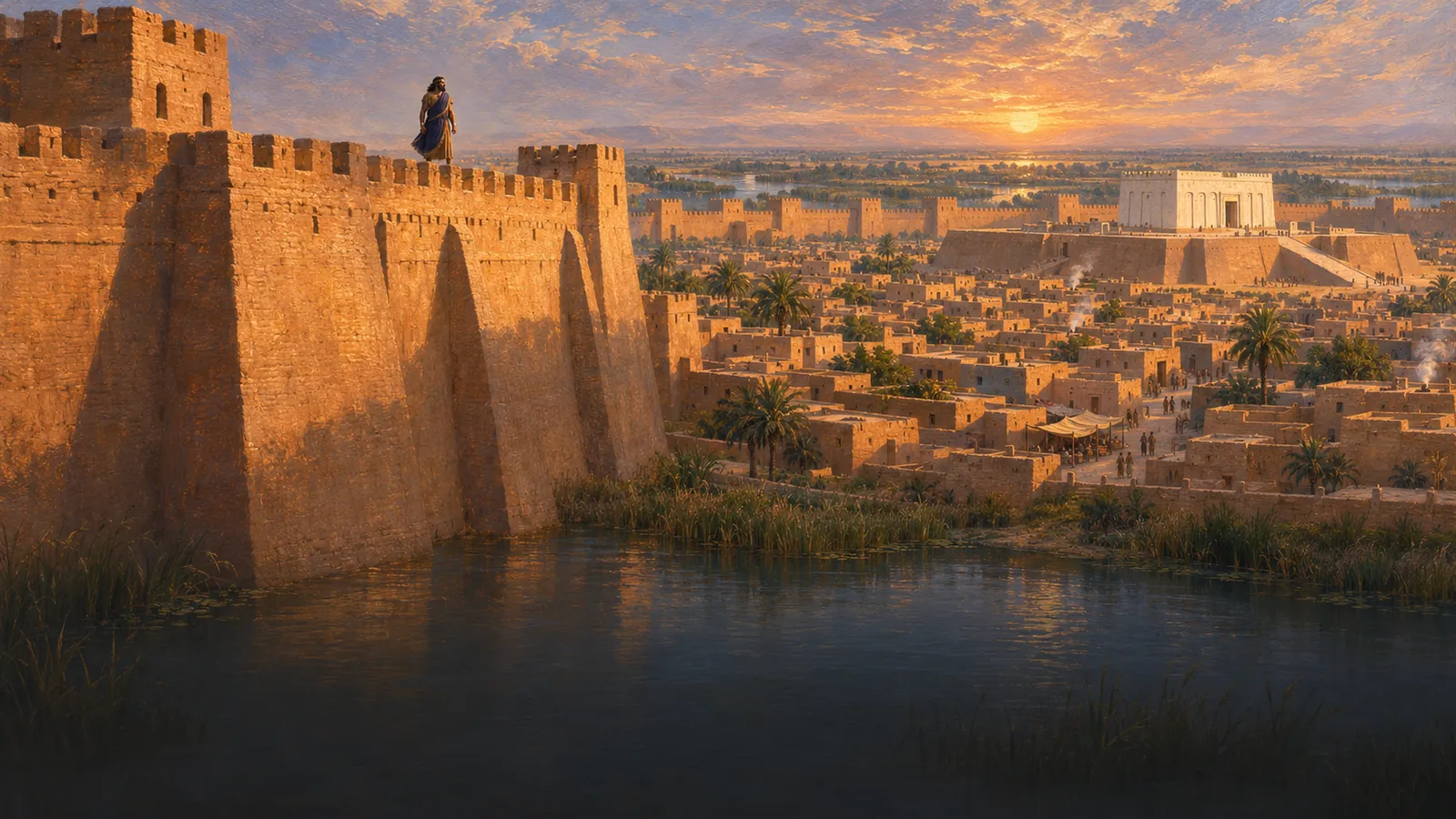
URUK
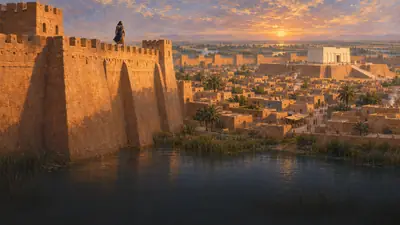
Long ago, behind the great walls of Uruk, there lived a king called Gilgamesh. His strength was famous. But inside his city, the people had little peace.
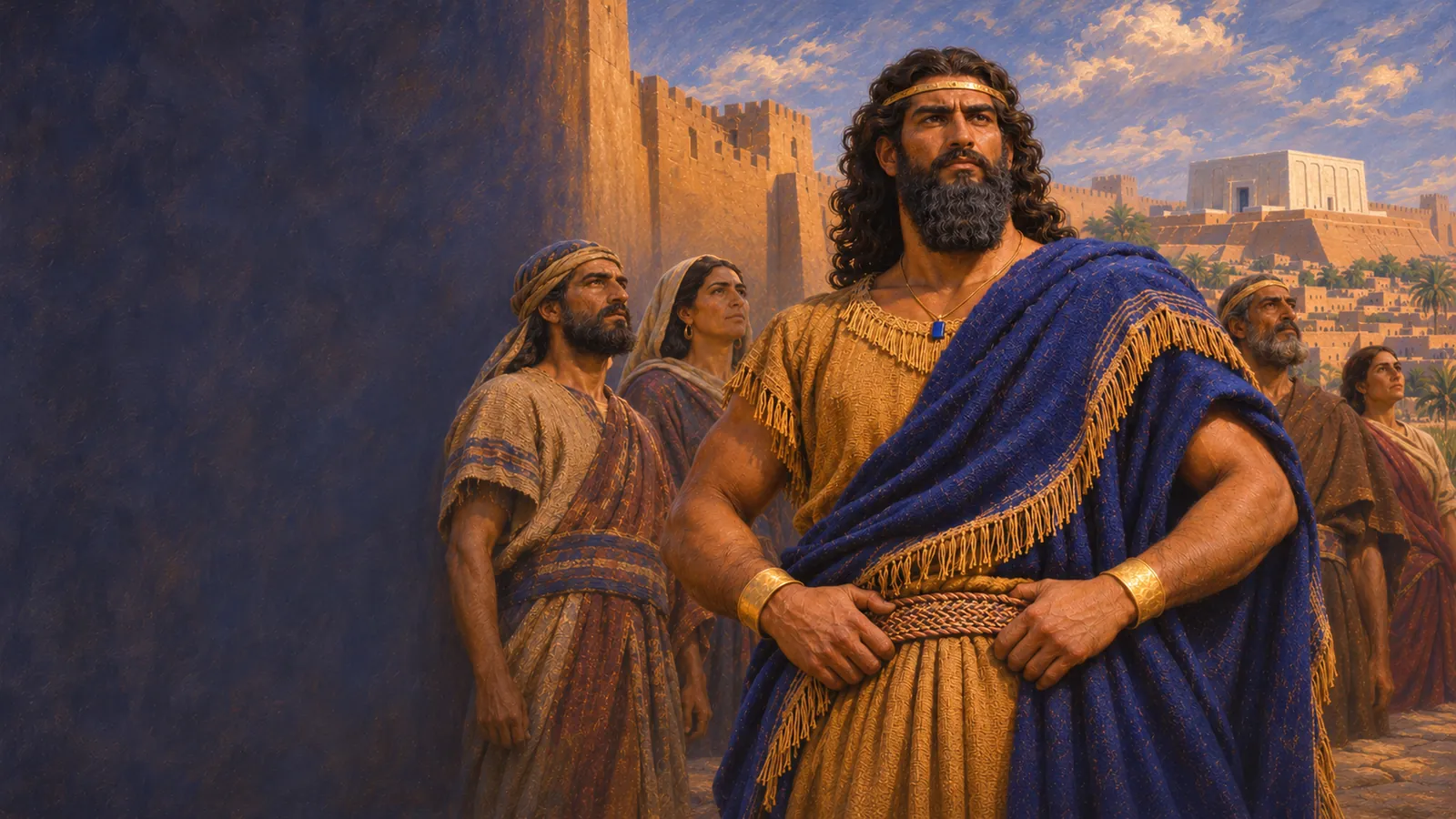
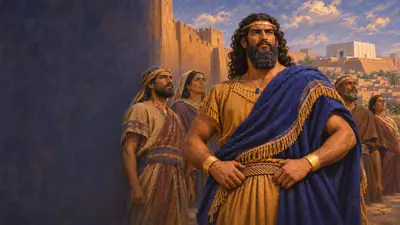
Gilgamesh stood above other kings in power and presence. In Uruk, no one could match him. He carried himself like a wild bull that no one could restrain.
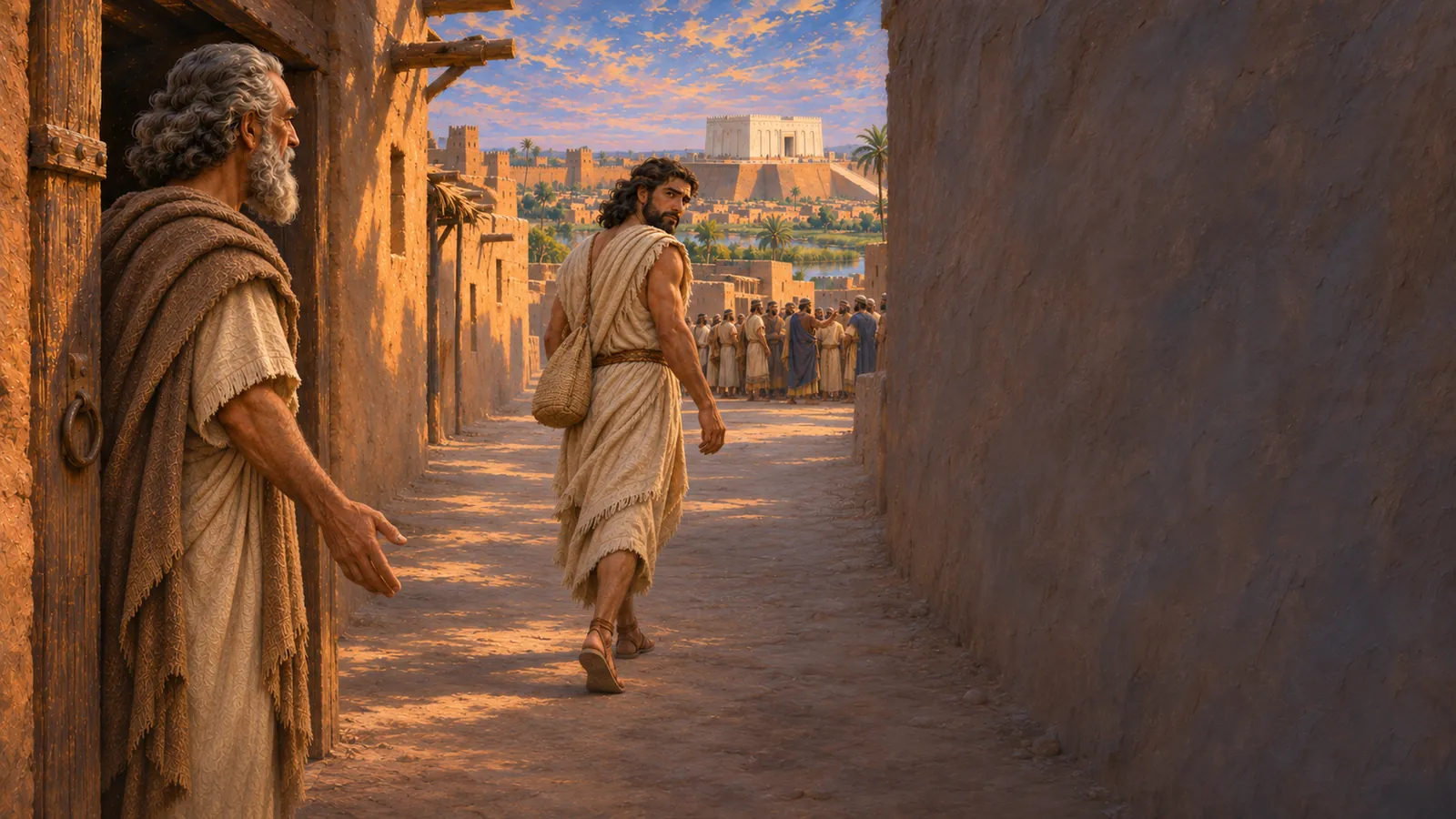
Day and night, the king's arrogance weighed upon the city. The young men had no rest, and sons were not left free to return to their fathers.
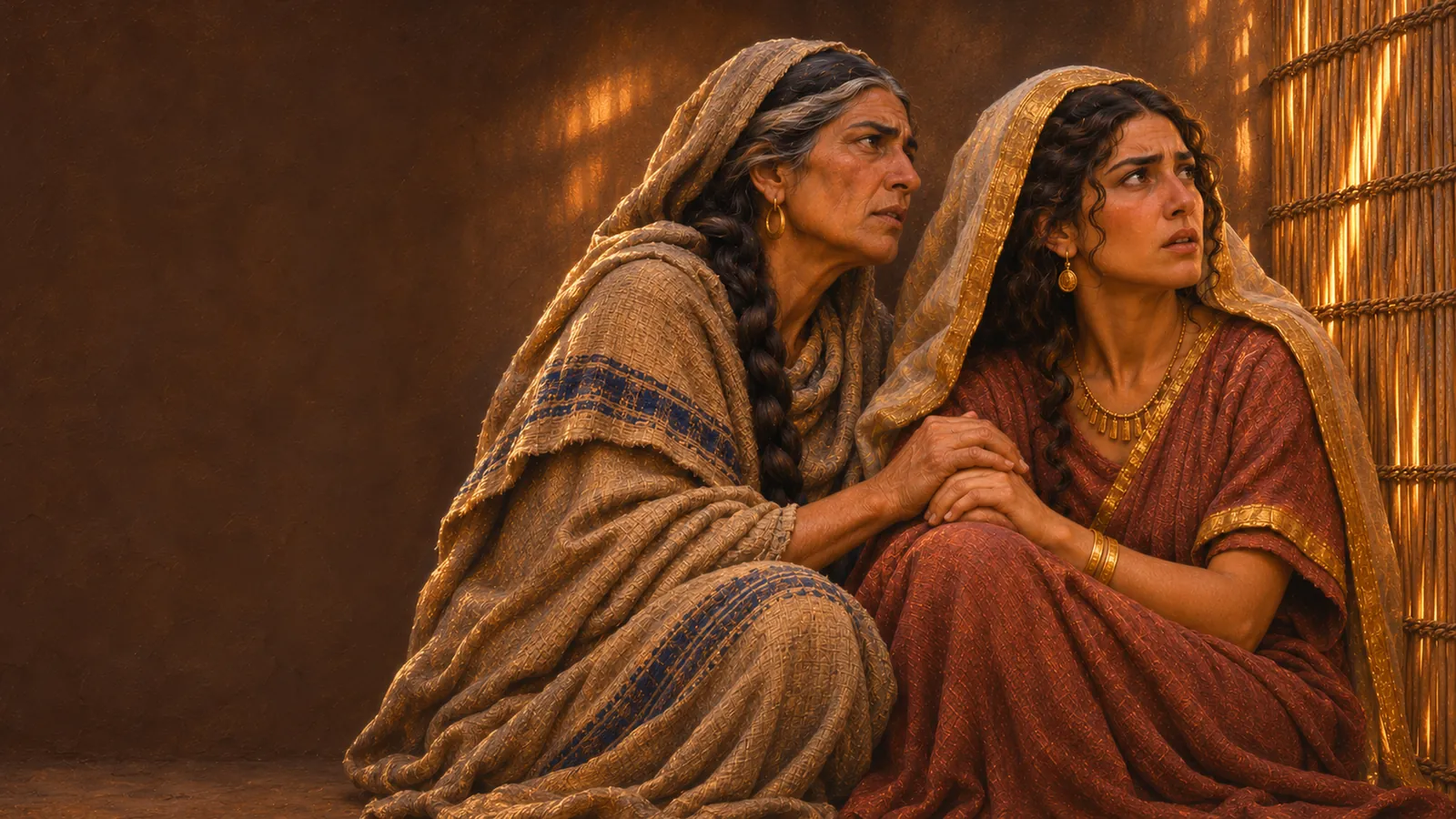
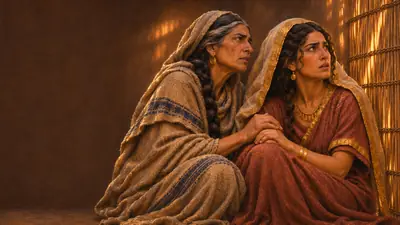
The complaint reached into the homes of Uruk. Daughters were not left to their mothers, nor brides to their bridegrooms. The king's power brought suffering where there should have been peace.
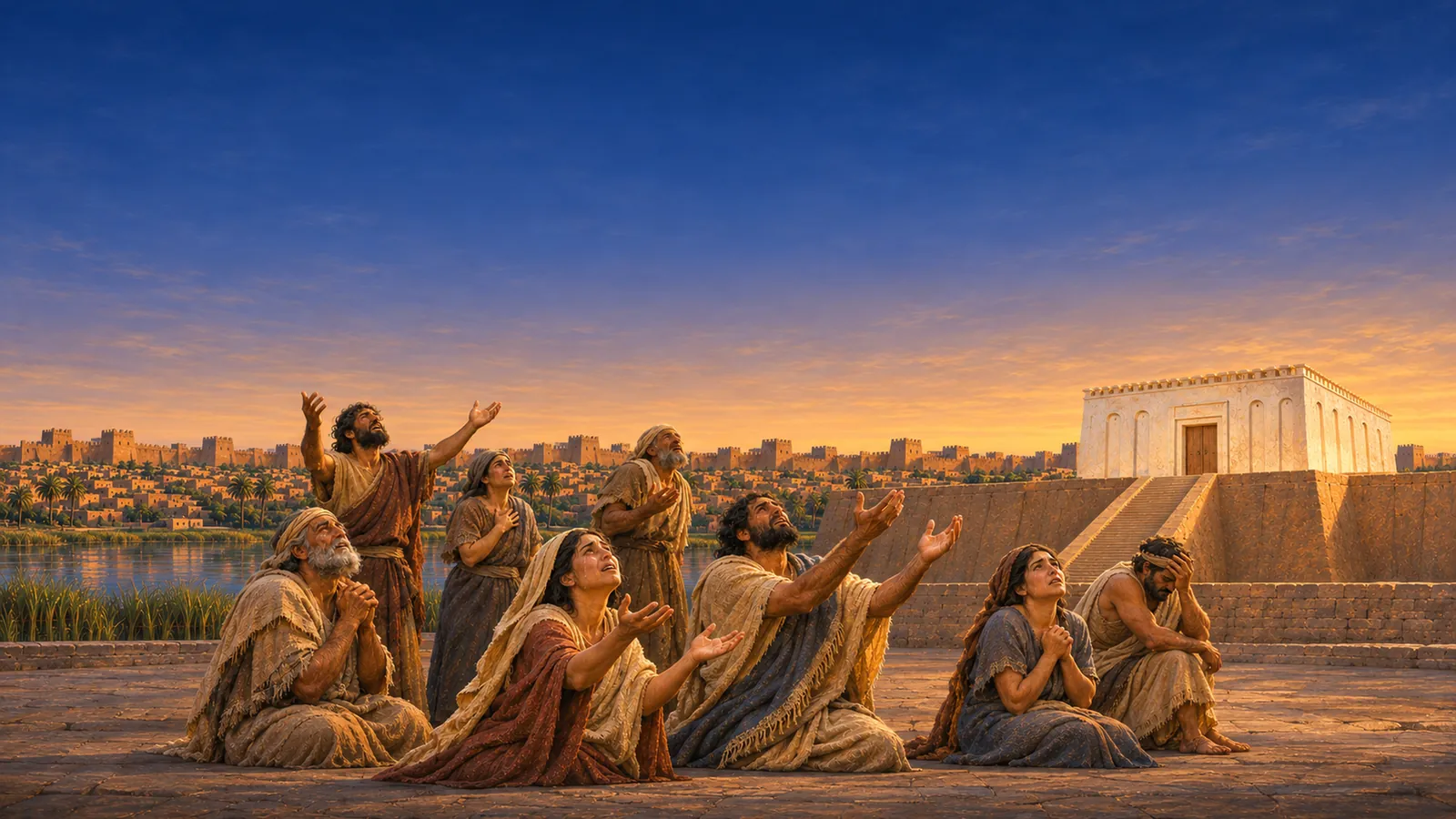
THE CRY
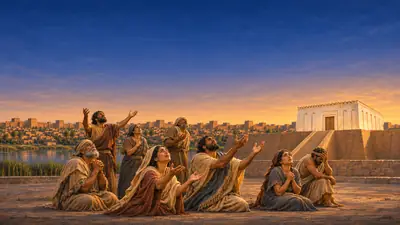
At last, the people's complaint rose to the gods. They heard what was happening in Uruk: a mighty king had become a burden to the very people in his care.
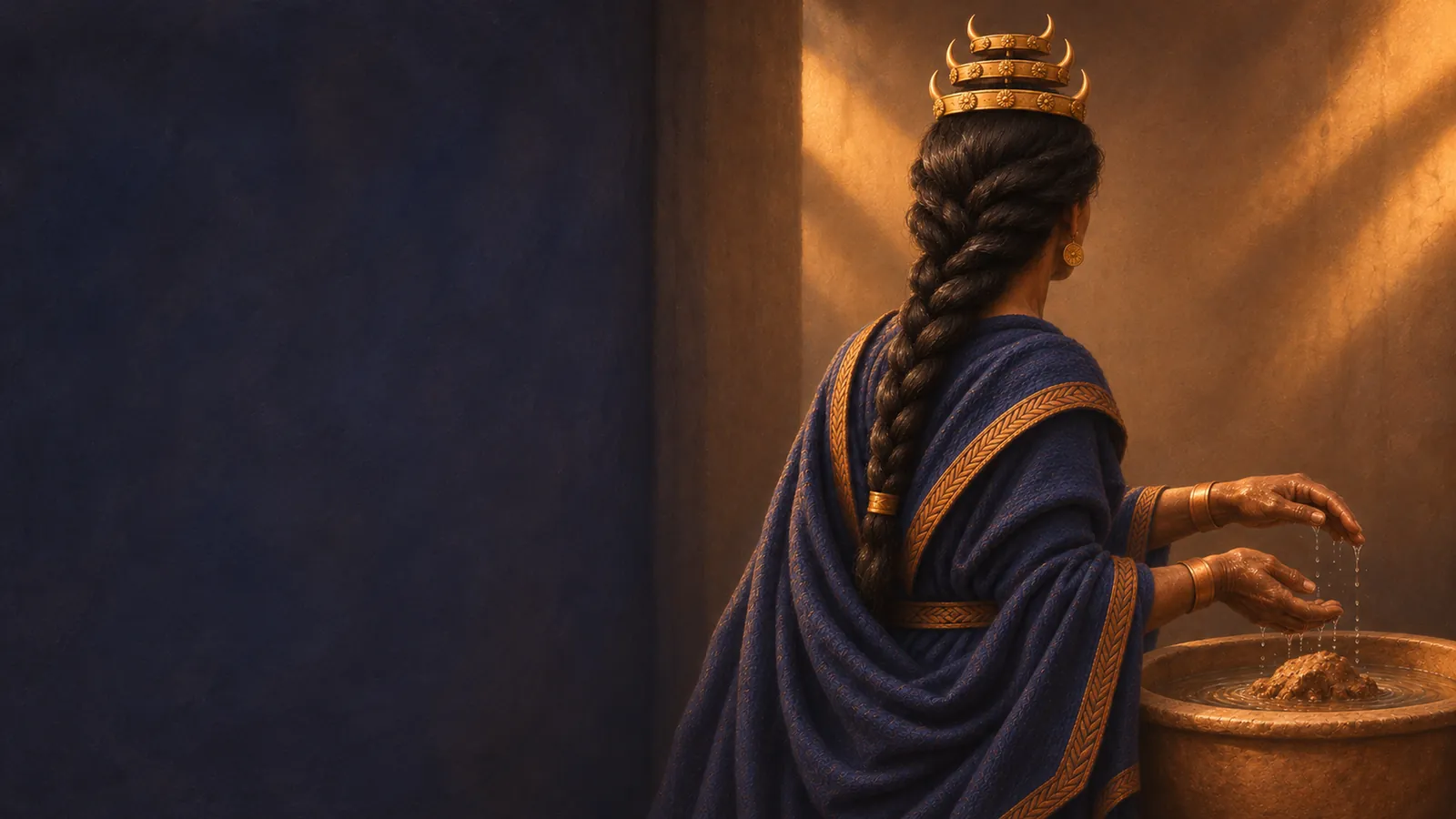
So Aruru was summoned. She was to create someone who could meet the force of Gilgamesh with a strength of his own. Let them contend, and let the city rest.
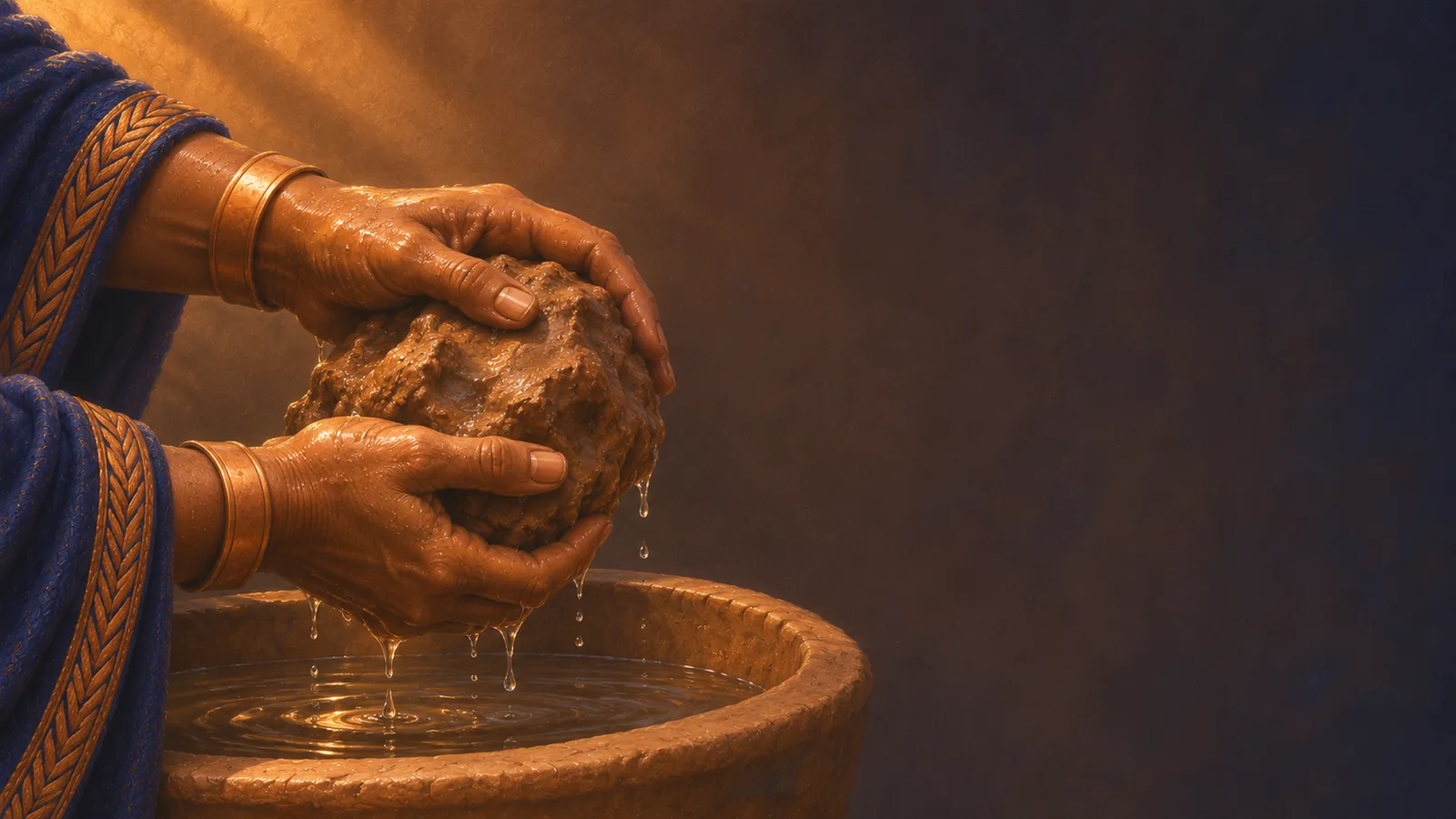
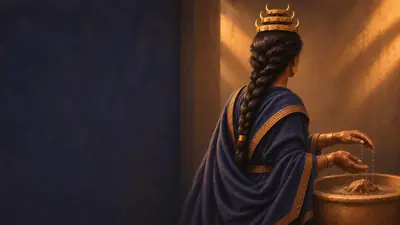
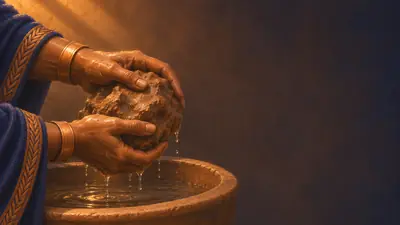
Aruru washed her hands and took a little clay. She cast it into the wilderness. There, far from the streets and houses of the city, she began her creation.
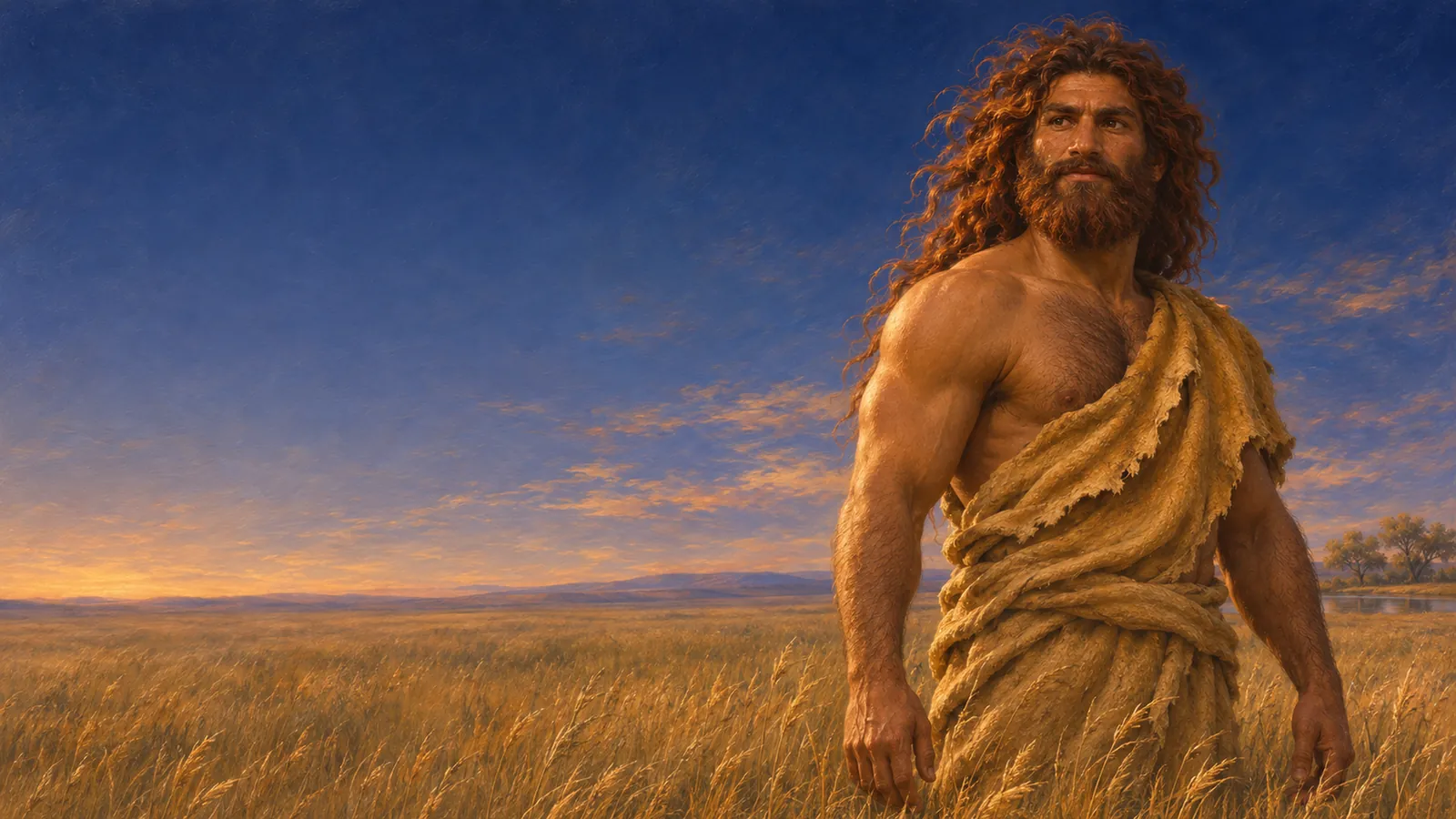
ENKIDU
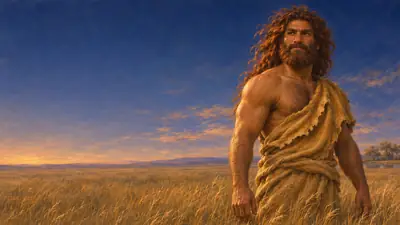
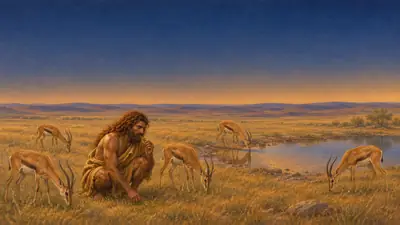
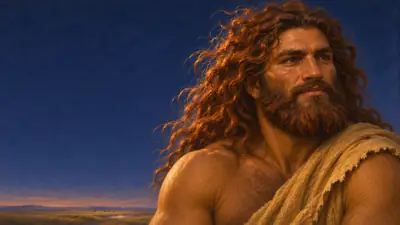
In the wilderness, Aruru created Enkidu. His body was strong and covered with hair; long locks fell around him. He knew nothing yet of cities or the ways of their people.
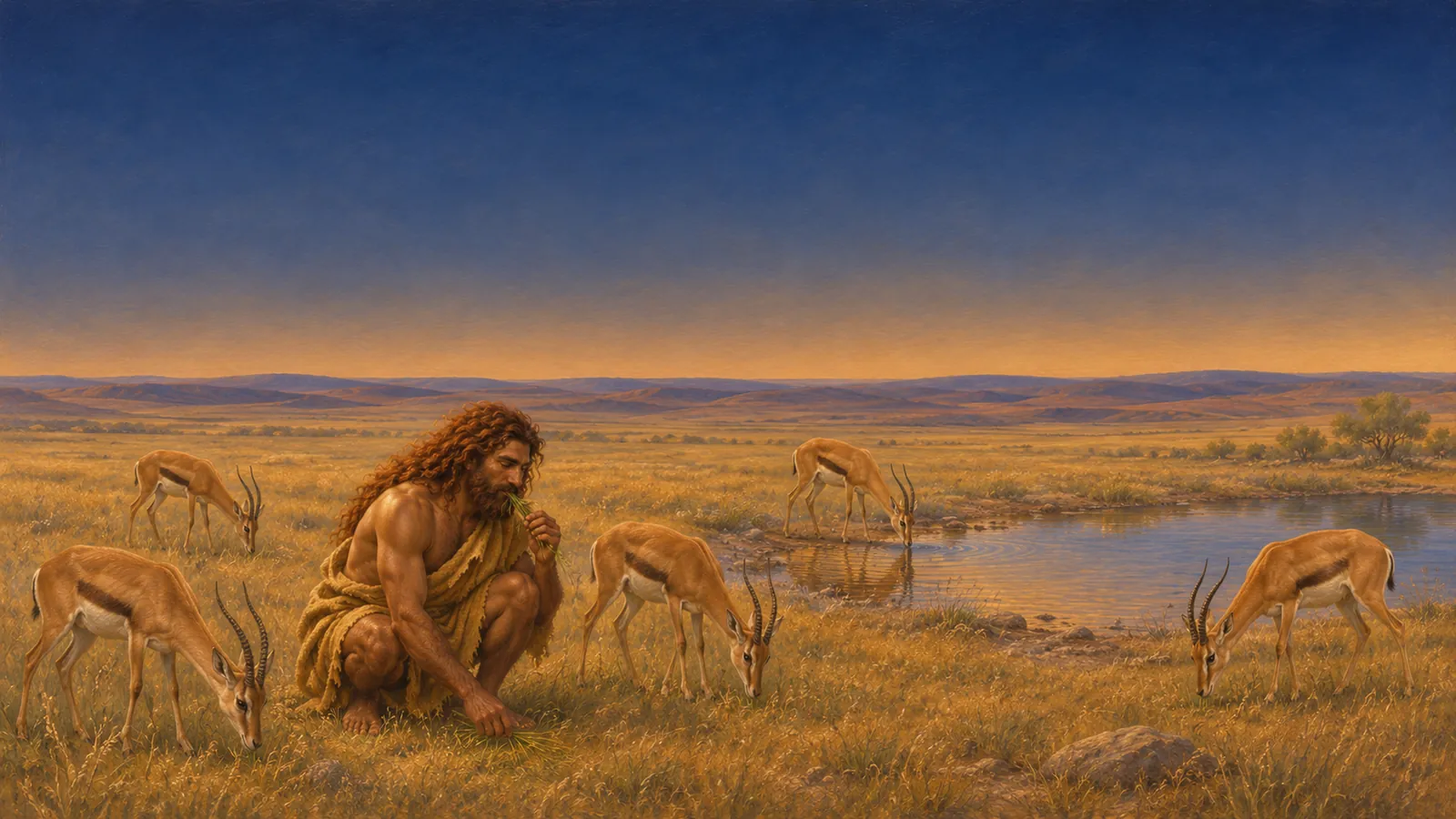
Enkidu lived among the animals. He grazed with the gazelles and roamed where the herds roamed. The open steppe was the world he knew.
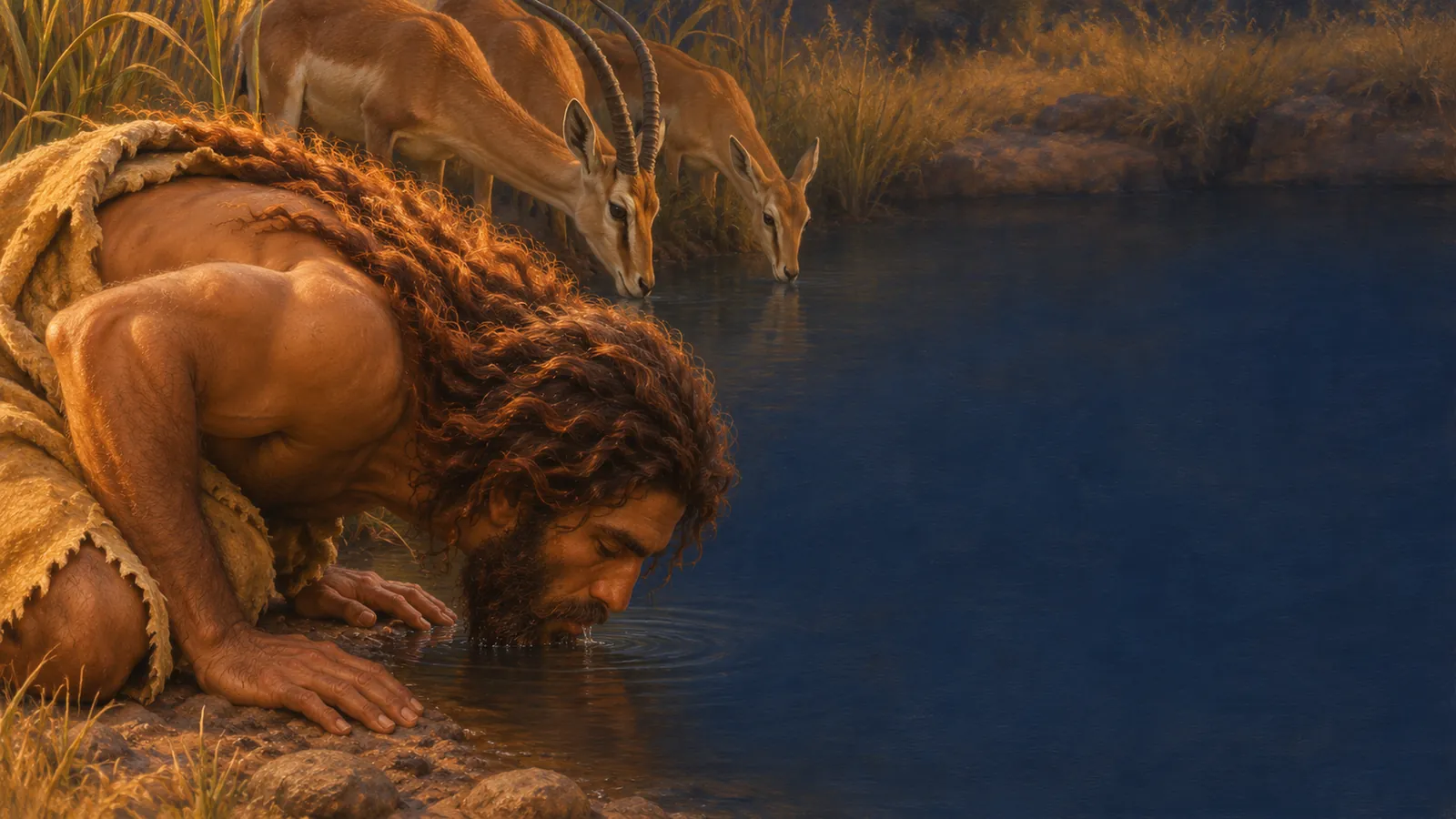
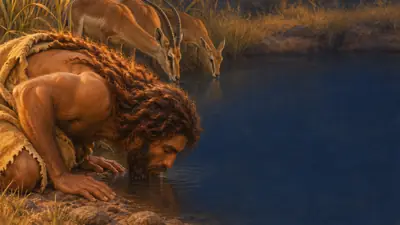
When the animals came to drink, Enkidu came with them. At the waterhole he shared their gathering, close beside the herd, taking pleasure in the water.
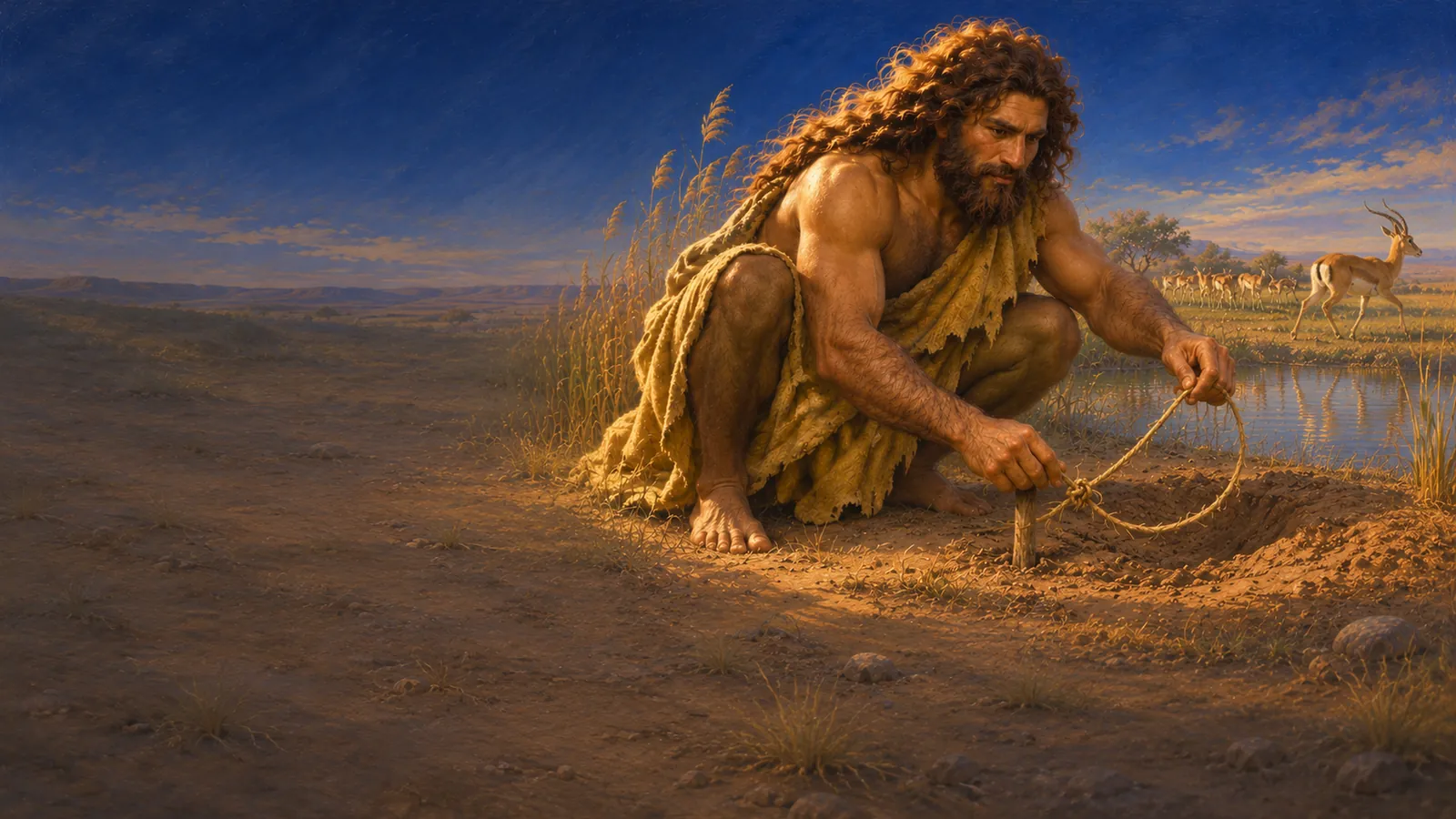
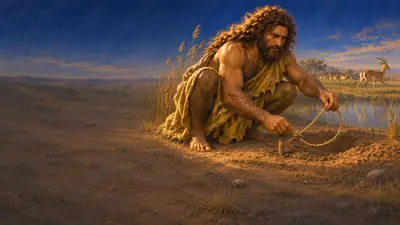
But a trapper's work was being undone. Enkidu filled the pits and pulled up the snares, freeing the animals that the hunter had hoped to catch.
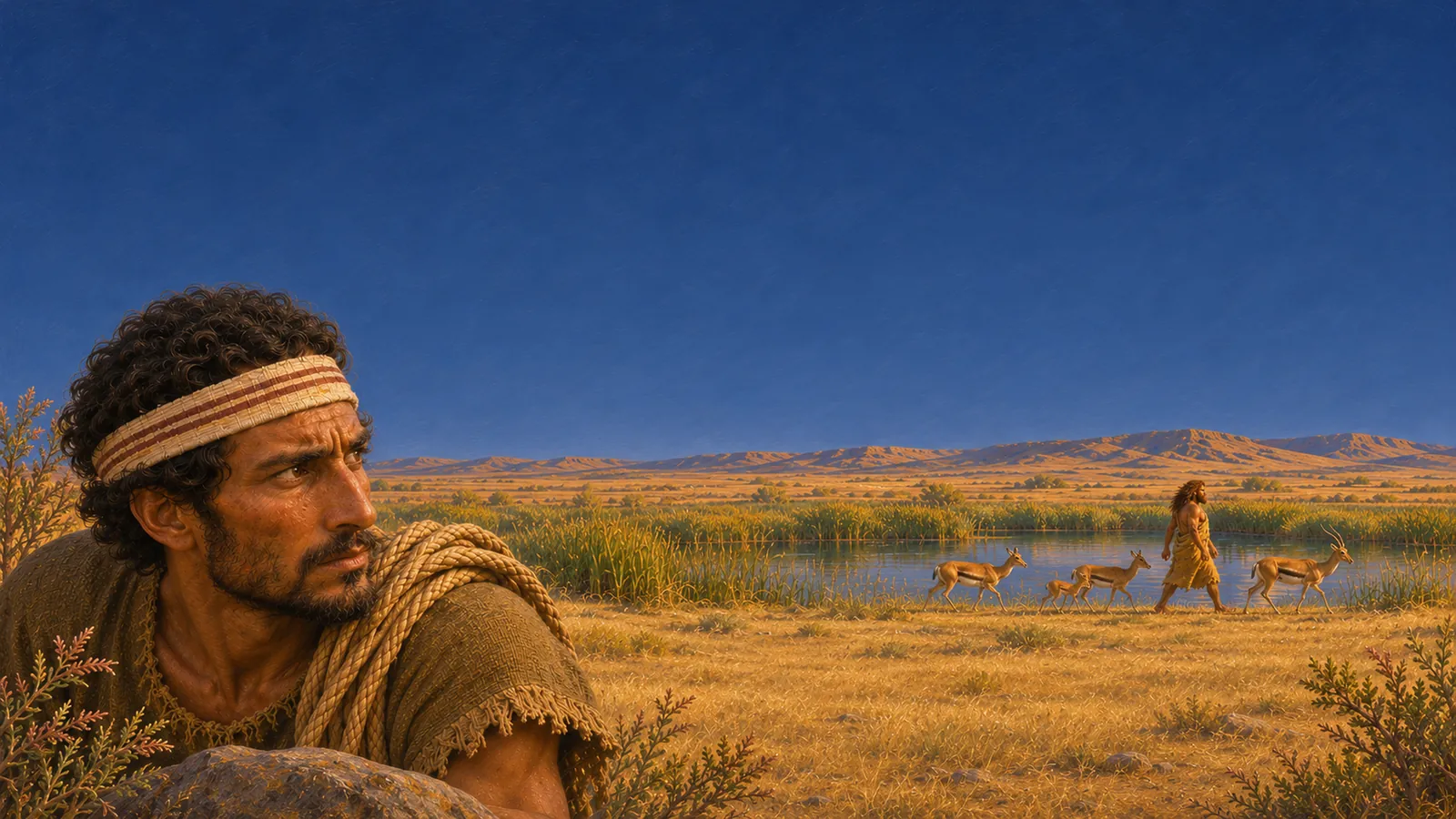
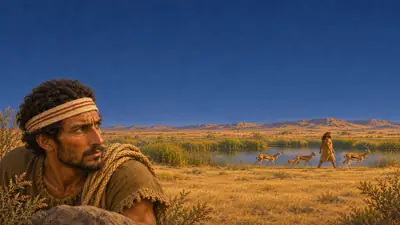
Then the trapper came face to face with Enkidu at the waterhole. The sight unsettled him deeply. He returned home silent and troubled, unable to continue as before.
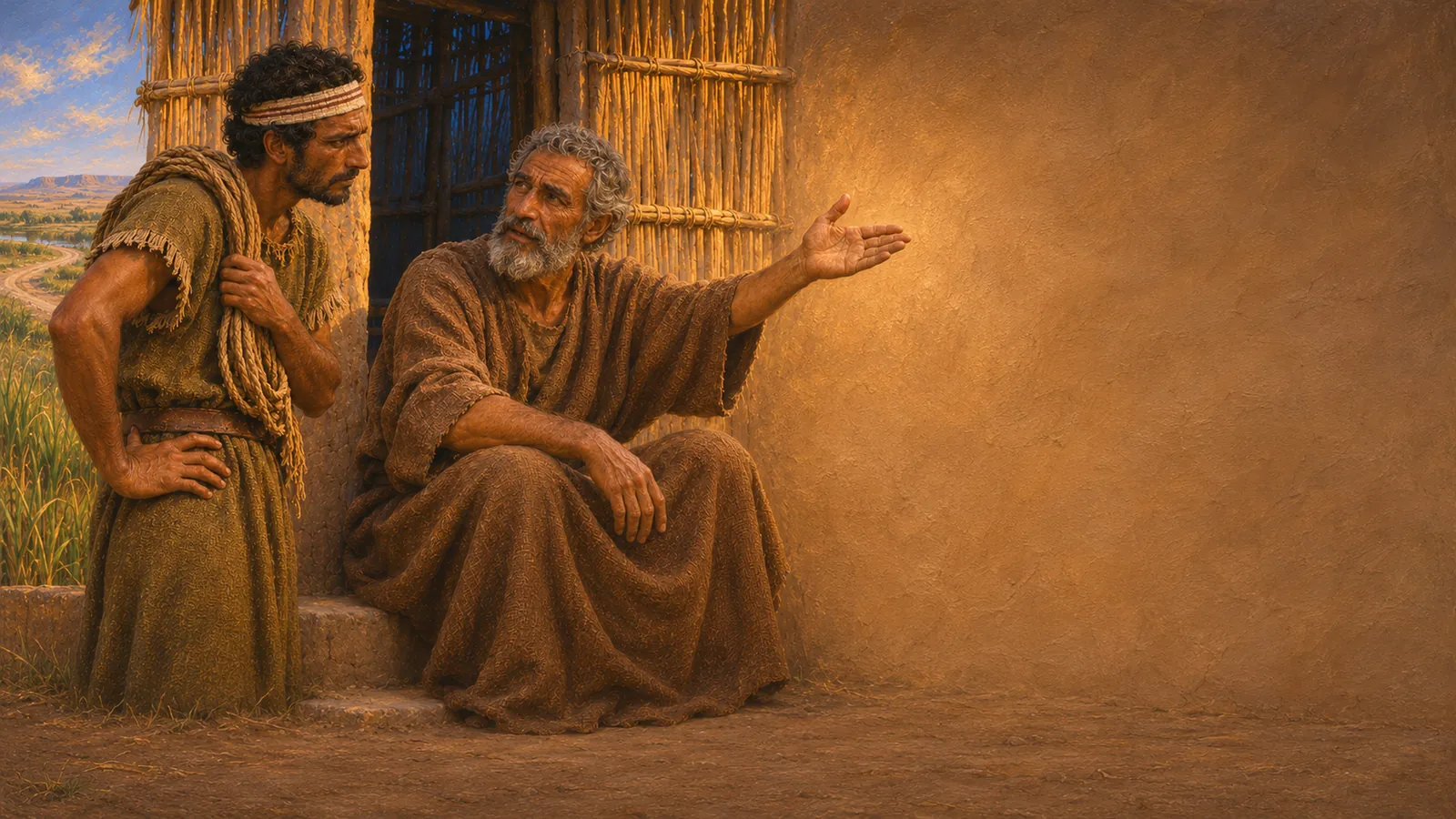
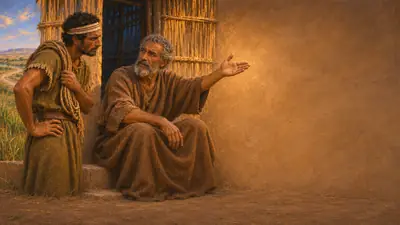
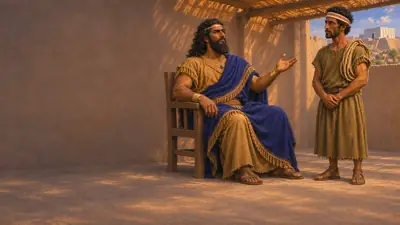
The trapper told his father about the powerful stranger and the broken traps. His father sent him to Gilgamesh in Uruk, where he could ask the king for help.
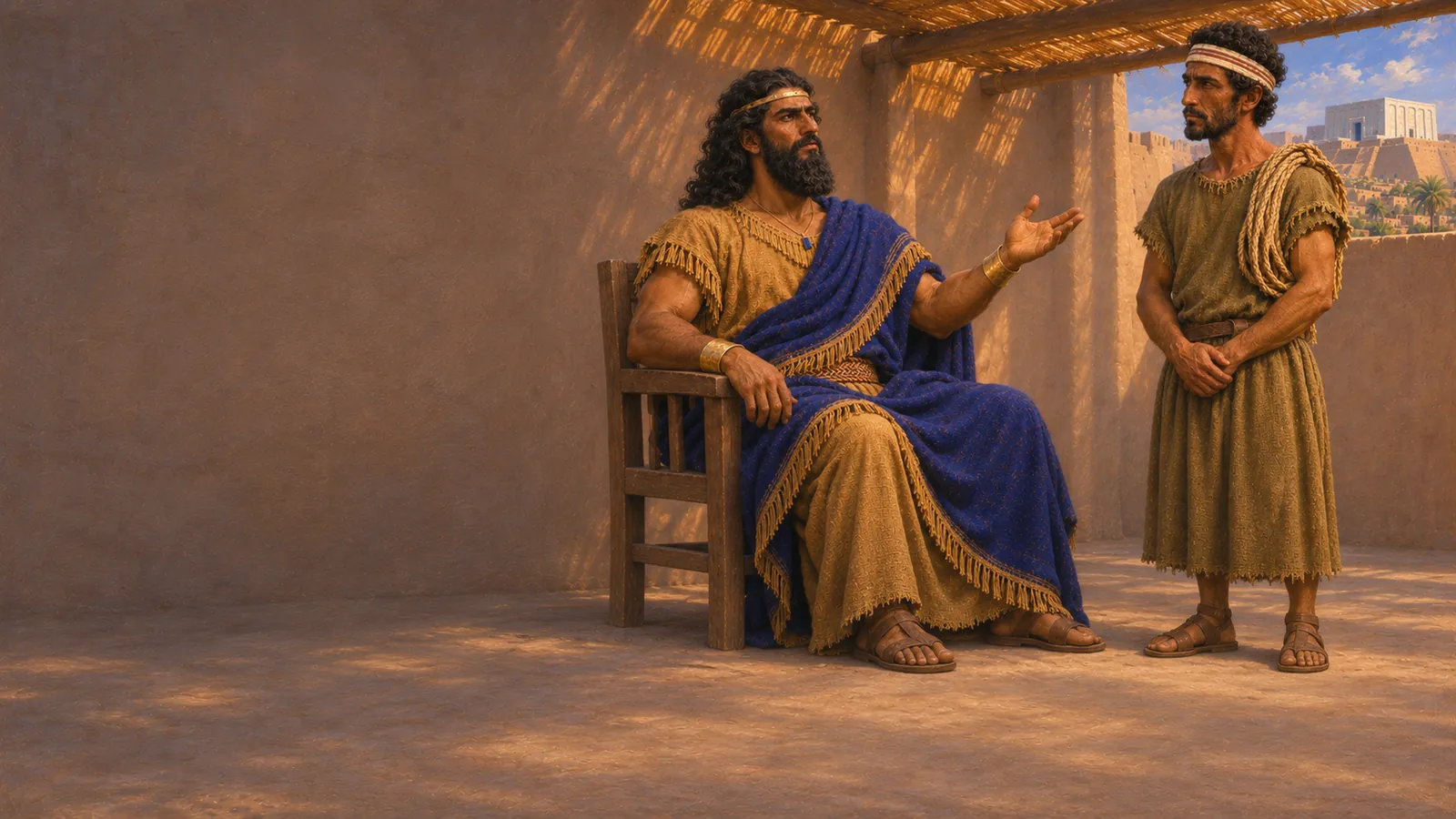
The king heard the trapper’s account. He told him to take Shamhat, a prostitute, to the waterhole. The stranger would approach her, and the herd would turn away from him.
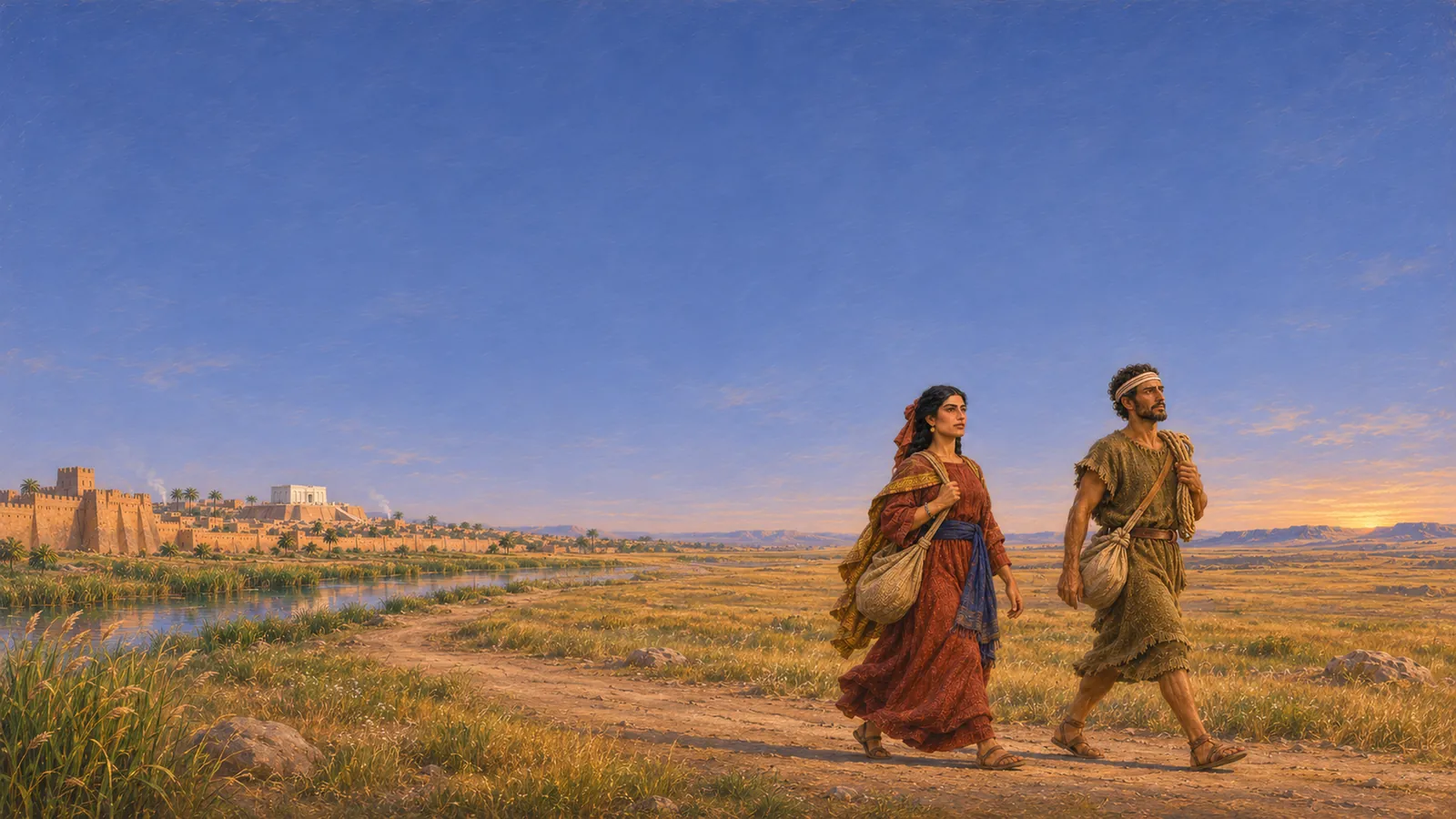
BEYOND THE CITY
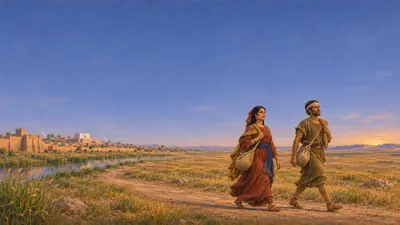
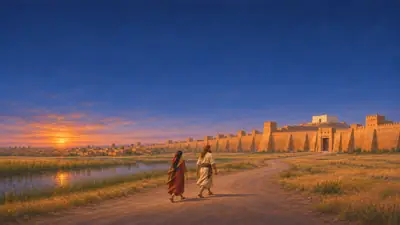
So the trapper set out again, this time with Shamhat. They followed the road into the open country, travelling toward the waterhole where Enkidu and the animals gathered.
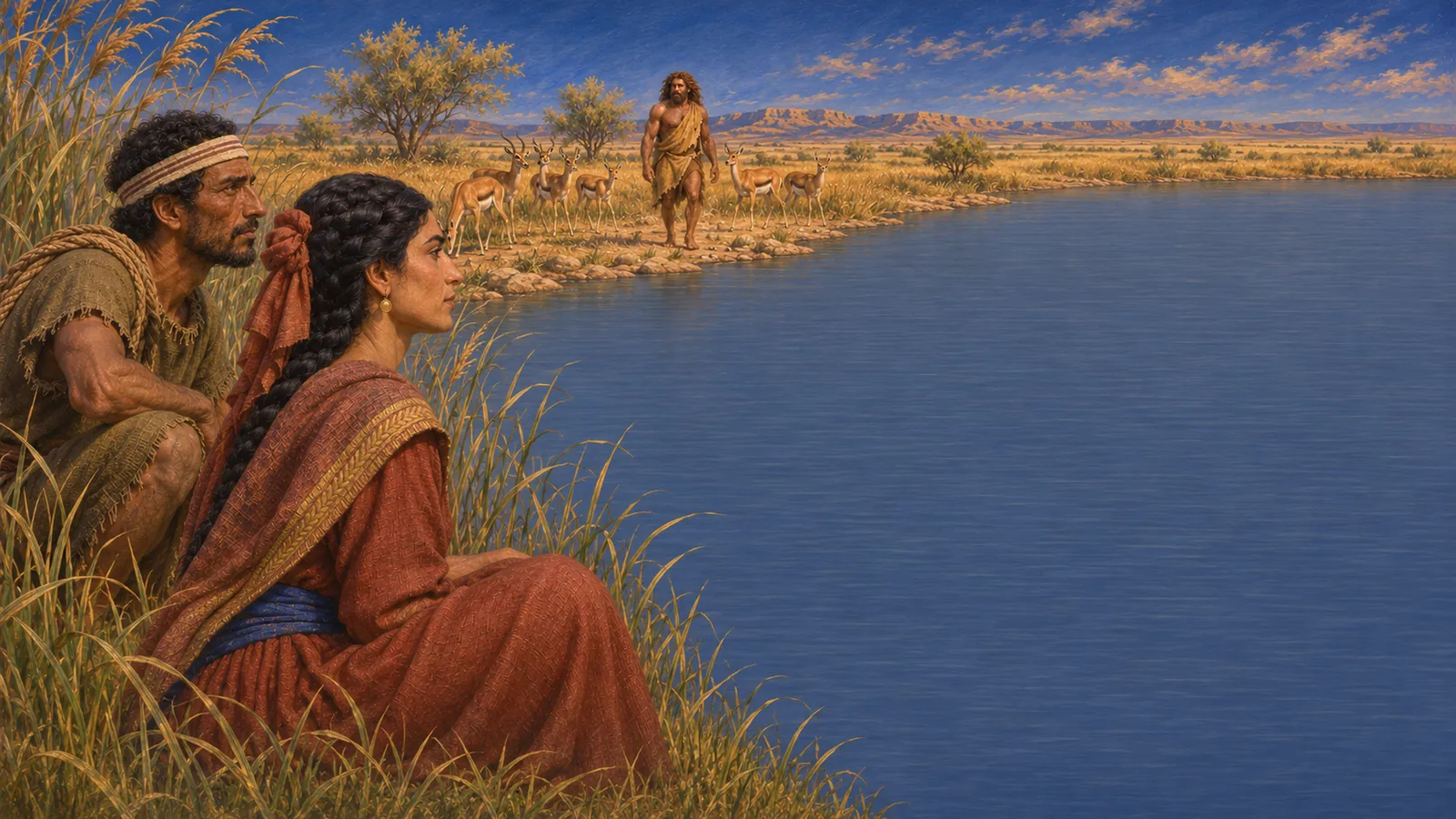
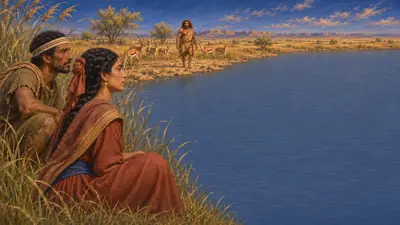
At the water's edge, they sat down to wait. A day passed, and another. Then the animals came to drink, and among them was Enkidu.
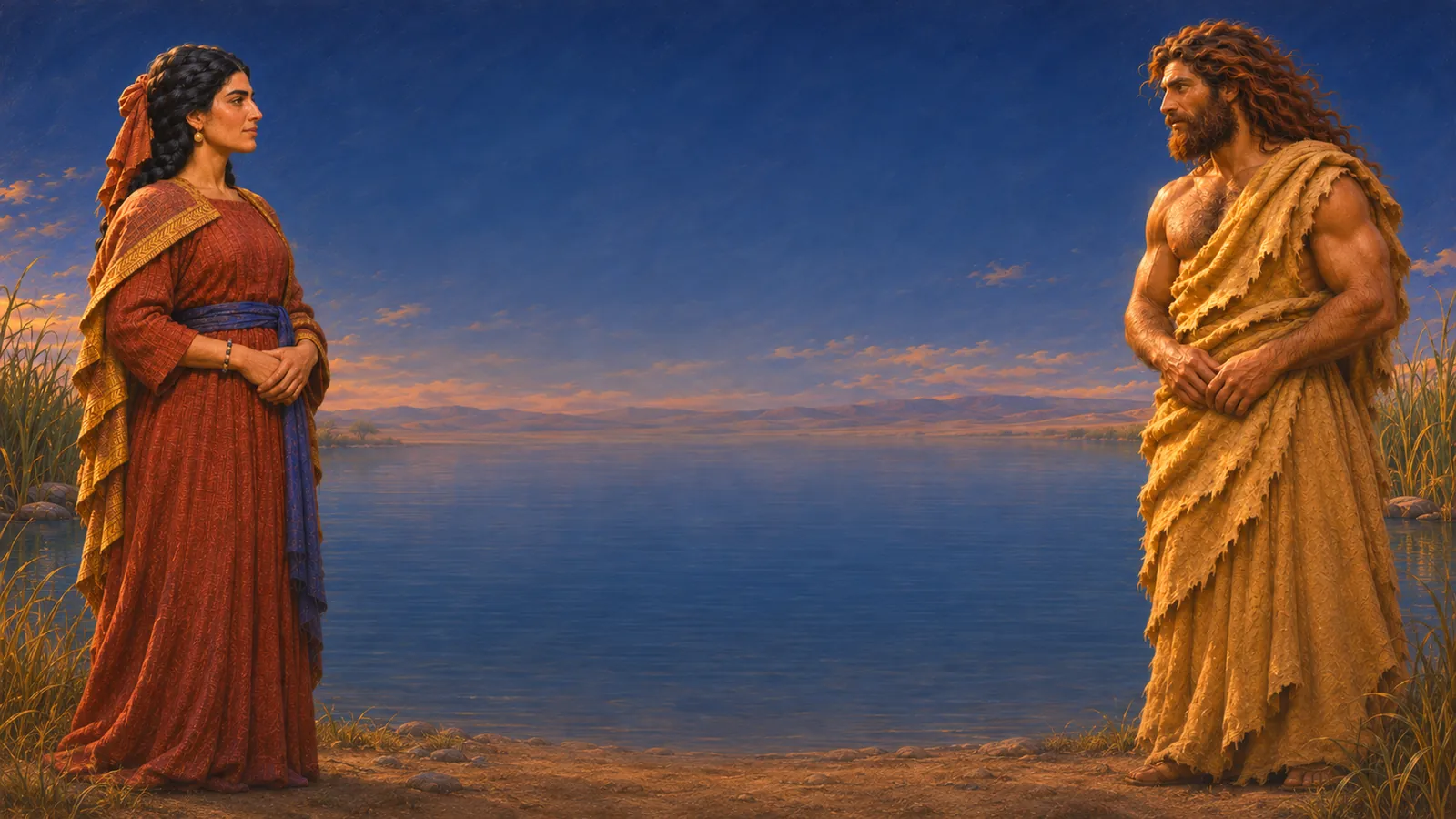
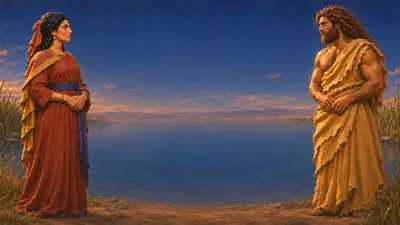
Shamhat saw the man who had grown up in the wild. She showed no fear. Enkidu came toward her, drawn into a closeness different from the company of the herd.
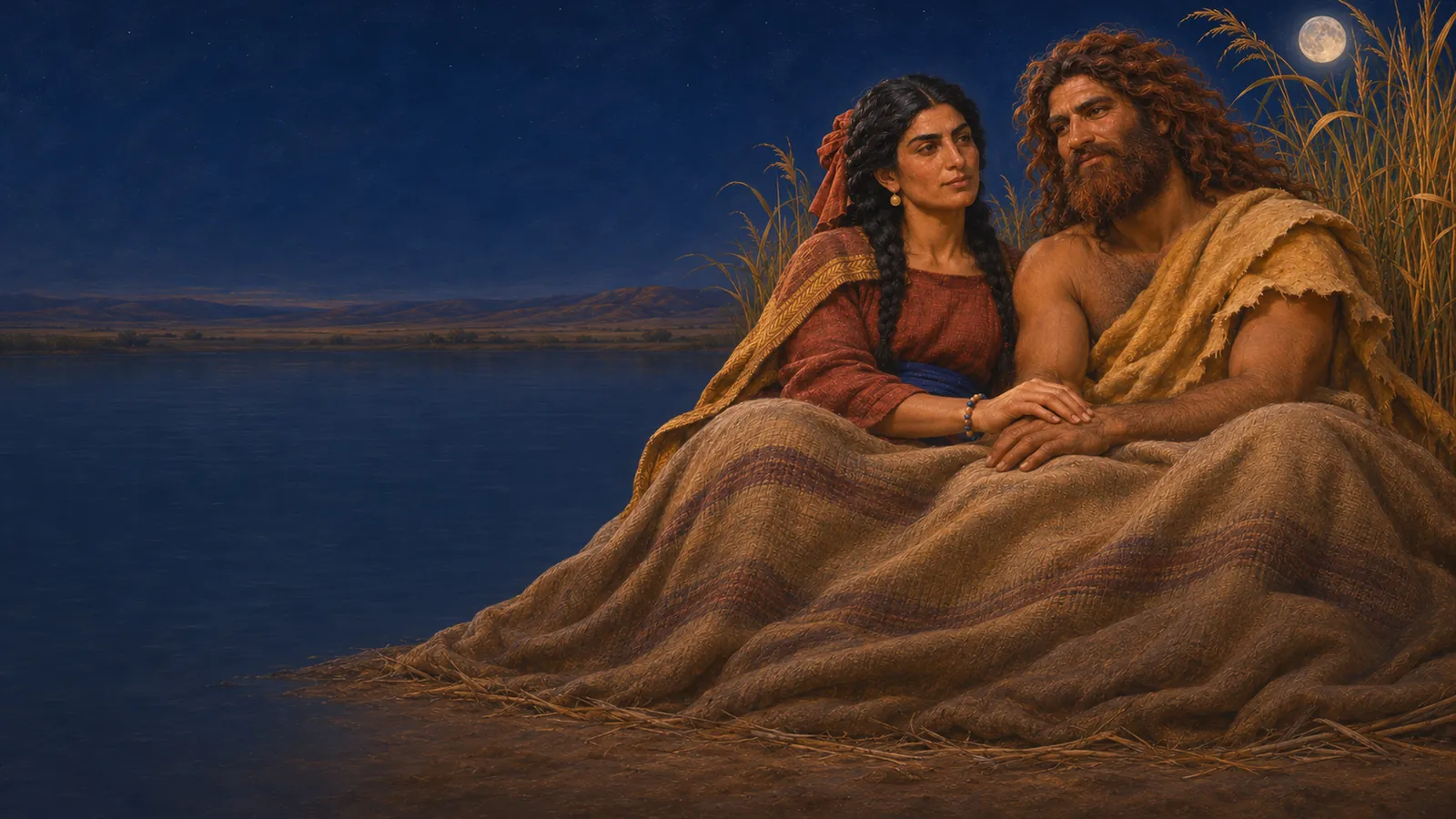
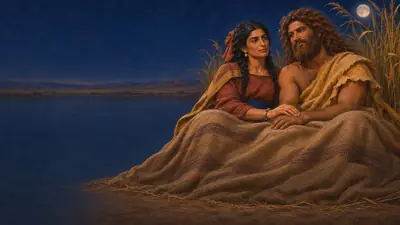
For six days and seven nights, Enkidu and Shamhat shared their intimacy. At last he turned toward the animals again, toward the herd with which he had lived.
THE HERD
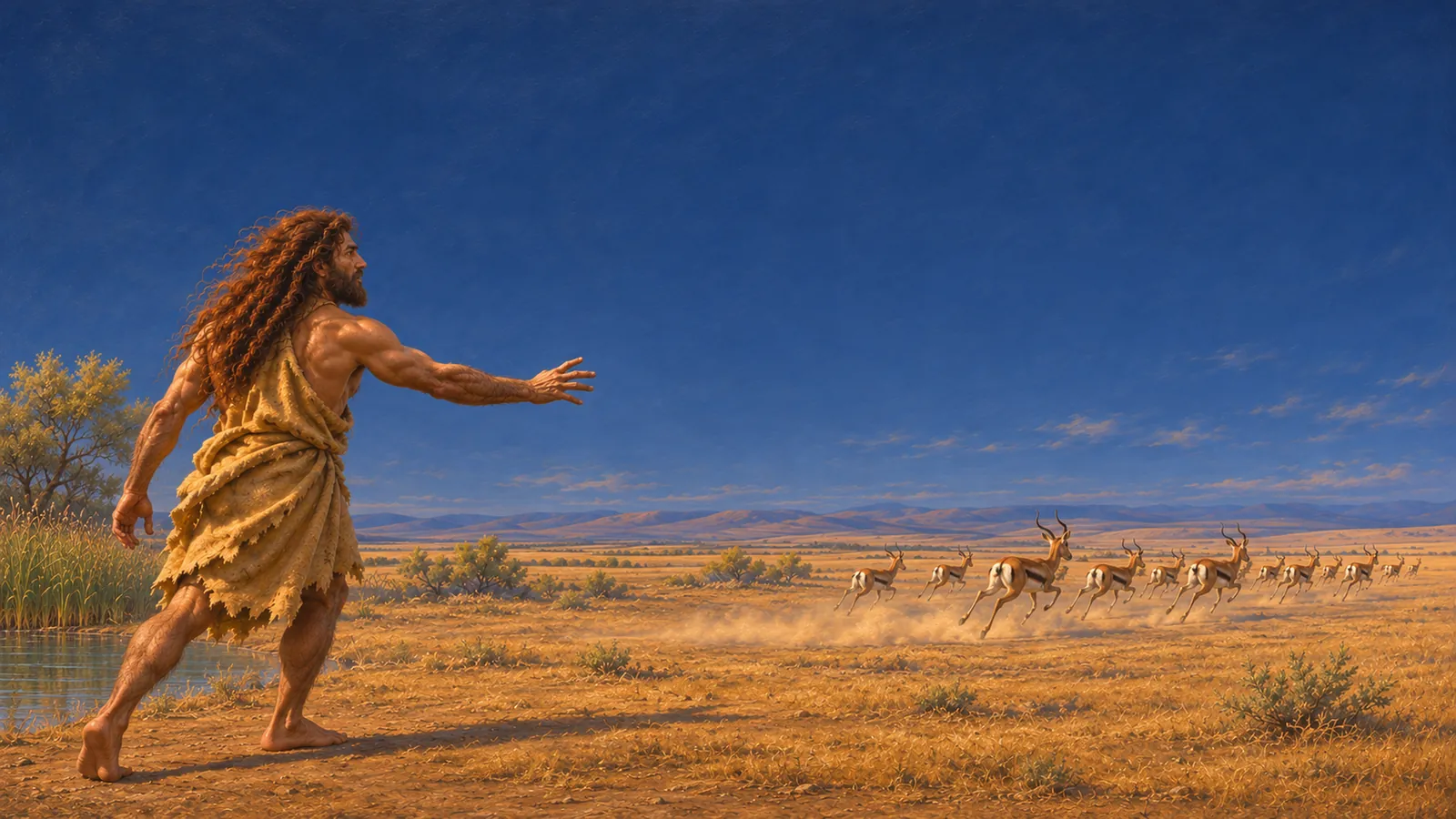
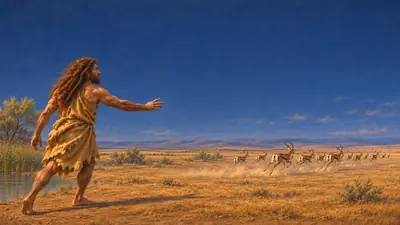
But the gazelles ran when they saw Enkidu. The wild animals drew away from him. The herd he had lived beside would no longer stay close.
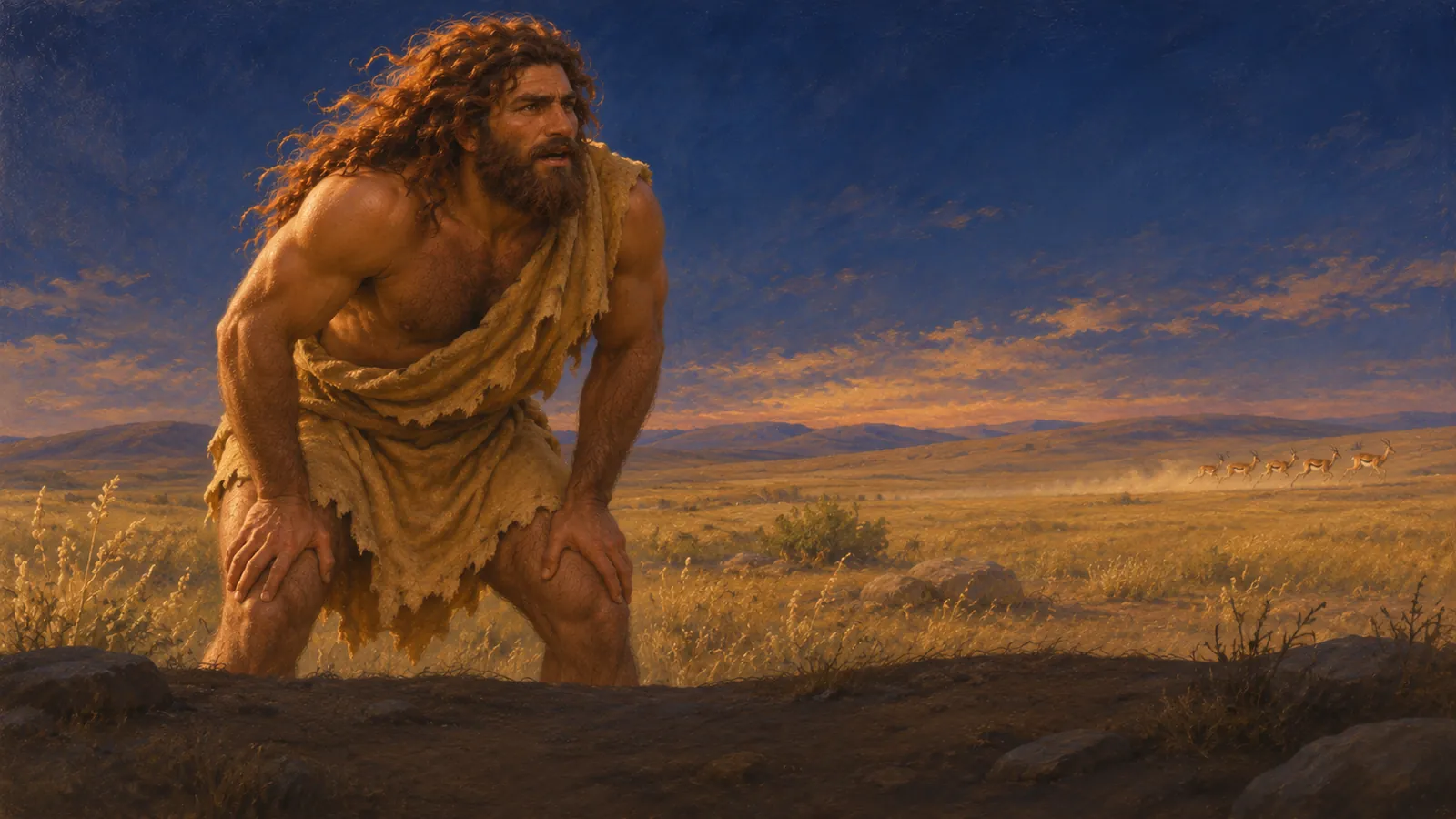
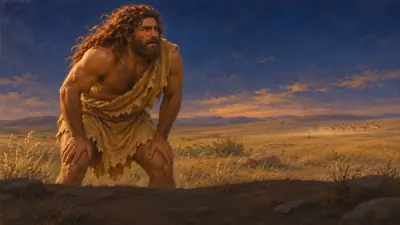
He tried to move with them, but his legs would not carry him as before. The animals went on without him. His old swiftness was gone.
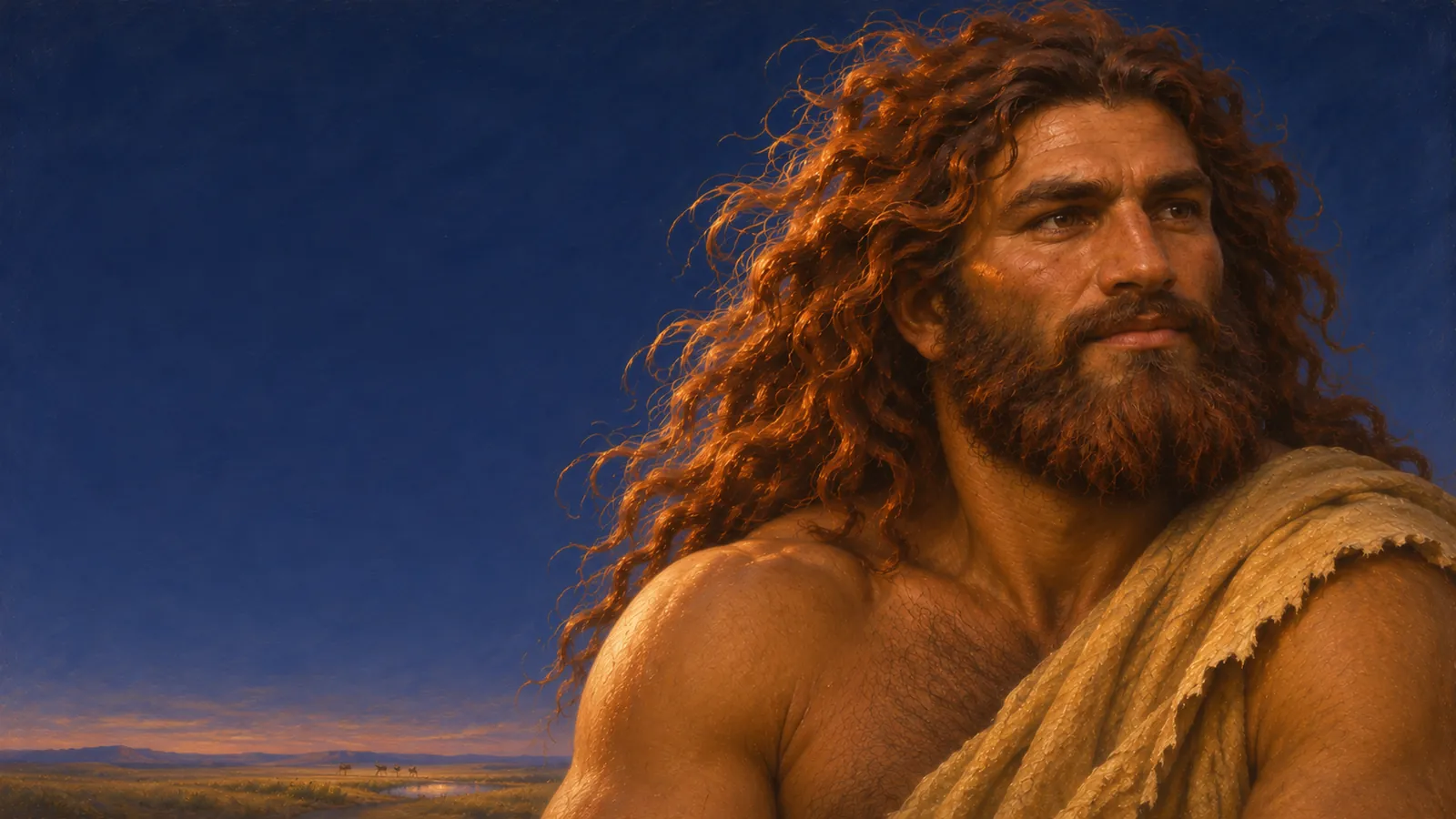
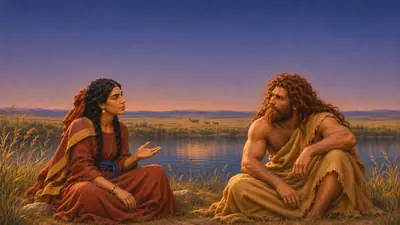
Yet something else had grown within him: understanding. Enkidu returned to Shamhat and sat before her, watching her face. Now he listened closely to what she had to say.
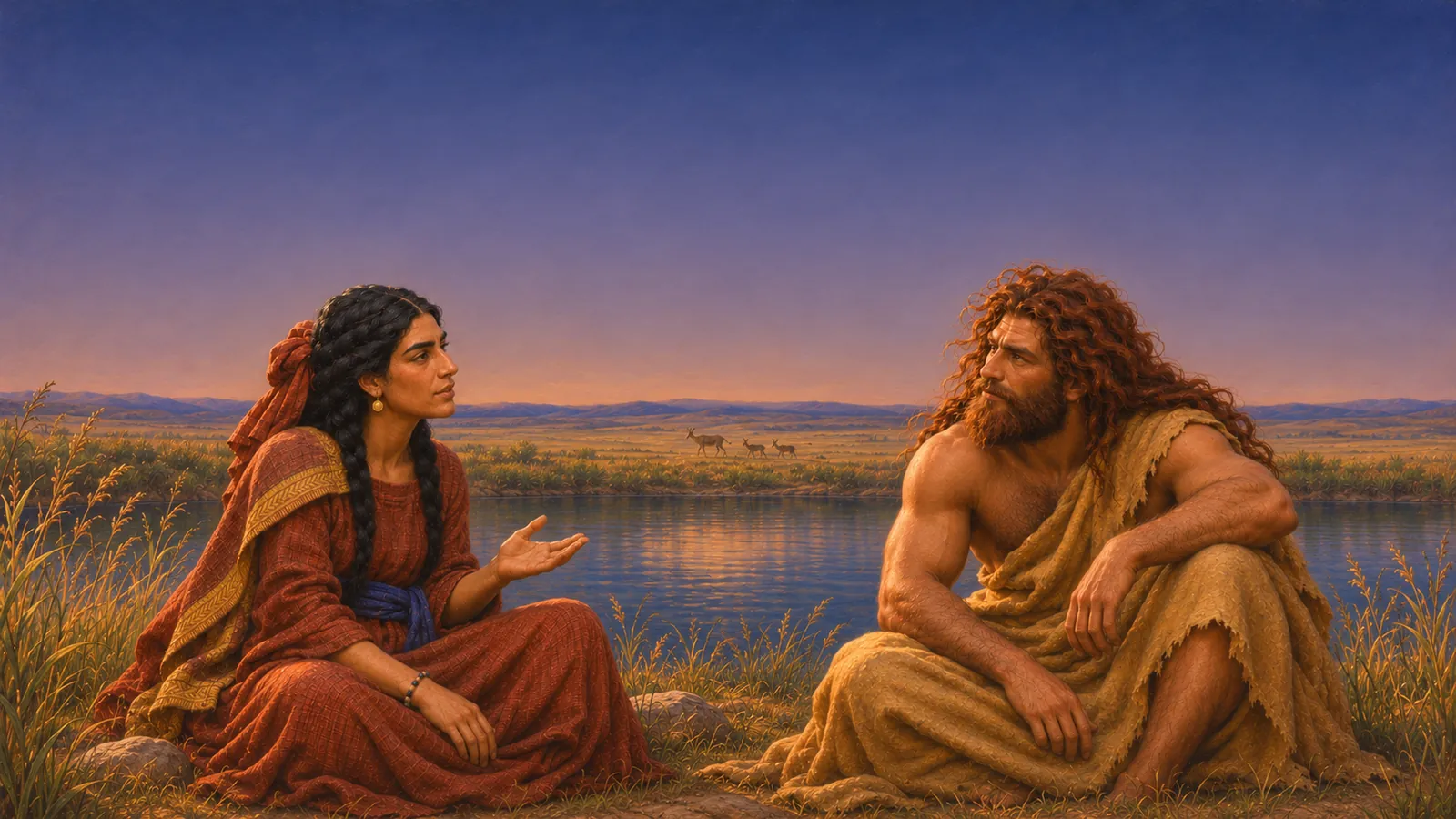
Shamhat told him about Uruk and its mighty king. Enkidu wanted to go there, but he spoke of challenging Gilgamesh. He believed his own strength could change things in the city.
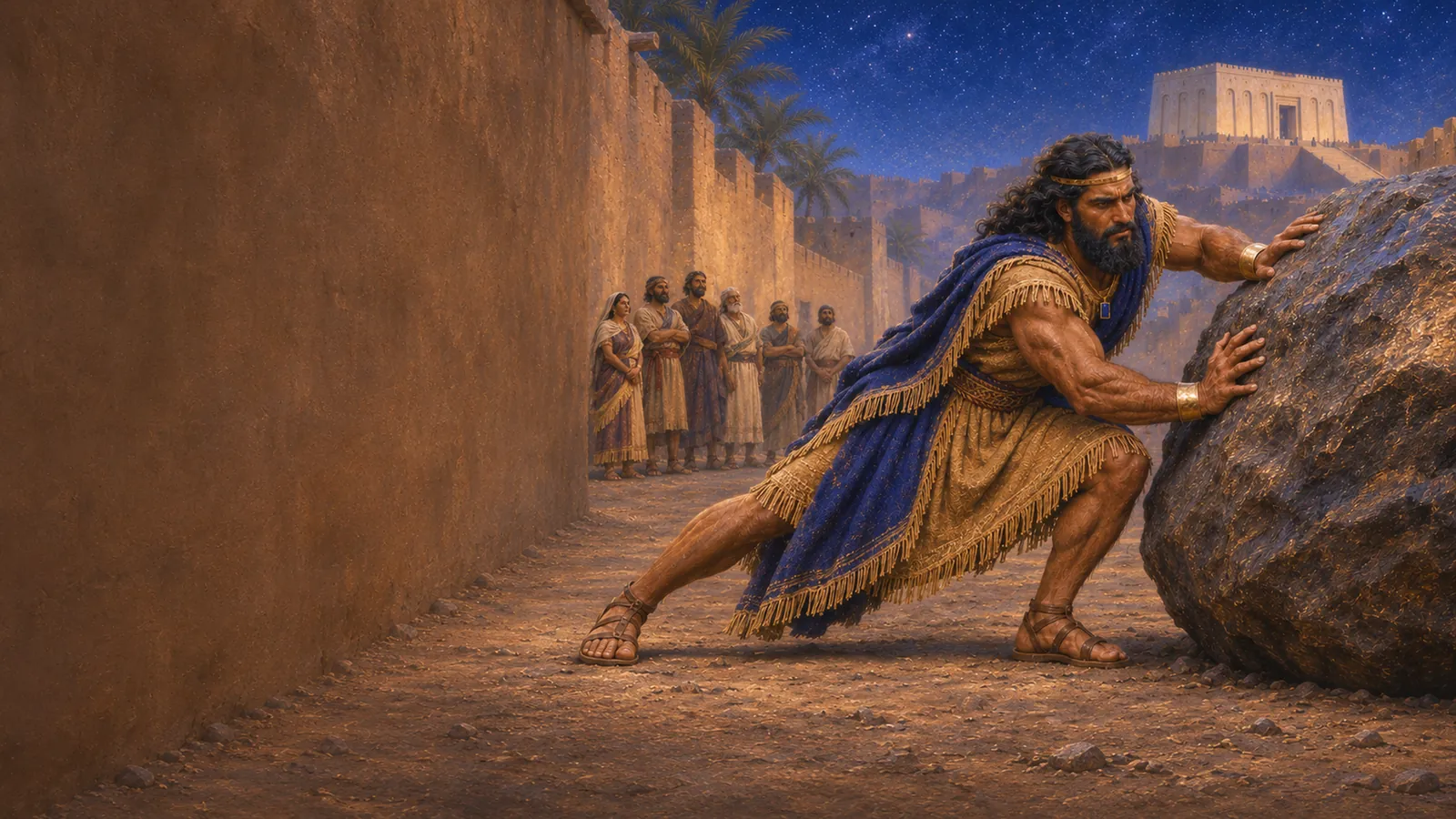
Shamhat told him that Gilgamesh had already dreamed of him. In one dream, a stone fell from the heavens. The king struggled to move it while the people of Uruk gathered around.
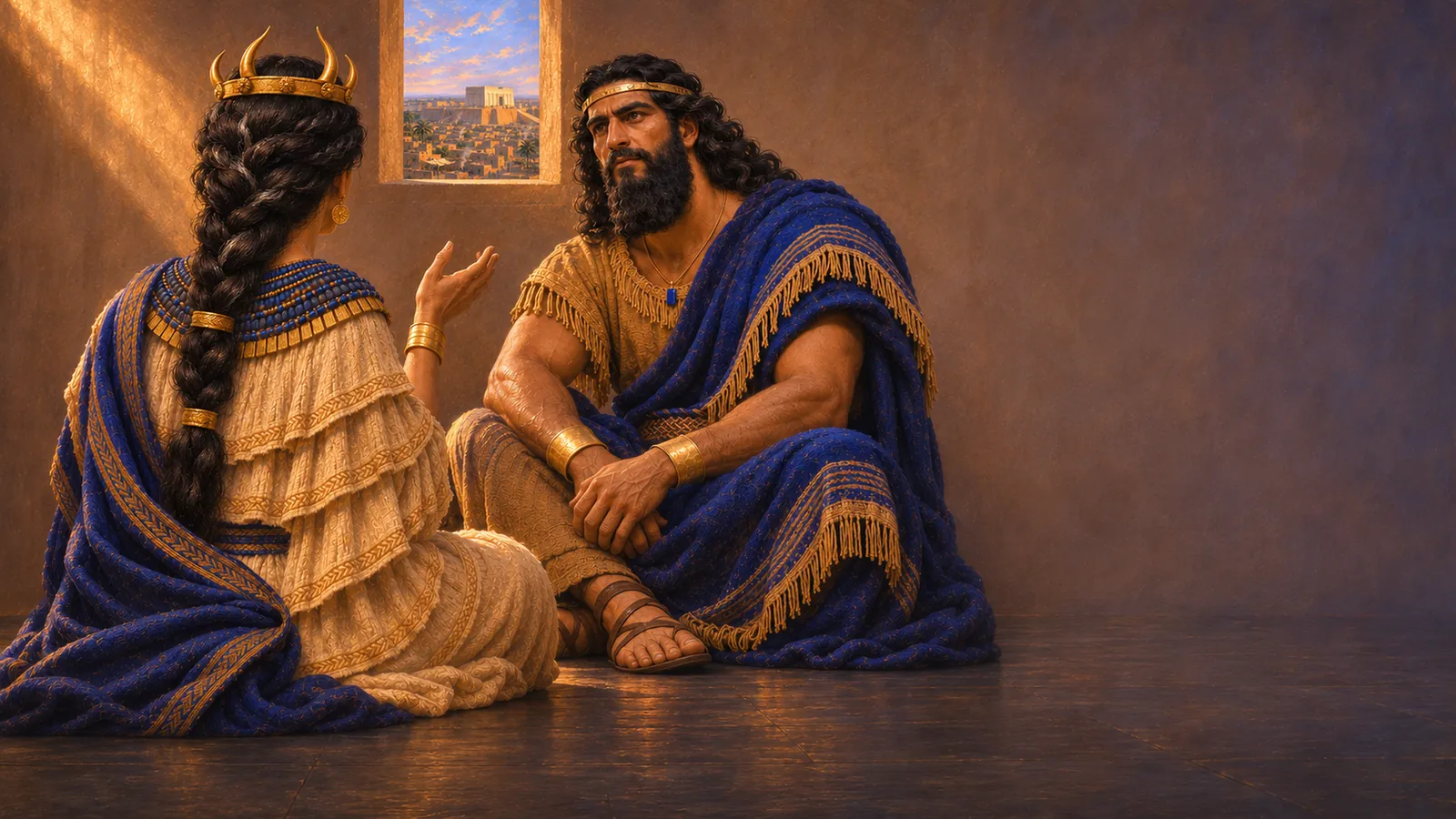
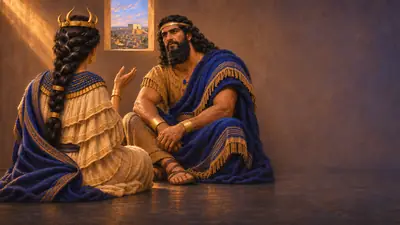
Gilgamesh had taken the dream to his mother, Ninsun. She understood its meaning: a mighty companion would come to him, someone he would love, and someone who would help keep him safe.
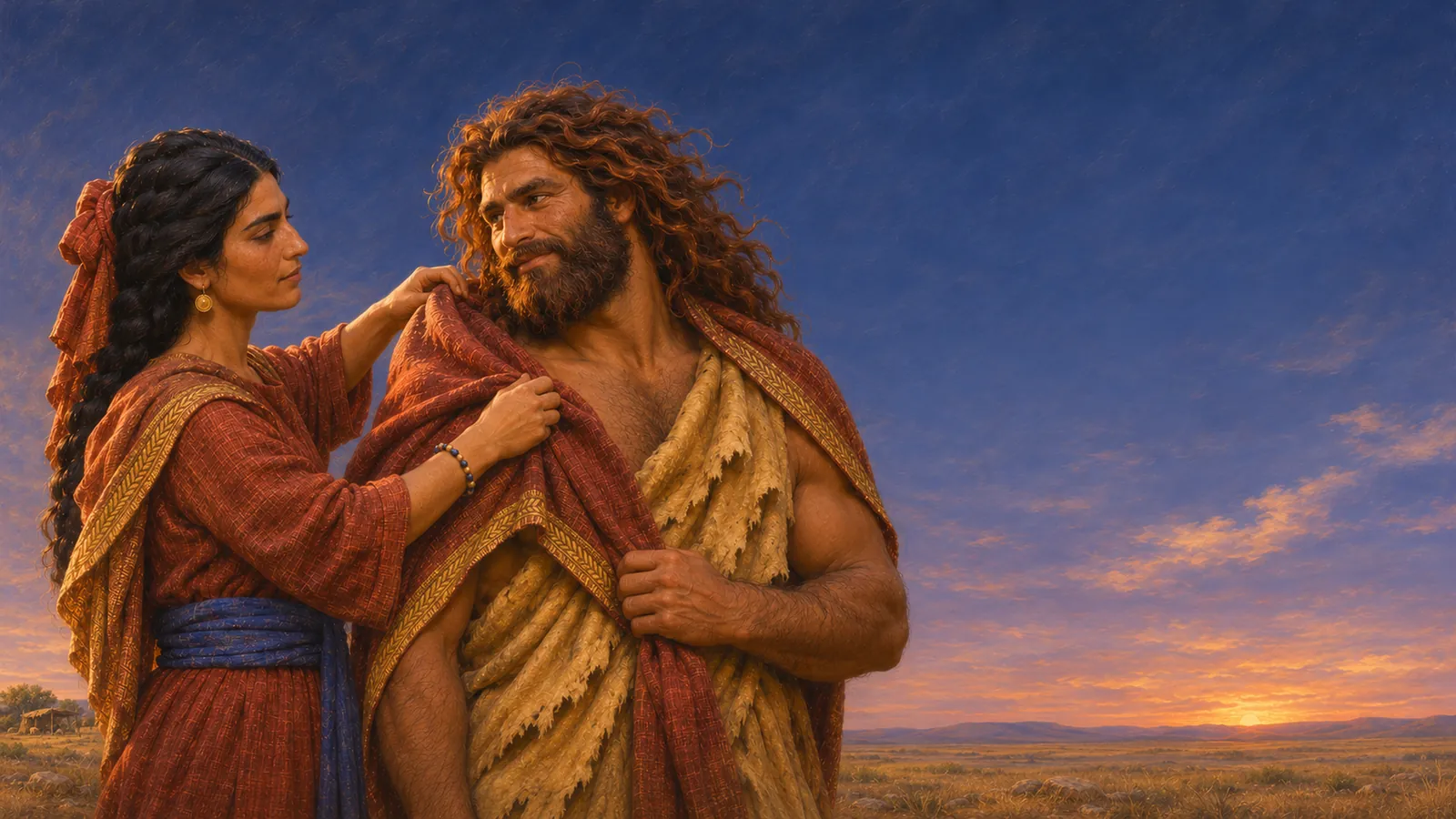
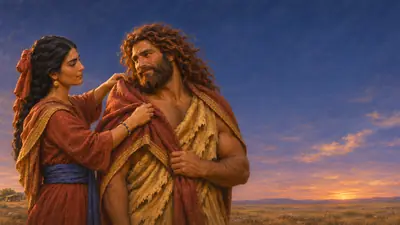
Shamhat shared her clothing with Enkidu. Then she took his hand and led him onward, away from the wild herd and toward the camp where the shepherds lived.
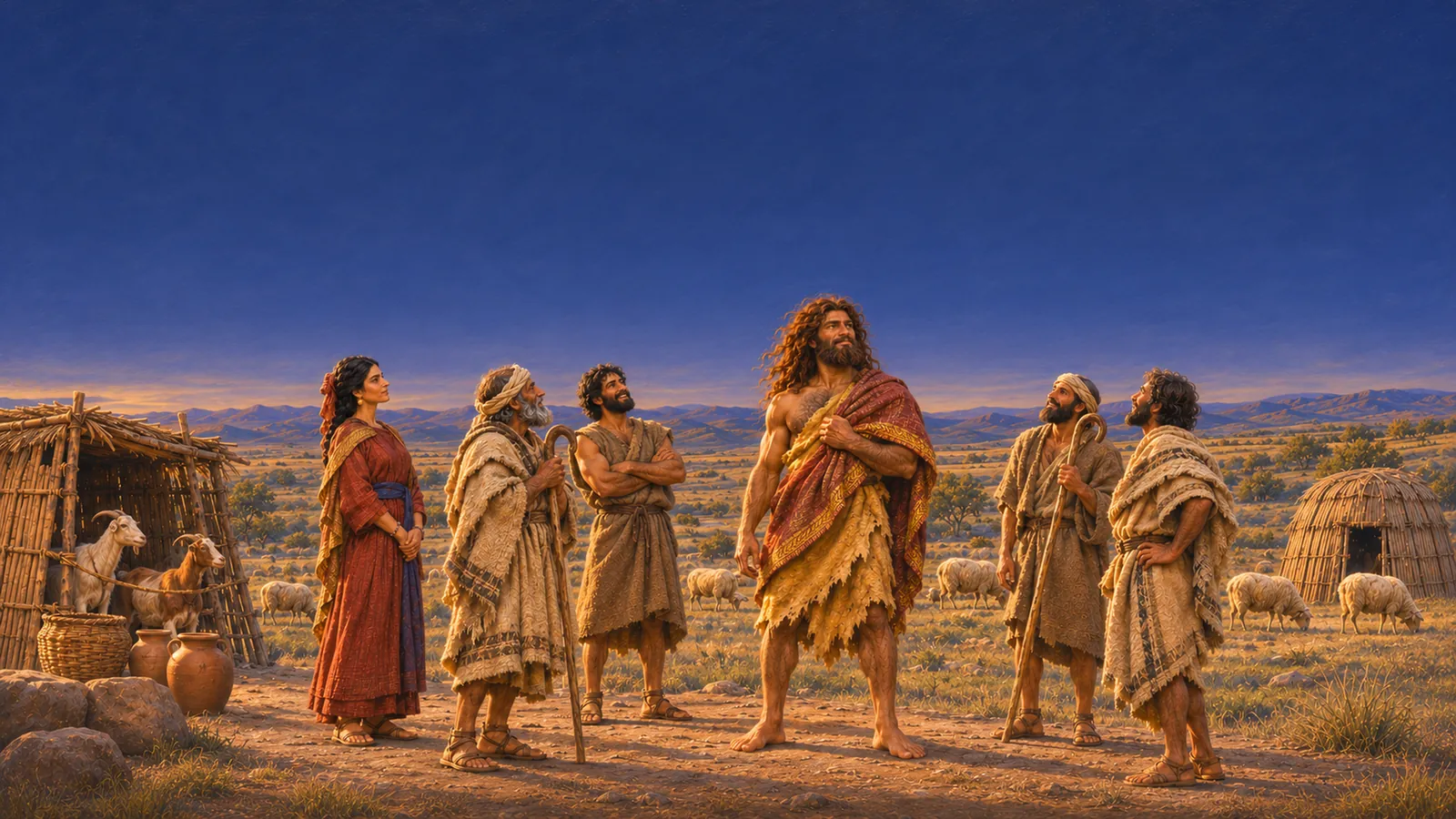
THE SHEPHERDS
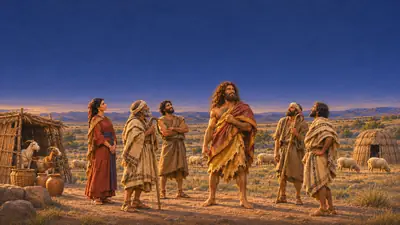
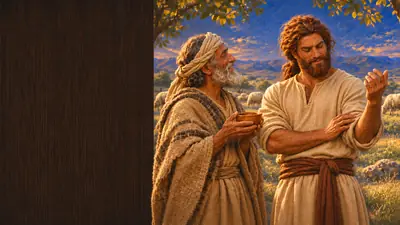
The shepherds gathered around their visitor. They marvelled at Enkidu's powerful build and spoke of how he resembled Gilgamesh. Such strength was something they could not overlook.
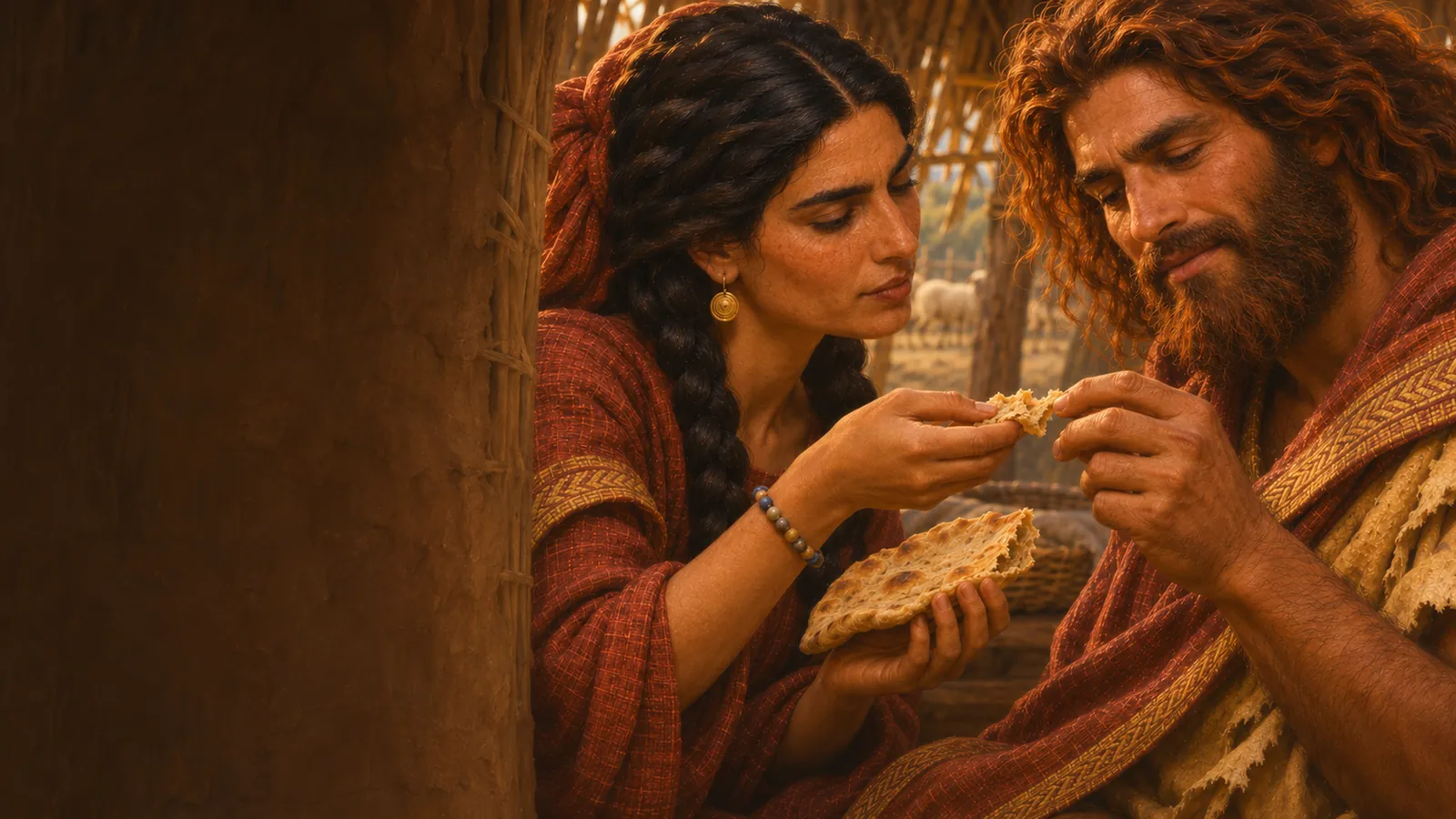
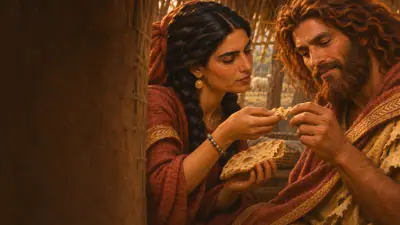
They placed bread before Enkidu, but he did not know how to eat it. Shamhat encouraged him to try the food people lived on, guiding him into another unfamiliar custom.
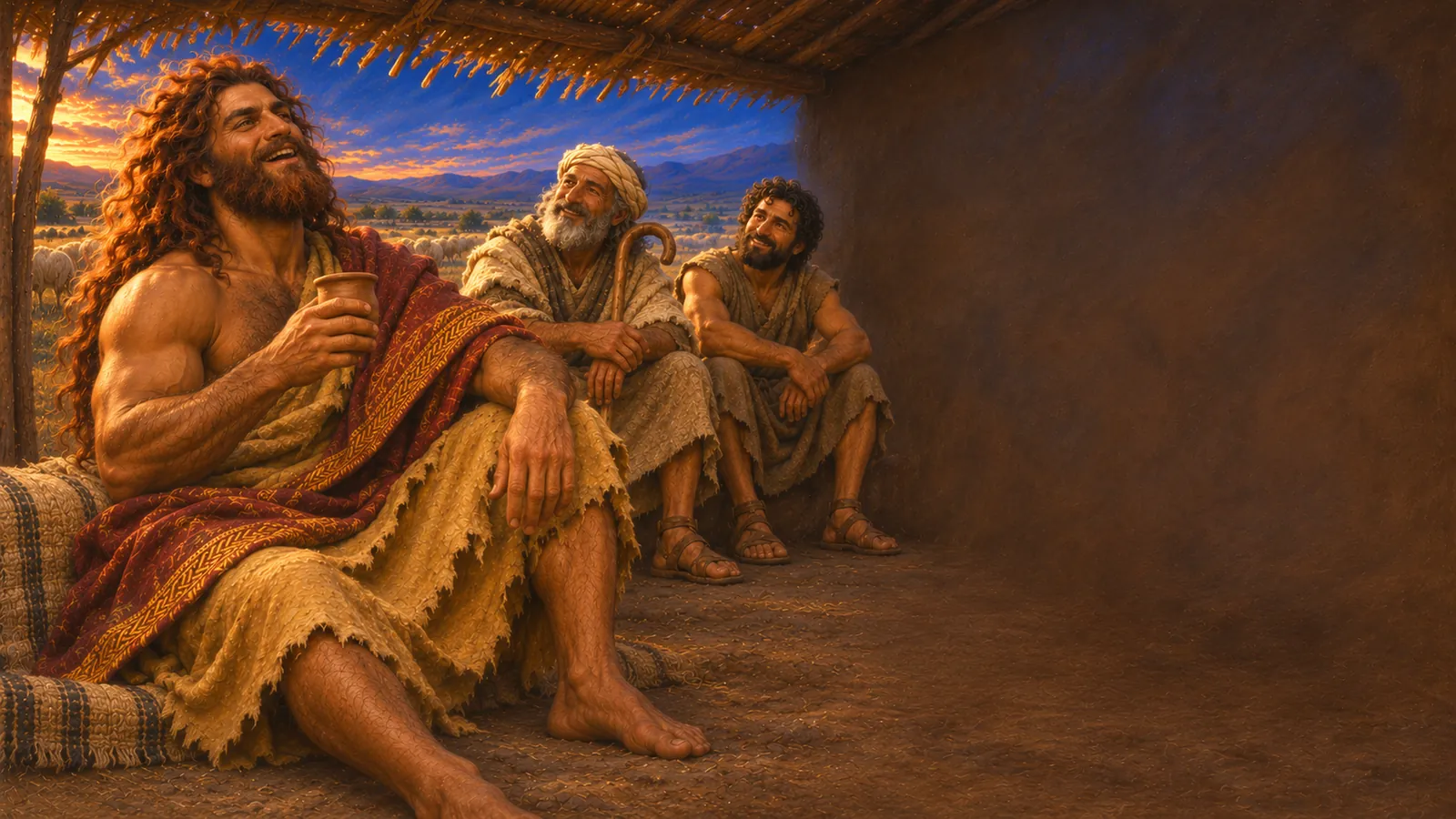
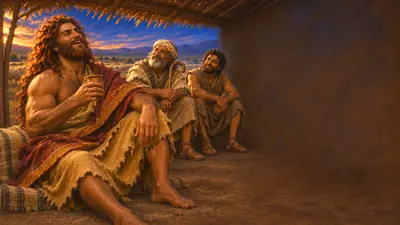
Enkidu ate until he was satisfied, then drank the beer. His mood grew cheerful and his face brightened. Soon he was singing among the people of the camp.
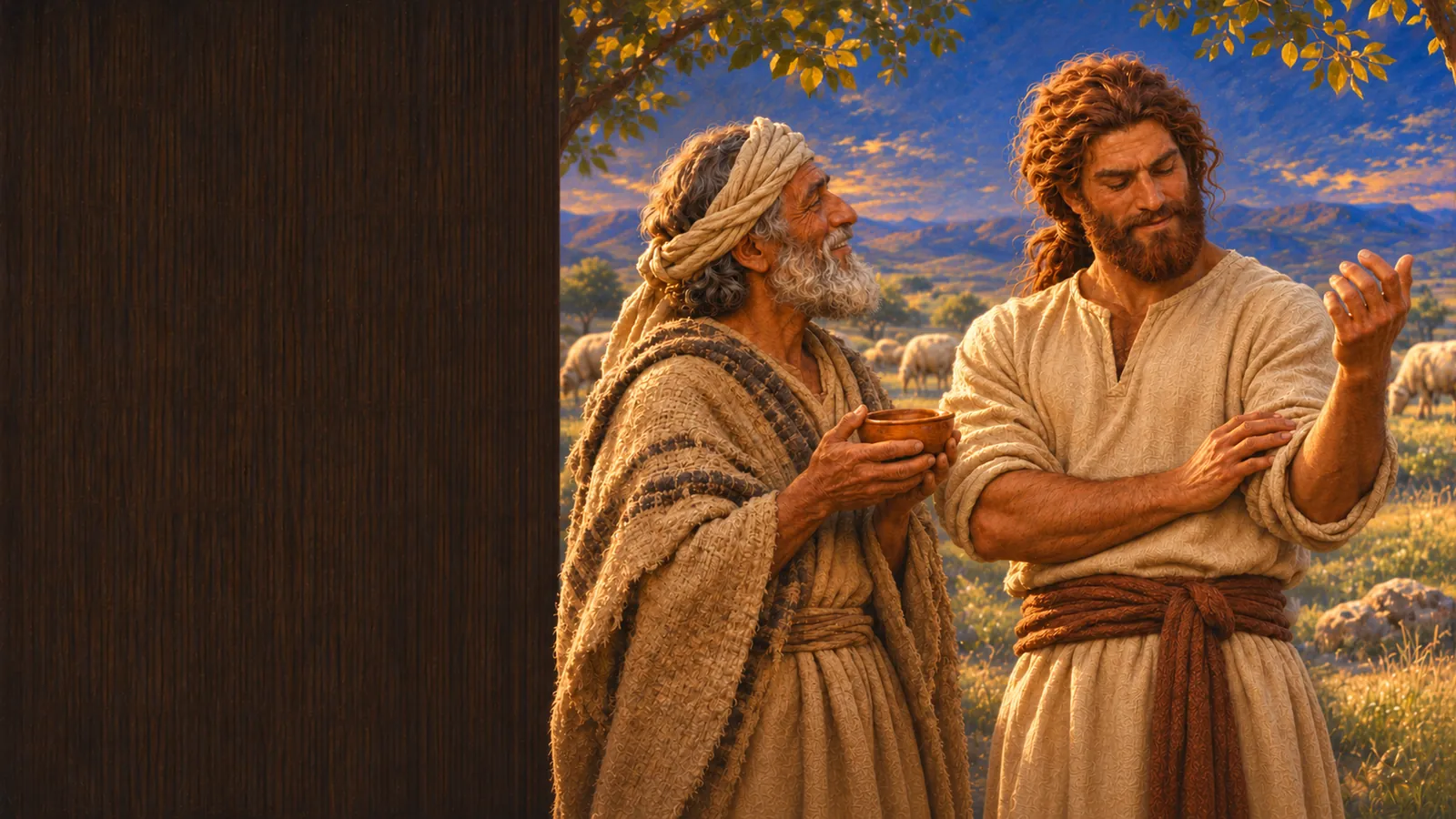
His hair was tended, he anointed himself with oil, and he put on clothing. Enkidu now appeared among the shepherds in a new way, ready to take his place beside them.
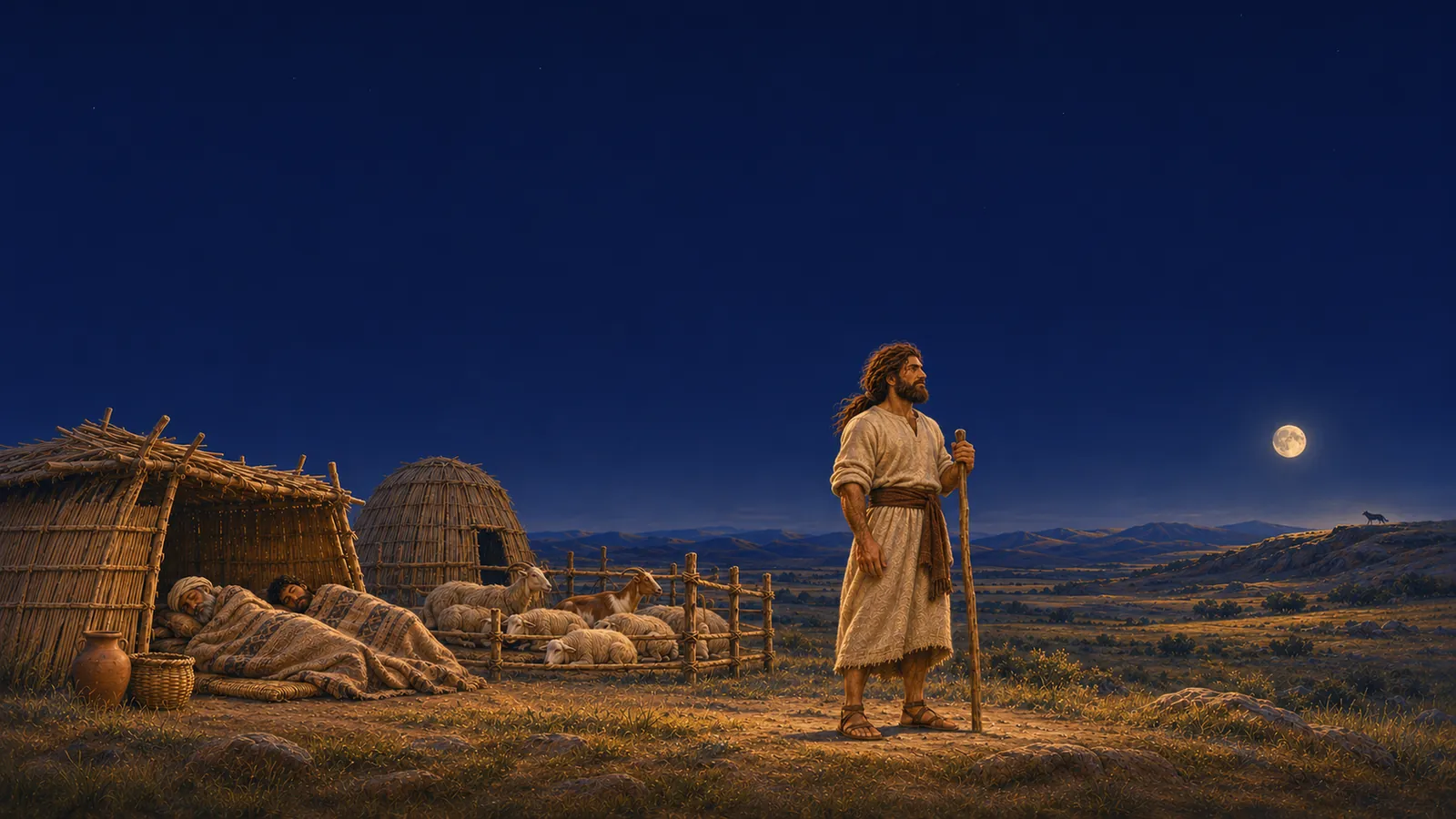
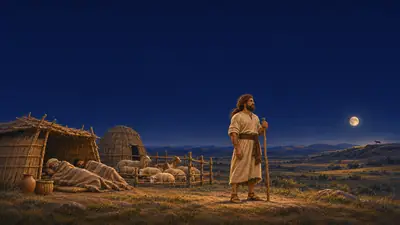
At night, Enkidu stayed awake while the shepherds slept. He protected their animals from wolves and lions. The strength that had guarded the wild herd now watched over their flocks.
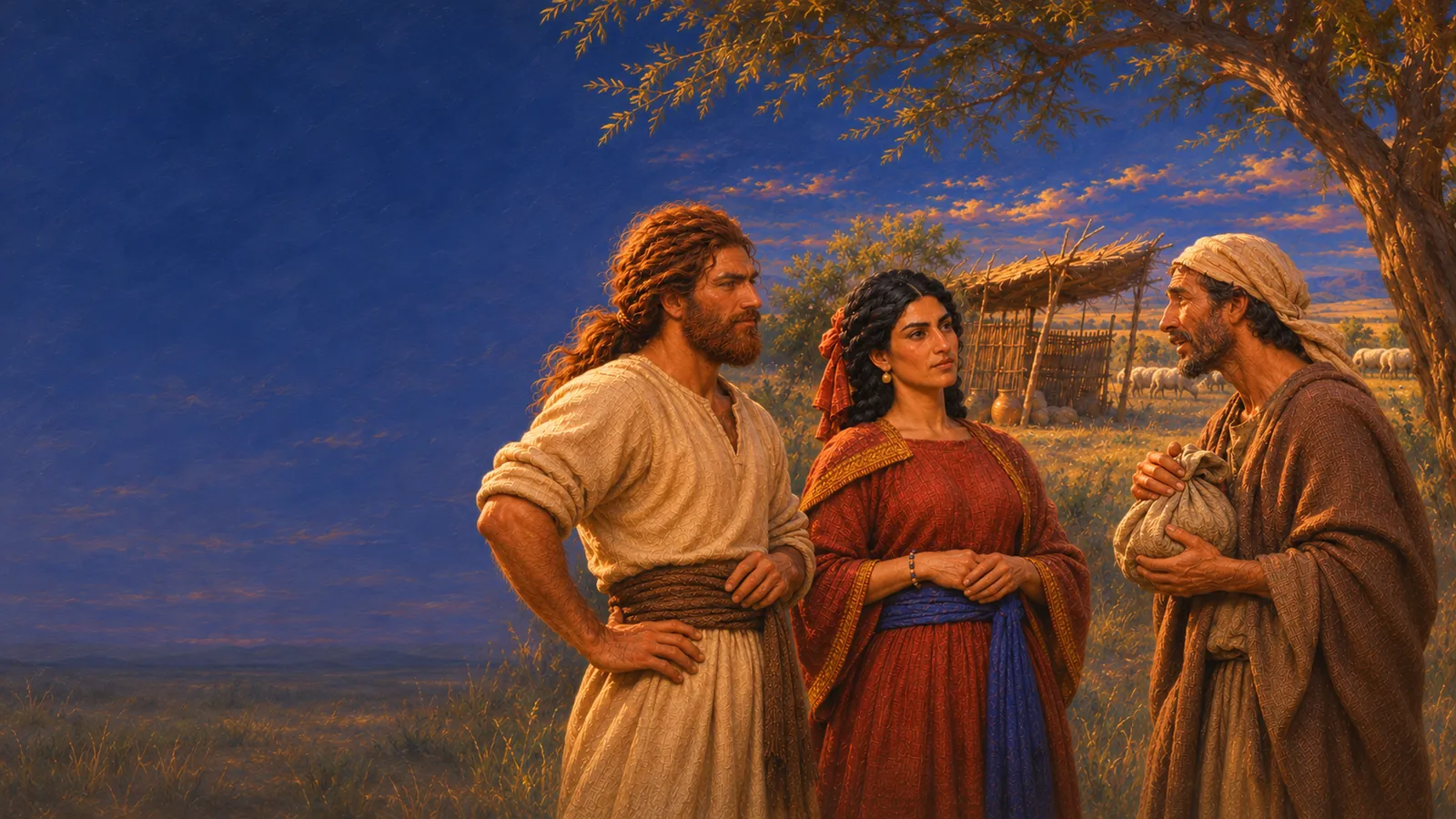
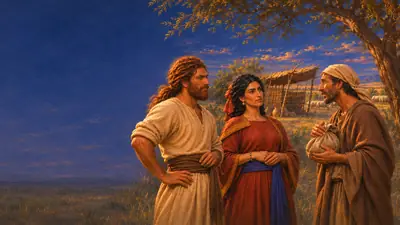
One day, Enkidu noticed a man passing by and asked Shamhat to call him over. The traveller explained his journey: he was going to a wedding feast.
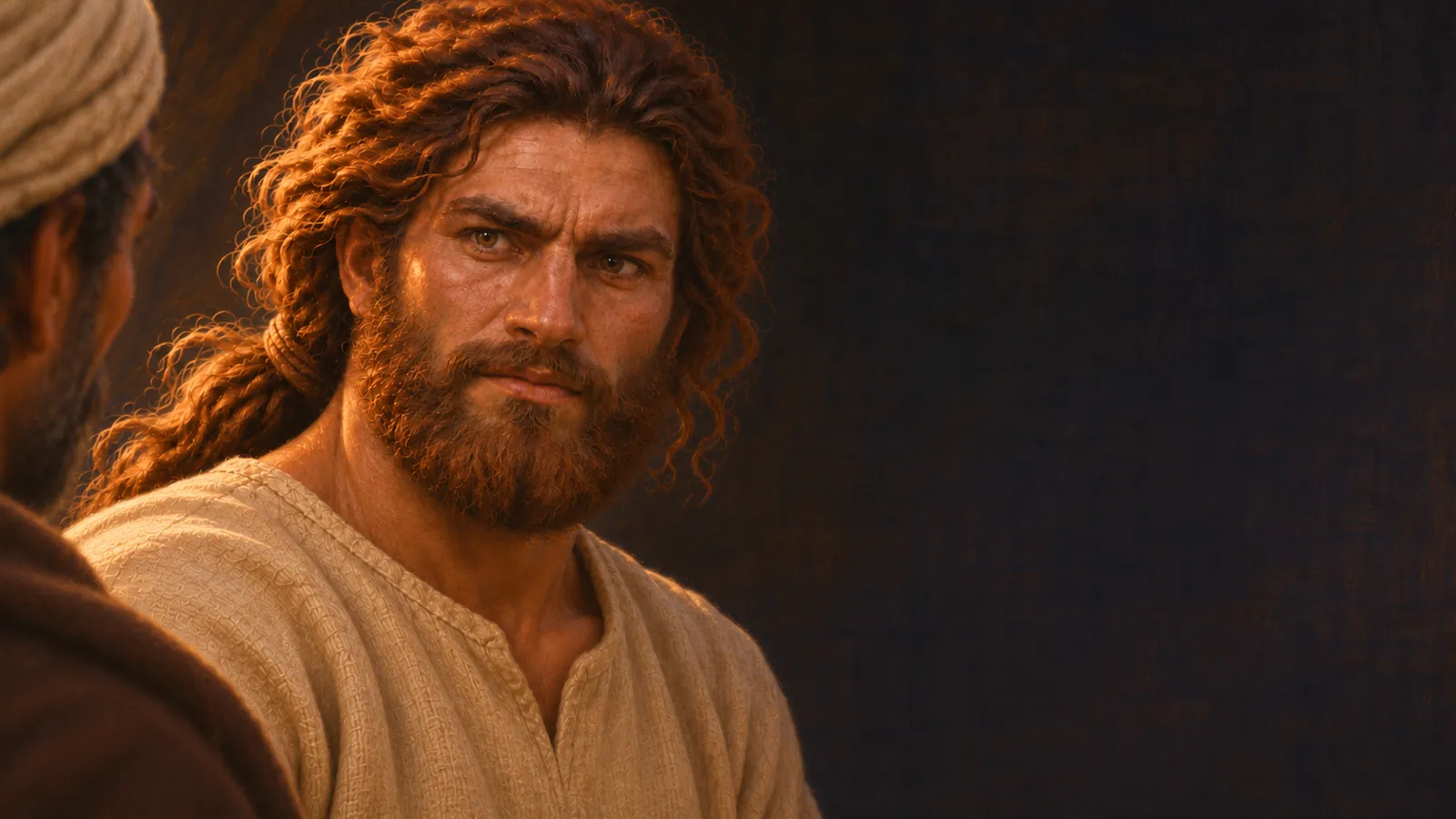
But there was more. Gilgamesh, the traveller said, would lie with the bride before her bridegroom did. As Enkidu heard the claim, the colour left his face.
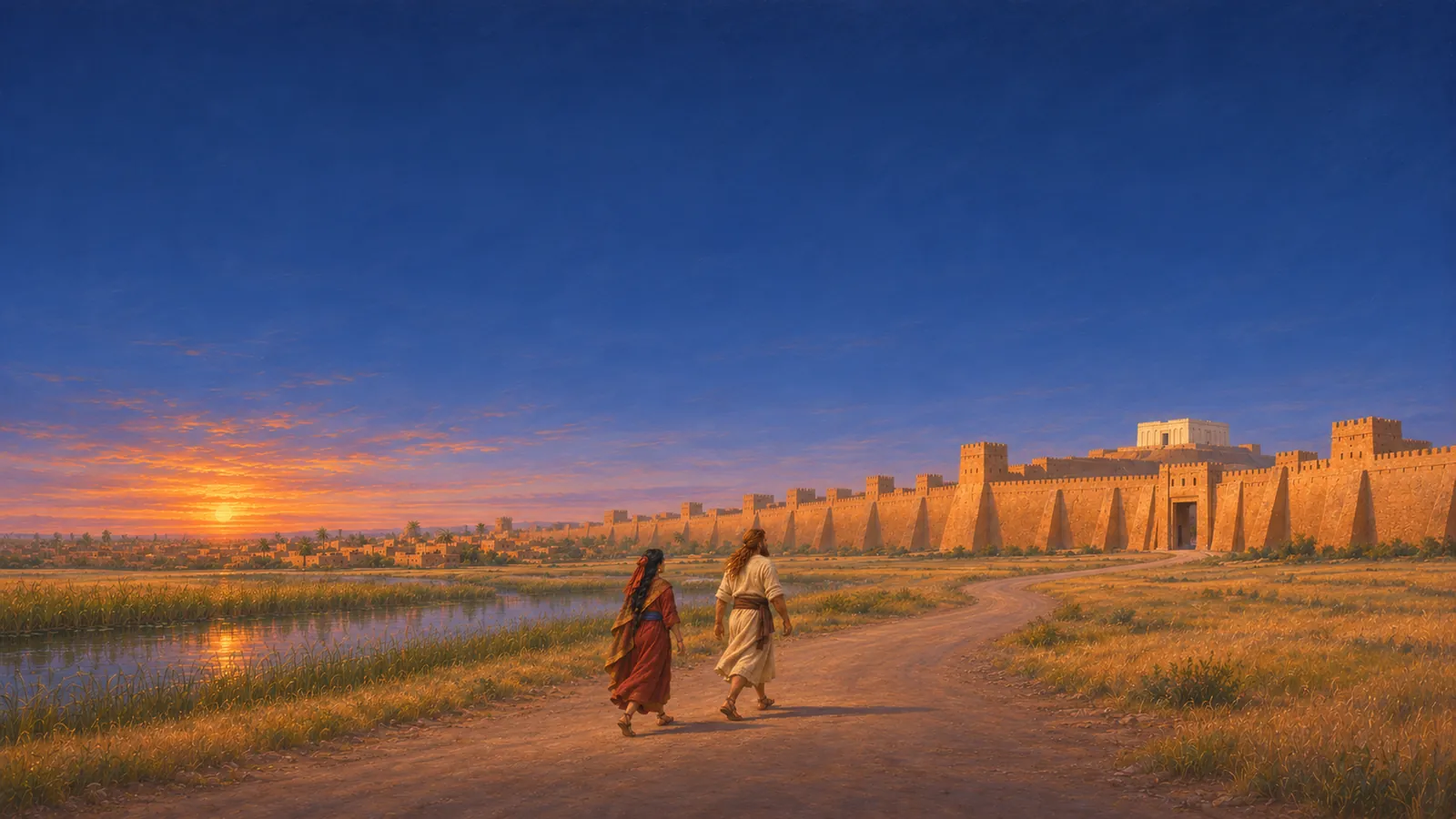
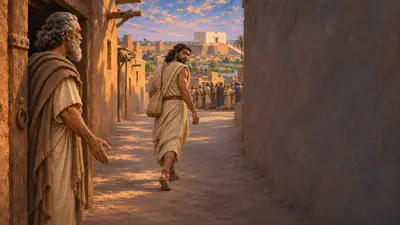
Enkidu went to see what the traveller had described. He set out for Uruk with Shamhat following. The stranger from the steppe was about to enter the king's city.
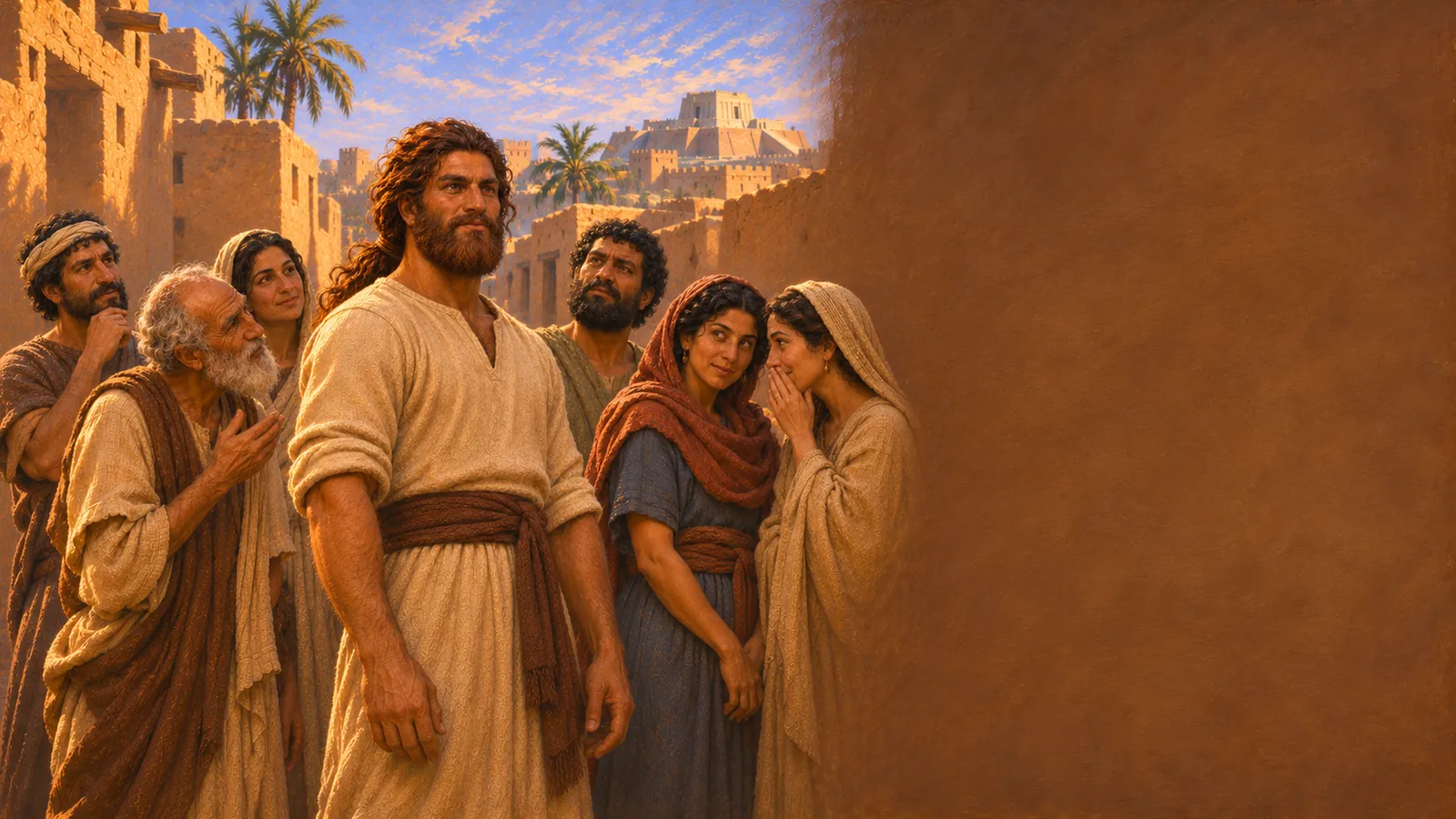
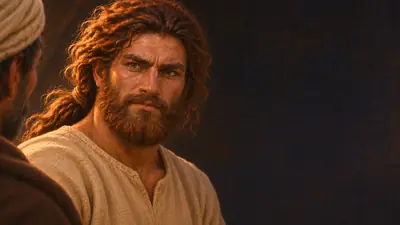
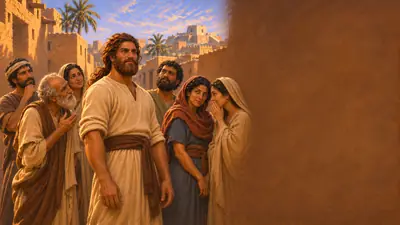
When Enkidu arrived, the people gathered around him in the street. They studied his powerful build and compared him with Gilgamesh. Here was someone who could stand beside their king.
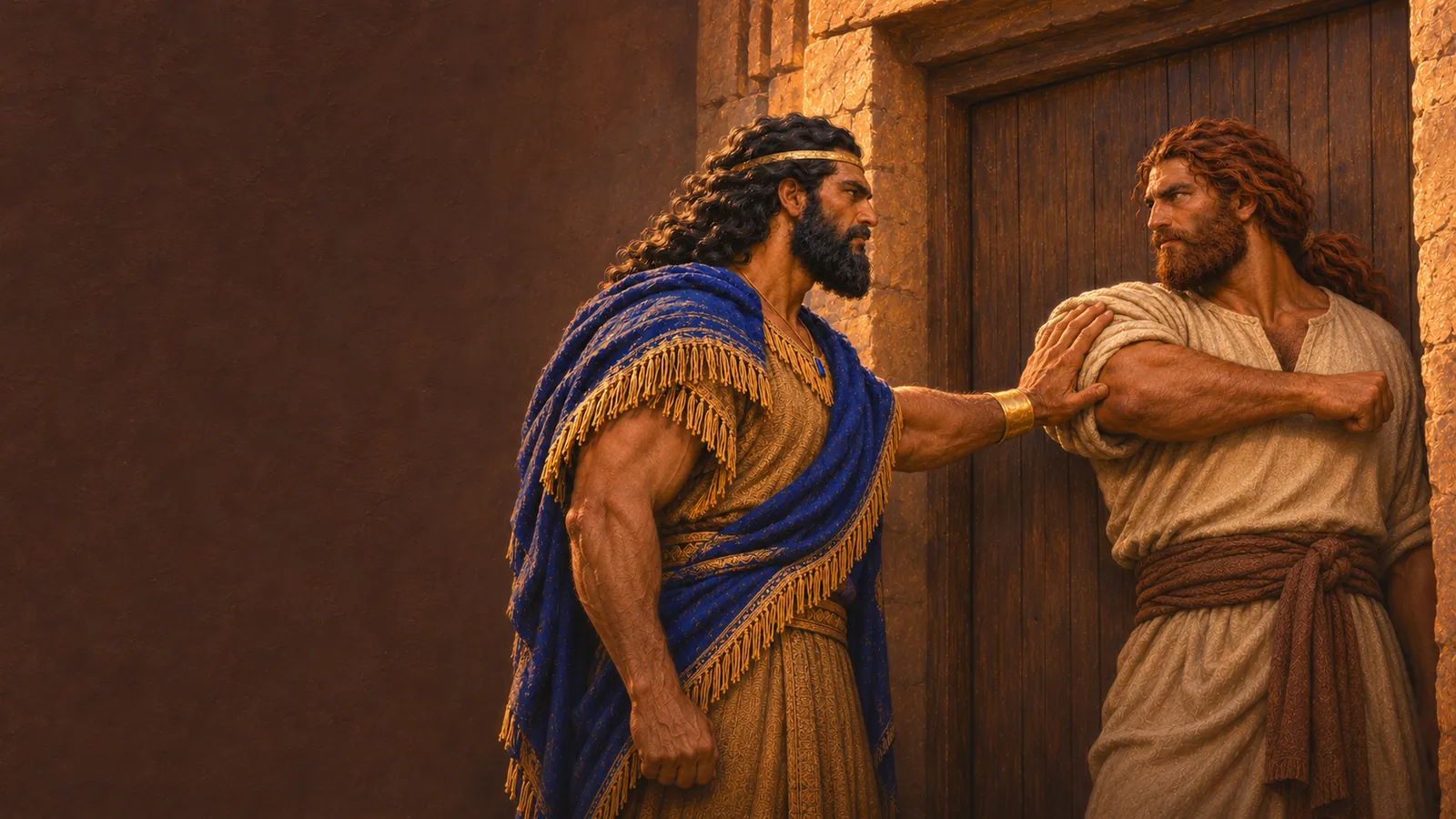
THE DOORWAY
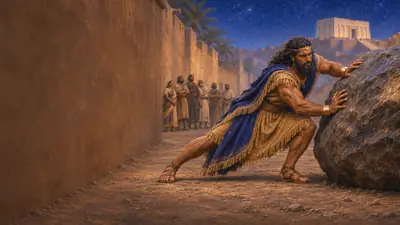
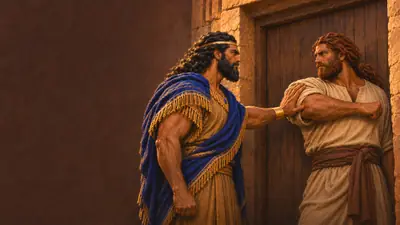
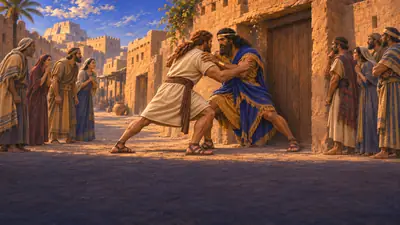
At the doorway of the wedding house, Enkidu stood in the way. He planted his foot and would not let Gilgamesh enter. The king's path was blocked.
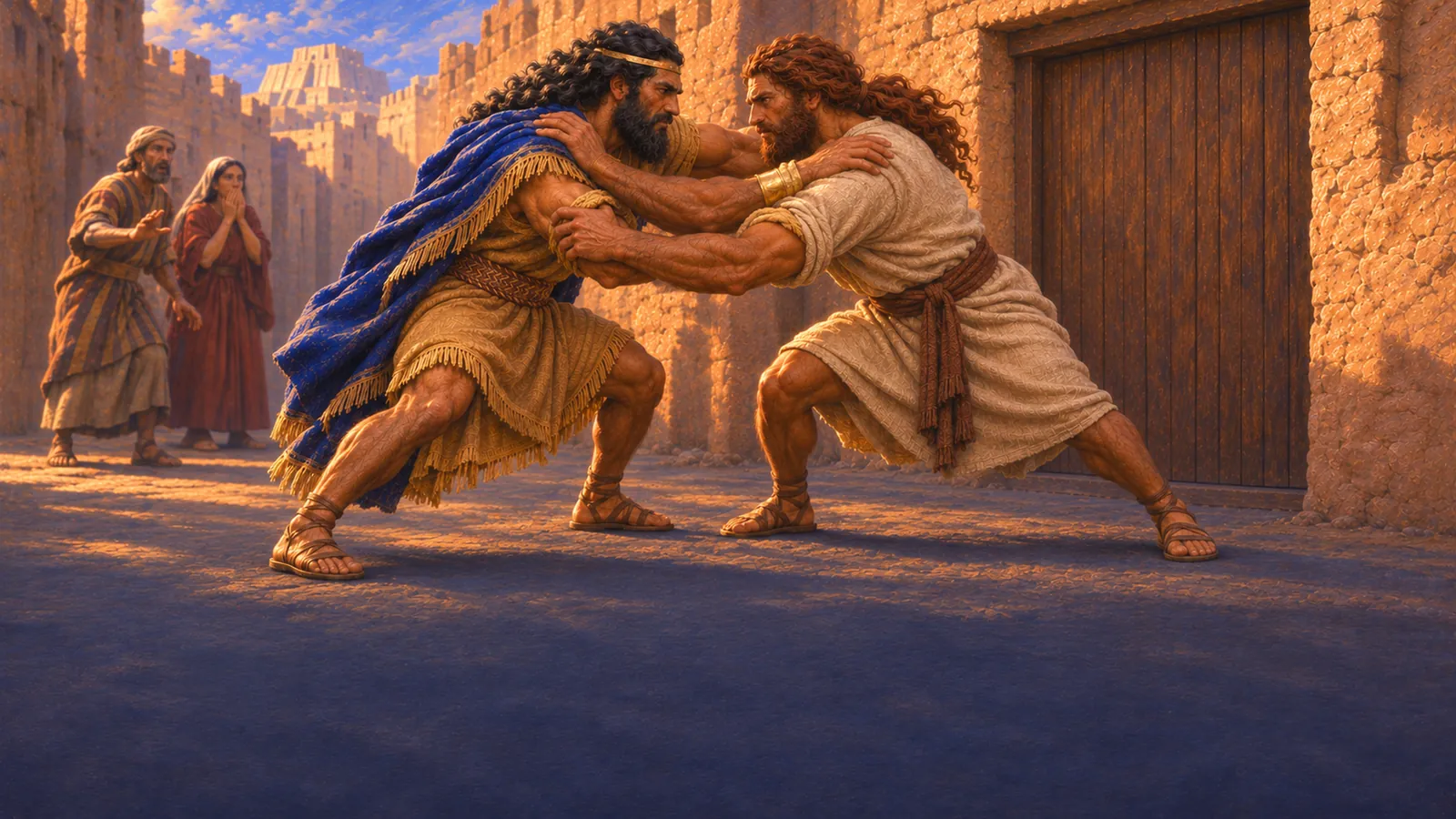
STRENGTH
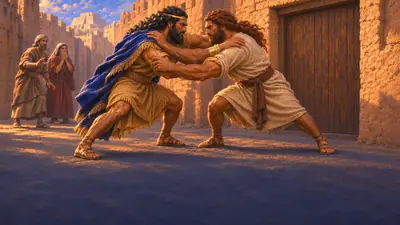
They gripped one another and began to wrestle. The struggle moved into the street, each bending against the other's strength. Gilgamesh had met the man created to be his match.
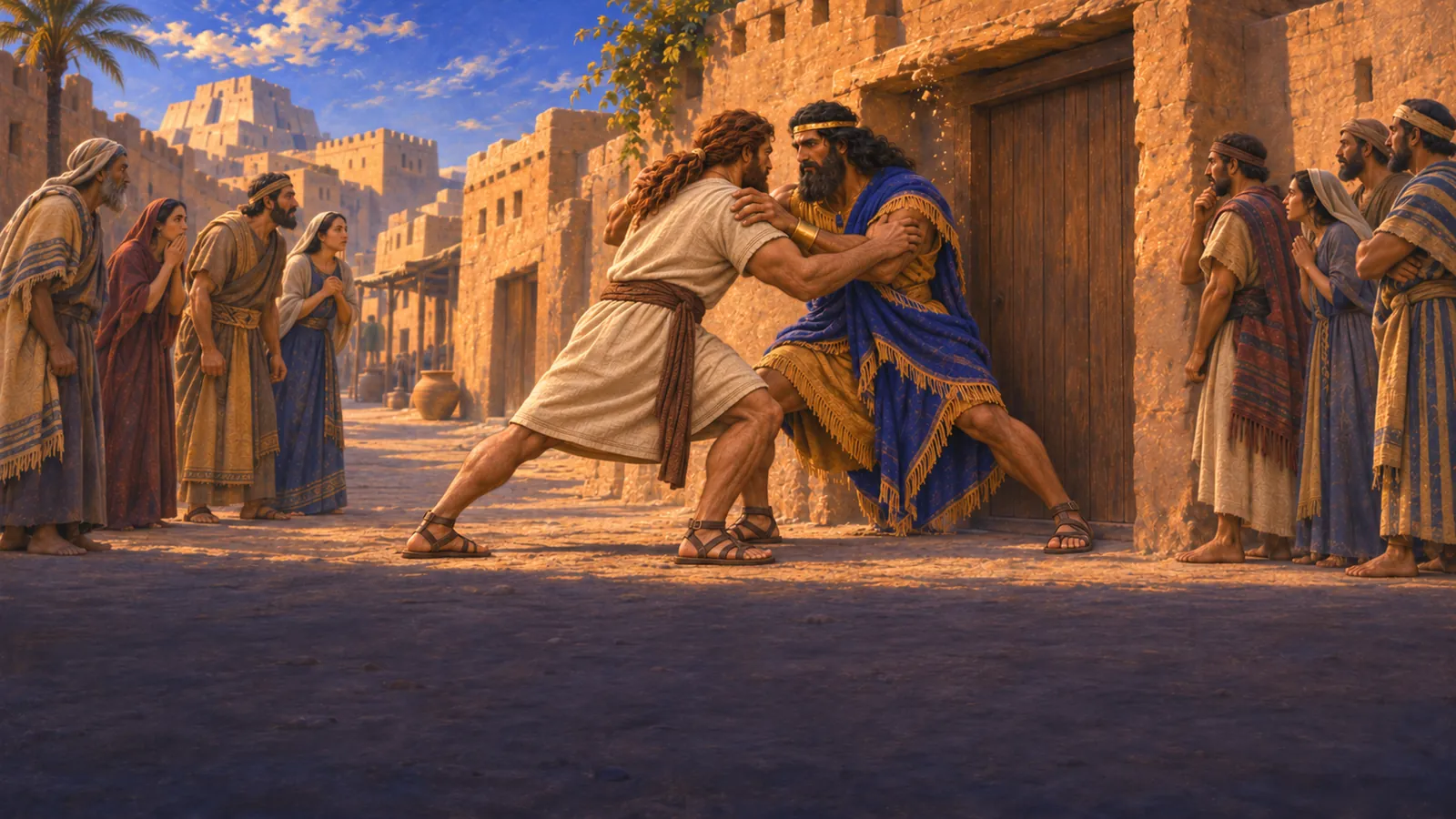
The force of their wrestling shook the doorposts and the wall. At the wedding house, their bodies strained against one another, and the very entrance trembled under the force.
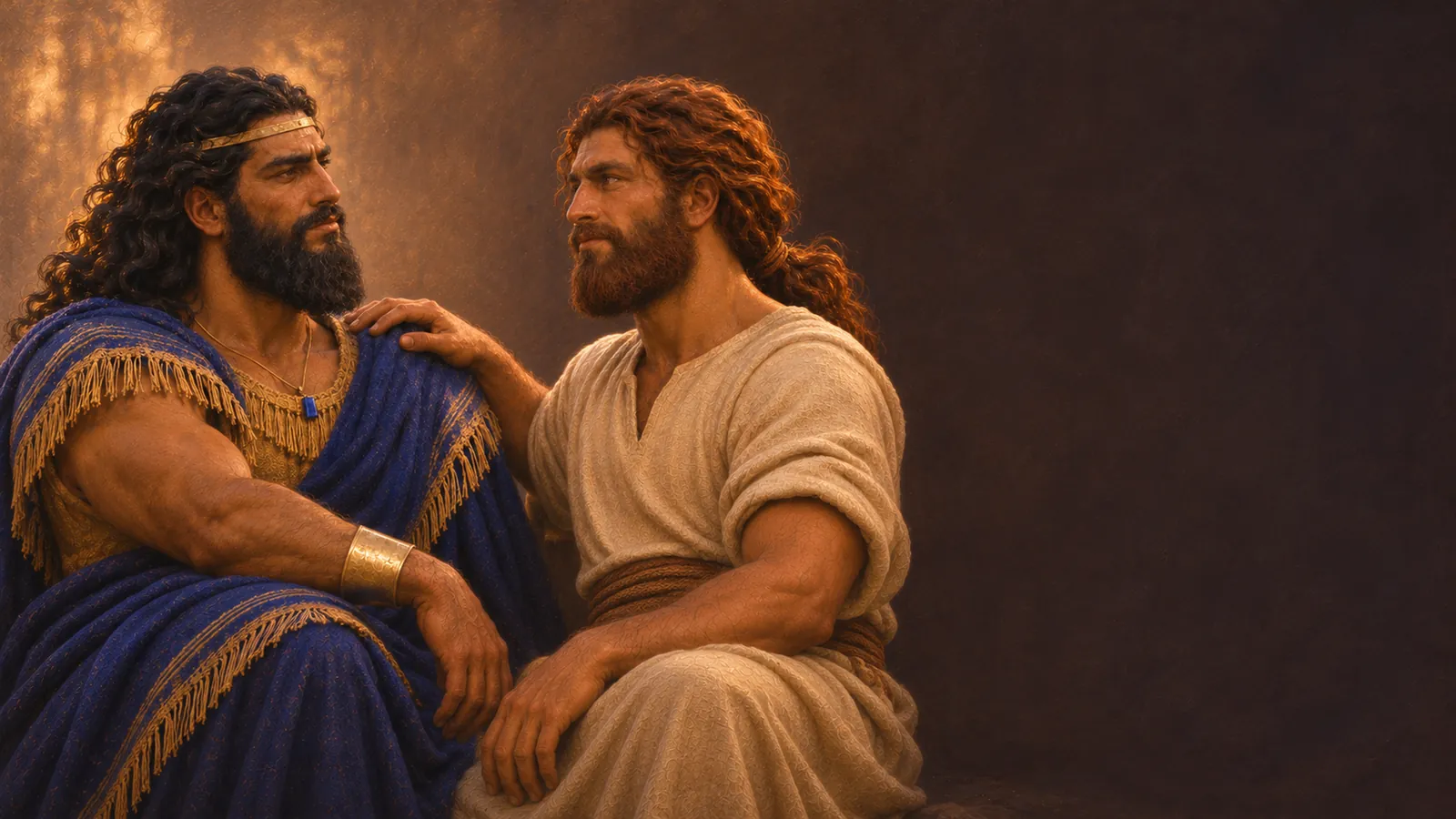
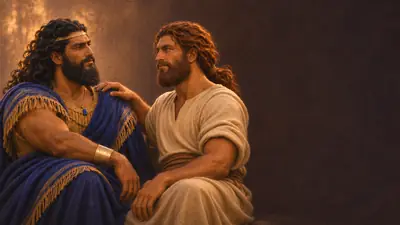
Then Gilgamesh broke off the struggle. His anger subsided, and the contest was over. The man who had barred his way was still there before him.
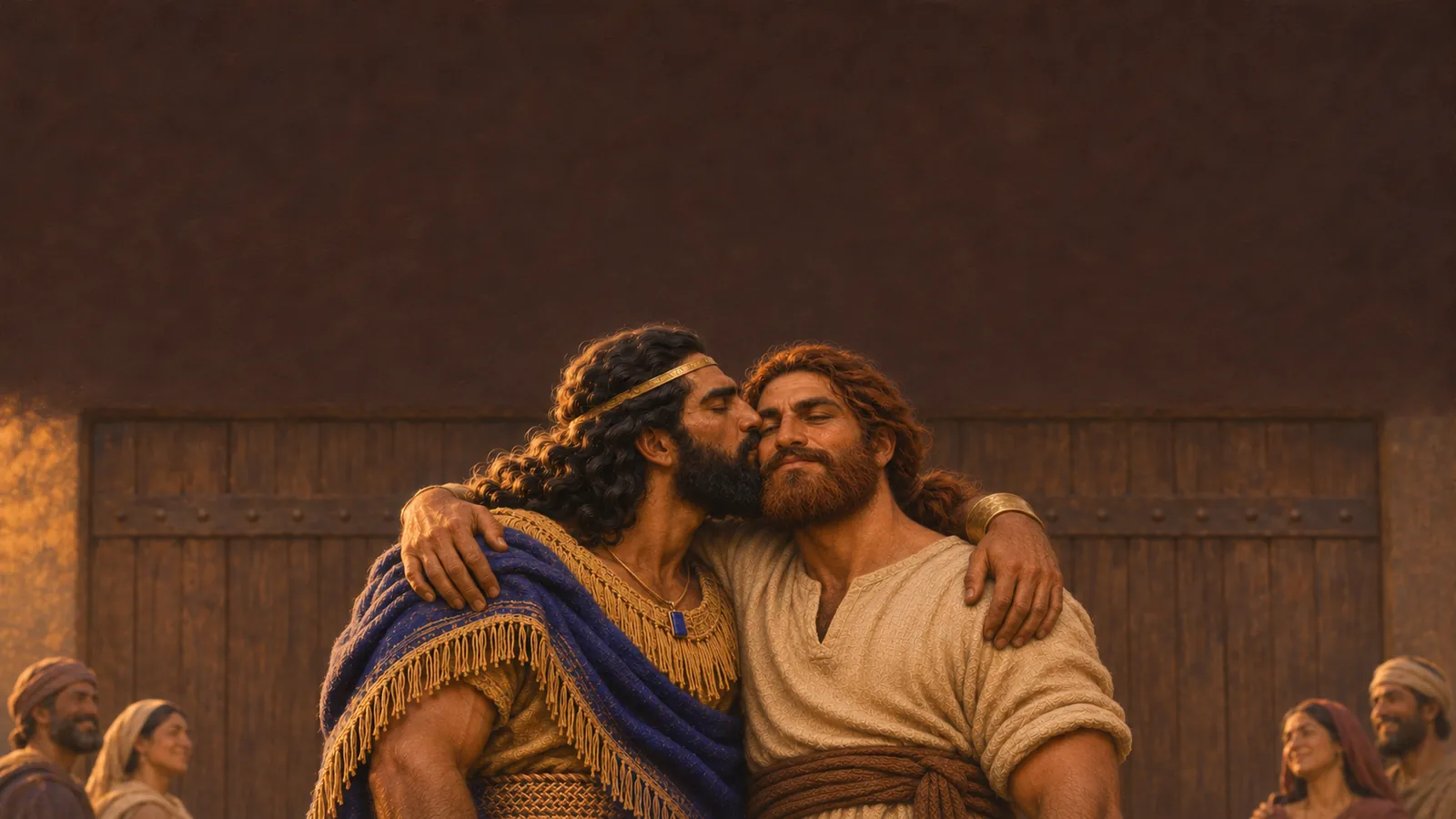
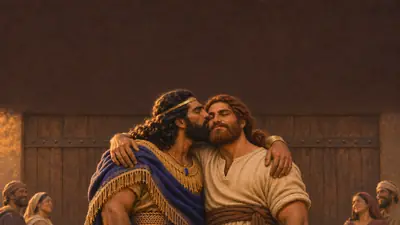
The old tale tells us that they kissed and became friends. What had begun in rivalry became companionship. Gilgamesh had found the friend whose coming his dream had foretold.

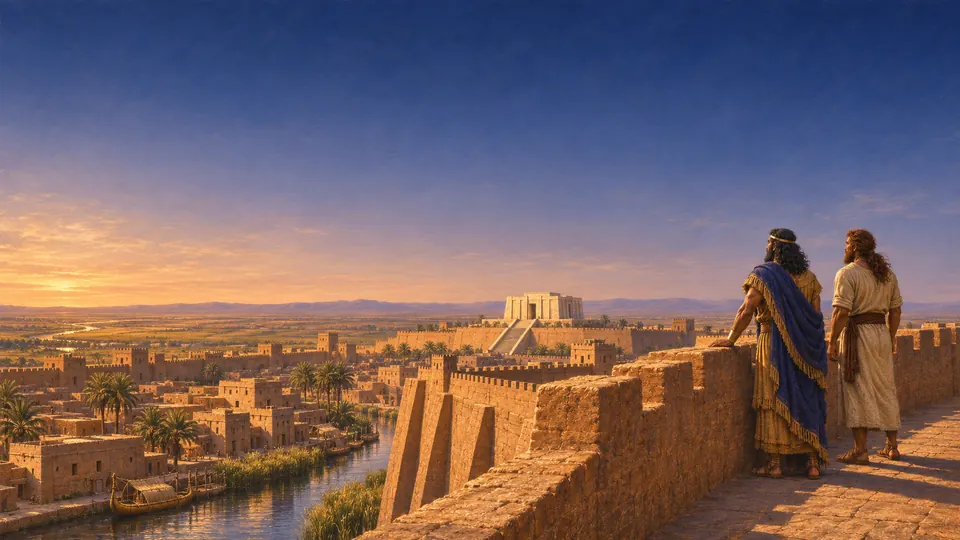
But friendship was only the beginning. Gilgamesh wanted a deed that would make his name endure. Far away stood the Cedar Forest, and he was already drawn toward its dangers.
End of chapter 1
All pages

Sources
The following official primary composite editions were checked on 15 November 2026.
Editions consulted
- eBL Standard Babylonian Tablet I: Uruk, the complaint, creation, life in the steppe, the trapper, Shamhat, withdrawal of the animals and the narrated dream.
- eBL Standard Babylonian Tablet II: surviving humanization and arrival material, the confrontation, and the later forest proposal used as the closing hook.
- eBL Old Babylonian Pennsylvania Tablet II, CBS.7771: explicitly labelled supplements for camp details, the wedding report and the end of the struggle.
- eBL Old Babylonian Yale Tablet III, YBC.2178: the kiss and friendship transition, and comparison for the forest proposal.
- eBL Gilgamesh corpus: edition context and related witnesses.
Notes on this retelling
SB II's damaged transition is not silently repaired as though every line survives. The friendship kiss belongs to the Yale witness rather than the Pennsylvania tablet. Enkidu's singing and grooming details are marked where the older witness supplies them.
The first encounter follows SB I's six days and seven nights; variant or repeated intimacy is compressed and remains non-explicit. The wedding-abuse report belongs to the poem and does not establish a historical legal institution.
Modern translations and scholarly editions retain their own rights; no long translated passage is reproduced or claimed as our own. The edition name and line anchors identify evidence, not endorsement by its editors.
On page 14, the king calls Shamhat a ḫarimtu, rendered “harlot” in George’s eBL translation, and says that she should undress at the waterhole so the stranger will approach her (SB Gilgamesh I 159–164). The retelling gives her occupation and the purpose of the meeting.
On pages 17 and 18, Shamhat undresses and lies with Enkidu. The poem says he stayed erect during the six days and seven nights of their union (SB Gilgamesh I 186–194, George’s eBL translation). The retelling gives their union and its duration.
On page 30, Enkidu takes up a weapon, kills the wolves and drives off the lions (OB Gilgamesh II, Pennsylvania 112–119, eBL). The retelling condenses these actions to his protection of the flocks.
Ancient lines behind each page
- Page 1: SB I 11–23, 61–67; official eBL composite edition, reviewed 2026-11-15
- Page 2: SB I 29–37, 61–65; official eBL composite edition, reviewed 2026-11-15
- Page 3: SB I 65–69, 82–85; official eBL composite edition, reviewed 2026-11-15
The complaint is poetically compressed. - Page 4: SB I 70–76, 89–91; official eBL composite edition, reviewed 2026-11-15
The text's accusation is retained without normalizing it as historical law. - Page 5: SB I 72–91; official eBL composite edition, reviewed 2026-11-15
- Page 6: SB I 92–98; official eBL composite edition, reviewed 2026-11-15
- Page 7: SB I 99–102; official eBL composite edition, reviewed 2026-11-15
- Page 8: SB I 101–107; official eBL composite edition, reviewed 2026-11-15
- Page 9: SB I 108–110; official eBL composite edition, reviewed 2026-11-15
- Page 10: SB I 109–110; official eBL composite edition, reviewed 2026-11-15
- Page 11: SB I 128–131, 155–158; official eBL composite edition, reviewed 2026-11-15
- Page 12: SB I 111–119; official eBL composite edition, reviewed 2026-11-15
- Page 13: SB I 132–143; official eBL composite edition, reviewed 2026-11-15
- Page 14: SB Gilgamesh I 159–164, Andrew R. George’s eBL translation
- Page 15: SB I 165–167; official eBL composite edition, reviewed 2026-11-15
- Page 16: SB I 168–175; official eBL composite edition, reviewed 2026-11-15
- Page 17: SB I 176–191; official eBL composite edition, reviewed 2026-11-15
- Page 18: SB I 192–194; official eBL composite edition, reviewed 2026-11-15
Later/variant repeated intimacy is compressed. - Page 19: SB I 194–196; official eBL composite edition, reviewed 2026-11-15
- Page 20: SB I 198–199; official eBL composite edition, reviewed 2026-11-15
- Page 21: SB I 199–203; official eBL composite edition, reviewed 2026-11-15
- Page 22: SB I 207–221; official eBL composite edition, reviewed 2026-11-15
- Page 23: SB I 241–256, 297; official eBL composite edition, reviewed 2026-11-15
Heavenly object often translated as a meteorite/boulder. - Page 24: SB I 257–270; official eBL composite edition, reviewed 2026-11-15
- Page 25: SB II 34–37; OB II (Pennsylvania) 69–76; official eBL composite edition, reviewed 2026-11-15
This version distinction is deliberate. - Page 26: SB II 38–43; OB II (Pennsylvania) 77–86; official eBL composite edition, reviewed 2026-11-15
SB II38–43 preserves the shepherds' admiration. OB Pennsylvania77–86 supplies a parallel, partly restored description. - Page 27: SB II 44–51; OB II (Pennsylvania) 87–100; official eBL composite edition, reviewed 2026-11-15
Bread/ale instruction exists in the current SB II44–51 composite, with editorial restorations. - Page 28: OB II (Pennsylvania) 101–105; SB II 52–59 damaged; official eBL composite edition, reviewed 2026-11-15
Drinking and singing are explicit in OB Pennsylvania101–105; the corresponding SB passage is damaged. - Page 29: OB II (Pennsylvania) 106–111; SB II 52–59 damaged; official eBL composite edition, reviewed 2026-11-15
- Page 30: SB II 60–62; OB II (Pennsylvania) 112–119; official eBL composite edition, reviewed 2026-11-15
Text includes killing wolves and chasing lions. - Page 31: SB II 63–66 damaged; OB II (Pennsylvania) 137–153; official eBL composite edition, reviewed 2026-11-15
- Page 32: OB Gilgamesh II (Pennsylvania) 154–166, eBL, especially 159–161 and 165–166
- Page 33: OB II (Pennsylvania) 174–177; official eBL composite edition, reviewed 2026-11-15
- Page 34: SB II 100–108; OB II (Pennsylvania) 177–189; official eBL composite edition, reviewed 2026-11-15
- Page 35: SB II 111–112; OB II (Pennsylvania) 215–217; official eBL composite edition, reviewed 2026-11-15
- Page 36: SB II 113–114; OB II (Pennsylvania) 218–224; official eBL composite edition, reviewed 2026-11-15
- Page 37: SB II 115; OB II (Pennsylvania) 220–226; official eBL composite edition, reviewed 2026-11-15
- Page 38: OB II (Pennsylvania) 227–230; corresponding SB II transition missing; official eBL composite edition, reviewed 2026-11-15
OB Pennsylvania227–230 explicitly names Gilgamesh and his subsiding anger. The comparable SB II116–161 stretch is missing from the present composite. - Page 39: OB III (Yale) 18–25; compare fragmentary SB II 182–186; official eBL composite edition, reviewed 2026-11-15
Kiss and friendship are explicit in OB Yale18–19, with the dream companion connection in24–25 partly restored. This supplements the fragmentary SB transition. Intervening damaged dialogue is omitted. - Page 40: SB II 193–229, 234–241, 260–267; OB III (Yale) 97–103, 140–160; official eBL composite edition, reviewed 2026-11-15
Illustrations made with AI tools by IL Archive; the text is based on the ancient sources (see the sources at the end of each chapter).