Illustrated Tales
Enmerkar and the Lord of Aratta
A messenger, a rival city and words in clay
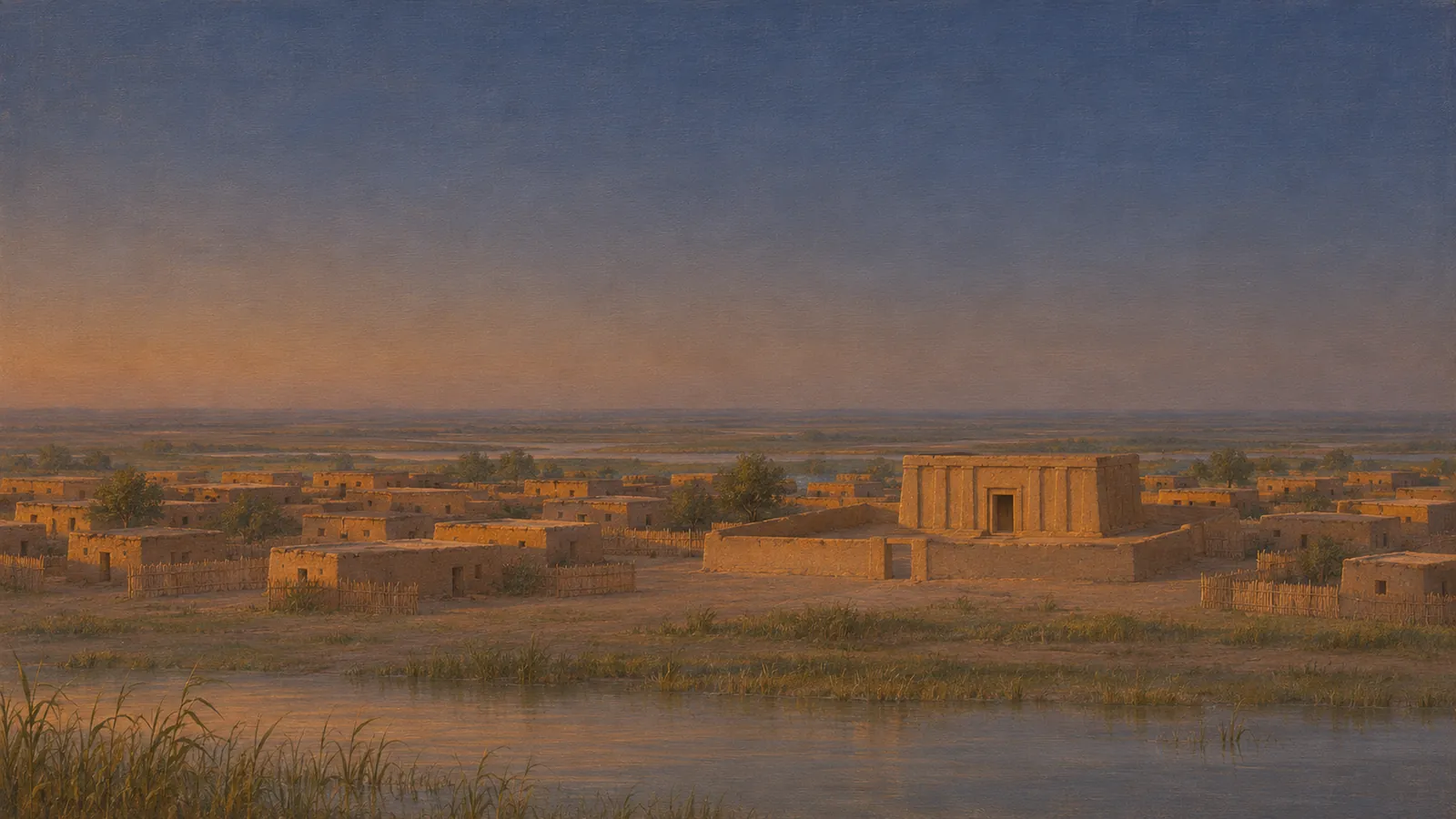
Enmerkar and the Lord of Aratta is a Sumerian poem known from clay tablets copied by scribes, among them a small fragment from Nippur; its last lines survive only in pieces. Enmerkar, ruler of Uruk, asks the goddess Inanna for the wealth of Aratta, a city beyond the mountains, and sends a messenger there again and again with his demands. When the messages grow too long to be carried in memory, Enmerkar sets his words on a tablet of clay: the poem’s own account of a new way to carry a message. This illustrated retelling follows the poem in two chapters; the text of every page is based on the ancient lines, and the sources are listed at the end of each chapter.
Illustrations made with AI tools by IL Archive; the text is based on the ancient sources (see the sources at the end of each chapter).
Chapters
-
 Read
Chapter 1
The Road to Aratta
Enmerkar sends a messenger across the mountains to demand treasures for Uruk and its sanctuaries. The lord of Aratta refuses to bow and answers with a challenge of his own.
Read
-
 Read
Chapter 2
Words in Clay
Enmerkar sends barley to Aratta, and the rivalry grows into a contest of riddles and demands. When the messenger can no longer repeat the king’s words, Enmerkar puts them into clay. The poem’s ending survives only in fragments.
Read