Artifact
Atra-hasis Tablet Fragment at the Metropolitan Museum
An object record bringing together its image, metadata, rights, and context.
- Names
- 86.11.378a · MMA 86.11.378A
A cuneiform witness to a later form of the Atra-hasis tradition. The entry separates object from literary work, notes differing datings and the limits of reading its broken lines, including Zisudra named as Utnapishtim.
Estimated reading time: 6 min Published Last reviewed:
Share article
Photograph
The Metropolitan Museum of Art, New York; Purchase, 1886; accession 86.11.378a. · Public domain
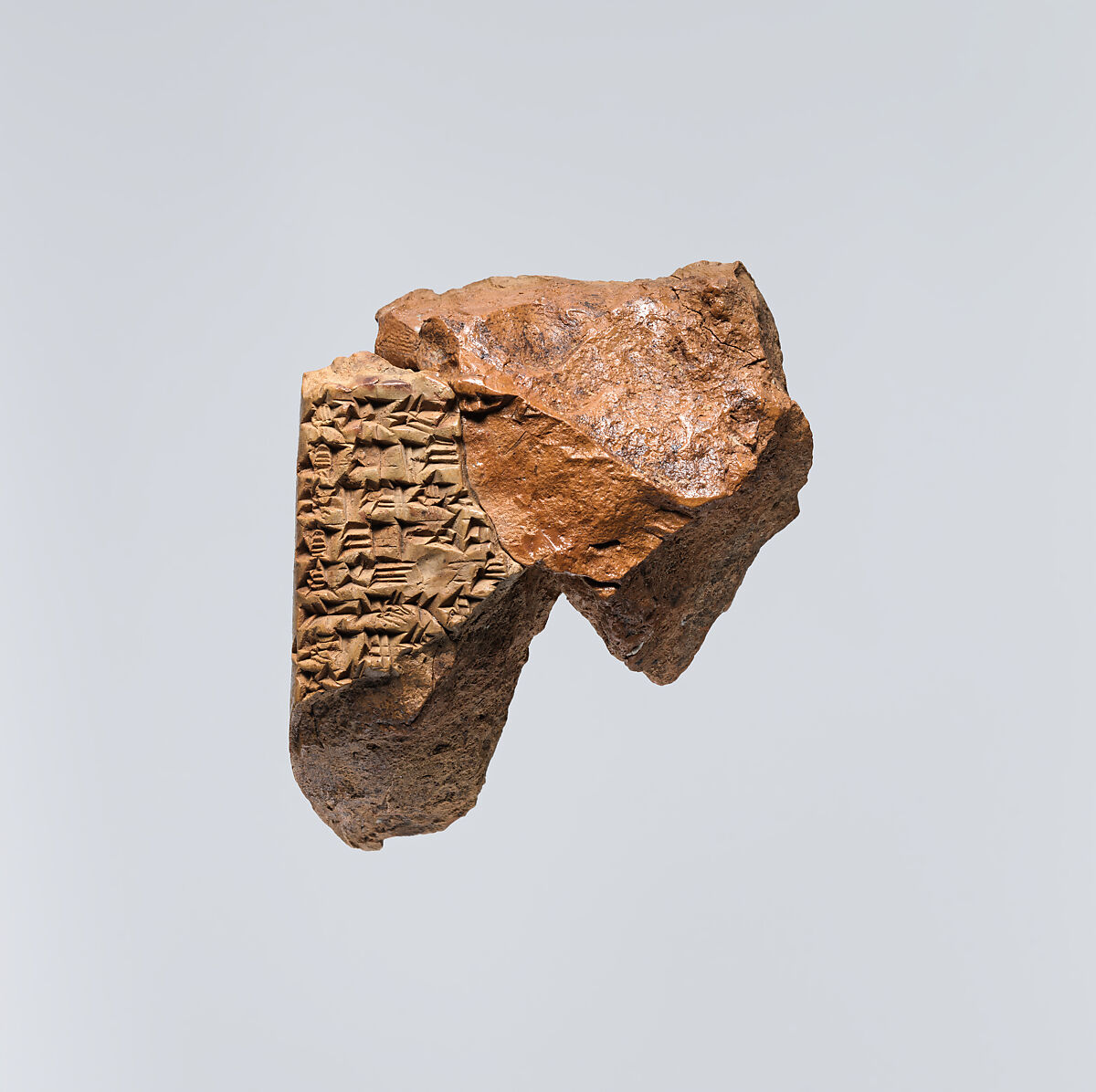
Cuneiform tablet fragment 86.11.378a as presented by the Metropolitan Museum of Art. Breaks and surviving writing are visible; this general photograph does not replace a detailed image or an accurate drawing of each line
Object record · Image source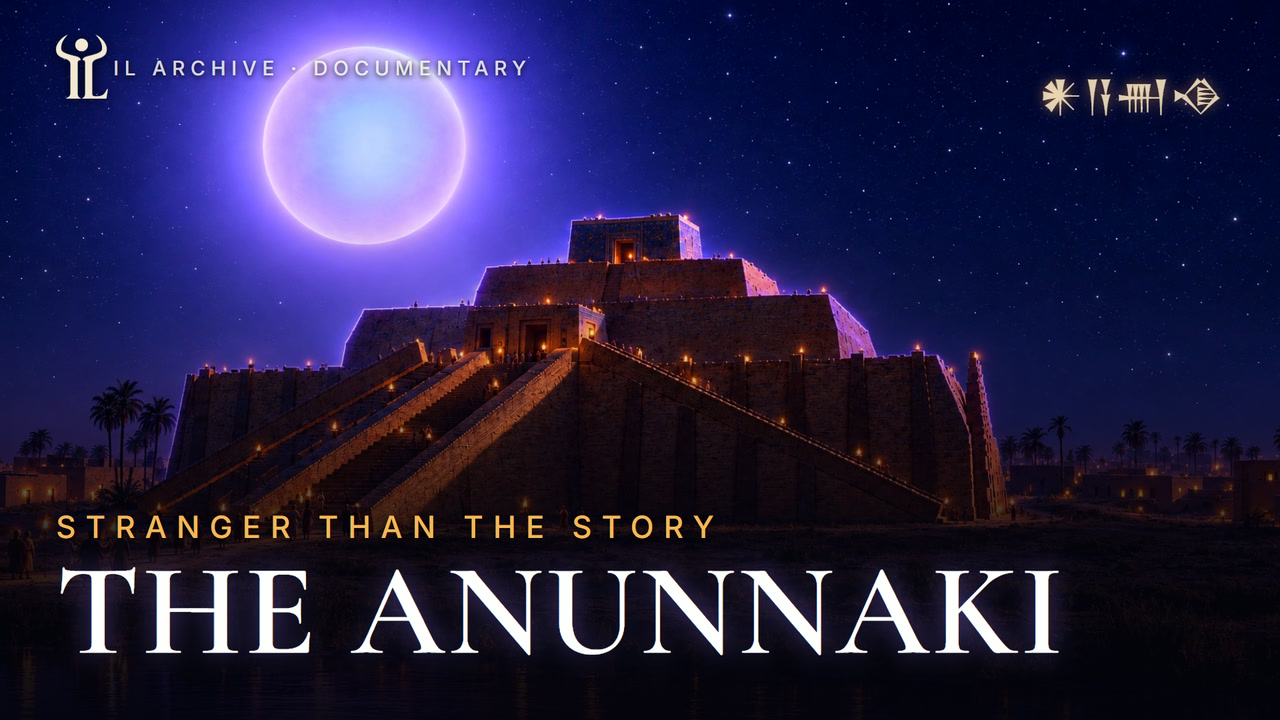
Video
The Anunnaki: Stranger Than the Story
Our second documentary places the popular Anunnaki story beside the clay tablets, line by line, to see what the ancient texts actually say. Some scenes are AI-generated illustrations.
The YouTube player loads only when you press play. Watch on YouTube
Object details
- Title
- Atra-hasis Tablet Fragment at the Metropolitan Museum
- Rights
- Public domain
Text
Introduction
This fragment of a clay cuneiformCuneiformWriting with wedge-shaped signs, developed from Mesopotamian recording traditions and used for several languages from the third millennium BCE.Glossary · Click to read the explanation tablet is held by the Metropolitan Museum of Art in New YorkNew York CityNew York City is in the United States and houses the Metropolitan Museum of ArtGlossary · Click to read the explanation under accession number 86.11.378a. The museum catalogue gives dimensions of approximately 6.35 × 5.72 × 2.54 cm and identifies its content with Atra-hasis, an AkkadianAkkadianAn ancient East Semitic language written in cuneiform from the third millennium BCE; its varieties include Babylonian and Assyrian, and it served in international diplomacy.Glossary · Click to read the explanation narrative about humans, gods and the Flood. This entry concerns that particular material witness; it is neither a republication of the epic nor a survey of every flood narrative.[1]
One object, not the entire epic
The photograph shows broken edges and substantial losses to the inscribed surface. The digital edition records the provenance as unknown. Neither the object’s present location in New York nor its broad association with MesopotamiaMesopotamiaHistorical region associated with the Tigris and Euphrates: Uruk, Ur, Eridu, cuneiform, Sumer, Akkad, Babylon and Assyria, their languages and cults, and the limits of archaeological evidence.Glossary · Click to read the explanation supplies a specific excavation site. Its accession number identifies the object, whereas Atra-hasis names the literary tradition within which it is studied.[1][2]
The museum records acquisition by purchase in 1886. This dates its entry into the collection, not an archaeological excavation. Its scholarly publications include text no. 42 in the museum’s second volume of cuneiform texts, published in 2005, and its subsequent treatment as manuscript z in Wasserman’s 2020 edition. Consulting both publications makes editorial differences traceable rather than leaving readers dependent on the museum’s brief description.[1][3][5]
Dating the copy and differing estimates
The Metropolitan Museum catalogue dates the object approximately to the seventh–sixth century BCE. Nathan Wasserman’s critical edition instead assigns the witness to the Late Babylonian or Achaemenid period, possibly in an Achaemenid hand; a 2025 study by Wasserman and Yigal Bloch gives a sixth–fourth-century BCE range. Both estimates are retained here with their sources, rather than combined into a single settled date.[1][3][4]
These dates concern the surviving tablet’s copying, not the Flood’s time within the story or the moment when the Atra-hasis tradition was composed. A late copy does not make every element of its narrative equally late, just as resemblance to an earlier text does not automatically date each reading. The history of this witness must be distinguished from the literary composition’s history and the time narrated.
What does the witness preserve?
The critical edition designates the fragment as manuscript z. It describes a passage on the obverse in which the Mesopotamian god EnlilEnlilEnlil/Ellil: a major Mesopotamian god associated with destinies, kingship, and Ekur at Nippur, already prominent in third-millennium god lists. His name’s origin and cult beginnings remain debated.Glossary · Click to read the explanation seeks to reduce the human population through disease, and publishes twenty-seven numbered lines from column v of the reverse. That is the numbering of the section edited from this column, not a count of all the original tablet’s lines or of the entire Atra-hasis text. Some of these lines survive only as fragmentary remains; the 2005 edition places lines 25′–27′ on the tablet’s edge.[2][3][5]
The published reverse passage concerns objections to the Flood and alternative means of limiting humanity, followed by the survivor’s departure from the boat and the change in his status and name. Comparison with parallel texts, especially Gilgamesh Tablet XI, helps editors propose readings in the breaks. It does not turn restored wording into signs that physically survive on this fragment. Comparison is a tool for reading an incomplete witness, and its limits must remain visible.[3]
A short witness to the name and its restoration
Wasserman prints line z v 17′ in column v as follows. Square brackets belong to the editorial notation and here mark portions restored in damaged areas.[2][3]
Transliteration, z v 17′
at-t[a-m]a ᵐZi-sù-ud-ra lu-ú Ut-napištīm(ZI-tim) [šùm-ka]
“You are Zisudra; let UtnapishtimUtnapishtimThe flood hero of Standard Babylonian Gilgamesh, granted exceptional life with his wife by the gods. He tells Gilgamesh how he survived; his name overlaps with Atrahasis and Ziusudra traditions without making their narratives identical.Glossary · Click to read the explanation be [your name].”
Brief wording following the edition, not an independent decipherment from the photograph. Brackets around “your name” retain its restored status; the transliteration also contains an internal restoration in its first word, at-t[a-m]a.
The line places both names in a single address, making it important for the relationship between literary forms of the flood hero. By itself it does not demonstrate that every narrative is identical or that one historical individual lies behind them. Nor is “your name” on the same evidential footing as the read name itself: its presence in the displayed sentence depends on an editorial restoration, whose brackets should not disappear in quotation or translation.
When a fluent translation is not enough
The following line, z v 18′, makes the role of textual criticismTextual criticismComparison of written witnesses and ancient translations to explain variant readings and textual transmission, distinguishing attested text from restorations and inferred ancestors.Glossary · Click to read the explanation particularly clear. Wasserman discusses a broken sign near its end and proposes a restoration concerning not knowing or not having sorrow of heart. This should not become a seamless, certain sentence as though every word survived. The choice of verb is itself part of the question considered by the editor.[3]
The practical sequence is to check the line reference and the edition’s notation, then distinguish a surviving trace from a comparative restoration and from words supplied to make the translation grammatical. The general photograph shown here helps readers understand the object’s condition; it is not presented as sufficient to read every wedge or independently verify every restoration.
The fragment’s value and the limits of comparison
The fragment brings together an incomplete material witness and a literary form related to other texts. Its particular value is that the edition allows readers to follow the movement from marks of writing to an editor’s proposal and then to an interpretation of the passage. Questions about which words belong securely to this object, the extent of its column and differing estimates of its date are part of the knowledge required, not defects to conceal.
Wasserman and Bloch’s recent study discusses the naming scene alongside biblical scenes. Reporting that comparison does not establish direct transmission from this very tablet to another text. Such a claim requires an argument beyond resemblance, addressing the dating of witnesses, channels of circulation and alternative explanations. Here the conclusion is narrower: this is a particular witness whose reading can be examined, not a key that settles the history of every flood story.[4]
Reading alongside this witness
For the literary work, consult the Atra-hasis entry; for the wider comparison, see Flood before Noah. The dating study separates narrative time from manuscript date, the textual-criticism entry explains witnesses and restoration notation, and the study of similarity and borrowing examines how resemblance can support a historical argument. This object remains an independent point of reference to which those materials can link.
References and notes
- Metropolitan Museum of Art catalogue, accession 86.11.378a. Source for object identity, dimensions, the museum’s date, photograph and image-rights statement. Accession 86.11.378a Return to the text ↑
- SEAL, MMA 86.11.378A, reverse column v. Metadata and the twenty-seven displayed lines were read; public access is not a licence to republish the entire modern translation. Reverse, column v, lines 1′–27′ Return to the text ↑
- Nathan Wasserman, The Flood: The Akkadian Sources (2020), pp. 99–103, manuscript z. The witness introduction, transliteration, translation and commentary on these pages were read. pp. 99–103, manuscript z Return to the text ↑
- Nathan Wasserman and Yigal Bloch, “Let your name be …” (2025), section 3 and conclusions. Used here for the witness’s dating range and naming discussion; no claim is made to have read every reference cited in the article. Section 3 and conclusions Return to the text ↑
- Ira Spar and W. G. Lambert, Cuneiform Texts in The Metropolitan Museum of Art, volume II (2005), no. 42, pp. 196–201. The object edition and commentary were read in the scanned volume; no licence to republish the book or its drawings is assumed. No. 42, pp. 196–201 Return to the text ↑
Archive records may be reviewed and refined as better evidence or sources become available. Suggest a correction
Suggest a correction · Suggest a source for this record
Cite this record
IL Archive, «Atra-hasis Tablet Fragment at the Metropolitan Museum», https://ilarchive.com/en/artifacts/met-atrahasis-fragment-86-11-378a
Continue reading