Entity · Deity
Isimud, the Two-Faced Messenger of Enki
A reference page linking a name, group, or concept to the materials that discuss it.
- Names
- Isimud · Usimu · Usmu
- Region
- Mesopotamia
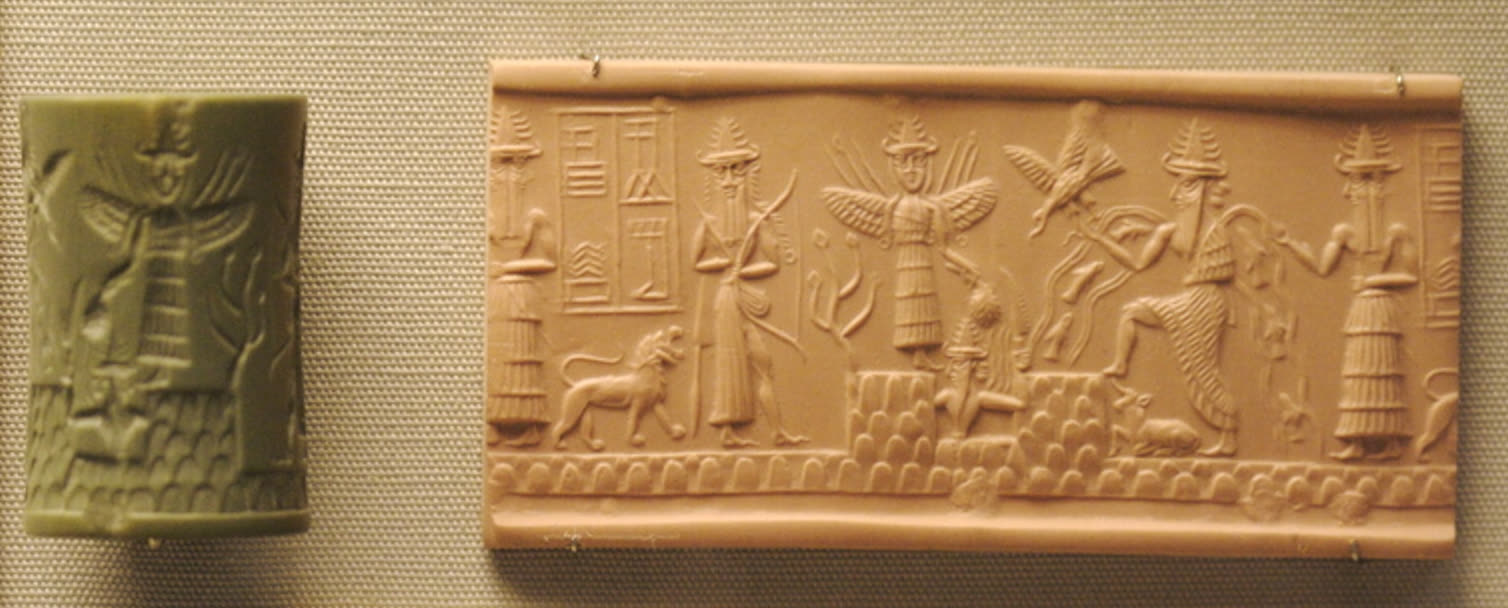
Isimud carries Enki’s orders in Sumerian stories. On the seal of the scribe Adda, the British Museum identifies him by his two faces and his place beside Enki.
Estimated reading time: 4 min Published Last reviewed:
Share article
Video
Inanna and Enki: Divine gifts, a feast and the Boat of Heaven
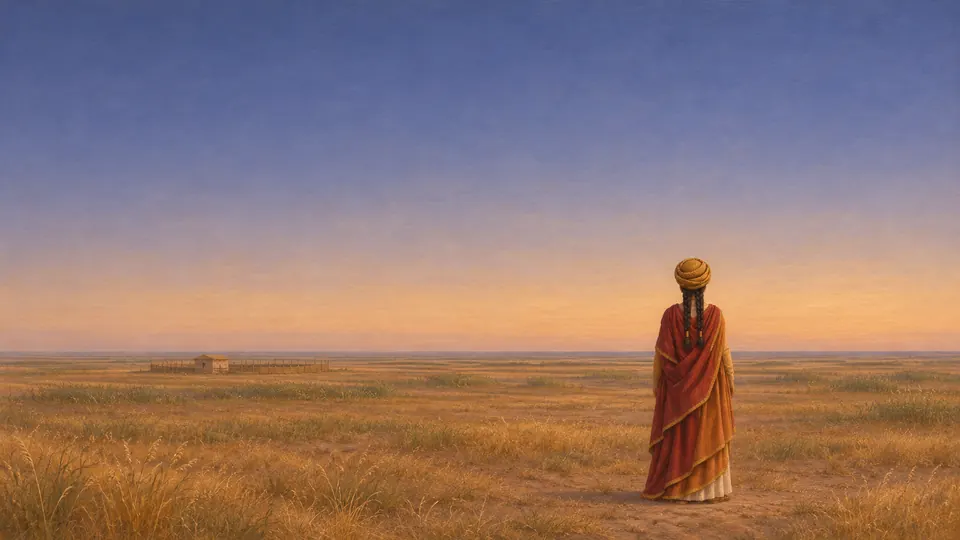
Divine gifts, a feast and the Boat of Heaven. The whole story in one illustrated chapter, told from the ancient clay tablets; where the tablets are broken, the narration says so. Illustrations, narration voice and visual effects were created with AI tools by IL Archive; the text is a faithful retelling based on the ancient tablets.
The YouTube player loads only when you press play. Watch on YouTube
Text
Introduction
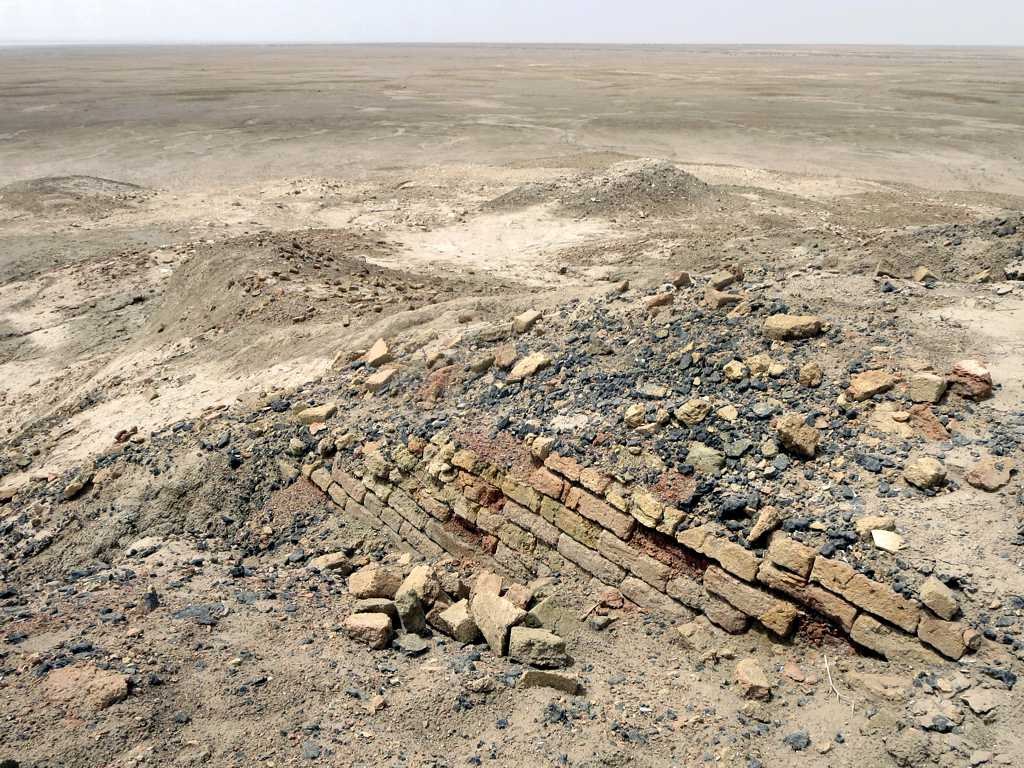
In a Sumerian story, EnkiEnkiMesopotamian deity also known as Ea, linked with Eridu and the Abzu (deep fresh waters), wisdom, incantations, and narratives of creation and cosmic order. Later written attestations do not identify the deity of Eridu’s earliest layers.Glossary · Click to read the explanation discovers that the Boat of Heaven has left his quay. His minister Isimud tells him where the divine powers have gone and carries his orders to InannaInanna / IshtarA prominent Mesopotamian goddess whose Sumerian name Inanna became associated with Akkadian Ishtar across diverse traditions. She was associated with desire, war, royal authority and Venus, while local forms and genealogies varied among texts.Glossary · Click to read the explanation. A second story puts the same official beside Enki in a marsh, answering his questions about plants. Both texts make Isimud the person Enki addresses when he needs information or wants something done. [1][2]
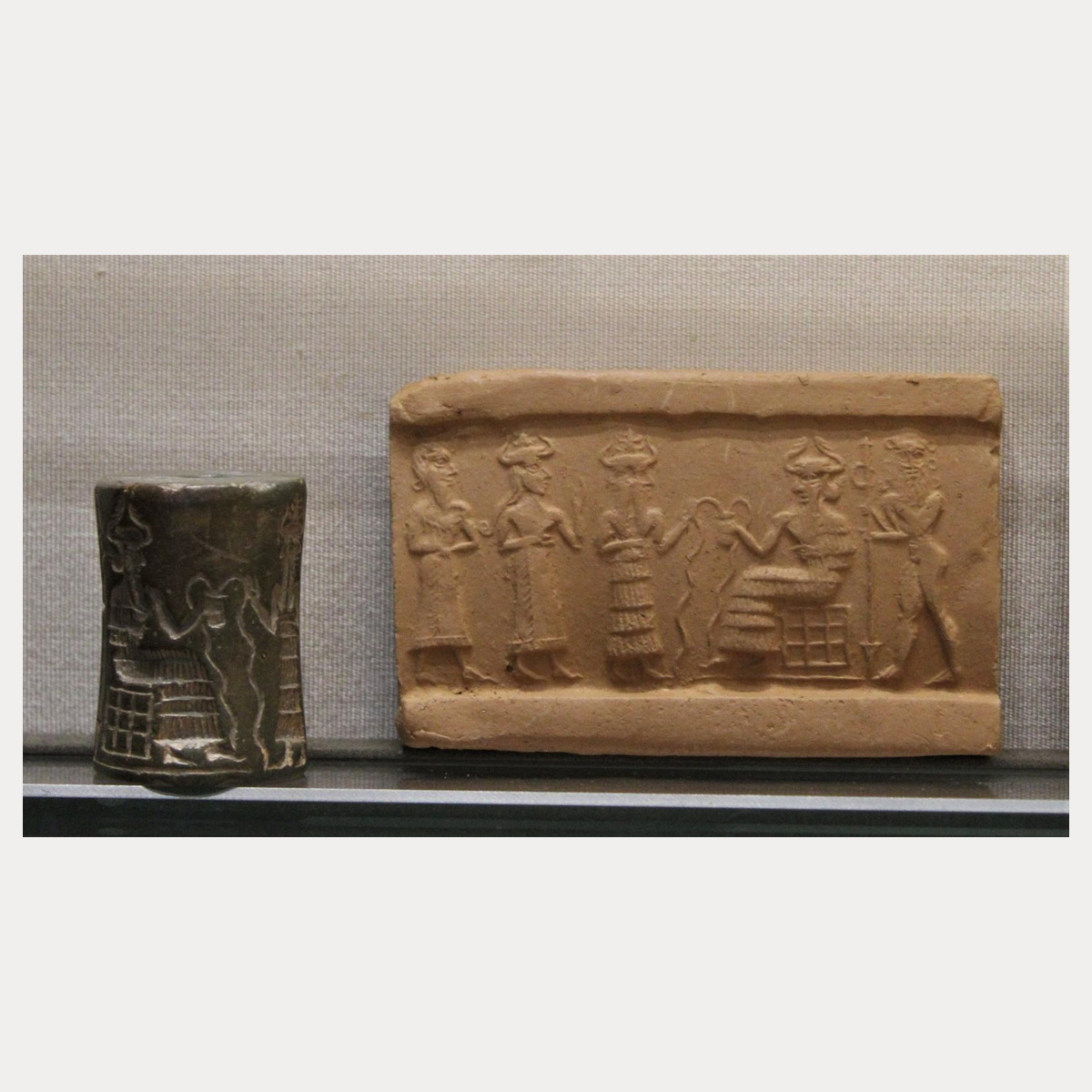
The British Museum identifies Isimud, under the name Usimu, on an AkkadianAkkadianAn ancient East Semitic language written in cuneiform from the third millennium BCE; its varieties include Babylonian and Assyrian, and it served in international diplomacy.Glossary · Click to read the explanation stone seal. The museum points to the divine attendant’s two faces and his position beside Ea, the Akkadian name of Enki. The Walters Art Museum uses the spelling Usmu for the figure it identifies on another seal. The figures on these objects and the minister in the stories give different ways to recognise him. [3][4]
A message on the river
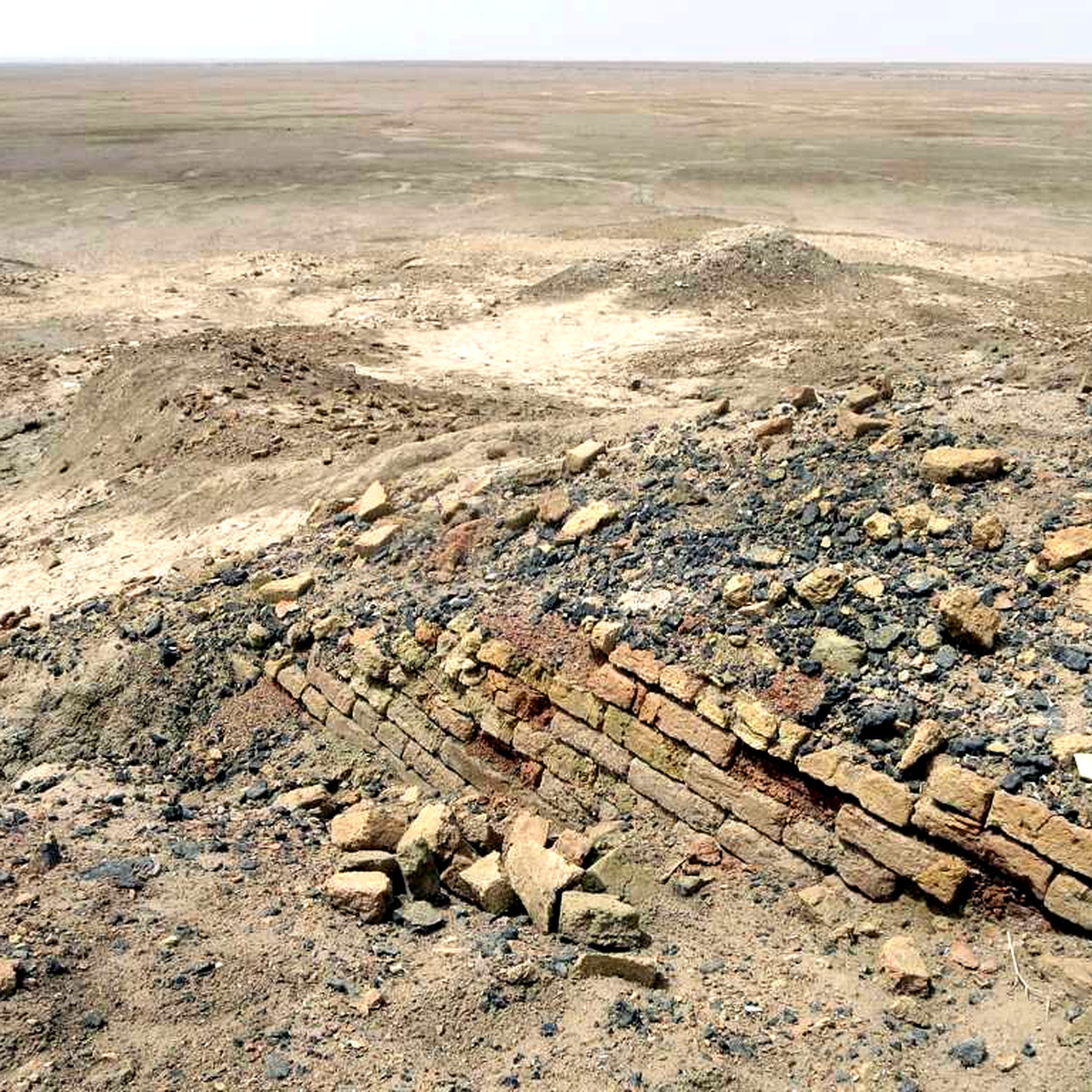
In Inana and Enki, Inanna leaves EriduEriduEridu (Abu Shahrain), a multi-mound site in southern Iraq occupied since the Ubaid, later home to a religious precinct associated with Enki. Its eighteen sounding levels are not proof that every early building was a temple.Glossary · Click to read the explanation in the Boat of Heaven carrying divine powers Enki gave her. The powers include things that order city life, such as religious offices, the royal throne and the craft of the scribe. When the effects of beer wear off, Enki asks what happened to the things he can no longer find. Isimud repeatedly answers that Enki gave them to his daughter. Enki calls him his minister and addresses him by the title the Oxford edition renders as “Sweet Name of Heaven.” [1]
Enki then sends Isimud after the boat. Isimud tells Inanna that she may travel to UrukUrukAncient city at Warka in southern Iraq, a major urban centre around 3200 BCE that preserved early writing and accounting tablets.Glossary · Click to read the explanation but must return the boat. She asks why Enki would go back on his promise. At successive stops, Isimud brings Enki’s order and has groups named in the story seize the boat. One group is the fifty giants of Eridu. Inanna calls on her own minister, NinshuburNinshubur: Divine Messenger of Inanna and AnMesopotamian divine messenger and intermediary associated with Inanna in Sumerian narratives and with An in inscriptions and hymns; identity and gender vary by context and must not be equated automatically with Papsukkal.Glossary · Click to read the explanation, and recovers the boat. The exchanges give the two ministers work on opposite sides of the same dispute. The boat eventually reaches the Gate of Joy at Uruk. Ninshubur announces its arrival and anticipates rejoicing in the city. [1]
The minister in the marsh
In Enki and Ninhursanga, the part about the plants begins when Enki sees what has grown and asks Isimud to name it. Isimud identifies each plant, cuts or pulls it up and hands it to Enki, who eats it. Enki then determines the plants’ destinies. The translation marks uncertainty about some plants and leaves a gap in one name. The sequence of actions is clear. Isimud provides the names and brings the plants within reach, setting up the next event, when Ninhursag curses Enki. [2]
Two faces on a seal
A cylinder sealCylinder sealSmall engraved cylinder rolled over soft clay to leave an extended image. Used to secure, document and identify administrative actions; its pictures do not automatically constitute writing.Glossary · Click to read the explanation is a small carved roller that leaves its design in clay. The impression spreads the design out so that the figures can be seen side by side. The inscription on the greenstone seal in the British Museum names Adda as its owner and describes him as a scribe. The museum dates it to about 2300 BCE. It identifies Enki by the streams and fish that emerge from his shoulders and the two-faced figure behind him as his minister. Identifying the owner comes from reading the inscription. Identifying the minister comes from looking at the figures. [3][4]
A hematite seal in the Walters Art Museum, dated to the eighteenth or seventeenth century BCE and attributed to Syria, gives another example of the two-faced figure. The museum identifies him as Isimud. It says the seated figure beside him might be Enki and the winged figure might be Inanna. The different degrees of certainty matter here. The two faces support the identification of the messenger, while the names of his companions remain possible readings of the scene. [4]
A minister’s speech at Eridu
In Enki’s Journey to Nibru, Isimud speaks before Enki at the temple in Eridu. He addresses the building directly. He praises the materials of the house, including its precious metal and lapis lazuli, and the pegs that fix its foundations. He compares the force of the building with the Tigris and the Euphrates. His words present a temple as more than a structure on a piece of land. He calls it a place where destinies are decided and a house that gives wisdom to the land. Within the poem the temple is the seat of Enki’s authority, and its minister has a part in making that authority known. [5]
The praise describes a deep body of water associated with Enki, called the abzu in Sumerian. The poem places the temple on its edge and brings in water, reed beds and fish as it describes the sanctuary and its setting. Later Enki hosts the gods at Nibru, the city also called Nippur. EnlilEnlilEnlil/Ellil: a major Mesopotamian god associated with destinies, kingship, and Ekur at Nippur, already prominent in third-millennium god lists. His name’s origin and cult beginnings remain debated.Glossary · Click to read the explanation praises the temple Enki has built, returning to its silver, lapis lazuli and songs. Isimud’s speech belongs near the beginning of that progression. As in the story of the boat, Isimud is a person whose words carry weight because he serves Enki. Here his words concern the identity of the temple, while the boat story has him repeat an instruction in the middle of a dispute. [1][5] The voyage ends in the shrine of Nibru, where the poem has Enki seat An at the head of the table and place Enlil beside him. [5]
References and notes (5)
- Electronic Text Corpus of Sumerian Literature, Inana and Enki, 1.3.1, English translation Read the lists of gifts in segments D and E, segment F.1–34 and the pursuit in H.1–205, plus the fragmentary transition and arrival in H.206–248. Used the dialogue naming Isimud as minister, the orders about the boat, Ninshubur’s role and the Gate of Joy. Return to the text ↑
- Electronic Text Corpus of Sumerian Literature, Enki and Ninhursanga, 1.1.1, English translation Read lines 186–227, including the growth and naming of the plants, Enki’s response, uncertain readings and Ninhursanga’s curse. Return to the text ↑
- British Museum, Greenstone seal of Adda, registration 1891,0509.2553 Read the museum description and object details reproduced on Google Arts & Culture, including the inscription naming Adda, the material and date, and the identification of Enki and his two-faced minister. Return to the text ↑
- Walters Art Museum, Cylinder Seal with a Presentation Scene, 42.424 Read the object description, dates and material, the explanation of seal impressions and the catalogue’s degrees of certainty about the three figures. Return to the text ↑
- Electronic Text Corpus of Sumerian Literature, Enki’s Journey to Nibru, 1.1.4, English translation Read lines 1–82 on the building of E-engura and Isimud’s address to it, and lines 104–129 on the banquet and Enlil’s praise. Return to the text ↑
Suggest a correction · Suggest a source for this record
Cite this record
IL Archive, «Isimud, the Two-Faced Messenger of Enki», https://ilarchive.com/en/entities/isimud
Continue reading
Related readings