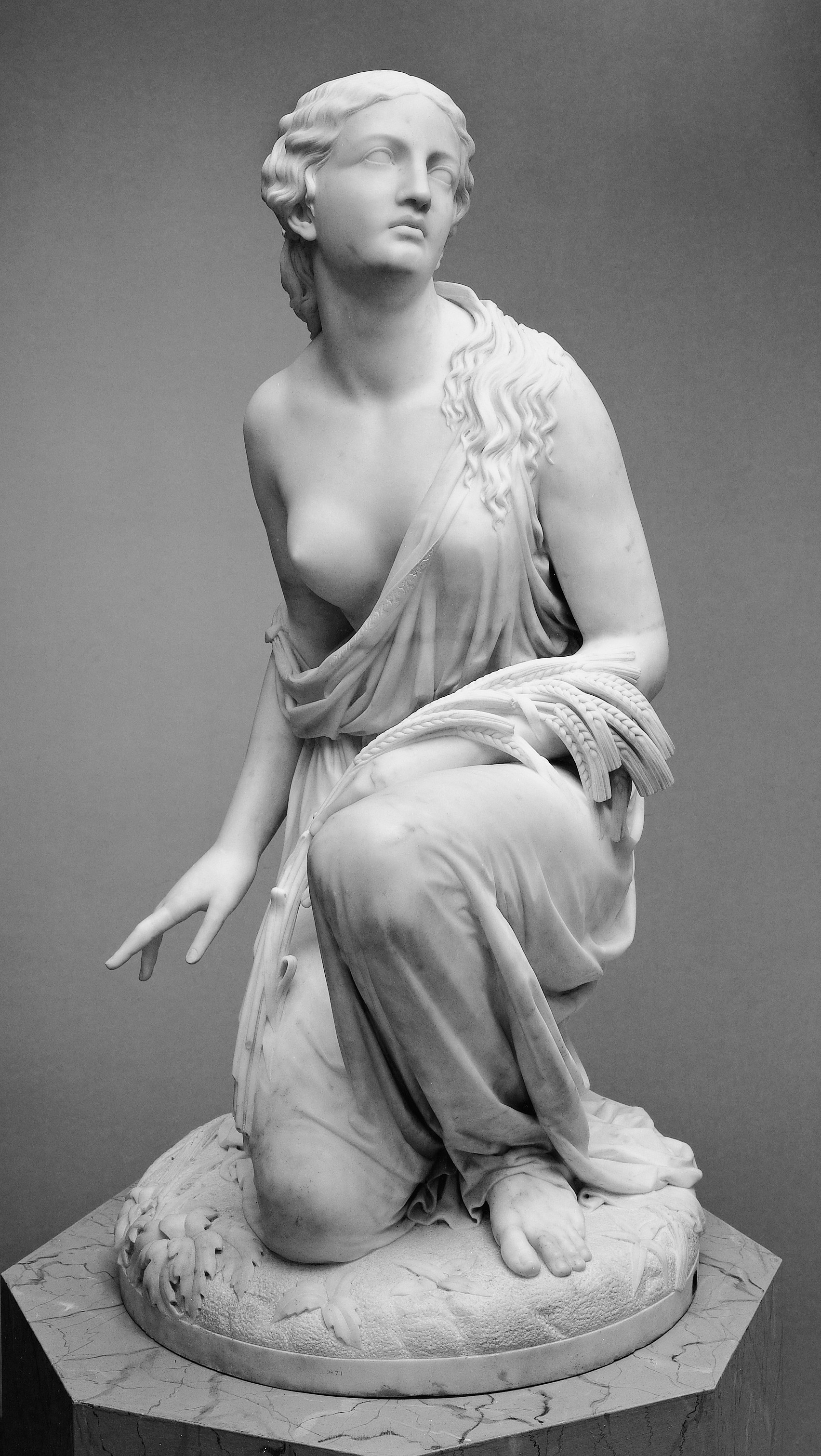
Ruth Gleaning, marble by Randolph Rogers: 1850 design, carved 1855 or 1856; Met 99.7.1. Artistic reception of Ruth 2, not a historical portrait or the chapter 4 redemption scene
Ancient text
Hebrew narrative whose ending joins land, redemption, marriage and name preservation.
Name variants: Book of Ruth
Context and sources →
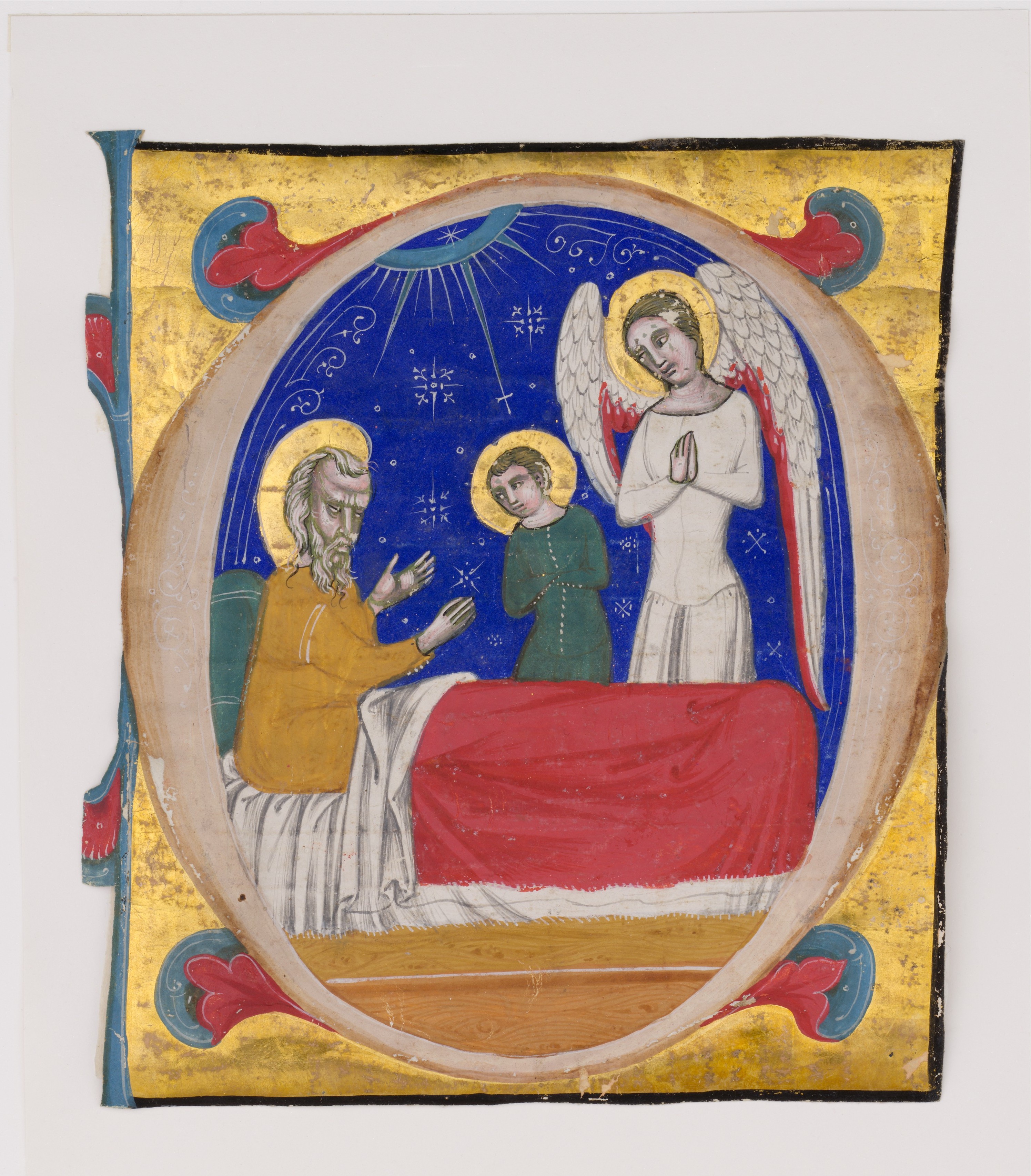
Tobit, Tobias and Raphael in an illuminated initial O from an antiphonary, Bologna, mid-fourteenth century; Met 31.134.6. Later artistic reception, not an ancient manuscript of the Ahiqar passage
Ancient text
Jewish story of a family in Assyria, combining adversity, prayer, journey and almsgiving, and naming Ahiqar.
Name variants: Book of Tobit, Book of Tobit
Context and sources →
Contemporary explainer; it is not an ancient artifact or historical likeness
Ancient text
Prophetic book of the Hebrew Bible whose third chapter depicts the high priest and an adversary.
Name variants: Zechariah (book)
Context and sources →

Modern AI-generated interpretive cover: a symbolic landscape for Enoch’s journey and the horizon of judgment; not a manuscript, ancient artifact or verified reconstruction
Entity
Opening unit of 1 Enoch (chapters 1–36), concerning the Watchers’ descent, offspring and judgment, Enoch’s mission and cosmic journeys; a composite work with multiple textual witnesses.
Name variants: Book of the Watchers
Context and sources →
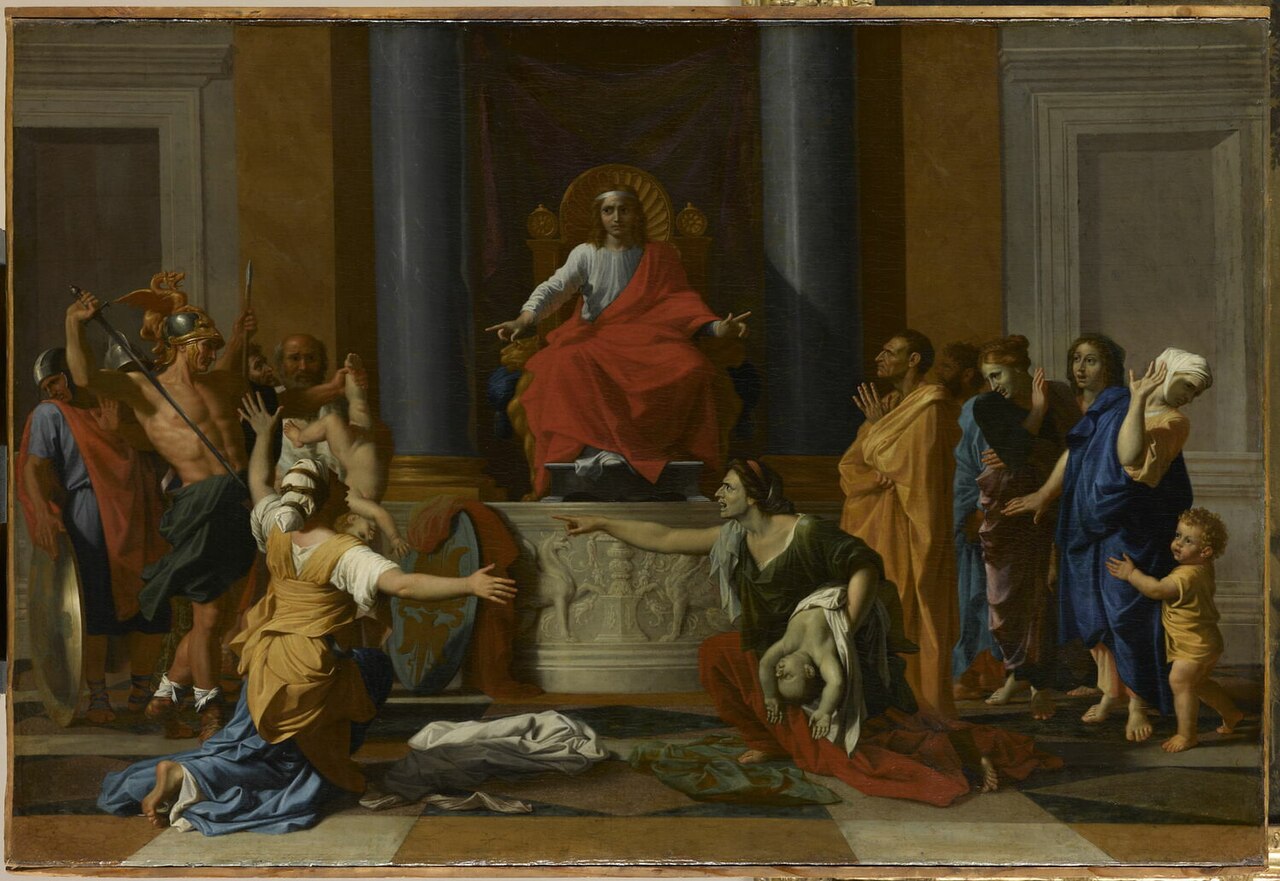
The Judgment of Solomon, Nicolas Poussin, 1649, Louvre INV 7277. Later artistic reception of 1 Kings 3: two women and two children before the king. It is neither a Kings manuscript nor contemporary evidence for the king
Ancient text
Biblical books narrating the kingdoms' history, including the campaign against Mesha in 2 Kings 3.
Name variants: 1 Kings, 2 Kings, Books of Kings
Context and sources →
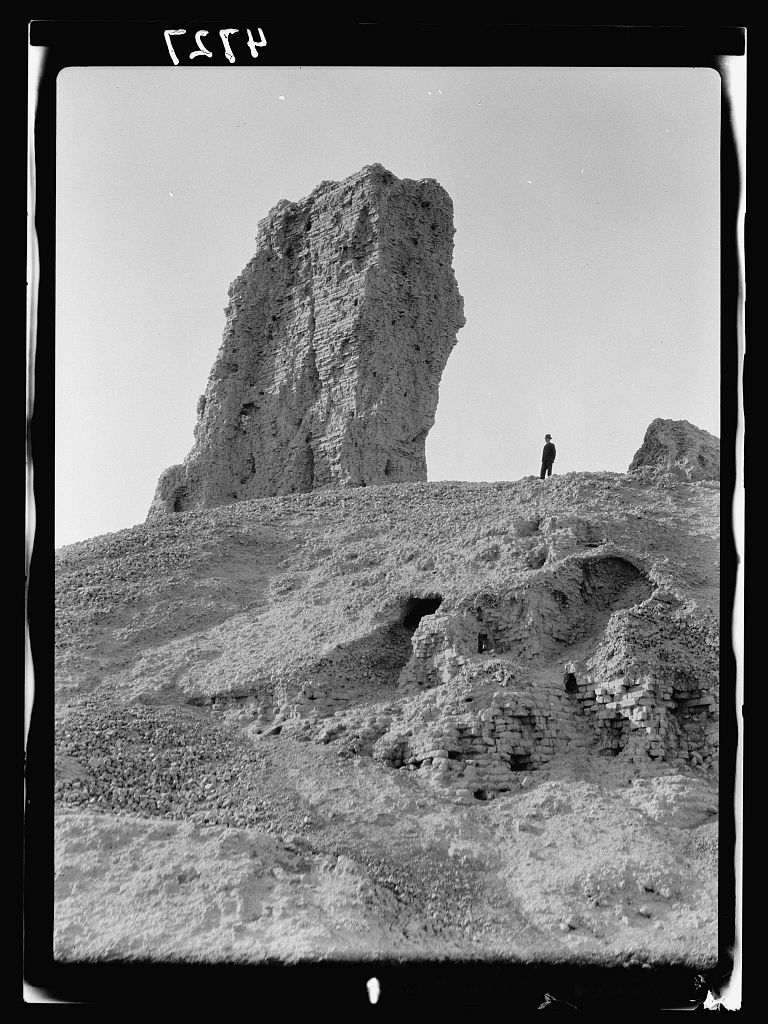
Remains of Borsippa’s ziggurat in Iraq, photograph dated 1932, American Colony (Jerusalem) Photo Department, Library of Congress LC-DIG-matpc-16130. Its archival title uses Tower of Babel as a traditional association; this is Borsippa, not Etemenanki in Babylon
Site
Borsippa is an ancient city in Iraq with the Ezida temple and a ziggurat, distinct from neighboring Babylon.
Name variants: Borsippa
Context and sources →
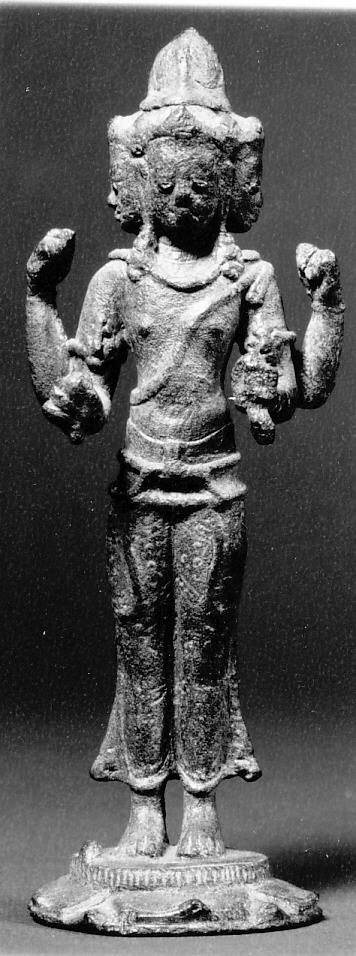
Brahma with Silver Eyes, bronze from Java, ninth century CE; Met 1987.142.202. Evidence of the deity’s representation, not the fish episode
Entity
Creator deity in Indian traditions, named as the fish’s identity in Mahābhārata 3.185.
Name variants: Brahmā, Brahma
Context and sources →
Person
Scholar of medieval literature and Christian apocrypha.
Name variants: Brandon W. Hawk
Context and sources →
Person
Scholar of the history of religion and early Islamic exegesis.
Name variants: Brannon M. Wheeler
Context and sources →
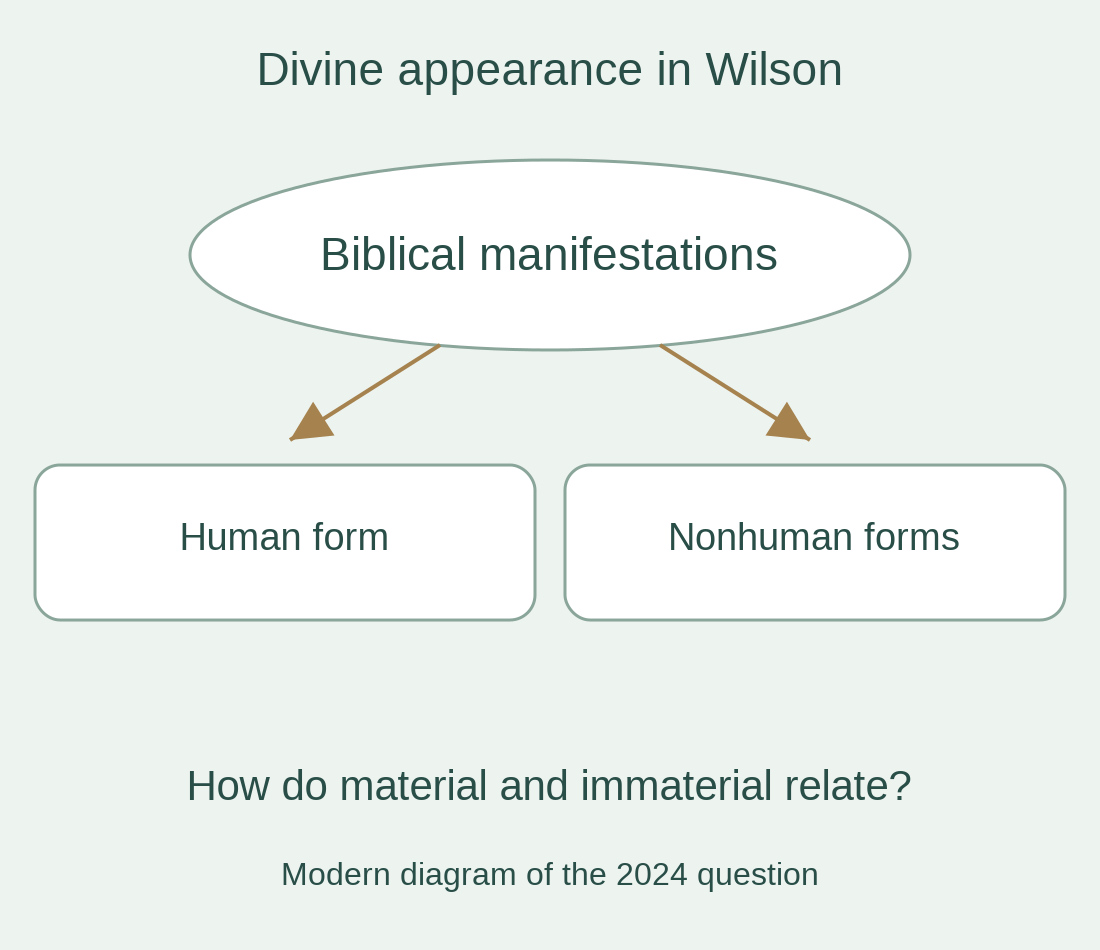
Modern diagram of the 2024 question. How do material and immaterial relate?. Not a portrait or depiction of God
Person
New Testament scholar at Duke University studying bodies and divine manifestation in Luke–Acts.
Name variants: Brittany E. Wilson
Context and sources →
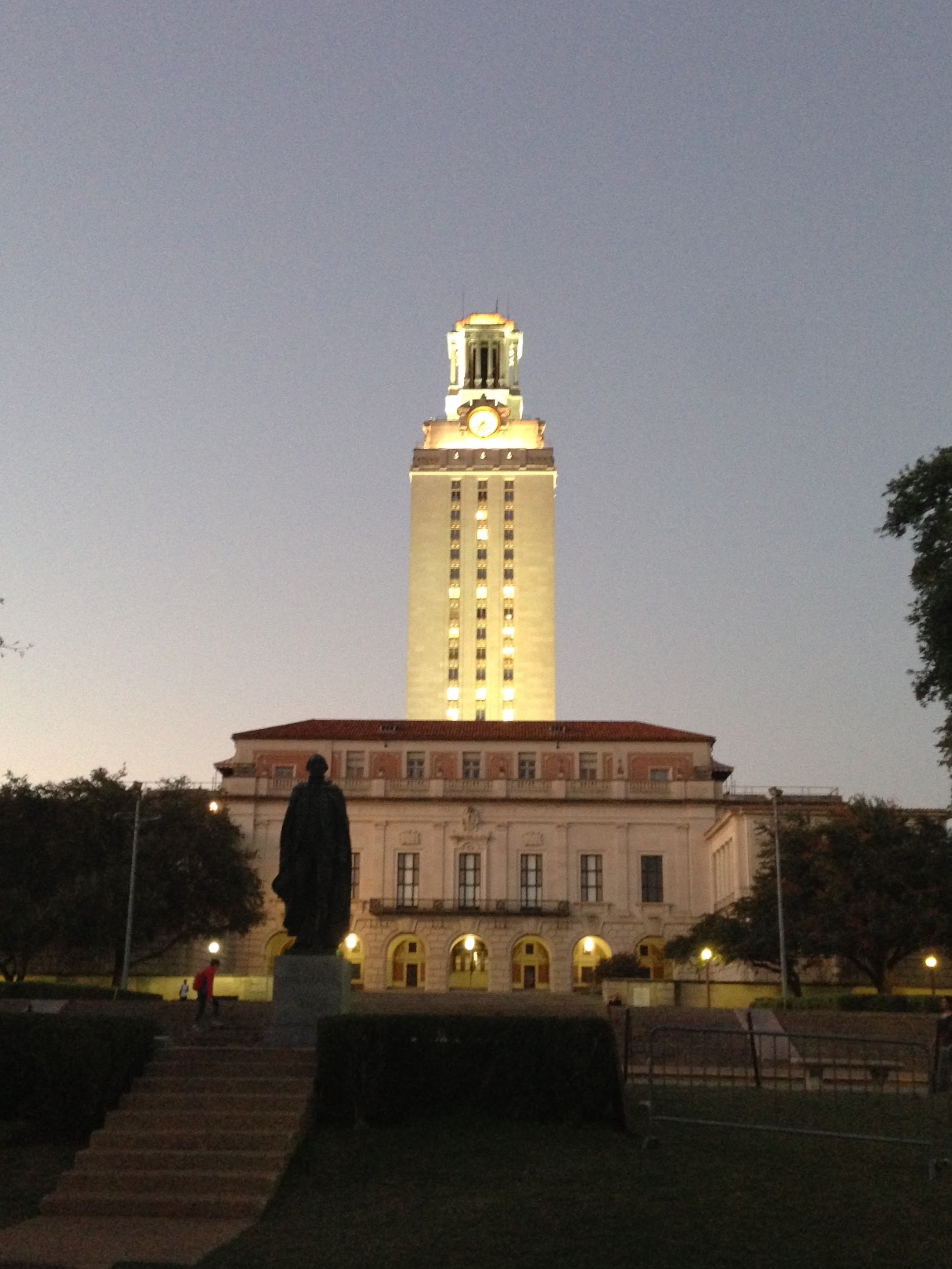
The Main Building Tower at the University of Texas at Austin at dusk, dated 29 September 2013 in the capture metadata. The photograph provides context for the university where Bruce Wells works on Middle Eastern studies and ancient law
Person
Hebrew Bible and ancient Near Eastern law scholar at the University of Texas at Austin, studying legal texts and litigation.
Name variants: Bruce Wells
Context and sources →
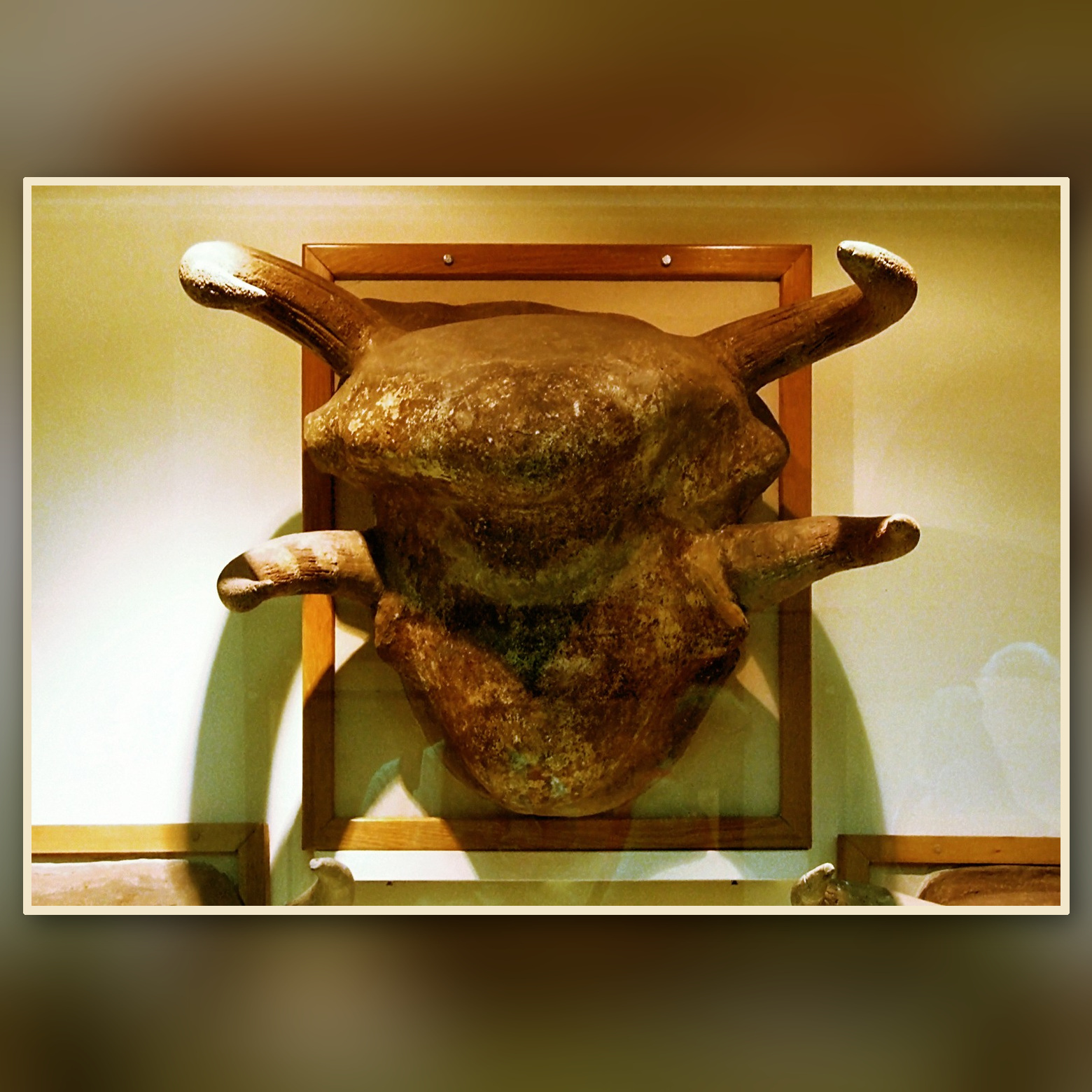
Square photographic cover adapted from a photographer-identified Çatalhöyük horned model in the Museum of Anatolian Civilizations, Ankara. The frame and blurred surrounding image are modern editorial treatment, not an excavated setting or scholarly reconstruction
Entity
Bucrania (singular bucranium): horned cattle skulls or heads and their representations. At Çatalhöyük, installations combined real horn cores and plaster models, some displayed or concealed; none alone identifies a deity or particular rite.
Name variants: bucrania, bucranium
Context and sources →
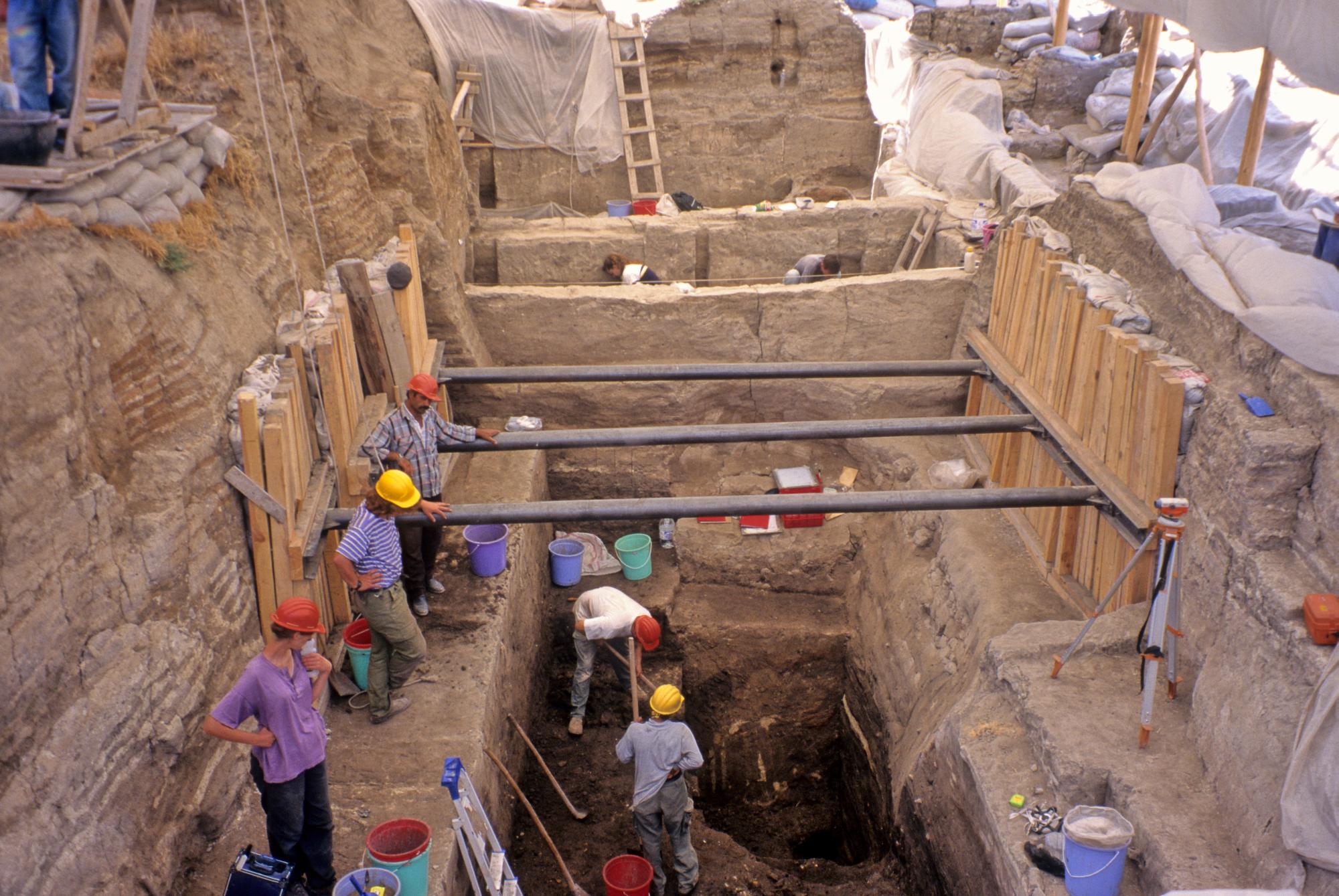
A deep excavation trench at Çatalhöyük exposes accumulated deposits and architectural remains. Braces, boards and working equipment are modern. This illustrates the setting for reading building sequences, not an identification of Building 42 or 52
Entity
Reading a building through construction, use, transformation and closure, rather than as a fixed plan.
Name variants: building biography, building life history
Context and sources →
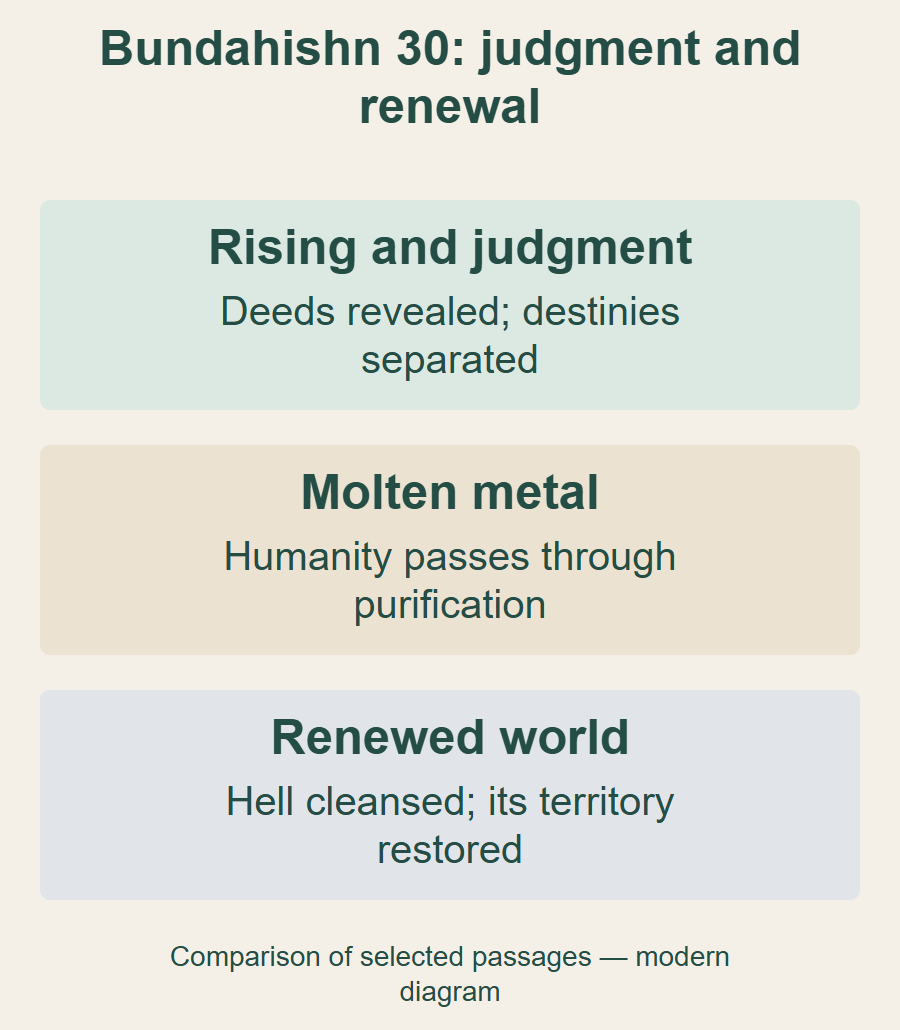
Modern chart of Indian Bundahishn 30: judgment, molten metal and the world’s purification; narrative sequence in West’s translation, not a manuscript or artifact
Ancient text
The Bundahishn is a Middle Persian Zoroastrian work on creation, the world and its final renovation.
Name variants: Bundahishn
Context and sources →
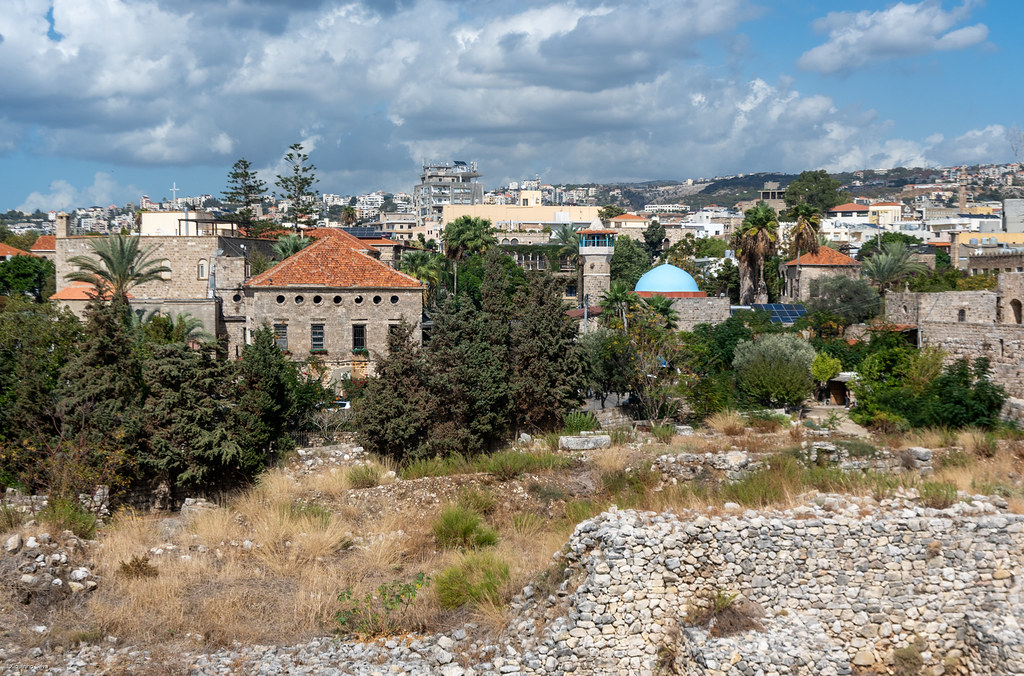
Byblos,9 October2025; the city and its architectural layers, with remains in the foreground. A modern view, not a Roman-period Adonis celebration
Site
Byblos, or Jbeil, is a coastal city in Lebanon north of Beirut.
Name variants: Byblos, Jbeil
Context and sources →
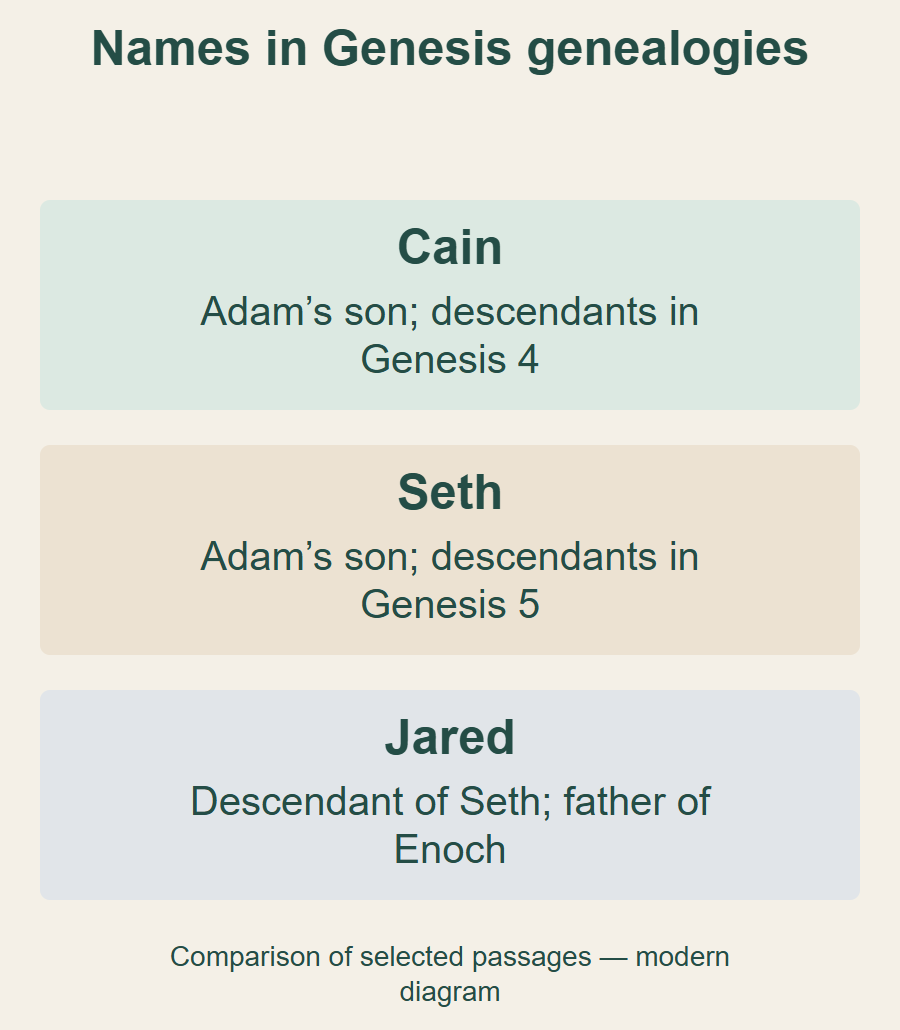
Modern chart distinguishing the Cain and Seth branches in Genesis and Jared’s position; textual relationships, not a reconstructed historical genealogy
Person
Cain is Adam’s son in Genesis 4, which tells of his killing his brother and lists his descendants.
Name variants: Cain
Context and sources →

Modern generated symbolic scene of tree rings and a luminous timeline suggesting calibration; neither a photographed scientific sample nor a plotted calibration dataset
Entity
cal BP denotes calibrated calendar years before the fixed reference year 1950, not raw ¹⁴C BP measurements; calibrated intervals depend on the curve, sample and probability model.
Name variants: cal BP, calibrated BP
Context and sources →
Person
Third-century-BCE Greek poet whose Hymn to Delos evokes Apollo's birth.
Name variants: Callimachus of Cyrene
Context and sources →
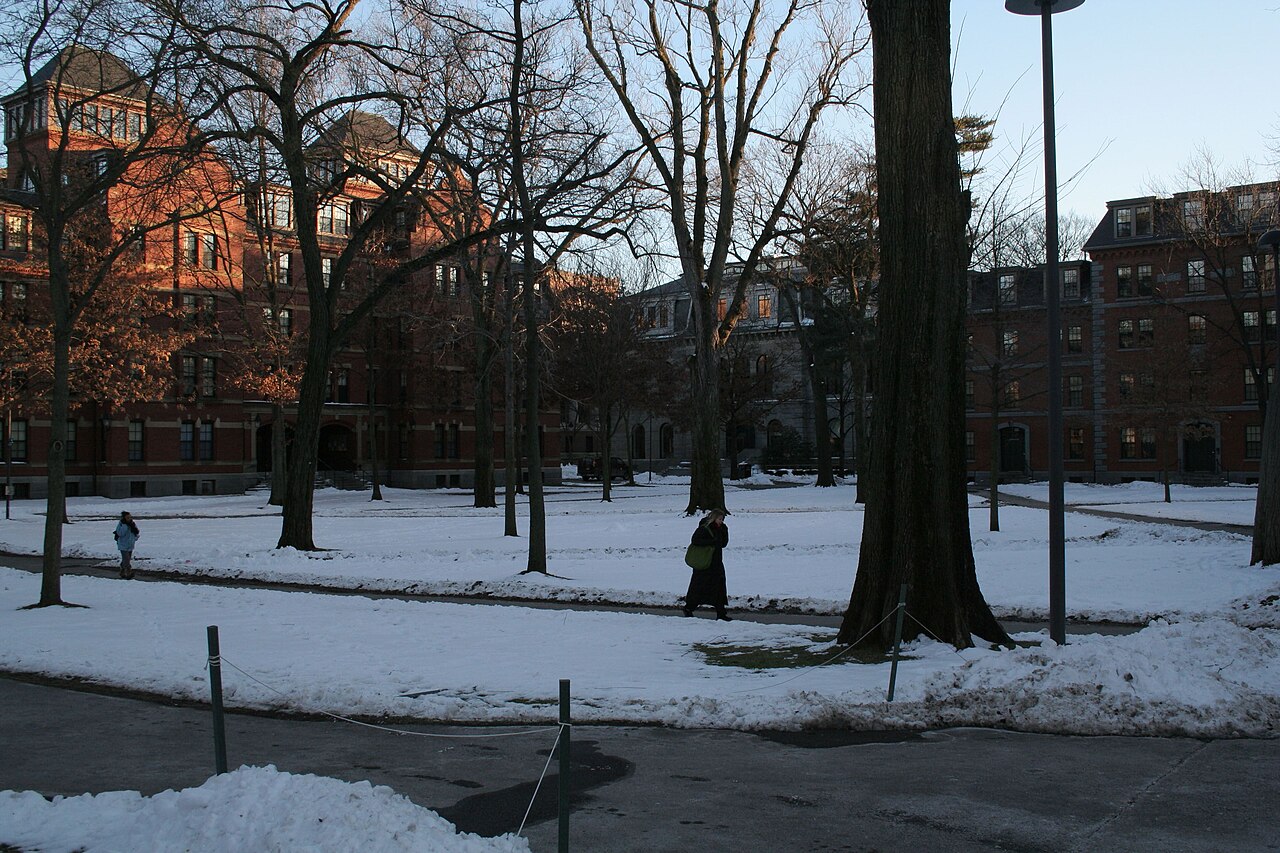
Harvard Yard in winter, 7 January 2010. Calvert Watkins worked at Harvard until his retirement in 2003; the photograph shows the campus after that date
Person
Scholar of Indo-European languages and ancient poetry (1933–2013), who worked at Harvard and then UCLA.
Name variants: Calvert Watkins, Calvert Ward Watkins
Context and sources →
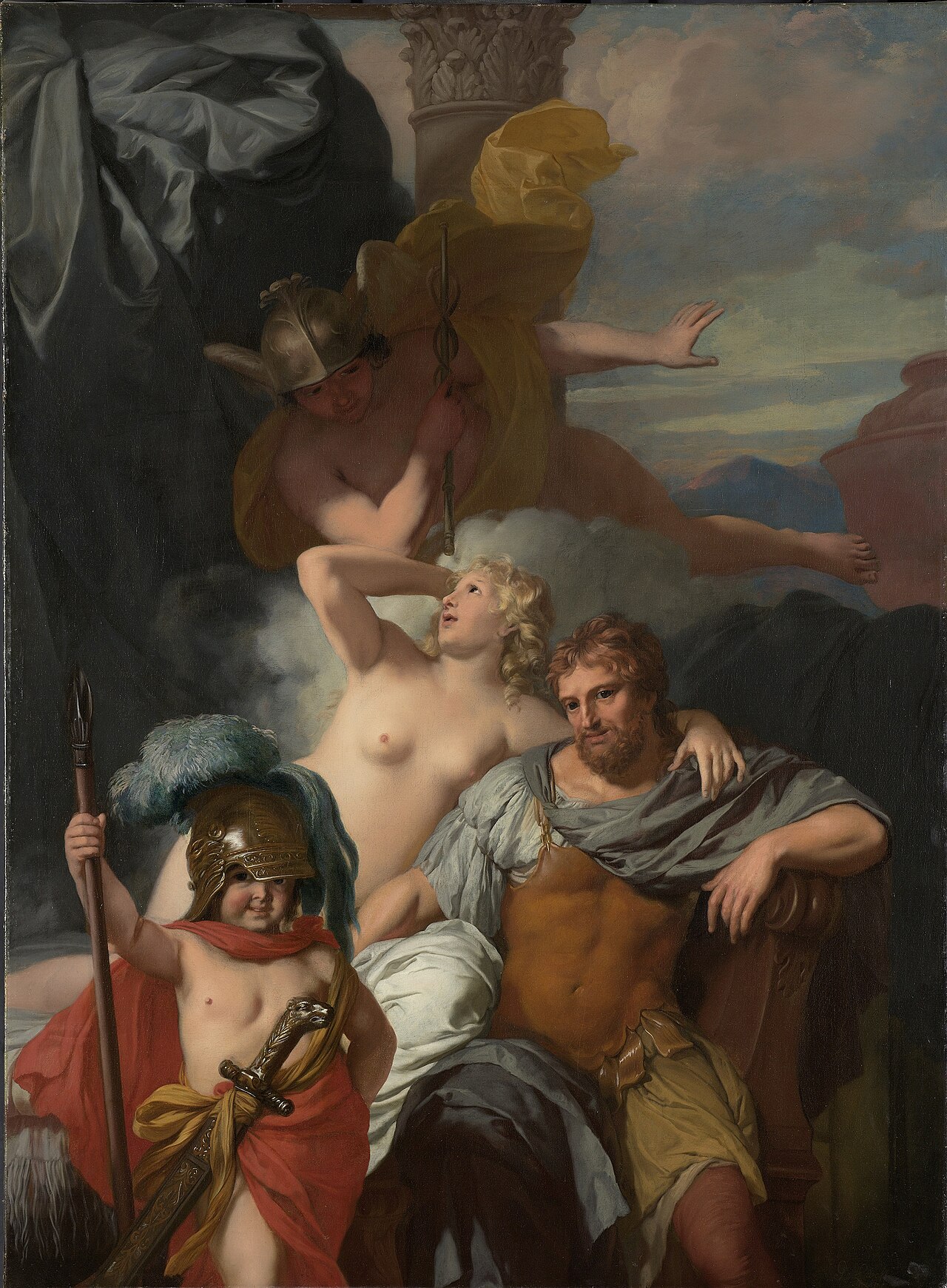
Mercury ordering Calypso to release Odysseus, painted by Gerard de Lairesse about 1680; Rijksmuseum SK-A-212. A later European representation of the story, rather than an ancient Greek artifact
Entity
Divine figure in the Odyssey who keeps Odysseus on her island while he longs to return home.
Name variants: Calypso
Context and sources →
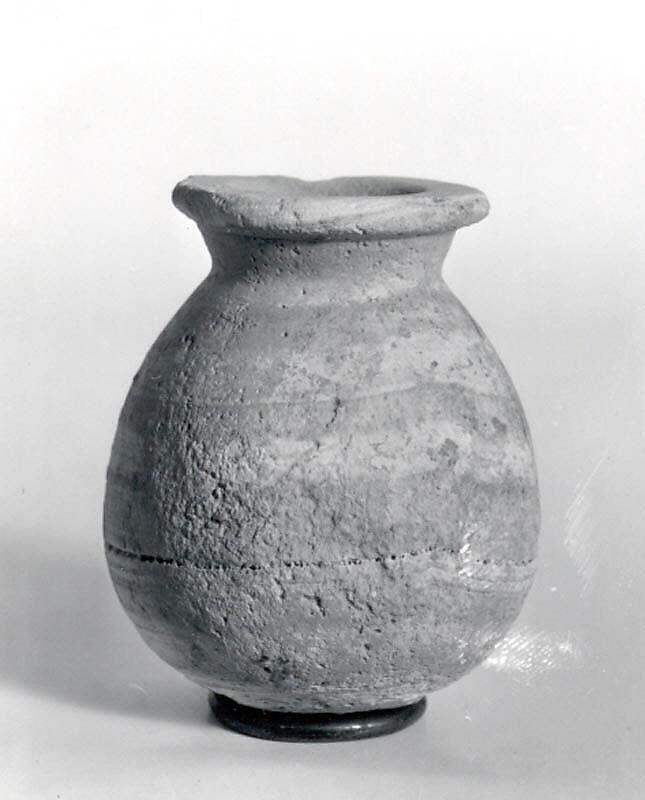
Alabaster vessel from Lachish, modern Tell ed-Duweir, ca. 1780–1580 BCE, classified as Canaanite by the Metropolitan Museum. One object from the region’s Middle Bronze Age; it neither maps Canaan’s boundaries nor establishes Abraham’s story. Met 34.126.31
Site
Regional name in the Mediterranean Levant, associated with Canaanite cities and cultures in the second millennium BCE and with Abraham’s family’s destination in Genesis.
Name variants: Canaan
Context and sources →
Person
McGill philosopher studying ancient and medieval philosophy and the relations of Jewish and Islamic thought to religion.
Name variants: Carlos Fraenkel
Context and sources →
Person
Scholar of the Hebrew Bible and Israelite and Judean history, studying Deuteronomy and Esarhaddon’s oath.
Name variants: Carly L. Crouch
Context and sources →
Person
Hebrew Bible scholar and professor emerita at Emory’s Candler School, working on Daniel, apocalyptic and wisdom literature.
Name variants: Carol A. Newsom, Carol Newsom
Context and sources →
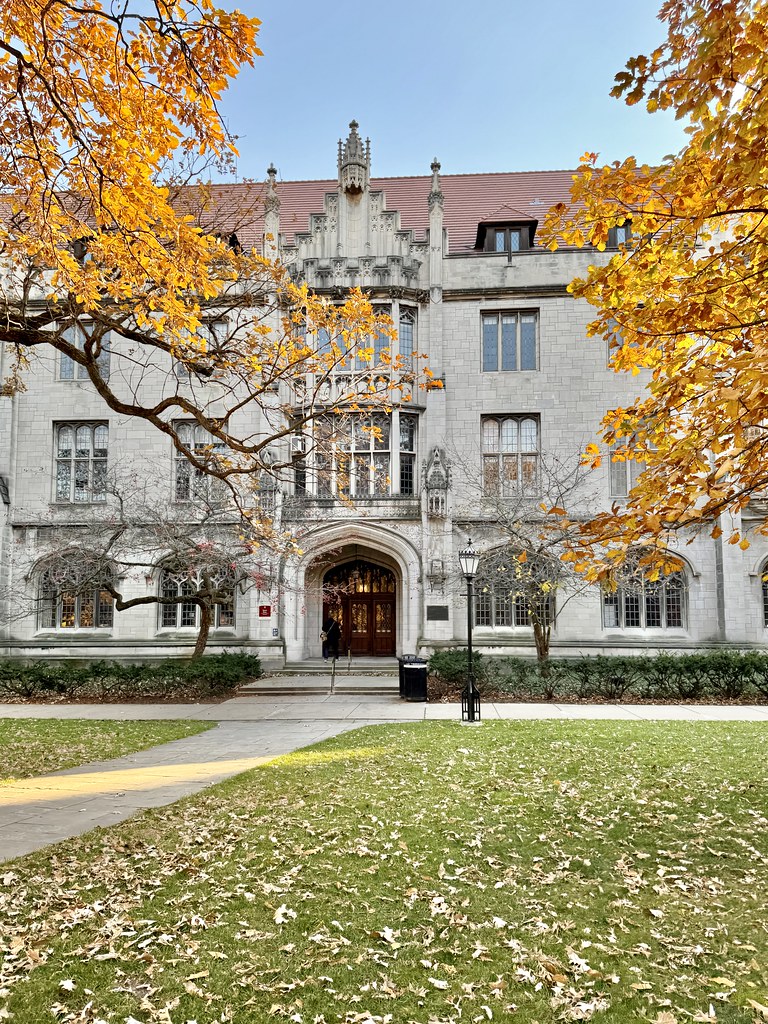
Swift Hall at the University of Chicago, photographed in 2023. University context associated with López-Ruiz’s work; not a portrait or a photograph of her office
Person
Scholar of ancient Mediterranean religions, mythologies and exchange between Greek and Semitic traditions.
Name variants: Carolina López-Ruiz
Context and sources →
Person
Scholar of ancient Israel, Judah and the Near East who proposed reading Ezekiel's Gog in relation to Babylonian Marduk traditions.
Name variants: Casey A. Strine
Context and sources →
Person
Scholar of biblical studies and ancient Judaism and author on resurrection in early Judaism.
Name variants: Casey D. Elledge
Context and sources →
Person
Chaim Milikowsky is a scholar of rabbinic literature, tradition history and textual criticism.
Name variants: Chaim Milikowsky
Context and sources →
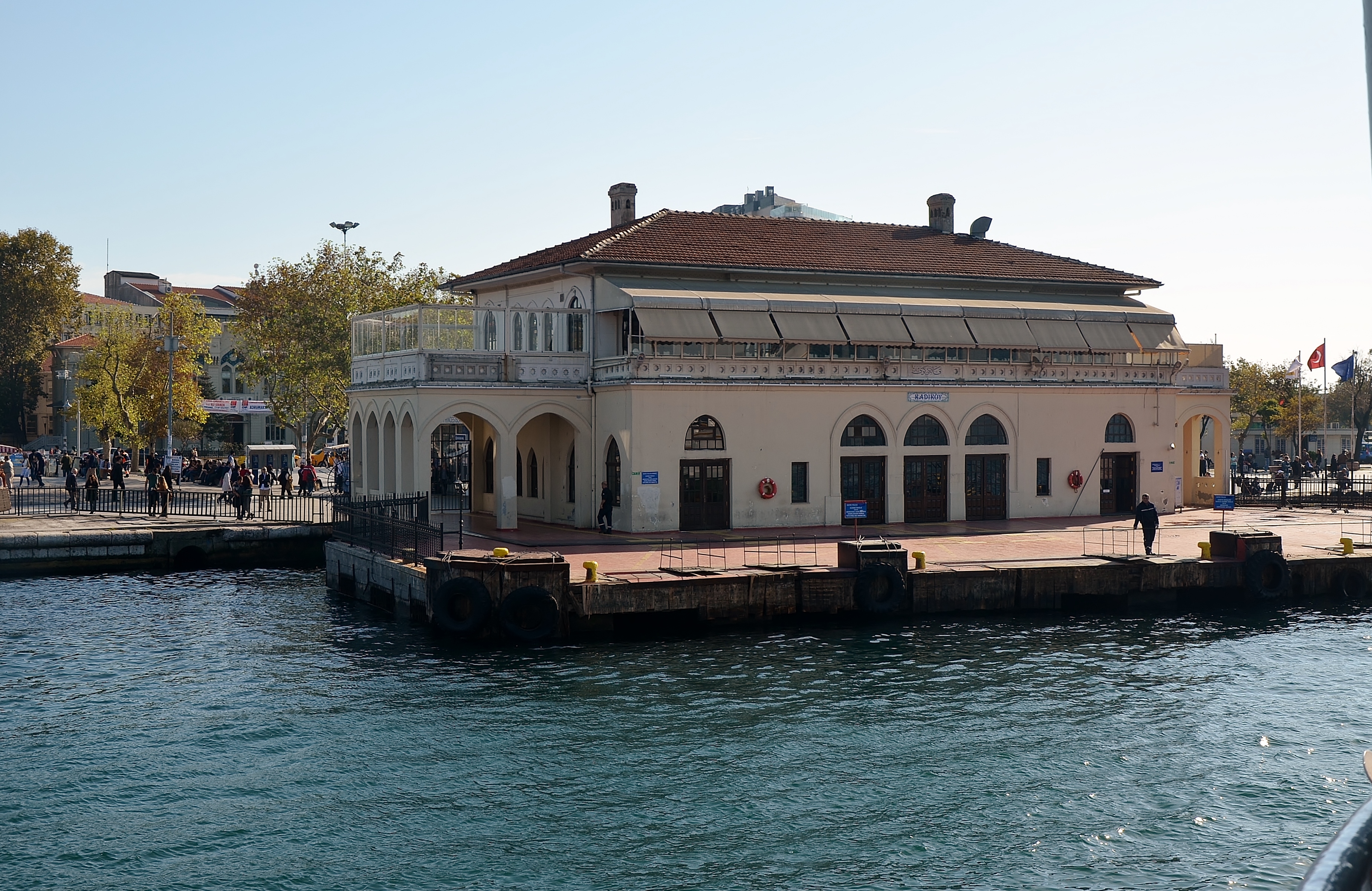
Old ferry-pier building at Kadıköy, photographed by CeeGee on 22 October 2014, CC BY-SA 4.0. A modern view of the area of ancient Chalcedon, not the council building of 451 or its remains
Site
Ancient city at modern Kadıköy on Istanbul’s Asian side.
Name variants: Chalcedon (Kadıköy)
Context and sources →
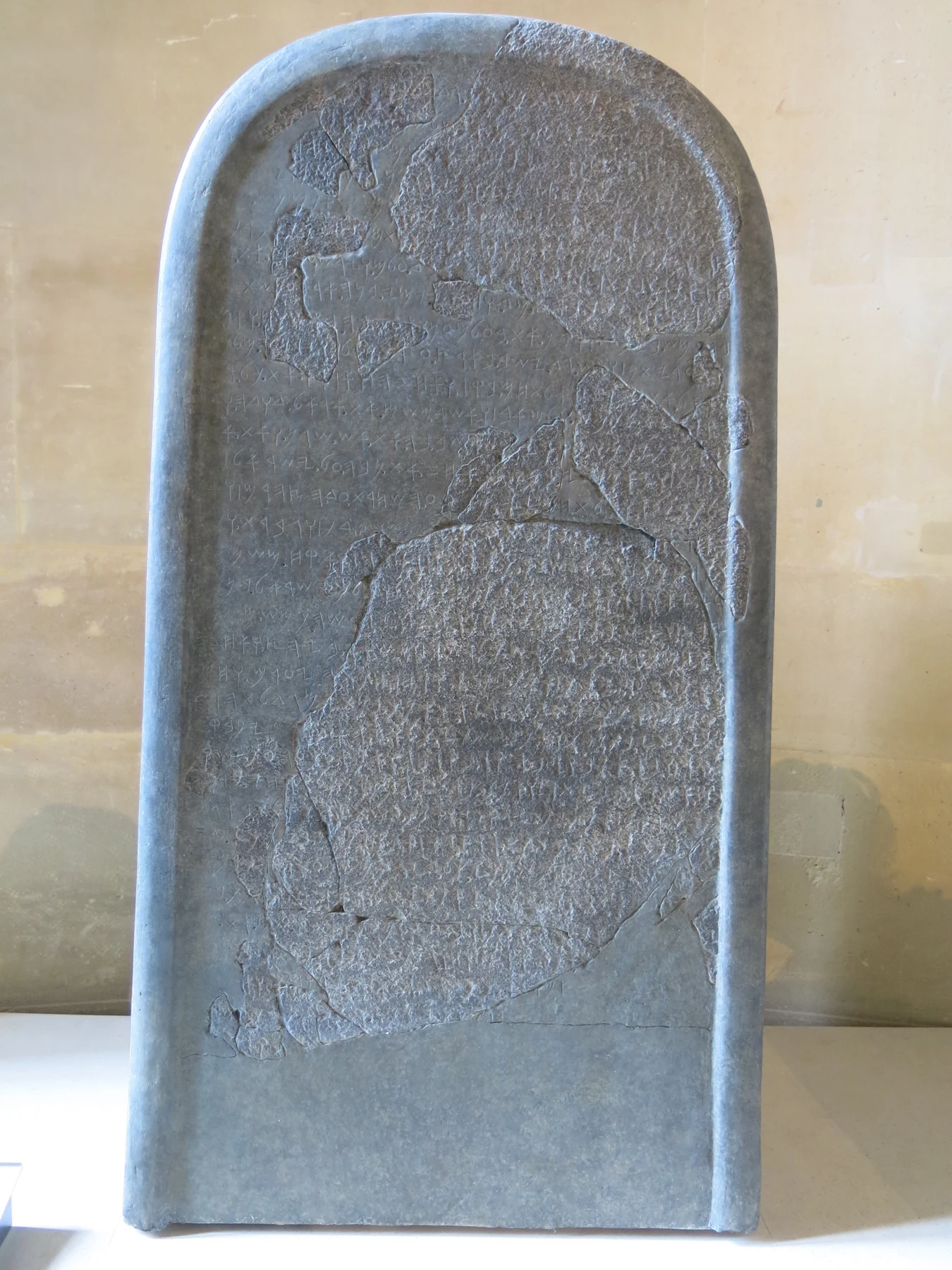
Mesha Stele, basalt from Dhiban, ninth century BCE, Louvre AO 5066. The text names Chemosh; the displayed object is reassembled and restored, not an image of the deity
Entity
Major Moabite deity in the ninth-century BCE Mesha Stele, credited with restoring territory and receiving war booty; also named in Hebrew texts from another perspective.
Name variants: Chemosh, Kemosh
Context and sources →
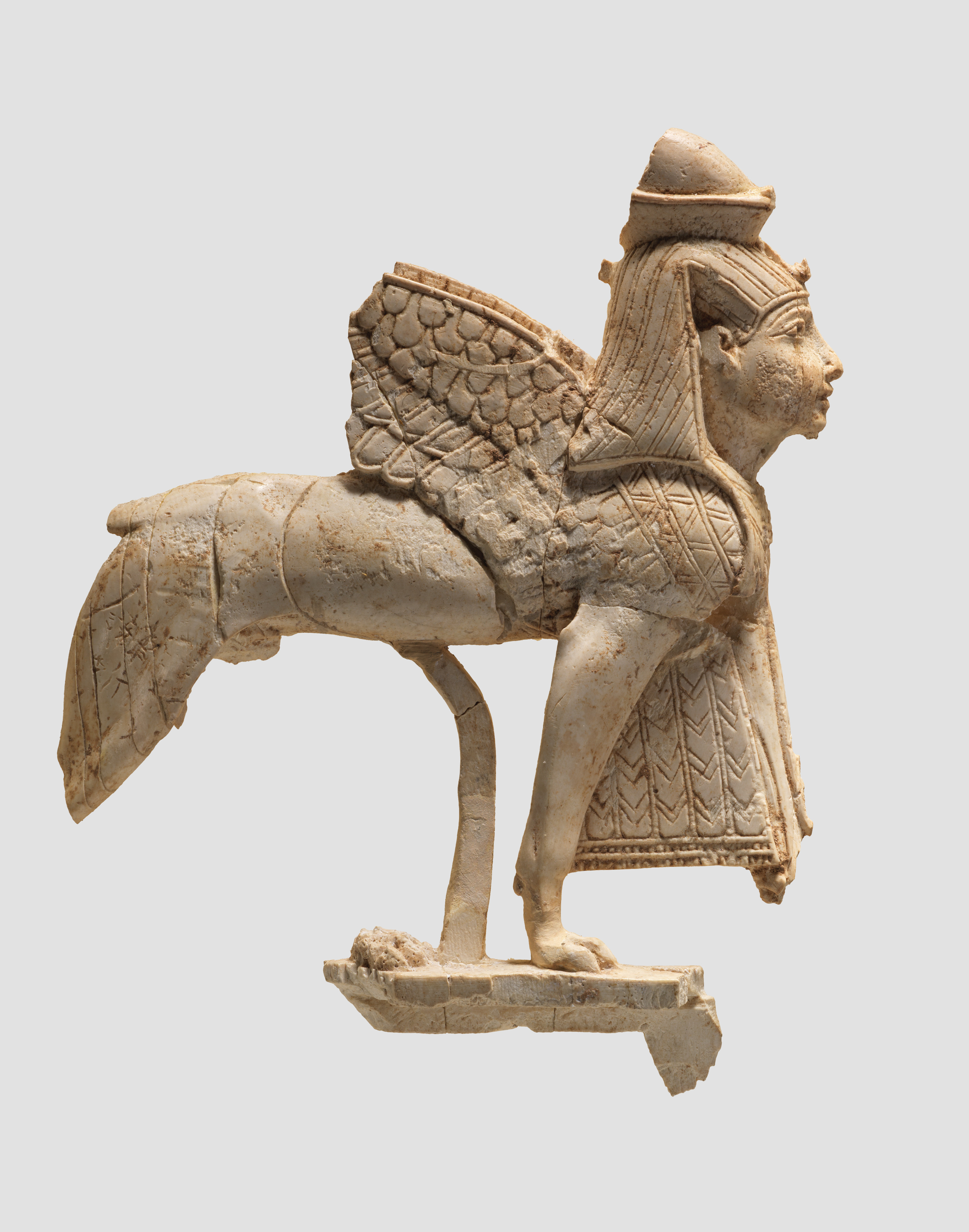
Ivory furniture plaque with a winged sphinx, ca. ninth–eighth century BCE; probably from Arslan Tash, Syria. The Met, 57.80.1. Comparative evidence, not a securely identified cherub or an image of the Ark
Entity
Cherubim as Eden’s guardians, Ark and Temple figures, and beings in Ezekiel’s vision: a plural name, varying descriptions, and the limits of ancient visual comparisons.
Name variants: cherubim, cherub
Context and sources →
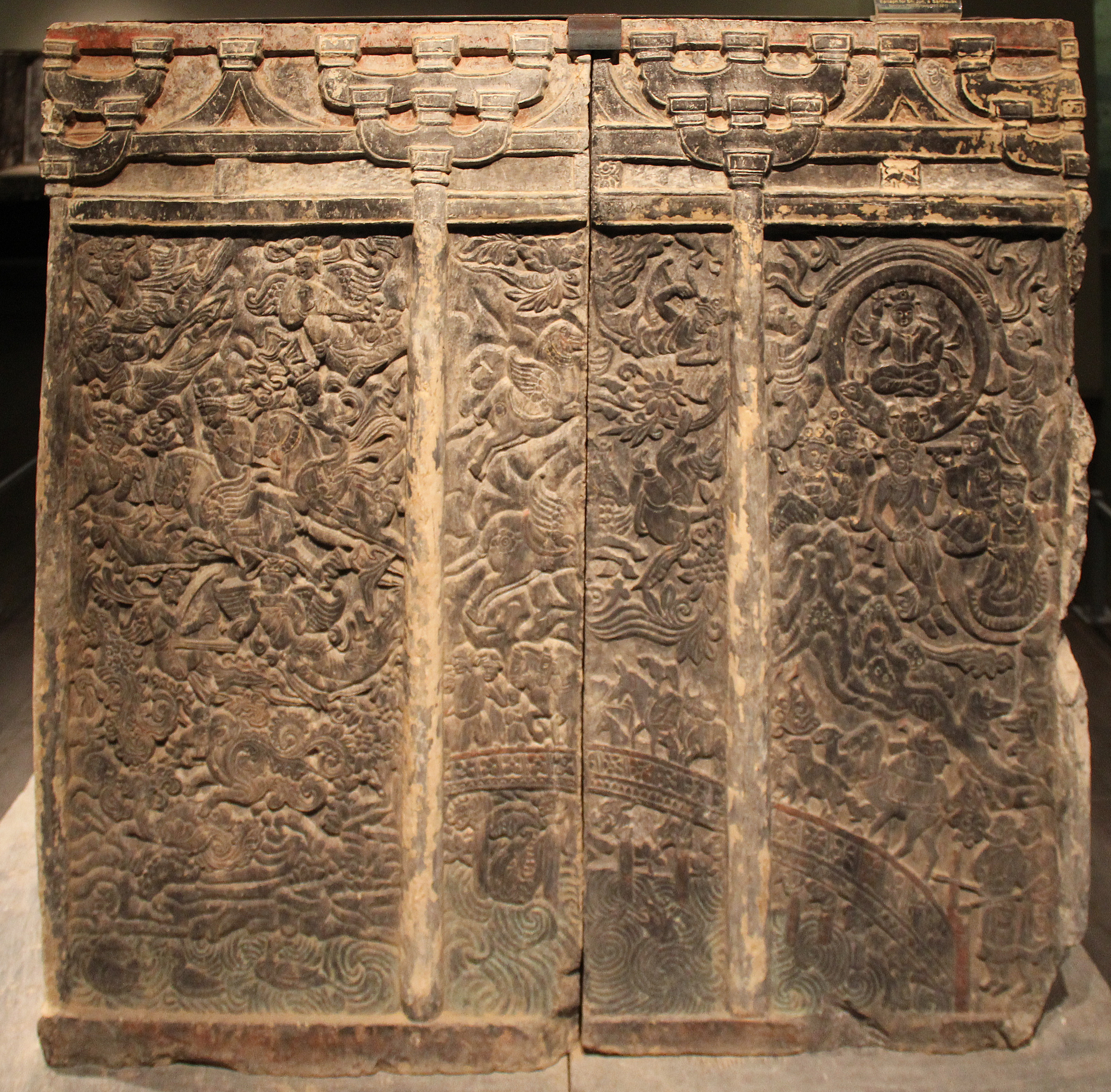
East panels of Wirkak’s (Shi Jun’s) sarcophagus, Xi’an, c. 579–580 CE. The lower crossing scene is interpreted as the Chinvat Bridge: later funerary imagery in a mixed religious setting, not a Gathic-period depiction
Entity
The crossing associated with the soul’s judgment after death in Zoroastrian tradition. Named in the Gathas, it receives fuller descriptions of guardians, weighing and unequal passage in later texts; it is distinct from resurrection and world renovation.
Name variants: Chinvat Bridge, Činwad Puhl, Cinvat
Context and sources →
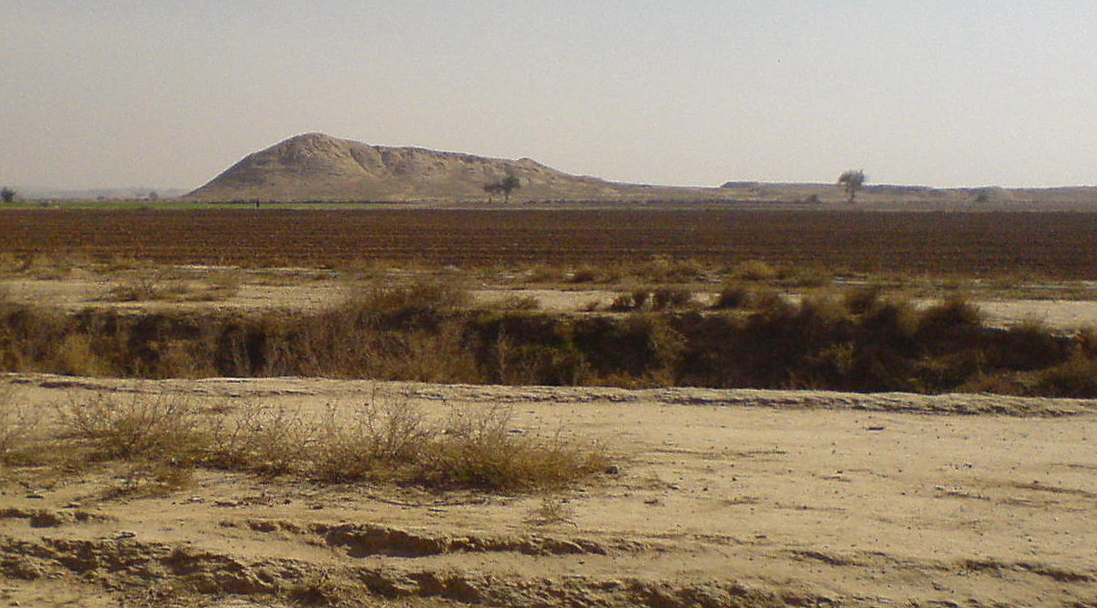
Modern view of the Chogha Mish mound; it does not identify a specific archaeological phase
Site
Multiperiod site in Khuzestan, southwestern Iran, relevant to figurines and cranial modification but requiring separation of its phases.
Name variants: Chogha Mish
Context and sources →
Person
Christian Lange is a scholar of Islamic studies, including the history of paradise and hell.
Name variants: Christian Lange
Context and sources →
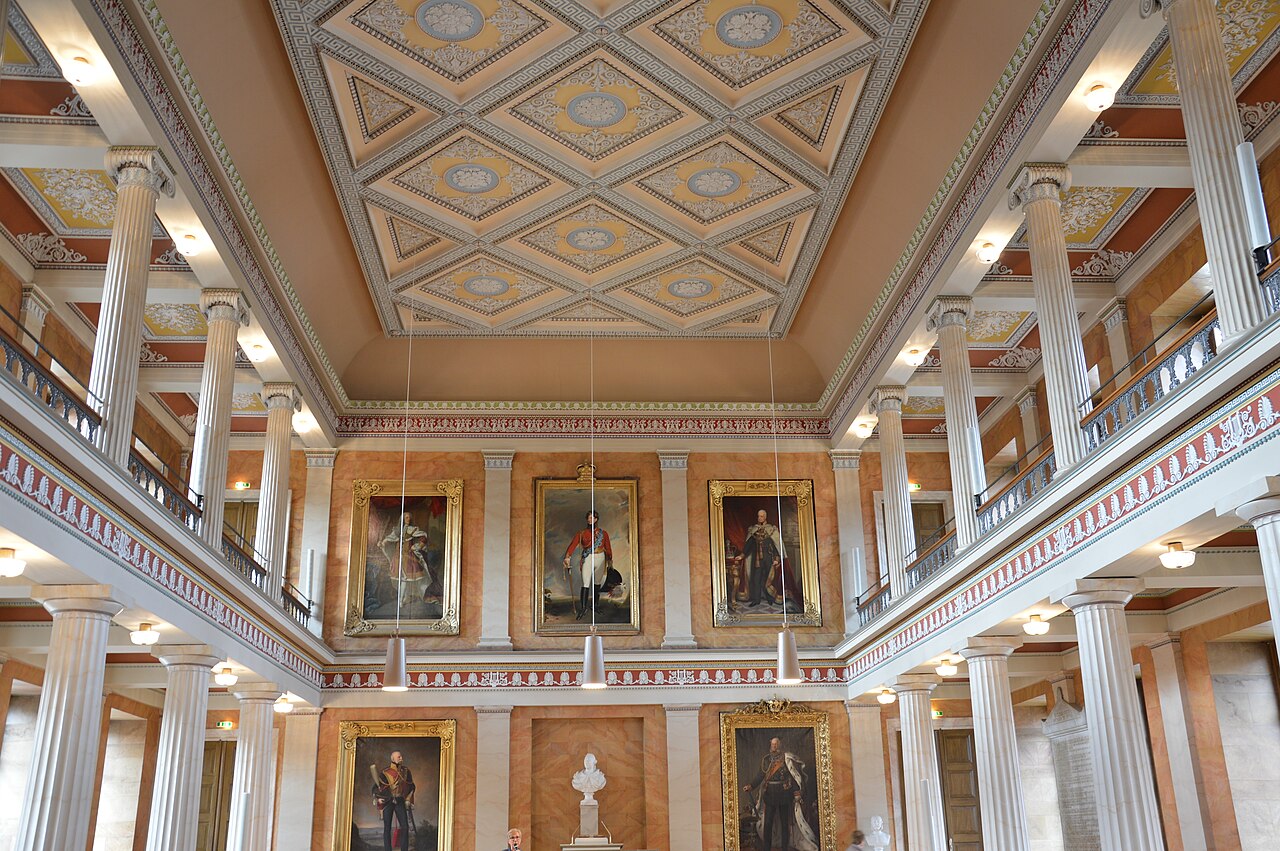
The Aula at Göttingen University, 3 April 2016. Institutional context for Christian Zgoll, not a portrait or identification of his office
Person
Scholar at Göttingen working on ancient languages and comparative mythology, including Greek poetry and Hittite texts.
Name variants: Christian Zgoll
Context and sources →

A modern AI-generated symbolic image of light and human fabric for the idea of incarnation; neither a manuscript, artifact, nor a historically verified depiction of Jesus
Entity
Christian belief that God’s Word assumed genuinely human existence in Jesus Christ; early formulations differ from later conciliar definitions and from mere divine appearances.
Name variants: Christian incarnation
Context and sources →
Person
Christine Hayes studies Jewish history, rabbinic literature and interpretation of the Hebrew Bible.
Name variants: Christine Hayes
Context and sources →
Person
Author of the 2012 German WiBiLex entry on Gog and Magog, surveying explanations of the names and their evidence.
Name variants: Christoph Rösel
Context and sources →
Person
Scholar of Northwest Semitic languages, literature and epigraphy who has studied ha-satan in biblical texts.
Name variants: Christopher Rollston
Context and sources →
Person
Christopher B. Hays studies the Hebrew Bible, Semitic languages and the ancient Near East.
Name variants: Christopher B. Hays
Context and sources →