Person
Siduri
- Names
- Shiduri · Siduri · The alewife · Šiduri
- Region
- Mesopotamia
Siduri is the tavern-keeper Gilgamesh meets on the shore after Enkidu’s death. An Old Babylonian tablet preserves counsel about mortal life, while the later epic records her directions to the boatman.
Estimated reading time: 5 min Published Last reviewed:
Share article
Text
Introduction
Siduri is the tavern-keeper who encounters GilgameshGilgameshA king of Uruk in Mesopotamian tradition and the hero of Sumerian poems and a multi-tablet Akkadian epic, with his companion Enkidu, the loss of a friend and the search for life. In standard Tablet XI, Utnapishtim tells him of the flood.Glossary · Click to read the explanation at the edge of the sea after the death of EnkiduEnkidu, Gilgamesh’s companionGilgamesh’s companion in the Babylonian epic; his death sets the king searching for life beyond mortality.Glossary · Click to read the explanation. In the Standard Babylonian epic she questions the stranger at her door and directs him toward the boatman who can help him cross. An older AkkadianAkkadianAn ancient East Semitic language written in cuneiform from the third millennium BCE; its varieties include Babylonian and Assyrian, and it served in international diplomacy.Glossary · Click to read the explanation tablet gives the corresponding figure a speech about how to live in the face of death. Reading those passages in their respective versions preserves what is distinctive about her role in each. [1] [2]
The stranger at the gate
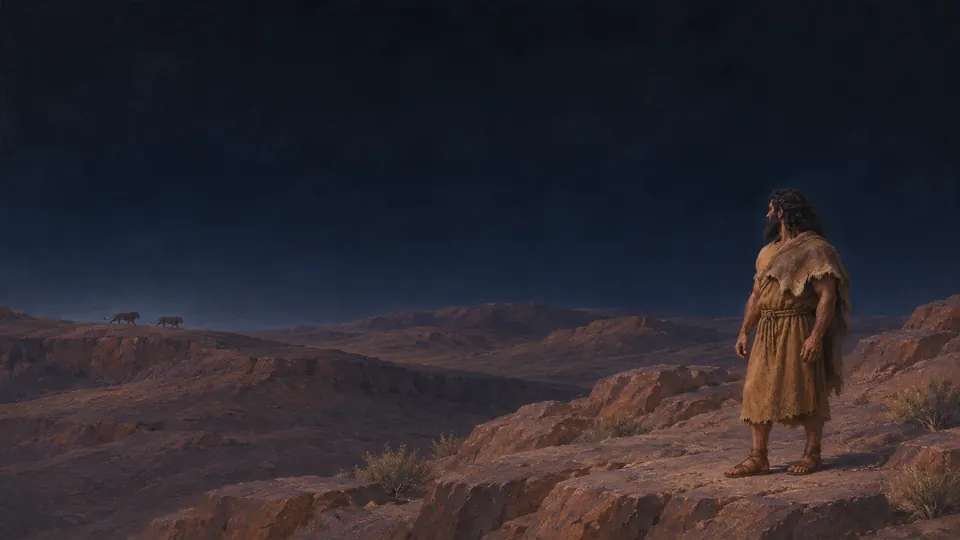
Tablet X of the Standard Babylonian epic introduces Siduri by the shore. Gilgamesh approaches in animal skins, his appearance altered by travel and grief. She watches him from a distance, takes him for a hunter, shuts her gate, and climbs onto the roof. He calls up to her and threatens to force the gate. The dialogue eventually turns to his appearance and the reason he has come so far. Her position at the gate gives her an immediate reason to ask who this wanderer is before hearing his account. [1]
Gilgamesh recounts his friendship with Enkidu and the adventures they shared. Siduri asks why a man who accomplished those things has come looking so worn and unhappy. He describes his friend’s death and acknowledges that he fears the same fate for himself. This exchange changes the meaning of the strange appearance she noticed first. The face and clothes are evidence within the story of the journey that followed his loss. He asks about the route to Uta-napishtiUtnapishtimThe flood hero of Standard Babylonian Gilgamesh, granted exceptional life with his wife by the gods. He tells Gilgamesh how he survived; his name overlaps with Atrahasis and Ziusudra traditions without making their narratives identical.Glossary · Click to read the explanation, the man he hopes can answer his questions about lasting life. [1]
Siduri says that the ocean crossing is dangerous and invokes ShamashShamashMesopotamian god of the sun and justice, shown before Hammurabi on an eighteenth-century BCE stele preserved in the Louvre.Glossary · Click to read the explanation, the sun god, as the one who crosses it. She also identifies the Waters of Death as a barrier and tells Gilgamesh to seek Ur-shanabi, Uta-napishti’s boatman. She leaves open the possibility of turning back if a passage is impossible. The information makes the next part of the quest possible, while keeping its difficulty in view. Gilgamesh does eventually cross with Ur-shanabi in Tablet X and reaches the man whose flood story is narrated in Tablet XI. [1]
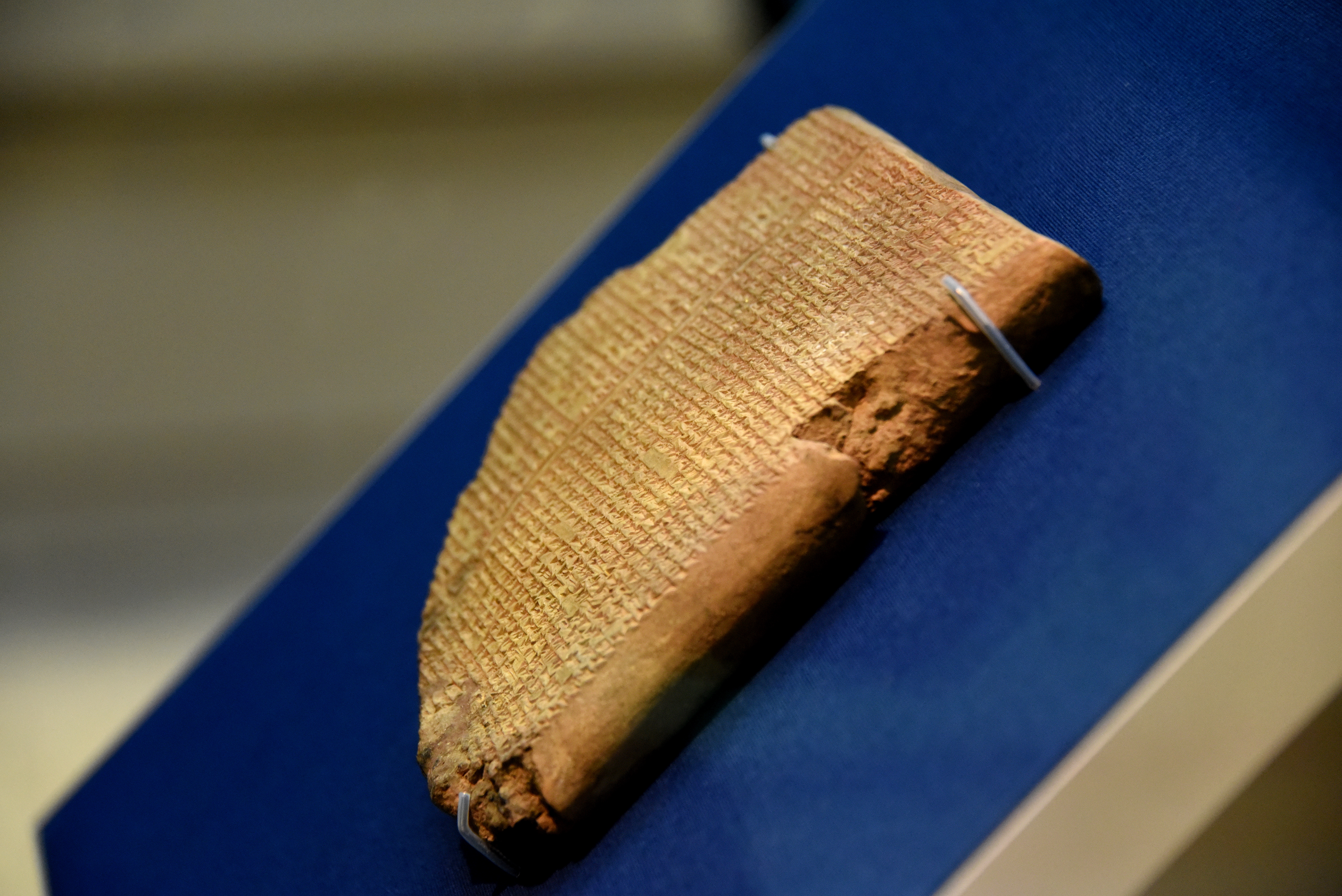
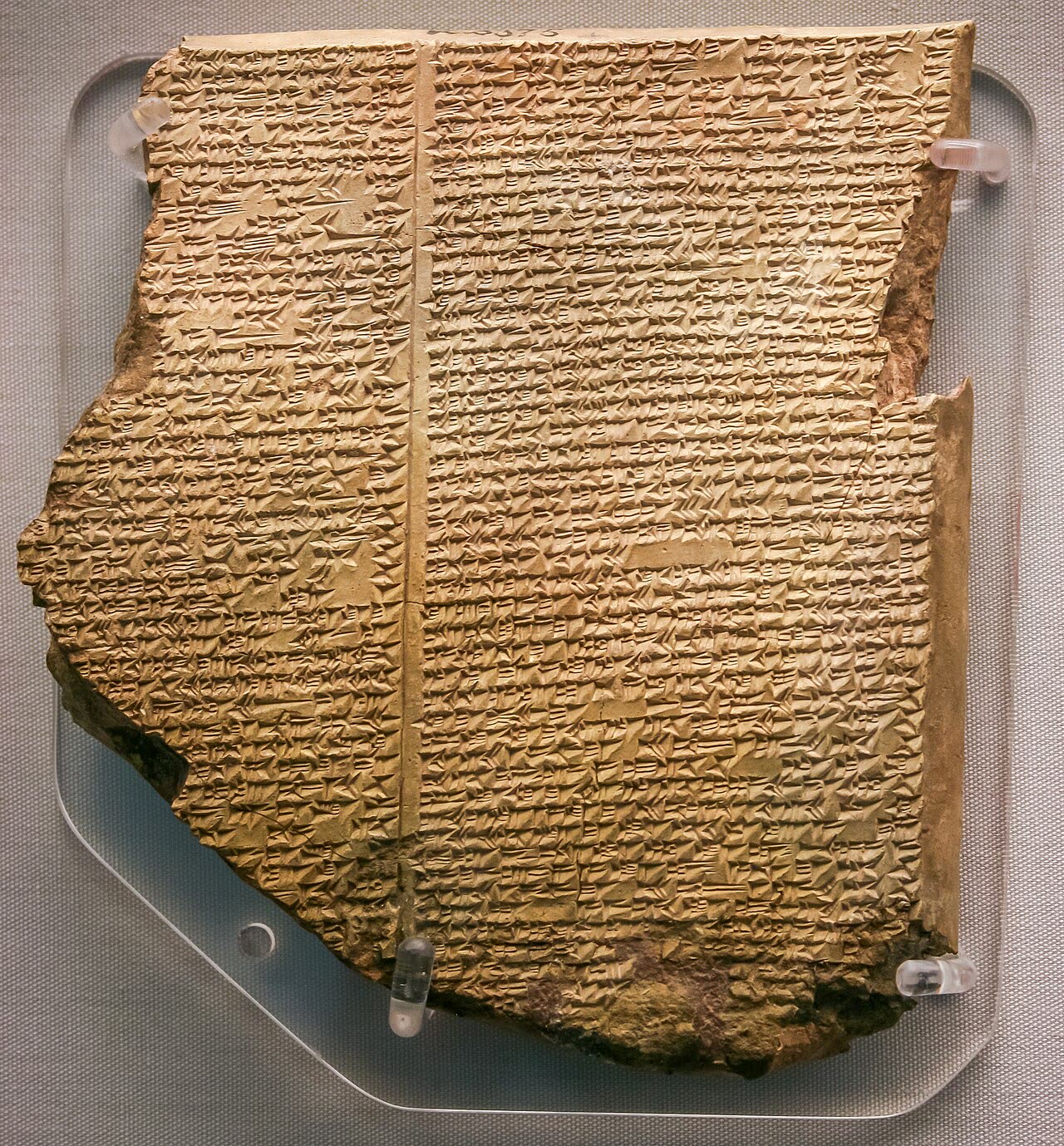
The object pictured is the British Museum’s K.3375, a Neo-Assyrian witness to Tablet XI from NinevehNineveh and KuyunjikNineveh is an ancient Assyrian city near Mosul in northern Iraq; Kuyunjik is one of its archaeological moundsGlossary · Click to read the explanation. It preserves Uta-napishti’s account at the next stage of the journey. The opening words of Tablet X, which place Siduri at the shore, are known from other tablets. The separate physical witnesses matter because modern readers encounter the two episodes in sequence, while the surviving clay preserves them on different objects. [1] [3]
A counsel about the life people have
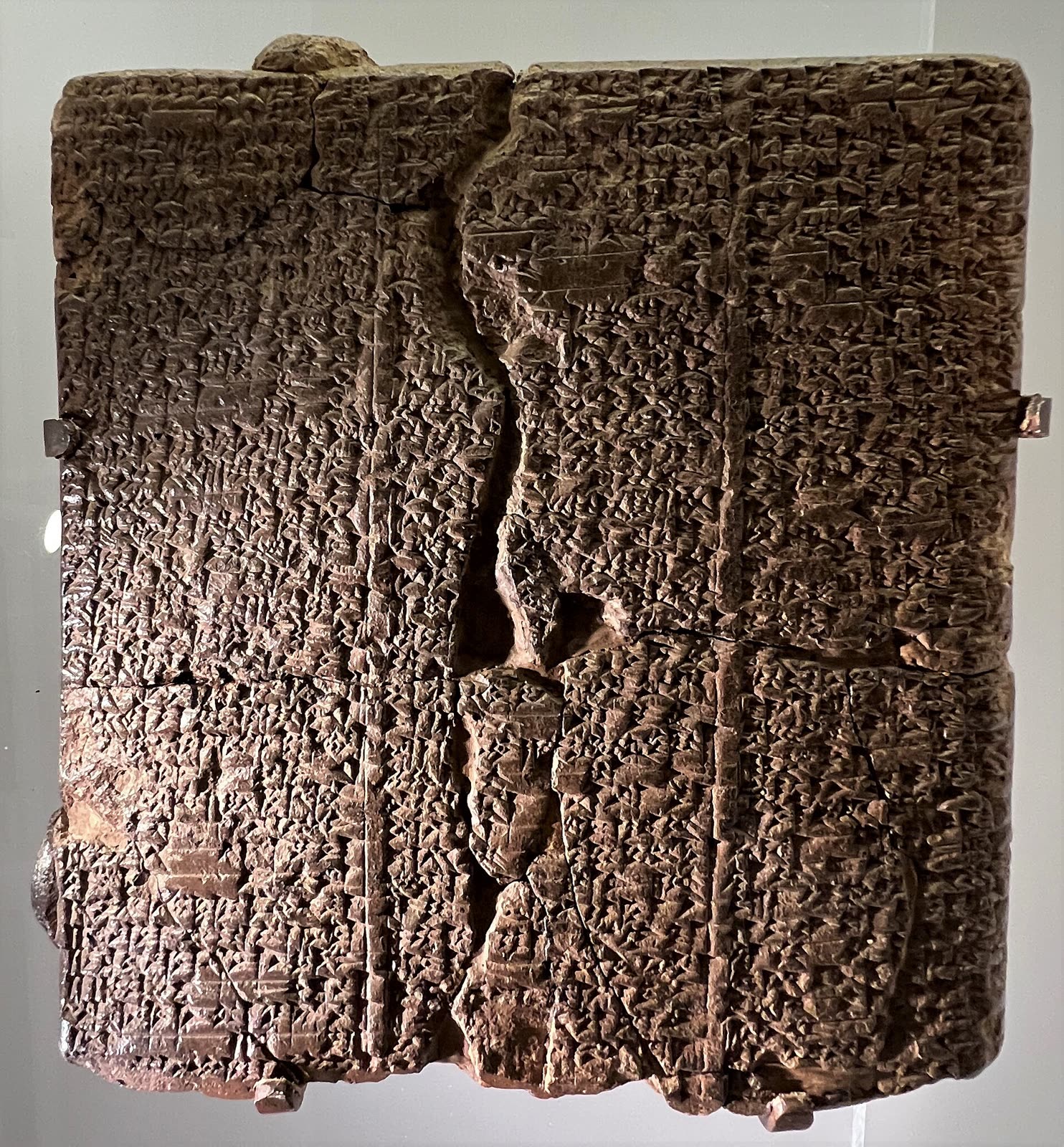
An Old Babylonian version survives in two joining pieces recorded as VAT 4105 in Berlin and BM 96974 in London. Bruno Meissner published the Berlin fragment in 1902, and A. R. Millard published the second fragment in 1964. The dealer who sold the tablet said it came from Sippar. Daniel Fleming and Sara Milstein keep that name as a tentative designation, and the Sources of Early Akkadian Literature catalogue lists the provenance as unknown. The surviving text overlaps portions of Tablets IX and X in the later edition. [1] [2] [4] [5]
In the older fragment the speaker is called the alewife. She asks where Gilgamesh is going and tells him that he will fail to find the life he seeks. The gods, she says, set death for human beings and kept lasting life for themselves. She advises him to eat well, celebrate, wear clean clothes, and bathe. She goes on to ask him to attend to the child holding his hand and to the pleasure of a wife. The movement from what the gods determined to what a person can do gives the speech its shape. The things she names can be done within a mortal life. [1] [2]
Gilgamesh replies that his heart is still sick for Enkidu and asks again about the route across the water. The surviving text includes the beginning of her response and then breaks. When it can be read again, the action has moved to his encounter with the Stone Ones associated with the crossing. The older fragment thus preserves both the counsel and Gilgamesh’s determination to continue asking for a way forward. [1] [2]
Her name and place in the poem
Francesco Sironi and Maurizio Viano observe that in the Standard Babylonian text her name appears at her introduction, while the ensuing dialogue keeps referring to her by her occupation, sābîtu. Ancient copies vary in how they mark the name. Some put a sign for deity before it, and one uses a sign identifying a woman. Such signs guide readers in sorting names into categories. Sironi and Viano discuss what such signs do and do not show about her status, with attention to the different name given to the corresponding figure in a Hurrian version. The manuscripts themselves provide more than one cue about her status. [6]
The two Babylonian passages also give different weight to her counsel. In the earlier witness she voices a response to the fact of mortality, then hears Gilgamesh’s renewed request. In the surviving later account the practical information about the boatman leads directly into the crossing. Her dialogue in either version gives Gilgamesh something he needs to hear at the boundary between his previous travels and the voyage toward Uta-napishti. [1] [2] [6]
References and notes (6)
- Andrew George, The Epic of Gilgamesh, Penguin Classics Standard Babylonian Tablet X, pp. 76–83, and Tablet XI, pp. 88–90, with Old Babylonian Sippar fragment, pp. 122–125 Return to the text ↑
- Sources of Early Akkadian Literature, Gilg. OB VA+BM Object and provenance record, transliteration and translation of columns i–iv, especially iii.1–28 Return to the text ↑
- British Museum, The Flood Tablet, collection record via Google Arts & Culture Object number K.3375, findspot, material, date, and identification as the eleventh tablet Return to the text ↑
- A. R. Millard, Gilgamesh X: A New Fragment, Iraq Open extract only, identifying the encounter tradition and the circumstances of the Berlin acquisition and fragment publication Return to the text ↑
- Daniel E. Fleming and Sara J. Milstein, The Buried Foundation of the Gilgamesh Epic Open excerpt, introductory note 14 on the two pieces, join, publication dates, and tentative Sippar provenance Return to the text ↑
- Francesco Sironi and Maurizio Viano, Šiduri and Thetis: A Note on Two Parallel Scenes, Kaskal 19 pp. 203–206, sābîtu and the name in different manuscript traditions, and Old Babylonian counsel Return to the text ↑
Suggest a correction · Suggest a source for this record
Cite this record
IL Archive, «Siduri», https://ilarchive.com/en/people/siduri
Continue reading
Related readings